Create a cleaner, more organized dog feeding area with practical bowl placement, washable surfaces, smart storage, and layouts that fit your home.
Save This Idea on Pinterest

10 Dog Feeding Station Ideas
Save to PinterestA dog feeding station gives food and water a predictable place while helping contain drips, crumbs, and everyday clutter. The most useful setup depends on your dog’s size, household layout, available storage, and how easily you can clean around the bowls.
These 10 dog feeding station ideas range from simple floor setups to built-in storage, compact corners, mudroom stations, and multi-dog layouts. Keep food securely stored, provide comfortable access to bowls and water, avoid crowded walkways, and choose surfaces that can handle regular wiping. Feeding stations should support your dog’s normal routine rather than prescribe portions, diets, or medical feeding plans.
Quick List
- Simple Dog Feeding Station with Washable Non-Slip Mat
- Built-In Cabinet Dog Feeding Station with Hidden Storage
- Compact Corner Feeding Station for Small Dog-Friendly Homes
- Mudroom Dog Feeding Station with Easy-Clean Storage
- Separate Bowl Feeding Station for Peaceful Multi-Dog Homes
- Kitchen Nook Dog Feeding Station with Closed Food Storage
- Minimalist Dog Feeding Station with Matching Bowls and Mat
- Senior-Friendly Dog Feeding Station with Clear Floor Access
- Entryway Dog Feeding Station with Towel and Supply Storage
- Portable Dog Feeding Station for Flexible Small-Space Living
1. Simple Dog Feeding Station With Washable Non Slip Mat

A simple feeding station starts with two stable bowls placed on a washable, non-slip mat in a quiet part of the room. The mat helps contain water drips and scattered food while reducing bowl movement on smooth flooring. Choose a location with enough room for your dog to approach, eat, drink, turn, and leave without squeezing between furniture. Keep the station away from busy doorways and chair legs that people move frequently. Bowls should be easy to lift for routine washing, and the floor beneath the mat should remain accessible for deeper cleaning. This uncomplicated setup works well when you want a functional feeding area without adding cabinets or permanent furniture.
Space & Placement
Place the station against a clear wall while leaving enough open floor around it for comfortable movement.
Cleaning Notes
Lift the mat regularly so moisture and crumbs do not remain trapped underneath.
2. Built In Cabinet Dog Feeding Station With Hidden Storage

You May Also Like

A built-in cabinet feeding station combines bowl space with closed storage for food containers, clean towels, and everyday feeding supplies. Use a low open section for the bowls and reserve upper drawers or cabinets for items your dog should not access independently. The bowl area should remain fully open at the front so your dog can stand comfortably without putting its head into a narrow cabinet cavity. Choose wipeable materials around the feeding surface because water and food residue can collect quickly. Keep medicines, cleaners, supplements, and unrelated household products separate from ordinary feeding storage. This idea works best when the cabinet is designed around easy cleaning rather than decorative details that trap crumbs.
Use & Maintenance
Keep frequently used supplies in one drawer and avoid overfilling the cabinet with unrelated household items.
Cleaning Notes
Wipe inside corners and cabinet edges regularly, especially where splashes from the water bowl tend to collect.
3. Compact Corner Feeding Station For Small Dog Friendly Homes
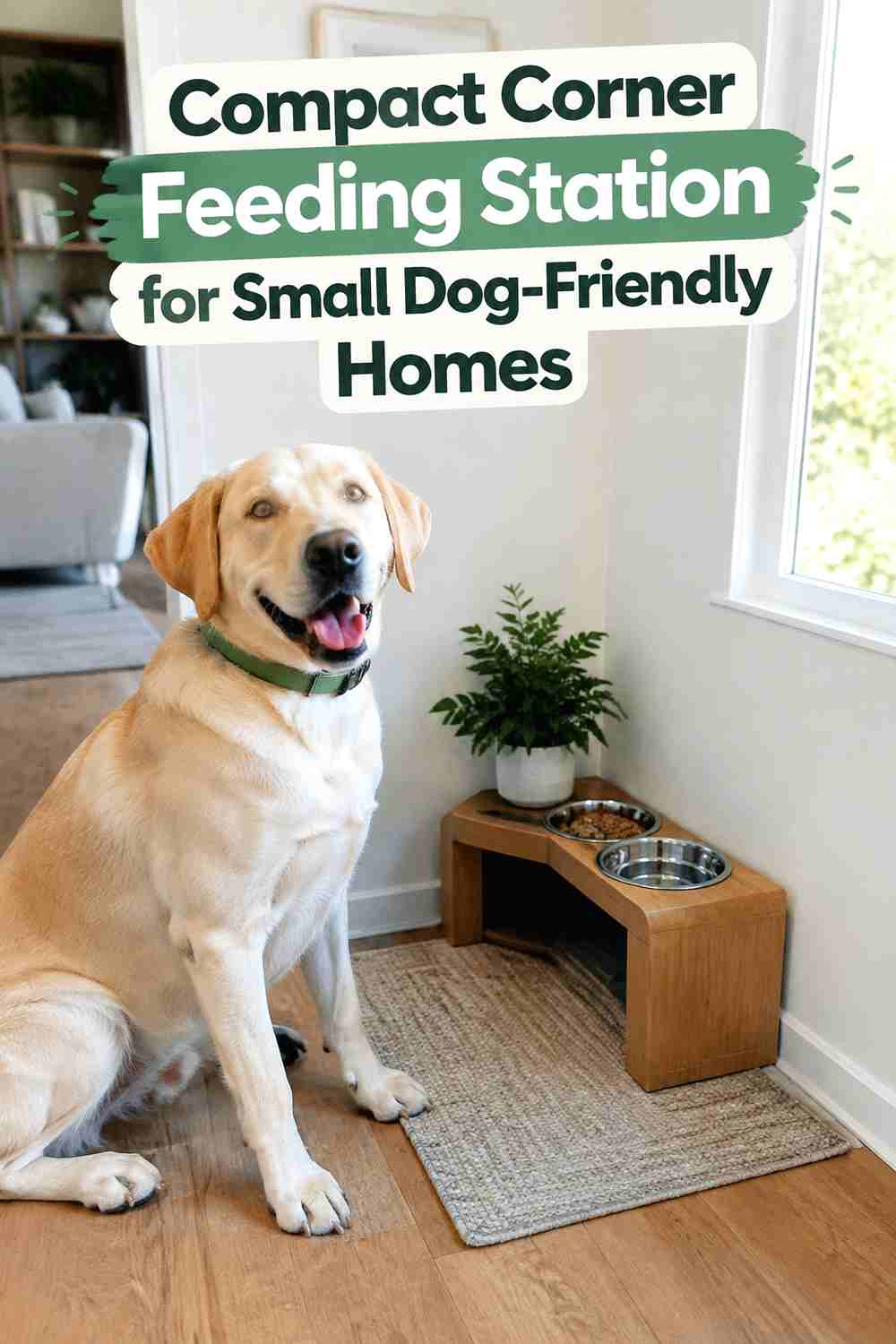
A compact corner feeding station makes use of an otherwise empty wall section without taking over valuable floor space. Position the bowls on a small washable mat and keep the surrounding area visually simple so your dog has an easy approach. A narrow wall shelf or closed cabinet nearby can hold spare bowls and towels, but keep food and small objects securely stored out of reach. This layout is useful in apartments, kitchens, and small utility rooms where a full cabinet station would feel bulky. Avoid placing the corner where two doors open into the same space or where people regularly step over the bowls. The station should feel tucked away without becoming difficult for your dog to access.
Best For
This setup suits homes where floor space is limited but a consistent feeding location is still useful.
Pro Tip
Use vertical storage for supplies while keeping the floor-level feeding area uncluttered.
4. Mudroom Dog Feeding Station With Easy Clean Storage

A mudroom feeding station works well for dogs whose daily routine already passes through a utility or entry area. Place bowls on an easy-clean, non-slip mat and store food, towels, and walking supplies in closed cabinets nearby. Mudrooms often handle wet paws and outdoor dirt, so choose surfaces that can be wiped quickly and keep the feeding area away from muddy shoes, cleaning products, and wet gear. The station should sit outside the main doorway path so your dog can eat or drink without people stepping around them. If the mudroom becomes cold, hot, or drafty during certain seasons, move the feeding area to a more comfortable indoor location.
Setup Notes
Keep food storage and cleaning products in separate closed compartments rather than mixing them on the same open shelf.
Cleaning Notes
Wipe the floor around the station frequently because outdoor dirt can collect around bowls faster in this type of room.
5. Separate Bowl Feeding Station For Peaceful Multi Dog Homes
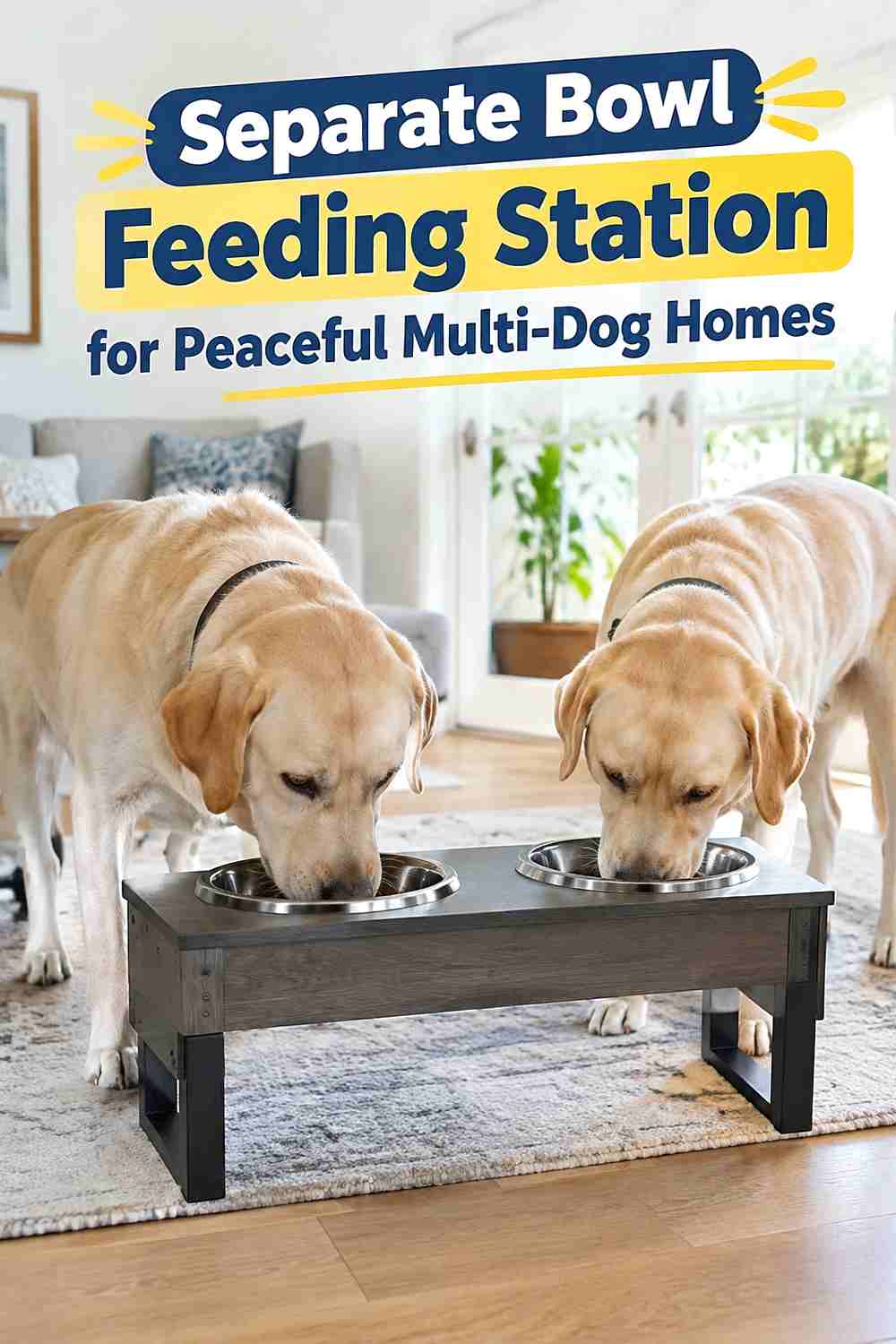
A multi-dog feeding station works best when each dog has a separate bowl area rather than being expected to eat directly beside another dog. Space the stations far enough apart that each dog can approach and leave without crossing through the other dog’s feeding space. In some homes, that may mean opposite ends of the same room; in others, separate rooms may be more practical. Use individual washable mats so spills stay contained and bowls are easy to identify. Supervise feeding when needed and avoid forcing dogs to share bowls or crowded floor space. Water access can also be duplicated when one central bowl creates congestion or competition around the station.
Space & Placement
Give each dog a clear approach and exit path without requiring close passing during meals.
Comfort & Safety
Increase separation or use different rooms if one dog repeatedly blocks or crowds another around food.
6. Kitchen Nook Dog Feeding Station With Closed Food Storage

A kitchen nook can become a practical dog feeding station when bowls fit neatly along a low-traffic wall and food stays in closed storage nearby. Use a sealed container appropriate for storing your dog’s food, then keep measuring tools or feeding accessories organized in the same cabinet rather than scattered across countertops. Place bowls on a washable mat that does not overlap the main cooking or walking path. The area should remain separate from cleaning chemicals, trash, hot appliances, and dropped human food. This layout is convenient because water, washing, and storage are already nearby, but the station still needs enough distance from busy cabinets and chairs so your dog can use it comfortably.
Space & Placement
Choose a nook outside the kitchen’s main work triangle so people do not repeatedly step around your dog during meals.
Use & Maintenance
Return food containers and supplies to closed storage after every use to keep the station tidy and inaccessible.
7. Minimalist Dog Feeding Station With Matching Bowls And Mat
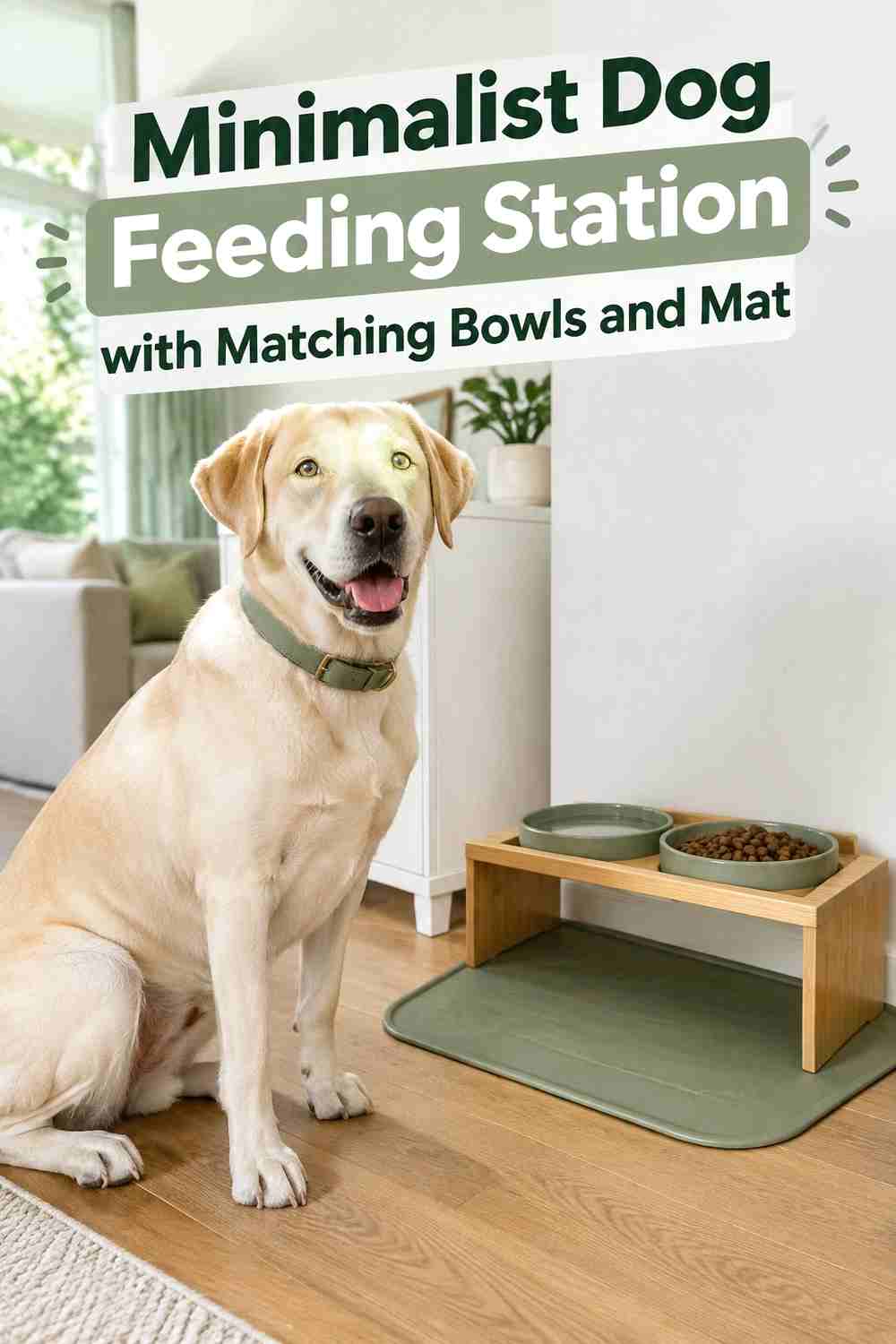
A minimalist feeding station uses a matching set of bowls, one simple mat, and little else at floor level. The goal is not decoration alone; reducing extra objects makes spills easier to see and cleanup faster. Choose stable bowls appropriate for everyday use and a mat that lies flat without curling at the edges. Keep decorative jars, signs, plants, and baskets off the floor where they could crowd the dog’s approach or become chew targets. A nearby closed cabinet can hold all backup supplies so the visible station stays uncluttered. This style works particularly well in open kitchens or dining areas where the feeding zone needs to blend into the room without sacrificing function.
Best For
This idea suits owners who prefer a visually simple setup that can be reset and wiped quickly.
Cleaning Notes
With fewer objects around the bowls, the entire station can be lifted and cleaned in only a few steps.
8. Senior Friendly Dog Feeding Station With Clear Floor Access
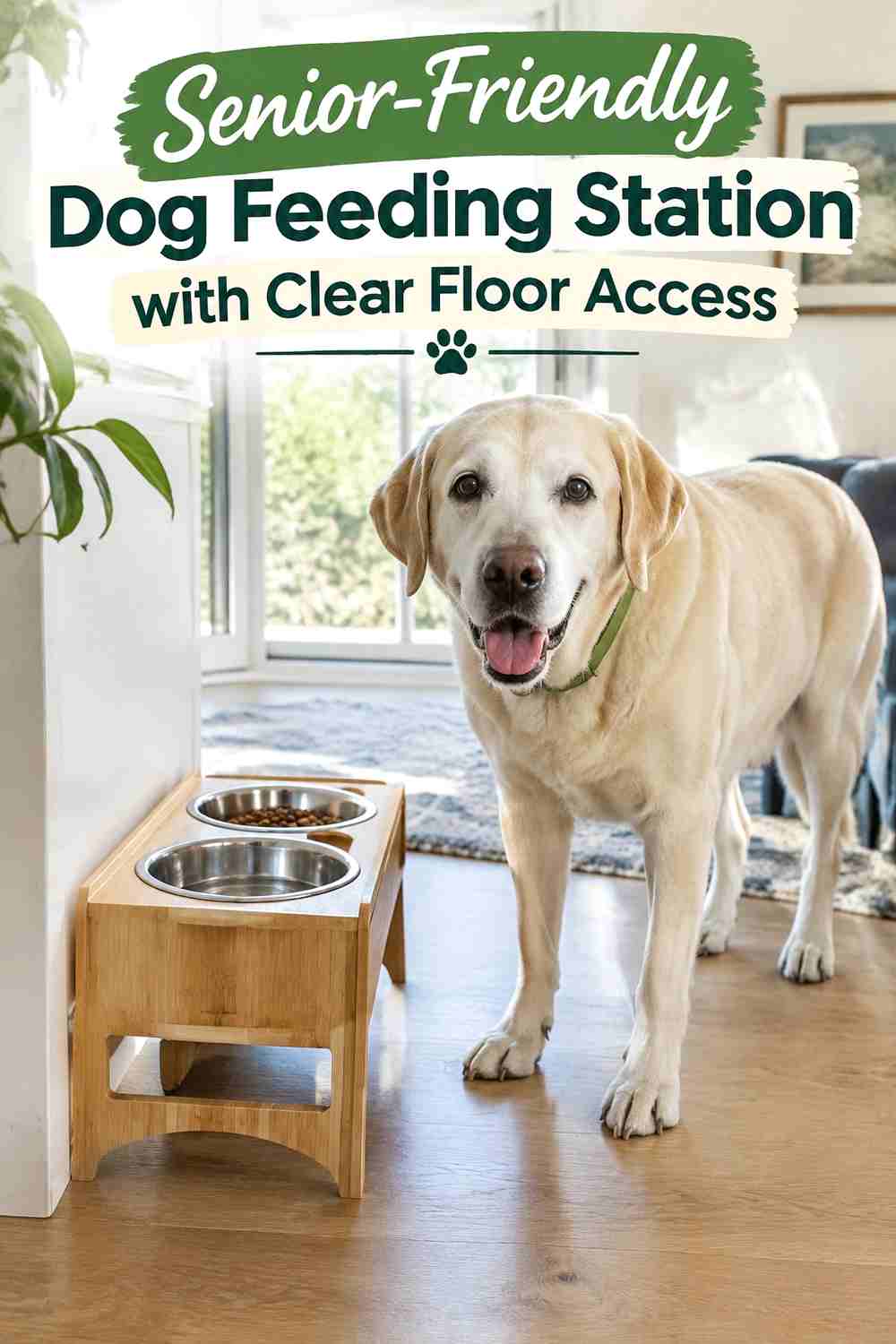
A senior-friendly feeding station prioritizes a predictable location, secure footing, and an uncluttered approach to food and water. Place bowls where your dog does not need to climb stairs, step over thresholds, or navigate around baskets and furniture. A stable non-slip mat can help keep both the bowls and surrounding footing steady. Leave enough room for your dog to stand and turn without making tight movements. Avoid frequently moving the station once the location works well. Older dogs vary widely in mobility and comfort, so observe how easily your dog approaches and leaves the area. Sudden changes in eating, drinking, posture, or movement should be discussed with a veterinarian.
Pet Type & Life Stage
This setup is designed with senior dogs in mind but can suit any dog that benefits from a simple, predictable floor layout.
Comfort & Safety
Keep the route dry, well lit, and free of loose rugs or objects that could shift underfoot.
9. Entryway Dog Feeding Station With Towel And Supply Storage
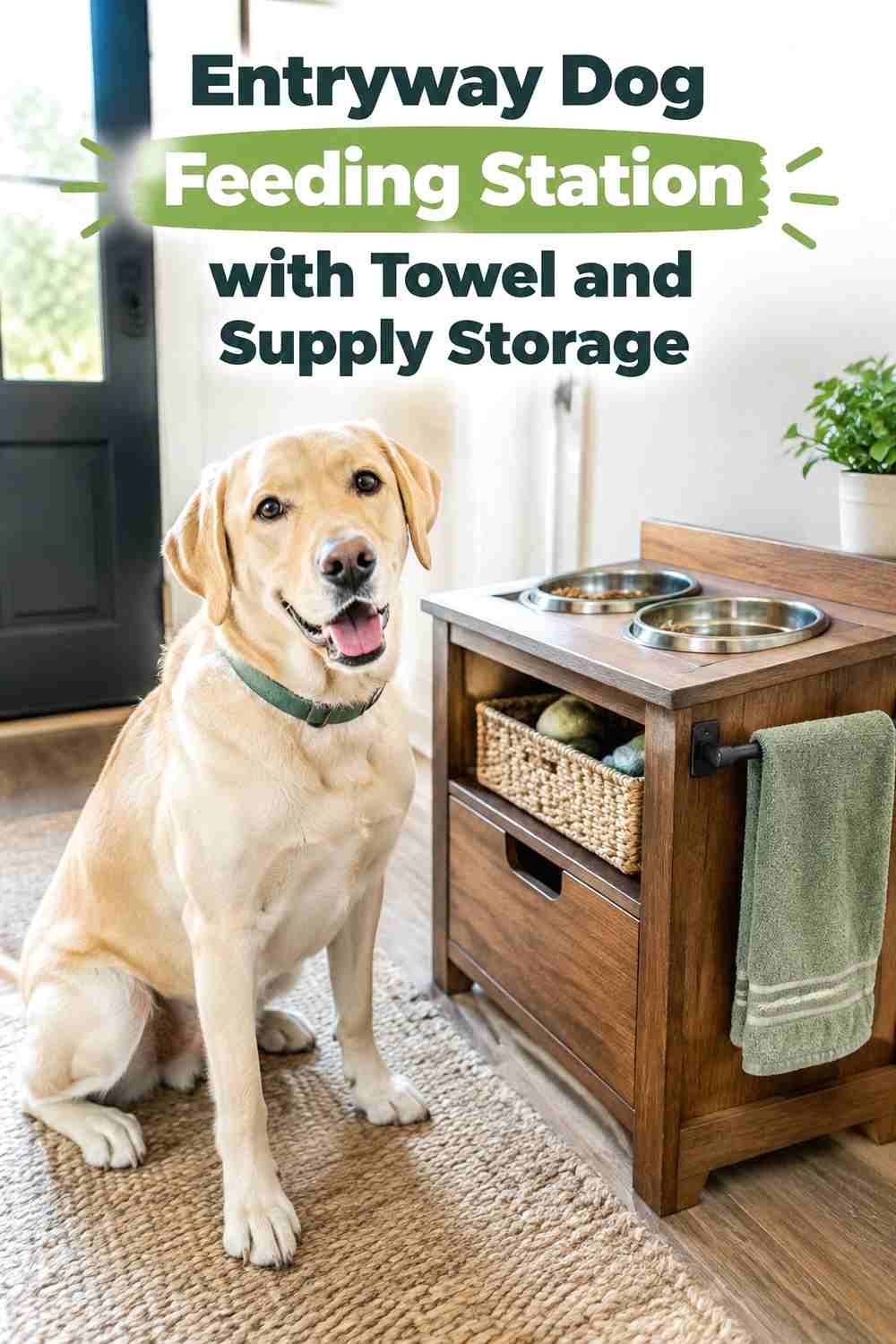
An entryway feeding station can combine bowls with practical storage for towels, leashes, and everyday dog supplies. Place the bowls along a side wall rather than directly beside the door so arrivals and departures do not interrupt the dog while eating or drinking. Use a washable mat beneath the bowls and store clean paw towels in a closed bench, drawer, or wall cabinet nearby. Keep outdoor shoes, bags, cleaning products, and wet gear separate from the feeding space. This idea is most suitable for roomy entryways; a narrow hallway may be too busy. The setup can be especially convenient after walks because you can clean paws before the dog reaches the feeding area.
Space & Placement
Make sure the open door cannot swing into the bowls and that people still have a clear path through the entryway.
Pro Tip
Keep one clean towel within easy reach while storing backups behind a closed door or drawer.
10. Portable Dog Feeding Station For Flexible Small Space Living
You May Also Like



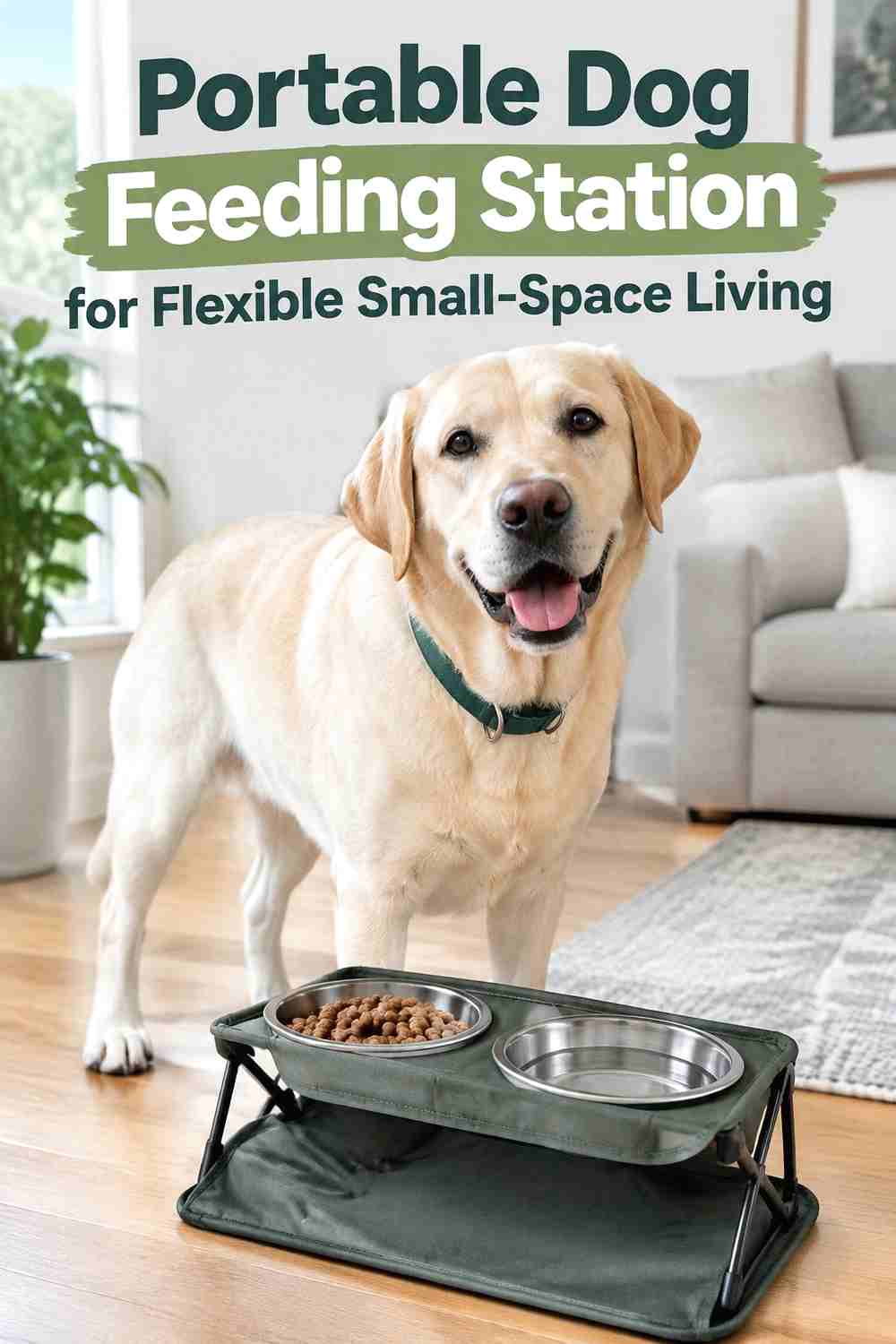
A portable feeding station uses a lightweight but stable tray or mat that can be moved when floor space needs to serve several purposes. Set the bowls in one consistent location during feeding, then lift the entire station for cleaning or storage when necessary. This approach works well in small apartments, multipurpose kitchens, or homes where a permanent feeding cabinet would take up too much space. Choose a tray with a flat base and enough room to prevent bowls from crowding each other. Keep food stored separately in a secure cabinet or container rather than moving it with the bowls. Even though the station is portable, using the same general location helps keep the routine predictable.
Best For
This setup suits compact homes where the feeding area occasionally needs to be cleared for other activities.
Use & Maintenance
Wash and dry the tray fully before storing it so trapped moisture and food residue do not build up.
How to Choose the Right Idea
Start with your available space and your dog’s normal feeding routine. A simple mat-and-bowl setup may be all you need, while a kitchen nook or built-in cabinet can make sense when you want food, towels, and supplies stored together.
Consider the dog’s size, age, mobility, and household traffic. Senior dogs may benefit from straightforward floor access and reliable traction, while multi-dog homes often work better with separated stations instead of one shared feeding area.
Cleaning should be easy. Washable mats, accessible floors, wipeable cabinet surfaces, and removable bowls make daily maintenance more realistic. Keep food securely stored and separate from cleaners, medicines, and unrelated household products. Most importantly, choose a location that lets your dog approach and leave comfortably without being crowded by people or other pets.
Final Thoughts
A good dog feeding station is less about elaborate furniture and more about creating a clean, predictable place for food and water. Stable bowls, washable surfaces, smart storage, and clear access can make the daily routine easier to manage.
Choose the simplest setup that fits your room and your dog, then add storage or organization only where it genuinely improves everyday use.
FAQs
1. Where is the best place for a dog feeding station?
Choose a quiet, easy-to-clean area outside the main household walking path. Kitchens, mudrooms, utility rooms, and low-traffic corners can all work depending on the layout.
2. Should dog food be stored beside the feeding station?
It can be stored nearby if it is kept in secure, appropriate closed storage. Keep it separate from cleaners, medicines, and other household chemicals.
3. What should go under dog food and water bowls?
A flat, washable, non-slip mat can help contain crumbs and water while reducing bowl movement on smooth floors.
4. Should two dogs share the same feeding station?
Separate feeding areas are often easier to manage because each dog has independent access to its own bowl. More distance may be needed if either dog crowds the other.
5. How do I keep a dog feeding station clean?
Wash the bowls routinely, wipe the mat and nearby floor, clean splashes promptly, and occasionally lift the entire setup to remove crumbs or moisture underneath.
CTA
Save your favorite dog feeding station ideas and create a cleaner, more organized setup that fits your dog’s routine and your home.
