Give your bunny a dedicated place to dig, toss, burrow, and explore with simple box setups that are easy to refresh and contain indoors.
Save This Idea on Pinterest

15 Bunny Dig Box Ideas
Save to PinterestBunny dig boxes can provide an appropriate outlet for natural digging and shredding behaviors while helping keep those activities focused away from rugs, bedding, or furniture. The best setup depends on your rabbit’s size, mobility, chewing habits, confidence, and preferred textures.
These 15 ideas use straightforward materials such as plain paper, cardboard, hay, paper bedding, and rabbit-appropriate natural textures. Keep boxes stable, avoid small plastic pieces, staples, tape, scented materials, or dusty fillers, and supervise new setups until you know how your rabbit interacts with them. The ideas follow the supplied Daily Pet Routine guidance on enrichment, simpler small-pet setups, rotation, cleanup, supervision, and safe material choices.
Quick List
- Crumpled Kraft Paper Dig Box for Curious Indoor Bunnies
- Shredded Plain Paper Dig Box for Playful Pet Rabbits
- Layered Hay and Paper Dig Box for Busy Bunnies
- Cardboard Strip Dig Box for Rabbits Who Love Shredding
- Tunnel-Connected Dig Box for Adventurous Indoor Rabbits
- High-Sided Paper Dig Box for Messy Indoor Bunnies
- Low-Entry Dig Box for Senior or Smaller Rabbits
- Hide-and-Dig Cardboard Box for Shy Indoor Bunnies
- Foraging Hay Dig Box for Food-Motivated Pet Rabbits
- Double-Chamber Dig Box for Rabbits Who Love Exploring
- Paper Bedding Dig Box for Gentle Indoor Bunny Play
- Seagrass Mat Dig Box for Rabbits Who Like Texture
- Compact Corner Dig Box for Small-Space Bunny Homes
- Rotating Texture Dig Box for Easily Bored Pet Rabbits
- Playpen Corner Dig Box for Everyday Bunny Enrichment
1. Crumpled Kraft Paper Dig Box For Curious Indoor Bunnies
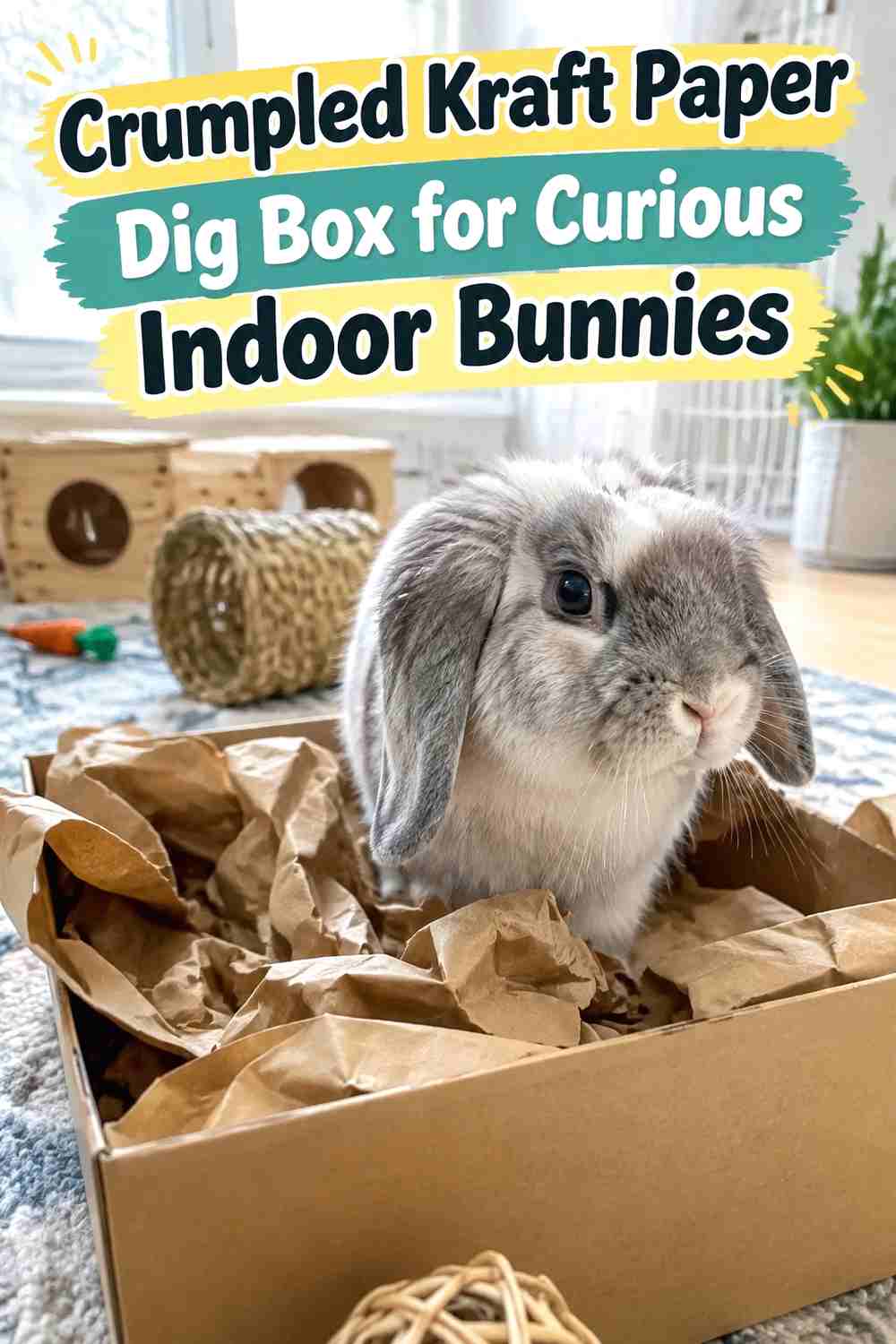
Fill a sturdy open cardboard box with loosely crumpled sheets of plain kraft paper to create a lightweight digging setup that rabbits can push, toss, and burrow through. Keep the paper loosely packed so your bunny can move it without getting wedged underneath dense layers. A box with enough floor space for turning and digging works better than a narrow container, and removing tape or staples keeps the setup simpler. Place the box on an easy-clean floor or washable mat because enthusiastic digging will send some paper over the edges. If your rabbit starts eating large amounts of the paper rather than shredding and moving it, remove the material and try another texture.
Setup Notes
Use plain, uncoated paper without glossy finishes, fragrance, or attached labels.
Cleaning Notes
Shake out loose hay and debris during refreshes and replace paper once it becomes dirty, damp, or heavily shredded.
2. Shredded Plain Paper Dig Box For Playful Pet Rabbits
You May Also Like



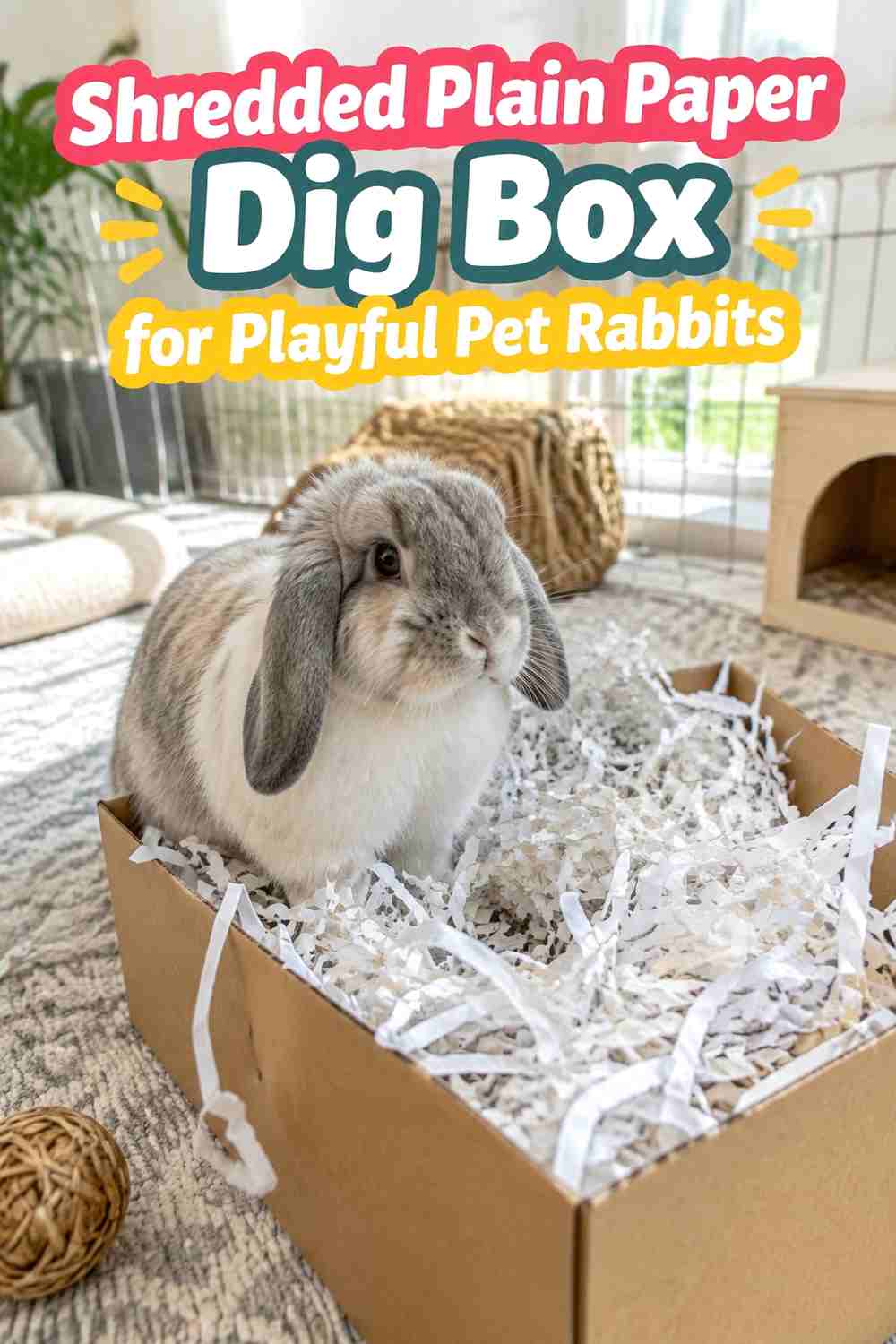
A box filled with broad strips of plain shredded paper creates a softer, looser digging texture than crumpled sheets. Tear clean paper into manageable strips rather than using tiny confetti-like pieces that scatter everywhere. Fill only part of the box so the rabbit still has room to stand, turn, and push material around. You can hide a cardboard tube or a small handful of hay underneath to encourage investigation without making the setup complicated. This version works well for rabbits that enjoy throwing lightweight materials with their paws and nose. Place the box where spilled paper is easy to sweep, and supervise the first sessions to see whether your rabbit digs, nests, chews, or simply sleeps in it.
Best For
This idea suits rabbits that enjoy loose materials but are less interested in heavier cardboard pieces.
Use & Maintenance
Fluff the paper between sessions and remove soiled sections rather than continually adding clean paper on top.
3. Layered Hay And Paper Dig Box For Busy Bunnies
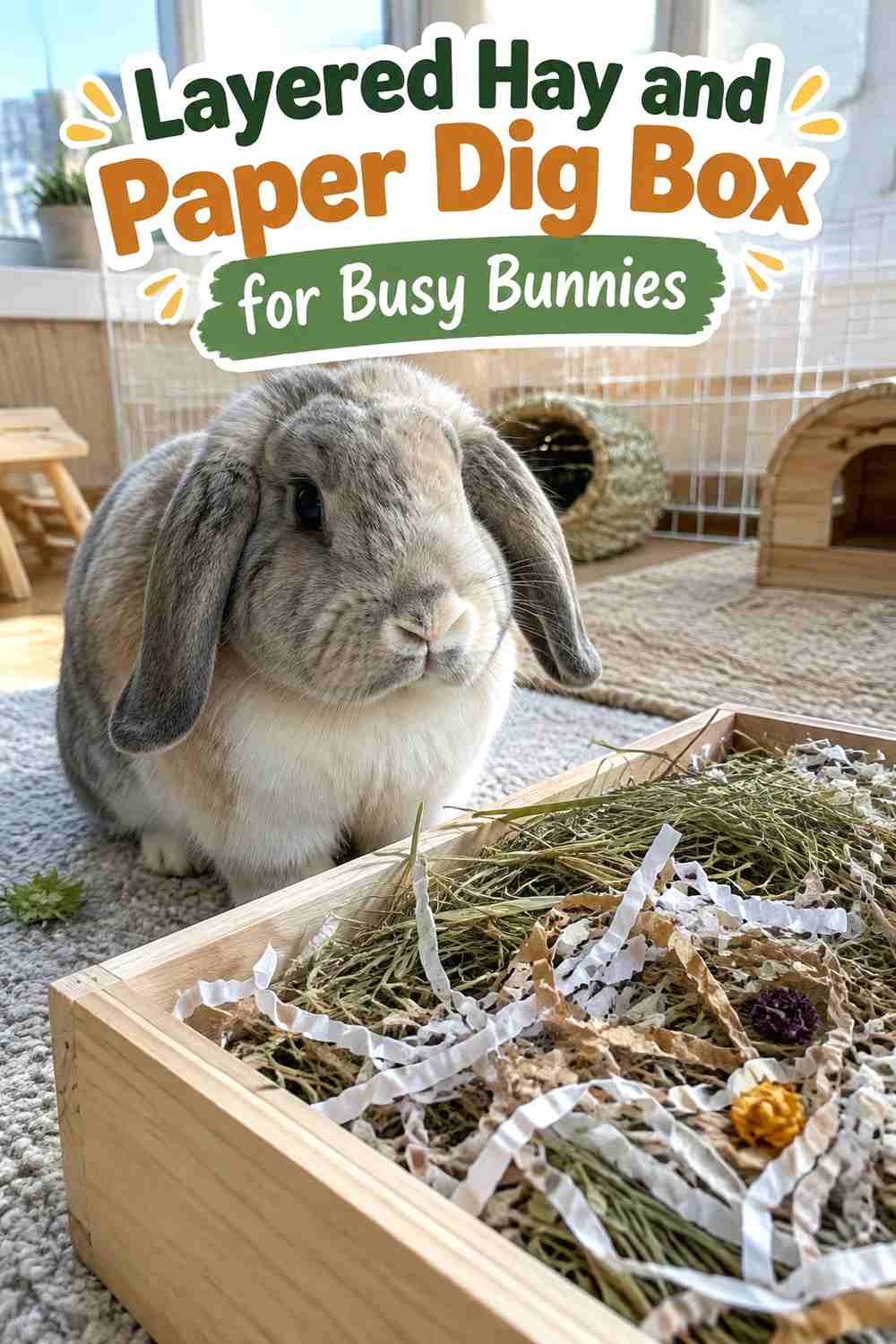
Layer loose hay with plain torn paper to create a dig box that changes texture as your rabbit works through it. Start with a thin layer of paper, add hay, then finish with another light paper layer so the box remains easy to move through. Rabbits can nose into the hay, pull pieces free, and rearrange the paper without needing a complex puzzle. Use hay that is already part of your rabbit’s normal routine rather than introducing unfamiliar edible materials just for enrichment. Because hay can travel quickly across the floor, a box with moderate side walls helps contain the mess. Replace damp or soiled material instead of allowing old layers to remain buried at the bottom.
Why It Works
The changing layers give the rabbit several textures to investigate without requiring small hidden objects.
Cleaning Notes
Empty the entire box periodically so old hay and debris do not accumulate underneath fresh material.
4. Cardboard Strip Dig Box For Rabbits Who Love Shredding
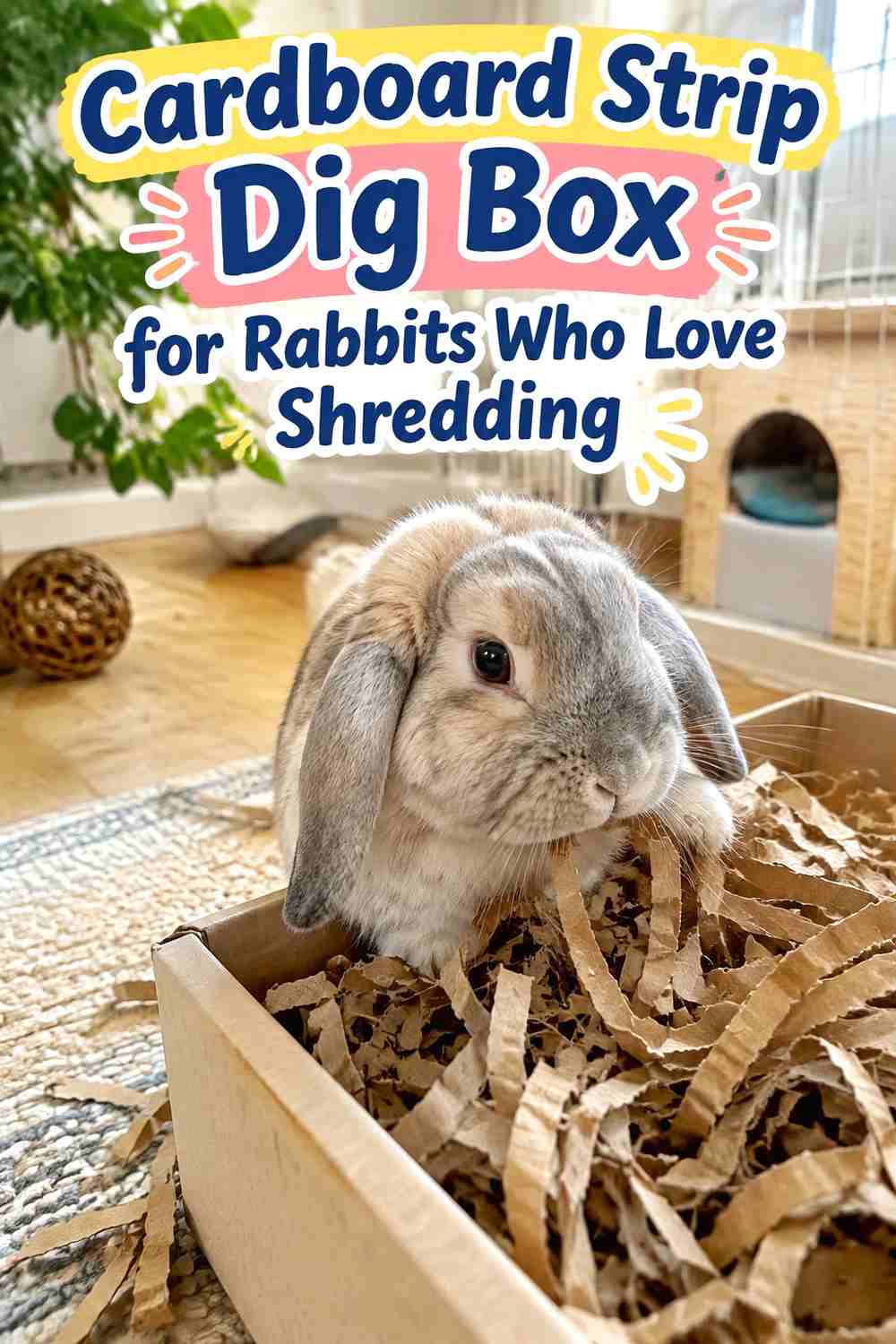
Cut plain corrugated cardboard into broad strips and stack them loosely inside a sturdy box for rabbits that prefer shredding and tugging over soft-paper digging. Remove all tape, staples, glossy labels, and plastic before adding the pieces. Mix vertical and horizontal strips so the rabbit can pull, push, and rearrange them rather than encountering one solid stack. This setup may last longer than a paper-only box, but it still needs regular inspection because chewed cardboard can become heavily fragmented or soiled. Keep the box away from important baseboards or furniture if the activity encourages an enthusiastic shredding session. When interest drops, replace only part of the material rather than rebuilding everything.
Best For
This option suits rabbits that already enjoy chewing and tearing ordinary plain cardboard.
Pro Tip
Combine a few cardboard tubes with the strips to add different shapes without introducing tiny loose parts.
5. Tunnel Connected Dig Box For Adventurous Indoor Rabbits

Connect a cardboard tunnel to the side of a dig box so your rabbit can move from enclosed exploration directly into digging. Cut a smooth entrance large enough for comfortable passage and make sure there are no sharp cardboard points around the opening. Fill the box with crumpled paper, paper strips, or another rabbit-appropriate filler your pet already handles well. The tunnel should stay stable and open rather than collapsing as the rabbit moves through it. This design works especially well in a larger play area where the rabbit has room to approach from several directions. If your rabbit begins chewing the connector until it becomes unstable, separate the pieces and replace the damaged section.
Space & Placement
Leave clear floor space around both entrances so your rabbit can enter, reverse direction, and exit without being blocked.
Use & Maintenance
Inspect the tunnel joints frequently because those edges often receive the most chewing and digging wear.
6. High Sided Paper Dig Box For Messy Indoor Bunnies

A high-sided cardboard box can contain more flying paper for rabbits that dig with enough enthusiasm to empty shallow boxes quickly. Choose a box with walls high enough to catch debris but still provide a safe, easy entrance. Cut one broad doorway into the side instead of making the rabbit jump over the wall, then smooth the cardboard edges. Fill the box with lightweight plain paper or cardboard strips and leave plenty of interior room for turning. This setup is especially practical near carpet or in shared living spaces where cleanup matters. Avoid fully enclosing the top; an open design keeps ventilation good and makes it easier to see how your bunny is using the box.
Best For
This setup suits energetic diggers and owners who want to keep loose filler concentrated in one area.
Cleaning Notes
Sweep around the doorway frequently and replace the box if urine, moisture, or chewing weakens the structure.
7. Low Entry Dig Box For Senior Or Smaller Rabbits

A low-entry dig box gives smaller rabbits and some senior bunnies easier access without requiring a high hop over the side. Use a broad shallow cardboard box or cut a wide entrance close to floor level, leaving enough wall around the rest of the box to contain paper. Add a light layer of soft plain paper or paper bedding rather than filling the box deeply. Position it on a stable, non-slip surface so the box does not slide as the rabbit steps in. Not every senior rabbit has mobility limitations, so adjust the entrance based on how your individual bunny moves. If you notice new difficulty stepping, hopping, or changing position, veterinary guidance is more appropriate than simply modifying the box.
Pet Type & Life Stage
This idea can suit small breeds, cautious rabbits, and older rabbits that prefer easy access.
Comfort & Safety
Keep the entrance smooth, wide, and free from raised edges that could catch feet.
8. Hide And Dig Cardboard Box For Shy Indoor Bunnies

Combine a roomy hiding box with a shallow digging area so a cautious rabbit can investigate from a partially covered space. Use a cardboard box with two large openings and leave part of the top intact for shelter, then place paper strips or crumpled kraft paper across the floor. Two entrances help prevent the box from feeling like a dead end and make it easier for the rabbit to move through naturally. Position the box in a quiet play area rather than the middle of household traffic. Do not reach inside repeatedly while your rabbit is resting there; the box should remain an optional retreat as well as an activity. Replace it when chewing makes the roof or walls unstable.
Best For
This setup can suit shy rabbits that enjoy digging more when they have some visual cover.
Space & Placement
Keep both exits open and avoid pushing the box tightly against furniture that blocks an escape route.
9. Foraging Hay Dig Box For Food Motivated Pet Rabbits

Turn a simple hay-filled box into a light foraging activity by mixing a small amount of your rabbit’s usual appropriate food through loose hay rather than adding unfamiliar treats. The rabbit can nose, paw, and rearrange the hay while searching, combining digging with normal food-seeking behavior. Keep the setup easy at first so the rabbit finds items quickly instead of becoming frustrated. Use a broad box that allows natural turning and keep the filler shallow enough that food does not disappear beneath old material. Once the session ends, remove leftover food and replace any soiled hay. This idea should complement, not replace, the rabbit’s usual feeding and hay access.
Why It Works
The box gives digging a clear purpose while using familiar hay and routine food rather than complicated puzzle parts.
Use & Maintenance
Empty old material fully before resetting the box so uneaten food does not remain hidden underneath.
10. Double Chamber Dig Box For Rabbits Who Love Exploring
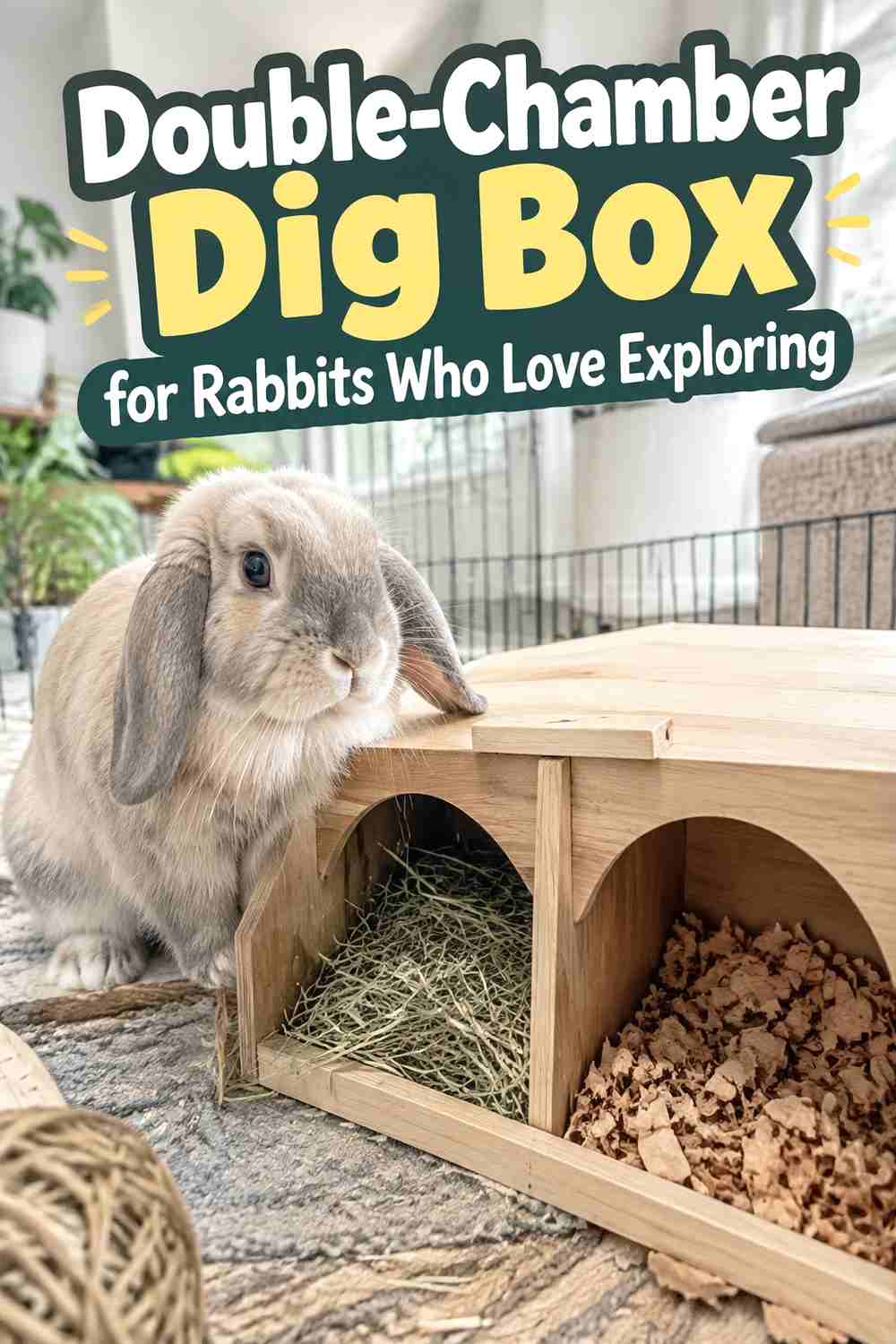
Join two cardboard boxes with a wide doorway to create a two-room digging setup. Fill one chamber with crumpled paper and the other with cardboard strips or hay, giving your rabbit two different textures without mixing everything together. Make the connecting opening large and smooth enough for comfortable passage, and add an exterior opening to each side when possible so the rabbit has multiple ways out. This setup can make a familiar dig box feel new while still using simple materials. Keep both chambers broad enough for turning and check the connecting wall for chewing damage. If one side becomes soiled more quickly, replace that chamber without rebuilding the entire setup.
Setup Notes
Keep the boxes level with each other and avoid narrow connectors that force awkward squeezing.
Pro Tip
Rotate which filler goes in each chamber when interest fades instead of constantly adding new materials.
11. Paper Bedding Dig Box For Gentle Indoor Bunny Play
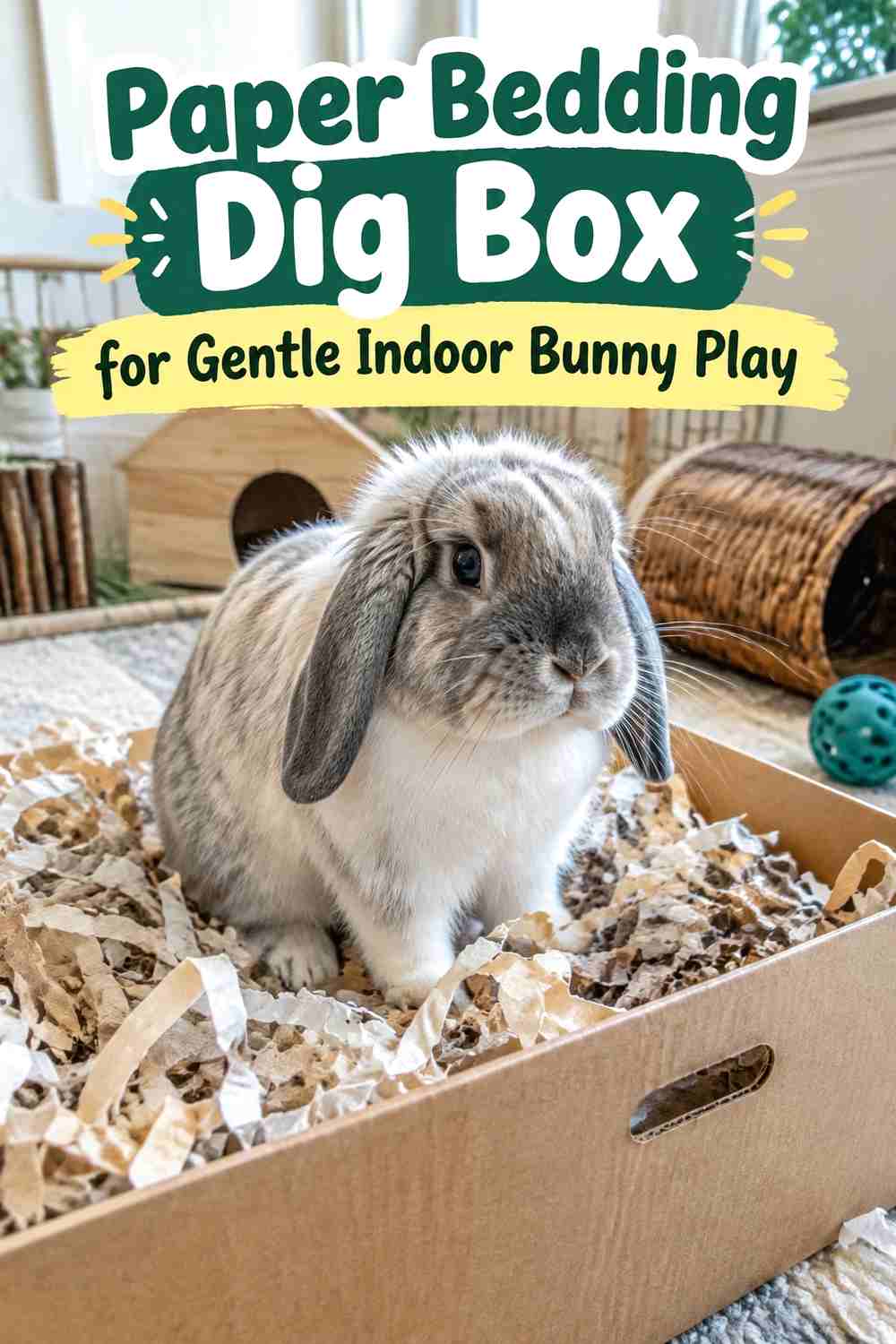
A shallow layer of unscented paper bedding can create a soft digging surface for rabbits that prefer fine, lightweight material over larger cardboard pieces. Use a sturdy low box with enough room for the rabbit to sit, turn, and paw through the bedding comfortably. Keep the layer modest rather than filling the container deeply, which makes cleanup easier and reduces waste. Choose a paper product intended for small-pet use and avoid scented or dusty materials. This box may also tempt some rabbits to use it as a toilet, so monitor the setup and remove wet or soiled bedding promptly. If that becomes the box’s main purpose, keep a separate enrichment dig box elsewhere.
Best For
This can suit rabbits that enjoy softer textures or are less interested in tearing cardboard.
Cleaning Notes
Spot-clean regularly and replace the bedding completely when it becomes damp, dirty, or strongly soiled.
12. Seagrass Mat Dig Box For Rabbits Who Like Texture

Line the bottom of a broad cardboard box with a rabbit-appropriate seagrass mat and add a loose layer of plain paper on top. The mat creates a firmer woven texture for pawing and chewing while the paper provides lightweight material to toss around. Make sure the mat lies flat so it does not bunch into awkward folds under the rabbit. This setup can work well for bunnies that quickly lose interest in paper-only boxes but enjoy natural woven surfaces. Keep the box open and uncluttered so you can see how the rabbit interacts with both materials. Replace the mat when chewing creates loose or damaged sections rather than letting heavily worn fibers accumulate.
Why It Works
Combining one firm texture with one loose texture gives the rabbit more variety without making the box complicated.
Use & Maintenance
Shake loose debris from the mat and remove any heavily frayed sections during routine checks.
13. Compact Corner Dig Box For Small Space Bunny Homes
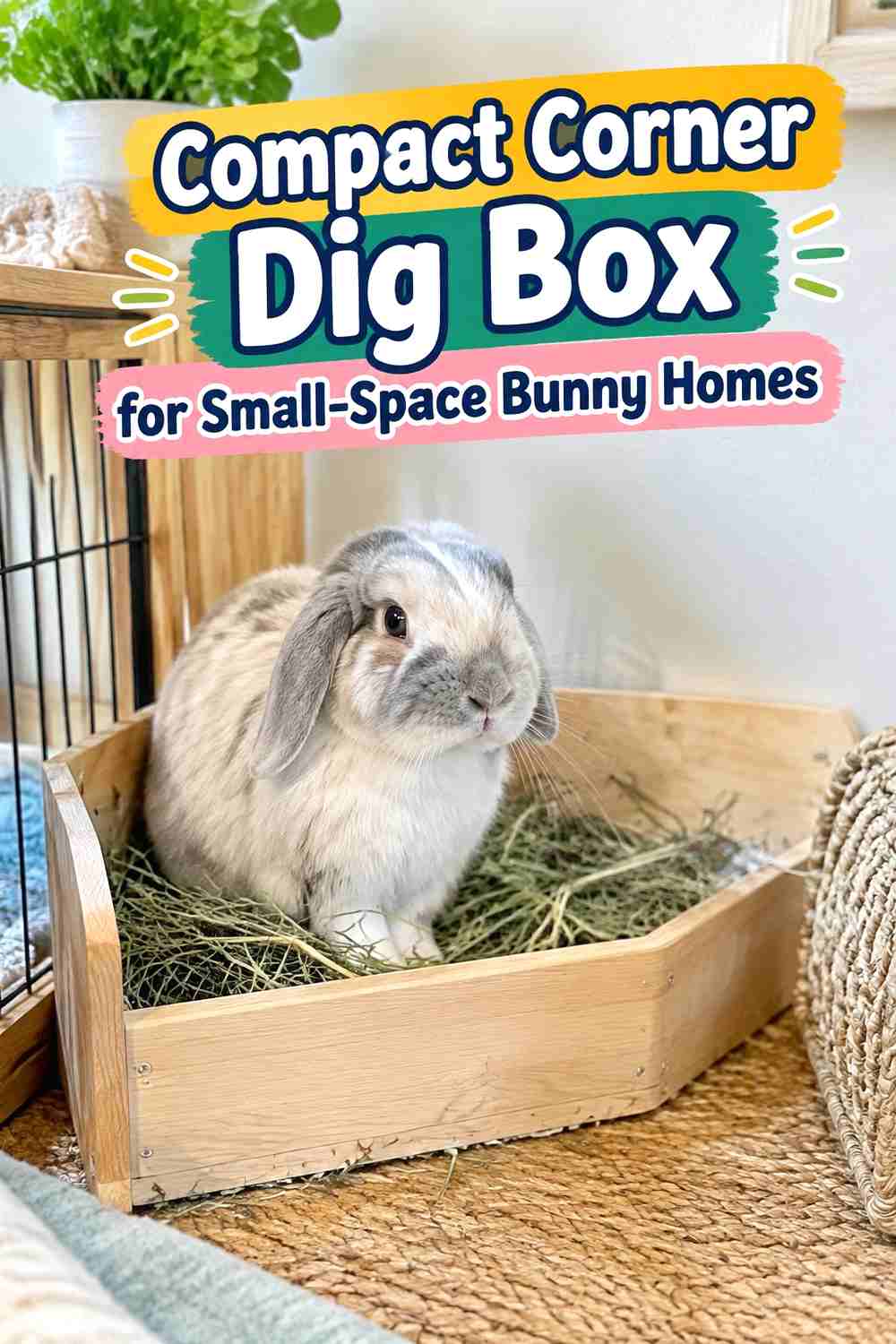
A compact corner dig box works well when floor space is limited but you still want a dedicated digging station. Choose a box that fits beside a playpen wall or in an unused room corner while remaining large enough for your rabbit to turn naturally. Fill it with one lightweight material, such as crumpled paper or cardboard strips, rather than adding several bulky layers. Place a washable mat underneath to catch spillover and make sweeping faster. Avoid squeezing the box between furniture where the rabbit has only one narrow route in and out. A compact setup is most useful when it stays tidy and accessible rather than becoming storage for toys, bowls, and unrelated supplies.
Space & Placement
Use a quiet edge of the play area while preserving a clear path around the box.
Pro Tip
Store replacement paper vertically nearby so refreshing the dig box does not require extra floor space.
14. Rotating Texture Dig Box For Easily Bored Pet Rabbits
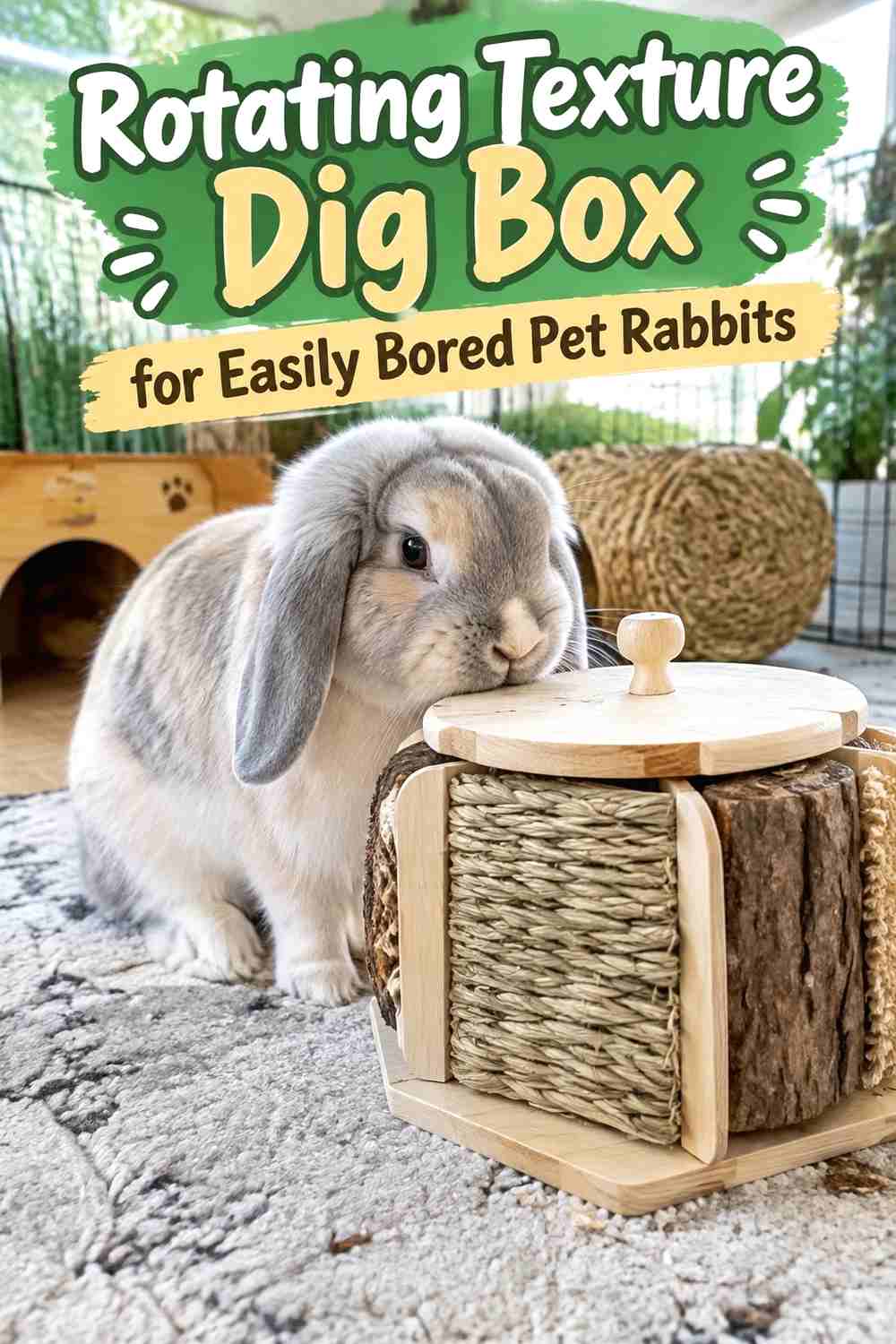
Use one familiar dig box but rotate the main filler instead of offering the same texture every day. One reset might use crumpled paper, another cardboard strips, and another a light hay-and-paper mix. Changing only one element keeps the activity recognizable while adding novelty. Introduce each material separately first so you know how your rabbit chews, tosses, and interacts with it before creating combinations. Avoid rotating so frequently that the box is constantly being disturbed; give your rabbit time to explore each version. If one filler clearly encourages more natural digging and less unwanted chewing elsewhere, use it more often rather than following a rigid rotation schedule.
Use & Maintenance
Store clean filler materials separately and discard anything that has become damp or soiled.
Best For
This setup suits rabbits that enjoy digging but quickly lose interest when the box never changes.
15. Playpen Corner Dig Box For Everyday Bunny Enrichment
You May Also Like




Make a dig box part of the permanent playpen layout so your rabbit has an appropriate digging option available during normal supervised activity time. Place a sturdy cardboard box in one corner, add a manageable amount of plain paper, cardboard strips, or hay, and keep food, water, litter, and resting areas separate. The box should be easy to remove for cleaning without disrupting the rest of the enclosure. Watch whether your rabbit actually uses the location; some bunnies prefer digging beside walls, tunnels, or hiding areas rather than in exposed open space. Refresh the filler as needed and rotate only a few textures so the setup remains familiar, practical, and easy to maintain.
Space & Placement
Keep enough open playpen floor space for running, resting, and normal movement instead of allowing the dig box to dominate the enclosure.
Cleaning Notes
Lift the box out for full cleaning and replace worn cardboard before the walls become unstable.
How to Choose the Right Idea
Choose a bunny dig box based on how your rabbit already likes to interact with objects. Rabbits that shred cardboard may enjoy strips or a double-chamber box, while rabbits that toss lightweight material may prefer crumpled or shredded paper. A shy bunny may use a partially covered box more readily, while a confident explorer may enjoy a tunnel-connected setup.
Size, mobility, flooring, and available space also matter. Smaller or older rabbits may appreciate a low entrance, and apartment setups benefit from high sides or a washable mat underneath. If your rabbit chews filler rather than simply digging through it, pay closer attention to the material and remove anything unsuitable or heavily damaged.
Keep the box stable, easy to exit, simple to clean, and separate from litter and feeding areas when practical.
Final Thoughts
A good bunny dig box does not need expensive materials or a complicated design. Start with a sturdy box and one simple rabbit-appropriate texture, then watch how your bunny digs, tosses, chews, and explores. Adjust the depth, entrance, and filler based on what your rabbit actually enjoys.
FAQs
1. What can I put in a bunny dig box?
Plain paper, cardboard strips, hay, unscented paper bedding, and rabbit-appropriate natural woven materials can all work depending on how your rabbit uses them.
2. How deep should a rabbit dig box be?
There is no single depth that suits every rabbit. Use enough filler for meaningful pawing and burrowing while still leaving space for easy movement, turning, and exit.
3. What should I avoid putting in a bunny dig box?
Avoid sharp objects, staples, tape, plastic pieces, fragranced materials, dusty fillers, and anything your rabbit could swallow or become tangled in.
4. How often should I clean a bunny dig box?
Remove wet or soiled material promptly and perform a full refresh whenever the filler becomes dirty, damp, heavily shredded, or difficult to inspect.
5. What if my rabbit ignores the dig box?
Try changing the location, entrance height, or filler texture rather than immediately adding more objects. Some rabbits prefer covered boxes, tunnels, hay layers, or boxes positioned along a wall.
CTA
Save your favorite bunny dig box ideas and experiment with simple textures and layouts to find the setup your rabbit enjoys most.
