Turn unused space beneath the stairs into a cozy dog nook with practical bedding, smart storage, easy cleanup, and comfortable layouts for everyday rest.
Save This Idea on Pinterest

11 Under-Stairs Dog Nook Ideas
Save to PinterestAn under-stairs dog nook can turn an awkward household space into a useful resting area, but the setup should match your dog’s size, sleeping position, and preference for open or sheltered spaces. The best designs leave enough headroom to stand and turn comfortably while keeping access clear.
These 11 ideas include compact beds, storage solutions, senior-friendly layouts, washable entry zones, quieter retreats, and open-front designs for larger dogs. Before setting up the area, check ventilation, floor comfort, lighting, household traffic, cords, exposed hardware, and anything stored nearby that should remain out of reach.
Quick List
- Cozy Under-Stairs Dog Bed Nook for Small Homes
- Built-In Under-Stairs Dog Nook With Hidden Storage
- Low-Entry Under-Stairs Dog Nook for Senior Pets
- Washable Under-Stairs Dog Nook for Muddy Paw Cleanup
- Quiet Under-Stairs Retreat for Dogs Who Need Downtime
- Under-Stairs Dog Nook With Toy Basket Storage
- Raised-Edge Under-Stairs Dog Bed for Drafty Floors
- Minimalist Under-Stairs Dog Nook With Neutral Bedding
- Under-Stairs Dog Nook With Soft Wall Lighting
- Multi-Dog Under-Stairs Nook With Separate Resting Spots
- Ventilated Open-Front Under-Stairs Nook for Larger Dogs
1. Cozy Under Stairs Dog Bed Nook For Small Homes
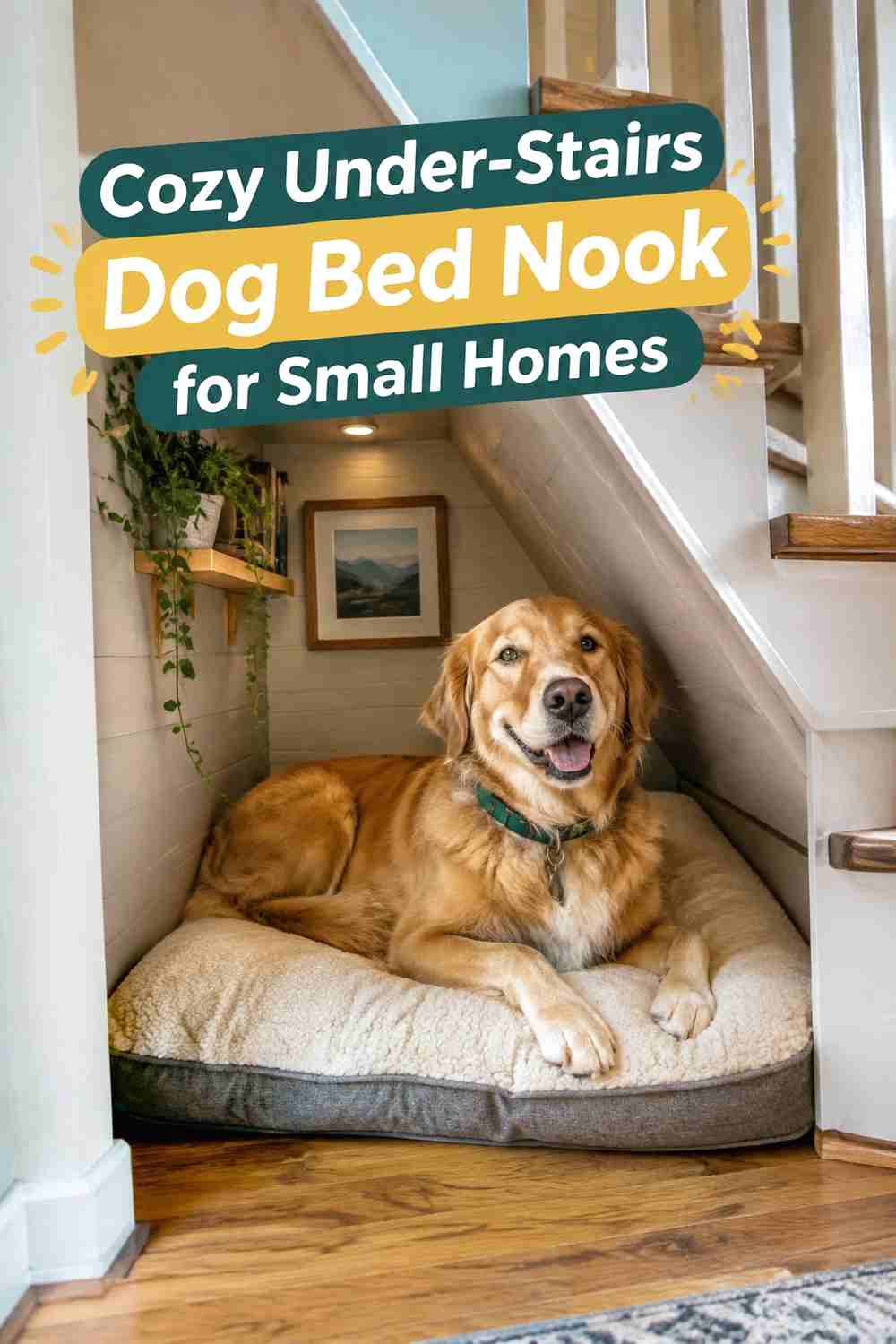
A cozy under-stairs dog bed nook makes good use of floor space that might otherwise sit empty in a small home. Start with a bed sized for your dog’s normal sleeping posture rather than simply choosing the largest cushion that fits the opening. Keep the front completely clear so your dog can enter, turn, stretch, and leave without squeezing past furniture or decorations. A washable rust, tan, or cream cover can make the nook feel warm without adding unnecessary clutter. Check the lowest part of the sloped ceiling and make sure your dog does not bump their head when standing. If the space is dark or enclosed, keep the design simple and open rather than filling every wall with accessories.
Space & Placement
Place the bed where the ceiling provides the most comfortable headroom and keep the narrower section for storage only if it can be securely separated from your dog.
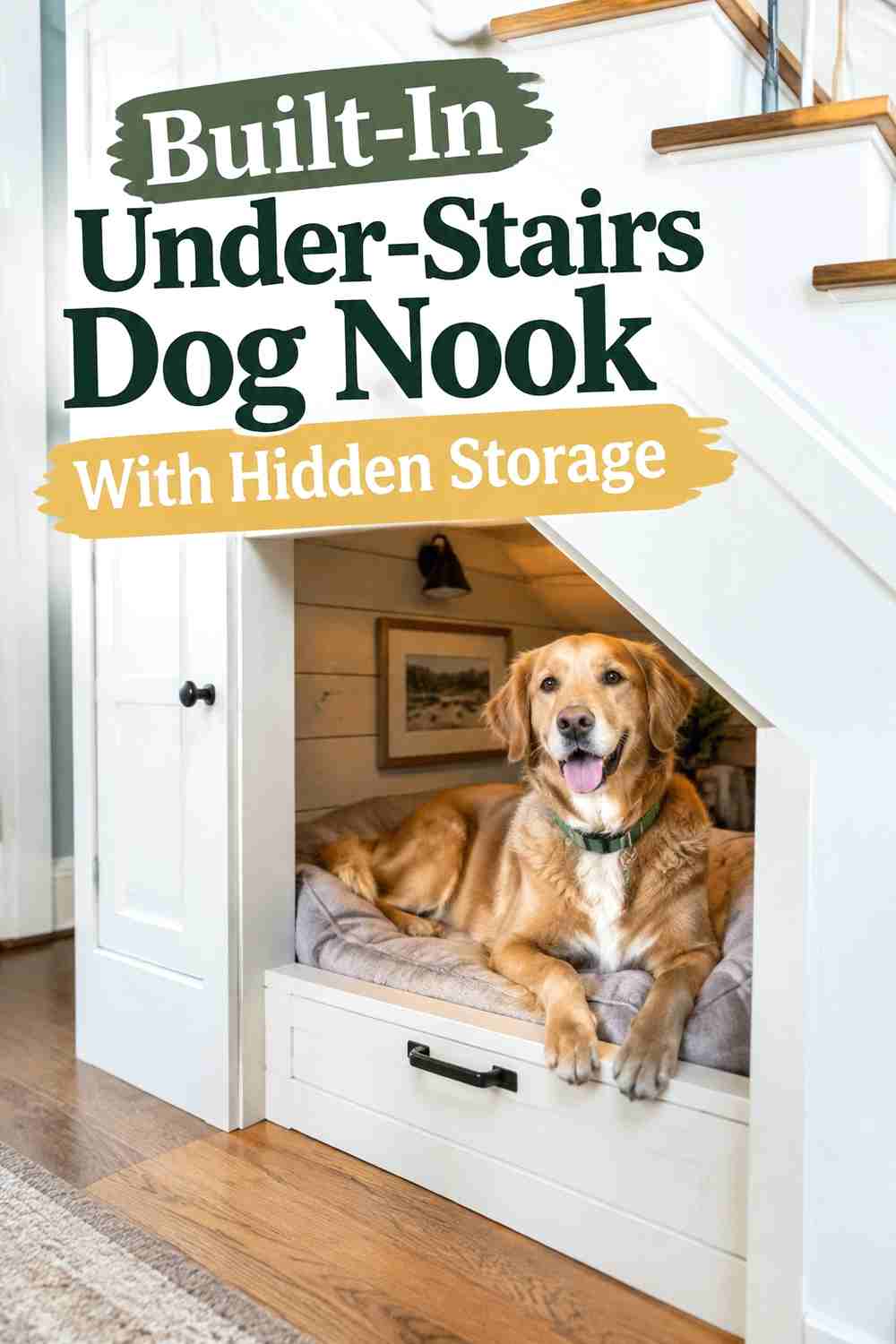
2. Built In Under Stairs Dog Nook With Hidden Storage
You May Also Like



A built-in under-stairs dog nook can combine a comfortable sleeping area with concealed storage for leashes, towels, toys, and other pet supplies. Keep the dog’s section open and uncluttered, then use closed drawers or cabinets in the narrower sections where your dog cannot comfortably rest anyway. Storage doors should open without swinging into the bed, and handles should not protrude where a collar or harness might catch. Use a removable bed rather than permanently fixing soft padding to the floor so cleaning stays manageable. Medicines, cleaners, grooming tools, and other unsuitable items should remain securely inaccessible. This layout works especially well when you want the nook to look integrated with the surrounding staircase rather than like an extra pet bed pushed underneath it.
Use & Maintenance
Group everyday supplies separately from less frequently used items so you can reach what you need without disturbing your resting dog.
3. Low Entry Under Stairs Dog Nook For Senior Pets
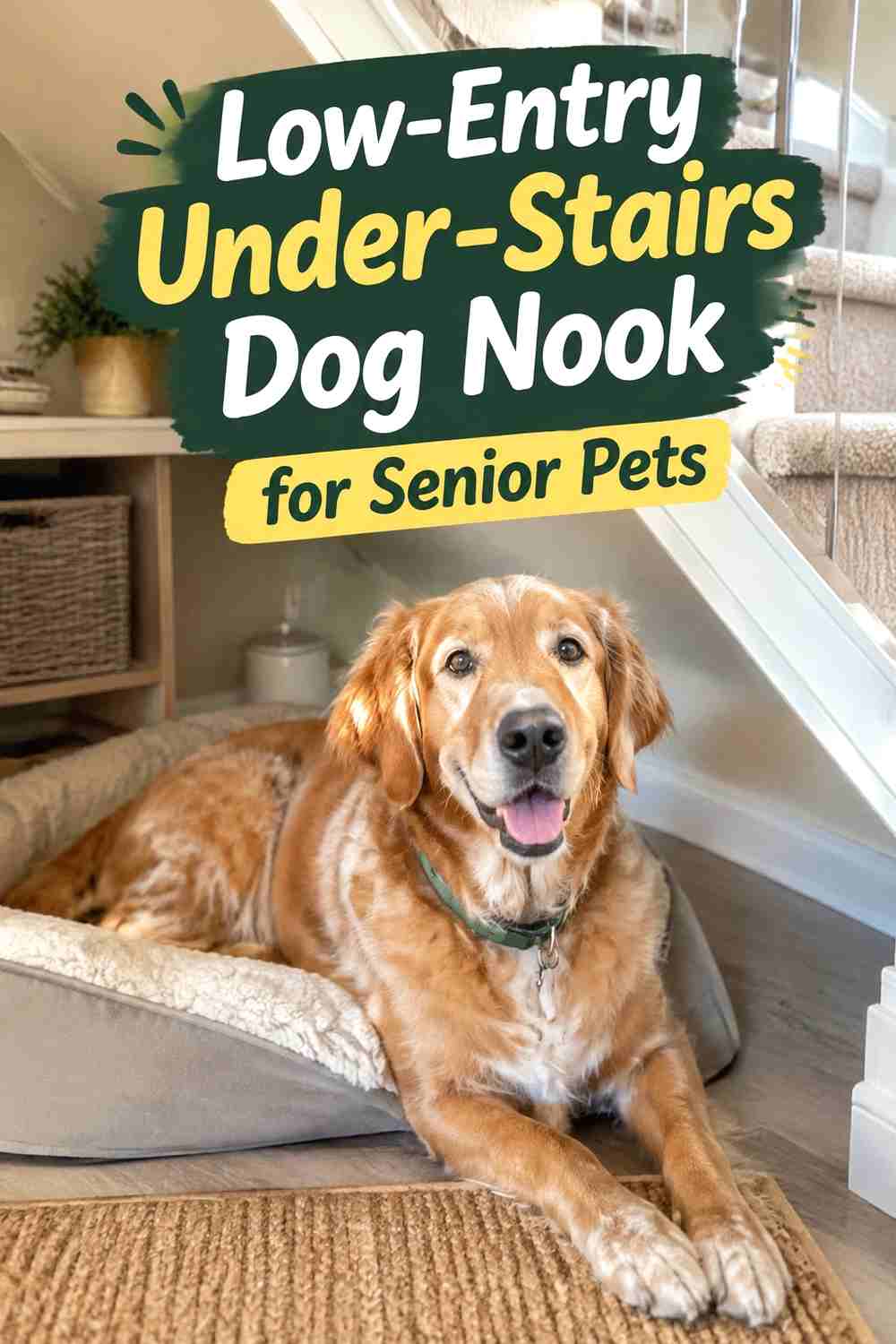
A low-entry under-stairs nook can provide an accessible resting area for senior dogs that prefer stepping onto bedding instead of climbing over a tall bolster. Choose a stable, floor-level bed with a low front edge and a nonslip base, then keep the approach completely free from baskets, raised thresholds, and decorative objects. Place the bed in the taller section of the nook so your dog does not need to crouch when entering or standing. Smooth flooring may need a secure traction mat leading to the bed. Keep the layout consistent rather than frequently moving furniture or storage around the entrance. If your dog suddenly struggles to get up, lie down, or navigate familiar spaces, that deserves veterinary attention rather than simply changing the nook.
Comfort & Safety
Prioritize easy entry, traction, predictable placement, and enough room for your dog to turn without backing awkwardly into the staircase walls.
4. Washable Under Stairs Dog Nook For Muddy Paw Cleanup
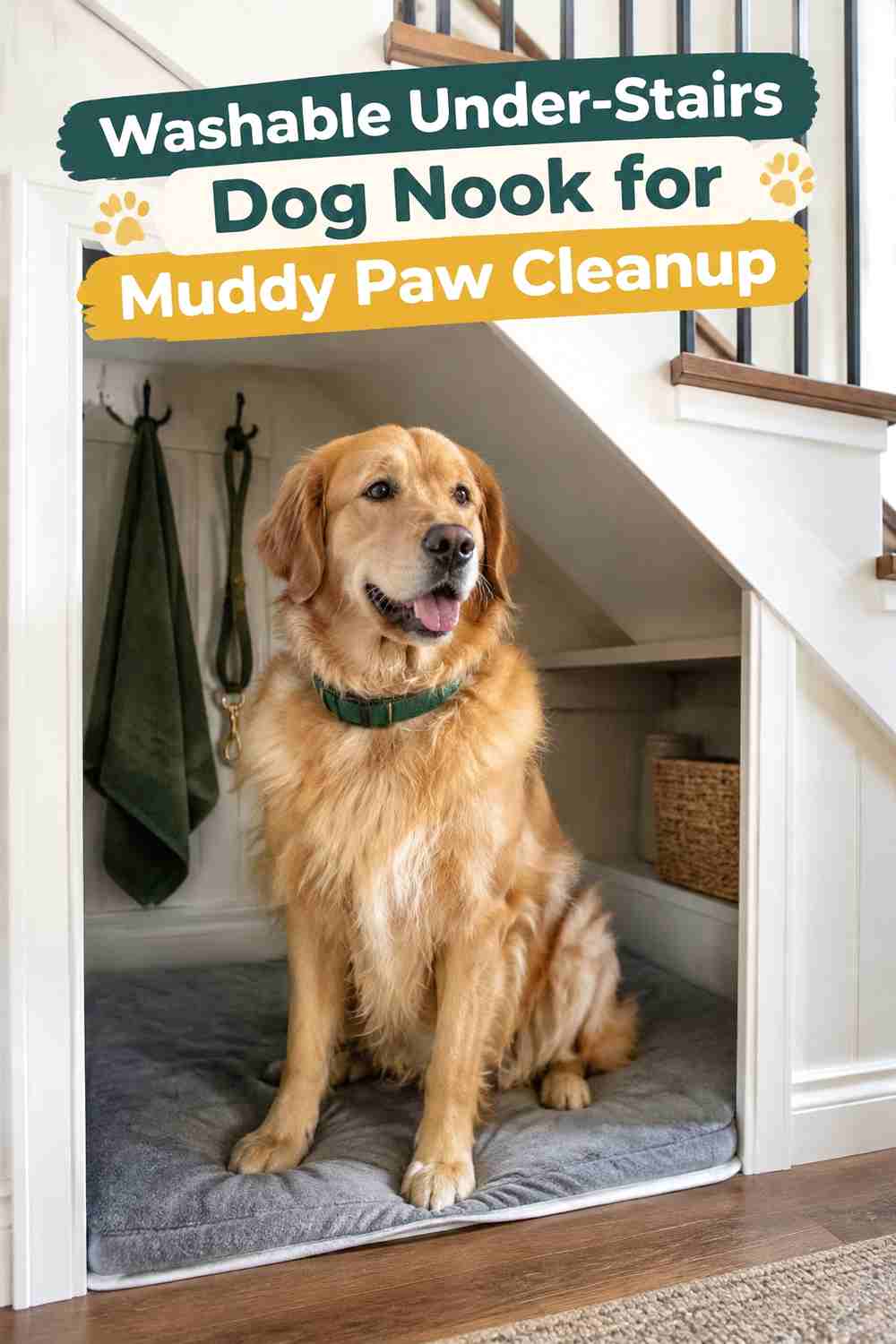
A washable under-stairs nook can double as a convenient settling area after damp walks, particularly when the staircase is near an entrance. Place a washable mat at the front and a bed with removable covers farther inside so muddy paws encounter an easy-clean surface before reaching soft bedding. Keep a pet towel nearby in closed or elevated storage instead of leaving fabric piled on the floor. Hard flooring around the entrance can simplify wiping, but make sure it is not slippery when wet. This setup is more practical than decorating the nook with delicate rugs or baskets that constantly collect dirt. If the area remains damp or chilly, use it for short cleanup periods and provide another comfortable resting place elsewhere.
Cleaning Notes
Keep a spare bed cover available so the nook remains usable while muddy bedding is being washed and thoroughly dried.
5. Quiet Under Stairs Retreat For Dogs Who Need Downtime
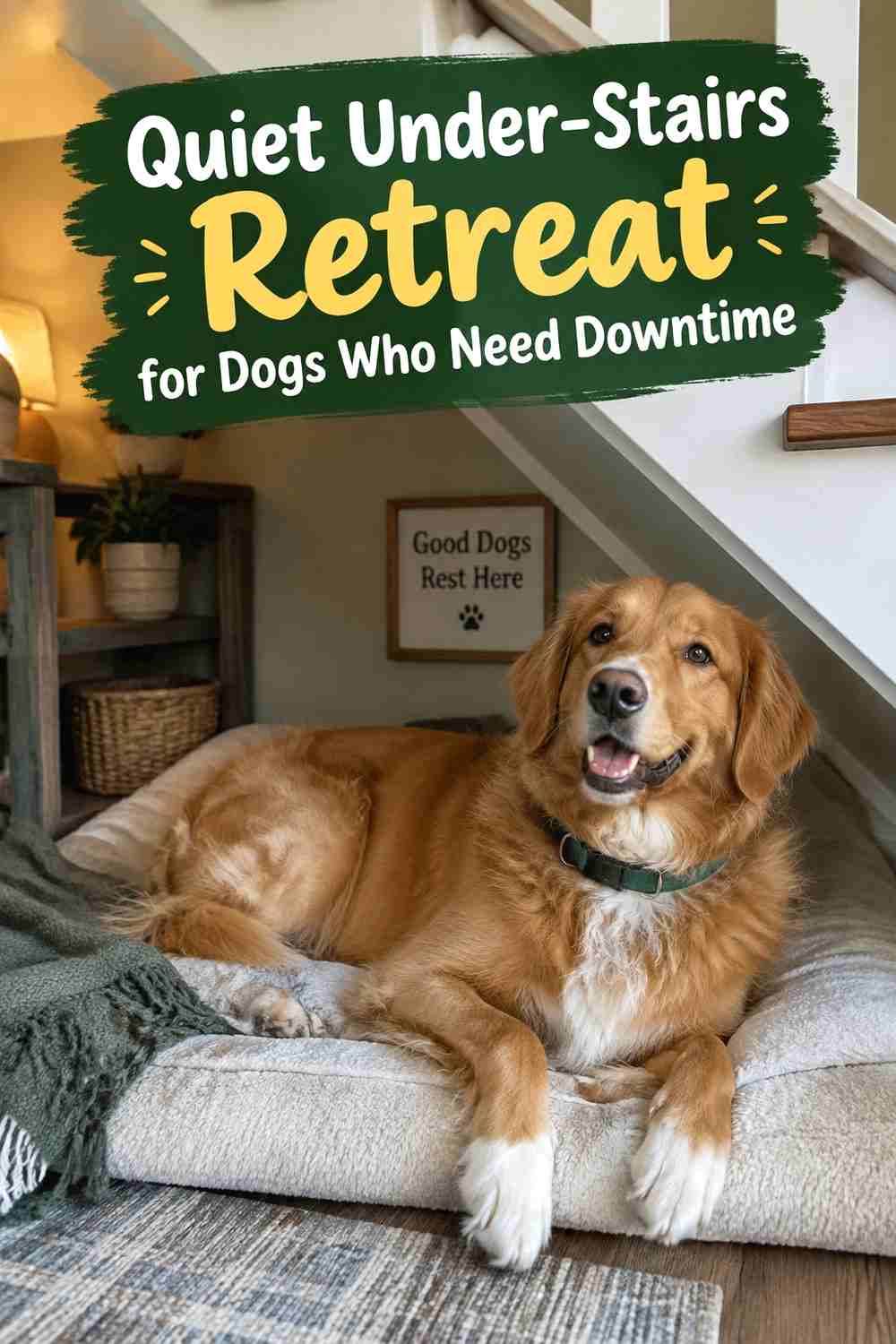
A quiet under-stairs retreat can give a dog an optional place to rest away from busier parts of the home. Keep the nook visually simple with a familiar bed, one washable blanket, and an open entrance rather than using curtains or doors that close the dog inside. This works best when the staircase is away from constant foot traffic, television speakers, and frequently opened exterior doors. Household members should treat the space as a resting area instead of repeatedly reaching in to pet or call the dog out. The nook may provide a calmer setup for some dogs, but it should not be used as a solution for persistent fear or behavior problems that need appropriate professional guidance.
Best For
This arrangement suits dogs that naturally seek quieter resting spots while still wanting an easy route back to the household.
6. Under Stairs Dog Nook With Toy Basket Storage
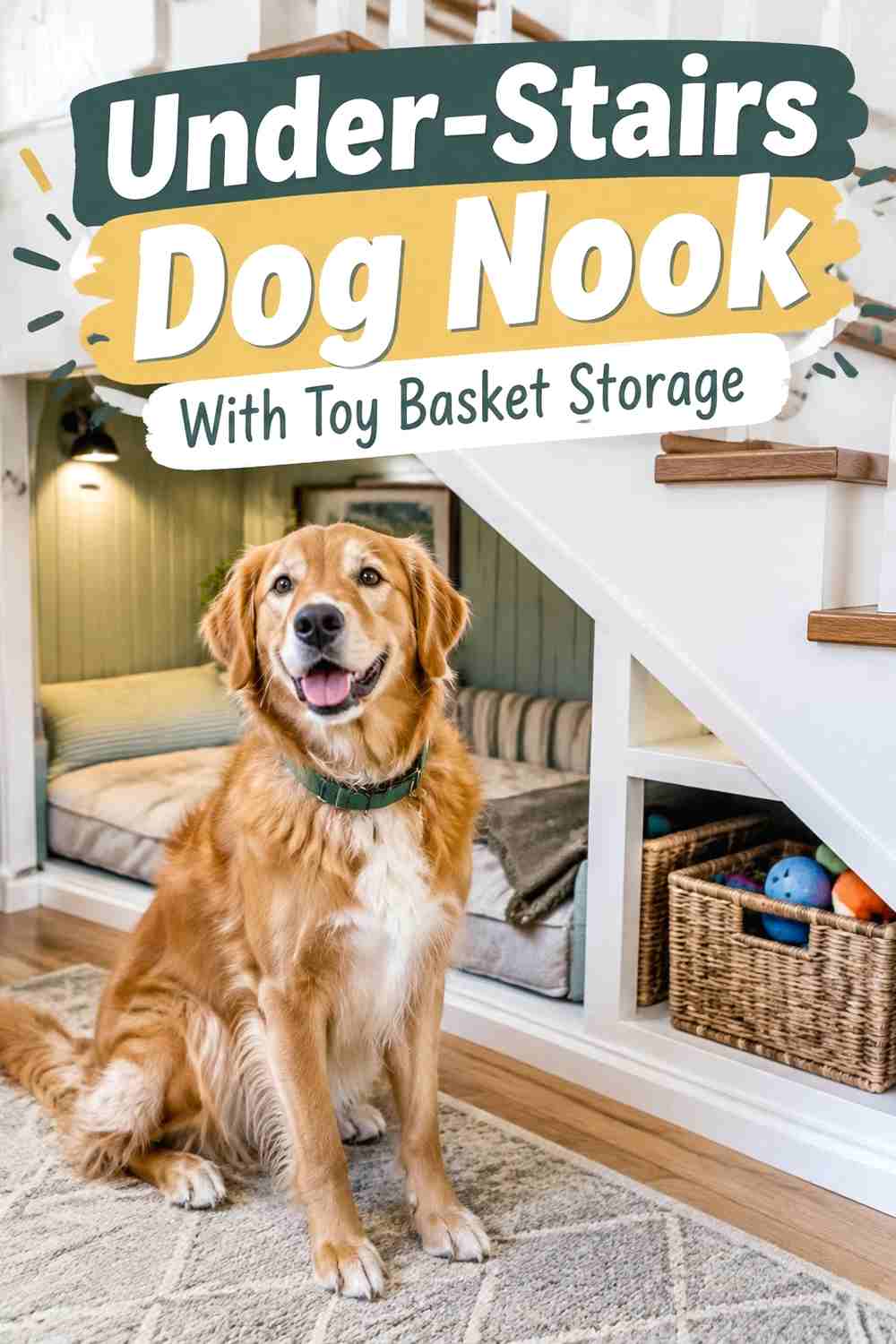
An under-stairs dog nook with toy storage keeps play supplies close to the resting area without allowing them to spread across the floor. Place a stable, open toy basket beside the bed where your dog can reach it without stepping over toys to enter the nook. Use a basket with smooth edges and no loose handles if your dog tends to chew containers. Rotate a small selection of familiar toys instead of packing the basket until items spill into the walkway. The deepest, lowest section beneath the stairs can hold closed backup storage as long as it is inaccessible to the dog. This design works particularly well in living rooms because the nook can organize toys and provide a defined bed in one compact footprint.
Use & Maintenance
Check toys during each reset, remove damaged items, and vacuum fur or crumbs that collect at the bottom of the basket.
7. Raised Edge Under Stairs Dog Bed For Drafty Floors
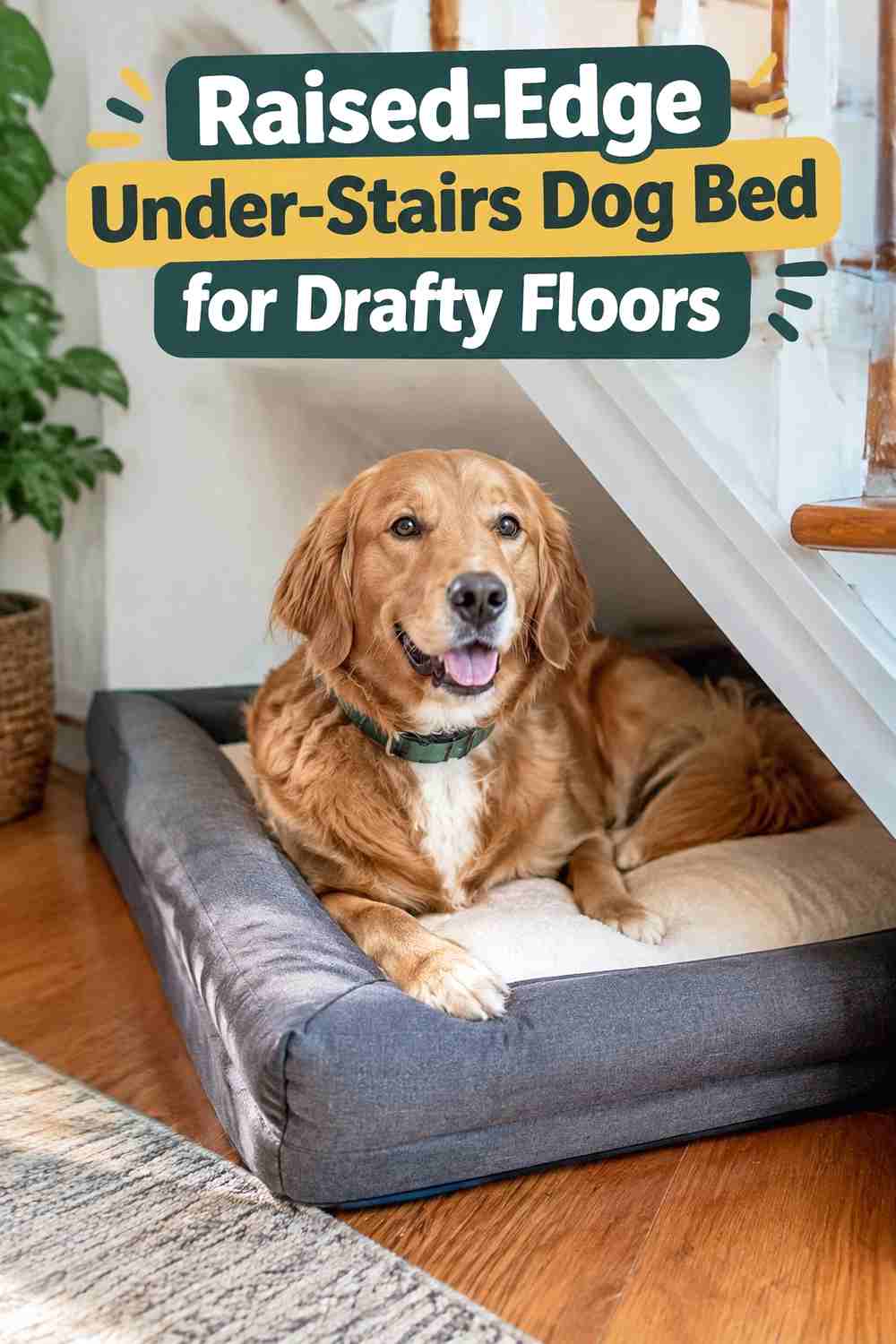
A raised-edge bed can make an under-stairs nook feel more sheltered when the surrounding floor tends to feel cool or slightly drafty. Choose a stable dog bed with low bolstered sides that provide a place to lean without making entry difficult. Position it away from obvious door gaps or vents rather than relying on thick bedding to compensate for a poorly placed nook. A removable fleece cover can add seasonal comfort if your dog enjoys softer surfaces, but allow room to move away from it. Check that the bed does not lift your dog so high that headroom becomes limited beneath the sloping staircase. Dogs that prefer sprawling flat may still be happier with a simple floor cushion.
Best For
This style can suit dogs that enjoy curling against a soft edge and naturally choose more sheltered sleeping positions.
8. Minimalist Under Stairs Dog Nook With Neutral Bedding
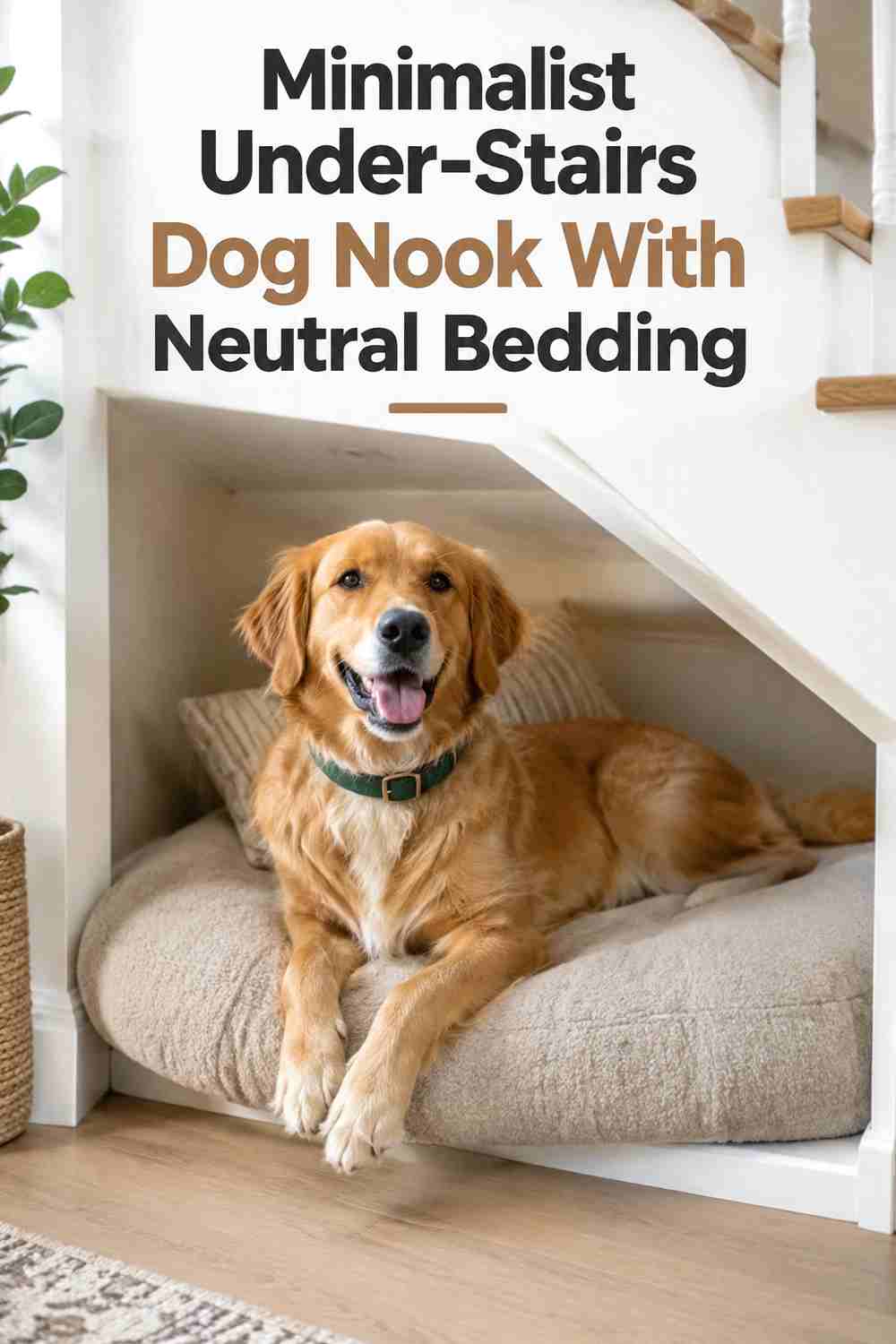
A minimalist under-stairs nook keeps the space visually calm by using one well-sized bed and very few additional objects. Choose neutral bedding in oatmeal, charcoal, warm gray, or tan and let the shape of the staircase create the architectural interest. Instead of adding decorative baskets, signs, pillows, and wall pieces, reserve nearby storage for items your dog actually uses. This approach makes vacuuming easier and leaves more usable room for standing, stretching, and turning. It can also help an under-stairs nook blend into a modern living room or hallway without looking like a separate themed pet area. Washable covers are worth prioritizing because the simplified design leaves the bed itself as the most visible element.
Why It Works
Less floor clutter gives your dog more usable space and makes the nook easier to maintain in a compact home.
9. Under Stairs Dog Nook With Soft Wall Lighting
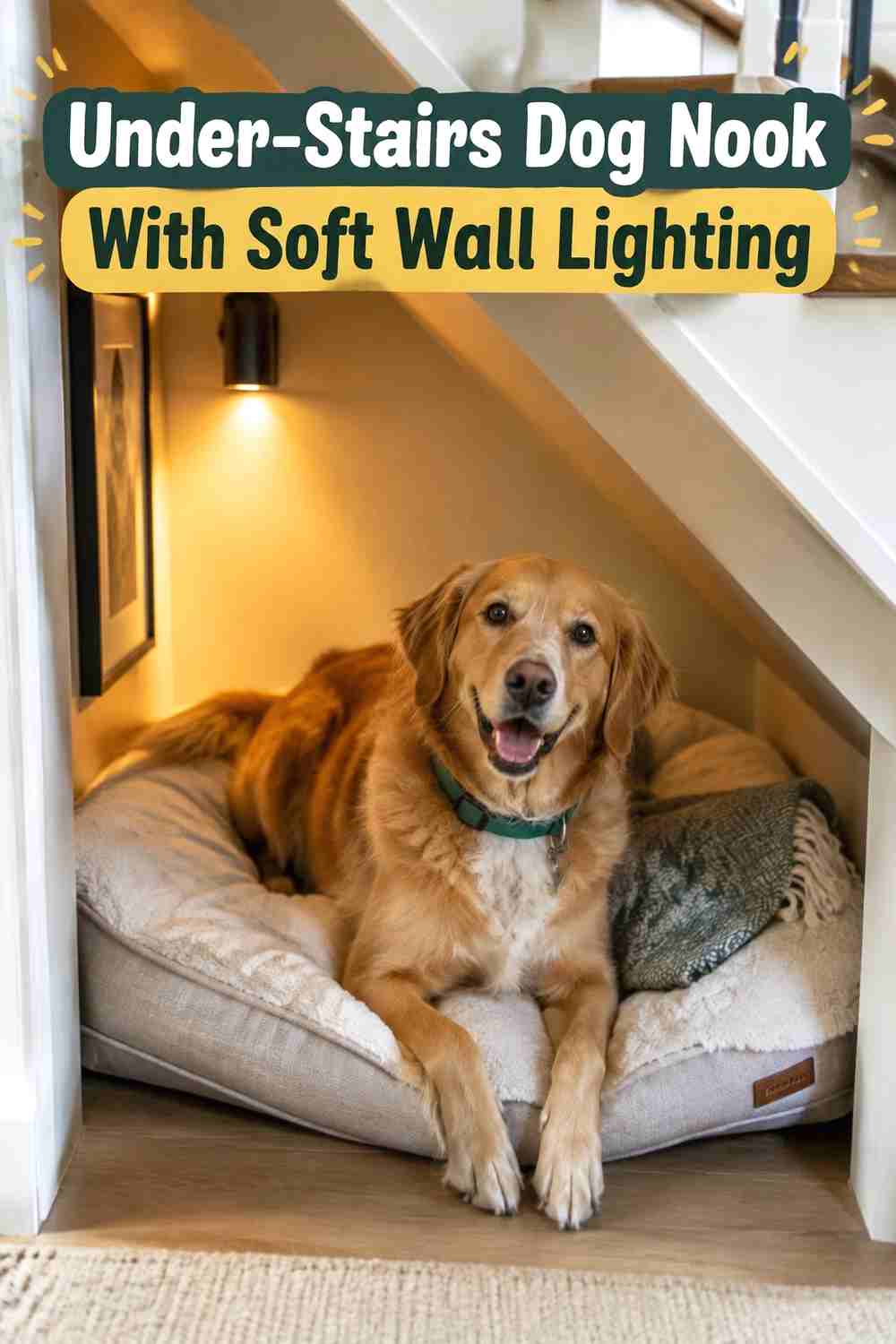
Soft wall lighting can make a darker under-stairs nook easier to see without placing lamps, cords, or hot fixtures on the floor. Use a professionally installed or securely mounted low-heat light positioned where your dog cannot reach wiring, switches, or removable parts. The goal is gentle visibility rather than bright illumination directly over the bed. Pair the lighting with a simple washable cushion so the nook remains practical during both daytime and evening use. Avoid loose string lights around the opening, since hanging wires can become tempting or create entanglement concerns. If electrical work would be required inside the staircase, use a qualified professional rather than improvising exposed wiring in a pet-accessible space.
Space & Placement
Keep all electrical components outside chewing range while maintaining enough light to check bedding and clean the area easily.
10. Multi Dog Under Stairs Nook With Separate Resting Spots
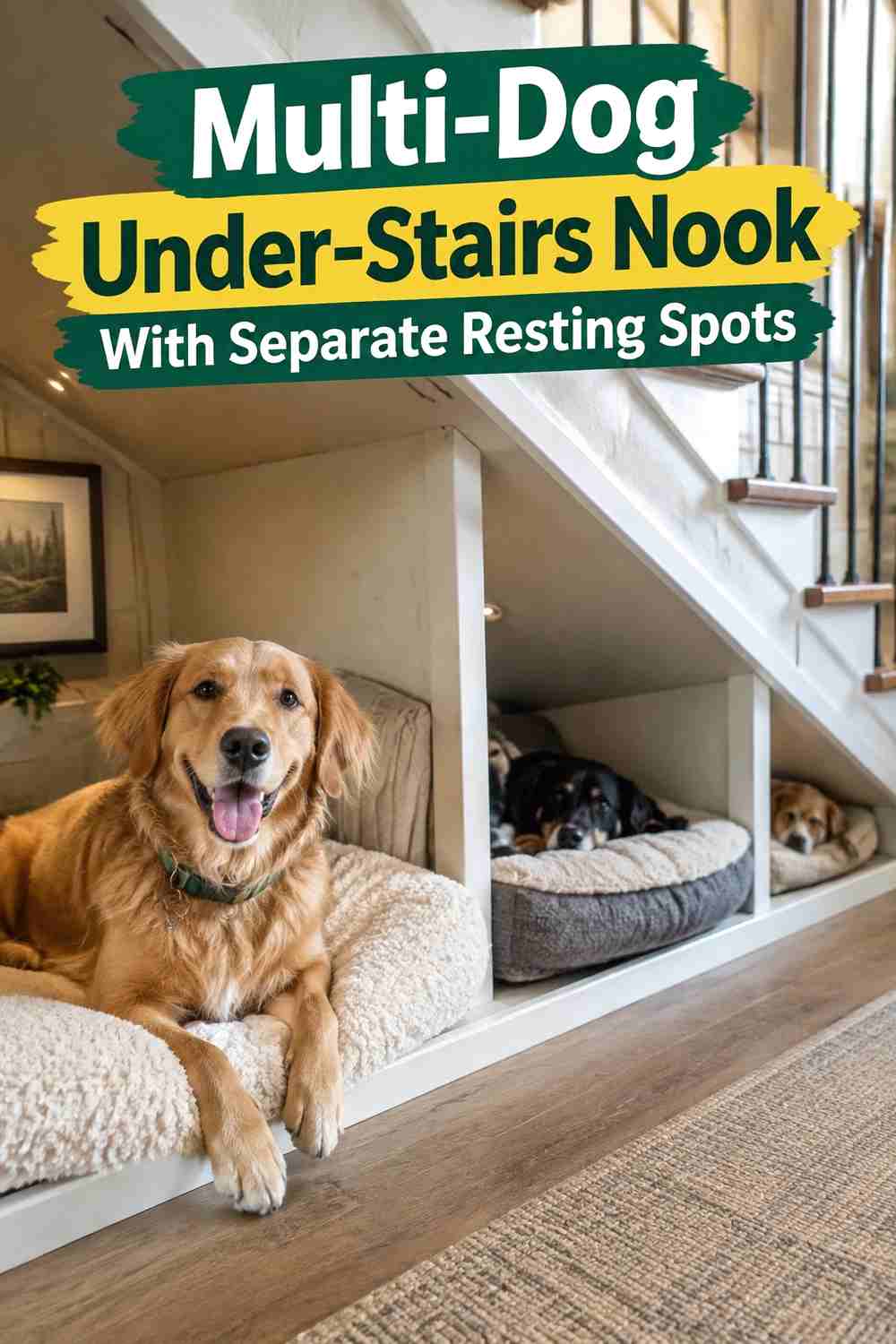
A multi-dog under-stairs nook works best when each dog has a clearly defined resting surface rather than being expected to share one oversized bed. If the space is wide enough, place two appropriately sized beds side by side with a small gap between them and keep the entrance open across the full width. Make sure one dog cannot easily block the only exit for the other. Dogs that prefer more personal space may need their second bed somewhere else in the room instead of both sleeping beneath the stairs. Keep toys and high-value items out of the shared resting zone if they encourage competition. Matching covers can give the setup a coordinated appearance without forcing the dogs to share resources.
Best For
This arrangement suits dogs that already rest comfortably near each other and have enough under-stairs space for separate beds and clear access.
Comfort & Safety
Never sacrifice an easy exit route just to fit another bed into the nook.
11. Ventilated Open Front Under Stairs Nook For Larger Dogs
You May Also Like



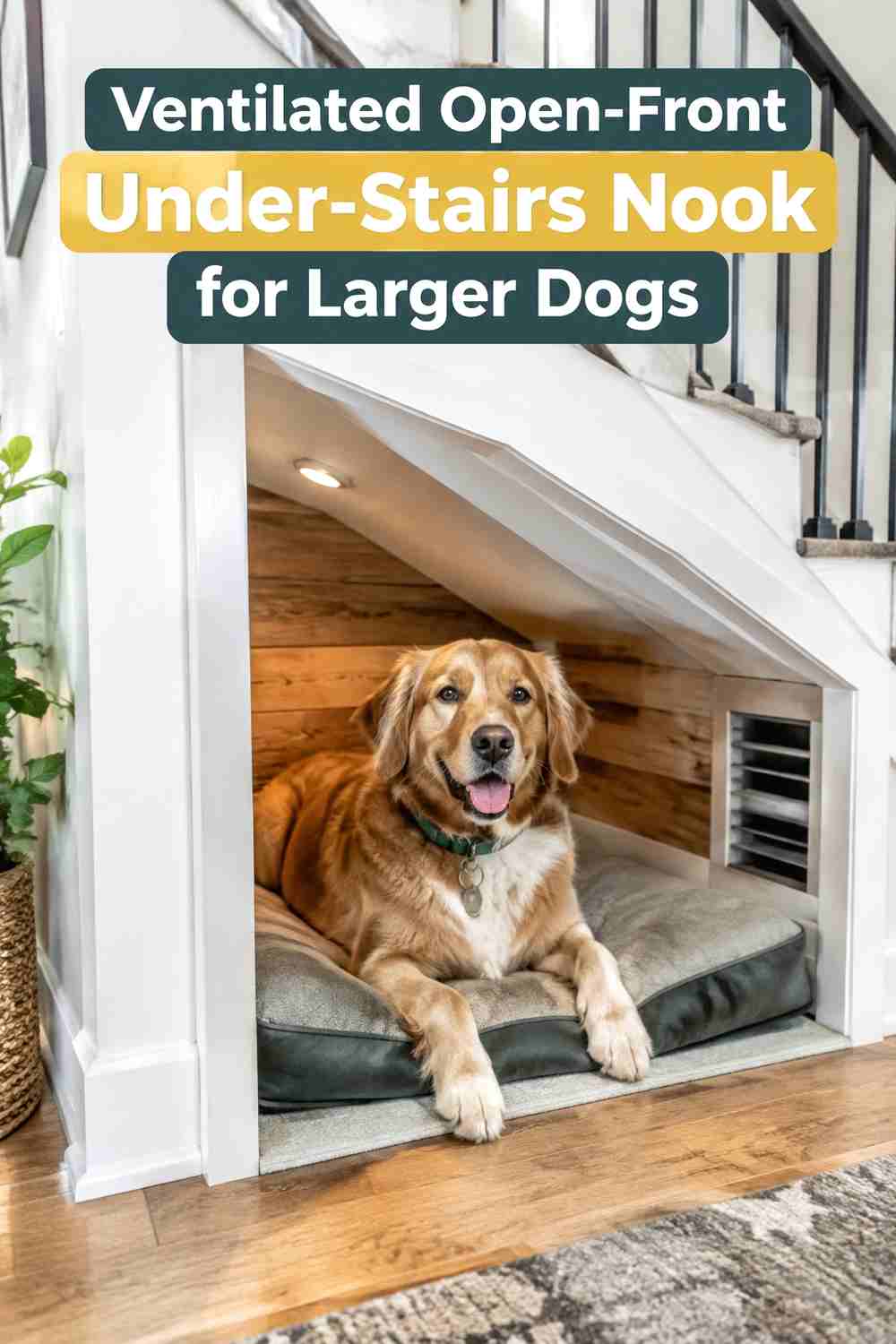
A ventilated open-front design makes an under-stairs nook more practical for a larger dog that needs extra headroom, airflow, and turning space. Use the tallest portion beneath the staircase as the bed zone and leave the front open rather than installing a small decorative doorway that makes the space feel cramped. A large flat cushion can work better than a deep bolster because it uses less vertical room and supports different sleeping positions. Keep vents clear and avoid filling the back of the nook with boxes that reduce airflow. Before committing to the layout, watch whether your dog can stand normally, turn around, and lie fully stretched without touching the sloped ceiling or walls.
Space & Placement
If your dog must crouch to enter or cannot comfortably turn around, use the under-stairs area for storage and choose a more spacious resting location.
How to Choose the Right Idea
Start by measuring the usable area from your dog’s perspective rather than simply judging the empty floor space. Your dog should have sufficient headroom to enter, stand, turn, and settle without repeatedly contacting the sloped ceiling.
Sleeping style matters too. Dogs that curl up may enjoy a sheltered bed with raised edges, while dogs that stretch out need a flatter, wider surface. Senior dogs may need low entry and extra traction, while larger dogs often benefit from the tallest section and a fully open front.
Think about the staircase location. A nook near an exterior door may need better cleanup planning, while one in a quiet interior hallway can work well as a retreat. Keep ventilation, temperature, noise, and household traffic in mind.
Finally, control clutter. Closed storage, removable covers, compact toy baskets, and accessible floors make the nook easier to clean without reducing the space your dog can actually use.
Final Thoughts
The best under-stairs dog nook turns unused space into a functional resting area without making your dog squeeze into an awkward corner. Comfortable dimensions, clear access, washable bedding, and sensible storage matter more than elaborate built-ins or decorative details.
Start with your dog’s size and favorite sleeping position, then choose the layout that fits naturally around those needs. If the space feels cramped, poorly ventilated, or difficult to enter, it is better used for household storage than as your dog’s bed.
FAQs
1. Is the space under the stairs suitable for a dog bed?
It can be if your dog has enough room to enter, stand, turn, stretch, and leave comfortably. The area should also have reasonable ventilation, stable temperatures, and a clear entrance.
2. How can I make an under-stairs dog nook easier to clean?
Use a removable bed, washable covers, accessible flooring, and closed storage. Avoid permanently attaching fabric padding to surfaces that are difficult to remove or wash.
3. Can a large dog use an under-stairs nook?
Only if the taller part of the space provides enough headroom and floor area. Larger dogs usually need an open front and a broad, flat resting surface rather than a small enclosed opening.
4. What should I store beside an under-stairs dog bed?
Toys, spare bedding, leashes, and towels can be useful nearby when safely organized. Medicines, cleaners, sharp grooming tools, and other unsafe items should remain securely inaccessible.
5. Should an under-stairs dog nook have a door or curtain?
An open entrance is usually simpler because it preserves airflow and lets your dog enter or leave freely. Decorative curtains or doors can reduce visibility, space, and easy access.
Save your favorite under-stairs dog nook ideas and turn that overlooked space into a comfortable, practical resting spot designed around your dog’s real routine.
