A good Halloween dog photo does not require an elaborate costume or a room full of decorations. A few carefully placed props, comfortable positioning, and flattering light can create a scene that looks unmistakably Halloween while still keeping the dog relaxed.
Save This Idea on Pinterest
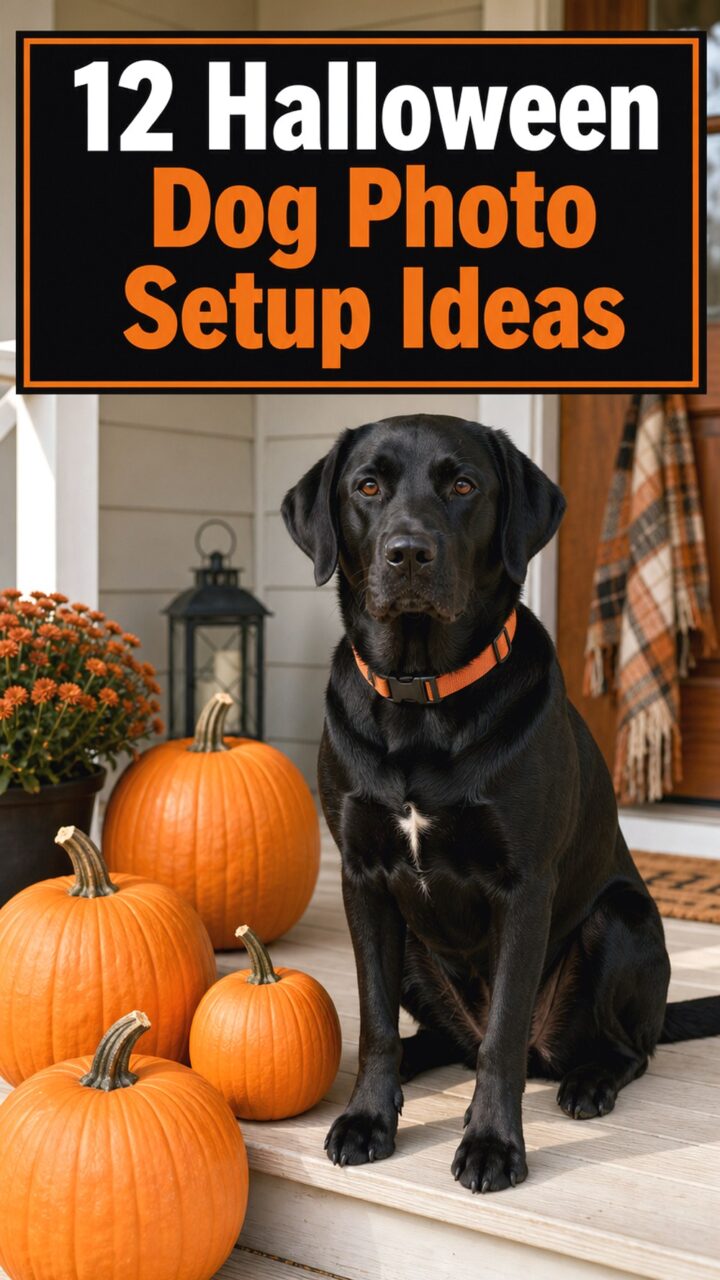
12 Halloween Dog Photo Setup Ideas for Festive, Pet-Safe Photos
Save to PinterestThe best setup depends on the photo you want. Pumpkins create a classic autumn portrait, paper decorations work well for graphic indoor shots, and a softly lit pathway gives you a moodier look without putting anything directly on your dog. Start with the location where your dog already feels comfortable, build the scene around that spot, and keep each photo session short enough that your dog remains interested rather than restless.
1. Build a Classic Pumpkin Porch Portrait
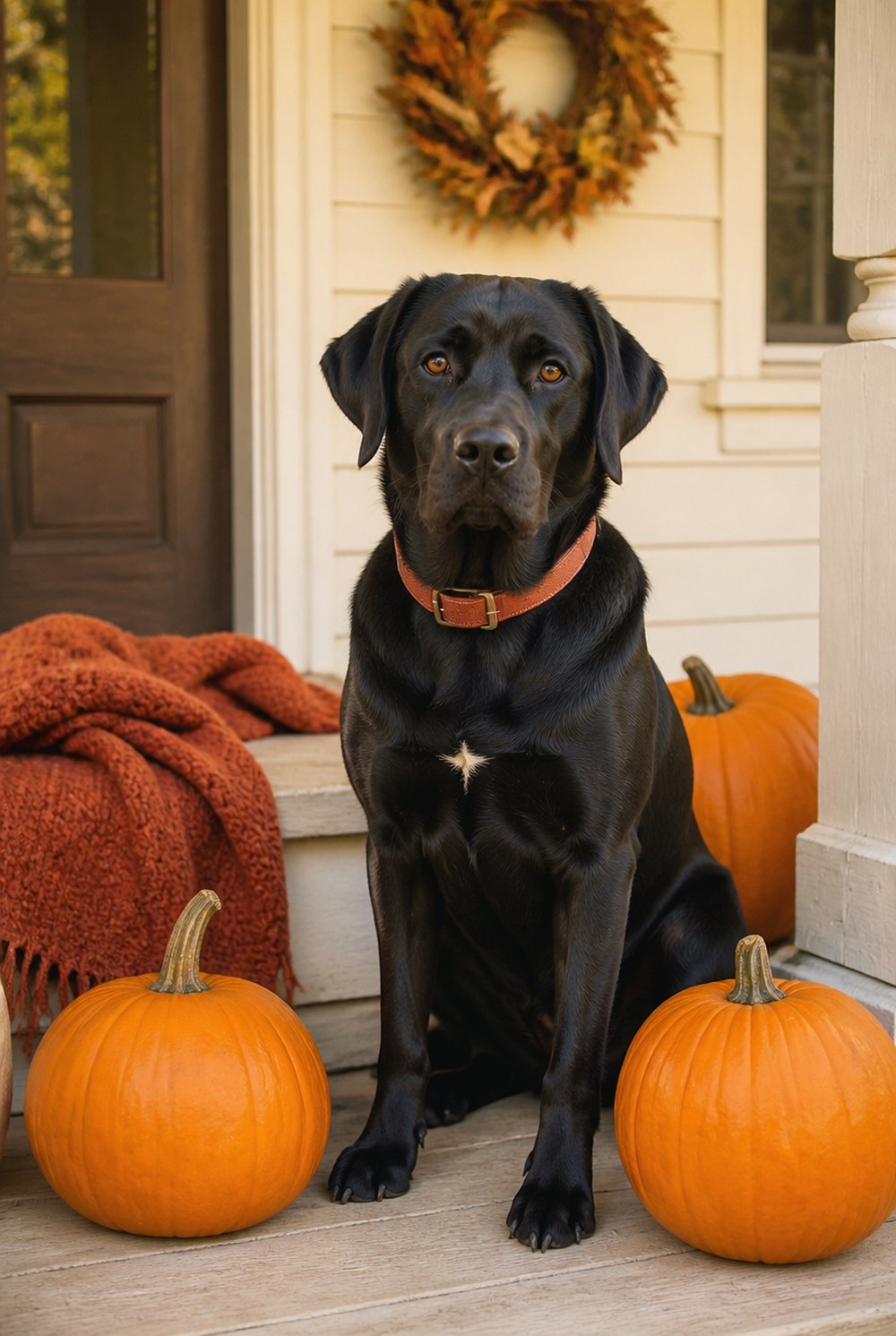
A porch and a few pumpkins can do most of the visual work for you. Arrange three to five intact pumpkins around the place where your dog naturally sits, varying their height slightly without creating anything the dog needs to climb.
Keep a clear sitting space in the middle rather than surrounding your dog tightly. A folded autumn blanket beside the pumpkins can add texture, while a wreath or neutral door provides a clean background.
This setup works especially well in late-afternoon daylight when the porch is bright but not receiving harsh direct sun. Photograph from around your dog’s eye level rather than standing over them.
Skip carved pumpkins containing candles. If you want a jack-o’-lantern look, use an unlit decorative pumpkin or a battery-operated light positioned where the dog cannot chew it.
2. Make a Paper Bat Backdrop
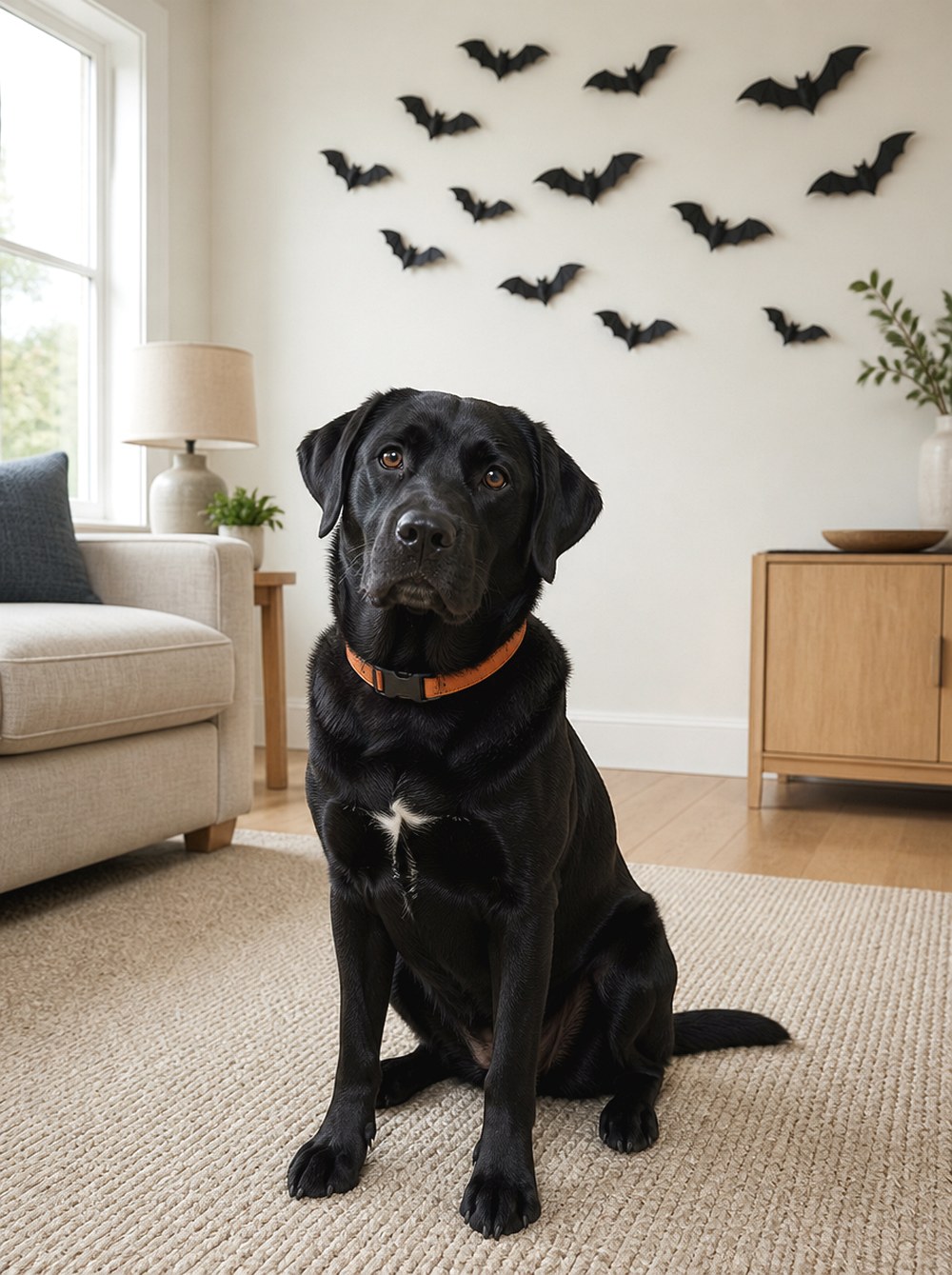
For an indoor Halloween portrait, turn a blank wall into the backdrop. Cut or buy lightweight paper bats and attach them securely above the dog’s reach, arranging them in a loose upward sweep instead of covering the entire wall.
Place a neutral rug or dog bed several feet in front of the wall. That distance helps keep the decorations slightly soft in the background while your dog’s face stays sharp.
A large window facing the setup can provide all the light you need. If one side of your dog’s face looks too dark, reposition the setup rather than using a strong flash.
Because the decorations remain on the wall instead of on the dog, this is a useful choice for dogs that dislike hats, capes, or other wearable props.
You May Also Like


3. Create a Cozy Halloween Reading Nook
A reading-chair corner gives Halloween photos a quieter, storybook feel. Start with a low chair or bench your dog already uses comfortably, or place the dog on the floor beside it if furniture access is not normally allowed.
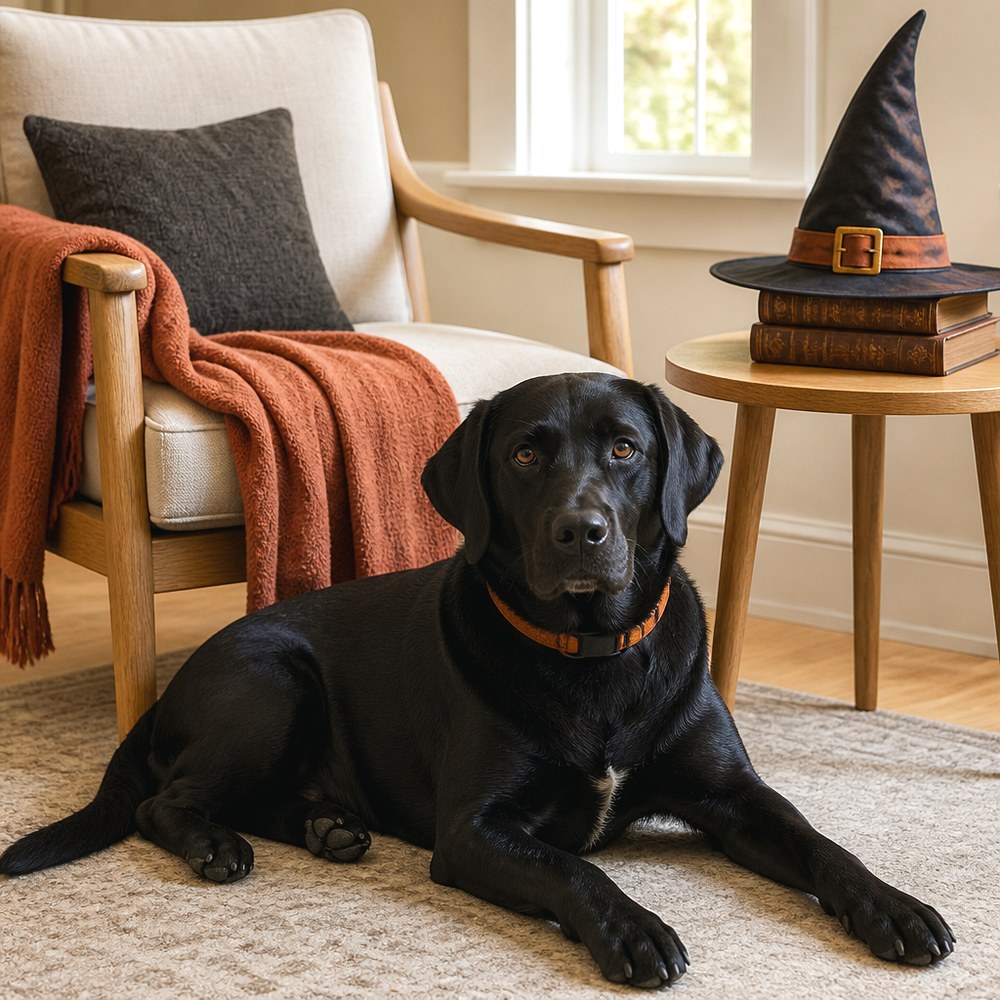
Add a rust or deep-orange throw, two plain cushions, and a small stack of closed books on a side table. A decorative witch hat can sit on the table rather than on the dog’s head.
The result still reads as Halloween without requiring a costume. It is also easier to photograph because the dog can settle into a familiar resting position.
Keep books and decorations stable, and remove anything your dog starts sniffing, pawing, or chewing.
4. Use a Ground-Level Haunted House Facade
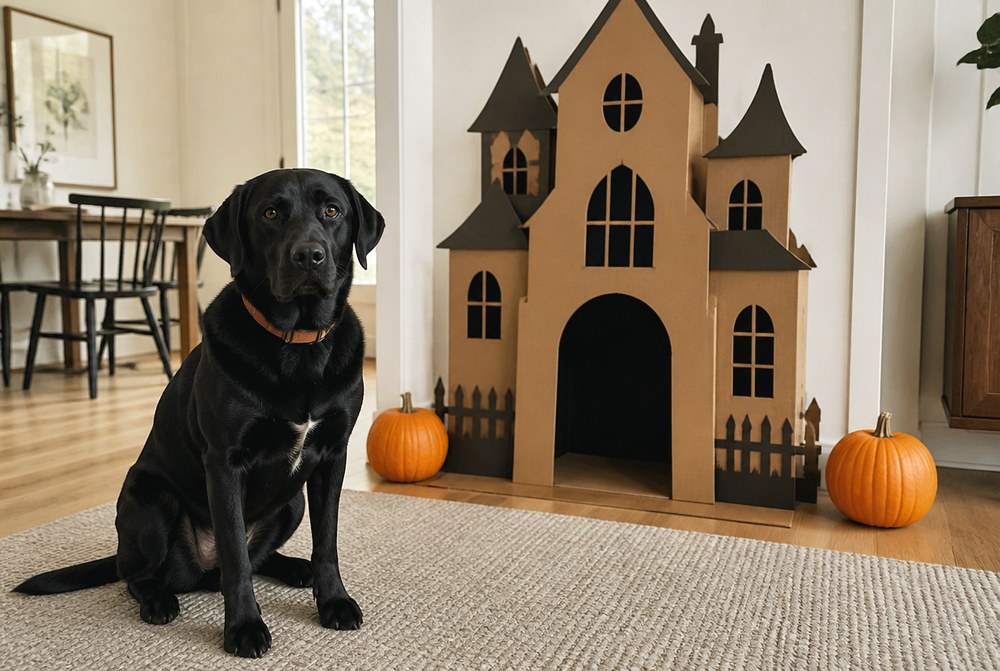
A cardboard haunted house can make a dramatic backdrop without turning the entire room into a set. The important part is treating it as scenery rather than something the dog needs to enter.
Cut a large house silhouette from sturdy cardboard, paint it with pet-appropriate materials well before the session, and let it dry completely. Smooth or cover exposed edges and secure the backdrop so it cannot fall toward your dog.
Place the dog several feet in front of it on a plain rug. A couple of pumpkins at ground level can make the transition between the backdrop and floor look more intentional.
For a dog that investigates cardboard enthusiastically, keep the session brief and remove the backdrop as soon as the photos are finished.
5. Frame the Dog With Orange and Black Paper Fans
If you want a cleaner, more graphic Halloween photo, use oversized paper fans instead of lots of small decorations.
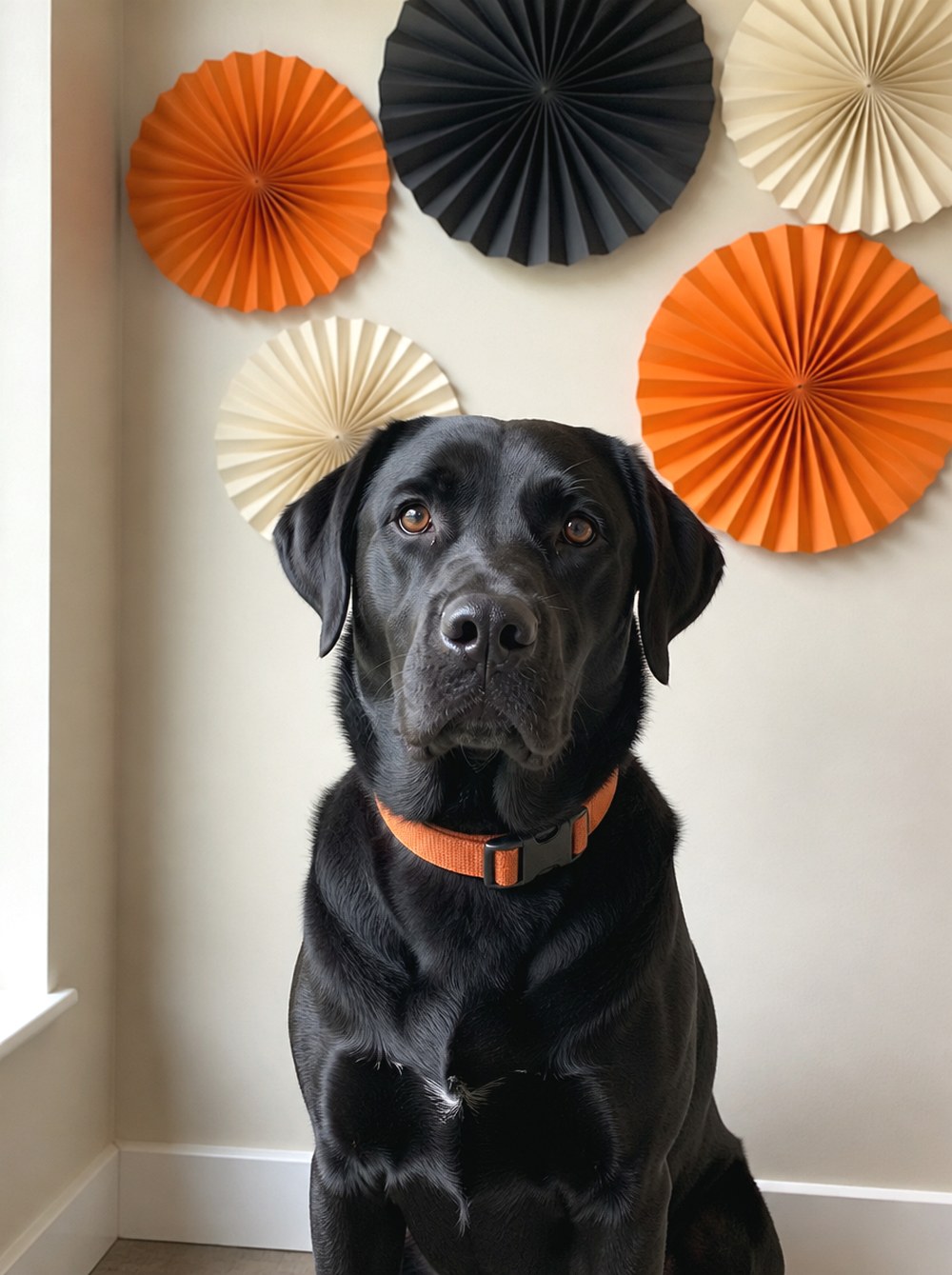
Mount several orange, black, and cream paper fans securely on the wall behind your dog’s sitting spot. Vary their diameter and overlap them slightly to create one large visual feature.
The bold shapes photograph well even when the room itself is fairly plain. They also work nicely for close portraits because you only need a small portion of the decorated wall in the frame.
Make sure all fasteners and loose paper edges remain above the dog’s reach.
6. Set Up a Halloween Dog-Bed Scene
Sometimes the easiest photo location is the place where your dog already relaxes. Use the normal dog bed as the center of the scene and temporarily change the surrounding textiles.
Add an orange washable blanket and place one large dog-safe Halloween-themed plush toy nearby if your dog uses plush toys appropriately. A pumpkin placed well behind the bed can complete the scene without crowding the resting area.
This setup is particularly useful for dogs that will not hold a formal sit for long. Photograph them resting naturally, looking toward a window, or briefly looking at the camera.
If the dog begins chewing decorations instead of settling, remove those items and keep only the blanket and familiar bed.

7. Photograph a Leaf-Pile Moment
For a more active outdoor Halloween picture, use fallen leaves rather than a posed indoor scene.
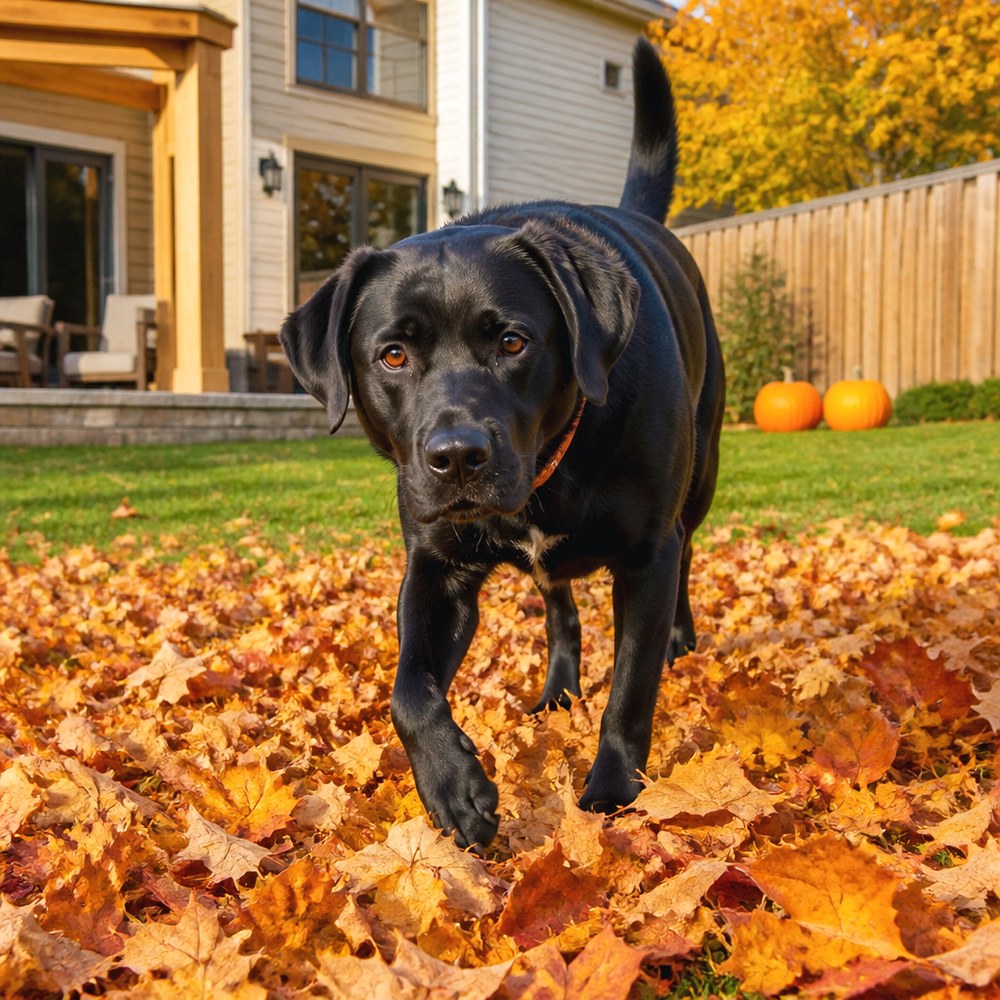
Choose a dry patch of a fenced yard and gather clean leaves into a shallow spread instead of a deep pile. Your dog can walk through them, sit beside them, or investigate them naturally while you photograph from a low angle.
A pumpkin or two in the distance will make the image feel more deliberately Halloween rather than simply autumn.
Check the area before starting and remove sticks, litter, mushrooms, sharp debris, or anything else you would not want the dog stepping on or mouthing. Avoid forcing a dog into a leaf pile if the rustling makes them uncomfortable.
8. Build a Trick-or-Treat Doorstep Scene Without Candy
You can recreate the look of trick-or-treat night without putting actual candy near your dog.
Place an empty orange treat bucket beside the doorstep, add two pumpkins, and hang a simple Halloween door decoration well above reach. Position the dog inside the open doorway or just outside on the porch, depending on where they are comfortable.
For an extra detail, place a few dog biscuits in your hand behind the camera rather than filling the bucket. That keeps the scene visually convincing without creating access to chocolate, wrapped sweets, or discarded wrappers.
If the front area is not securely contained, keep your dog leashed and have another adult manage the leash outside the camera frame.

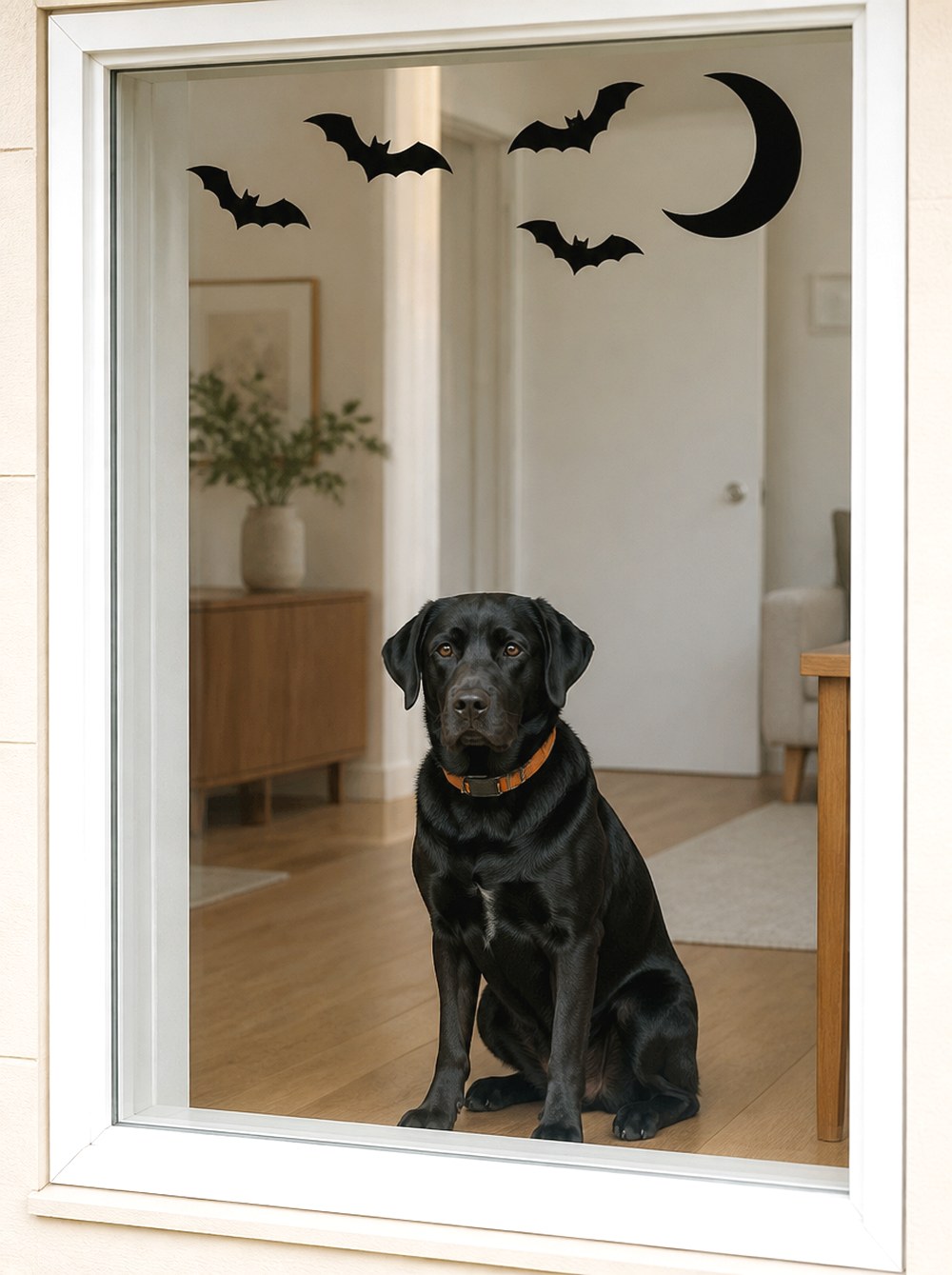
9. Use Halloween Window Decals for a Backlit Portrait
A window can become part of the Halloween setup while also supplying flattering light.
Place removable bat, moon, or pumpkin decals high on the glass, keeping the lower section clear. Position your dog a few feet inside the window so daylight outlines the fur without turning the face completely dark.
Expose the photo for the dog’s face rather than the bright outdoors. Moving the dog slightly sideways from the window often creates more dimension than pointing them directly toward it.
This setup works especially well when you want a minimalist photo with very little floor clutter.
10. Make a Pumpkin Patch Corner in the Backyard
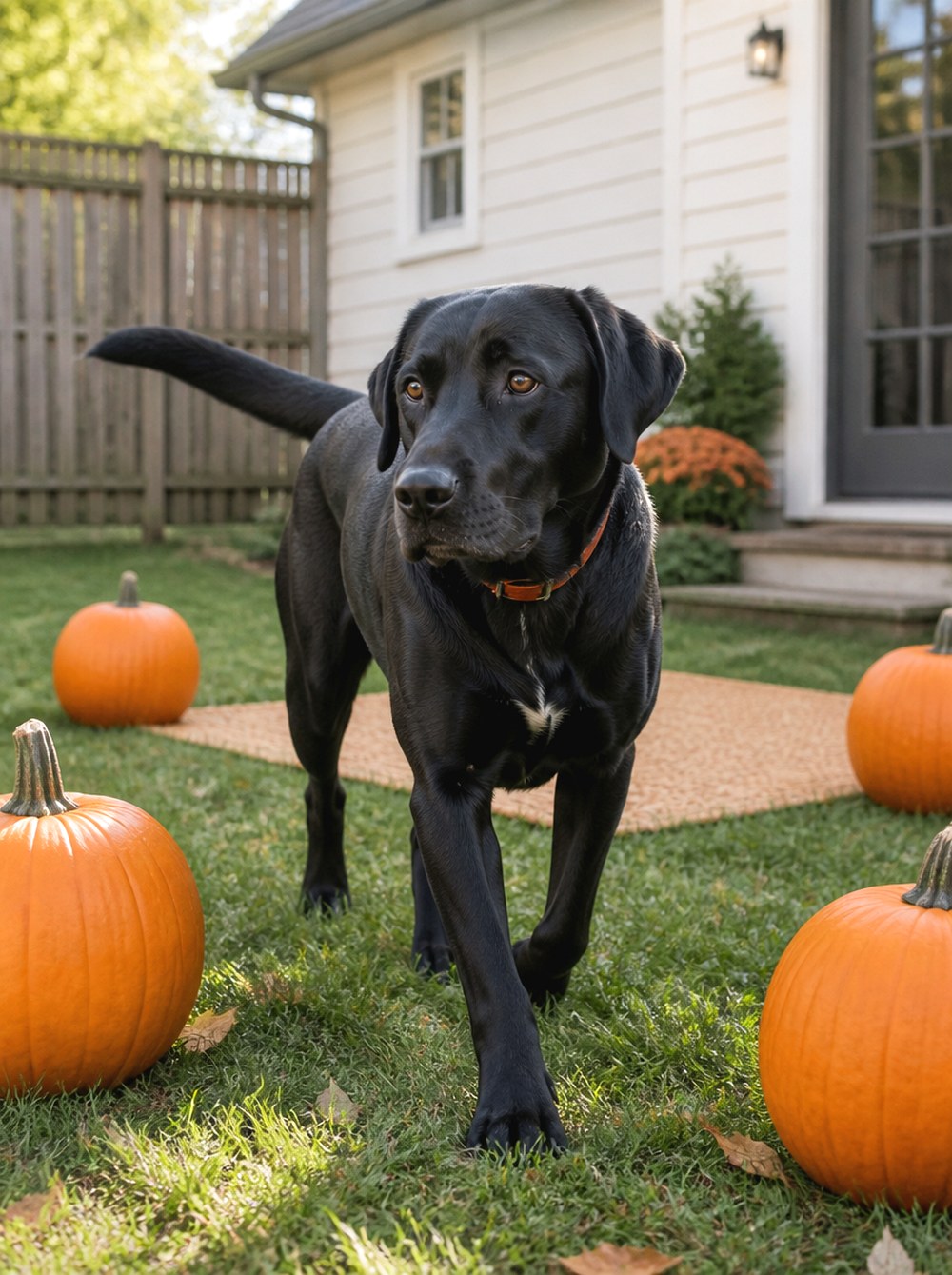
Instead of traveling to a busy pumpkin patch, build a small version in a familiar backyard.
Arrange several intact pumpkins across the grass with enough space for your dog to walk naturally between them. Add a straw-colored outdoor mat or small wooden sign in the background if you want more texture, but keep the main sitting or walking area open.
Try taking some photos while the dog sits and others as they walk toward you. The movement gives you more variety from one setup.
Avoid stacking heavy pumpkins where they could roll or fall, and do not place your dog on top of crates or other unstable props just to gain height.
11. Create a Halloween Biscuit-Baking Scene
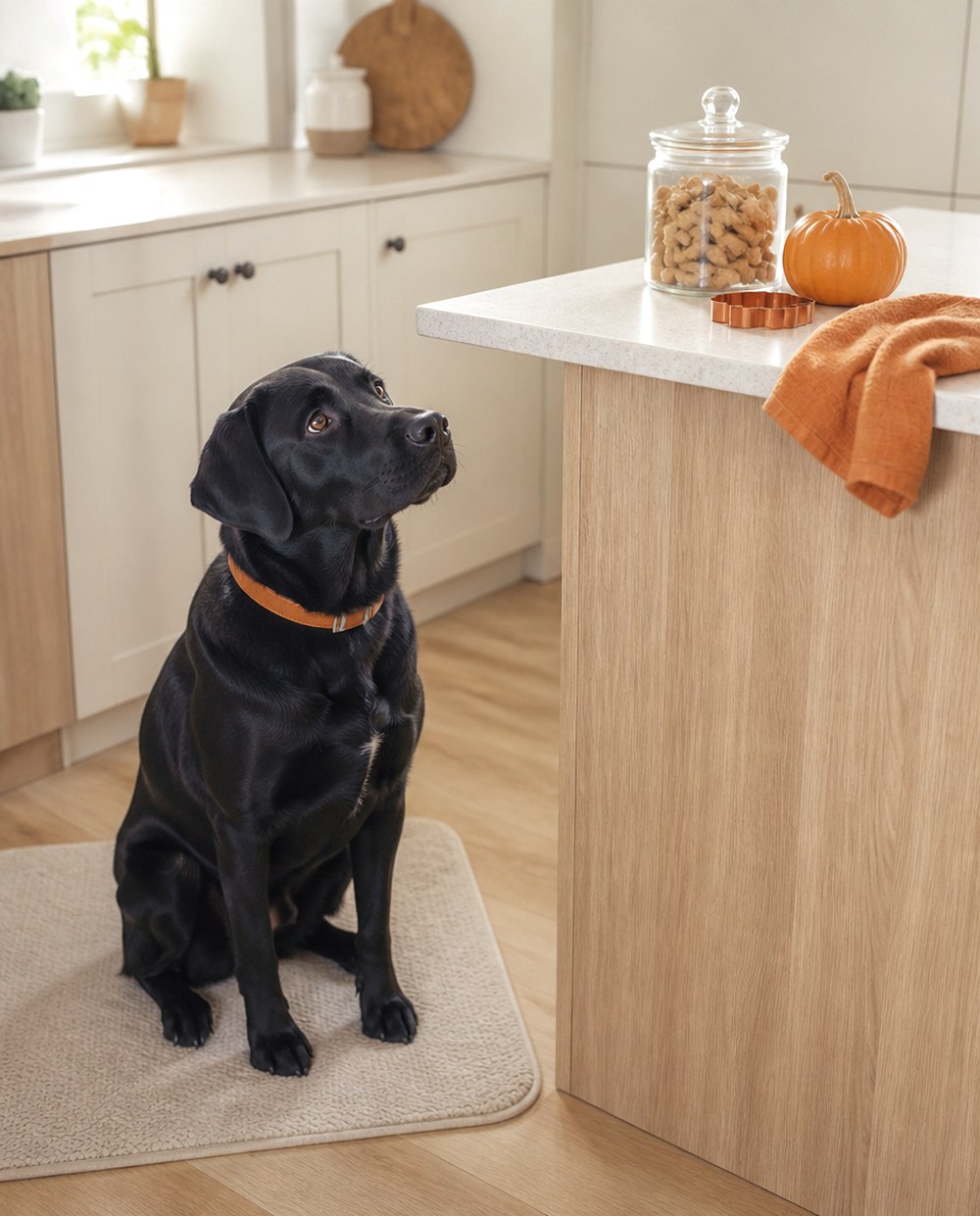
A kitchen scene can suggest Halloween treats without putting human candy in the photo.
Use a clean section of kitchen floor or a low washable mat in front of a light-oak cabinet. Place a closed jar of your dog’s usual biscuits safely on the counter, along with a pumpkin-shaped cookie cutter that remains completely out of reach.
The dog can sit below the counter and look toward you while the Halloween details stay in the background. An orange tea towel or small pumpkin on the counter can add color.
Do not scatter biscuits around purely for decoration. Keeping food controlled makes it easier to prevent gulping or repeated snatching during the session.
12. Finish With a Battery-Lantern Twilight Path
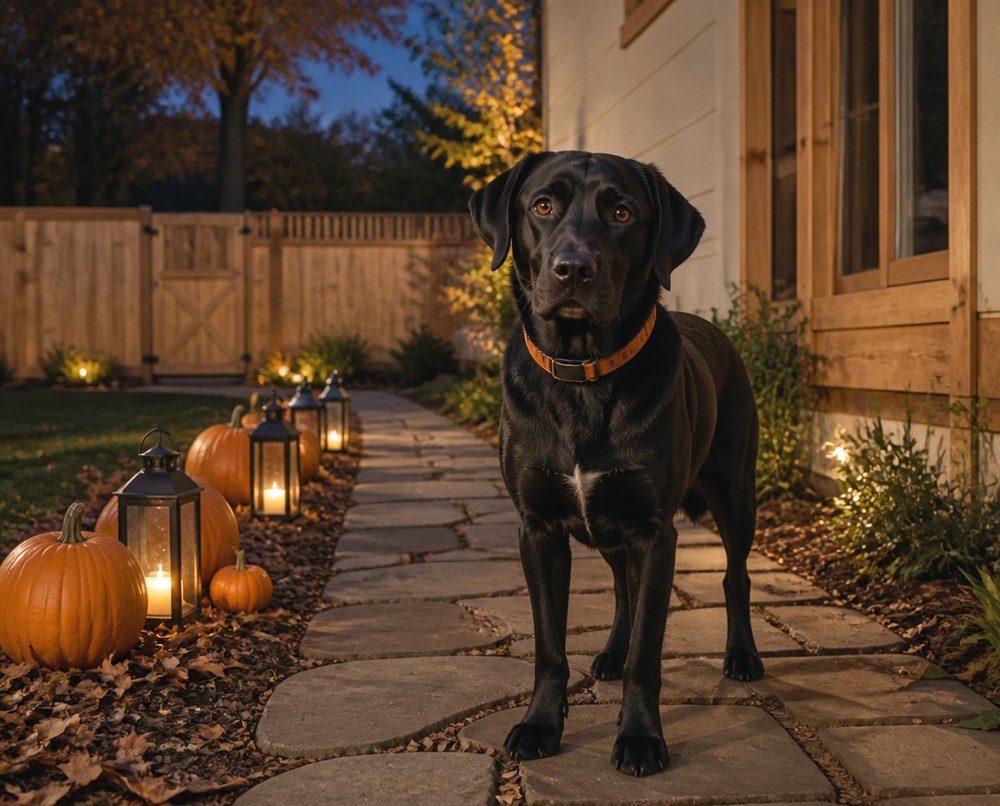
For a moodier Halloween image, photograph outside just before the daylight disappears completely.
Place pumpkins along one side of a familiar garden path and use enclosed battery-operated lanterns for a warm glow. Keep the lanterns off the walking line so the dog does not need to step around them.
Because some daylight is still present, you can capture a Halloween-evening atmosphere without relying on bright flash or open flames. Have the dog sit near the beginning of the path or walk slowly toward the camera while another person supervises.
Keep electrical cords out of the setup entirely, and use only stable battery lights that remain cool and inaccessible to chewing.
You May Also Like


Getting Better Photos Without Making the Setup Bigger
Once the scene looks like Halloween, resist the urge to keep adding props. Your dog’s expression and body language should remain the main subject.
Set up the decorations before bringing your dog into the area. Then allow a moment to look around and sniff any safe unfamiliar objects before you start asking for a sit or stay. Work in short bursts, reward behavior your dog already knows, and photograph natural moments between posed shots as well.
Natural window light, open shade, or soft outdoor daylight will usually be more comfortable than repeated direct flash. Get close enough that your dog fills a meaningful portion of the frame, and lower the camera toward eye level for a more engaging portrait.
If your dog moves away repeatedly, avoids the setup, pants when the room is not hot, paws at wearable items, or seems increasingly restless, simplify the scene or finish the session. A Halloween photo is not worth turning a familiar room or activity into something stressful.
Keep Halloween Props Dog-Friendly
Halloween decorations introduce several things dogs do not normally encounter, including dangling fabric, small plastic pieces, electrical decorations, costumes, and food displays. Choose larger stable props and keep small, chewable, dangling, sharp, or breakable decorations out of reach.
Real candles are unnecessary for these setups; enclosed battery-operated lights can provide a similar visual effect without an exposed flame. Keep chocolate, sweets, wrappers, and other trick-or-treat foods away from the photo area. Decorative cobweb material is also better omitted around dogs because loose fibers can be pulled, chewed, or swallowed.
If you use a bandana, collar accessory, or another wearable item, it should not interfere with breathing, vision, hearing, walking, or normal movement. Remove it if the dog tries repeatedly to scratch or pull it off.
The most convincing Halloween dog photos usually come from one recognizable seasonal element—a group of pumpkins, a graphic wall backdrop, autumn leaves, or warm lantern light—combined with a dog who is comfortable enough to look like themselves.
