Fall
Fall can make daily dog walks more comfortable after summer heat, but it also changes the conditions you are walking in. Mornings become darker, temperatures can swing sharply between one outing and the next, wet leaves make sidewalks slippery, and an afternoon walk that started in daylight may finish near dusk.
Save This Idea on Pinterest
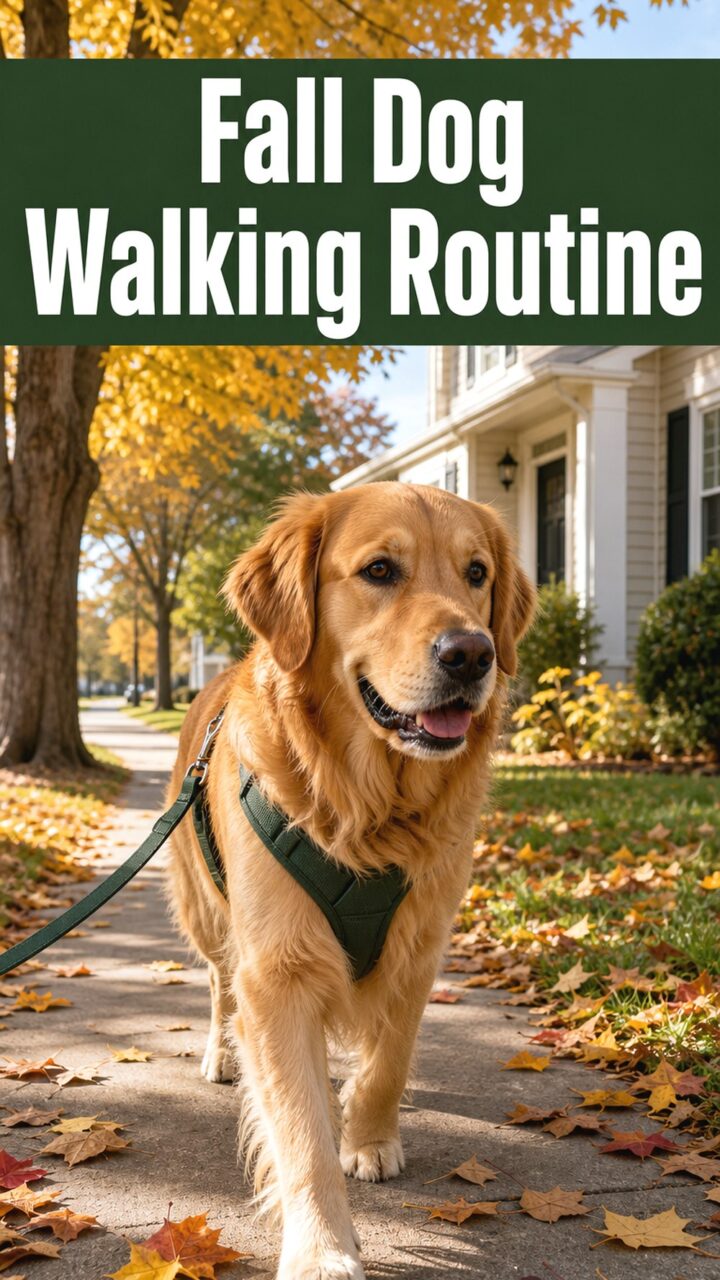
Fall Dog Walking Routine: A Practical Guide for Cooler Days
Save to PinterestA useful fall dog walking routine does not need a rigid clock. It works better as a repeatable before-during-after sequence that you can adjust for the weather, your dog’s energy, and the amount of daylight available.
The goal is consistency without forcing the same distance or pace every day. Prepare for the conditions before leaving, let the walk itself respond to what you encounter, and use a short post-walk reset to catch muddy paws, damp gear, debris, or changes in your dog’s comfort.
Set Up the Walk Before You Open the Door
Fall walks often go more smoothly when you make a few decisions before clipping on the leash. Instead of automatically following the same route, look at the conditions and decide what kind of outing makes sense that day.
Check light, temperature, and ground conditions
Daylight becomes an increasingly important part of the routine as fall progresses. If your usual evening walk begins close to sunset, consider moving it earlier when your schedule allows or choosing a familiar, well-lit route.
Temperature also deserves a fresh check before each outing. A mild afternoon can follow a very cool morning, so the gear and distance that worked earlier in the day may not fit the next walk.
Pay attention to the ground as well. Damp leaves can hide uneven pavement, holes, sharp debris, or slick surfaces. After heavy rain, your normal grassy route may also be muddier than expected.
You do not have to cancel the walk every time conditions are imperfect. Instead, shorten the route, reduce the pace, or choose a cleaner and more visible surface when needed.
Make visibility part of the regular gear
When walks happen near dawn, dusk, or after dark, visibility should be built into the routine rather than treated as an occasional extra.
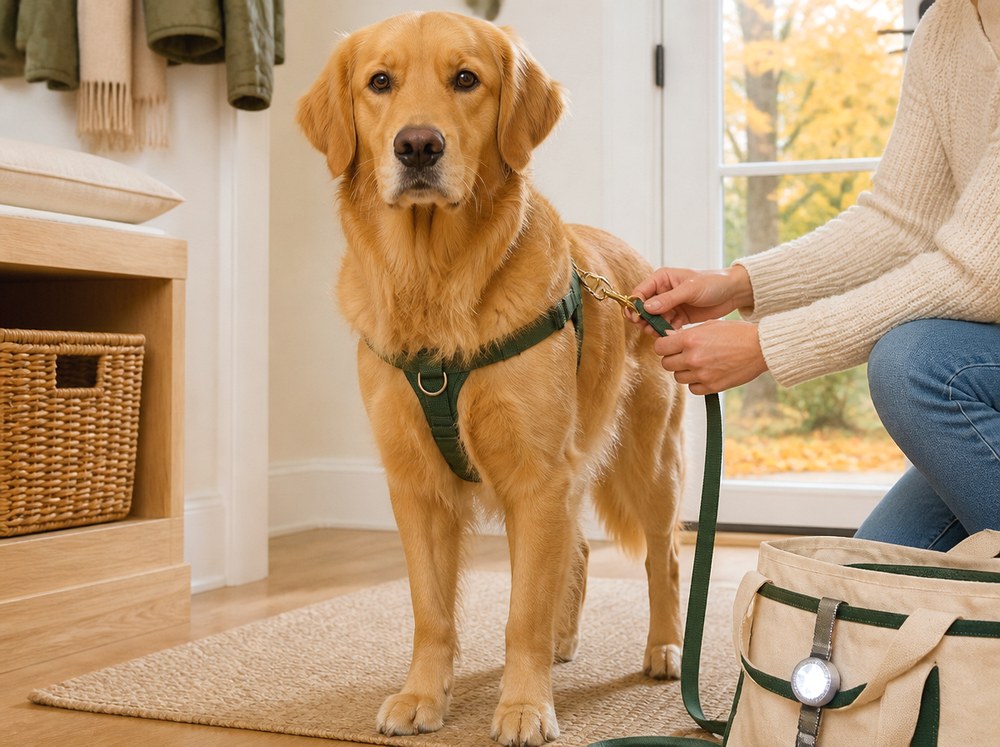
A properly fitted harness or collar with reflective material can make your dog easier to see. Reflective details on your own clothing are useful too. If you use a pet-safe visibility light, attach it securely so it does not swing where your dog can chew it or become tangled.
Before leaving, give the leash, harness, and clips a quick look. Wet weather, mud, and frequent use can make wear easier to miss.
Decide what today’s walk needs to accomplish
Not every walk has to serve the same purpose.
One outing may be mainly for bathroom needs and a quiet sniff around the block. Another may be the day’s longer movement period. A high-energy dog may benefit from a brisker section, while a dog coming off a busy day may be satisfied with slower sniffing and a shorter route.
Thinking about purpose first helps prevent the habit of measuring every successful walk only by distance.
Let the First Few Minutes Set the Pace
Going straight from the front door into a fast pace can make a walk feel more hurried than it needs to be. Give your dog a short settling period instead.
Allow time for bathroom needs and some sniffing near the beginning. This gives you a chance to notice how your dog is moving and reacting to the weather.
A dog that steps out eagerly on a dry, cool afternoon may be ready for a longer route. On a cold, rainy morning, the same dog may move more cautiously or show less interest in continuing.
Use those first few minutes as information rather than assuming the planned route must be completed.
Make the Middle of the Walk Match the Weather
Once your dog has settled into the outing, you can shape the main portion of the walk around the day’s conditions.
Cool, dry days
Comfortable fall weather can be a good time for a somewhat longer outing if your dog is accustomed to the activity. You might combine steady walking with several sniffing stops rather than moving continuously from start to finish.
Changing pace also adds variety without requiring a new destination. A few minutes of purposeful walking followed by a slower section can work well for many adult dogs.
Increase duration gradually rather than suddenly doubling the length of the walk simply because the weather feels pleasant.
Rainy days
A light rain does not automatically rule out a walk, but the route may need to change. Choose surfaces with better footing and avoid areas where deep puddles, mud, or slippery leaves make walking awkward.
If your dog becomes reluctant, repeatedly tries to turn home, or seems uncomfortable, a shorter outdoor trip followed by appropriate indoor enrichment can be more practical than insisting on the normal route.
Afterward, damp coats and gear will also require a little more attention before they are put away.
Windy days
Wind can make familiar streets feel different to a dog. Moving leaves, blowing debris, unusual noises, and strong scents may increase alertness or hesitation.
Keep the leash controlled without holding it constantly tight, and give your dog more room to observe unfamiliar movement from a comfortable distance.
If branches or substantial debris are falling, choose a safer location or postpone the longer outing.
Colder mornings
As the season progresses, some dogs may need a more gradual start on colder mornings, particularly seniors, small dogs, dogs with short coats, or dogs with mobility limitations.
Instead of beginning with the longest route, start at a comfortable pace and watch movement closely. Weather-appropriate dog clothing can be useful for some dogs when it fits correctly and does not interfere with normal movement.
Your veterinarian can provide guidance if you are unsure how cold weather should affect a particular dog’s activity.
You May Also Like



Give Sniffing a Place in the Routine
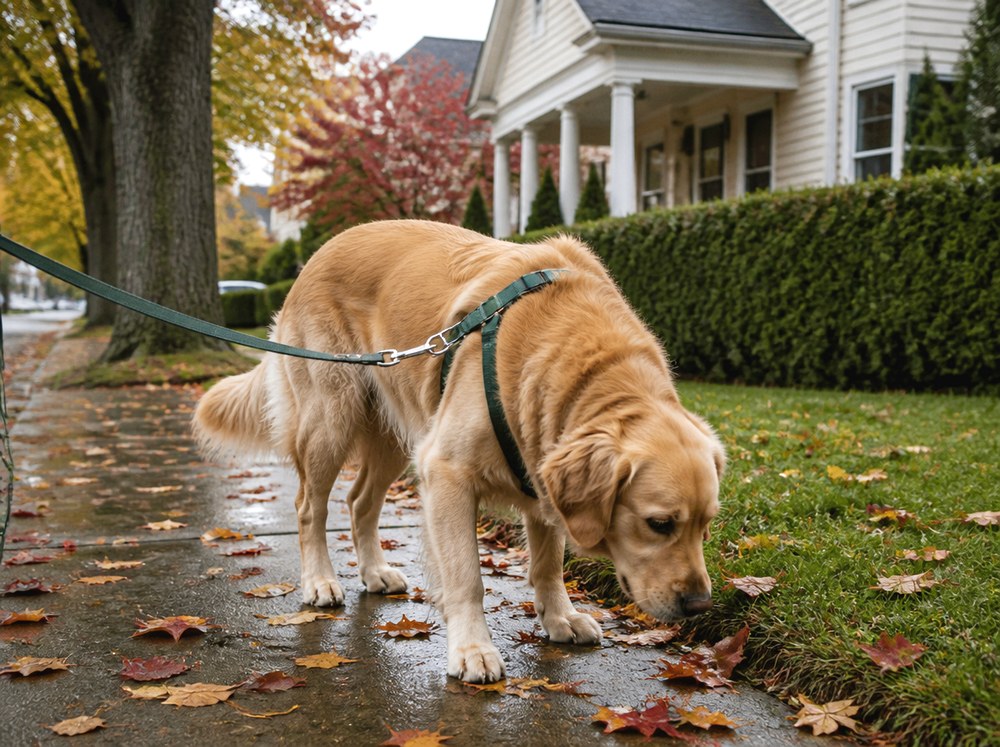
Fall brings changing scents from leaves, soil, wildlife, rain, and cooler air. Allowing reasonable sniffing time can make a shorter walk more engaging without turning every outing into a long-distance exercise session.
You can build sniffing into predictable points on the route. For example, walk steadily for part of the block, pause in a suitable grassy area for exploration, and then continue.
This can be especially useful on busy weekdays when you cannot add much extra distance.
Keep your dog away from unknown food scraps, mushrooms, garbage, animal waste, and objects hidden beneath leaf piles. Do not assume something is safe simply because it is natural or outdoors.
Watch What Fallen Leaves Are Hiding
A thick layer of leaves can change an otherwise familiar path. Curbs become harder to see, pavement cracks disappear, and small objects may be hidden underneath.
Rather than letting your dog charge through every leaf pile, slow down when you cannot clearly see the surface.
This matters even more after rain, when leaves can slide underfoot. Choose a steadier route for senior dogs, dogs with limited mobility, or anyone walking a strong dog who may pull suddenly.
Fall yard work creates other obstacles too. Give piles of branches, garden tools, yard-waste bags, and roadside cleanup areas extra space.
Use the Return Trip as a Cool-Down
The last portion of the walk can be quieter than the middle.
After a brisk section, ease into a steadier pace as you approach home. Give your dog a final opportunity to sniff or take care of bathroom needs rather than ending with a rush through the door.
This transition can make the routine feel more predictable and gives you another chance to notice stiffness, limping, fatigue, or unusual behavior.
If your dog suddenly struggles to walk, appears weak, has difficulty breathing, or shows another concerning change, stop the activity and seek veterinary guidance promptly.
Reset at Home Before the Next Walk
The walk is not quite finished when you come through the door. Fall conditions make a short post-walk check particularly useful.
Look at your dog’s paws for mud, small stones, plant material, or other debris. Check the coat as needed, especially after walking through tall grass, brush, or wet vegetation. Depending on where you live and your veterinarian’s recommendations, parasite prevention may remain relevant during cooler months.
If paws or fur are dirty, clean them with a pet-appropriate method and dry damp areas gently. Avoid using harsh household cleaners or strongly fragranced products on your dog.
Hang wet leashes and harnesses where they can dry fully and remain out of chewing reach. Wipe muddy gear before putting it back into a basket or drawer so the next walk does not start with damp equipment.
Refresh drinking water when needed and allow your dog to settle after the outing.
This small reset takes less effort than dealing with a pile of muddy walking equipment several days later.
You May Also Like




A Flexible Fall Walking Rhythm
Exact times are less useful than dependable anchors because daylight, work schedules, and weather vary. A routine might look like this:
| Part of the Day | Main Goal | Fall Adjustment |
|---|---|---|
| Morning | Bathroom break plus light movement | Check temperature, wet surfaces, and early-morning visibility |
| Midday, if available | Short movement or sniff break | Use brighter daylight when possible |
| Late afternoon or evening | Main walk for many households | Start earlier as sunset shifts |
| Before bed | Brief bathroom outing | Use a familiar, well-lit route and visibility gear |
A dog that receives several shorter outings may not need one very long walk. Another dog may do well with one longer outing plus brief bathroom trips.
Let age, health, energy, training level, and household schedule shape the pattern.
Adjust the Routine Instead of Abandoning It
Fall weather can change quickly. Having a fallback version of the routine helps maintain consistency.
On a pleasant day, take the full familiar route. On a wet evening, use the shorter loop with better pavement. When daylight is limited, choose the well-lit route. When outdoor conditions make a long walk impractical, keep the necessary bathroom outing brief and shift some engagement indoors.
The point is not to make every day identical. The dependable part is the sequence: check conditions, choose the appropriate outing, walk according to your dog’s response, and reset at home.
That makes the routine easier to maintain from the first cool mornings of early fall through the darker days near winter.
Notice When the Routine Needs to Change
Your dog’s behavior is more useful than the calendar alone.
A route may need shortening if your dog regularly slows down well before reaching home, hesitates on cold or wet surfaces, or seems unusually tired after walking. A dog with extra energy afterward may benefit from a different balance of walking, sniffing, training, and suitable enrichment rather than automatically adding more mileage.
Pay attention to sudden changes rather than trying to solve them by modifying exercise alone. Pain, weakness, repeated vomiting, appetite changes, bathroom changes, breathing difficulty, or an abrupt behavior change are reasons to contact a veterinarian.
For older dogs or dogs with existing health or mobility concerns, ask your veterinarian how seasonal conditions should influence walking duration and intensity.
Build the Season Around a Few Reliable Habits
You do not need an entirely new schedule because the leaves start changing. Keep the parts of the walk your dog already understands, then adapt the details that fall affects most: daylight, temperature, footing, visibility, and cleanup.
Start by checking conditions before each walk and adding a brief paw-and-gear reset when you return home. From there, adjust route length and timing as the season gets cooler and darker.
A fall dog walking routine works best when it stays recognizable to your dog while remaining flexible enough for the weather outside.
