Turn a utility room, mudroom, or spare corner into a practical dog wash space with easy bathing, organized supplies, and simpler cleanup.
Save This Idea on Pinterest

11 Dog Wash Room Ideas
Save to PinterestA dog wash room can make muddy paws, home baths, and post-adventure cleanup easier to manage without carrying a wet dog through several rooms. The most useful designs combine comfortable access for the dog with water-resistant surfaces, secure storage, good traction, and enough room for the owner to work.
These 11 dog wash room ideas include walk-in showers, raised tubs, laundry-room layouts, drying zones, wall storage, senior-friendly access, and multi-dog setups. Some are better for compact homes, while others suit large breeds or frequent outdoor messes. Compare your available space, plumbing, dog size, mobility, coat care, and cleaning routine before choosing a layout.
Quick List
- Walk-In Dog Shower Room with Handheld Sprayer
- Raised Dog Wash Tub Room for Easier Bathing
- Mudroom Dog Wash Room for Messy Outdoor Dogs
- Small Laundry Room Dog Wash Area with Storage
- Non-Slip Tile Dog Wash Room for Safer Bathing
- Built-In Towel Storage Dog Wash Room for Easy Cleanup
- Dog Wash Room with Separate Drying and Grooming Zone
- Large-Dog Wash Room with Wide Low-Entry Shower
- Compact Dog Wash Room with Wall-Mounted Supplies
- Senior Dog Wash Room with Low-Step Bathing Access
- Multi-Dog Wash Room with Organized Bathing Stations
1. Walk In Dog Shower Room With Handheld Sprayer
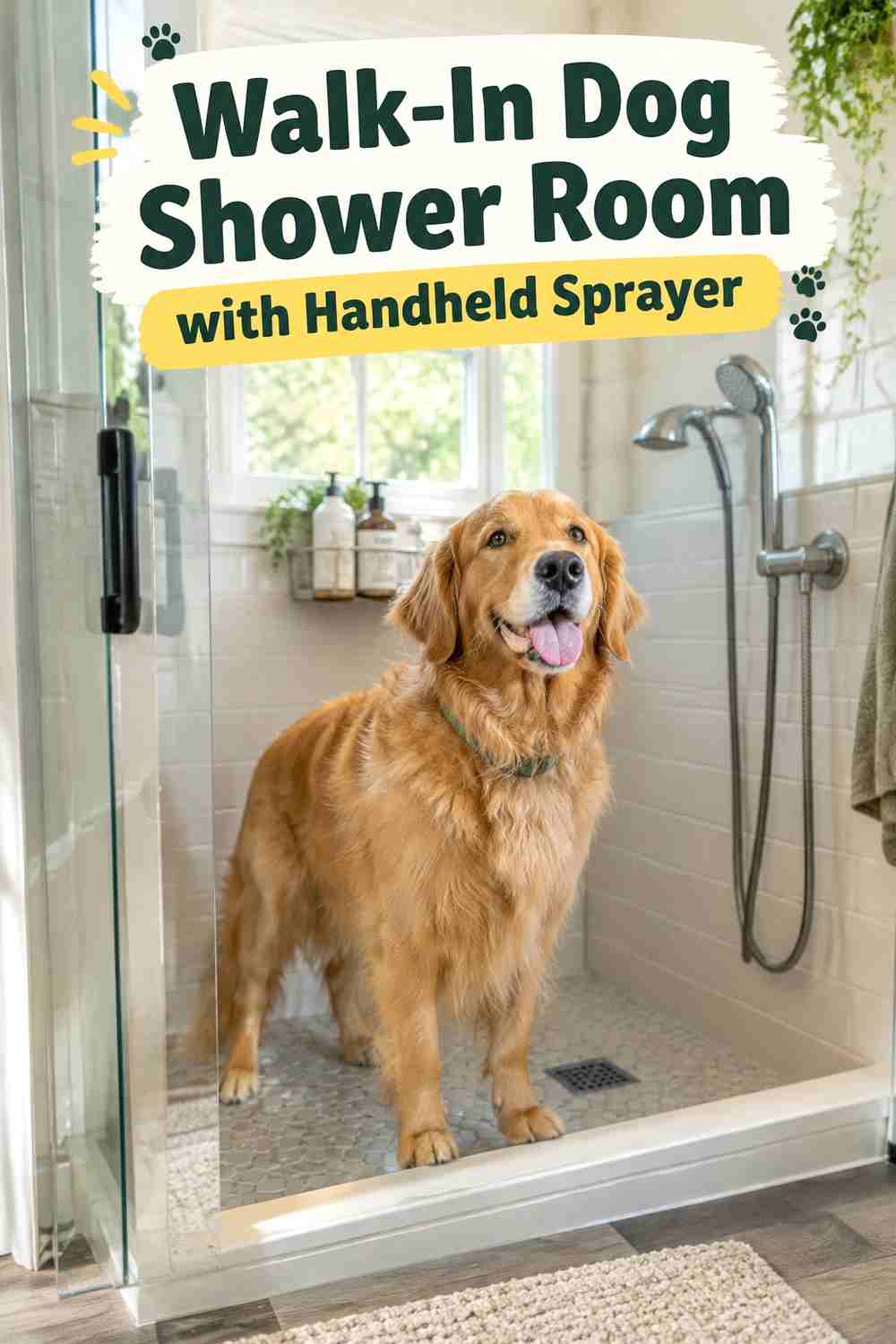
A walk-in dog shower room gives the dog floor-level access while keeping rinsing simple with a flexible handheld sprayer. Build the bathing area around a low or nearly flush entrance so the dog can step in without being lifted over a high tub wall. A textured, water-resistant floor helps provide traction, while a wall-mounted sprayer lets you control where the water goes around the body and legs. Keep shampoo, towels, and grooming tools within adult reach but outside the dog’s reach. Good drainage matters because standing water quickly makes the space harder to clean. Leave enough open room for your dog to turn comfortably without squeezing against fixtures.
Setup Notes
Position towel hooks and a small supply shelf close to the shower without placing electrical items near the wet zone. Keep the entrance clear so the dog has a straightforward way in and out.
2. Raised Dog Wash Tub Room For Easier Bathing
You May Also Like



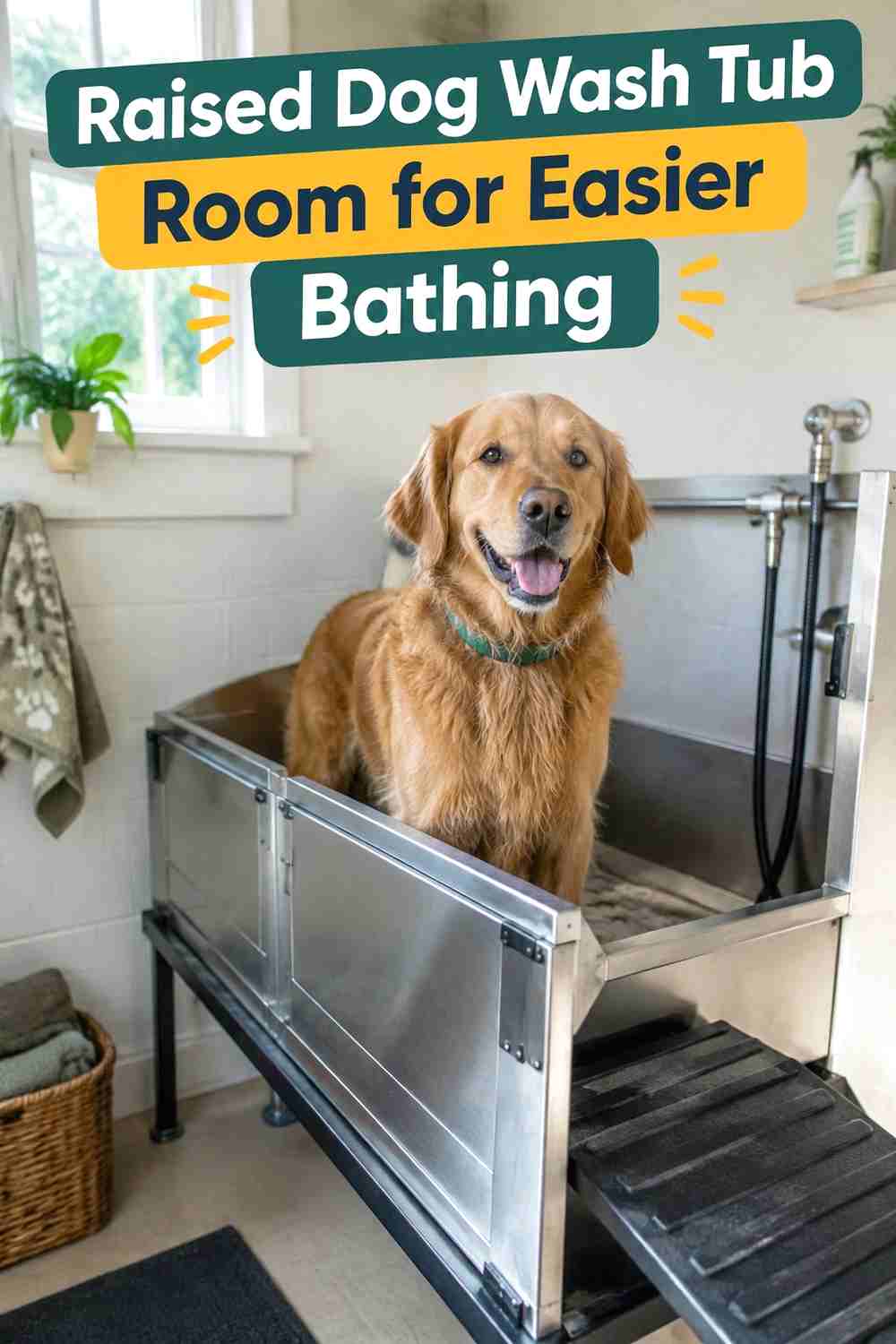
A raised wash tub brings a smaller or medium-sized dog closer to a comfortable working height for bathing. The tub should have a stable base, a nonslip interior, and an access method that does not require the dog to make an awkward jump. Built-in steps or a sturdy ramp can work when appropriate for the dog, but both should remain dry and secure. Keep the surrounding floor clear so you can stand close to the tub without stepping over baskets or hoses. This setup can reduce repeated bending for the owner, although it is less practical for very large dogs or dogs that dislike elevated surfaces. Clean the tub after each bath so soap residue and loose fur do not accumulate.
Best For
Raised tubs are often most practical for dogs that can enter safely and remain comfortable at the elevated height. Floor-level options may suit heavier or less mobile dogs better.
3. Mudroom Dog Wash Room For Messy Outdoor Dogs
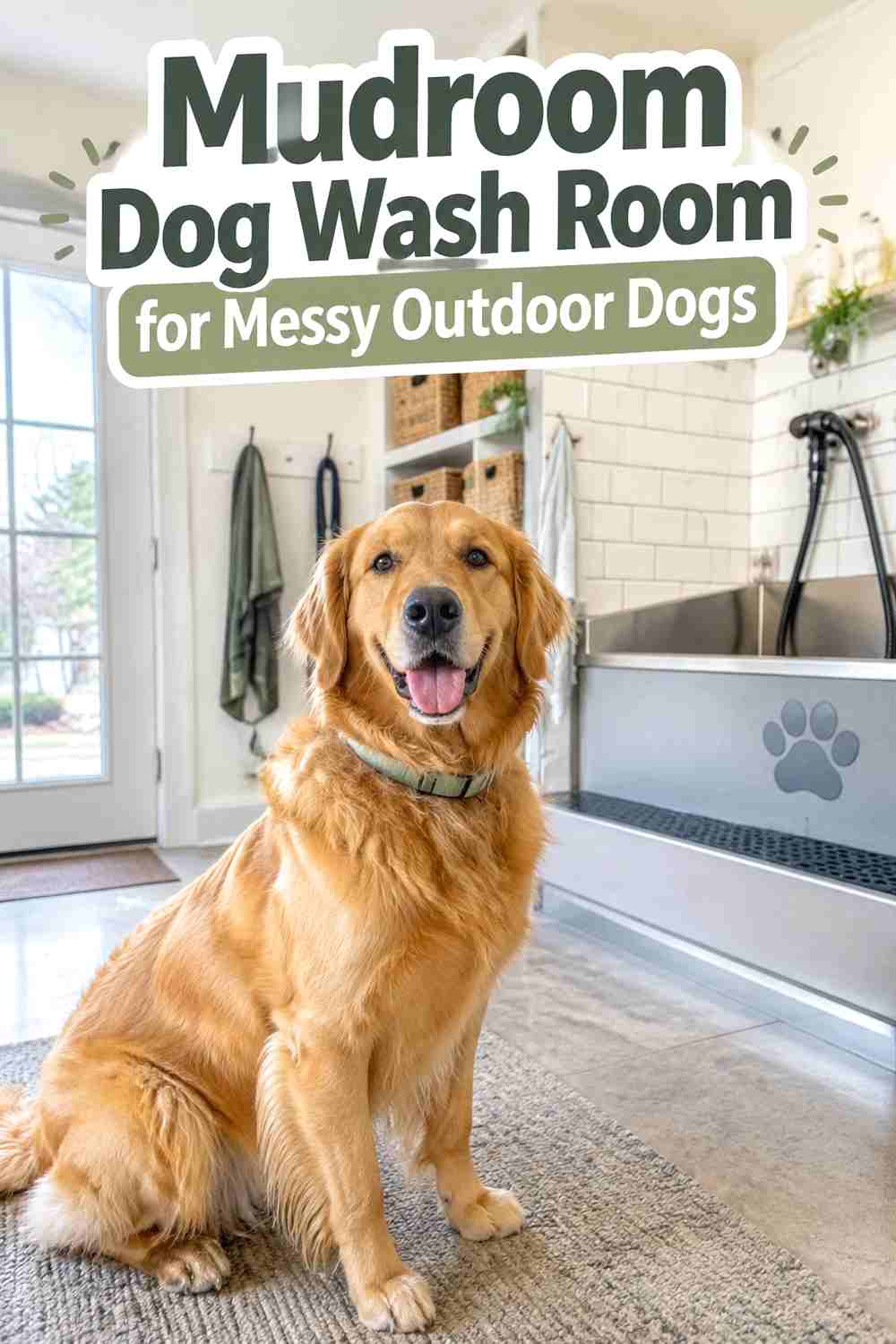
A mudroom dog wash room creates a direct cleanup zone between outdoor adventures and the main living space. Place the shower or tub near the exterior entrance so muddy paws, wet coats, and loose dirt can be handled before the dog reaches carpets or furniture. Add a washable floor mat, closed storage for clean towels, and a separate spot for wet leashes, rain gear, or muddy human shoes. Keep detergents, cleaners, and household chemicals secured away from the dog rather than mixing them with pet supplies. A bench can give the owner a convenient place to sit during paw drying, but the floor around the wash area should remain open enough for the dog to stand naturally.
Use & Maintenance
Rinse mud from the bathing area promptly and remove wet towels instead of letting them pile up. Frequent quick resets keep the room useful during long stretches of rainy weather.
4. Small Laundry Room Dog Wash Area With Storage

A small laundry room can double as a dog wash area when the layout keeps bathing supplies separate from detergents and household chemicals. Use a compact shower base or practical wash tub along one wall, then take advantage of closed cabinets or higher shelving for towels, brushes, and dog shampoo. Keep laundry products securely inaccessible to the dog, even if they are stored in the same room. Vertical storage helps preserve floor space, but avoid hanging heavy items directly above the bathing zone. A washable mat outside the tub gives your dog a stable place to stand during drying. Make sure appliance doors and cabinet access are still usable without moving the dog station every time.
Space & Placement
Protect a clear walkway between the door, washing machine, and dog wash area. Compact rooms work better when most supplies are stored vertically rather than in floor baskets.
5. Non Slip Tile Dog Wash Room For Safer Bathing
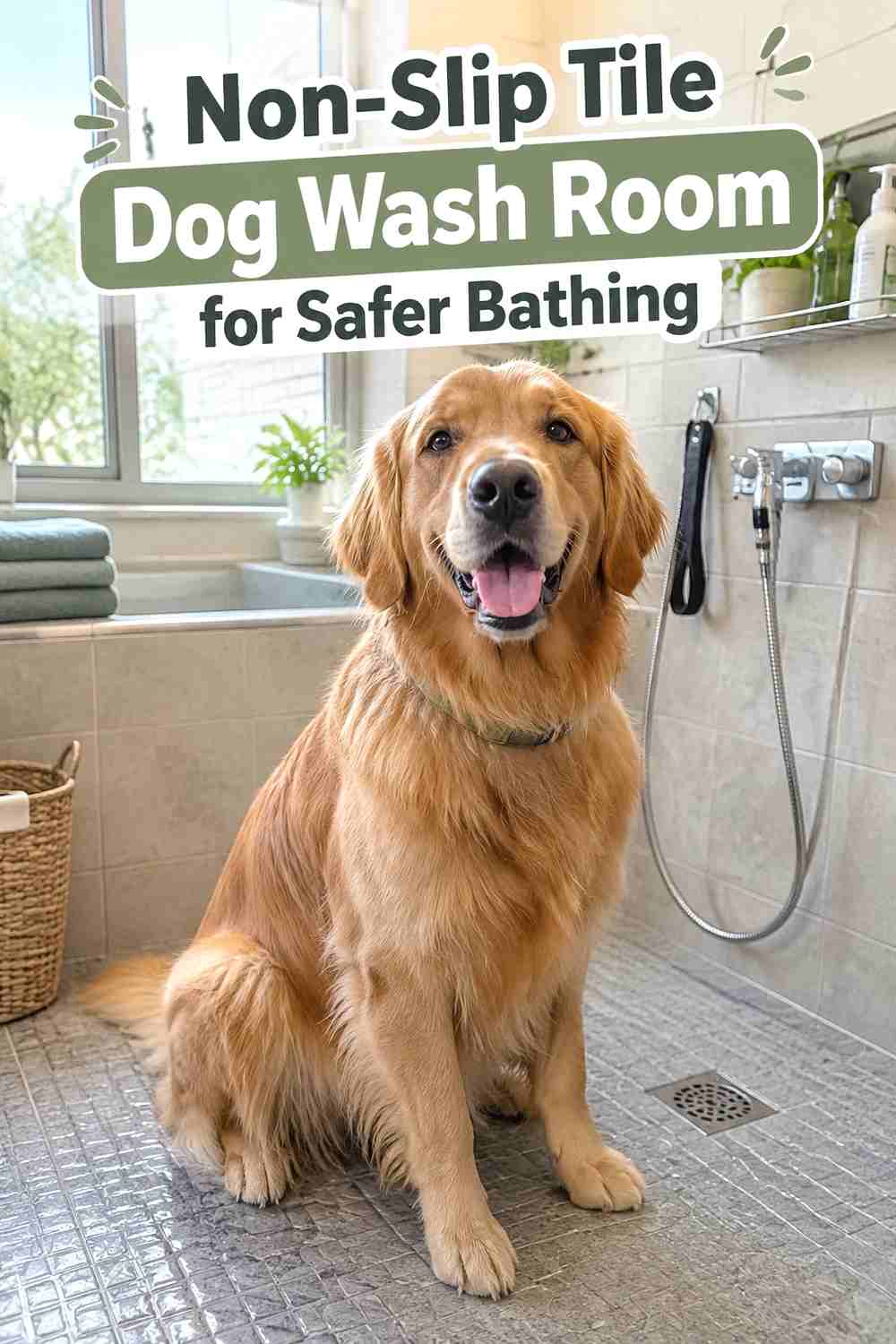
A non-slip tile dog wash room focuses on dependable footing across both the bathing area and the floor outside it. Choose a textured water-resistant surface that remains easier for paws to grip when wet instead of relying on highly polished tile for visual appeal. Add a removable nonslip mat where extra traction is useful, and keep grout, drains, and floor edges clean so soap residue does not create slick patches. The room should also have enough open floor space for your dog to turn without stepping immediately onto a slippery transition. A practical surface is especially valuable for energetic dogs that shake after baths or dogs that become cautious when their feet slide.
Cleaning Notes
Rinse away shampoo residue and remove loose fur from drains and corners after use. Wash removable mats regularly and allow them to dry completely before replacing them.
6. Built In Towel Storage Dog Wash Room For Easy Cleanup
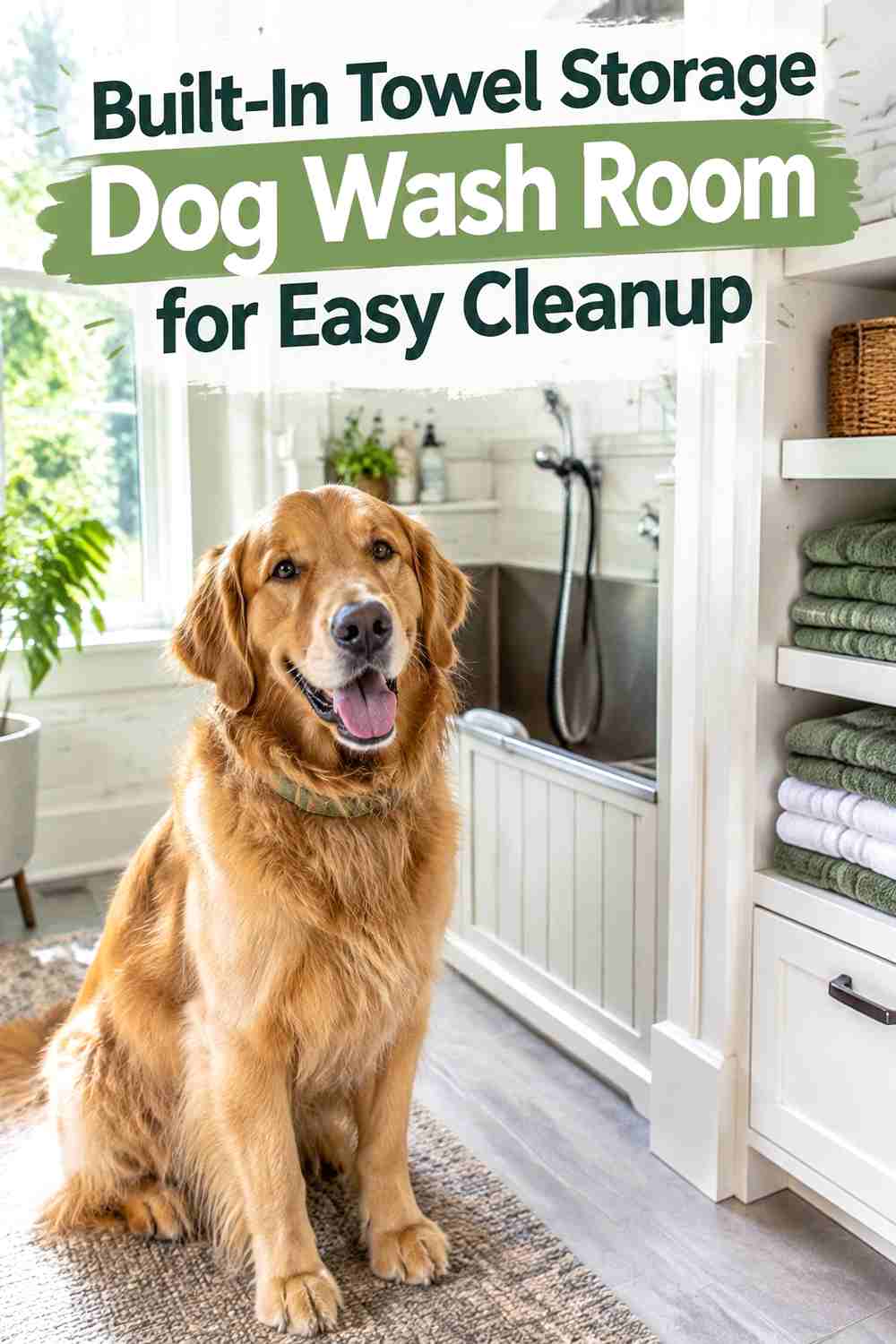
A dog wash room with built-in towel storage keeps clean drying supplies close to the bathing area without covering the floor in baskets. Use closed shelves, drawers, or cubbies for dry towels and keep a separate ventilated place for used ones so damp fabric does not get mixed back into the clean supply. Position storage where you can grab a towel before the dog steps out of the tub or shower. Lower open shelves should hold only items that are safe around the dog, while cleaners and sharp grooming tools belong in secure closed storage. This layout works especially well for households that bathe dogs frequently and want the room to reset quickly afterward.
Pro Tip
Keep one large body towel and several smaller paw towels in the most accessible section. Store backup linens farther away so the main wash area stays uncluttered.
7. Dog Wash Room With Separate Drying And Grooming Zone
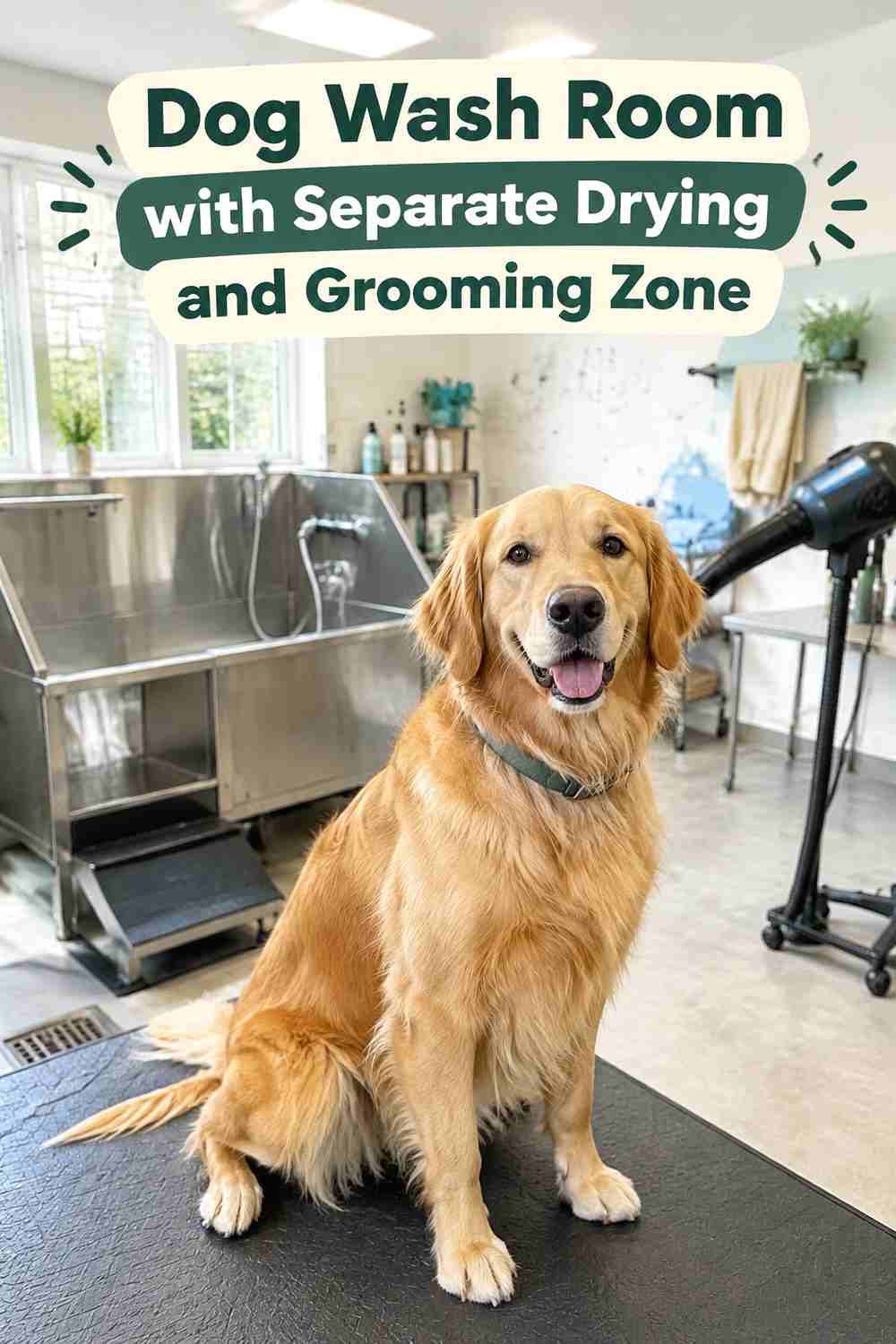
A separate drying and grooming zone keeps post-bath coat care away from the wettest part of the room. Place a nonslip mat or stable floor-level area beside, but not directly inside, the shower zone and store clean towels, brushes, and combs nearby. Dry the coat first so water does not drip across the entire room, then use grooming tools only as appropriate for your dog’s coat and tolerance. Keeping wet and dry zones distinct also makes cleanup easier because loose fur tends to collect in one predictable area. Avoid unstable grooming tables unless they are specifically suitable for the dog and used safely. Skin irritation, painful matting, or persistent grooming problems should be discussed with a veterinarian or qualified groomer.
Space & Placement
Leave enough separation that splashing from the shower does not soak the drying mat. Closed tool storage helps prevent chewing and keeps the floor clear.
8. Large Dog Wash Room With Wide Low Entry Shower
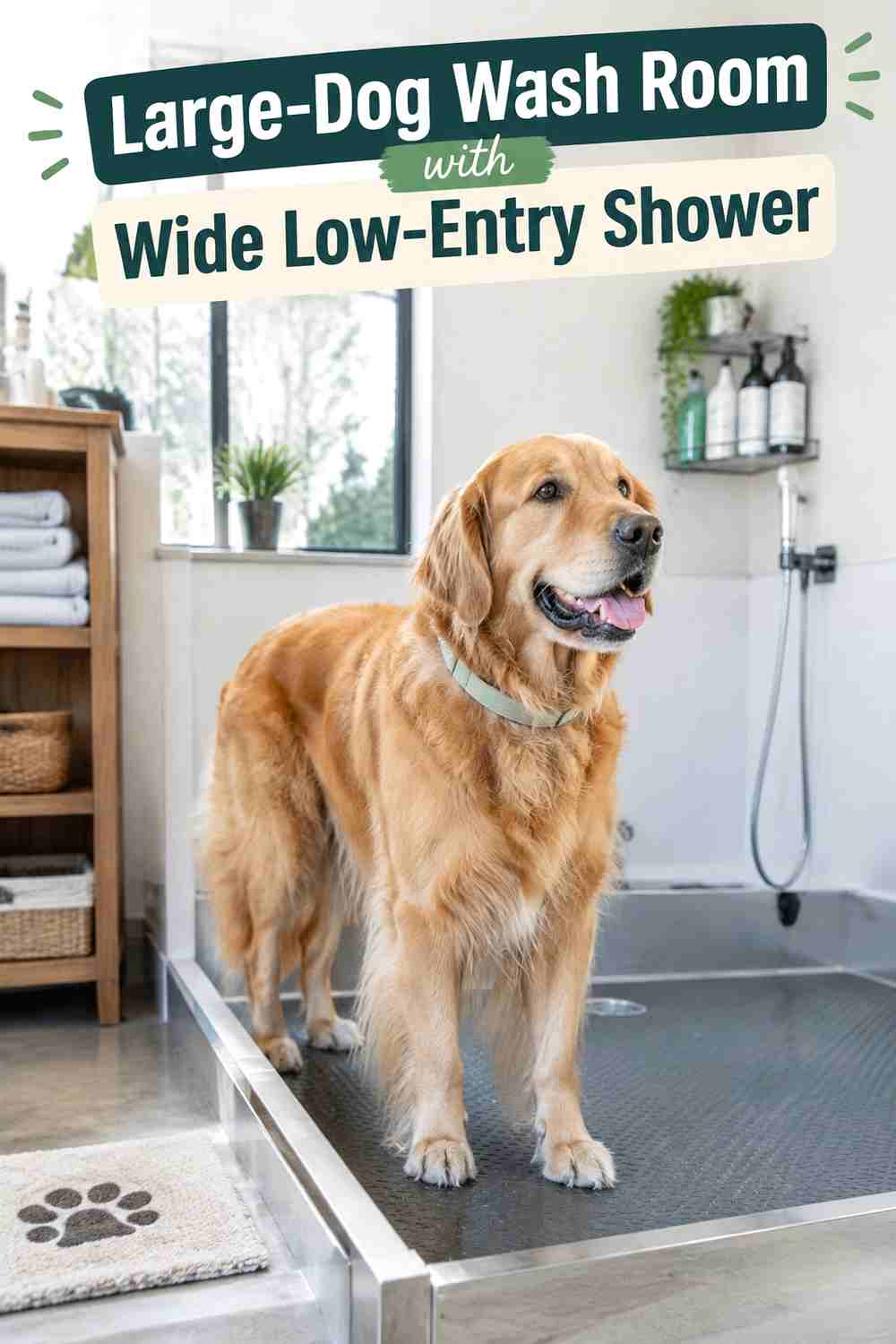
A large-dog wash room needs enough width for the dog to enter, turn, and stand comfortably without being squeezed between walls. A wide low-entry shower is often more practical than a raised tub because it removes the need to lift a heavy dog. Use a handheld sprayer with enough reach to rinse the legs, underside, and back while you remain in a stable position. A textured floor and clear entrance help reduce awkward footing, especially when the coat and paws are wet. Keep towels close enough to begin drying before the dog walks through the rest of the room. Oversized decorative features matter less than generous working space, dependable drainage, and easy-clean surfaces.
Best For
This layout is particularly useful for large and heavy dogs that are difficult to lift. It can also make bathing easier when the owner needs room to work from either side.
9. Compact Dog Wash Room With Wall Mounted Supplies
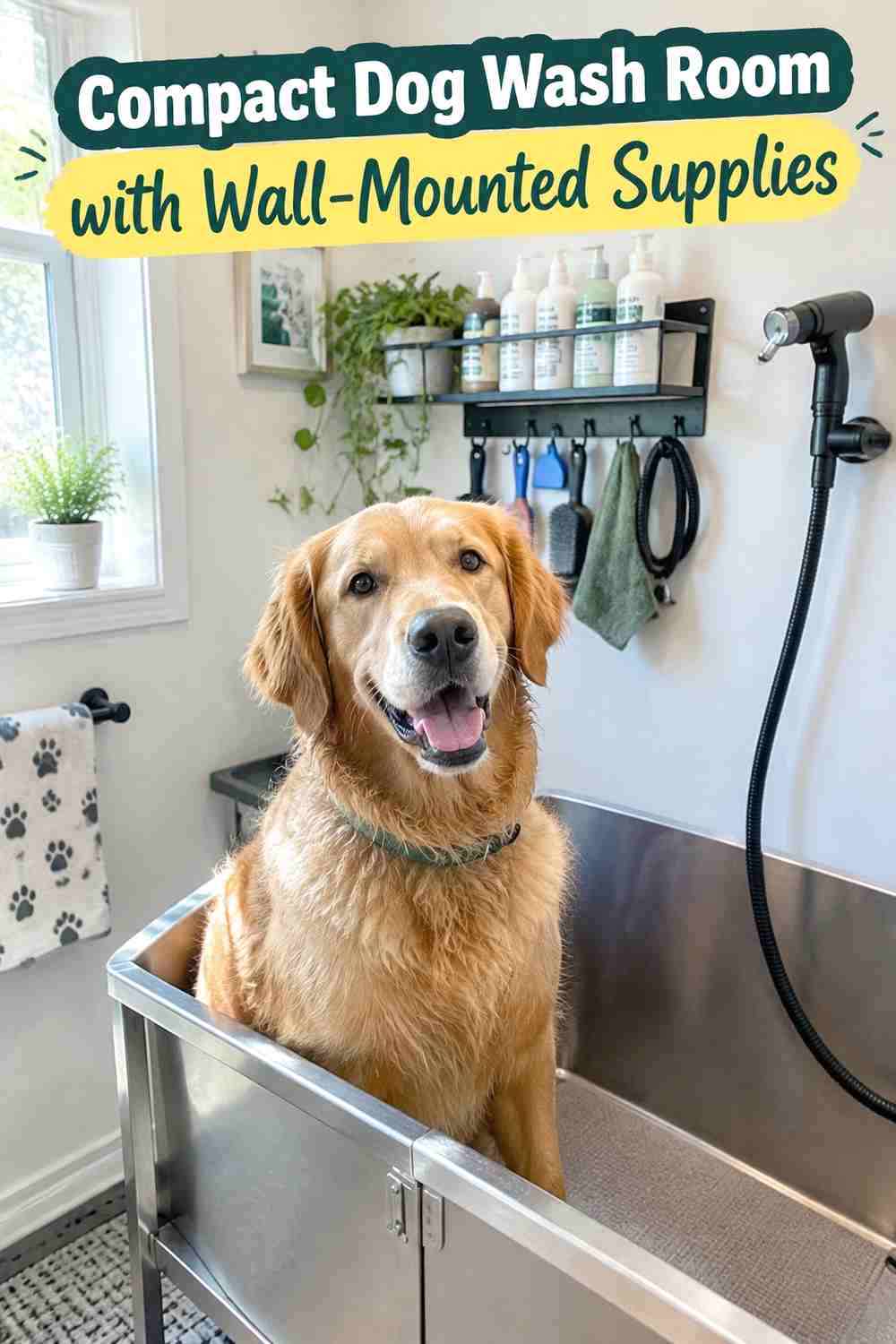
A compact dog wash room can stay functional by moving everyday supplies off the floor and onto secure wall storage. Install hooks, narrow shelves, or closed cabinets for towels, brushes, and bathing accessories while keeping the actual wash area simple and open. Place frequently used items within easy adult reach but far enough from the bathing zone that they do not become soaked by splashing. Avoid hanging leashes, cords, or fabric where the dog can pull them down. A small nonslip mat outside the tub or shower can define the drying area without requiring additional furniture. This layout works well in converted closets, laundry niches, or narrow utility spaces where every bit of floor area matters.
Space & Placement
Use vertical storage selectively rather than covering every wall. The dog still needs visual openness and enough room to enter, exit, and shake without hitting unstable objects.
10. Senior Dog Wash Room With Low Step Bathing Access

A senior dog wash room should reduce unnecessary stepping, jumping, and slippery transitions. Use a floor-level or low-step shower with stable traction so the dog can enter at a comfortable pace, and keep the drying area immediately nearby to limit walking while wet. Avoid raised tubs unless the individual dog can access them safely without being lifted awkwardly. Keep towels within reach so the dog does not need to stand for longer than necessary during cleanup. A predictable room layout can also help when the dog prefers familiar routines. Senior dogs have different mobility levels, so adapt the space to the individual. New weakness, pain, or sudden resistance to bathing should be discussed with a veterinarian.
Comfort & Safety
Keep thresholds low, mats flat, and the floor clear of baskets or equipment. Allow the dog to change position rather than requiring prolonged standing.
11. Multi Dog Wash Room With Organized Bathing Stations
You May Also Like



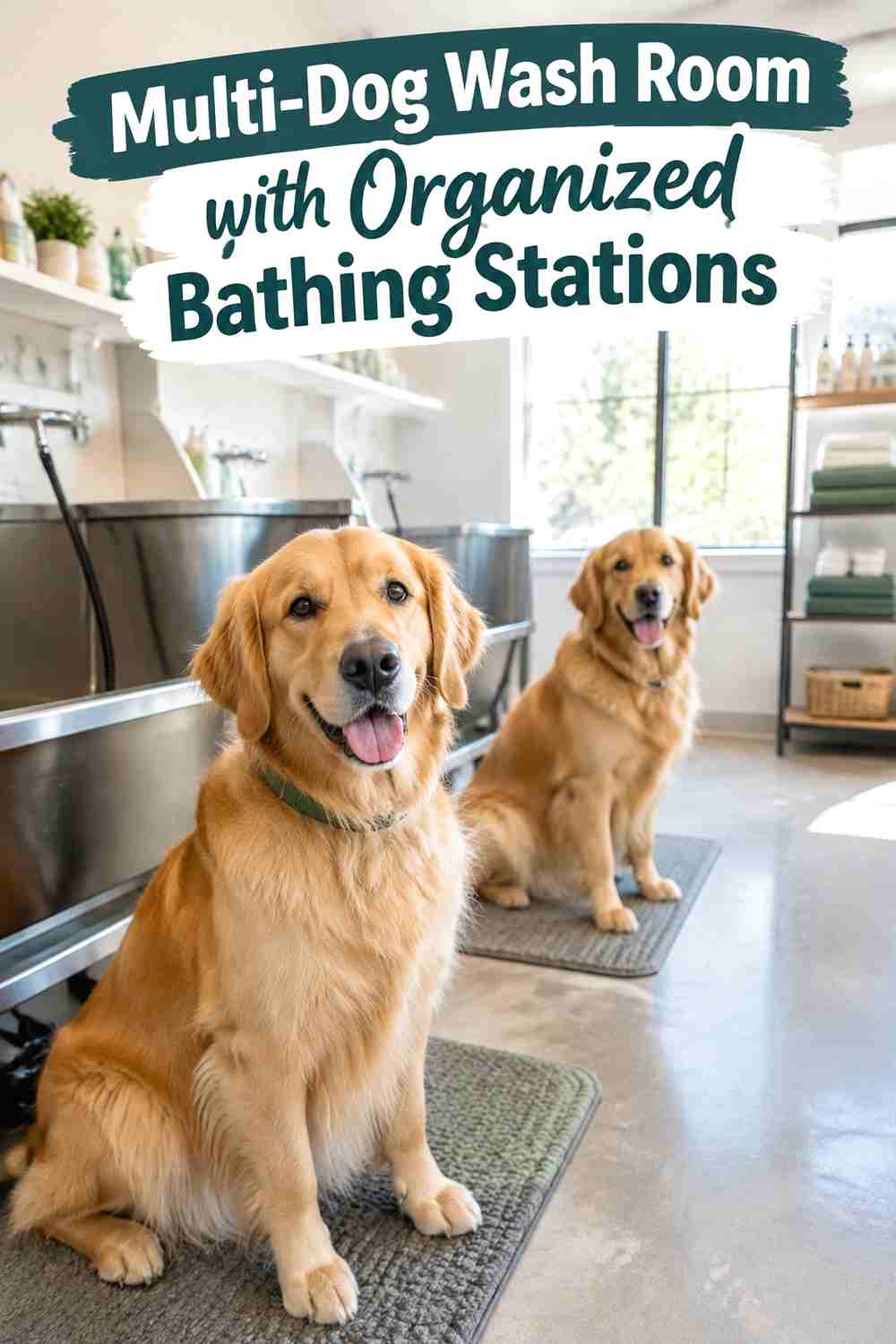
A multi-dog wash room works best when bathing, drying, and supply storage stay organized enough to avoid crowding. You may use one large wash area with separate towel hooks and grooming supplies for each dog, or create distinct drying spots if two dogs regularly come in wet together. Avoid forcing dogs to wait tightly beside one another around a small shower, especially if either dog becomes excitable in confined spaces. Closed cabinets can keep shampoos and tools organized, while labeled towel sections make it easier to grab clean supplies quickly. The room should still have enough open space for one dog to finish drying before another enters the bathing area.
Setup Notes
Handle dogs one at a time when that creates a calmer routine. Duplicate towels and drying mats are often more useful than trying to build several permanent tubs into one room.
How to Choose the Right Idea
Start with the way you expect to use the room most often. Dogs that regularly return muddy from outside may benefit from a wash area near an exterior door, while households focused on occasional baths may prefer a laundry-room or bathroom setup.
Dog size and mobility strongly affect the best layout. Small dogs may work well with a safely accessible raised tub, while large dogs usually need a wider floor-level shower. Senior dogs and dogs with limited mobility benefit from low thresholds, reliable traction, and short routes between bathing and drying areas.
Also consider cleanup, plumbing, storage, and household traffic. Water-resistant surfaces, good drainage, accessible towels, and secure cabinets matter more than decorative extras. Keep chemicals, cords, sharp tools, and medicines out of reach, and make sure the room remains easy to clean after every use.
Final Thoughts
A good dog wash room should make bathing and cleanup simpler without creating another difficult space to maintain. Start with safe access, dependable traction, drainage, and towel storage before adding decorative features or extra equipment.
Choose the layout that matches your dog’s size and your normal routine. A compact laundry-room wash area may be enough for one household, while another may benefit more from a wide mudroom shower with a separate drying zone.
FAQs
1. What should a dog wash room include?
A practical setup usually includes a tub or shower, nonslip footing, a handheld rinsing option, clean towels, secure supply storage, reliable drainage, and enough room for the dog to move comfortably.
2. Is a raised tub or walk-in shower better for dogs?
It depends on the dog. Raised tubs can reduce bending when bathing smaller dogs, while walk-in showers are often easier for large, heavy, senior, or less mobile dogs.
3. What flooring works well in a dog wash room?
Water-resistant flooring with reliable traction is the priority. Avoid highly slippery surfaces, especially around the shower exit where wet paws need secure footing.
4. Can a laundry room double as a dog wash room?
Yes, if there is enough space for safe bathing and drying. Keep laundry chemicals secured away from the dog and preserve clear access to appliances and doorways.
5. How do I keep a dog wash room organized?
Separate clean towels from wet ones, use closed storage for grooming supplies and chemicals, remove loose fur after bathing, and keep only frequently used items near the wash area.
CTA
Save your favorite dog wash room idea and plan a bathing space that makes muddy paws, wet coats, and home cleanup easier to manage.
