A dog room can look warm and intentional without turning into a collection of paw-print signs and overflowing toy bins. The most comfortable spaces combine things your dog actually uses—such as a bed, water station, blankets, and everyday supplies—with materials and colors that already belong in the rest of the home.
Save This Idea on Pinterest
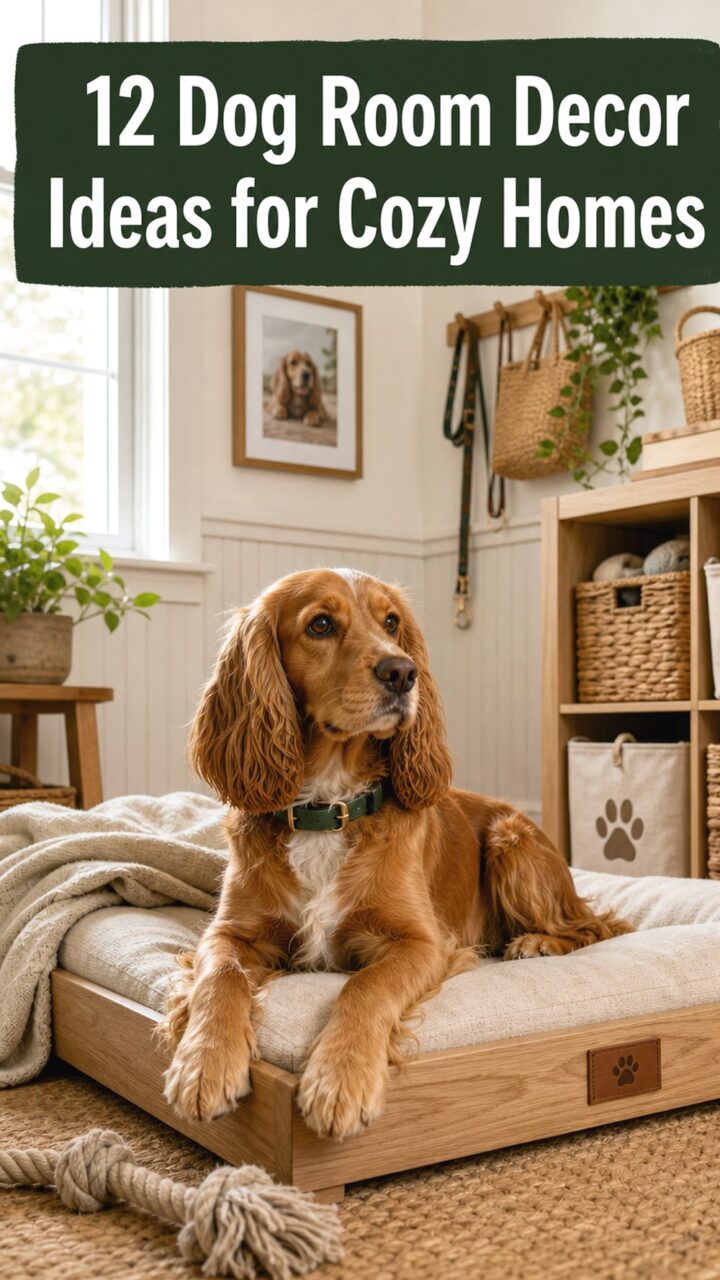
12 Dog Room Decor Ideas for Cozy Homes
Save to PinterestThe key is to decorate at two levels. Keep the lower part of the room durable, accessible, and free from tempting loose objects. Use walls, closed storage, washable textiles, and carefully chosen furniture to bring in the cozy details.
These 12 dog room decor ideas range from restful sleeping corners to compact storage and personalized wall accents, so you can borrow only the pieces that suit your available space.
1. Build the Room Around a Cozy Bed Nook
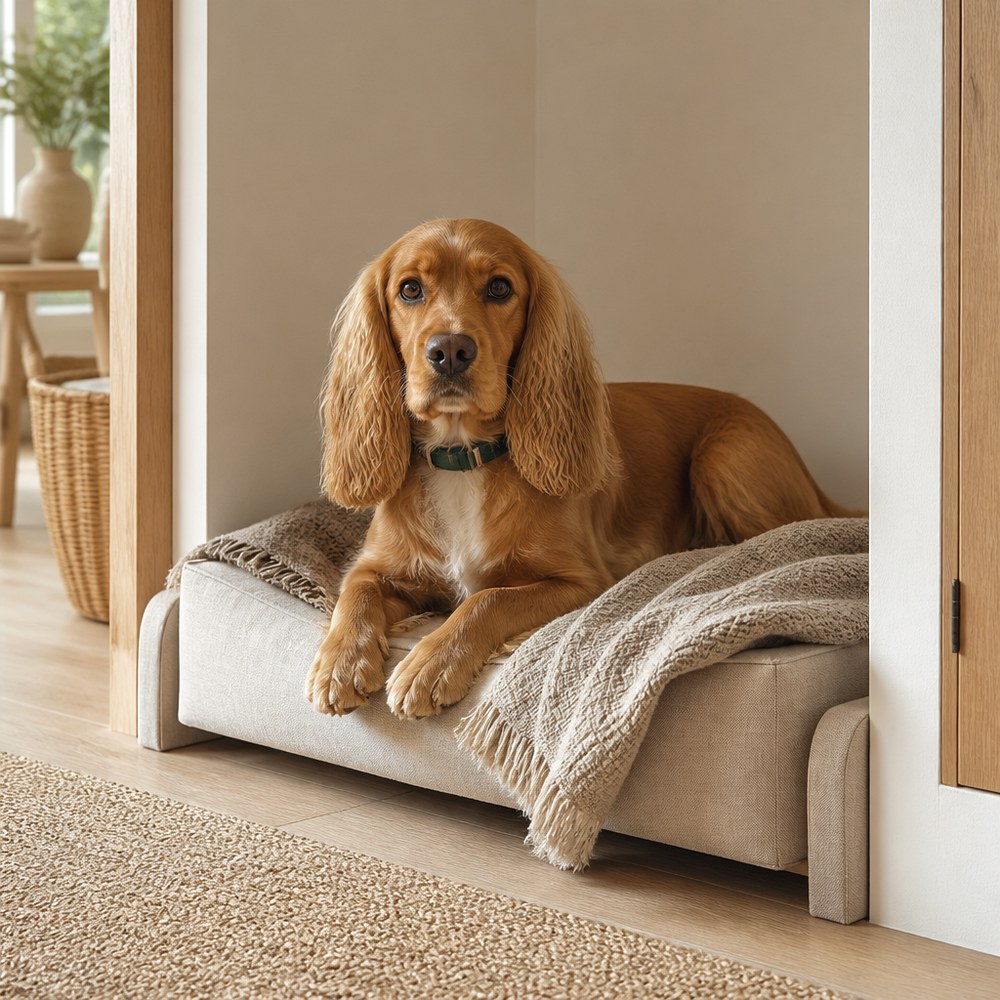
Start with the feature your dog is most likely to use: a comfortable place to rest. Positioning the bed against a wall or in a shallow nook gives the room a visual anchor while leaving open floor space for movement.
Instead of trying to make the bed decorative on its own, coordinate the surrounding materials. A cream, oatmeal, taupe, muted green, or other subdued bed cover can blend into a cozy interior more naturally than a brightly patterned one. A washable throw adds another layer without committing you to an elaborate setup.
Keep the sleeping corner relatively quiet. Decorative baskets, framed art, and storage can occupy nearby walls, but avoid stacking objects directly over a bed if they could fall. The goal is to make the nook feel sheltered without enclosing it so tightly that your dog has difficulty entering, turning around, or stretching out.
2. Use a Low Bench as a Storage-and-Style Piece

You May Also Like


A low storage bench can solve two decorating problems at once: it fills an empty wall with a substantial furniture piece while hiding the less attractive supplies that accumulate in a dog room.
Use closed compartments for spare towels, sealed packages of supplies, grooming items, and other things you do not need sitting in view. Frequently used items can go in the easiest-to-reach drawer, while anything unsafe for unsupervised access—medicines, cleaners, sharp grooming tools, or small objects—should remain securely stored where your dog cannot reach them.
Choose a sturdy bench with a wipeable or washable surface and minimal exposed hardware. If the top is cushioned for human seating, make sure the pad cannot slide off easily.
Matching the bench wood tone to nearby shelving, flooring, or furniture is a subtle way to make a designated dog space feel connected to the rest of the house.
3. Add One Oversized Framed Dog Portrait
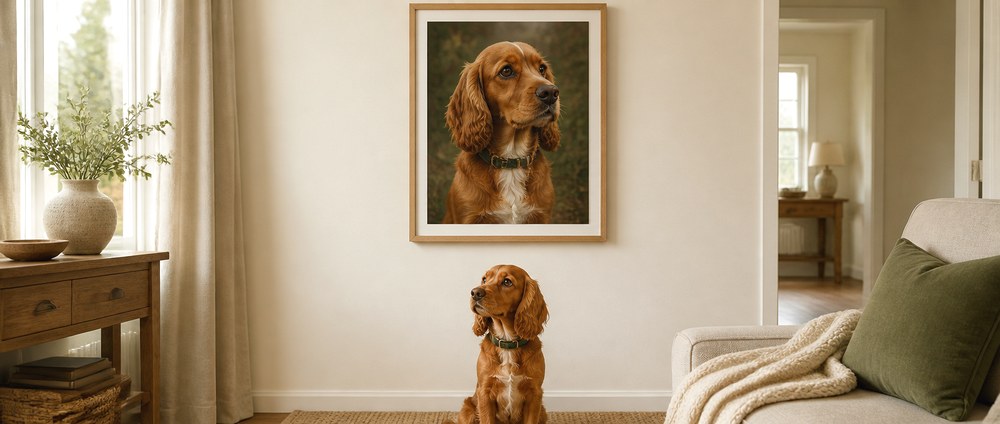
A single large piece of artwork often looks calmer than a wall crowded with several small dog-themed decorations. A framed portrait of your dog, a tasteful silhouette, or custom artwork can provide the personality people expect from a dog room without taking over the entire design.
Scale matters. On a broad empty wall, one generously sized frame feels deliberate and gives the eye a clear focal point. Choose a frame finish that repeats something already present in the room, such as pale oak, dark wood, or a simple neutral finish.
Mount frames securely and keep them beyond your dog’s reach. Avoid leaning glass-covered artwork against the wall at floor level, particularly in a narrow room where it could be bumped.
With one personalized feature taking center stage, the rest of the room can stay understated.
4. Create a Built-In-Looking Toy Basket Station
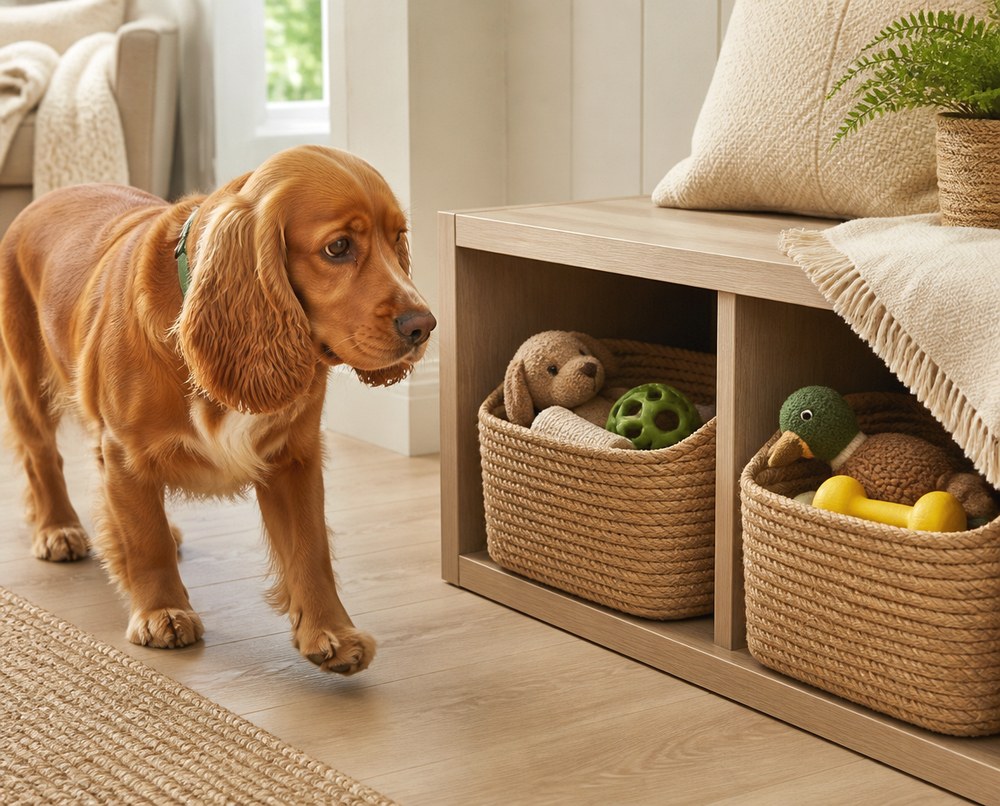
Toy storage looks less like clutter when the containers have a specific home. Try a pair of baskets beneath a low shelf, inside open cubbies, or beside the bed rather than scattering individual bins around the room.
Reserve accessible baskets for toys your dog can safely use under the level of supervision appropriate for those toys. Inspect the contents regularly and remove anything damaged, frayed, or small enough to create a swallowing risk.
A matched pair of storage containers can also become part of the room’s texture. Structured woven-look bins, washable fabric baskets, or smooth containers in a warm neutral finish can complement a cozy interior without requiring novelty dog graphics.
Keep the number of baskets proportional to the room. Two well-edited containers usually look more intentional than six half-filled ones, and a smaller collection makes it easier to notice when a toy needs cleaning or replacement.
5. Warm Up the Floor With a Washable Rug
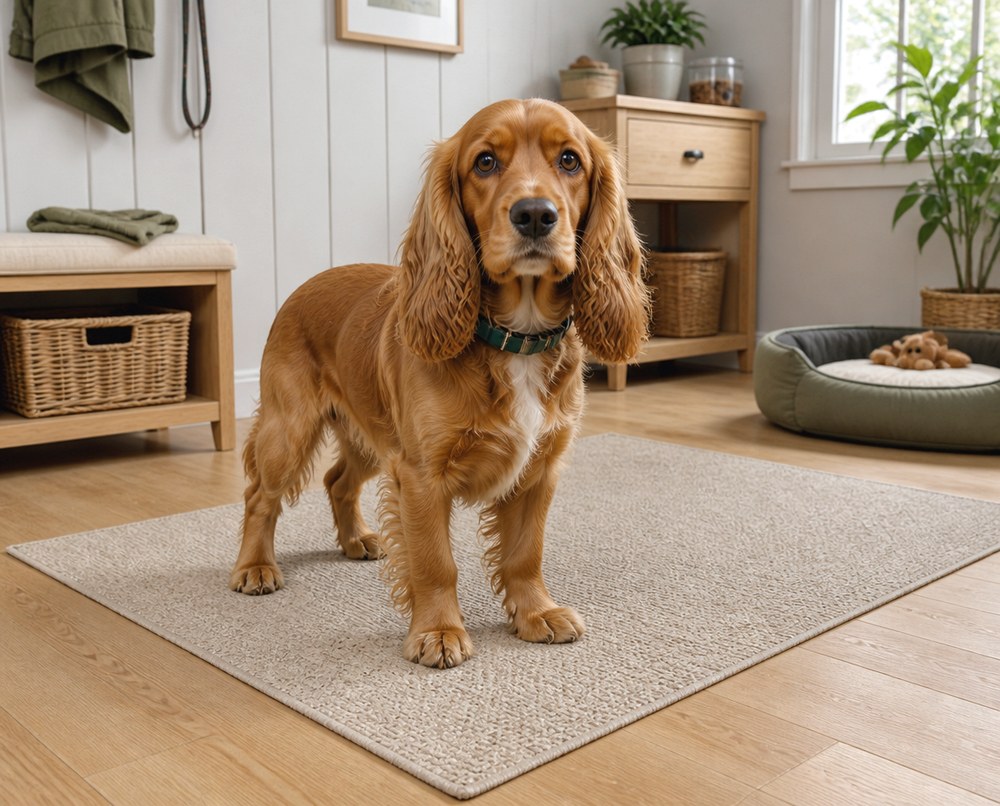
A rug can visually transform a sparse dog room, especially when hard flooring makes the space feel unfinished. It introduces color, softens sound, and defines the part of the room used for resting or quiet play.
For a dog-focused space, practicality should lead the choice. A washable, low-pile rug is easier to maintain than a thick shag style that can trap hair and debris. Skip long fringe or decorative tassels if your dog is inclined to chew fabric.
Use a rug pad or other suitable non-slip method so the rug stays flat instead of sliding as your dog walks across it. This becomes particularly relevant for senior dogs or dogs that are less steady on smooth floors.
A subtle pattern can be useful in a working pet space because everyday hair or small marks may be less visually prominent than they would be on a solid, high-contrast surface.
6. Turn an Empty Wall Into a Neat Leash Drop Zone

Leashes and harnesses are awkward to hide completely because they are used so often. Rather than stuffing them into a distant drawer, give them a contained drop zone near the dog room entrance.
A secure wall rack can keep walking gear visible without allowing straps to pool on the floor. Mount hooks high enough that a curious dog cannot pull hanging gear down, and avoid placing them directly over the bed, bowls, or another area where your dog spends time.
A small closed cabinet above or beside the rack can hold items that should remain inaccessible, creating a compact walk-preparation zone without covering an entire wall in storage.
This idea works especially well when the dog room connects to a mudroom, laundry room, or side entry. The equipment stays close to the route you already use, while the rest of the room remains calmer.
7. Frame the Window With a Quiet Resting Spot
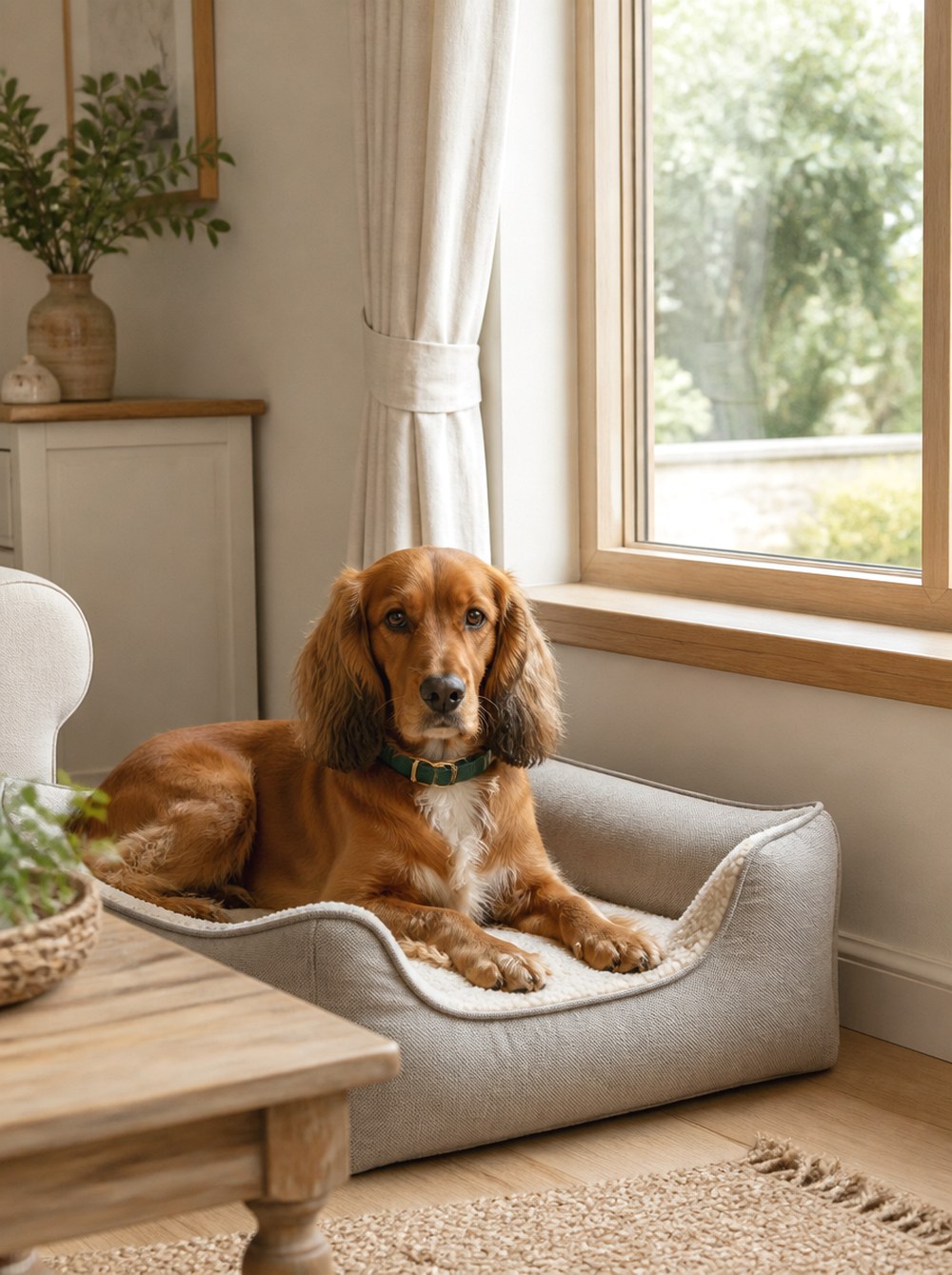
If the room has a window, make it part of the design instead of filling every available wall with furniture. A bed or padded mat positioned nearby can create an appealing daytime resting area while natural light makes the whole room feel warmer.
Keep the actual window setup secure. Screens are not a substitute for preventing unsafe access, and blind or shade cords should never hang where a dog can reach them. Curtains should also be arranged so they are not easily pulled down or chewed.
A window corner does not need much decoration. Soft curtains, a neutral bed, and open floor space may be enough.
Pay attention to direct sunlight and temperature throughout the day. A spot that is comfortable in the morning may become hot later, so your dog should always be able to move to another resting location.
8. Make the Feeding Area Look Intentional
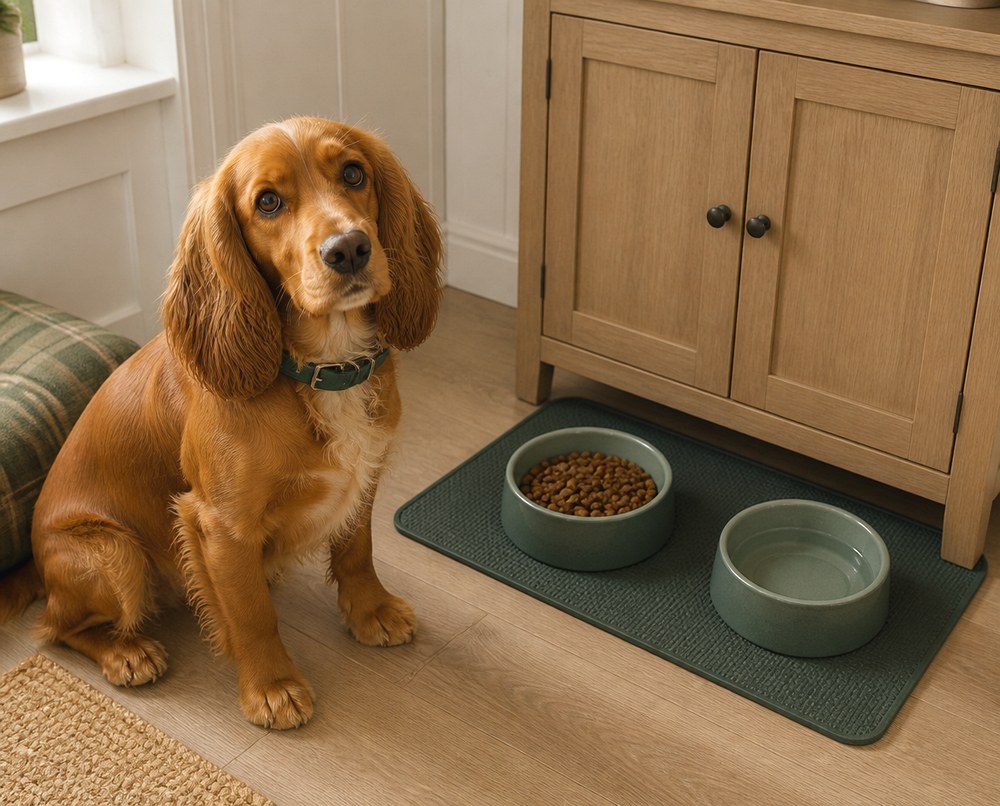
Bowls do not need to be hidden to keep a cozy room polished. Treat the feeding area as its own small zone with a washable mat, stable bowls, and nearby closed storage.
Choose finishes based on durability and appropriate use rather than appearance alone. The decorative element can come from the mat or from the cabinet behind the station instead of ornate bowls that are difficult to clean.
Keep food sealed and stored appropriately rather than leaving an open bag as part of the decor. Cleaning products, medications, supplements, and other items that could be harmful should also stay secured rather than sitting on open shelving.
Leave enough space around the bowls for comfortable access and routine cleanup. A feeding station that can be wiped down quickly is more likely to stay looking good than a densely styled corner filled with objects that have to be moved every time water spills.
9. Add a Blanket Ladder Look Without Accessible Hanging Fabric
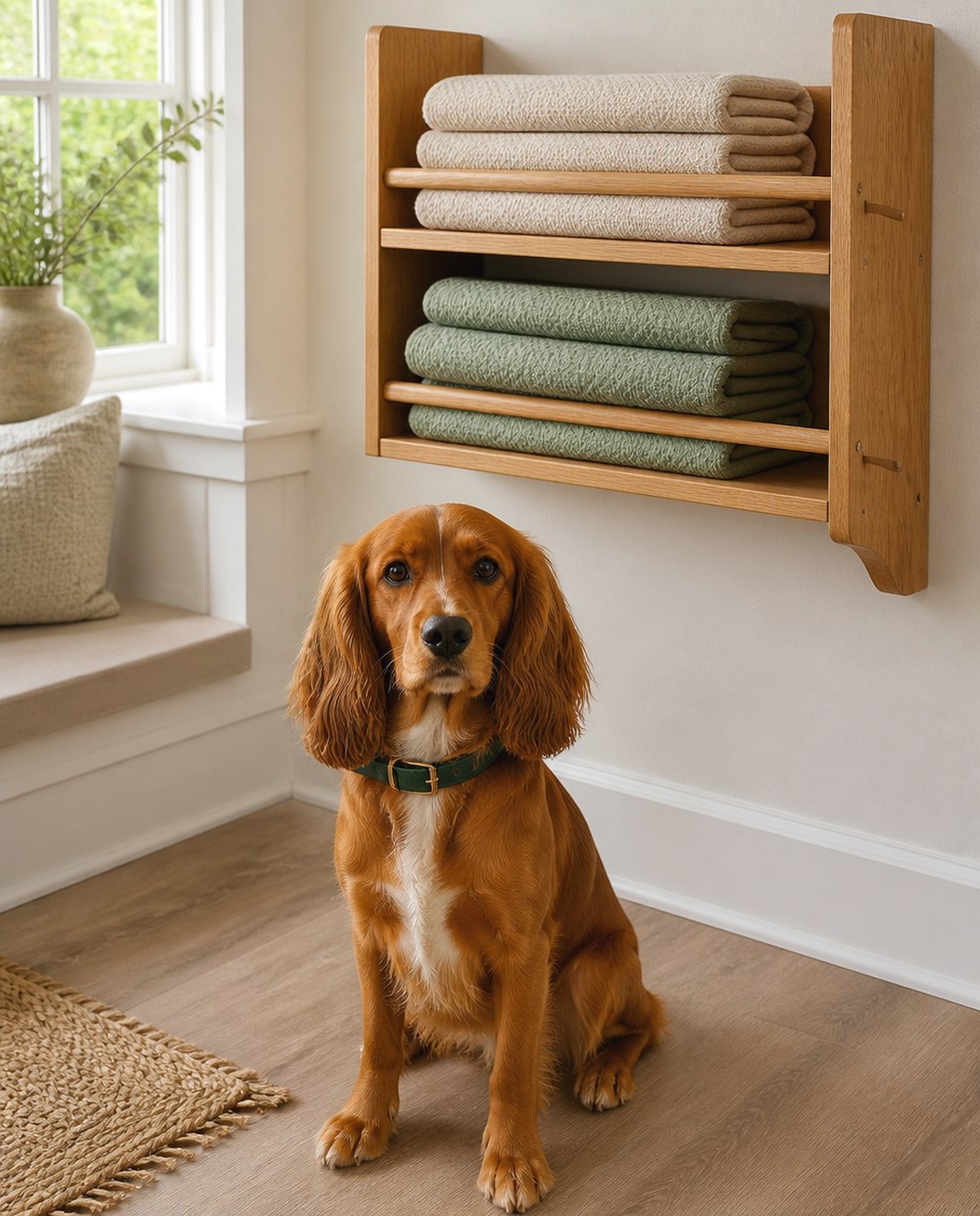
The layered-blanket look suits cozy interiors, but a freestanding decorative ladder is not always a good match for a room where a dog moves freely. You can get a similar visual effect with a secure wall-mounted rack or shallow shelving that keeps folded blankets out of reach.
Arrange two or three washable textiles in complementary tones rather than storing an entire linen collection on display. The variation in texture adds warmth while leaving the floor clear.
This is also a useful way to rotate bedding. Keep one clean replacement ready while the current bed cover or throw is being washed.
If your dog tends to pull at fabric, closed storage may be a better choice than any exposed textile display. Decor should adapt to the dog’s habits rather than requiring constant intervention to keep the setup intact.
10. Display a Small Collection on High Floating Shelves
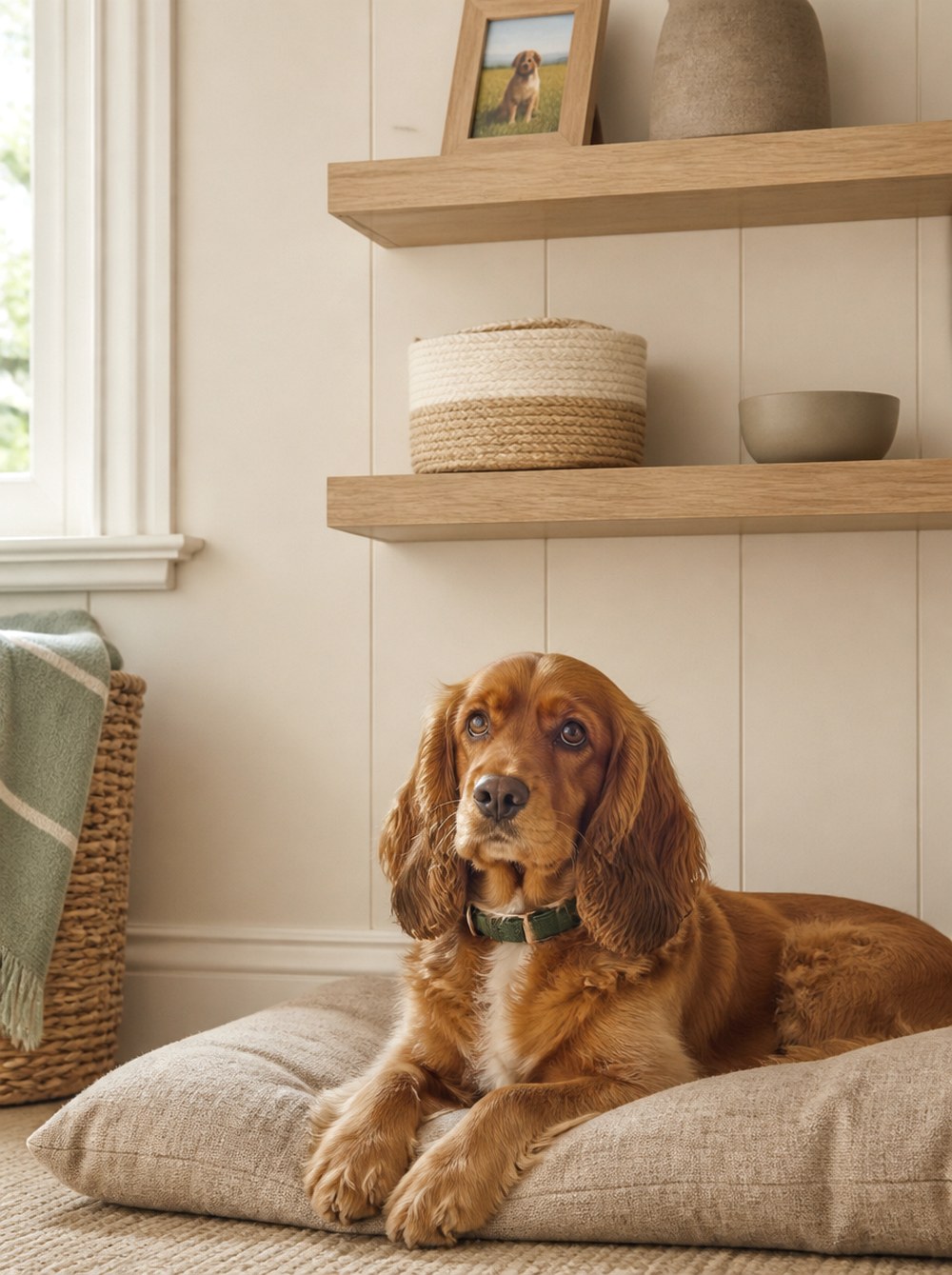
Floating shelves give you somewhere to add personality without sacrificing floor space. They are especially useful in small dog rooms where every lower surface is needed for beds, bowls, or storage.
Keep the styling restrained. One framed photo, a substantial decorative object, or another securely positioned accent may be enough. You do not need to fill every inch.
Anything displayed in a dog room should be chosen with its location in mind. Avoid open flames, toxic plants, dangling decorations, or fragile pieces balanced near shelf edges. Mount shelving securely and place it far enough above the dog’s activity zone that it does not become something to investigate.
The empty space around the displayed objects is part of the look. It keeps a small room from feeling crowded while still giving you a place for decor that is primarily for the humans using the home.
11. Use Closed Cabinets to Create a Calm Grooming Corner
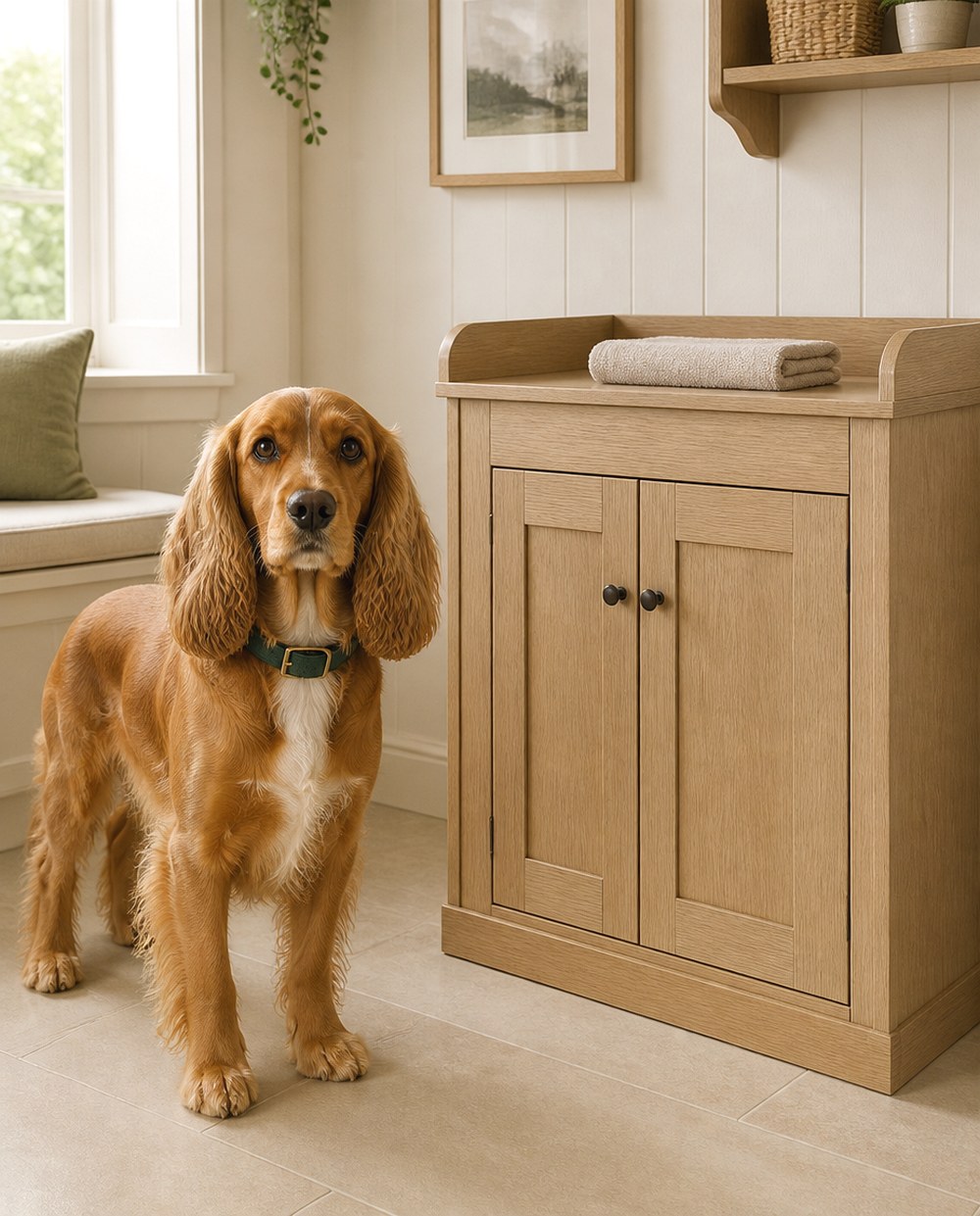
Grooming supplies tend to create visual clutter because brushes, towels, wipes, and other items differ in shape and packaging. A small closed cabinet contains them without forcing the room to look like a utility closet.
Place the cabinet where you can reach it comfortably, but keep anything potentially hazardous secured. Sharp tools, cleaners, medications, and small items should never be left within a dog’s reach simply because they are used frequently.
The top of the cabinet can remain mostly bare, perhaps holding a folded clean towel when you are actively preparing for grooming. That clear surface makes the room feel calmer and is easier to wipe down.
This approach also separates functional supplies from toys and bedding, so you are not searching through one mixed basket every time you need a particular item.
12. Finish With a Soft, Layered Neutral Color Palette
You May Also Like


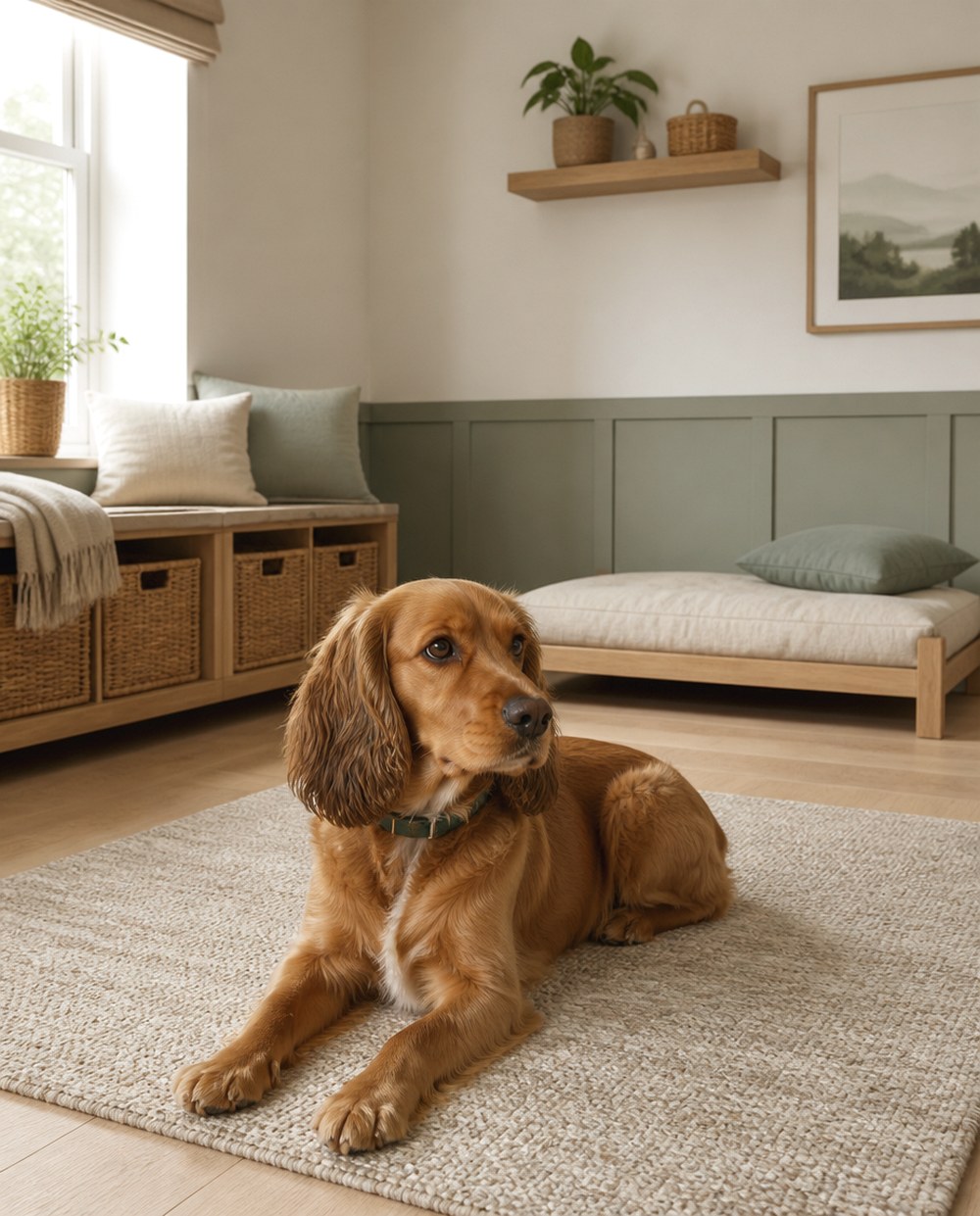
The final layer is not another object. It is the color relationship between everything already in the room.
Start with two or three recurring base materials—perhaps cream walls, light wood, and oatmeal textiles—then add one subdued accent such as sage, muted blue, or warm rust. Repeating that accent in only a few places can make unrelated dog supplies feel more coordinated.
Texture keeps a restrained palette from becoming flat. Smooth painted walls, natural-looking wood, low-pile textiles, and structured storage baskets all read differently even when their colors are similar.
You also do not need to replace every existing dog item just because it does not match. Let the largest visual surfaces establish the palette, and allow practical equipment to remain practical.
A cozy dog room should still have breathing room. Leaving some wall space blank and some floor area open is often what makes the finished arrangement feel settled rather than staged.
Make the Room Cozy Without Decorating Every Corner
Start with the pieces that solve an everyday need: a comfortable bed, dependable storage, an accessible water area, and clear walking space. Once those elements work, add one or two decorative layers such as a washable rug, framed portrait, coordinated textiles, or high wall display.
You can also build the room gradually. A bed nook and organized toy station may be enough for the first version. After living with the setup, you will know which wall needs storage, where walking gear naturally collects, and whether another piece of furniture would genuinely help.
Most importantly, let your dog’s habits shape the final design. A beautiful basket is not useful if it becomes a chew target, and an elaborate display is not worth giving up secure storage or comfortable movement. The coziest room is one that feels like part of the home while still working for the dog who uses it.
