Keep dog puzzles easier to find, clean, rotate, and use with smart storage setups that prevent enrichment toys from taking over your home.
Save This Idea on Pinterest

14 Dog Puzzle Storage Ideas
Save to PinterestDog puzzle storage works best when every toy has a practical place to go after use. Puzzle boards, treat toys, snuffle items, sliding games, and accessories can vary widely in shape, so one oversized basket often becomes messy and makes it harder to notice damaged pieces or find the puzzle you want.
These ideas include open shelves, closed cabinets, rolling carts, drying stations, rotation bins, and compact options for smaller homes. Choose a system based on how many puzzles you own, how often you use them, whether they need washing or drying, and how securely they should be kept away from unsupervised dogs.
Quick List
- Labeled Bin Shelf for Organized Dog Puzzle Storage
- Clear Lidded Boxes for Dust-Free Dog Puzzle Storage
- Rolling Cart Station for Frequently Used Dog Puzzles
- Cube Organizer Baskets for Rotating Dog Puzzle Toys
- Closed Cabinet Storage for Bulky Dog Puzzle Toys
- Under-Bench Drawers for Small-Space Dog Puzzle Storage
- Wall Pegboard System for Hanging Dog Puzzle Accessories
- Slim Pantry Cart for Compact Dog Puzzle Storage
- Washable Tray Shelf for Drying Dog Puzzle Toys
- Puzzle Rotation Bins for Keeping Dog Enrichment Fresh
- Entryway Basket Station for Grab-and-Go Dog Puzzles
- Stackable Tote Storage for Seasonal Dog Puzzle Rotation
- Puzzle Prep Caddy for Treats and Dog Enrichment Tools
- Travel Bag Organizer for Portable Dog Puzzle Games
1. Labeled Bin Shelf For Organized Dog Puzzle Storage

A labeled bin shelf separates dog puzzles by type instead of letting boards, balls, mats, and accessories collect in one deep container. Use sturdy bins that fit the shelf securely, then create simple categories such as food puzzles, sniffing games, refill pieces, or washable toys. Keep frequently used puzzles at an easy adult reach and store heavier items on lower shelves so the unit remains balanced. Labels make it faster to return every item to the same place after cleaning. Before storing a puzzle, check that removable pieces are accounted for and that food residue has been removed. This setup works especially well for households with a growing enrichment collection because the system can expand one bin at a time.
Setup Notes
Choose shelving that is stable and appropriately anchored when needed. Avoid placing tempting food-scented puzzles where an unsupervised dog can pull down a bin.
Pro Tip
Leave one bin partly empty so new puzzles or awkward accessories have a temporary home instead of creating clutter elsewhere.
2. Clear Lidded Boxes For Dust Free Dog Puzzle Storage

You May Also Like

Clear lidded boxes make it easy to see which dog puzzles are inside while protecting less frequently used items from dust and household debris. Group similar puzzles together, placing flat boards in one container and smaller treat toys in another rather than overfilling a single box. Make sure every puzzle is completely clean and dry before closing the lid, especially toys with grooves or hidden food compartments. Boxes can be stacked in a closet or on sturdy shelving as long as heavier containers stay near the bottom. This option is useful when puzzles are rotated rather than used every day. A transparent container also helps owners notice missing pieces without opening several boxes during setup.
Best For
This system suits homes with closet, pantry, or utility-room storage where puzzle toys need protection between rotations.
Use & Maintenance
Open stored boxes periodically and check for trapped moisture, odor, damaged parts, or food residue before returning puzzles to regular use.
3. Rolling Cart Station For Frequently Used Dog Puzzles
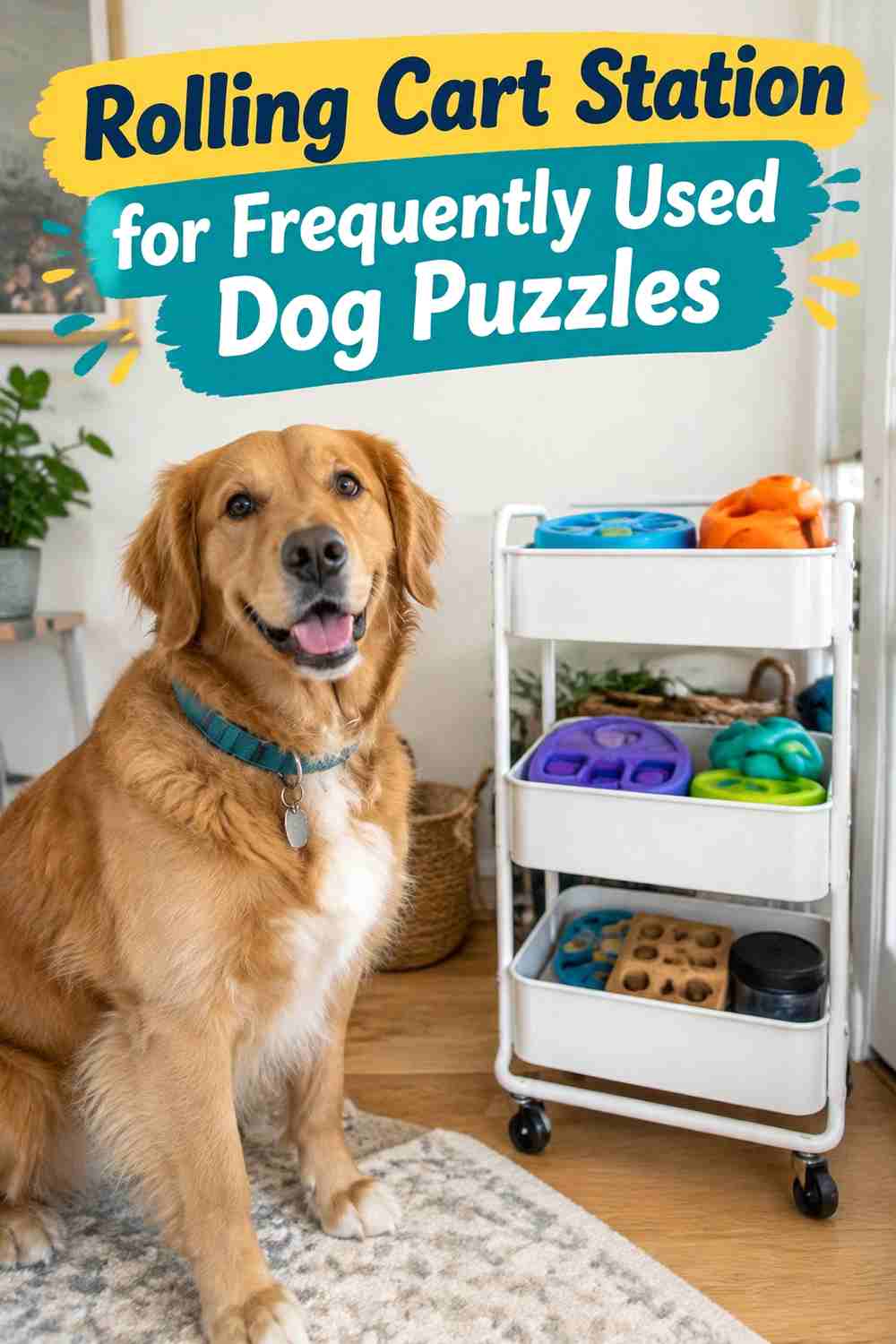
A rolling cart keeps frequently used dog puzzles together and allows the entire enrichment setup to move between rooms. Use separate shelves for ready-to-use puzzles, cleaning supplies, and accessories so wet or dirty items never sit on top of clean toys. Choose a cart with stable wheels and locking casters if it will remain in one location during puzzle preparation. Larger boards can sit flat on a lower shelf while smaller toys fit into shallow bins above. When the activity is finished, roll the cart into a closet, pantry, or other dog-inaccessible storage area. This setup is practical for owners who prepare puzzles often and want everything nearby without dedicating permanent cabinet space to enrichment gear.
Space & Placement
Park the cart where it does not block doors or walking paths, and keep it away from stairs where rolling movement could become hazardous.
Pro Tip
Reserve one small container for loose puzzle inserts so individual pieces do not disappear behind larger toys.
4. Cube Organizer Baskets For Rotating Dog Puzzle Toys

Cube organizer baskets create separate storage zones while keeping the overall setup visually tidy. Assign each cube to a puzzle category or rotation group, such as beginner games, sniffing activities, slow-search toys, or washable accessories. Soft-sided baskets can hide visual clutter, but choose versions with enough structure to hold their shape when heavier puzzle boards are placed inside. Store only clean, dry toys and avoid packing baskets so tightly that pieces bend or become difficult to inspect. This arrangement makes puzzle rotation easier because one basket can come into use while another remains stored. It also works well in living rooms or multipurpose spaces where owners want enrichment supplies nearby without displaying every toy.
Use & Maintenance
Empty baskets occasionally to vacuum crumbs, hair, and debris that settle at the bottom.
Best For
Cube systems are useful for medium-sized collections where owners want both accessible storage and clear rotation categories.
5. Closed Cabinet Storage For Bulky Dog Puzzle Toys
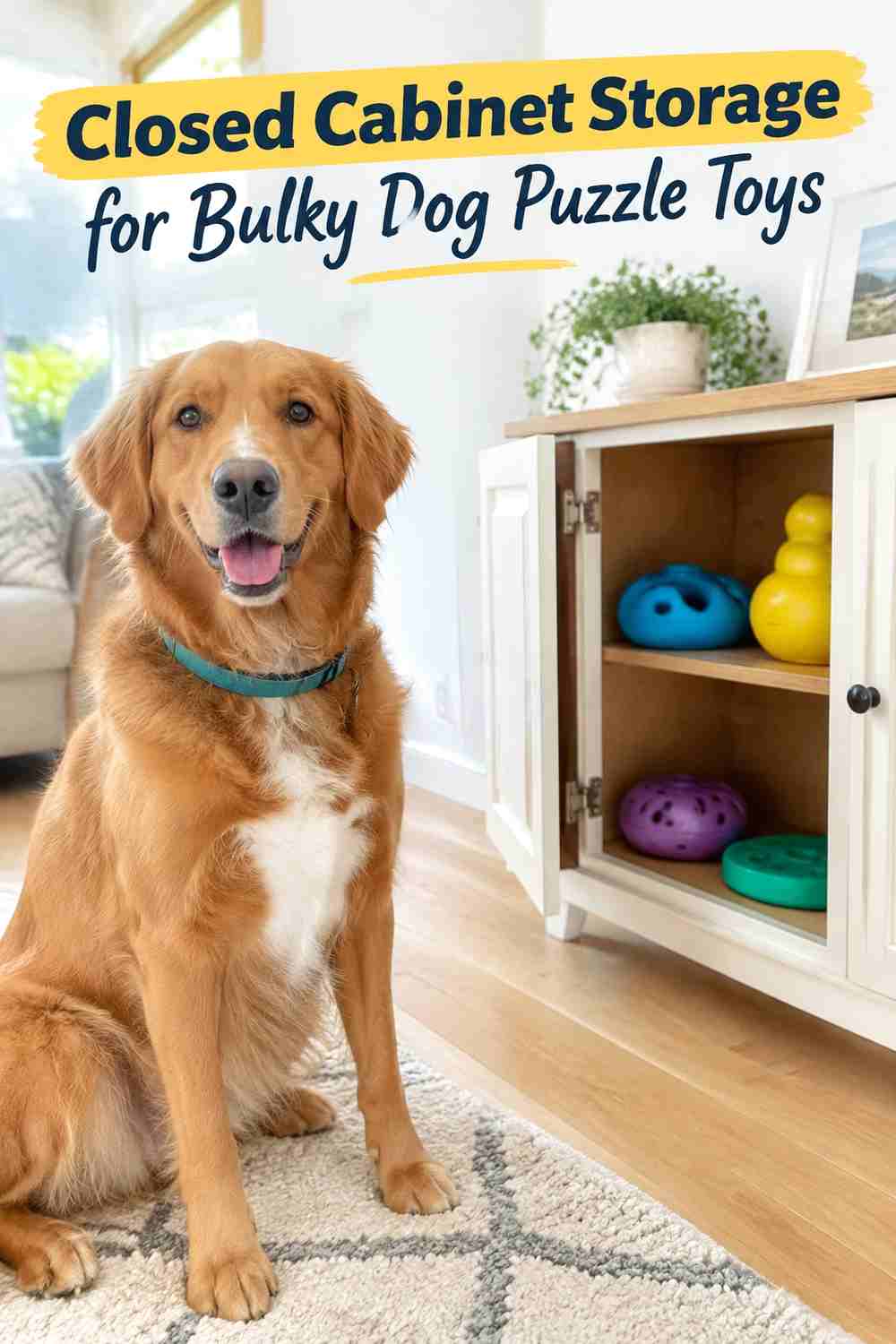
A closed cabinet is a practical choice for bulky dog puzzles that do not stack neatly in baskets. Use adjustable shelves to accommodate large boards, maze toys, wobble puzzles, and other irregular shapes while keeping food-scented items out of unsupervised reach. Place heavier puzzles lower in the cabinet and avoid leaning tall boards where they could fall forward when the door opens. Small removable pieces can go into labeled containers on the same shelf as their matching puzzle. Before closing the cabinet, confirm that washed toys are fully dry so moisture and odor do not build up. This setup works particularly well in kitchens, utility rooms, or mudrooms where owners want puzzle storage completely hidden between enrichment sessions.
Setup Notes
Use shelves deep enough for the largest puzzle to sit securely rather than hanging over the edge.
Comfort & Safety
If your dog can open cabinet doors, use a secure pet-resistant closure and keep treats or food-filled puzzles stored separately when appropriate.
6. Under Bench Drawers For Small Space Dog Puzzle Storage

Under-bench drawers turn otherwise unused space into compact dog puzzle storage. Flat puzzles, lick mats, snuffle accessories, and small treat toys can be sorted into shallow drawers beneath an entryway or mudroom bench. Use dividers or small containers so loose puzzle pieces do not mix together when the drawer opens and closes. This arrangement is especially helpful in apartments where floor-standing shelving would take up valuable space. Keep frequently used items in the easiest drawer and reserve deeper sections for bulkier puzzles or backup supplies. Because enclosed drawers can hide crumbs and moisture, clean puzzle toys before putting them away and check the drawer interior regularly. The bench itself should remain stable and suitable for household use.
Best For
This idea suits smaller homes where pet supplies need to share space with everyday furniture.
Cleaning Notes
Vacuum crumbs and hair from drawer corners and wipe removable organizers before returning clean puzzle toys.
7. Wall Pegboard System For Hanging Dog Puzzle Accessories

A wall pegboard organizes lightweight dog puzzle accessories that are otherwise easy to lose in bins. Use it for washable mats, preparation scoops, small storage pouches, cleaning brushes, or empty accessory bags rather than heavy puzzle boards that could fall. Mount the pegboard securely and high enough that the dog cannot reach hooks, hanging straps, or stored items. Add small secured baskets for replacement pieces and label them by puzzle type. This arrangement keeps accessories visible, making it easier to notice what needs cleaning or restocking before the next enrichment session. A pegboard works particularly well above a cabinet or utility counter, where puzzle preparation already happens and the wall space would otherwise remain unused.
Space & Placement
Keep all hanging components well outside the dog’s reach and away from busy doorways where people may brush against them.
Pro Tip
Photograph complicated puzzles before storing removable pieces so reassembly is easier if several accessories look similar.
8. Slim Pantry Cart For Compact Dog Puzzle Storage

A slim pantry cart fits dog puzzle supplies into narrow spaces beside cabinets, shelving, or utility-room furniture. Its shallow shelves are useful for smaller treat toys, folded snuffle mats, cleaning brushes, and containers of puzzle accessories without creating a large storage footprint. Organize each level by use, keeping clean puzzles separate from anything waiting to be washed. Because slim carts can become top-heavy, place larger or heavier items on the bottom and avoid overloading the upper shelves. Roll the cart out only when needed, then return it to a secure location where the dog cannot investigate food-scented toys without supervision. This storage style works well for apartment owners who need vertical organization but have very little spare floor area.
Best For
Choose this approach when you have a modest puzzle collection but no room for a full cabinet or wide shelving unit.
Use & Maintenance
Check wheels and shelf stability periodically, especially if the cart is moved often between storage and puzzle-preparation areas.
9. Washable Tray Shelf For Drying Dog Puzzle Toys

A washable tray shelf gives freshly cleaned dog puzzles a dedicated place to dry before they return to closed storage. Place removable trays on open shelving and arrange puzzles so air can reach grooves, compartments, and undersides rather than stacking wet pieces together. Keep the drying station in a clean indoor area away from the dog’s unsupervised reach. Trays catch dripping water and small crumbs, making the shelf easier to wipe down after each batch. Once toys are fully dry, move them to their regular bins or cabinets rather than leaving the drying shelf permanently overloaded. This idea is especially useful for food puzzles that need frequent washing because it separates cleaning and storage instead of putting damp toys directly into enclosed containers.
Cleaning Notes
Wash and dry the trays themselves regularly so residue does not collect beneath clean puzzle toys.
Why It Works
A separate drying step makes it easier to inspect puzzle grooves and removable pieces before everything is packed away.
10. Puzzle Rotation Bins For Keeping Dog Enrichment Fresh

Puzzle rotation bins divide a larger collection into smaller groups so the dog does not have every enrichment toy available at once. Create two or more labeled bins and keep only one group in active use while the others stay clean and stored. When interest drops or you want a change, switch the active set rather than buying another puzzle immediately. Include different puzzle styles in each bin so every rotation offers variety instead of several nearly identical toys. Inspect everything during each swap and remove damaged pieces before they return to storage. This approach is useful for owners with many enrichment toys because it reduces everyday clutter while making existing puzzles feel less constantly available.
Use & Maintenance
Choose a rotation rhythm that fits your routine rather than following a rigid schedule. Switch groups when it is genuinely useful.
Pro Tip
Keep a simple list inside each bin so missing puzzle pieces are easier to notice during rotation.
11. Entryway Basket Station For Grab And Go Dog Puzzles

An entryway basket station keeps a few simple dog puzzles ready for quick use without turning the main living space into permanent toy storage. Choose one sturdy basket for frequently used enrichment items such as a snuffle toy, treat ball, or compact puzzle board. Position it inside a cabinet, on a shelf, or otherwise beyond the dog’s unsupervised reach if the toys still smell like food. Limit the basket to a small active selection so it stays easy to carry and reset. Larger collections can remain in another storage area and rotate into this station as needed. This approach works well for busy routines because owners can grab one activity quickly, then clean and return it without searching through several containers.
Best For
This setup suits households that use one or two enrichment activities regularly and keep a larger backup collection elsewhere.
Cleaning Notes
Shake out or wipe the basket frequently because crumbs from puzzle toys can collect underneath them.
12. Stackable Tote Storage For Seasonal Dog Puzzle Rotation
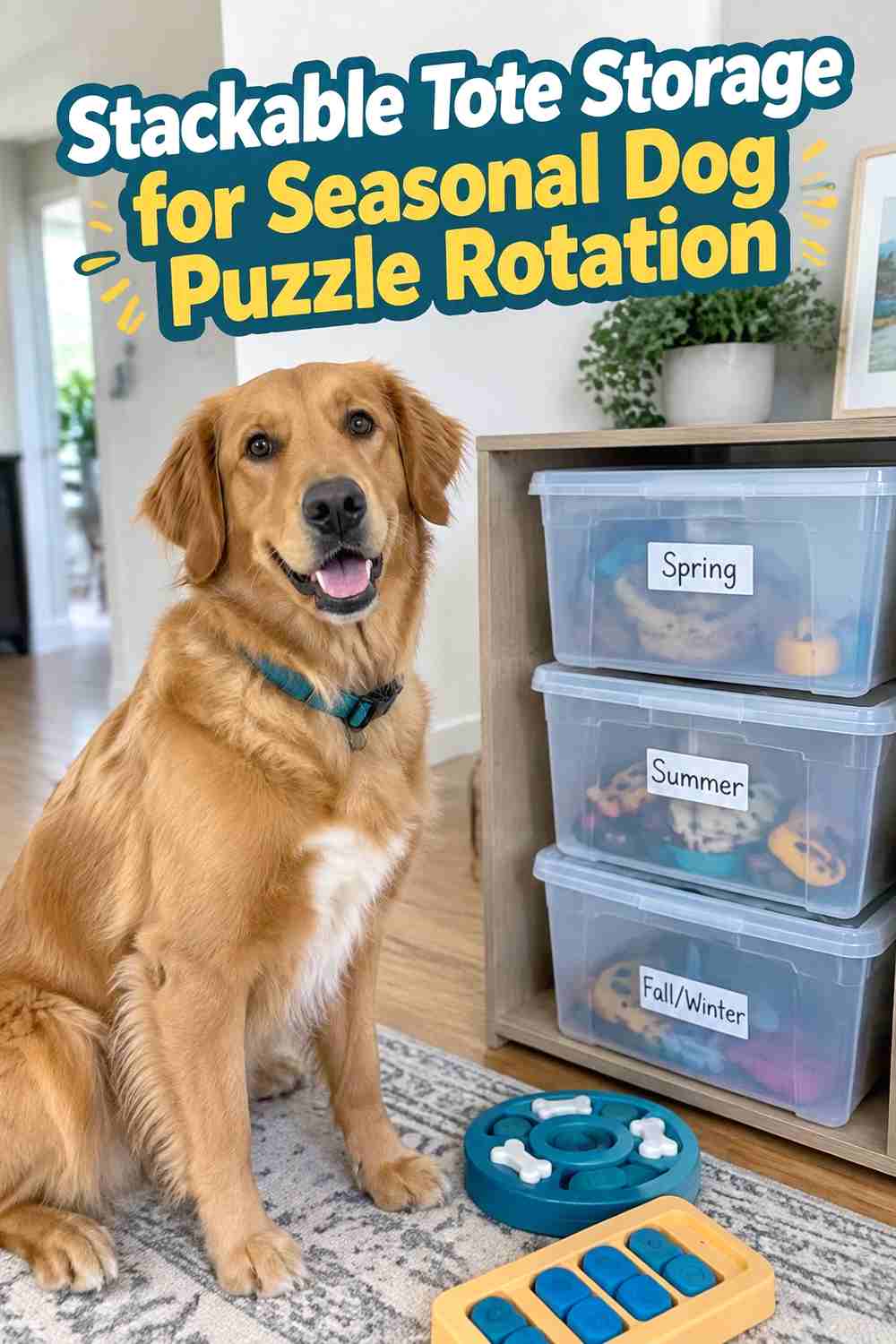
Stackable totes provide longer-term storage for puzzles that are used only occasionally or rotated by season, travel schedule, or household routine. Sort puzzles into clearly labeled containers and keep similar items together so reopening a tote does not require unpacking the entire stack. Hard-sided boxes protect bulky toys better than soft bags, especially in closets or storage rooms where other household items may sit nearby. Clean and dry every puzzle before packing it, and avoid sealing away anything with leftover food. Store heavier totes at the bottom and keep stacks low enough to remain stable. This system is useful for larger collections, but active everyday puzzles should stay somewhere easier to reach so frequent lifting does not become inconvenient.
Space & Placement
Use a dry indoor storage area where temperature and moisture are reasonably controlled rather than an exposed outdoor location.
Pro Tip
Add a simple contents label to the short side of each tote so you can identify it without moving the whole stack.
13. Puzzle Prep Caddy For Treats And Dog Enrichment Tools

A puzzle prep caddy keeps the small tools used during enrichment preparation together without mixing them into toy-storage bins. Use divided compartments for measuring scoops, cleaning brushes, spare puzzle parts, wipes intended for pet-safe cleanup, or sealed containers used during puzzle preparation. Food and treats should remain in their normal secure storage unless the caddy includes an appropriate sealed container and is kept beyond the dog’s reach. Carry the caddy to the preparation area, then return it to its storage spot when the activity is ready. This idea is helpful when puzzle setup involves several little items that tend to disappear into kitchen drawers. It also keeps preparation tools separate from washed toys and dirty items awaiting cleanup.
Setup Notes
Keep the caddy lightweight enough to carry easily and avoid overfilling compartments with duplicate tools you rarely use.
Use & Maintenance
Wipe the caddy regularly and remove crumbs or food residue before returning it to storage.
14. Travel Bag Organizer For Portable Dog Puzzle Games
You May Also Like




A travel bag organizer keeps compact dog puzzles ready for road trips, hotel stays, visits, or other situations where familiar enrichment may be useful. Choose a washable zippered bag with separate pockets for a few portable puzzles, cleanup supplies, and removable pieces. Select toys that pack flat or have securely contained components rather than bringing large boards that are awkward to transport. Clean and dry every item before packing, and inspect the bag after each trip for crumbs or forgotten treats. Keep the organizer stored with other dog travel supplies so it can be prepared without disturbing the main puzzle-storage system at home. This setup works best as a small curated kit rather than a bag containing the dog’s entire enrichment collection.
Best For
Choose familiar, durable puzzles that your dog already understands rather than introducing complicated new games in an unfamiliar setting.
Pro Tip
Keep a short packing checklist inside the bag so puzzle pieces and cleaning supplies are easier to account for before leaving.
How to Choose the Right Idea
Start with the size and shape of your dog puzzle collection. Flat boards may fit shelves or drawers, while bulky wobble toys often need deeper bins or cabinets. If you have many small accessories, choose a system with compartments so replacement pieces do not disappear underneath larger toys.
Next, consider how often the puzzles are used. Everyday enrichment belongs somewhere convenient, such as a rolling cart, entryway station, or accessible cabinet. Puzzles used occasionally can move into labeled totes or rotation bins. Toys that require frequent washing benefit from a separate drying shelf before they return to enclosed storage.
Your dog’s habits matter too. Food-scented puzzles, treat containers, loose accessories, and cleaning tools should not remain within reach of a dog that may chew, pull down bins, or investigate storage independently.
Finally, match the system to your home. Small spaces benefit from vertical shelves, under-bench drawers, and slim carts, while larger storage areas can support cabinets and stackable totes. The best setup is one you can clean, reset, and maintain without turning puzzle time into a complicated chore.
Final Thoughts
Good dog puzzle storage should make enrichment easier to use, not simply hide toys from view. Start by separating clean, drying, active, and rotated puzzles, then choose containers that fit the shapes you actually own.
A simple labeled system can make cleanup faster, help you spot damaged pieces, and keep your dog’s puzzle collection from becoming household clutter.
FAQs
1. Should dog puzzles be stored with regular dog toys?
They can be, but separate storage is often more practical for puzzles with removable pieces, food residue, or special cleaning needs. Dedicated bins also make puzzle rotation easier.
2. Do dog puzzles need to be washed before storage?
Food puzzles should be cleaned as appropriate for their material and allowed to dry completely before enclosed storage. Check grooves and removable components for leftover food before putting them away.
3. How can I store dog puzzles in a small apartment?
Use vertical shelving, slim carts, under-bench drawers, or a small rotation system. Keeping only a few puzzles in active use reduces the amount of everyday storage space required.
4. How should small puzzle pieces be stored?
Place removable pieces in a labeled container, pouch, or compartment with the matching puzzle. Check that all pieces are present before storing the toy or offering it again.
5. Is rotating dog puzzles better than leaving all of them out?
Rotation can reduce clutter and may help keep familiar activities interesting for some dogs. You do not need a strict schedule; simply switch available puzzles when the current selection is no longer useful or engaging.
CTA
Save your favorite storage setup and explore more practical dog enrichment ideas for a cleaner, easier everyday routine.
