Create a cleaner, easier dog mealtime routine with organized dinner stations designed for bowls, food storage, small spaces, messy eaters, puppies, and senior dogs.
Save This Idea on Pinterest

14 Dog Dinner Station Ideas
Save to PinterestDog dinner stations work best when they give your dog a predictable, comfortable place to eat while making meal preparation and cleanup easier for the household. Some setups keep food storage nearby, while others focus on quiet placement, washable surfaces, or better use of limited floor space.
These 14 ideas cover apartments, kitchens, mudrooms, multi-dog homes, puppies, seniors, storage, and messy mealtimes. Keep food stored according to its original directions, clean bowls regularly, and avoid prescribing special portions or diets based on a decorative feeding setup. If your dog develops sudden appetite, swallowing, or eating problems, veterinary guidance is more appropriate than changing the station alone.
Quick List
- Compact Kitchen Dinner Station for Everyday Dog Meals
- Cabinet-Side Dog Dinner Station With Hidden Food Storage
- Separate Multi-Dog Dinner Stations for Comfortable Mealtimes
- Small Apartment Dog Dinner Station With Vertical Storage
- Quiet Corner Dinner Station for Easily Distracted Dogs
- Easy-Clean Dog Dinner Station for Messy Eaters
- Senior Dog Dinner Station With Stable Easy Access
- Puppy Dinner Station With Simple Easy-Clean Setup
- Pantry-Side Dog Dinner Station for Organized Meal Prep
- Rolling Cart Dog Dinner Station for Flexible Meal Storage
- Mudroom Dog Dinner Station for Durable Easy-Clean Floors
- Wall-Protected Dog Dinner Station for Splash Control
- Under-Shelf Dog Dinner Station for Tiny Feeding Spaces
- Minimal Dog Dinner Station With Matching Bowl Storage
1. Compact Kitchen Dinner Station For Everyday Dog Meals

A compact kitchen dinner station keeps your dog’s food and water bowls in one defined spot without taking over a busy room. Choose an unused wall or cabinet end where your dog can approach comfortably, stand without being bumped, and leave without squeezing past people. Place the bowls on a washable non-slip mat large enough to catch ordinary crumbs and water drips. Keep bulk food, medications, and cleaning products elsewhere so the feeding area remains simple. This setup works best when the kitchen already serves as the center of meal preparation and the station does not interfere with appliance doors or cabinet access. Pick up leftover food as appropriate and clean the surrounding floor regularly.
Space & Placement
Avoid narrow paths between counters and islands. A quiet cabinet end or unused corner usually gives the dog more room while keeping the setup close to meal-preparation areas.
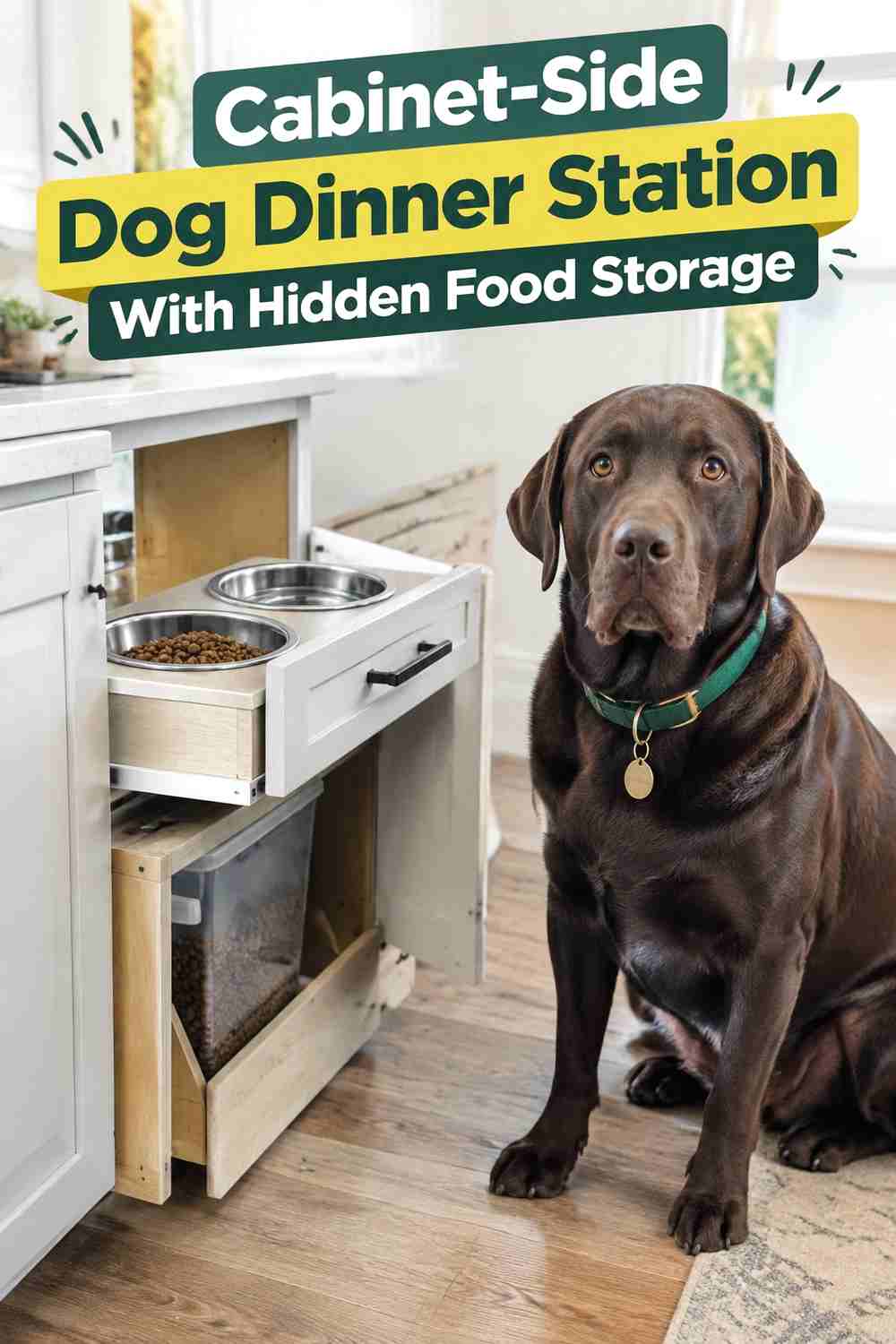
2. Cabinet Side Dog Dinner Station With Hidden Food Storage
You May Also Like

A cabinet-side station combines visible bowls with hidden storage so the feeding area stays tidy between meals. Dedicate a nearby cabinet shelf to properly stored dog food, clean measuring tools, and other routine feeding supplies while leaving the floor around the bowls uncluttered. Place the bowls on a washable mat beside the cabinet rather than directly in front of a door that needs to open during meals. Keep household cleaners, medications, and unrelated products in separate secure storage. This arrangement makes meal preparation efficient without creating a tower of food bins around the dog’s eating space. Return supplies after each meal so the countertop and floor do not gradually become permanent storage areas.
Use & Maintenance
Wipe cabinet handles and shelves periodically, especially if they are touched during food preparation. Keep food packaging information available even if you use an appropriate secondary container.
3. Separate Multi Dog Dinner Stations For Comfortable Mealtimes

Separate dinner stations give each dog a defined place to eat without requiring them to share bowls or stand closely together. Set up individual bowls in different parts of the room, opposite corners, or separate rooms depending on how your dogs behave around food. Each station should have enough space for the dog to approach and leave without passing directly through another dog’s eating area. Clearly identify bowls if different dogs receive different foods. Supervise until you know whether either dog tries to switch stations or approach the other bowl. A visually symmetrical setup is less important than comfortable spacing. If one dog repeatedly interferes, greater separation is usually more practical than simply moving the bowls a few inches apart.
Best For
This layout suits multi-dog households where individual resources make meals easier to manage. It can also simplify cleanup and help owners keep each dog’s bowl in the correct location.
4. Small Apartment Dog Dinner Station With Vertical Storage
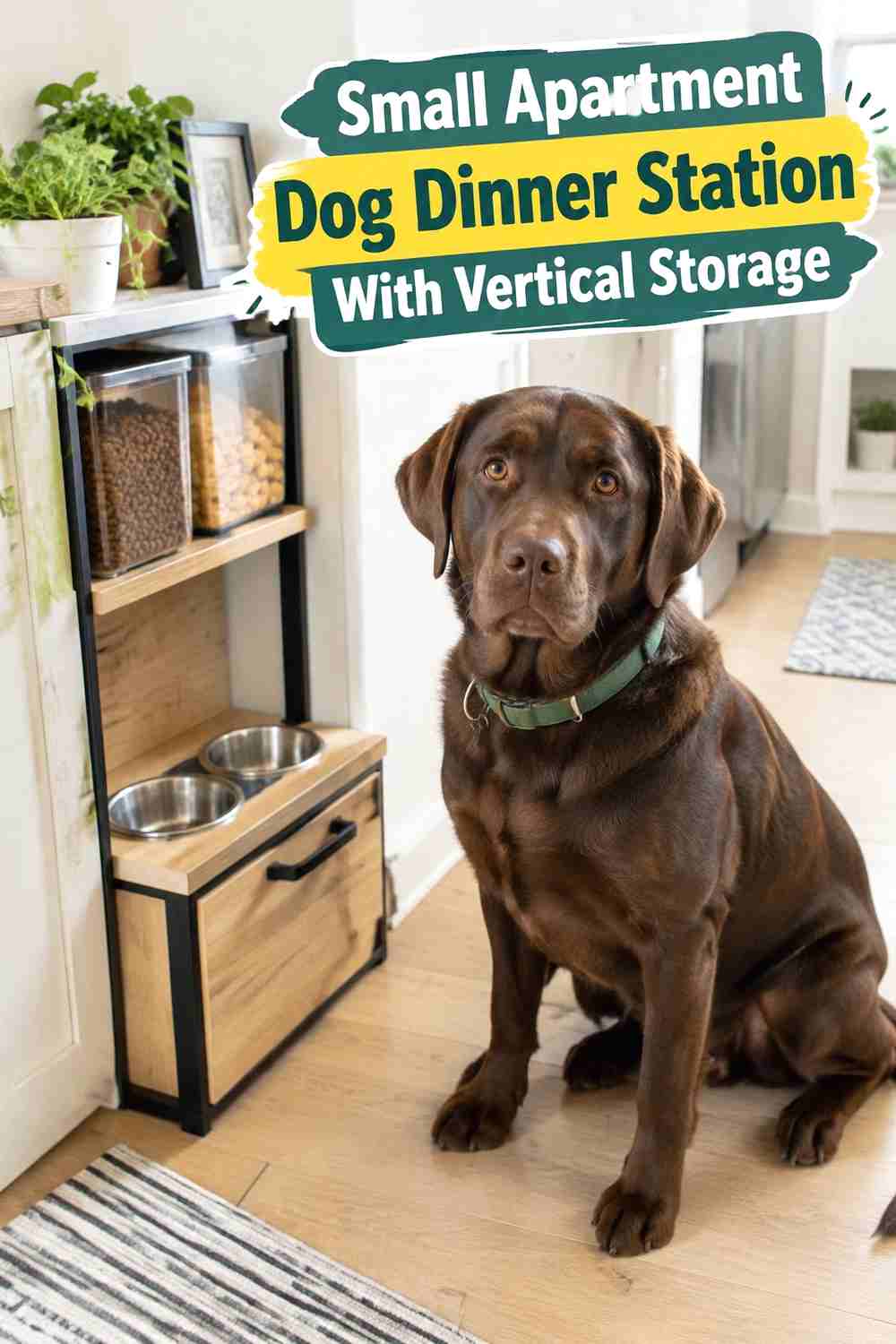
A small apartment dinner station can use wall space for storage while keeping only the bowls on the floor. Install a secure narrow shelf or wall organizer above adult reach height from the dog, then store lightweight feeding accessories or clean supplies there. Keep heavy food containers and breakable items elsewhere rather than directly above the bowls. Below, use a compact washable mat and place the feeding area against a wall that does not form part of the main walking route. Vertical storage works especially well when kitchen cabinets are limited and you want dog supplies contained without adding another piece of furniture. Leave generous head clearance so your dog never feels tucked underneath a low shelf while eating.
Space & Placement
Measure the complete standing area your dog needs, not just the bowl footprint. Tiny spaces still require enough room for comfortable turning and easy access.
5. Quiet Corner Dinner Station For Easily Distracted Dogs
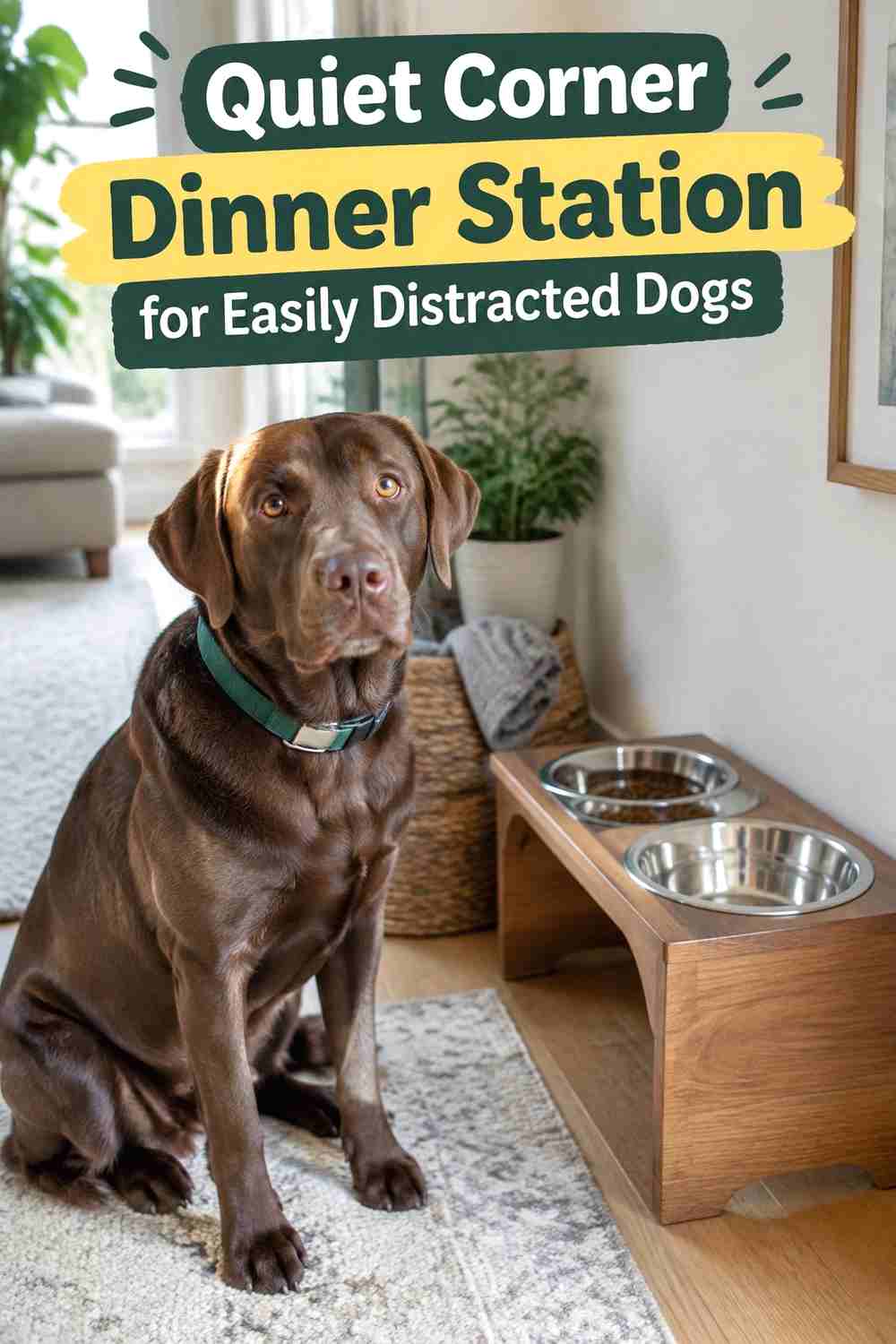
A quiet corner dinner station gives an easily distracted dog a simpler environment away from doorways, television activity, children’s play areas, and constant household traffic. Choose a low-traffic wall or corner but leave an open exit route rather than trapping the dog between furniture. Keep the station visually simple with bowls, a washable mat, and little else. Toys, storage baskets, and another pet’s feeding supplies can create unnecessary activity around meals. This setup may suit dogs that repeatedly stop eating to monitor movement elsewhere in the room. Let the dog eat without people constantly approaching the bowl. If eating habits change suddenly or the dog repeatedly refuses food, seek veterinary guidance rather than assuming distractions are the only cause.
Comfort & Safety
Give the dog space while remaining available for normal supervision. The dinner station should feel predictable, not isolated or difficult to leave.
6. Easy Clean Dog Dinner Station For Messy Eaters
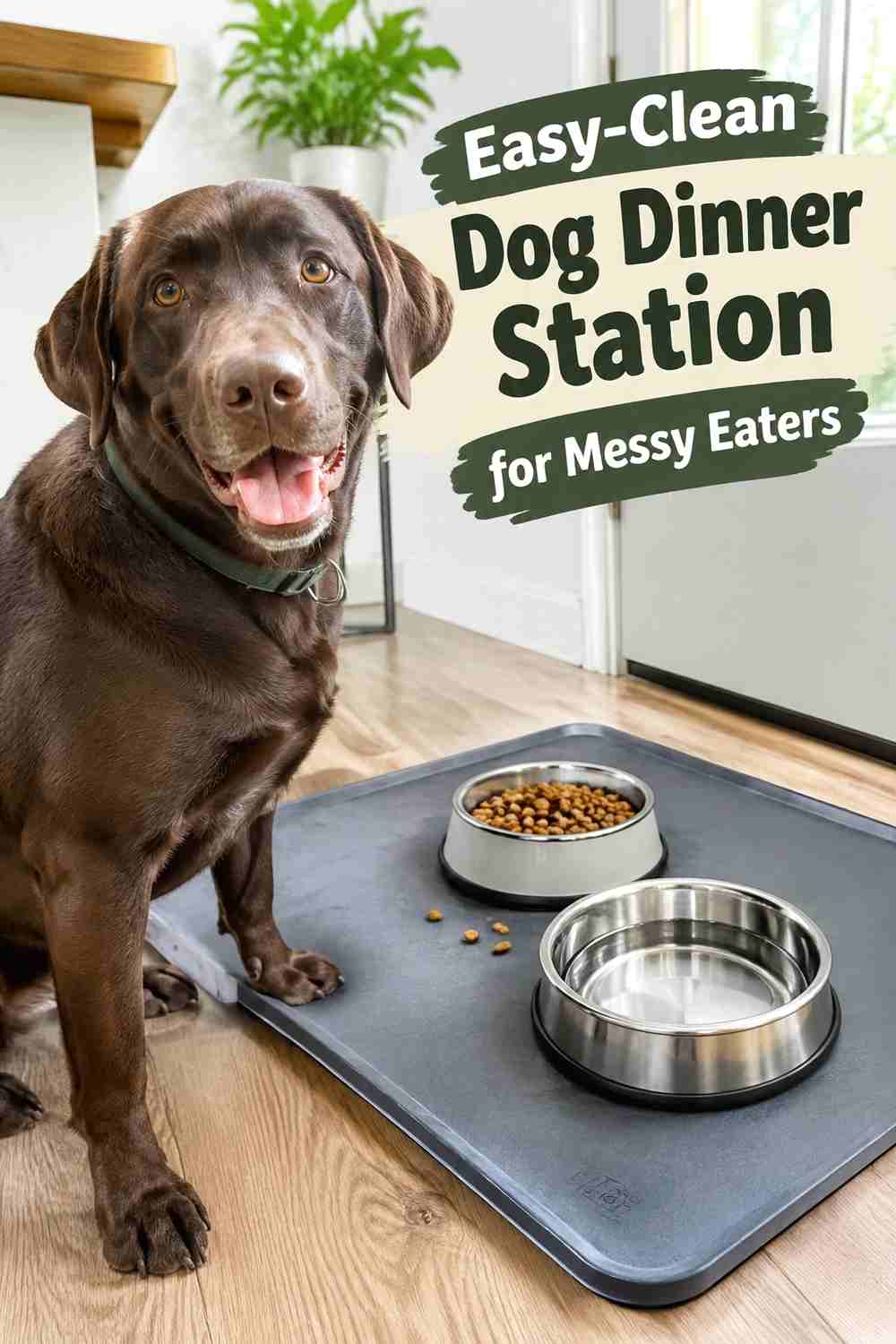
An easy-clean dinner station focuses on containing crumbs, drips, and food splatter before they spread across the room. Use bowls that stay stable during eating and place them on a broad waterproof or machine-washable mat rather than a tiny decorative pad. Position the station on hard flooring when possible so routine sweeping and wiping are simple. Keep nearby walls and cabinets easy to clean, and avoid fabric storage baskets directly beside the bowls where food residue can collect. Removable bowls make regular washing more convenient, while a simple layout lets you lift everything quickly for deeper floor cleaning. For especially messy drinkers, extend the mat farther beyond the water side of the station.
Cleaning Notes
Lift the mat regularly and clean underneath it. Moisture and crumbs can collect out of sight even when the visible surface appears tidy.
7. Senior Dog Dinner Station With Stable Easy Access

A senior dog dinner station should prioritize secure footing, easy access, and a predictable location. Place bowls on a non-slip mat in an area the dog can reach without navigating stairs, tight turns, or slippery flooring. Keep the setup free of loose rugs, storage bins, and furniture legs that complicate movement. Bowl height should suit the individual dog rather than following a blanket rule for older pets; not every senior needs an elevated feeder. Watch how your dog approaches, stands, and leaves the station, and avoid making frequent layout changes once a comfortable arrangement is established. New difficulty standing, bending, swallowing, or eating deserves veterinary attention rather than repeated DIY adjustments.
Comfort & Safety
Choose stability over decorative furniture. Bowls, mats, and any feeding stand should remain secure when the dog shifts weight or leans forward.
8. Puppy Dinner Station With Simple Easy Clean Setup
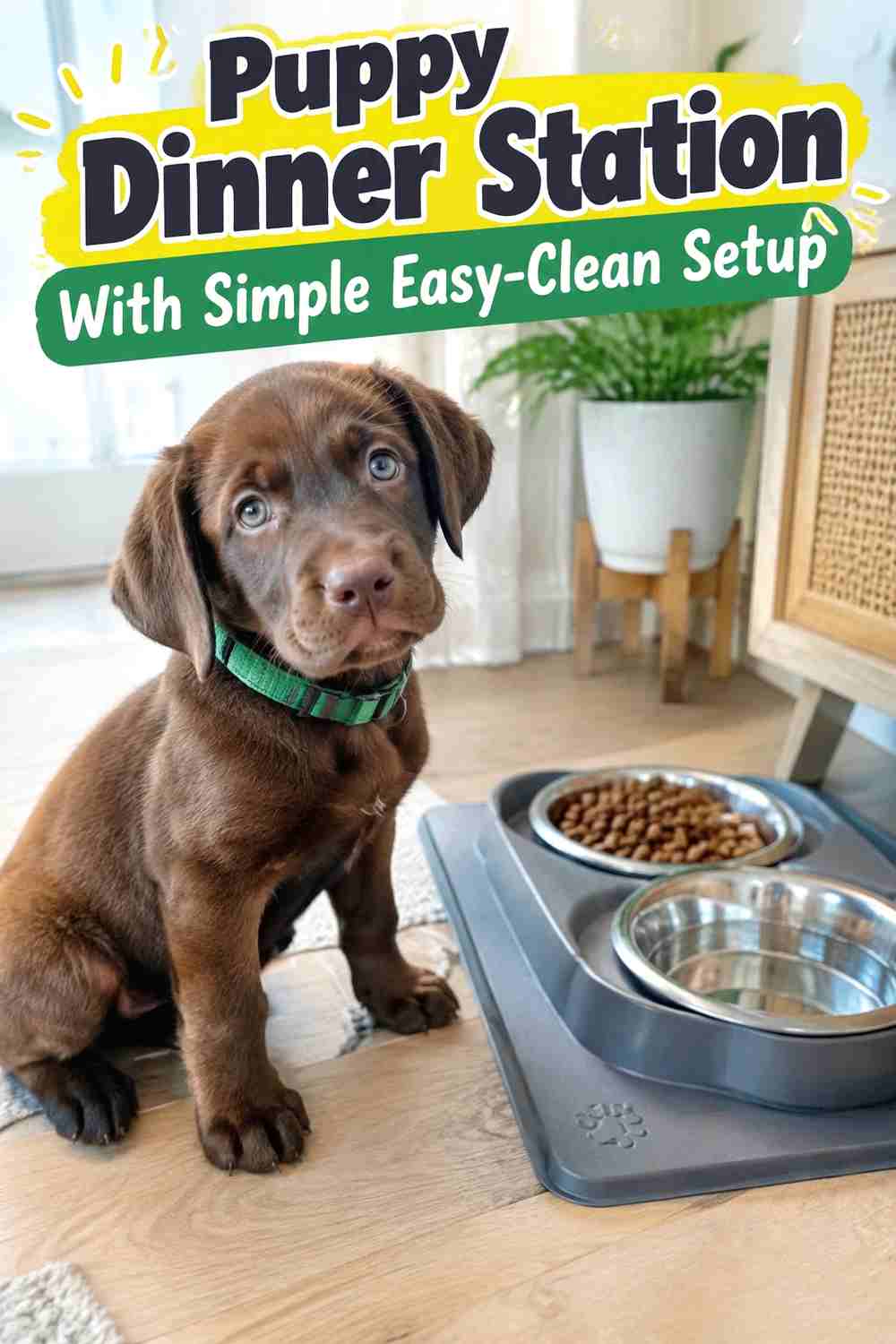
A puppy dinner station works best when it is simple, sturdy, and easy to reset after enthusiastic meals. Place appropriately sized bowls on a washable non-slip mat in a secure area away from cords, cleaning products, and small objects the puppy could investigate. Avoid surrounding the bowls with decorative signs, baskets, or accessories that become chew targets. Keep the station in one predictable location so mealtime does not require searching around the home. Because puppies grow and routines change, choose equipment that is easy to replace or adjust rather than building a highly permanent feeding cabinet immediately. Clean spills promptly and pick up unnecessary food or equipment when the meal is finished.
Setup Notes
Check bowls, mats, and nearby objects regularly for chewing damage. Young dogs often explore their environment with their mouths, so simple setups are easier to supervise.
9. Pantry Side Dog Dinner Station For Organized Meal Prep
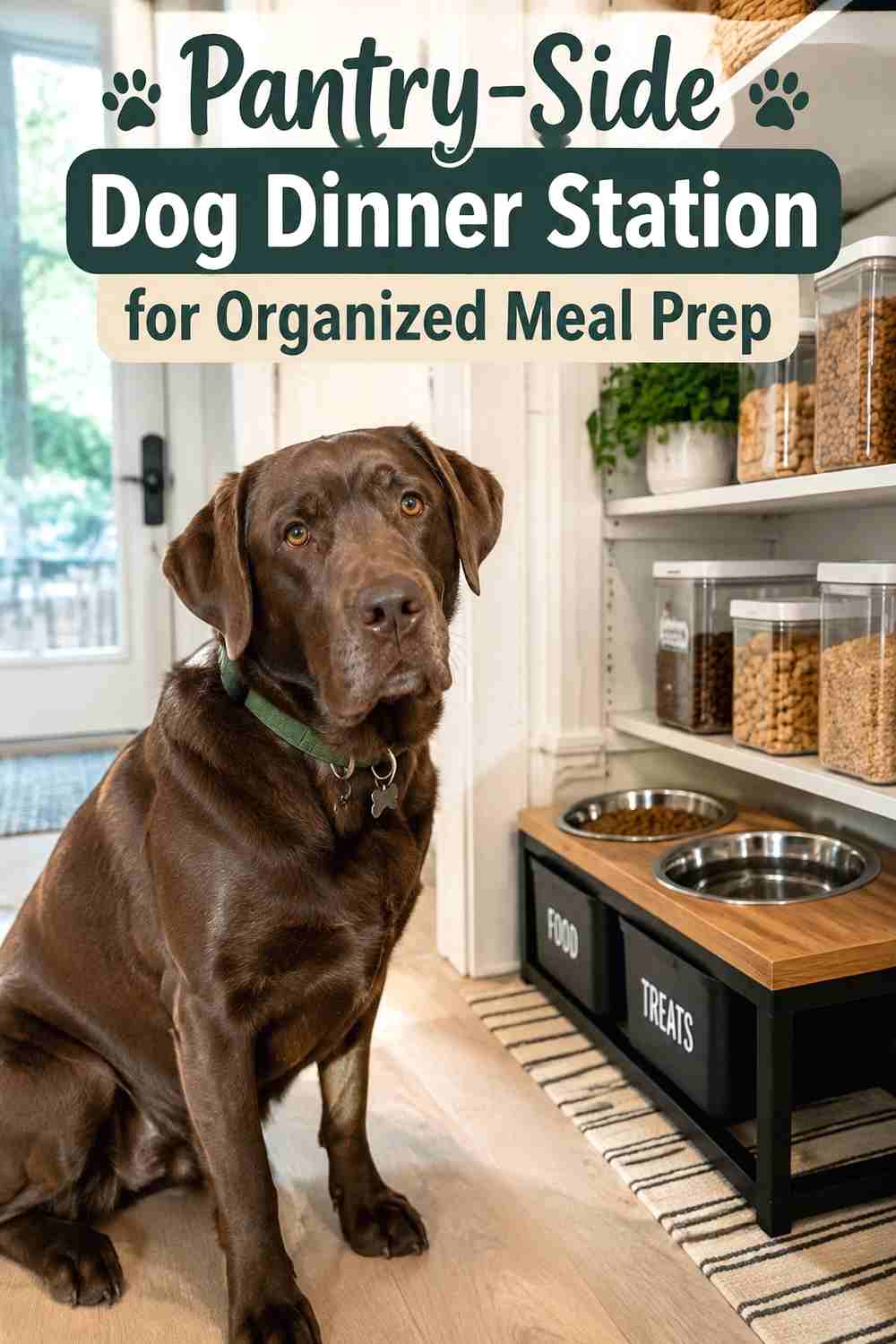
A pantry-side dinner station keeps meal preparation efficient by placing the feeding area close to stored supplies without putting the bowls inside a busy pantry walkway. Use an open wall just outside the pantry for the bowls and mat, then keep food and clean feeding accessories properly stored inside. This reduces the number of containers left on countertops while making dinner setup quick. Arrange supplies so older packages are noticed rather than pushed behind newer ones, and keep product labels or original information accessible. Avoid storing dog food directly beside cleaners or other unsuitable household products. After dinner, return scoops and containers to the pantry instead of leaving them around the bowl area.
Use & Maintenance
Review stored supplies periodically and clean the shelf before restocking. Keeping the preparation zone separate from the floor feeding area can make both spaces easier to maintain.
10. Rolling Cart Dog Dinner Station For Flexible Meal Storage
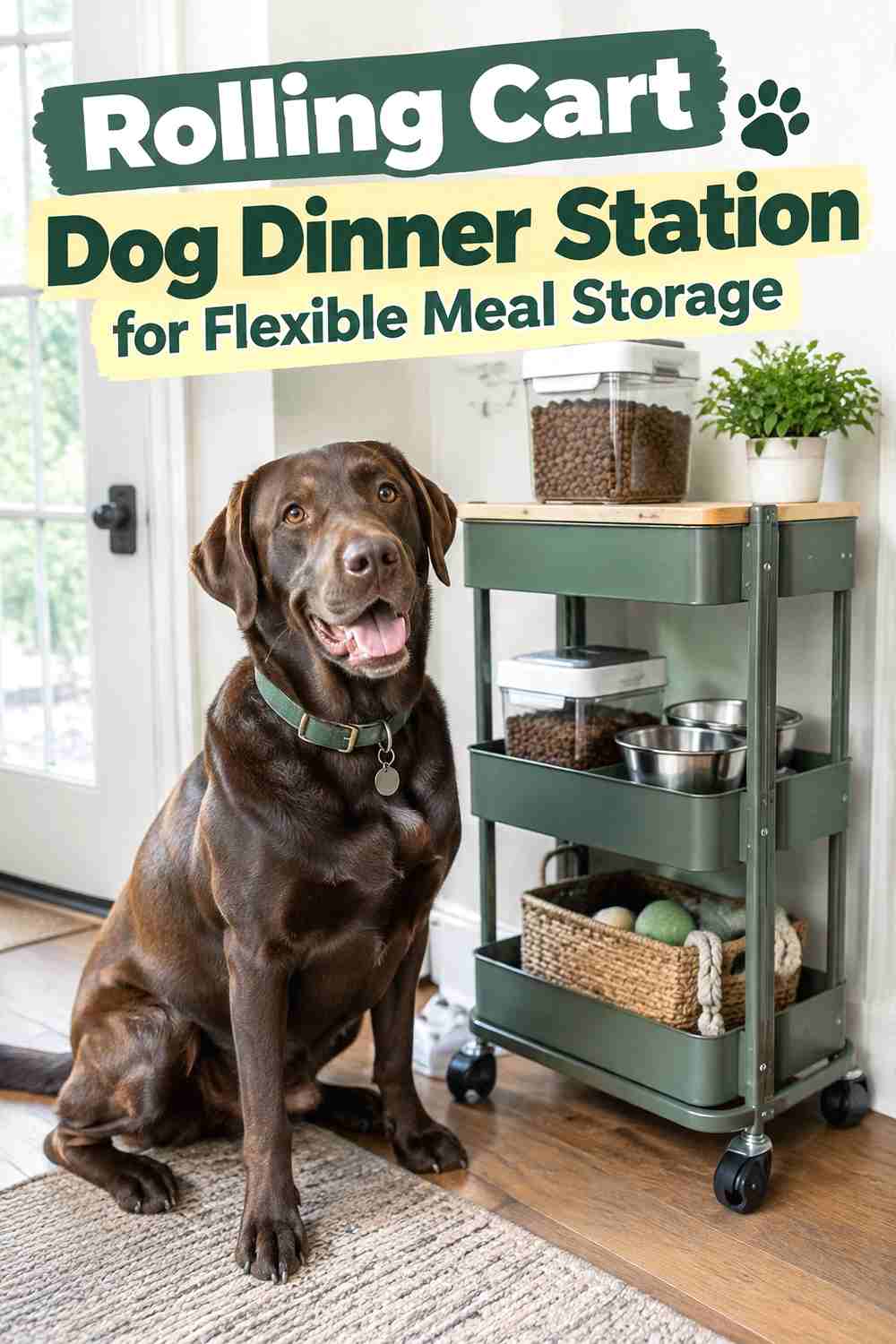
A rolling cart can organize dinner supplies when your home lacks a permanent feeding cabinet. Use the cart for clean bowls, towels, and non-hazardous feeding accessories, then park it securely against a wall when not in use. Store food only in a way appropriate for the product and container rather than assuming an open cart is suitable for every package. Keep heavy items on lower tiers to improve stability and prevent the dog from investigating accessible supplies. At mealtime, the cart can move closer to the feeding area and return afterward, leaving the floor less cluttered. This option is especially useful in rental homes or multipurpose rooms where permanent built-in storage is impractical.
Pro Tip
Use removable washable bins on each tier. They contain crumbs and make it easier to clean the cart without unloading every individual item.
11. Mudroom Dog Dinner Station For Durable Easy Clean Floors
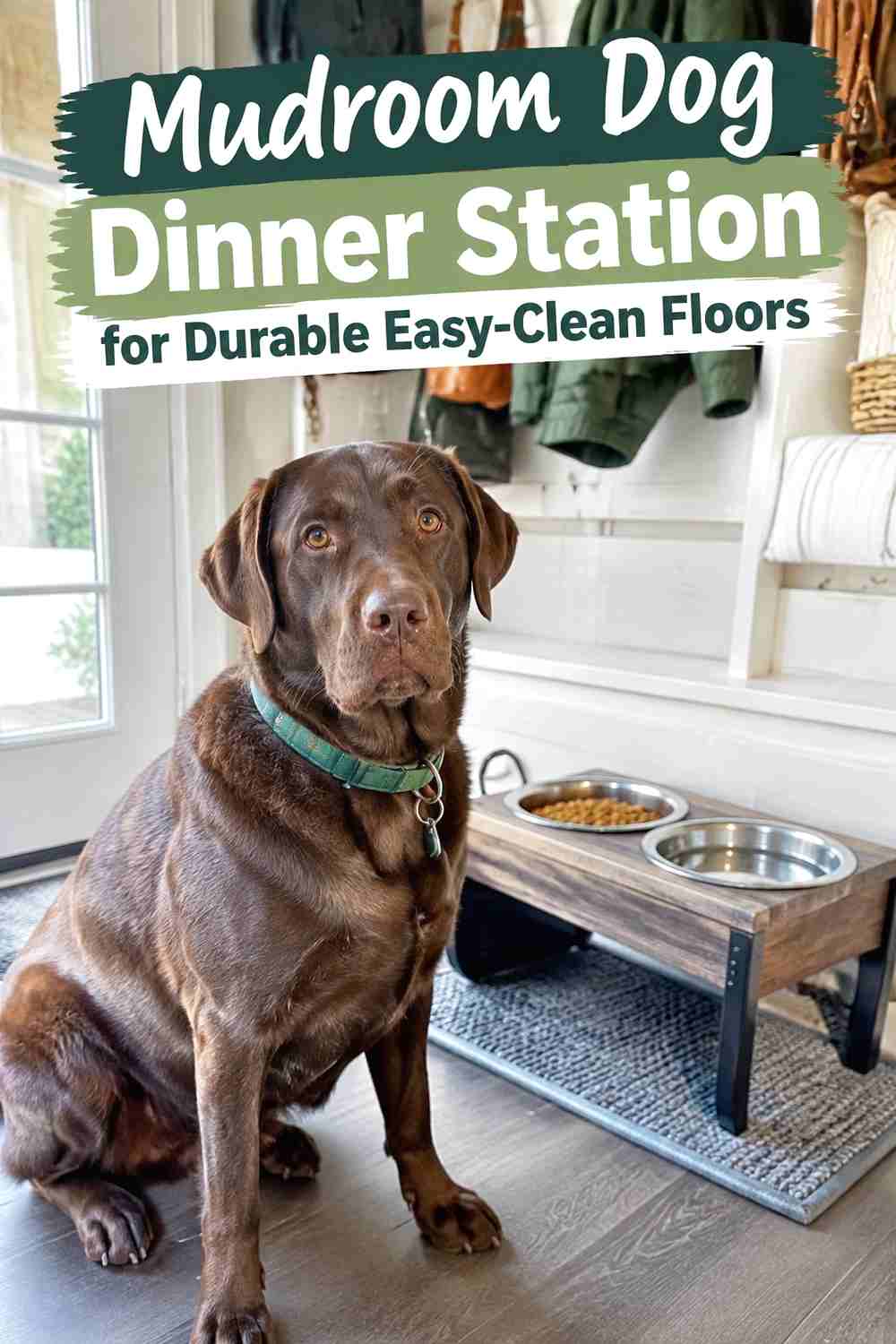
A mudroom dinner station works well when the room has durable flooring and enough quiet space away from the exterior door. Place bowls against an interior wall where boots, wet coats, and arriving family members will not constantly pass through the feeding area. Add a broad washable mat to catch water and food while keeping the dog away from stored cleaning products, garden supplies, and laundry chemicals. Mudrooms can become cluttered quickly, so preserve a clear approach to the bowls rather than using the same corner for shoes and pet feeding. This setup can keep meals outside the main kitchen while still providing an easy-to-clean surface that tolerates regular wiping.
Space & Placement
Choose the calmest section of the mudroom, not simply the nearest empty floor area. Keep dirty outdoor gear physically separated from food and water bowls.
12. Wall Protected Dog Dinner Station For Splash Control

A wall-protected dinner station adds an easy-clean surface behind the bowls when food or water regularly reaches the wall. Install a smooth washable panel, suitable backsplash, or other securely finished surface behind the station, then pair it with a generous floor mat. The wall protection should extend only as much as needed and have no sharp edges or loose corners near the dog. This idea works particularly well for feeding stations that must remain against painted drywall or other surfaces that show splashes easily. Keep the protective material simple enough to wipe; highly textured decorative panels can trap more residue than they prevent. The bowls themselves should remain stable and easy to remove for washing.
Cleaning Notes
Wipe the panel when you clean the bowls and mat. Pay attention to seams where food or moisture can collect unnoticed over time.
13. Under Shelf Dog Dinner Station For Tiny Feeding Spaces

An under-shelf dinner station uses otherwise wasted wall height while keeping a compact feeding area underneath. Install a shallow, secure shelf well above your dog’s head and use it for lightweight, non-breakable items such as clean feeding towels or empty accessories. Do not store heavy containers, glass jars, or anything likely to fall directly above the bowls. Leave generous clearance so the dog can stand naturally without feeling enclosed. On the floor, use a simple mat and stable bowls fitted closely to the wall. This layout can work in studio apartments, small kitchens, and narrow utility areas where no extra cabinet will fit. The shelf should save space without turning the feeding spot into a cramped cubby.
Space & Placement
View the shelf from your dog’s standing height before final installation. Make sure edges, brackets, and stored objects stay well outside the dog’s head space.
14. Minimal Dog Dinner Station With Matching Bowl Storage
You May Also Like



A minimal dinner station keeps only the essential bowls visible and stores clean backup equipment neatly nearby. Use a coordinated but functional set of stable bowls on a plain washable mat, then dedicate one drawer, cabinet shelf, or closed bin to spare bowls and feeding accessories. Avoid filling the space with decorative jars, signs, artificial plants, or extra containers that make routine wiping more difficult. This layout suits homeowners who want the feeding area to blend into the room without hiding it completely. Matching pieces can create a polished look, but durability, safe materials, and easy washing matter more than perfect styling. Keep everything your dog does not need during dinner out of the immediate floor area.
Why It Works
Reducing visible supplies makes the station quicker to wipe and reset. A simple setup also leaves more open floor space around the dog during meals.
How to Choose the Right Idea
Start with your dog’s size, life stage, eating habits, and temperament. Puppies need simple, chew-resistant surroundings, senior dogs may benefit from predictable access and secure footing, and easily distracted dogs may do better in a quieter location. Multi-dog homes often need physically separate feeding spaces rather than one large shared station.
Next, consider your home. Small apartments benefit from vertical or under-shelf storage, while kitchens and pantries make meal preparation easier when supplies are nearby. Mudrooms can work well if feeding is separated from dirty outdoor gear and household chemicals.
Finally, choose a station you can clean easily. Washable mats, removable bowls, uncluttered floors, and sensible food storage usually matter more than elaborate furniture or decorative accessories.
Final Thoughts
A practical dog dinner station should make meals easier for both the dog and the person preparing them. Start with a comfortable feeding location, stable bowls, and an easy-clean surface before adding storage or decorative details.
The most useful setup is the one you can maintain consistently without creating clutter, crowding the dog, or complicating daily meal preparation.
FAQs
1. Where is the best place for a dog dinner station?
Choose a low-traffic area with comfortable access, stable flooring, and enough room for your dog to approach and leave easily. Kitchens, utility areas, and quiet corners can all work.
2. Should dog food be stored beside the feeding bowls?
It can be convenient if the storage location is appropriate for the food and securely out of the dog’s reach. Follow the product’s storage directions and keep original information available.
3. How can I make a dog dinner station easier to clean?
Use washable removable bowls, a generous non-slip mat, and easy-clean surrounding surfaces. Keep decorative clutter away so the entire area can be wiped or swept quickly.
4. Should multiple dogs eat at the same dinner station?
Separate bowls and comfortable spacing are usually more practical than forced sharing. Some dogs may need completely separate rooms or feeding areas to eat comfortably.
5. What should I avoid placing around a dog dinner station?
Avoid cleaners, medicines, loose cords, breakable decor, chewable storage pieces, and anything that blocks access to the bowls. Keep the feeding space simple and functional.
CTA
Save these dog dinner station ideas for your next feeding-area refresh, and choose the setup that best fits your dog, home, and everyday meal routine.
