A dog corner in the bedroom does not need to take over the room. A few square feet can become a dependable place for sleeping, settling down, storing daily supplies, or keeping bedtime necessities within reach.
Save This Idea on Pinterest

12 Dog Corner Ideas for Bedrooms That Feel Calm and Organized
Save to PinterestThe most useful setup depends on what your dog actually does in the bedroom. A dog that sleeps beside the bed needs a different corner from one that prefers a crate, carries toys upstairs every evening, or needs a convenient water spot overnight.
Start by giving the corner one main job. Once that purpose is clear, choose furniture and storage that fit the available floor space, stay easy to clean, and do not leave cords, small objects, medications, or unstable storage within reach.
1. Create a Low Bedside Sleeping Corner
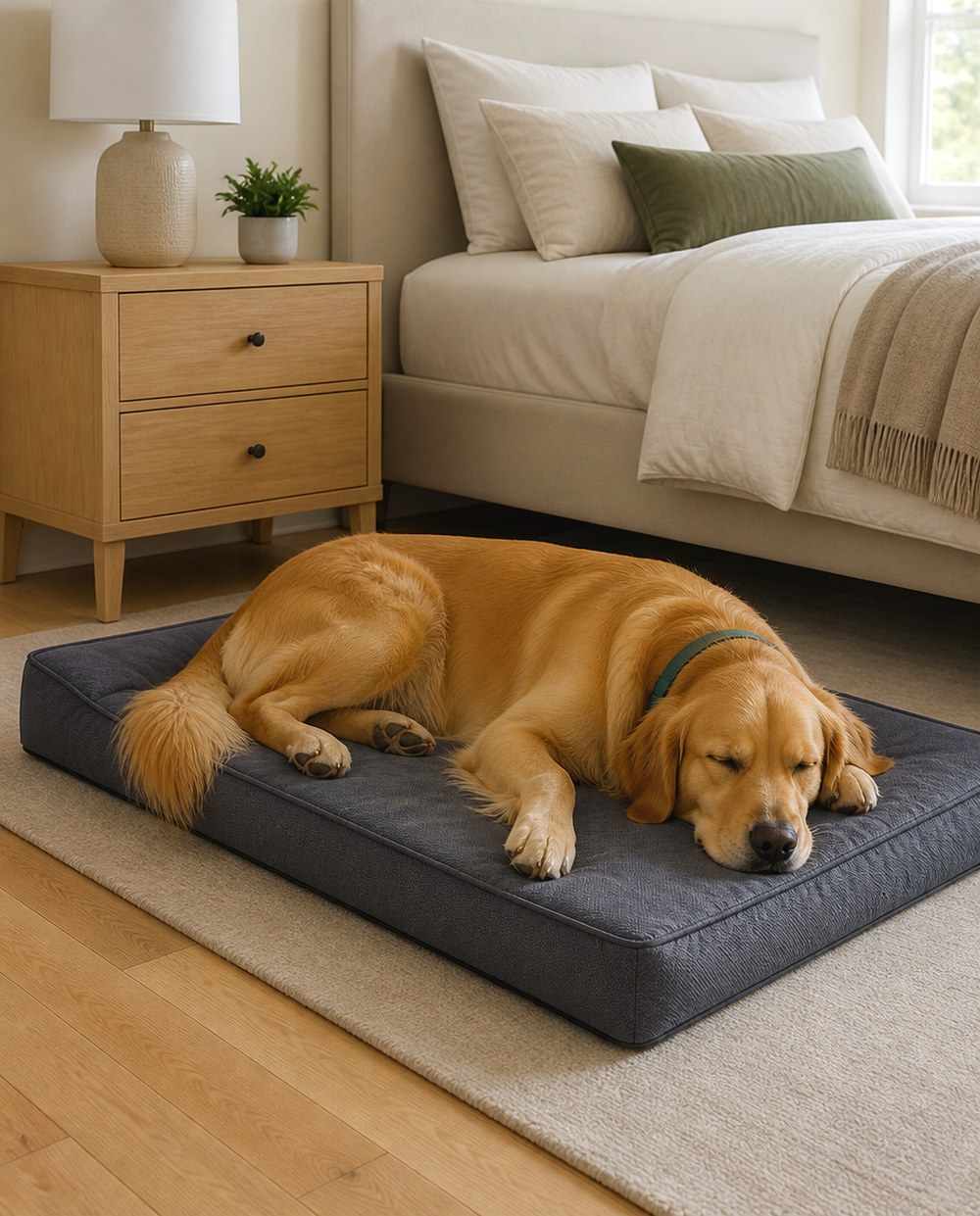
One of the most practical bedroom arrangements is also one of the least complicated: place a dedicated dog bed beside your own bed.
Choose a location that does not block the path between the bed, doorway, closet, and bathroom. Leaving a comfortable walking route matters especially at night, when both people and dogs may be moving around in low light.
A low-profile washable bed usually works better here than an oversized decorative bed. Position the back or one side against a wall so the sleeping area feels defined without squeezing the dog into a tight gap.
For a small bedroom, measure the available space before buying the bed rather than trying to force a large bed into an awkward corner. Your dog should still be able to stand, turn around, stretch, and change sleeping positions comfortably.
2. Turn a Quiet Window Corner Into a Daytime Nap Nook
A bedroom window can provide a pleasant daytime resting spot for a dog that likes watching the room or lying in natural light.
Place the bed far enough from the window that your dog cannot lean against an insecure screen or interfere with blinds and cords. Cordless window coverings are a better fit around pets than long dangling cords.
Consider temperature as well as appearance. Strong afternoon sun can make a window corner surprisingly warm, while an older window may create a cold draft in winter. Move the bed a little farther into the room when necessary rather than treating the location as permanent year-round.
A small washable mat beneath the bed can visually frame the nook while catching some loose fur.

You May Also Like


3. Use the Open Space Under a Bedroom Bench
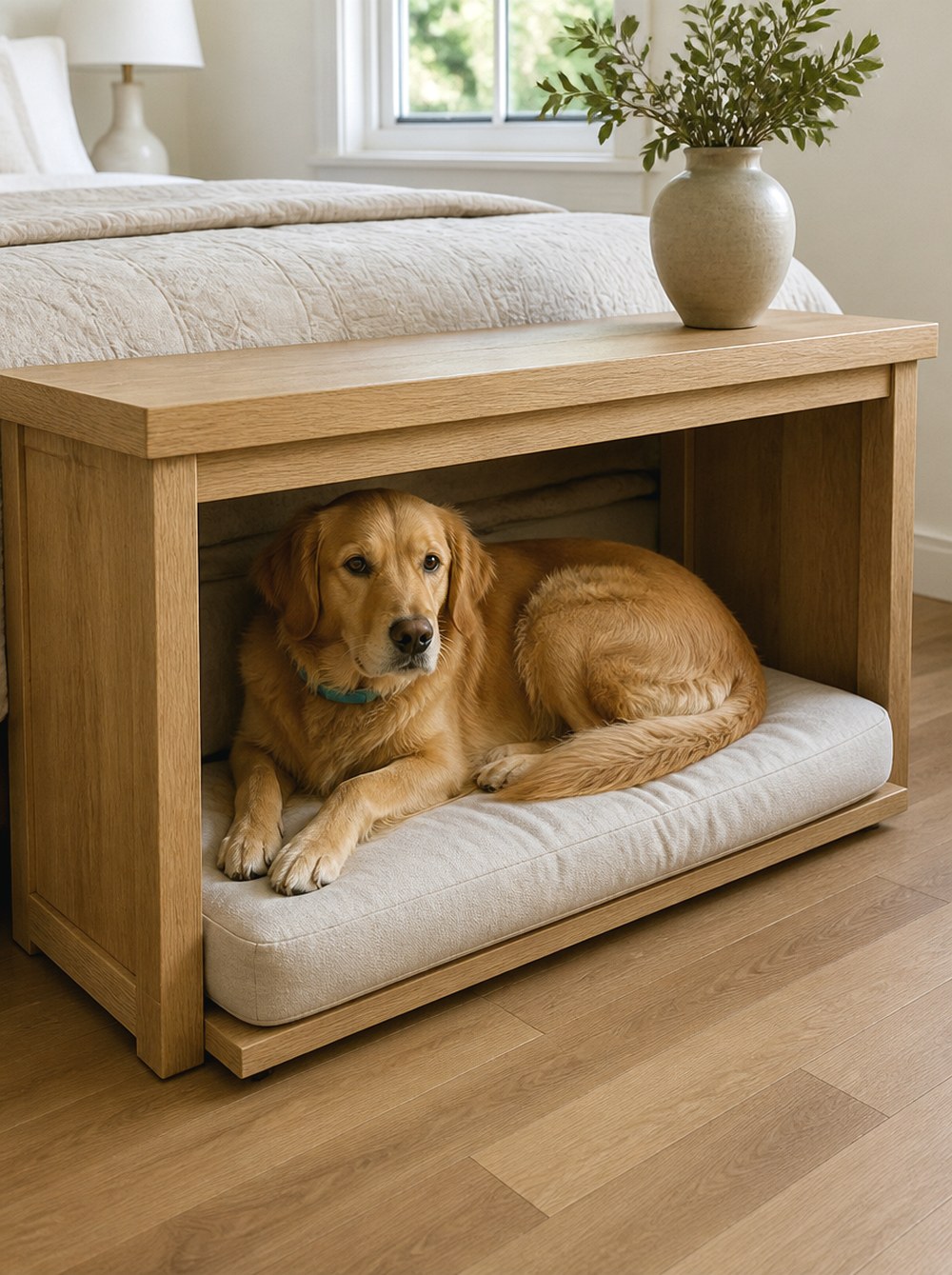
If a bench already sits at the foot of the bed or against a wall, the open area beneath it may be useful dog space rather than wasted floor area.
This works best with a sturdy bench that has enough height and depth for the dog to enter, turn, lie down, and exit without crouching uncomfortably. Add a fitted cushion or thin washable mattress instead of stuffing the space with thick bedding.
Keep shoes, bags, storage boxes, and dangling fabric out of the same opening. The goal is to create an obvious resting nook rather than asking the dog to share space with household clutter.
Do not use a lightweight bench that could shift if bumped.
4. Make the Crate Feel Like a Deliberate Part of the Room
For a dog that is already comfortable resting in a crate, the bedroom can be a useful place for it. Instead of squeezing the crate wherever it happens to fit, choose a quiet wall where it can remain accessible without blocking doors or drawers.
Use a correctly sized crate and keep ventilation openings clear. If your dog likes partial visual coverage, use only an appropriate breathable crate cover and make sure airflow is not restricted.
The top of a sturdy crate may look like tempting storage space, but avoid stacking objects that could fall, rattle, or spill onto the dog.
A nearby rug or furniture arrangement can help the crate look integrated with the bedroom without changing its basic function as a secure resting place.

5. Define the Corner With a Washable Rug
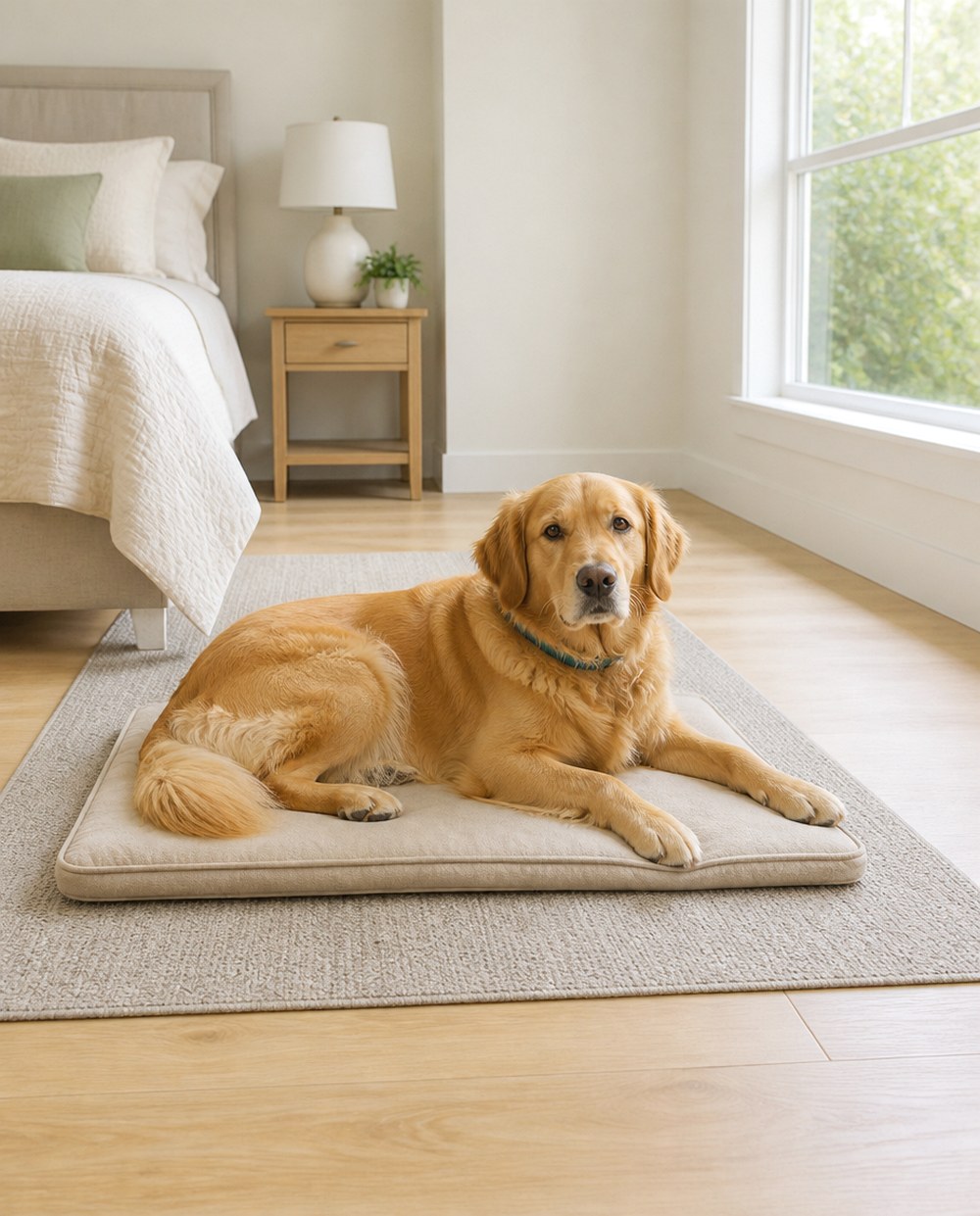
Not every bedroom has room for another piece of furniture. A washable rug can define a dog zone without adding much visual or physical bulk.
Place a non-slip or securely backed rug in an unused corner and set the dog’s bed or mat on top. The contrasting floor area gives the corner a clear boundary while providing extra grip on smooth hardwood or laminate.
This arrangement also makes seasonal changes easier. A lighter sleep mat can replace a thicker bed in warm weather without redesigning the entire space.
Avoid rugs with loose fringe, unraveling edges, or decorative pieces that invite chewing. Inspect the rug periodically and replace it if the backing or edges become damaged.
6. Build a Companion Spot Beside a Reading Chair
If you read, journal, or relax in the bedroom, consider giving your dog a resting place beside the chair instead of placing every dog item next to the bed.
A small supportive bed beside the chair creates a shared quiet-time zone without expecting the dog to climb onto furniture. It can also help separate daytime resting from the main nighttime sleeping spot if your dog uses both.
Keep enough distance between the dog bed and the chair legs so standing up or moving the chair does not crowd the dog.
A nearby basket can hold one or two durable toys, but a calm corner usually works better when it is not overflowing with playthings.

7. Add a Neat Bedside Water Station
Dogs that sleep upstairs or spend long periods in the bedroom may benefit from having water available nearby.
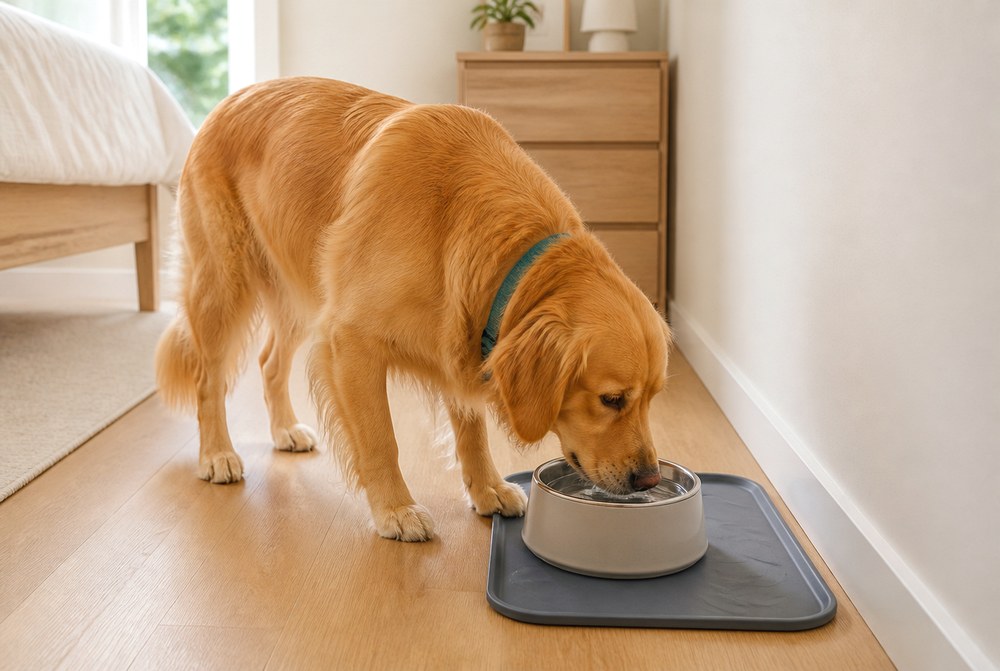
Choose a stable bowl with enough weight or grip that normal drinking will not push it across the floor. Place it on a washable waterproof mat rather than directly against bedding, electrical outlets, power strips, or furniture that could be damaged by repeated splashes.
A wall-side location often keeps the bowl out of nighttime traffic. Refill it with fresh water regularly and wash the bowl as needed rather than letting the bedroom location make it easy to overlook.
For dogs that enthusiastically splash while drinking, a larger absorbent mat or a different location outside the bedroom may be more practical.

8. Give Toys a Small Rotation Basket
Bedroom toy storage works better when it contains a useful selection rather than every toy your dog owns.
A low, sturdy basket can hold a few appropriately sized favorites while the rest remain stored elsewhere. Rotating toys occasionally also prevents the bedroom corner from becoming a permanent pile of chews, balls, and fabric toys.
Choose a basket without exposed wire ends, sharp hardware, loose woven pieces, or handles your dog is likely to chew. If your dog tends to destroy storage containers, use closed storage that only you can access instead.
Inspect toys as you put them away and remove damaged items rather than returning them to the basket.
9. Use Closed Storage for Grooming Supplies
A dog corner can hold care supplies without putting everything within the dog’s reach.
A narrow bedside cabinet, small drawer unit, or closed section of existing bedroom furniture can hold brushes, clean towels, grooming wipes intended for your pet, and similar frequently used items. Keeping them behind a closed door also reduces visual clutter.
Anything potentially hazardous, including medication, sharp grooming tools, cleaners, or small swallowable objects, should be stored securely where the dog cannot access it.
Try to reserve this storage for items actually used in the bedroom. A compact, intentional collection is easier to maintain than turning one cabinet into overflow storage for every dog product in the house.

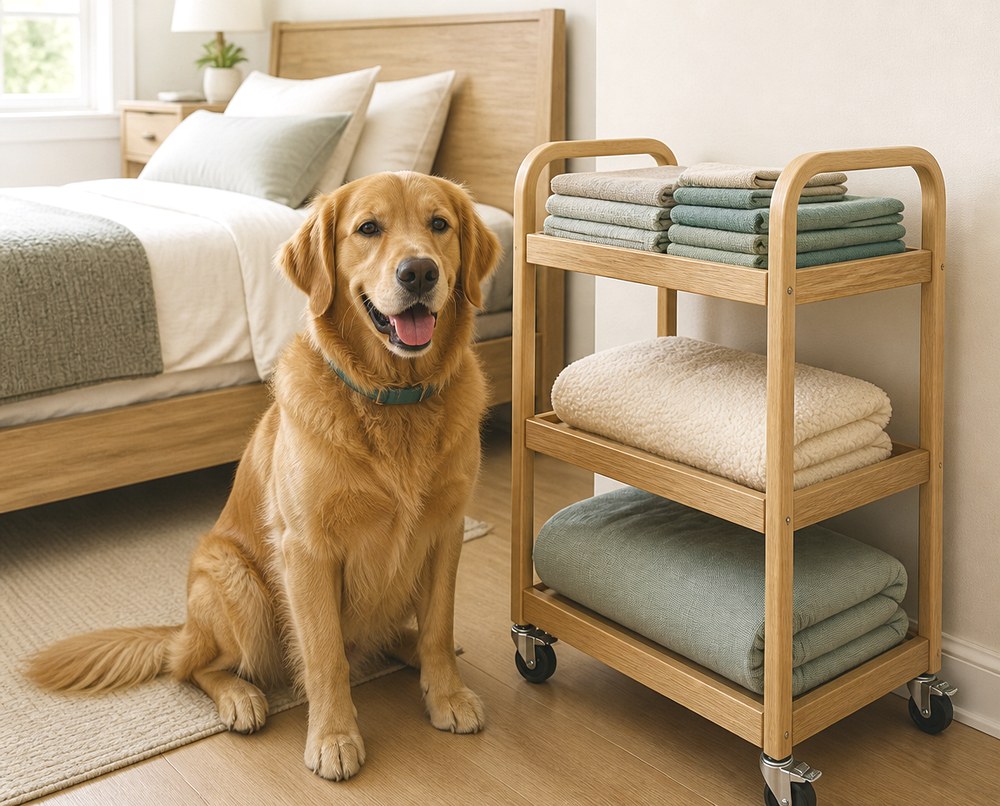
10. Create a Slim Rolling Care Cart for Flexible Storage
A small rolling cart can work in a bedroom where permanent cabinets are limited, especially when dog supplies need to move between rooms.
Use the cart for bulky, low-risk items such as folded towels, spare washable bedding, or sealed packages of routine supplies. Keep medications, cleaners, sharp grooming tools, and small objects in secure storage elsewhere.
Choose a stable cart with locking wheels and park it where the dog cannot knock it into a doorway or nightstand. Avoid hanging leashes, plastic bags, cords, or other tempting items from the sides.
The main advantage is flexibility: the cart can stay in the dog corner most of the time and roll out when the floor needs cleaning.
11. Set Up a Supervised Calm-Enrichment Corner
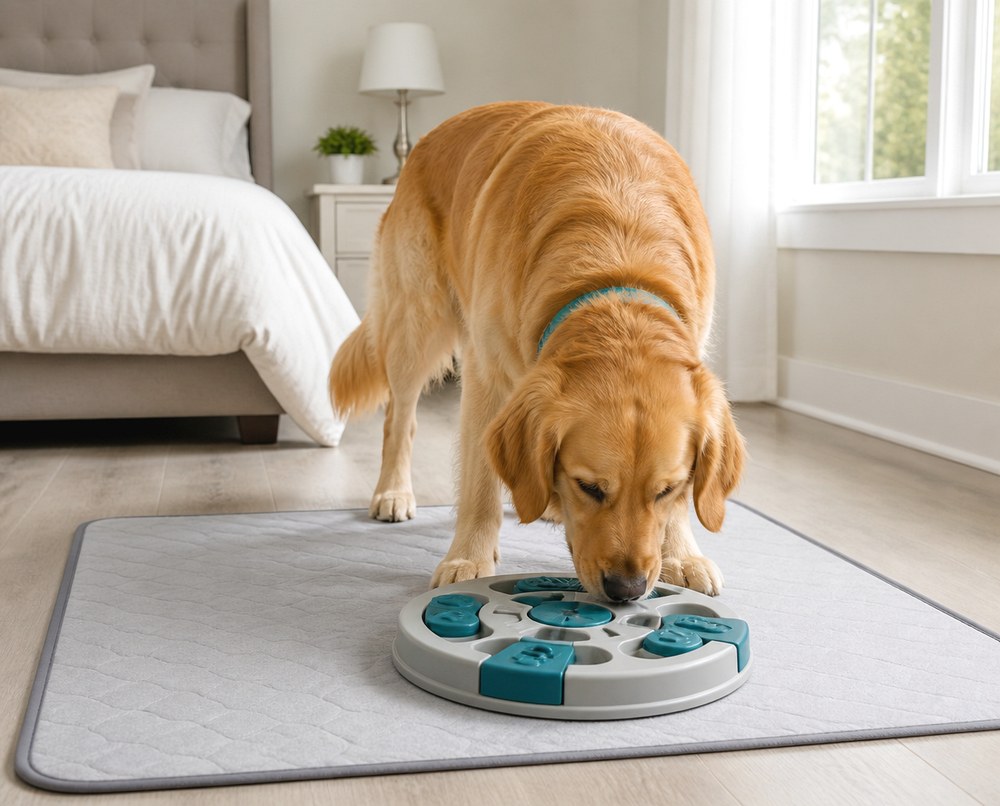
A bedroom corner can occasionally become a quiet enrichment area, particularly on days when you want a lower-energy activity.
A washable mat provides an obvious place for a suitable food puzzle, lick mat, or other enrichment item that matches your dog’s chewing style and eating habits. Use food-based enrichment as part of the dog’s normal feeding plan rather than automatically adding extra treats.
Supervise items that could be chewed, torn, or swallowed, and remove them when the activity is finished. Damaged enrichment products should be replaced.
This is a useful temporary function for the corner, not a reason to leave food-filled toys sitting beside the bed all day.
12. Make a Door-Side Bedtime-to-Walk Station
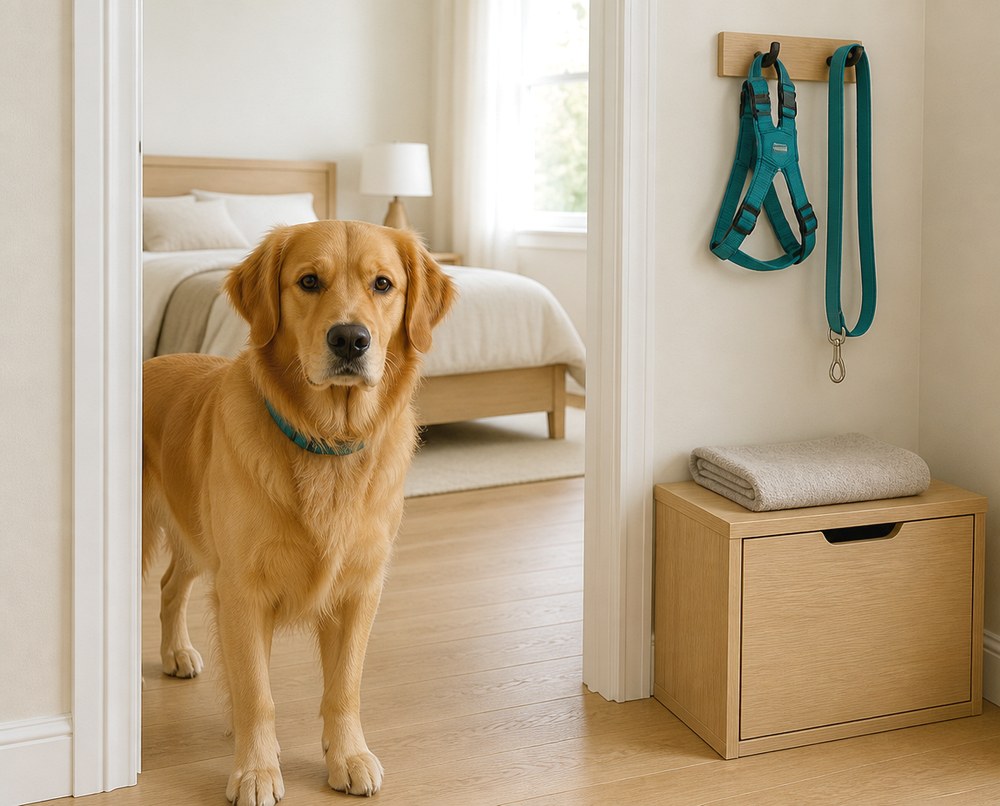
For dogs whose last bathroom trip happens shortly before bed, a small station near the bedroom door can make the evening transition more organized.
Keep a properly fitted harness or leash on a secure wall hook that the dog cannot reach and pull down. A folded towel can sit in a closed basket or cabinet for wet paws on rainy evenings.
Keep the floor itself mostly open. Shoes, bags, loose leashes, and clothing quickly turn a useful transition point into an obstacle course.
This idea works particularly well when the dog’s sleeping corner is farther into the bedroom. The door station handles departure supplies, while the actual sleeping area remains quiet and uncluttered.
You May Also Like


Choose One Job for the Corner First
The strongest bedroom dog corners usually solve one clear problem. If your dog mainly sleeps in the room, start with the bed location and walking space. If supplies are creating clutter, prioritize closed storage. If your dog spends quiet daytime hours there, a window nook or reading-chair companion spot may be more useful.
You can combine compatible ideas, such as a bedside bed with a nearby toy basket, but leave enough open space that the corner still feels comfortable rather than crowded.
Once the setup is in place, watch how your dog actually uses it. A dog that repeatedly chooses another sleeping location may prefer a cooler surface, more distance from foot traffic, or a different degree of enclosure. The most attractive corner is only useful when it also suits the dog’s normal resting habits.
