Keep chew toys organized, easier to inspect, and simple to rotate with practical stations designed for real homes, busy routines, and different play setups.
Save This Idea on Pinterest
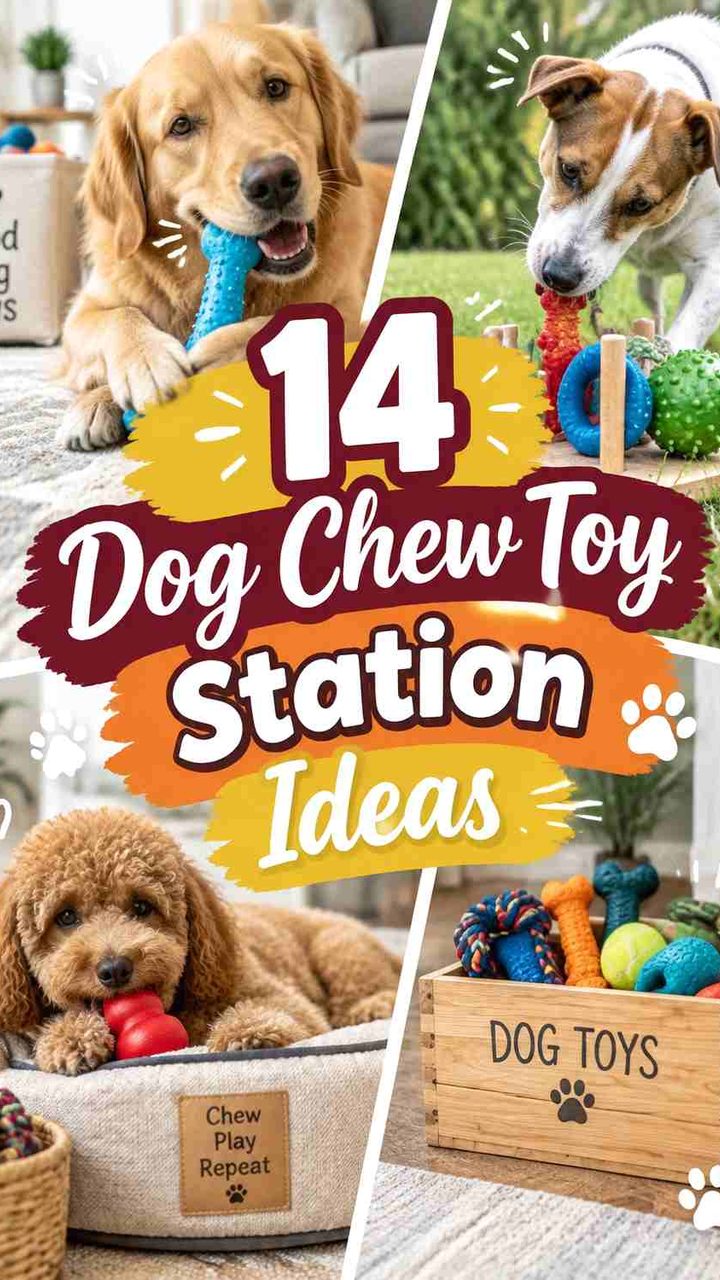
14 Dog Chew Toy Station Ideas
Save to PinterestDog chew toy stations help separate active chew toys from the rest of the toy collection while giving owners a clear system for storage, cleaning, inspection, and rotation. The ideas below range from simple open baskets and daily trays to closed cabinets, rolling carts, outdoor totes, and multi-dog storage.
The best station depends on how your dog uses chew toys, how many you keep, whether certain items require supervision, and how much floor or cabinet space is available. Some dogs do well with a few suitable toys within reach, while other households need owner-controlled storage. Whichever setup you choose, regular condition checks should remain part of the routine.
Quick List
- Low Open Basket Chew Toy Station for Everyday Dogs
- Divided Chew Toy Organizer for Different Dog Play Styles
- Supervised Chew Toy Caddy for Owner-Led Dog Play
- Wash-and-Dry Chew Toy Station for Easier Dog Cleanup
- Small-Space Drawer Chew Toy Station for Apartment Dogs
- Rolling Cart Chew Toy Station for Flexible Dog Play
- Lidded Chew Toy Cabinet for Neat Dog Storage
- Wall Shelf Chew Toy Station for Owner-Controlled Dog Access
- Multi-Dog Split Chew Toy Station for Separate Favorites
- Backyard Chew Toy Tote for Outdoor Dog Play
- Daily Chew Toy Tray for Quick Dog Toy Swaps
- Chew Toy Inspection Station for Safer Dog Play
- Hidden Reserve Chew Toy Station for Longer Dog Rotations
- Entryway Chew Toy Basket for Easy Indoor-Outdoor Dog Access
1. Low Open Basket Chew Toy Station For Everyday Dogs

A low open basket creates a straightforward chew toy station for dogs that can safely choose from a small collection on their own. Place a sturdy basket in the main play area and keep only several suitable chew toys inside instead of filling it with every toy you own. The smaller selection makes cleanup easier and lets you notice which items are being used most often. Choose a basket with smooth edges and material your dog is unlikely to chew apart. Remove toys that need supervision rather than leaving them in free-access storage. During cleanup, quickly inspect the toys for loose pieces, splits, or other wear before returning them to the basket.
Best For
This setup works well for homes that want simple everyday access without complicated labels, schedules, or extra furniture.
Use & Maintenance
Empty the basket occasionally to remove fur and debris, and use the reset as an opportunity to review every chew toy.
2. Divided Chew Toy Organizer For Different Dog Play Styles

You May Also Like

A divided organizer separates chew toys into useful categories instead of letting every item collect in one large pile. One section might hold softer rubber toys, another firmer chew options, and another owner-supervised items. The goal is not to create rigid categories but to make it easier to choose an appropriate toy for a particular play session. Clear compartments or shallow bins also help prevent smaller toys from disappearing underneath larger ones. Keep sections lightly filled so items remain visible and easy to inspect. If your dog can reach the organizer independently, only place toys there that are suitable for that level of access; everything else should remain in a secured compartment.
Setup Notes
Use removable containers if possible so each section can be lifted out and cleaned separately when dirt, fur, or crumbs collect.
Pro Tip
Leave one compartment partly empty for newly cleaned toys instead of constantly squeezing more items into an already crowded station.
3. Supervised Chew Toy Caddy For Owner Led Dog Play
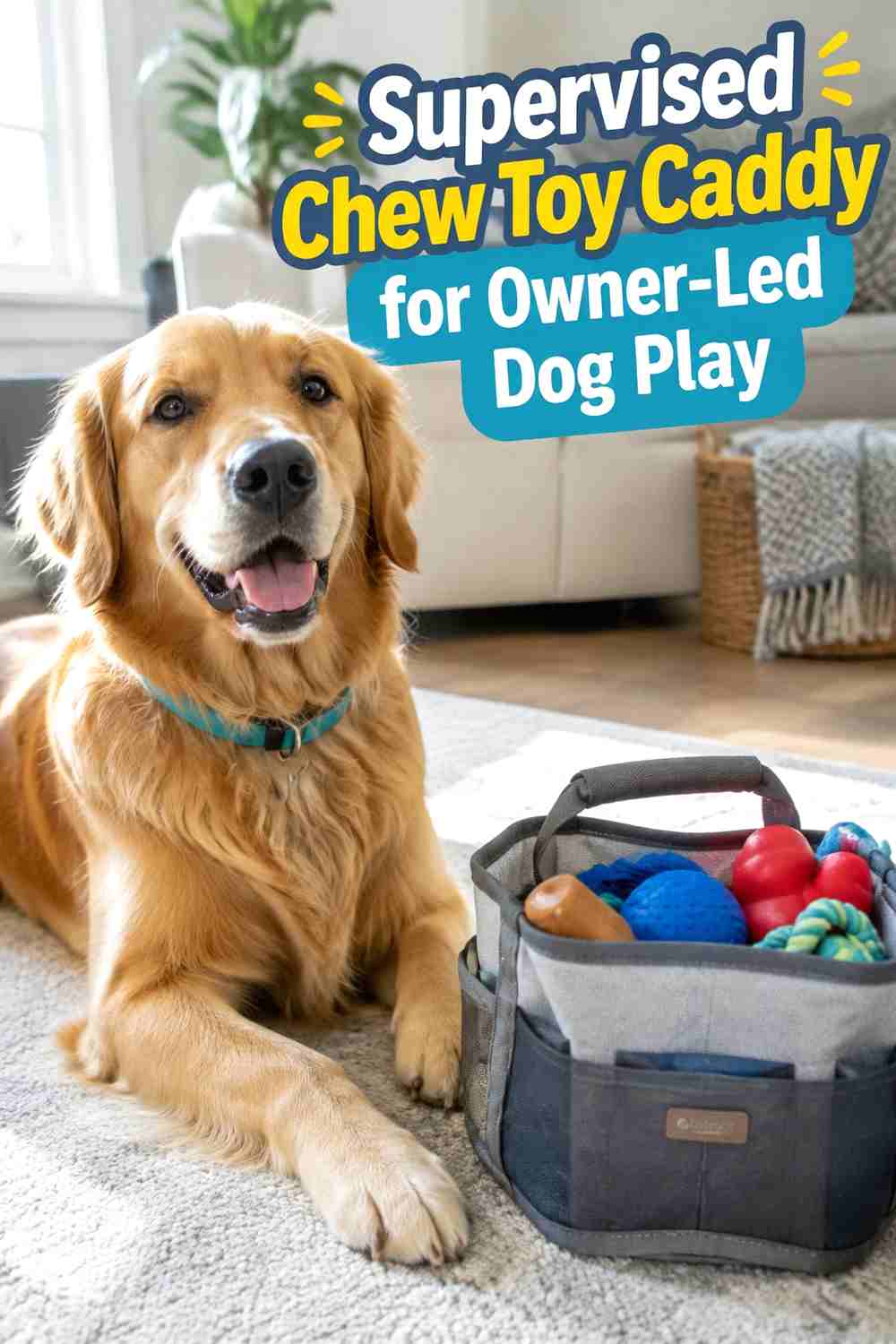
A supervised chew toy caddy keeps special-use items together for play sessions when an owner is present. Store toys that you prefer to monitor in a portable container and bring out the caddy only when you are ready to supervise. This prevents those toys from becoming mixed with everyday free-access items and makes cleanup more consistent afterward. A handled caddy can move easily between the living room, patio, and other play areas without scattering the collection around the house. Keep the container stored out of the dog’s reach between sessions. After play, check each item before returning it rather than automatically putting a worn or damaged toy back into the caddy.
Best For
This station suits households where some chew toys are appropriate only during intentional, owner-supervised play periods.
Use & Maintenance
Keep an empty section for toys awaiting inspection so questionable items do not accidentally return to normal circulation.
4. Wash And Dry Chew Toy Station For Easier Dog Cleanup
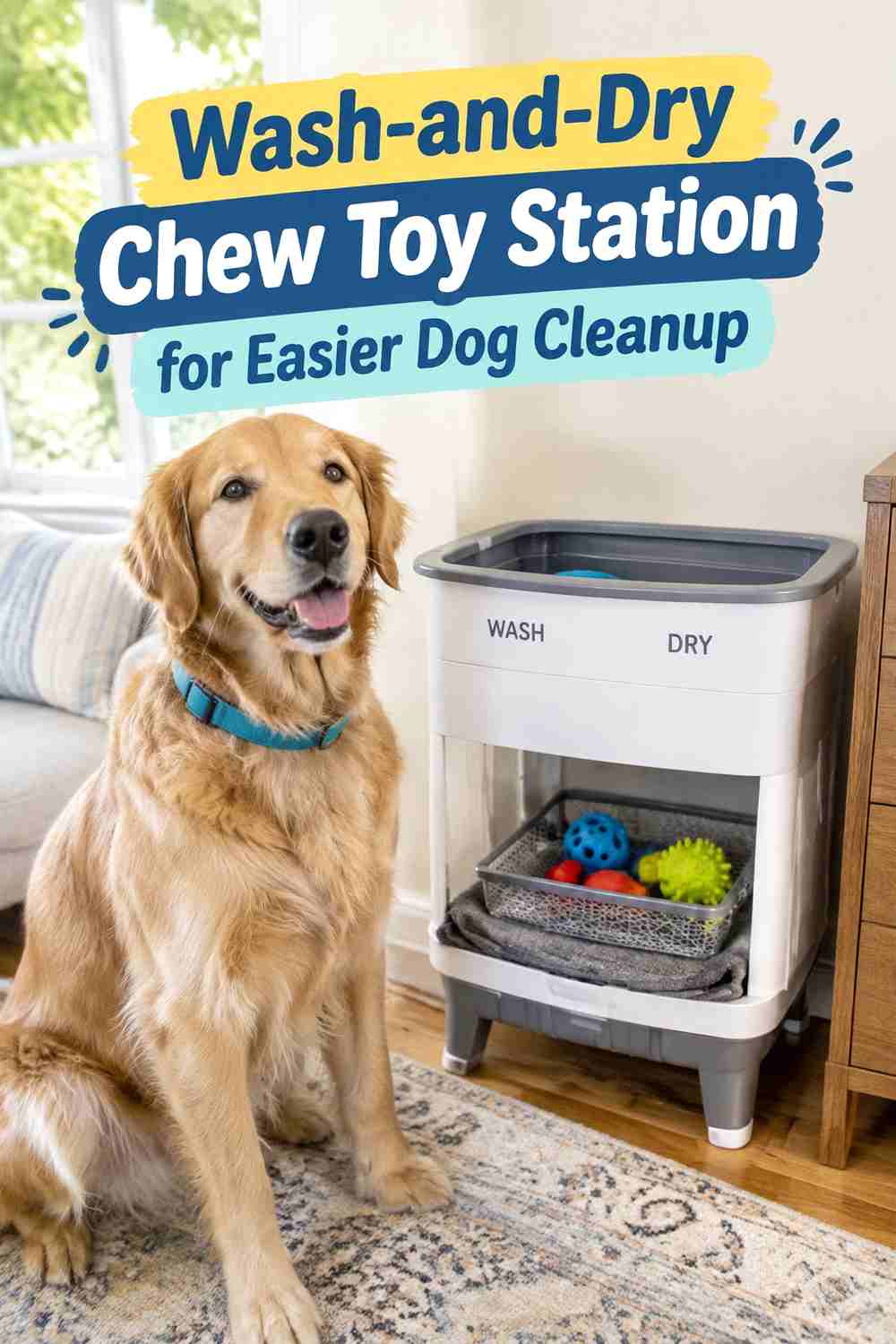
A wash-and-dry station gives used chew toys a temporary home before they return to clean storage. Set up one washable bin for dirty items and a separate ventilated surface or basket for toys that have been cleaned and are drying. This keeps wet, muddy, or slobbery toys from going directly back into a cabinet or basket. Follow the care instructions for each toy because different materials can require different cleaning methods. Wait until items are fully dry before placing them in closed storage. During the process, look over seams, edges, and surfaces so heavily worn toys are caught before the next play session rather than disappearing back into the collection.
Space & Placement
A mudroom, laundry area, or utility space can work well as long as cleaning supplies remain secured away from the dog.
Cleaning Notes
Rinse or wipe the station itself regularly so the “dirty” container does not become a permanent source of grime or odor.
5. Small Space Drawer Chew Toy Station For Apartment Dogs

A dedicated drawer creates hidden chew toy storage without taking up valuable apartment floor space. Use one deep drawer or several divided sections for current backups, supervised toys, and items waiting for the next rotation. Keep only a manageable selection in the dog’s normal play area and pull replacements from the drawer when needed. This prevents chew toys from spreading across shelves and walkways while still keeping them convenient for the owner. Make sure the drawer closes securely if your dog can nose cabinets open. Avoid storing pet toys beside medicines, batteries, cleaning products, small household objects, or anything that could become accessible if the drawer is opened unexpectedly.
Best For
This setup is practical for apartments, bedrooms, and small living rooms where another basket or storage unit would add unnecessary clutter.
Cleaning Notes
Vacuum out loose fur periodically and return only clean, dry toys to prevent dirt and moisture from building up inside.
6. Rolling Cart Chew Toy Station For Flexible Dog Play

A rolling cart turns chew toy storage into a flexible station that can move between the rooms where your dog spends time. Use separate shelves for everyday chew toys, supervised options, cleaning supplies that are pet-safe and securely contained, and toys waiting for inspection. When play begins, roll the cart nearby; afterward, return toys to their assigned places and move the cart out of the way. Choose a sturdy model that does not tip easily and lock the wheels whenever it is parked. Lower shelves should contain only items the dog can safely approach if access is possible, while restricted toys belong higher up or inside closed containers.
Space & Placement
Park the cart away from stairs, narrow hallways, and busy doorways so it does not become a tripping or collision hazard.
Pro Tip
Add one removable bin for toys that need washing so they never get mixed back into the clean shelf by mistake.
7. Lidded Chew Toy Cabinet For Neat Dog Storage

A lidded chew toy cabinet keeps the collection out of sight while giving the owner clear control over what comes out each day. Use baskets or shallow bins inside the cabinet to separate current toys, backups, and supervised items instead of stacking everything loosely. A closed station works particularly well when visible toy clutter is a concern or when your dog tends to empty open baskets repeatedly. Choose a cabinet with stable construction and doors or lids your dog cannot easily open. Keep only dog-related items inside so an accidental mix-up does not put household chemicals, medicines, cords, or small objects beside the toy supply.
Best For
This setup fits tidy living rooms, mudrooms, or dedicated pet corners where owners want the station to blend into the rest of the home.
Use & Maintenance
During each refill, remove everything from one section and inspect it rather than continually adding new toys on top of old ones.
8. Wall Shelf Chew Toy Station For Owner Controlled Dog Access
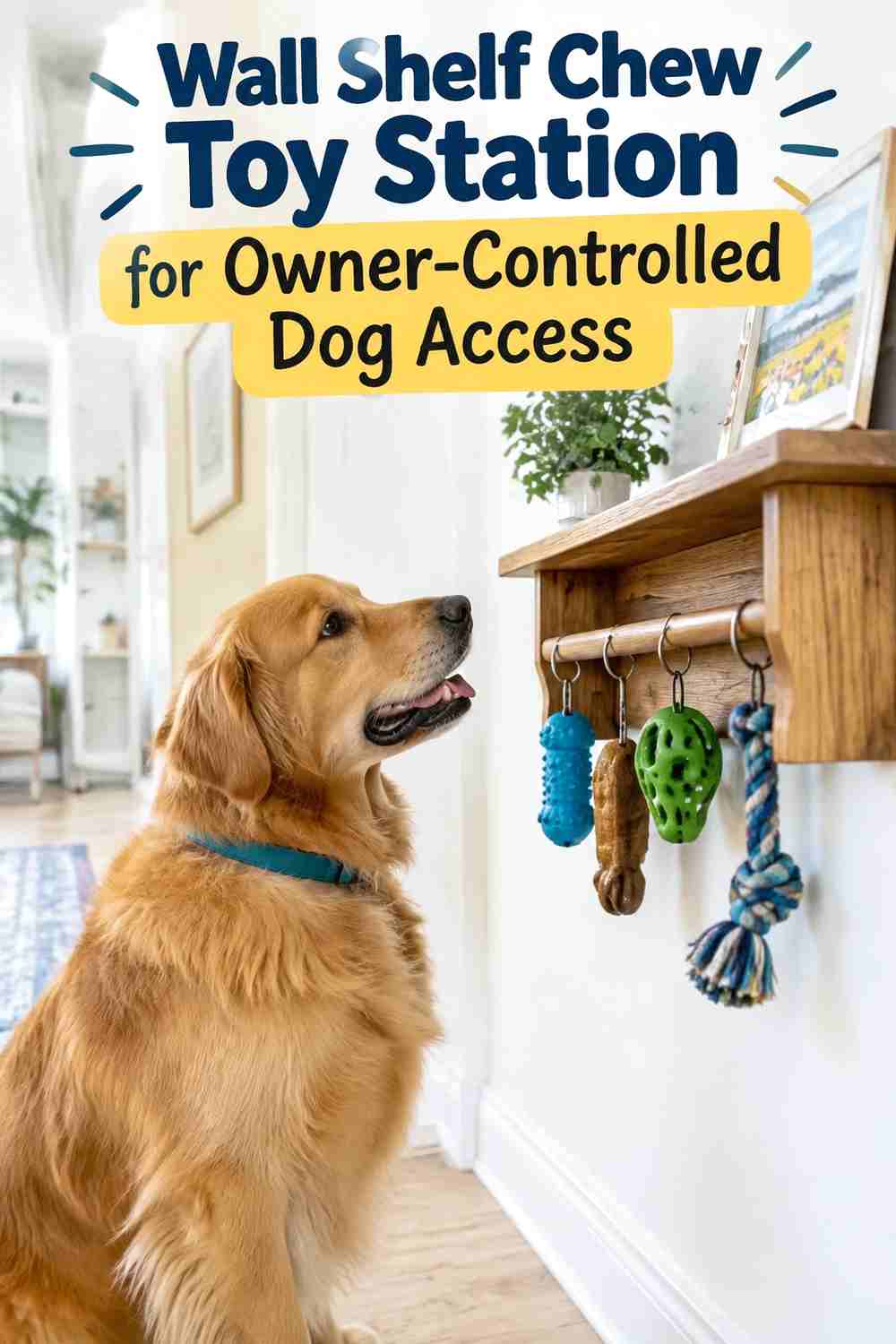
A wall shelf station keeps chew toys visible to the owner while placing restricted items outside normal dog reach. Use sturdy, properly installed shelving with baskets or bins that cannot slide easily from the edge. Separate everyday backups from toys that require supervision, and avoid overloading the shelf with bulky items. This setup frees floor space, which can be especially useful in compact rooms or homes where a dog likes to investigate low storage. The shelf should remain an owner-access area rather than something the dog is encouraged to jump toward. Place it away from furniture that could become an unintended climbing route and keep heavier bins at a comfortable handling height.
Space & Placement
Install the station where retrieving a toy does not require reaching over the dog’s bed, food area, or another frequently used pet space.
Pro Tip
Use lightweight labeled baskets so you can remove an entire category without repeatedly reaching for individual toys.
9. Multi Dog Split Chew Toy Station For Separate Favorites
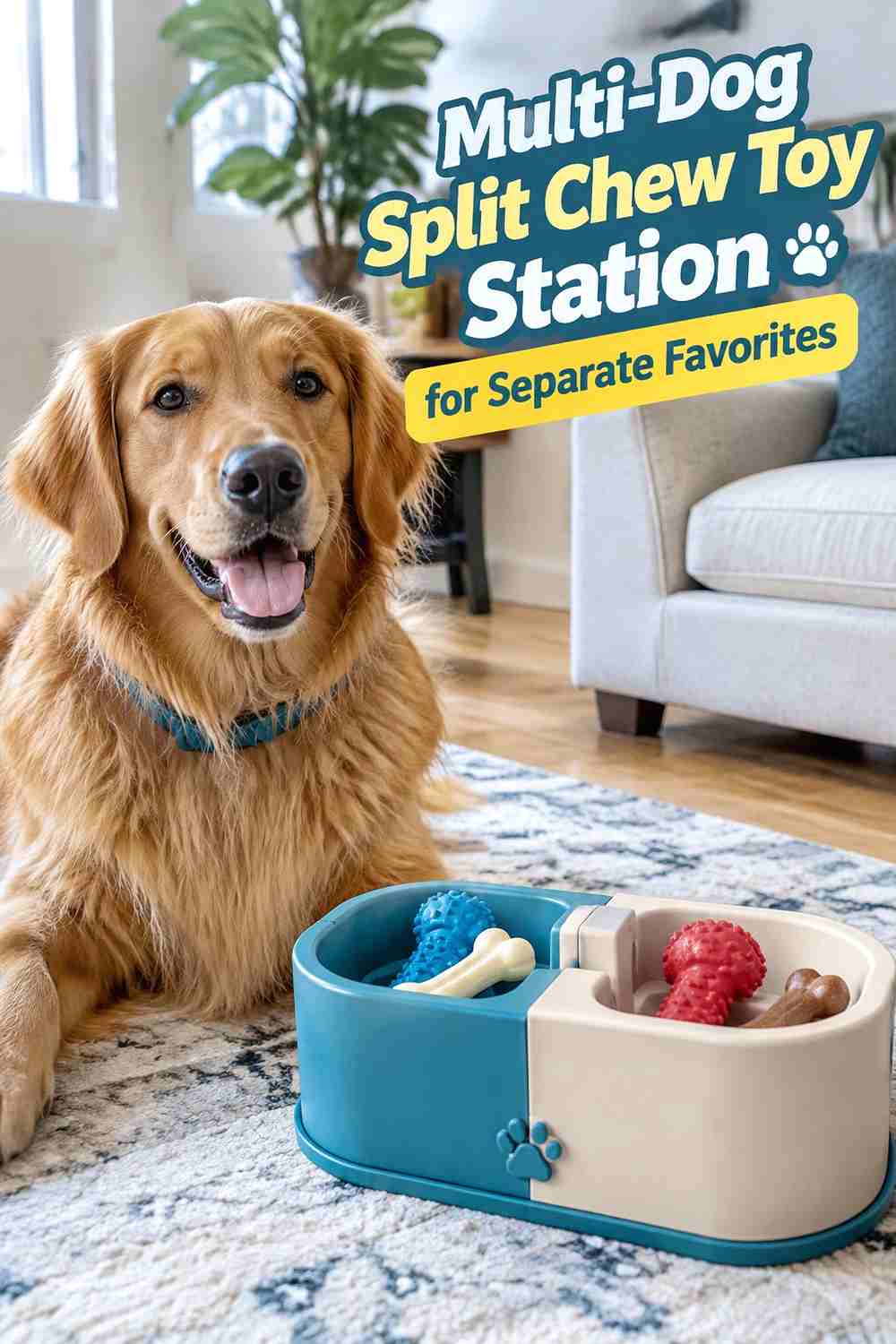
A multi-dog split station gives each dog a separate place for chew toys rather than assuming every item should be shared. Use labeled bins or divided shelves for individual favorites, size-specific toys, and options that match different chewing styles. A third section can hold shared items when the dogs comfortably use them together. Separate storage also makes it easier to see which dog is wearing out particular toys faster and when one selection needs refreshing. Keep high-interest items controlled if sharing creates tension, and supervise when necessary rather than expecting dogs to negotiate access themselves. The station should simplify ownership and cleanup, not create forced sharing around valued objects.
Best For
This system is useful when dogs differ in size, toy preferences, chewing intensity, or the amount of supervision particular items require.
Setup Notes
Use clear labels or distinct baskets so family members can return toys to the correct dog’s section after cleanup.
10. Backyard Chew Toy Tote For Outdoor Dog Play

A backyard chew toy tote keeps outdoor play items together instead of leaving them scattered across grass, patios, and garden edges. Choose a sturdy, easy-clean container and bring out only the chew toys suitable for the planned outdoor session. Collect the toys afterward so they are not left in rain, direct sun, standing water, or the path of lawn equipment. Outdoor use can expose toys to mud, grass, insects, and moisture, so check them before transferring them back into indoor storage. A covered porch, mudroom, or garage-access area can make a convenient home for the tote, provided the stored items are protected from unsuitable temperatures and moisture.
Cleaning Notes
Shake off grass and dirt promptly, and dry wet toys fully before closing them inside a tote where moisture could remain trapped.
Use & Maintenance
Review the contents periodically instead of letting the outdoor tote become a forgotten collection of old or weathered chew toys.
11. Daily Chew Toy Tray For Quick Dog Toy Swaps

A daily chew toy tray creates a small, intentional selection that can be refreshed without reorganizing the entire collection. Choose a few appropriate chew toys from reserve storage and place them on a shallow tray for the day or a specific play period. When the session ends, return clean items, move dirty toys to the wash station, and set aside anything that needs closer inspection. Keeping the selection limited makes it easier to notice which toys your dog actually chooses and which repeatedly go untouched. Store the tray itself away when not in use if it is not designed for chewing. The system works best when the rest of the toy collection remains neatly stored elsewhere.
Best For
Busy owners can use this method when they want quick rotation without maintaining several labeled bins or a complicated weekly schedule.
Pro Tip
Include one familiar favorite with less-used options rather than changing every single toy at once.
12. Chew Toy Inspection Station For Safer Dog Play

A chew toy inspection station gives questionable items a designated place instead of allowing them to disappear back into normal storage. Use a small owner-only bin or tray for toys with surface damage, loose sections, deep wear, or anything else that deserves a closer look. When cleaning up, move uncertain items here rather than making an immediate decision while distracted. Review the station regularly and either return suitable toys to circulation or discard items that can no longer be used appropriately. Keeping this separate from the everyday basket prevents family members from accidentally handing a damaged toy back to the dog. The station should remain inaccessible to pets while items are being evaluated.
Setup Notes
Place the inspection bin near your regular toy storage so using it becomes an easy part of cleanup rather than an extra chore.
Why It Works
A clear holding area separates “needs checking” from “ready to use,” reducing the chance that worn toys are forgotten in the main collection.
13. Hidden Reserve Chew Toy Station For Longer Dog Rotations
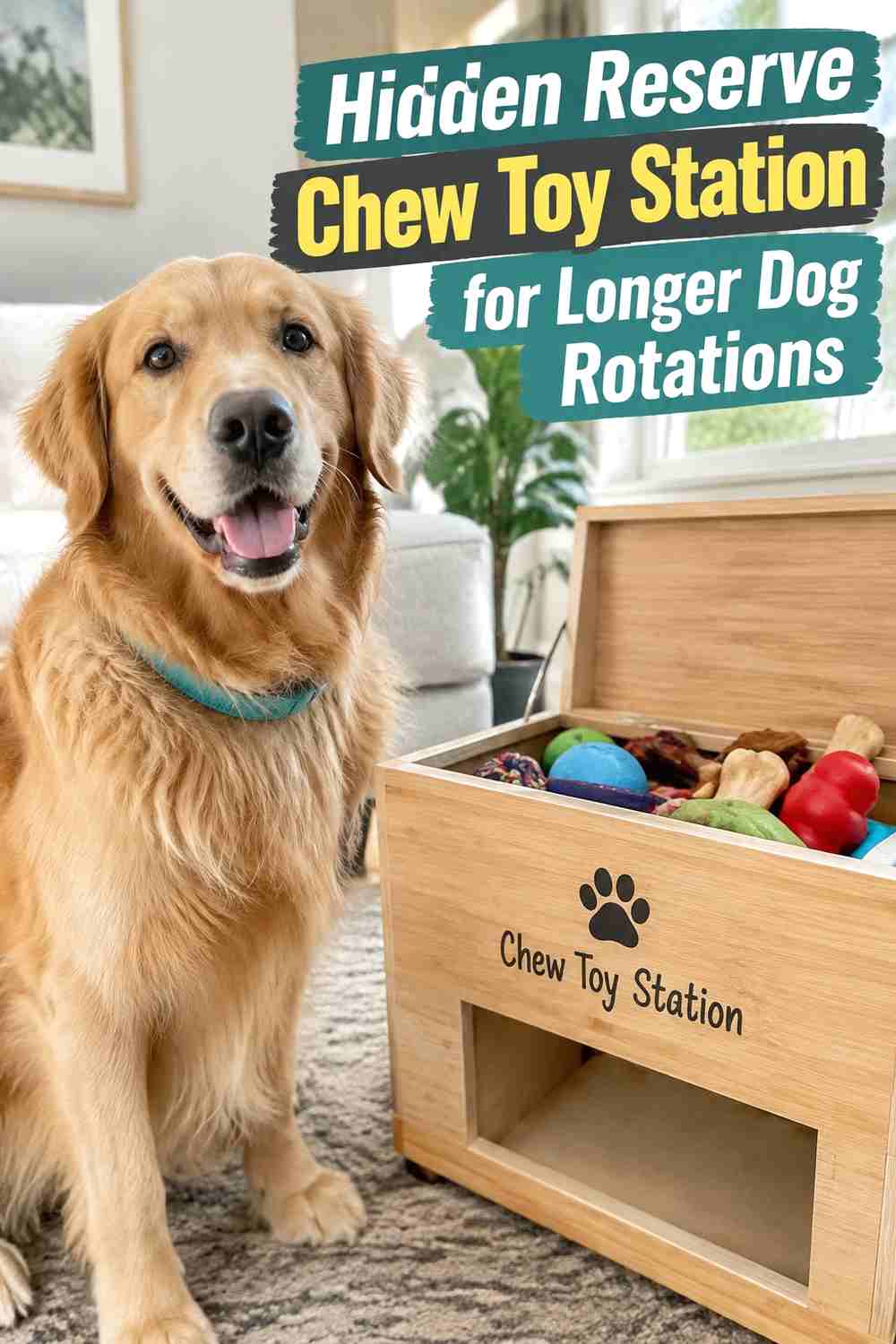
A hidden reserve station stores part of the chew toy collection completely out of sight while only a smaller group remains available. Use a closed cabinet, high shelf, or secure bin to organize toys that will return during later rotations. Keeping a reserve reduces floor clutter and gives owners a clear supply for refreshing the current selection without buying something new. Divide the reserve loosely by toy type or use so you can create balanced swaps rather than pulling out several similar items at once. Before storing a toy, clean it, dry it fully, and inspect its condition. When it returns to use later, check it again rather than assuming storage guarantees it remains suitable.
Best For
This system works well for larger toy collections and dogs that lose interest when too many options remain available continuously.
Use & Maintenance
Review the reserve occasionally and remove toys that are consistently ignored, badly worn, or no longer appropriate for your dog.
14. Entryway Chew Toy Basket For Easy Indoor Outdoor Dog Access
You May Also Like




An entryway chew toy basket creates a convenient transition station for toys that move between indoor rooms, a patio, and the backyard. Keep several easy-clean chew toys inside along with a separate small container for items that come back dirty or wet. The location makes it simple to grab a toy before going outside and return it before entering the rest of the home. Choose a sturdy basket that does not block the doorway or become a tripping hazard. If your dog can access the basket freely, limit it to toys suitable for independent use and store supervised options elsewhere. Avoid mixing leashes, cleaning products, shoes, or small household items into the same reachable container.
Space & Placement
Set the basket beside the traffic path rather than directly in it, and keep enough clearance for doors to open fully.
Cleaning Notes
Wipe the basket regularly because dirt from outdoor toys can quickly collect around an entryway station.
How to Choose the Right Idea
Start with your dog’s chewing style and access needs. If your dog can safely choose suitable toys independently, a low basket may be enough. If some toys need closer monitoring, a cabinet, wall shelf, or supervised caddy gives you more control.
Space also matters. Drawers and shelves work well in smaller homes, while rolling carts and larger cabinets suit owners with bigger collections. Multi-dog households may benefit from clearly separated bins, and homes with frequent backyard play can use a dedicated outdoor or entryway station to keep dirt from spreading indoors.
Maintenance should be easy enough to become routine. Choose a system that lets you see what is clean, what is in use, and what needs inspection. No storage method replaces checking chew toys for wear and removing items that are no longer appropriate.
Final Thoughts
The best dog chew toy station is one that makes everyday access, cleanup, inspection, and rotation easier rather than adding another layer of clutter.
Start with a simple basket, drawer, or cabinet that fits your space. Add separate cleaning, outdoor, inspection, or supervised-play stations only when they solve a specific problem in your routine.
FAQs
1. Should all dog chew toys stay available at the same time?
Not necessarily. Keeping a smaller selection available can make cleanup and inspection easier, while the remaining toys stay in reserve for later rotation.
2. Where should supervised chew toys be stored?
Keep them in an owner-controlled location such as a closed cabinet, higher shelf, or dedicated caddy that the dog cannot access independently.
3. How should I organize chew toys for multiple dogs?
Separate bins can help when dogs have different toy sizes, chewing styles, preferences, or access rules. Shared items can have their own section when sharing is appropriate.
4. Can outdoor chew toys go back into the indoor basket immediately?
Clean off dirt and debris and let wet toys dry fully first. Inspect them as well, since outdoor play can make wear and damage easier to miss.
5. What should I do when a chew toy looks damaged?
Remove it from normal circulation and inspect it before the next play session. A separate inspection bin can prevent questionable toys from accidentally returning to use.
CTA
Save these dog chew toy station ideas and choose one setup that makes your dog’s everyday toy routine cleaner, simpler, and easier to manage.
