Keep your dog’s bow ties neat, visible, and ready to wear with smart storage ideas for drawers, walls, closets, travel, and small spaces.
Save This Idea on Pinterest

13 Dog Bow Tie Storage Ideas
Save to PinterestDog bow tie storage works best when delicate accessories stay clean, dry, easy to find, and protected from chewing or crushing. Whether your dog owns a few everyday bow ties or a larger collection for holidays, photos, and special events, the right setup can prevent accessories from disappearing into cluttered drawers.
These 13 ideas include wall organizers, clear drawers, pegboards, baskets, travel cases, seasonal systems, and multi-dog storage. Some prioritize quick visibility, while others protect bow ties from dust or save floor space. Choose a system that matches the size of your collection, how often the accessories are worn, and whether your dog can reach or chew exposed items.
Quick List
- Wall-Mounted Bow Tie Organizer for Small Dog Accessories
- Clear Drawer Dog Bow Tie Storage for Dust-Free Organization
- Pegboard Dog Bow Tie Display for Easy Outfit Planning
- Labeled Basket Storage for Everyday Dog Bow Ties
- Over-the-Door Dog Bow Tie Organizer for Small Spaces
- Closet Rod Dog Bow Tie Storage with Clip Hangers
- Rotating Seasonal Dog Bow Tie Storage by Color and Theme
- Travel Case Dog Bow Tie Storage for Trips and Events
- Multi-Dog Bow Tie Storage with Separate Labeled Sections
- Decorative Shadow Box Display for Special Dog Bow Ties
- Compact Drawer Divider System for Dog Bow Tie Collections
- Wash-and-Store Dog Bow Tie Station for Easy Maintenance
- Entryway Dog Bow Tie Storage for Quick Daily Access
1. Wall Mounted Bow Tie Organizer For Small Dog Accessories
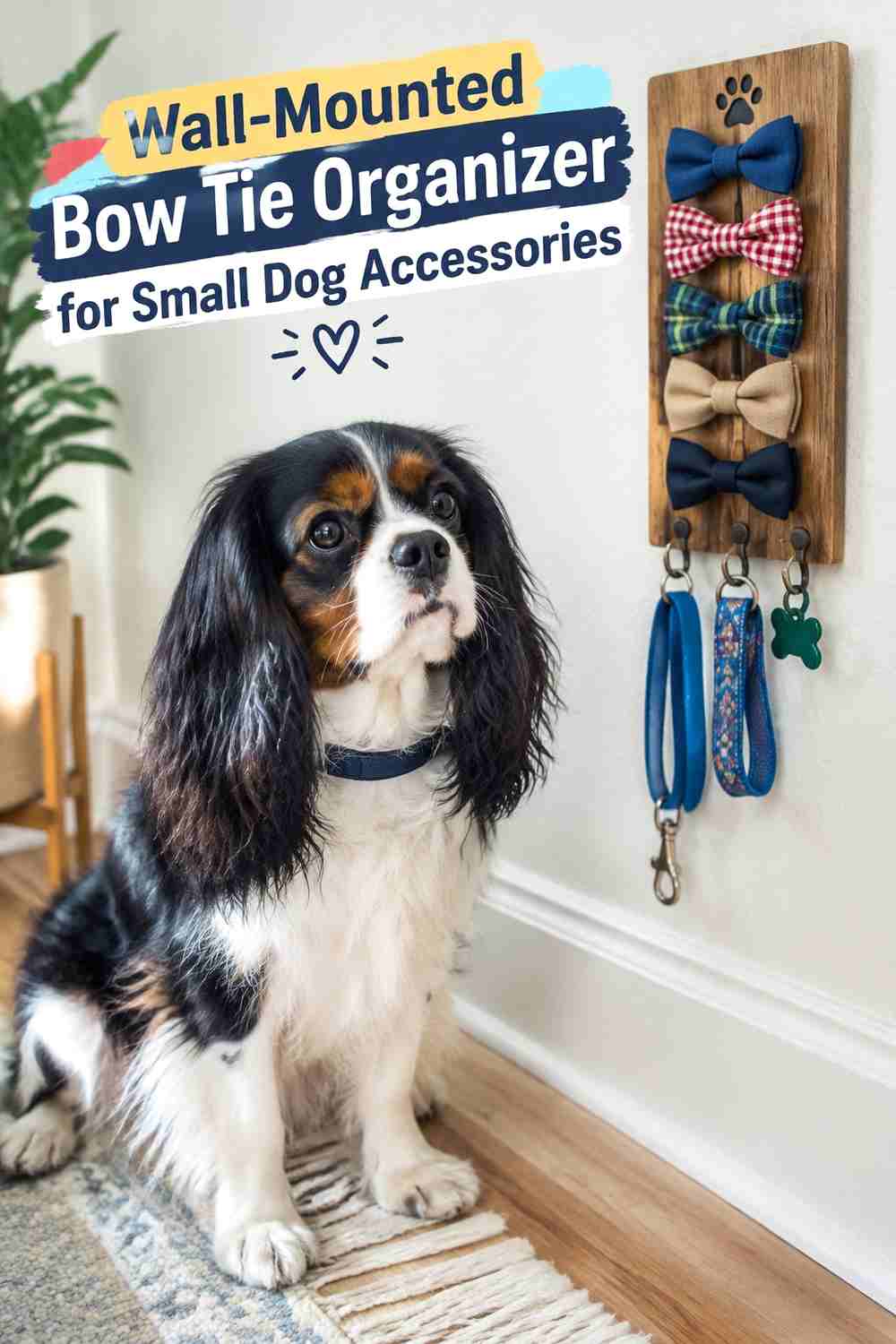
A wall-mounted organizer turns a small section of unused vertical space into a visible home for your dog’s bow ties. Use a secure board, shallow rack, or row of smooth hooks where each accessory can hang without being folded or crushed. Arrange frequently worn bow ties at eye level and reserve upper sections for seasonal or occasional pieces. Keep the organizer high enough that your dog cannot pull accessories down, especially if the bow ties have elastic loops, clips, or small decorative parts. This setup works well near a closet or grooming area because you can choose an accessory without opening drawers or digging through containers.
Space & Placement
Install the organizer away from the dog’s resting area and normal play zone. Secure mounting matters more than decorative styling, especially when several accessories hang from one surface.
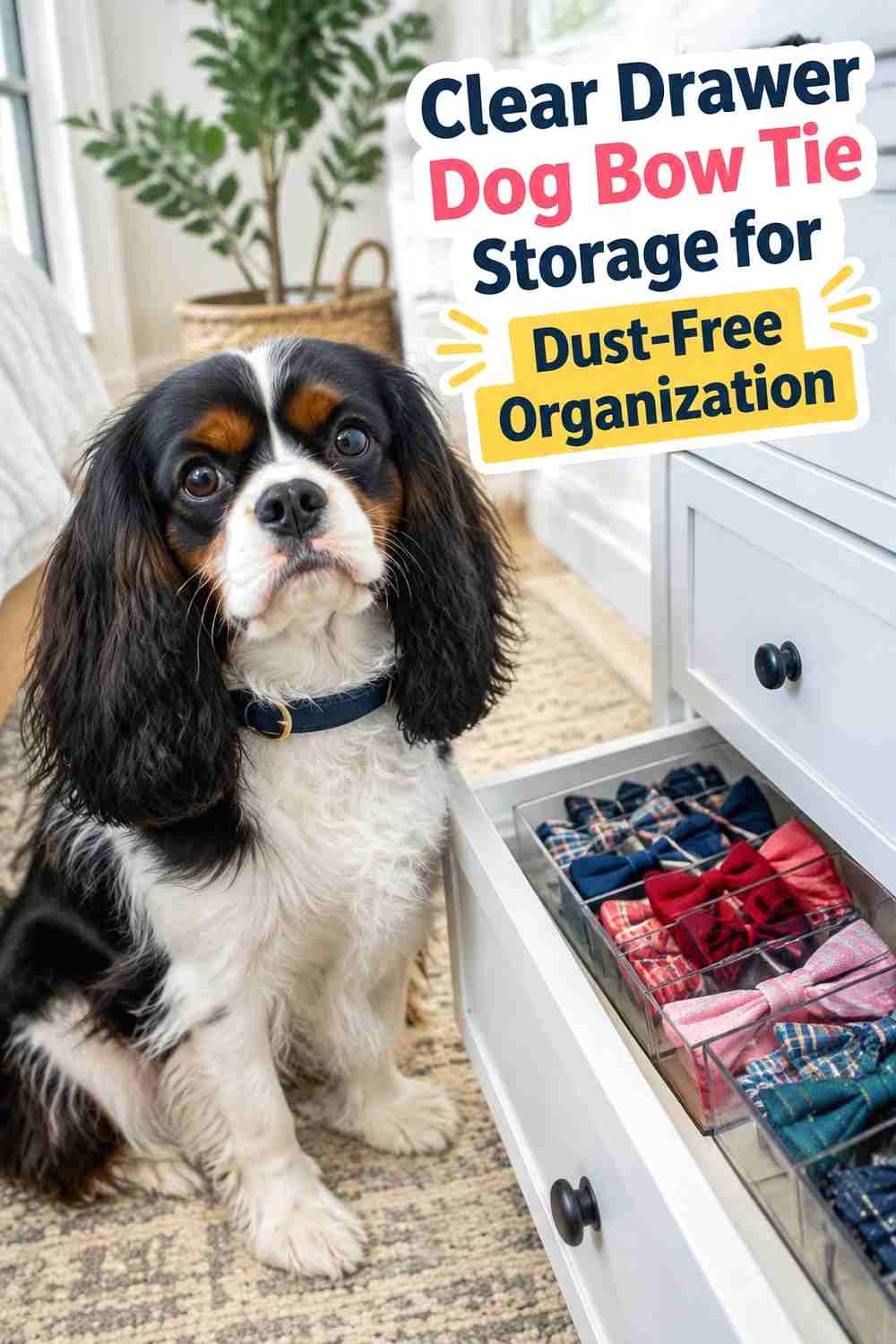
2. Clear Drawer Dog Bow Tie Storage For Dust Free Organization
You May Also Like



Clear drawers protect dog bow ties from dust while still making colors and patterns easy to see. Choose shallow drawers so accessories can lie flat in a single layer rather than being piled into a deep container. Group them by everyday wear, seasonal use, color, or size depending on how you normally choose outfits. A small label on the front can make larger collections easier to manage without opening every drawer. Keep the unit in a dry closet, dressing area, or pet supply cabinet, and avoid placing damp accessories inside. Closed drawers are also useful in homes with dogs that might otherwise chew fabric, elastic loops, or decorative pieces left within reach.
Use & Maintenance
Return each bow tie only after it is clean and completely dry. Wipe drawer interiors occasionally so loose fur and dust do not collect beneath the accessories.
3. Pegboard Dog Bow Tie Display For Easy Outfit Planning
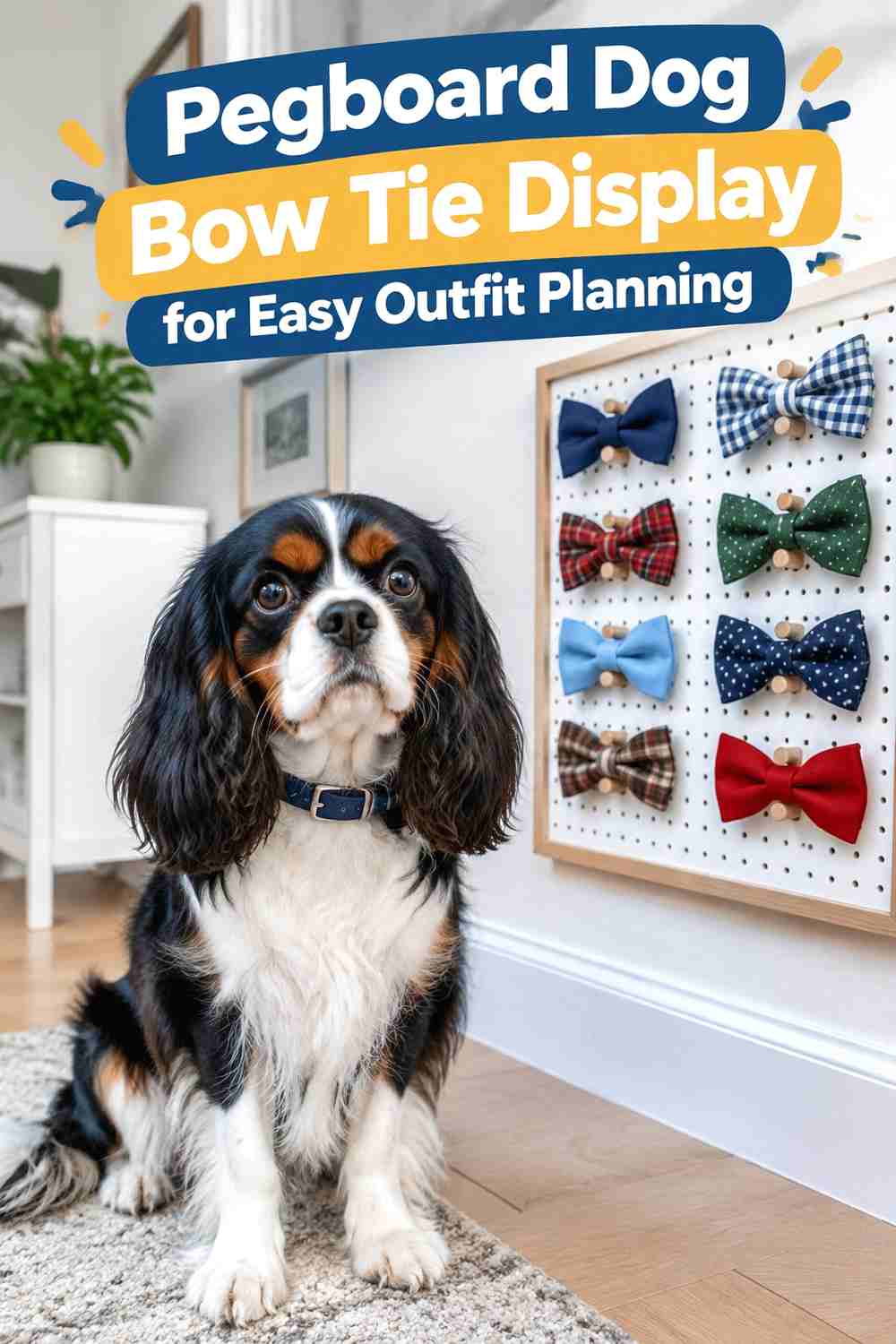
A pegboard display makes a dog bow tie collection easy to scan when you enjoy coordinating accessories with collars, bandanas, or special outfits. Use smooth hooks or small accessory holders arranged with enough spacing that bow ties do not overlap. Sort by color, pattern, season, or formality so choosing one takes only a few seconds. The open display can also make it easier to notice damaged clips or stretched loops before use. Mount the board securely and place it well above your dog’s reach, since exposed accessories may be tempting to pull down. This setup works especially well in a closet, grooming nook, or dedicated pet organization area.
Pro Tip
Leave a few empty spaces instead of filling every hook. Extra room keeps the display readable and gives you space for new accessories without immediately reorganizing everything.
4. Labeled Basket Storage For Everyday Dog Bow Ties
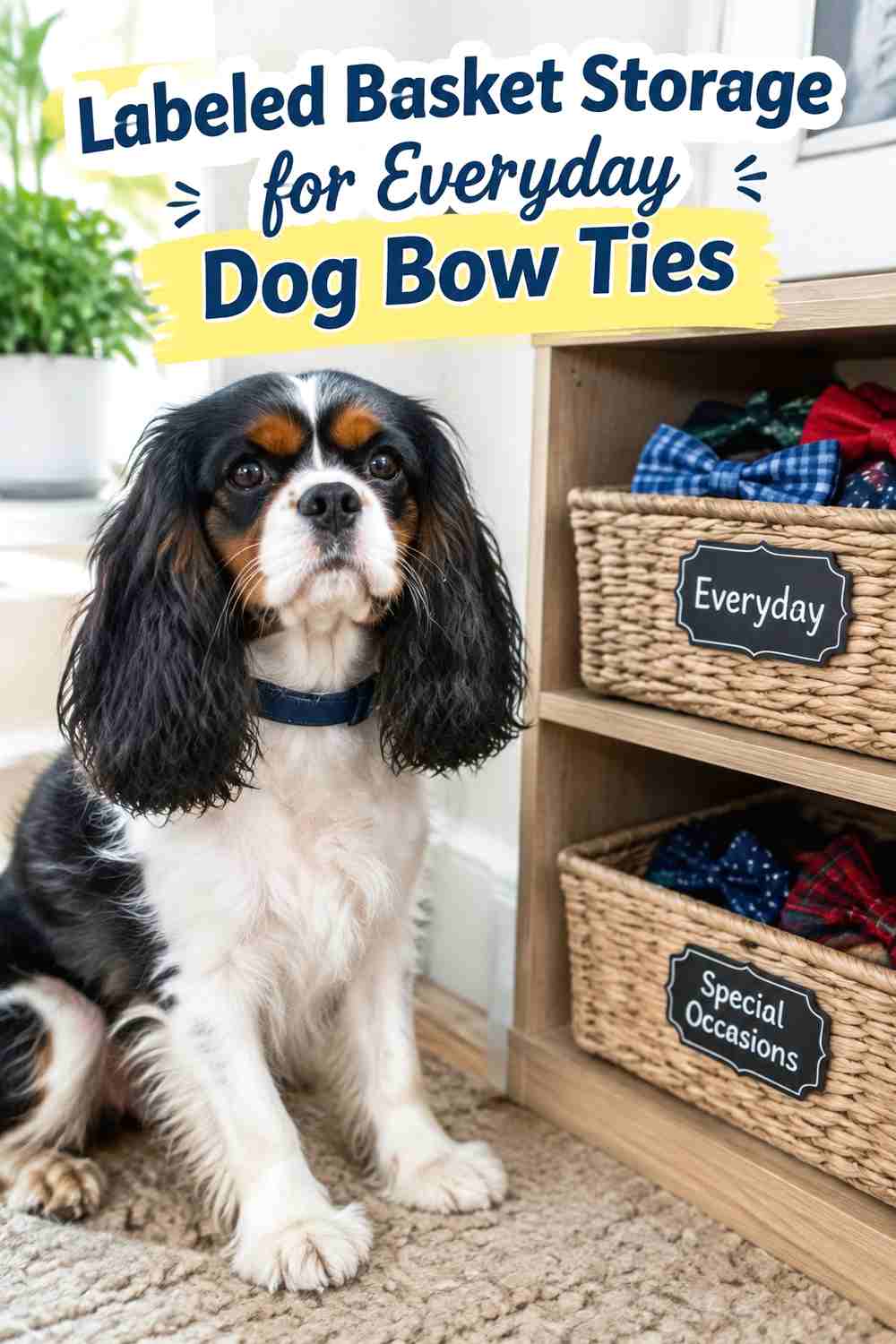
Labeled baskets create a simple storage system for dog bow ties that are used often but do not need to be displayed. Choose small, shallow baskets so accessories stay visible from the top instead of disappearing under a deep pile. One basket might hold everyday styles, another seasonal pieces, and a third formal or photo-ready bow ties. Keep the containers on a secure shelf rather than the floor if your dog likes investigating fabric items. This system is easy to expand, but avoid adding too many categories because a complicated setup becomes harder to maintain. Remove damaged accessories during regular sorting instead of returning them to the basket.
Best For
This option suits medium-sized collections and owners who prefer quick sorting without installing wall hardware or dedicating an entire drawer unit to pet accessories.
5. Over The Door Dog Bow Tie Organizer For Small Spaces
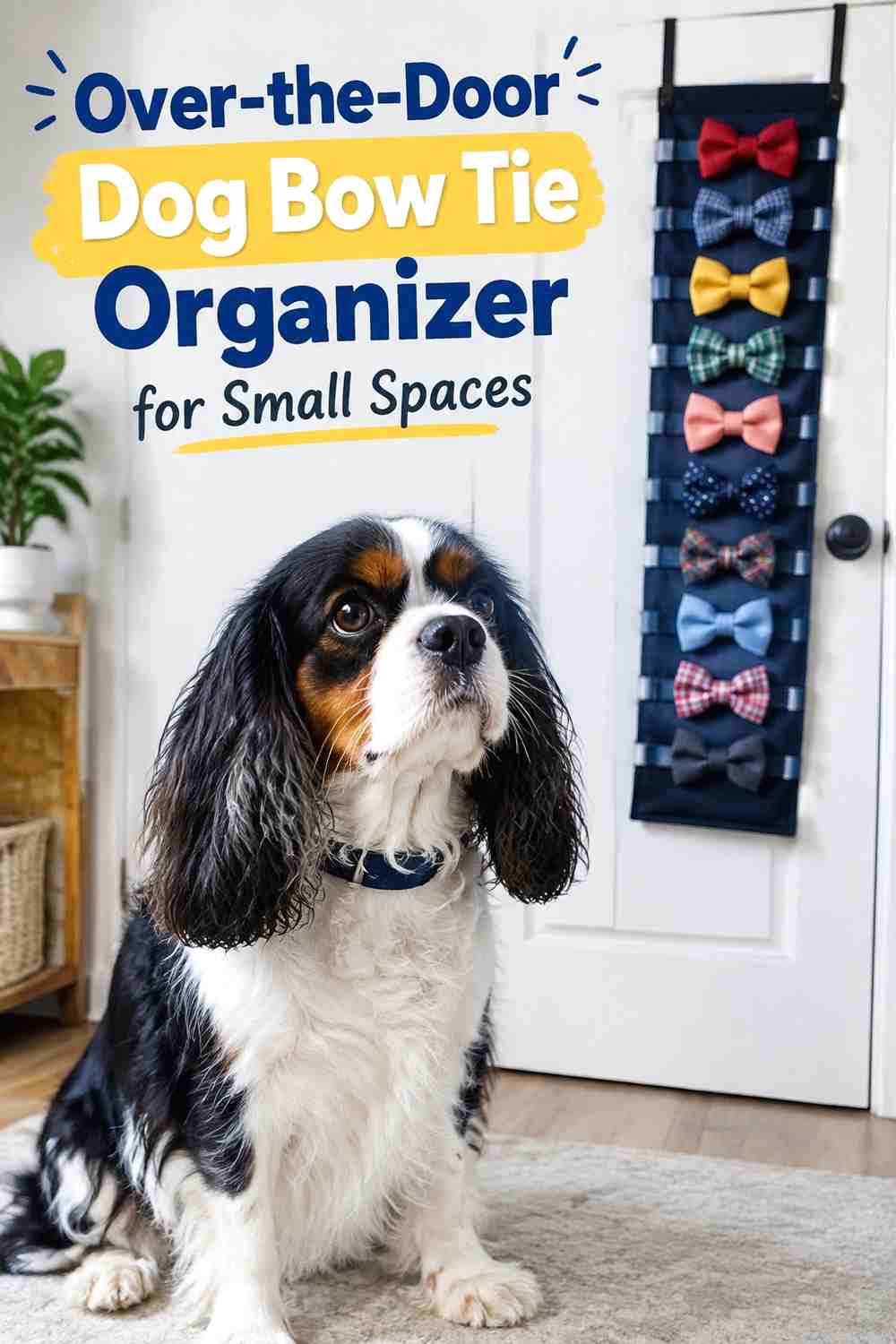
An over-the-door organizer uses otherwise empty vertical space for dog bow ties in apartments, closets, or compact homes. Choose an organizer with shallow clear pockets or small fabric sections so each bow tie has its own place and stays easy to identify. Keep heavier pet supplies elsewhere so the door organizer does not become overloaded or difficult to close. Position frequently used accessories in the middle rows and occasional pieces higher up. Make sure the organizer does not interfere with the door latch or drag along the floor. If your dog can reach the lowest pockets, leave them empty or use the upper section only.
Space & Placement
A closet door is often more practical than a frequently used entry door because the organizer is less likely to swing, bump furniture, or interrupt normal household traffic.
6. Closet Rod Dog Bow Tie Storage With Clip Hangers

Closet rod storage works well when bow ties are already part of a larger dog wardrobe. Use small accessory hangers or smooth clips that hold each bow tie without crushing the fabric or pulling too tightly on elastic loops. Group similar styles together and leave enough space between hangers to see patterns clearly. A short section of an existing closet rod is often enough for a moderate collection, making this useful for owners who also store dog coats, harnesses, or bandanas nearby. Keep the accessories separate from damp outdoor gear and avoid clips with rough edges that could snag delicate fabric. Closed closet storage also helps reduce dust.
Use & Maintenance
Check clips occasionally for rust, sharp edges, or excess pressure. If a bow tie becomes creased, store it flat instead of forcing it back onto a hanger.
7. Rotating Seasonal Dog Bow Tie Storage By Color And Theme
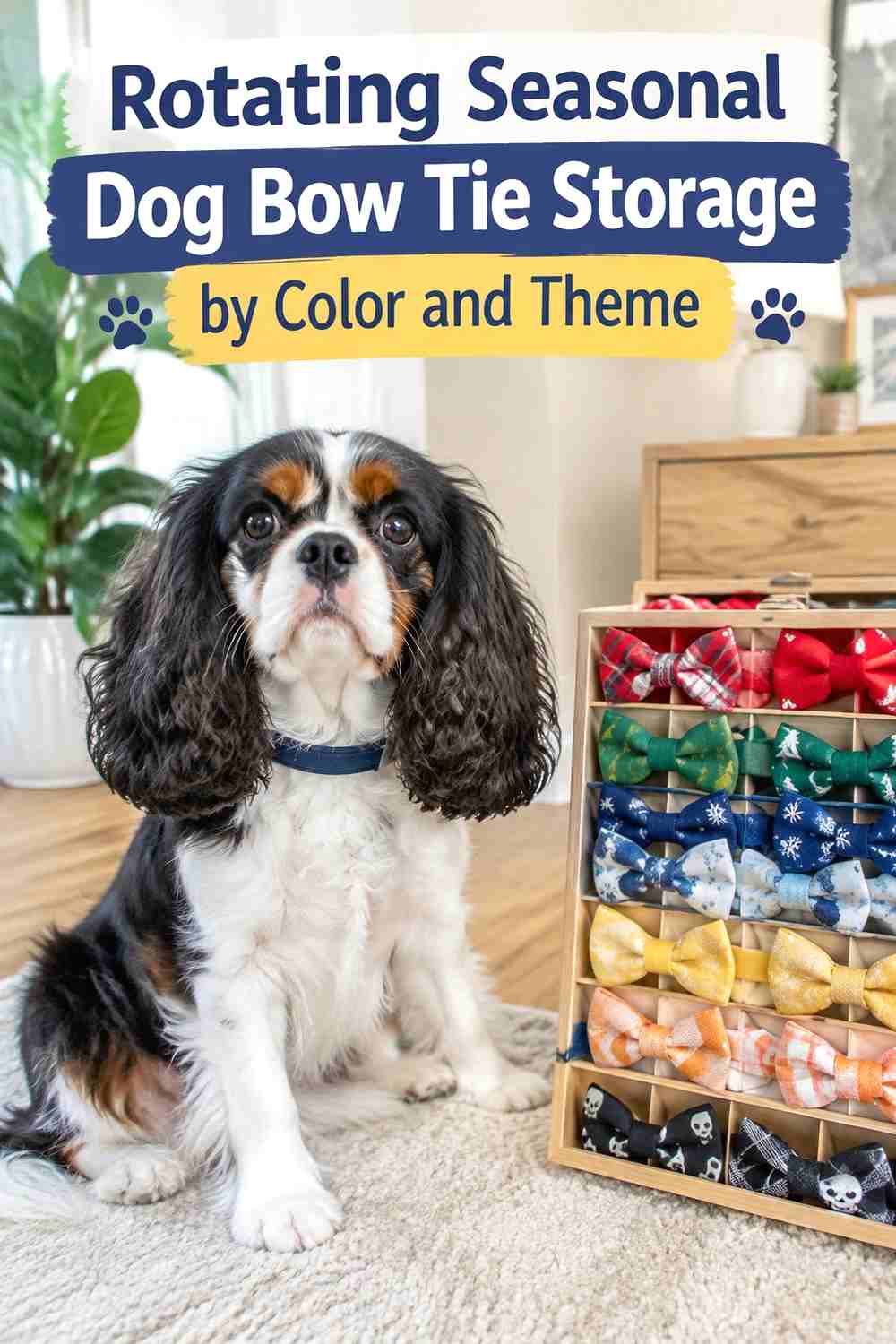
Seasonal rotation keeps the current dog bow ties easy to reach while moving off-season pieces out of the main storage area. Sort accessories into simple groups such as spring, summer, fall, winter, holidays, or neutral everyday styles, then keep only the current selection in the most accessible drawer or basket. Store the remaining pieces in a clean closed container until their season returns. This approach works especially well for larger collections because it prevents the everyday storage area from becoming overloaded. Avoid packing bow ties tightly or mixing damp accessories with clean ones. When rotating the collection, inspect attachment loops, clips, and fabric condition before putting items back into use.
Pro Tip
Use broad seasonal categories rather than creating a container for every holiday. Fewer groups make rotation faster and require less storage space.
8. Travel Case Dog Bow Tie Storage For Trips And Events

A compact travel case keeps dog bow ties protected when packing for weddings, vacations, photo sessions, or other events away from home. Choose a small zippered organizer with flat compartments so bow ties do not become crushed under leashes, bowls, or heavier luggage. Pack only the styles you expect to use and keep attachment pieces contained so nothing gets lost inside the suitcase. A washable pouch or structured accessory case can also separate clean bow ties from dog gear that may pick up dirt outdoors. After the trip, unpack the case instead of leaving used accessories stored inside indefinitely. Clean and dry anything that became damp before returning it to permanent storage.
Best For
This setup is useful for owners who regularly take dog accessories to events or trips and want a dedicated system that is easy to transfer between bags.
9. Multi Dog Bow Tie Storage With Separate Labeled Sections
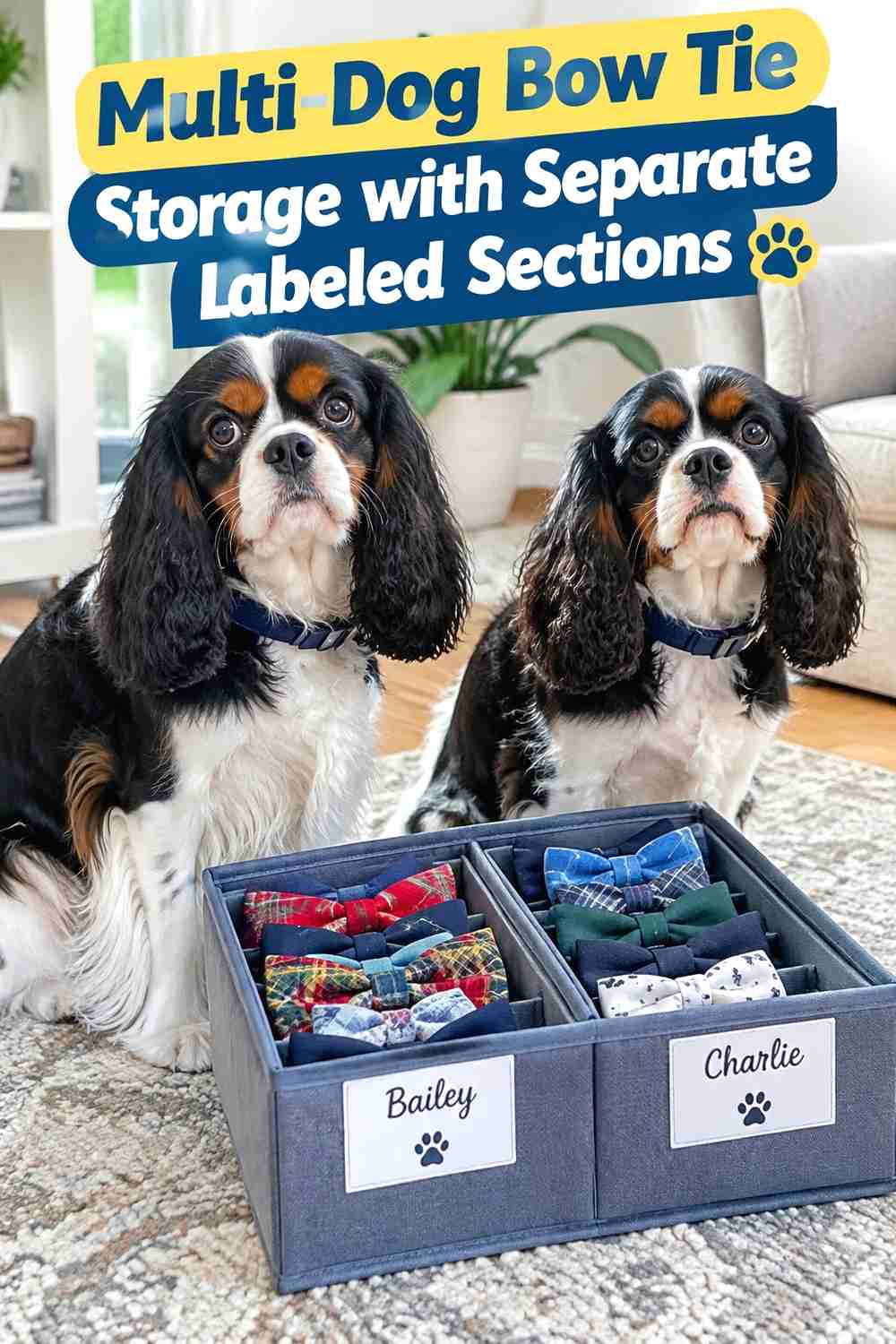
A multi-dog storage system keeps each dog’s bow ties separate when sizes, attachment styles, or collar widths differ. Give every dog a labeled drawer, basket, row of hooks, or divider section so accessories do not get mixed together after washing or dressing. If some bow ties fit multiple dogs, create a shared section rather than guessing where they belong. This system is especially helpful in homes where dogs have similar-looking accessories but different collar sizes. Store everything out of reach so pets cannot pull down clips, elastic loops, or fabric pieces. A simple name label is usually enough; complicated color-coding can become harder to maintain than the collection itself.
Setup Notes
Place the most frequently used sections at the easiest height for the owner. Less-used formal or seasonal accessories can go higher or farther back.
10. Decorative Shadow Box Display For Special Dog Bow Ties
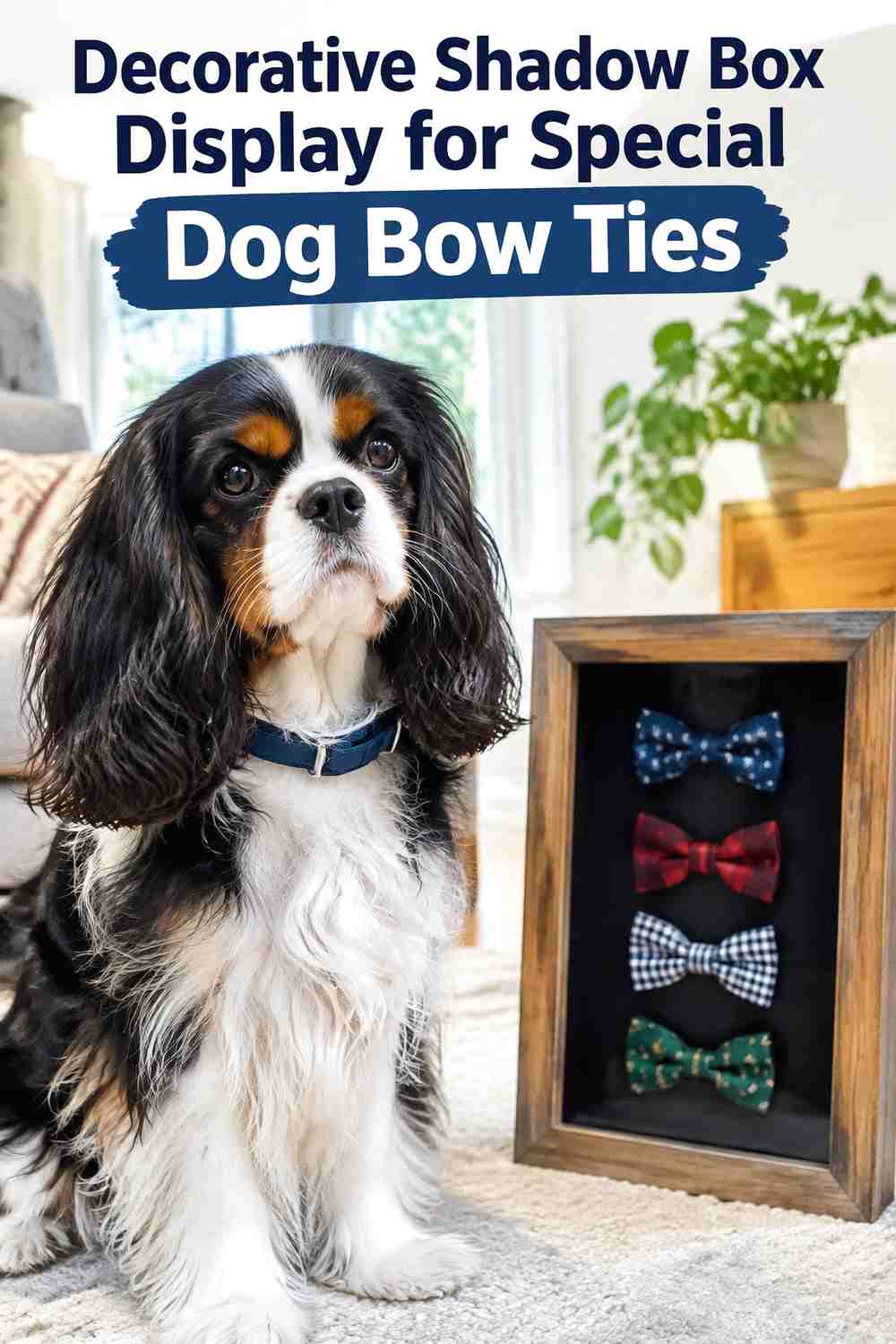
A shadow box display turns a few special dog bow ties into décor while keeping them protected from dust and casual handling. Choose meaningful pieces such as a birthday bow tie, wedding accessory, holiday favorite, or photo-session style rather than trying to fit the entire collection inside. Arrange the accessories with enough spacing that each one is easy to see, and use attachment methods that do not permanently damage the fabric. Mount or place the closed display securely where your dog cannot knock it over. This idea is better for sentimental or rarely worn accessories than everyday pieces, since repeatedly opening a decorative display can become inconvenient.
Best For
Use a shadow box for memorable accessories you want to preserve or display rather than for bow ties needed several times each week.
11. Compact Drawer Divider System For Dog Bow Tie Collections
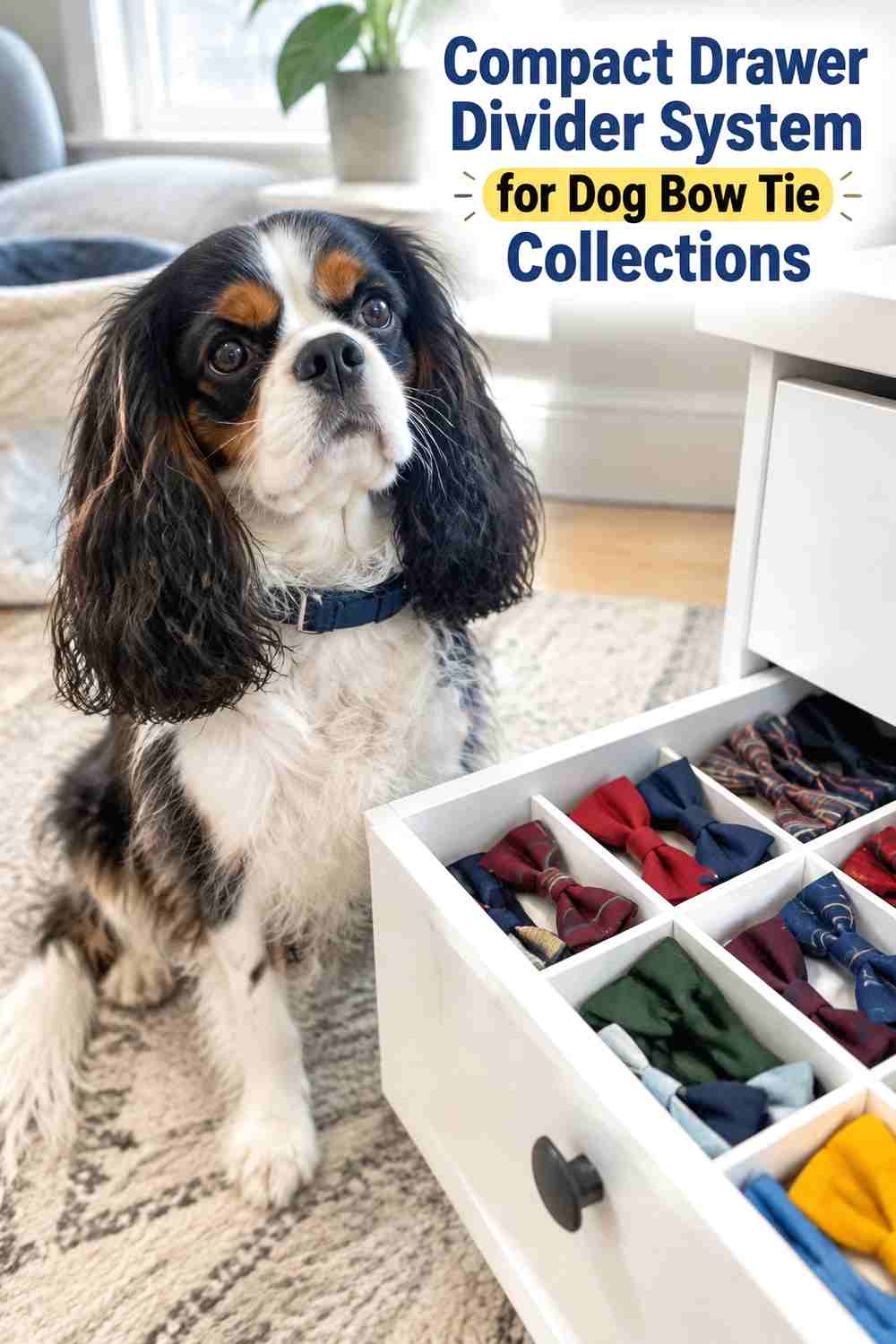
Drawer dividers make a mixed dog bow tie collection easier to organize without adding new furniture. Use adjustable compartments to separate small, medium, seasonal, formal, and everyday accessories while keeping each bow tie flat enough to retain its shape. Shallow sections are usually more practical than deep bins because you can see everything at once. Place frequently used styles near the front and less-used pieces toward the back. Avoid squeezing oversized bow ties into compartments that bend their edges or decorations. This system can share a drawer with other dog accessories as long as hard objects, grooming tools, or wet gear are kept in separate sections.
Space & Placement
Choose a dry drawer away from bathroom humidity or damp entryway gear. Closed storage is especially useful when your dog is curious about fabric accessories.
12. Wash And Store Dog Bow Tie Station For Easy Maintenance

A wash-and-store station keeps dirty and clean dog bow ties separated so worn accessories do not disappear back into the collection before they are refreshed. Use a small washable pouch or basket for pieces waiting to be cleaned, plus a separate closed drawer or container for clean, dry bow ties. Follow the care instructions for each accessory, since decorative fabrics, clips, and elastic attachments may need different handling. Let every bow tie dry completely before putting it away to reduce trapped moisture and odor. This system works particularly well near a laundry or grooming area, but cleaning products should remain securely out of the dog’s reach.
Use & Maintenance
Inspect each bow tie while sorting laundry. Retire pieces with loose decorations, damaged clips, frayed elastic, or other wear that could make them unsuitable for use.
13. Entryway Dog Bow Tie Storage For Quick Daily Access
You May Also Like



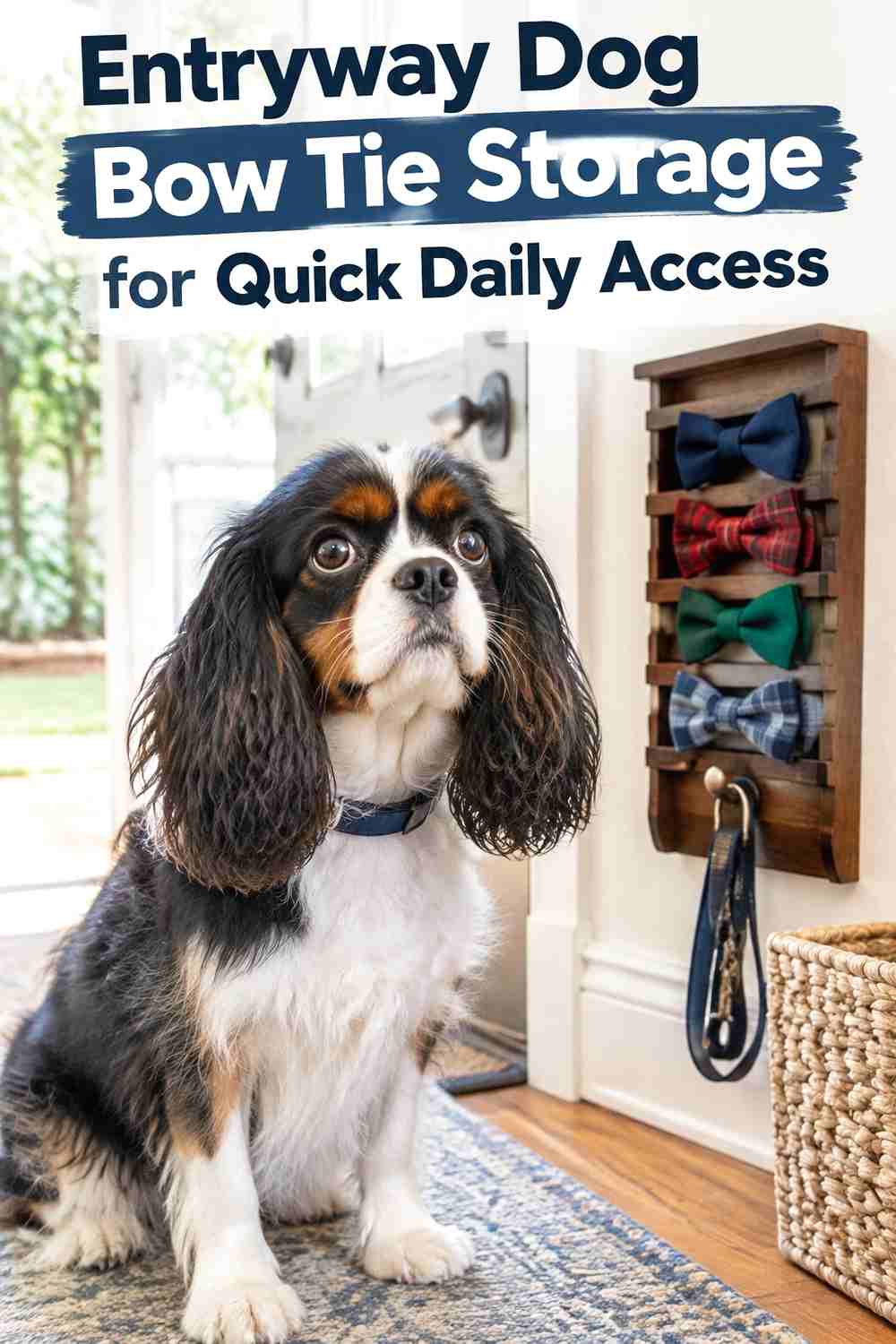
An entryway storage spot keeps a small selection of frequently worn dog bow ties close to collars, harnesses, and walk gear. Use a narrow drawer, secure wall pocket, or small closed box rather than leaving loose accessories on a bench where they can be chewed or lost. Limit this station to a few everyday favorites so the entrance stays uncluttered, and keep the larger collection in a closet or drawer elsewhere. This setup works especially well for dogs that wear bow ties for visits, outings, photos, or regular social activities. Return each accessory to the same spot after use so the entryway remains a quick-access station instead of becoming another miscellaneous pet-storage area.
Pro Tip
Rotate two or three favorites through the entryway station and keep occasional styles elsewhere. A small selection is faster to manage and easier to keep tidy.
How to Choose the Right Idea
Start with the size of your dog’s bow tie collection and how often you use it. A few everyday accessories may only need a labeled basket or entryway drawer, while a larger collection benefits from dividers, wall storage, seasonal rotation, or clear drawers.
Next, consider protection. Delicate or sentimental bow ties are better kept in closed drawers, cases, or shadow boxes where they will not collect dust or become crushed. Frequently used pieces can stay more visible as long as they remain beyond your dog’s reach.
Available space matters too. Apartments and small homes can use over-the-door organizers, closet rods, wall racks, or compact drawer dividers instead of extra furniture. Whatever system you choose, keep accessories dry, inspect clips and elastic regularly, and store small or chewable pieces where pets cannot access them unsupervised.
Final Thoughts
Dog bow tie storage can be simple as long as the system keeps accessories clean, easy to find, and protected from damage. The best option is usually the one that matches how often you actually dress your dog rather than the size of the collection alone.
Start with one drawer, basket, rack, or organizer and sort your most-used bow ties first. Add seasonal, display, or travel storage only when it makes the collection easier to manage.
FAQs
1. What is the best way to store dog bow ties?
Store them clean and dry in a shallow drawer, organizer, basket, or hanging system where they will not be crushed. Keep any clips, elastic, or decorative pieces out of your dog’s reach.
2. Should dog bow ties be stored flat or hanging?
Either can work. Flat storage is useful for structured or delicate bow ties, while hanging storage works well for lightweight accessories that can be clipped without stretching or creasing.
3. How can I organize a large dog bow tie collection?
Divide the collection by dog, season, color, size, or frequency of use. Keep everyday bow ties accessible and move occasional or seasonal pieces into separate storage.
4. How do I store dog bow ties in a small apartment?
Use vertical or hidden storage such as an over-the-door organizer, wall rack, closet rod, or drawer dividers. These options organize accessories without adding extra floor furniture.
5. Should dog bow ties be cleaned before storage?
Yes, when they are dirty or damp. Follow the accessory’s care instructions and make sure each bow tie is completely dry before placing it back into closed storage.
CTA
Save your favorite dog bow tie storage idea and create an accessory system that keeps every color, pattern, and special-event style easy to find.
