A dog bed does not have to look as though it was dropped into the living room wherever a few feet of floor happened to be free. The best dog bed corners work with the room: they give your dog a comfortable place to settle while keeping walkways open, cleaning manageable, and the seating area visually balanced.
Save This Idea on Pinterest

12 Dog Bed Corner Ideas for Living Rooms That Feel Intentional
Save to PinterestStart by watching where your dog already chooses to rest. Some dogs want to stay close to the sofa, while others prefer a quieter edge of the room where people are not constantly walking past. From there, choose a corner that has enough room for the dog to stretch out without blocking doors, heating vents, drawers, or traffic paths.
These 12 setups use different parts of the living room, from unused furniture gaps to reading nooks and open-plan boundaries.
Corners That Blend Into the Main Seating Area
1. Tuck the Bed Beside the Sofa
The space beside a sofa is often one of the easiest places to create a dog bed corner because it keeps your dog close without putting the bed in the center of the room.
Choose the sofa end that gets less foot traffic. A rectangular or softly structured bolster bed can sit parallel to the sofa, making the setup feel like an extension of the seating arrangement rather than a separate pet zone. If there is a side table nearby, leave enough clearance so the dog cannot bump it when getting up or stretching.
This arrangement works especially well for dogs that like being near people during television time or evening relaxation. It also keeps the center of the room free for walking.

2. Pair the Bed With a Reading Chair
A reading chair can create a natural little companion zone for a dog bed. Instead of placing the bed directly beside the main sofa, position it near the outer side of an armchair where your dog can settle while someone reads or relaxes.
This is particularly useful in larger living rooms where one corner feels disconnected from the primary seating group. A compact round or oval bed can soften the geometry of the chair and nearby floor lamp.
Keep electrical cords secured and inaccessible rather than trailing near the bed. The dog should also have enough space to enter and leave the corner without squeezing between furniture.

You May Also Like


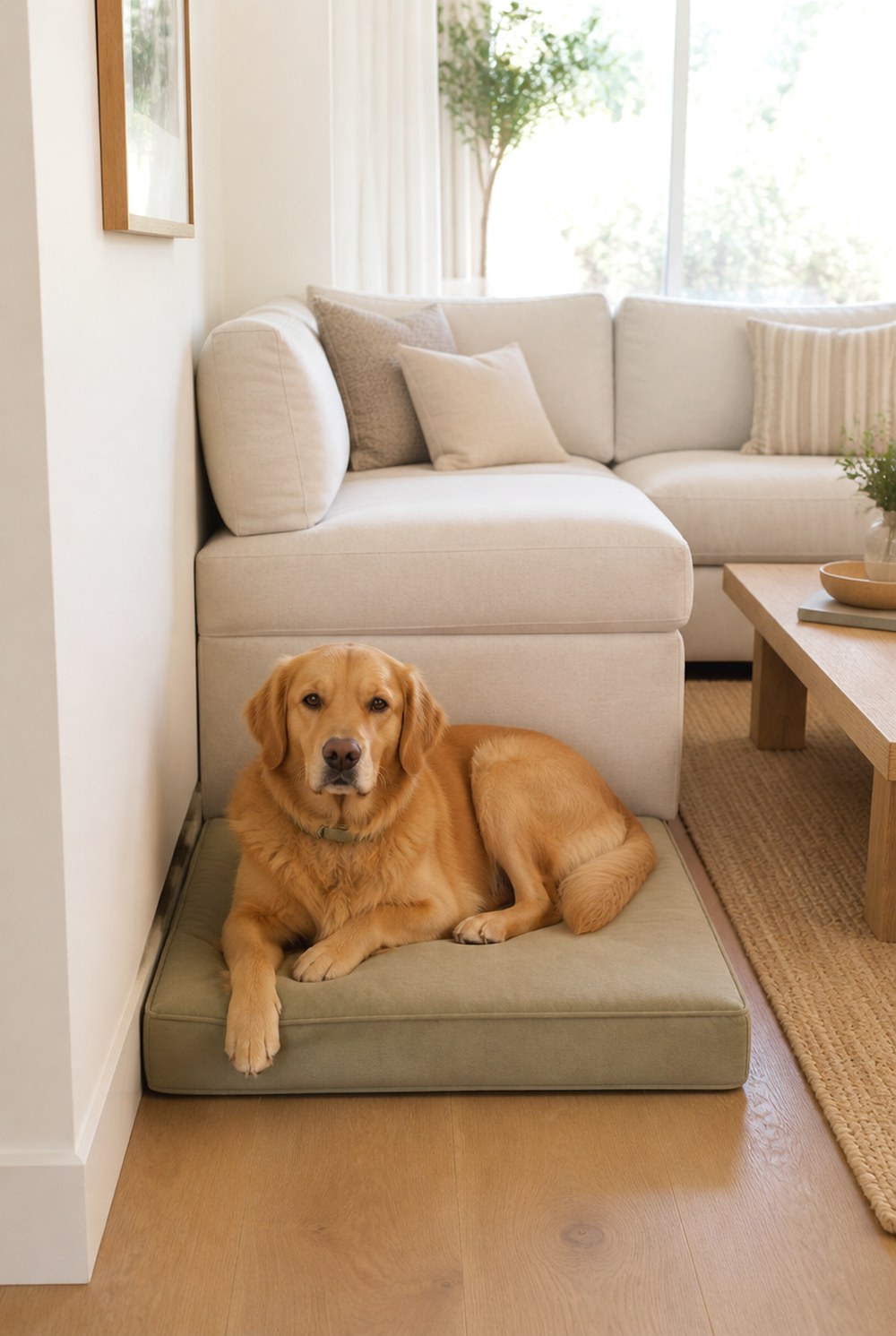
3. Use the Outside Corner of a Sectional
Large sectionals can create small pockets of unused floor space at their outer ends. One of these pockets can become a dog bed area without reducing the room’s main seating capacity.
Measure the space before choosing the bed. A bed that fits comfortably inside the available footprint will look more deliberate than one that sticks several inches into the walkway.
The outer end of the sectional is usually a better choice than wedging a bed behind the sofa, where a dog may feel boxed in or become difficult to see when people move furniture.
4. Create a Matching “Second Seat”
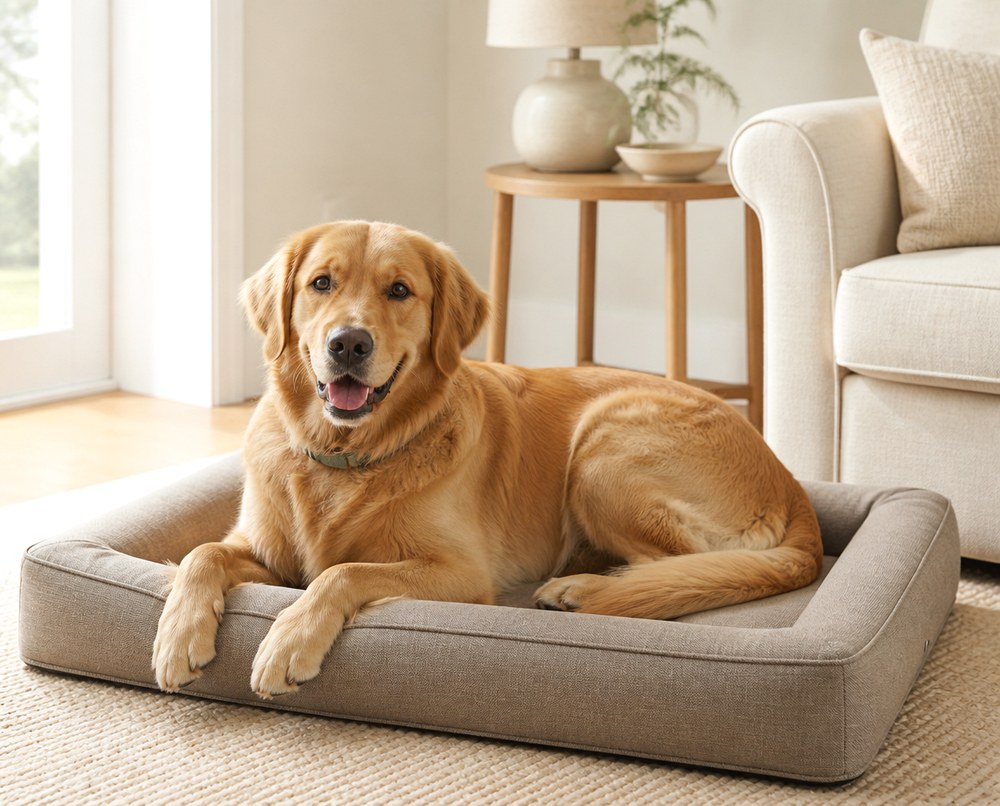
For a particularly cohesive room, choose a dog bed whose shape and fabric tone echo the nearby furniture without trying to match it exactly.
A structured bed in a washable neutral cover can sit beside an armchair or sofa like a low second seat. The visual repetition makes the pet area feel planned, while a removable cover makes routine fur and dirt cleanup more manageable.
Avoid decorative pillows, tassels, or loose trims if your dog tends to chew or pull fabric.
Ideas for Awkward or Underused Living-Room Space
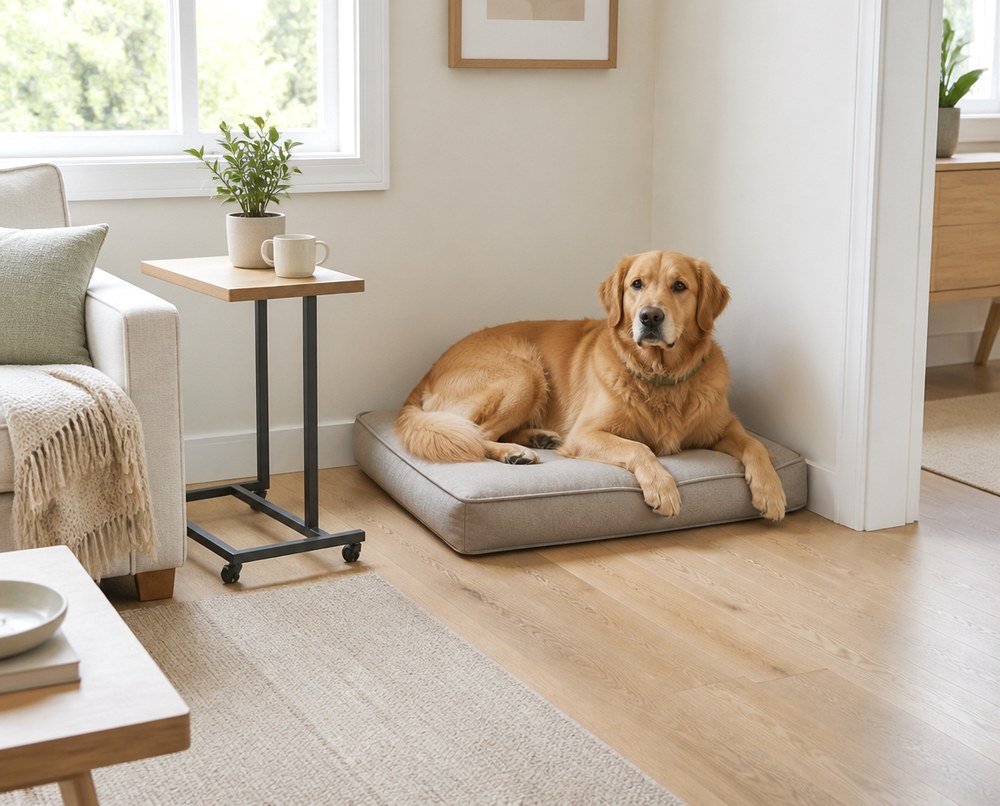
5. Turn an Empty Wall Corner Into a Defined Nook
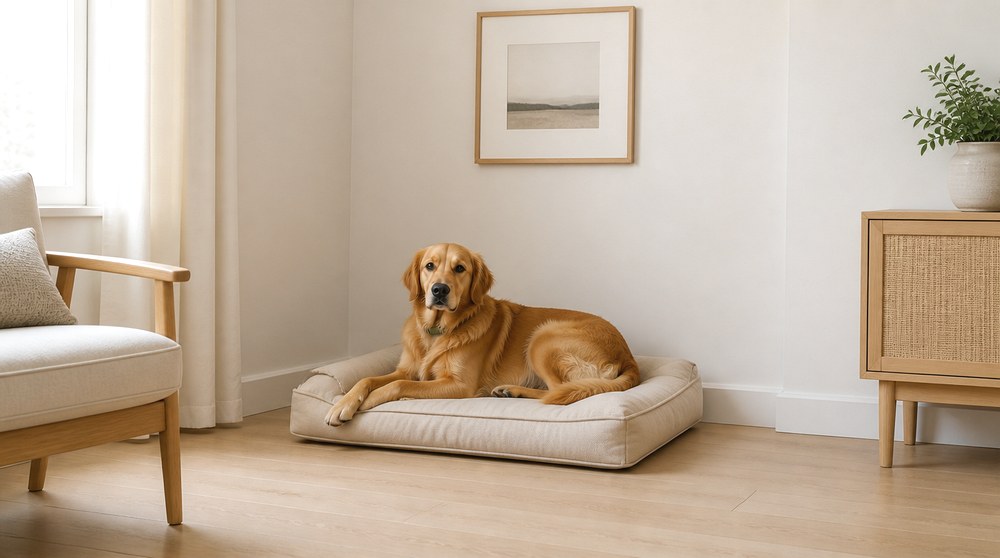
An empty corner between two walls can hold more than a bed without becoming cluttered. Center the bed in the available floor area and use one piece of wall art above it to visually define the zone.
Wall-mounted decor is generally more practical here than placing decorative items on the floor around the bed. The dog keeps the full floor area for turning and stretching, and vacuuming around the bed stays straightforward.
Choose artwork that is securely mounted and keep the corner free of dangling cords or objects the dog can reach.
6. Use the Open Space Beneath a Console Table
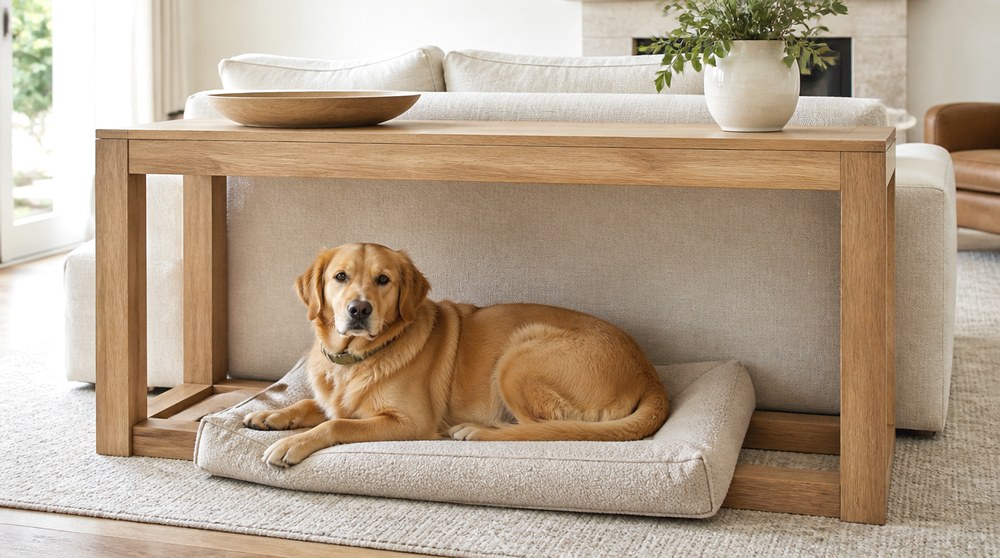
A wide console with an open base can provide a surprisingly useful dog bed location, provided the furniture offers generous headroom and is stable.
The dog should be able to stand, turn, and leave comfortably without bumping the tabletop or supports. This works better with an open-frame console than a narrow piece with crossbars or storage bins underneath.
Secure the console to the wall when appropriate for the furniture design, and do not store fragile, heavy, or hazardous objects directly above an area where the dog regularly moves.
7. Make Use of a Bay Window or Shallow Alcove
Architectural recesses often become awkward decorating spaces, but many are well suited to a dog bed.
A shallow alcove can provide a slight sense of separation while still allowing the dog to see the room. In a bay window, position the bed so the dog has shade available rather than assuming full sun will always be comfortable.
Temperature matters more than the view. If the area becomes noticeably hot, cold, or drafty at certain times of day, use another resting spot during those periods.

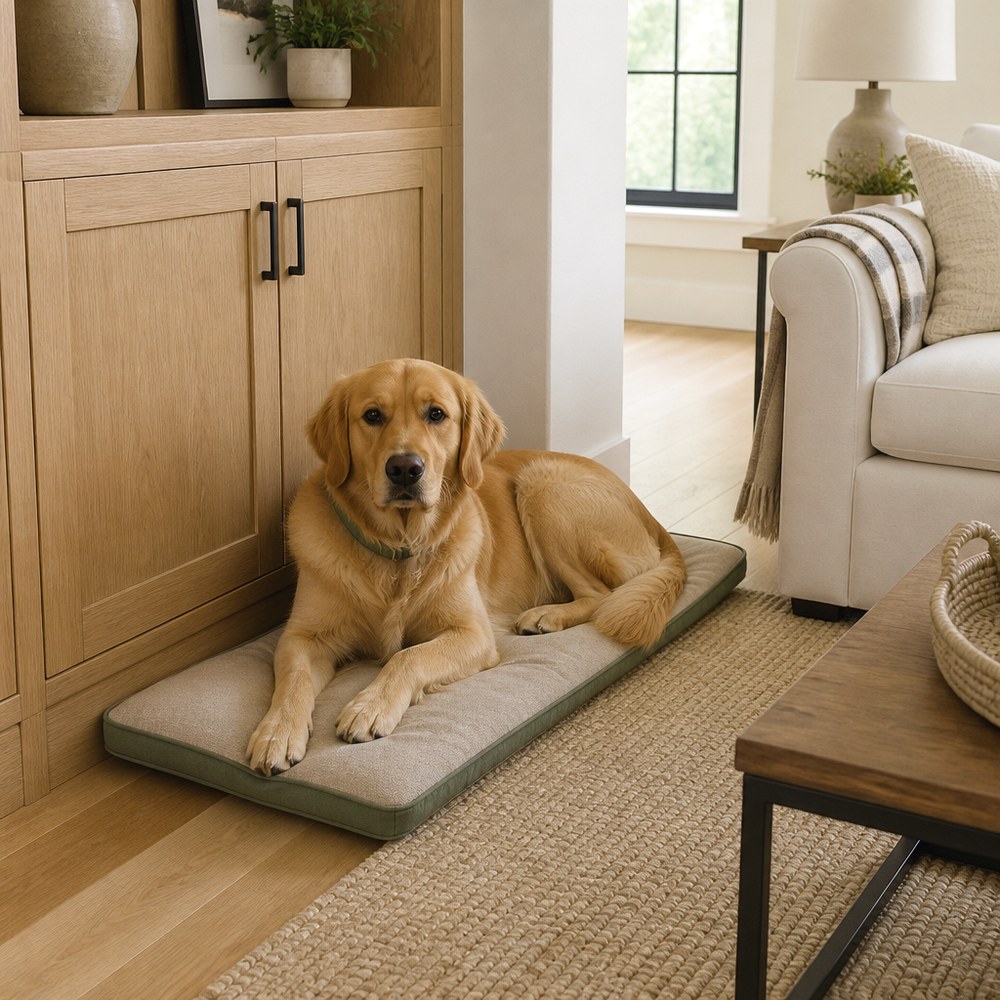
8. Fill the Space Beside a Built-In Cabinet
Built-in shelves, media units, and cabinets sometimes stop short of the adjoining wall, creating a narrow floor area with no obvious use. If the space is large enough, it can become a neat dog bed corner.
A slim rectangular bed usually works better here than a wide round one. Keep cabinet doors and drawers fully operational so nobody has to move the dog’s bed every time storage is accessed.
If the cabinet contains electronics, make sure cables and outlets remain inaccessible.
Dog Bed Corners That Support Daily Routines
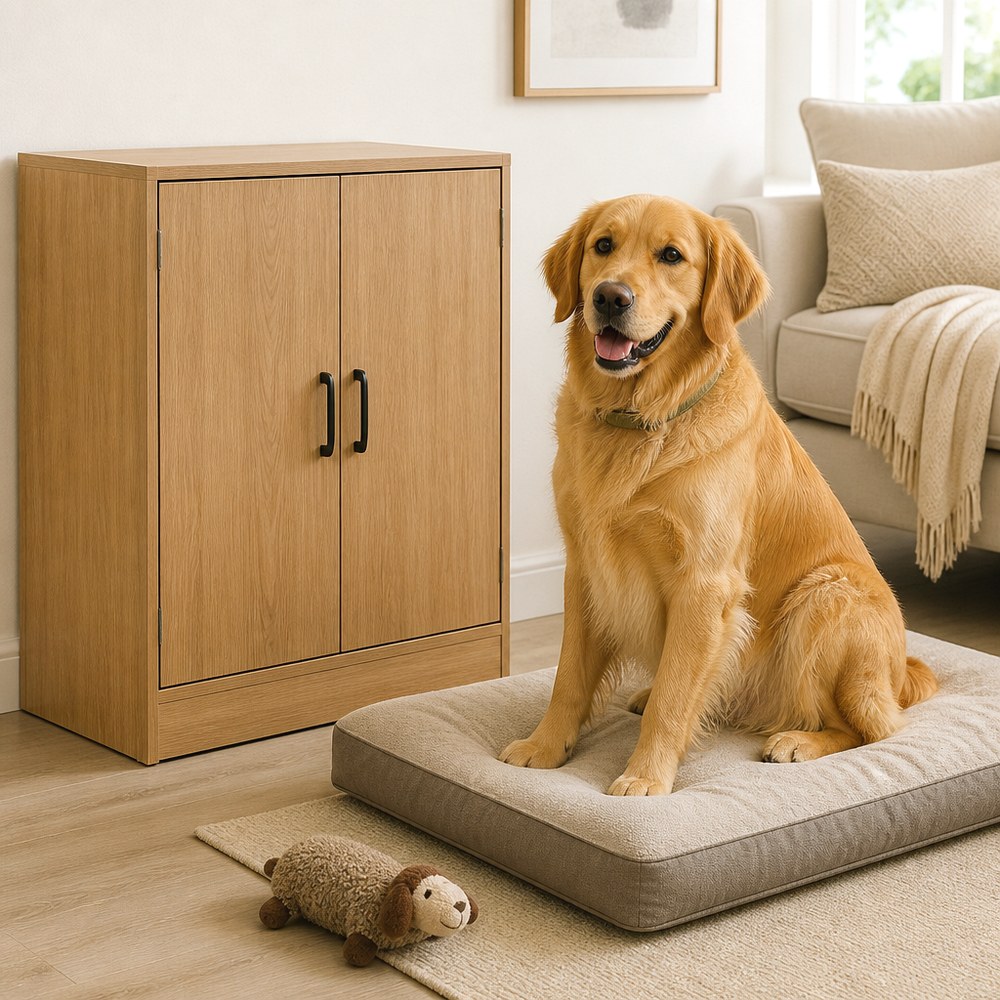
9. Combine the Bed With Closed Toy Storage
If toys tend to migrate across the living room, place the dog bed beside a small piece of closed or secure storage dedicated to pet items.
A lidded basket that the dog cannot tip into, or a low cabinet with supplies stored behind doors, can keep backup toys and grooming items nearby without surrounding the bed with clutter.
Keep frequently chewed toys separate from anything with small pieces or damaged parts. Inspect toys regularly and remove items that are breaking apart.
10. Set Up a Quiet Corner Away From the Television
Not every dog wants to sleep in the busiest part of the room. A corner along the side or back wall can provide a quieter resting place while still allowing the dog to remain near the household.
This setup can be useful in homes where the television, gaming area, or main conversation zone is active for long stretches. Place the bed where people will not repeatedly step over or around the dog.
The goal is not to isolate the dog. The bed should remain accessible and connected to the living space while offering a lower-traffic option.

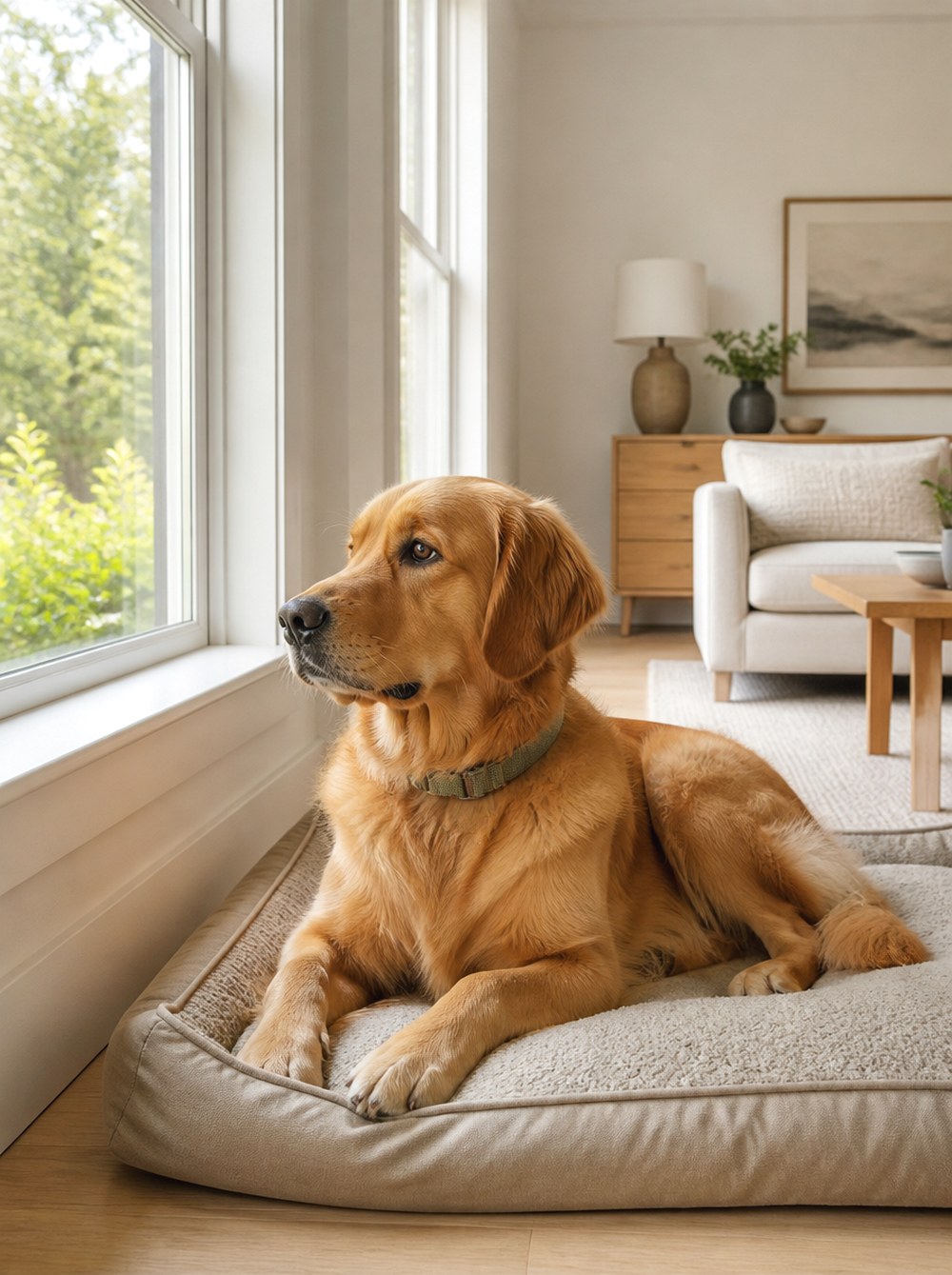
11. Give the Bed a Spot Near the Main Window—Without Blocking It
Some dogs enjoy watching normal outdoor activity, and a window-side bed can give them a comfortable observation point.
Place the bed beside the window rather than directly across a doorway or narrow passage. Keep blinds, curtain cords, and similar dangling items secured completely out of reach.
Also consider what your dog actually does at the window. If watching pedestrians, dogs, or deliveries consistently leads to prolonged barking or agitation, a calmer corner with less visual stimulation may fit better.
12. Build a Flexible Corner for Small Living Rooms
In a compact living room, the most useful dog bed location may need to serve more than one layout. Instead of building a permanent nook, use a supportive bed that can stay in one designated corner most days and move temporarily when guests need the floor space.
Choose a normal daily position first so your dog has a predictable resting location. A corner beside a movable side table or lightweight ottoman can work, provided the furniture remains stable and the bed never blocks an exit.
When the room changes for visitors, move the bed to another familiar, quiet spot rather than removing your dog’s resting place completely.
You May Also Like


Choosing the Right Corner Before You Rearrange the Room
A good-looking location is only useful if your dog will actually rest there. Before committing to a setup, check four practical details: traffic, temperature, visibility, and space.
A dog that likes household activity may prefer the sofa-side or reading-chair setups. A dog that seeks quieter places may settle more readily along a side wall or in an alcove. Dogs that stretch out need a corner sized for their full resting posture, while dogs that naturally curl up may be comfortable in a more compact footprint.
Watch for environmental issues as well. Avoid positioning the bed directly against heaters, active fireplaces, floor vents that make the spot uncomfortable, or doors that repeatedly swing toward the bed. Keep electrical cords, medicines, cleaning products, small swallowable objects, and breakable decorations away from the resting area.
The bed itself should remain supportive, cleanable, and appropriately sized for your dog. Wash removable covers according to their care instructions and check the bed periodically for damaged foam, torn fabric, exposed fasteners, or filling that a dog could pull out.
Make the Corner Feel Like Part of the Room
The most successful dog bed corner usually does not need much decoration. The bed, good placement, and perhaps one nearby piece of furniture are enough.
Instead of surrounding the area with signs, pillows, baskets, and decorative accessories, leave some open floor space. Your dog gets an easier path in and out, and you get a corner that is faster to vacuum and reset.
If you are undecided between several spots, try the bed in one location for a few days and observe where your dog chooses to settle. A small adjustment—moving it away from a busy walkway, closer to the sofa, or out of strong afternoon sun—can make the corner more usable without changing the rest of the room.
