A balcony can give an apartment dog a pleasant place to watch the neighborhood, enjoy fresh air, or relax beside you, but it needs to function as a controlled outdoor room rather than an open extension of the living space. Rail gaps, heat, climbable furniture, wind, and dropped objects can turn a comfortable-looking balcony into a risky one.
Save This Idea on Pinterest
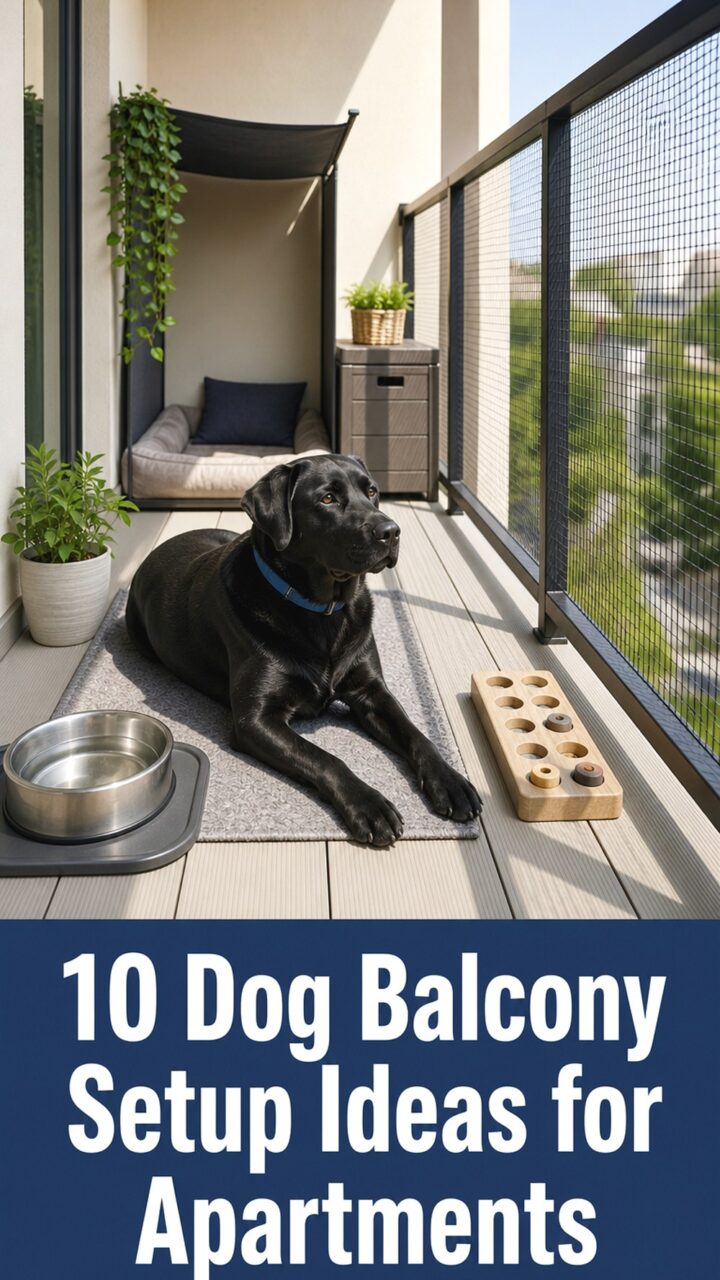
10 Dog Balcony Setup Ideas for Apartments Safe, Practical Small-Space Options
Save to PinterestThe most useful dog balcony setup ideas solve those problems first, then add comfort and enrichment. You do not need to fill a small balcony with dog gear. A secure perimeter, one comfortable resting place, water, and one or two purposeful additions often work better than a crowded setup.
Dogs should still be supervised on balconies, even after safety improvements. Balcony time also does not replace walks, exercise, bathroom breaks, or opportunities to explore at ground level.
1. Secure Open Railings Before Adding Anything Else
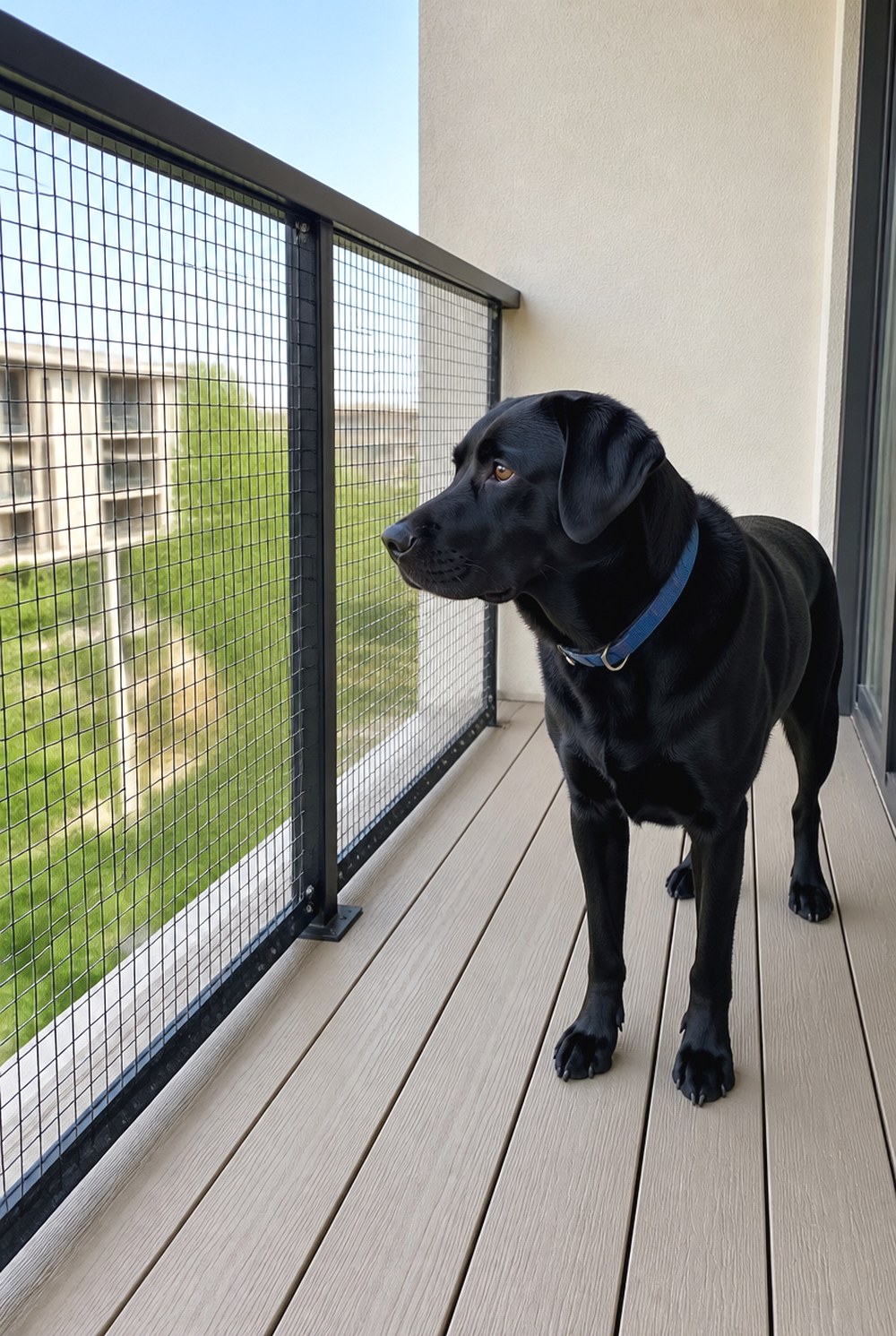
The safest balcony makeover starts with the perimeter. Measure the spaces between railing bars, along the bottom edge, and around the sides where the railing meets the wall. A dog that would never deliberately jump may still push its head through a gap, chase something moving below, or squeeze into a narrow opening.
A properly installed balcony barrier can close those spaces without consuming valuable floor area. Look for a sturdy product intended for balcony or pet containment rather than loose decorative netting that could sag, tear, or create entanglement points. Installation must also comply with your lease, condominium rules, and local building requirements.
The finished barrier should be firmly attached, free of loose loops or dangling ties, and tall enough that your dog cannot reach an unsecured section above it. Check it regularly for weather damage or loosened fasteners.
Do not rely on the barrier as a reason to leave a dog unattended.
2. Make a Shaded Resting Corner
A balcony that feels pleasant to a person may become uncomfortable for a dog surprisingly quickly. Sunlight can heat flooring, exterior walls, metal surfaces, and bedding, particularly during the middle of the day.
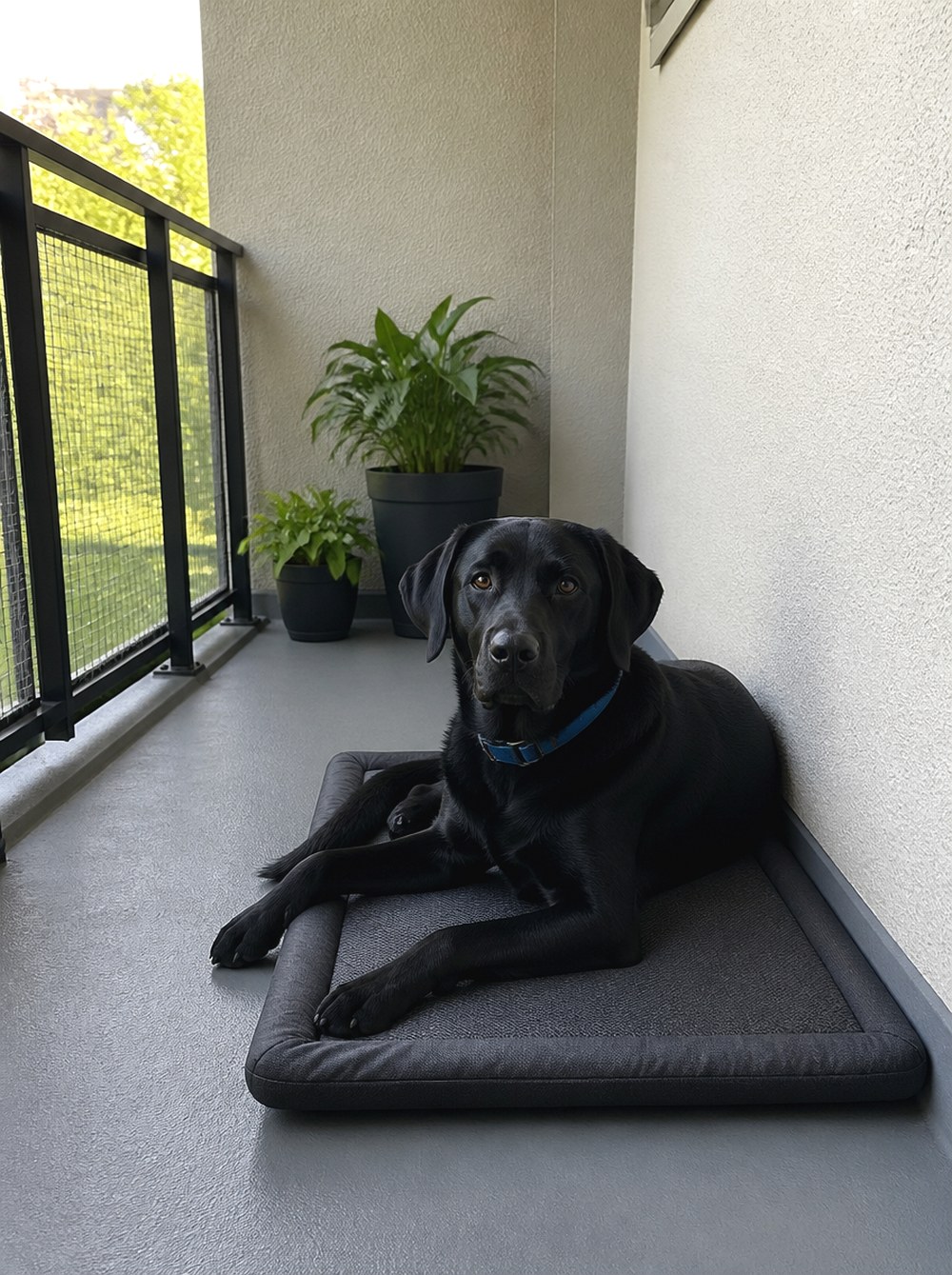
Create one reliably shaded resting zone against the building wall and well away from the railing. Depending on your balcony and building rules, shade may come from the existing roof overhang or a securely installed outdoor shade designed for the space. Avoid improvised fabric that can flap loose or become dangerous in strong wind.
Add a low, stable outdoor dog mat or bed with a washable cover. Keep it low enough that it cannot function as a step toward the railing. Touch the balcony flooring before longer outdoor sessions; if the surface feels excessively hot, move your dog indoors.
This corner is particularly useful for dogs that enjoy being outside without needing constant activity.
You May Also Like


3. Add a Stable Outdoor Water Station
If your dog spends more than a brief moment outside with you, give water its own designated spot.
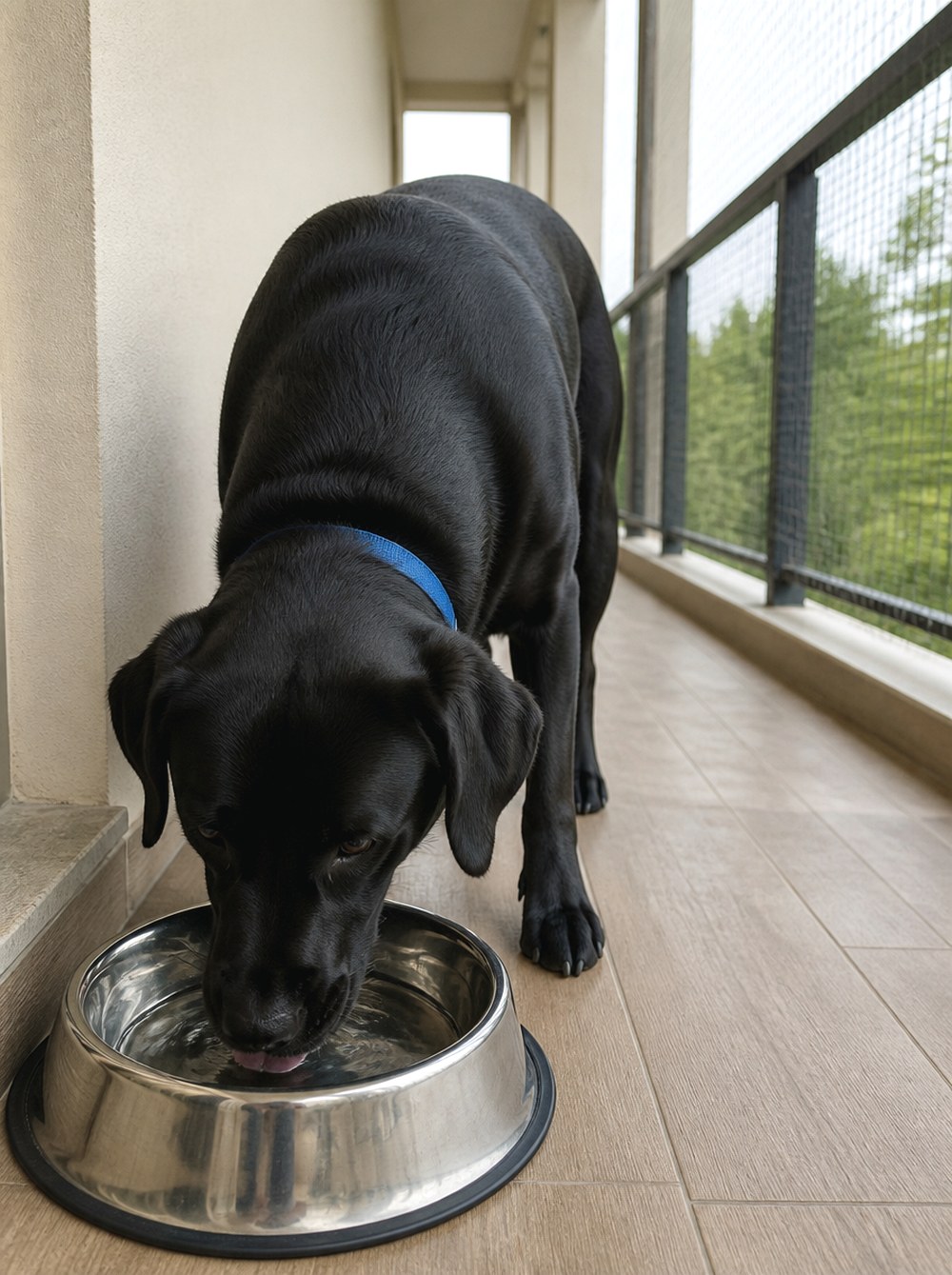
A wide, sturdy bowl with a non-slip base is more useful on a balcony than a lightweight bowl that can slide, tip, or blow around. Put it in shade so the water does not sit in direct sun. Keeping the bowl close to the apartment door also makes refilling and cleaning easier.
Avoid leaving standing water outside for extended periods. Empty and wash the bowl routinely, especially during warm weather, and bring it inside when the balcony is not in use.
A dedicated water location also helps keep a compact layout organized: the dog learns where to drink, while the center of the balcony stays clear for movement.
4. Create a Small Sniff-and-Explore Zone
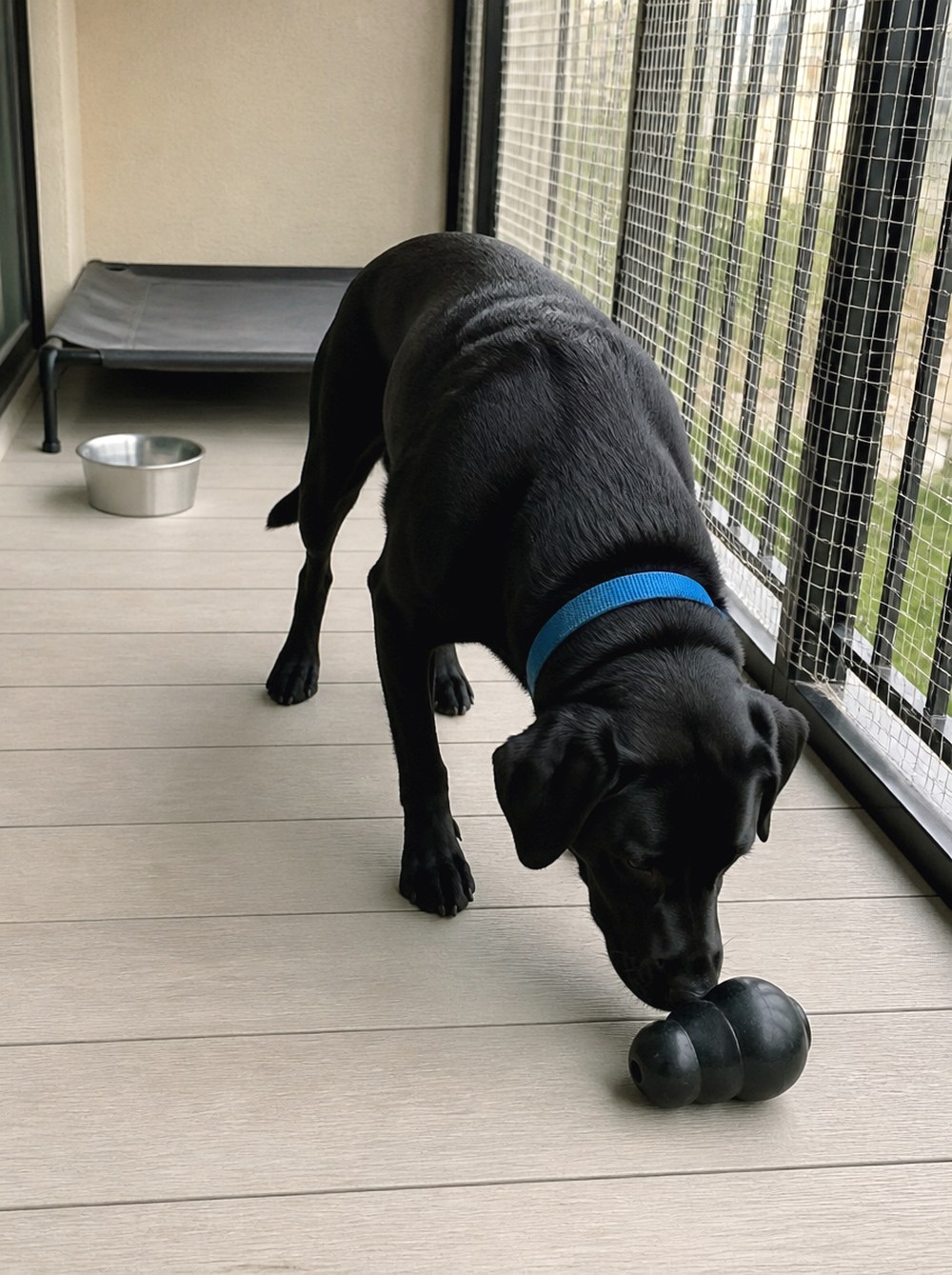
Balcony enrichment does not have to mean vigorous play. For many dogs, sniffing and investigating a changing scent can be more suitable for a confined space.
Reserve one small section for supervised scent exploration. You might bring out a familiar rubber food toy, a dog-safe sniffing activity, or another durable enrichment object from indoors and remove it again when the session ends. Rotating one item at a time keeps the space from turning into permanent toy storage.
Choose items large and durable enough for your individual dog, and supervise anything containing food or chewable material. Remove damaged toys rather than leaving them exposed to weather.
The goal is not to make the balcony exciting enough for unsupervised entertainment. It is to give your dog a brief, purposeful activity while you are already outside together.
5. Use a Washable Outdoor Runner for Better Footing
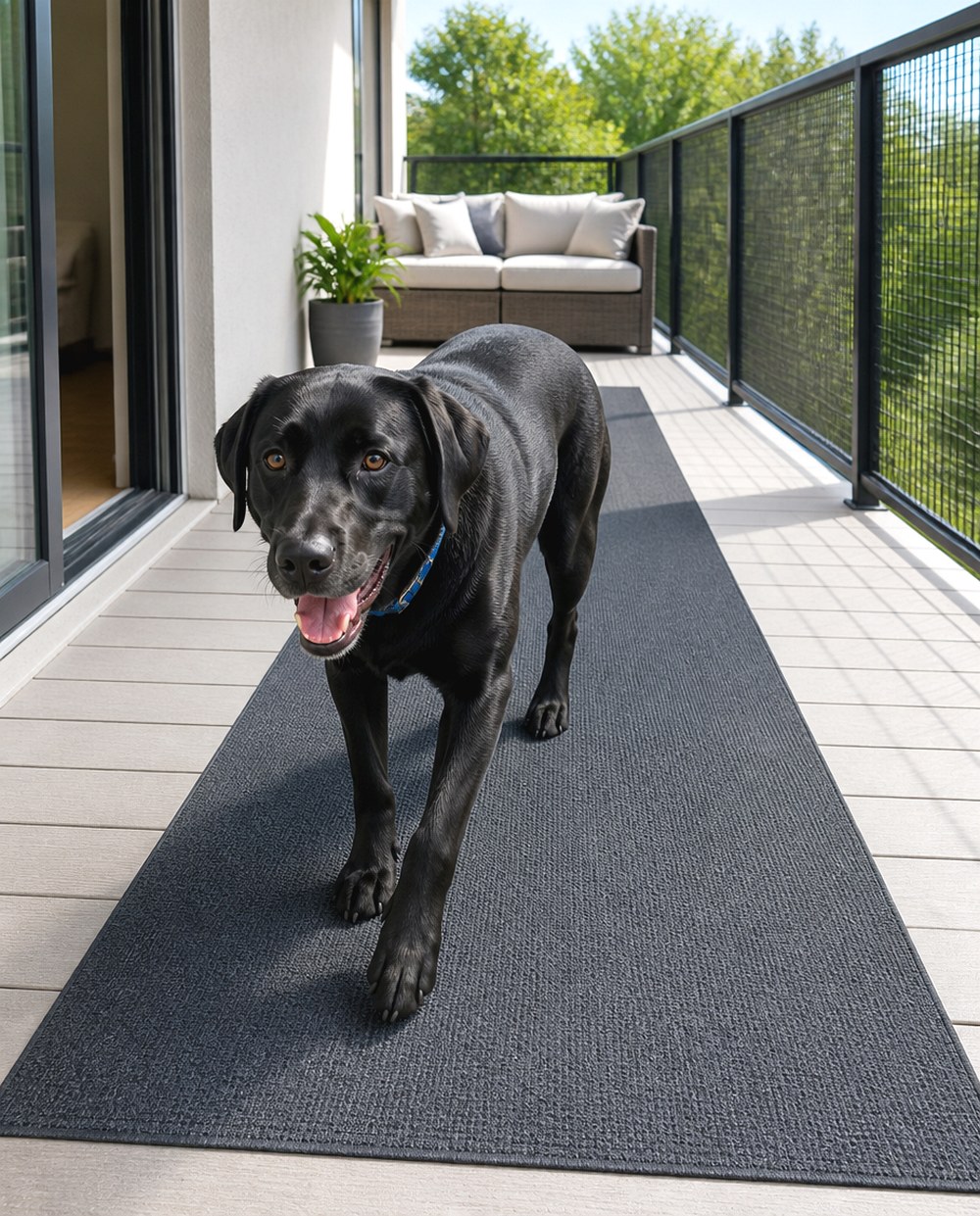
Smooth concrete or composite flooring may become slippery when damp. A narrow washable outdoor runner can create a more comfortable route between the apartment door, water station, and resting area.
Choose a low-profile surface with a stable, non-slip backing. The edges should lie flat rather than curling upward where paws or human feet could catch them. Avoid thick loose rugs that remain wet after rain or are difficult to clean.
Placement matters more than covering the entire balcony. On a narrow balcony, one runner through the primary walking path can improve footing without making the area feel smaller.
Check underneath periodically for trapped moisture and clean both the runner and balcony surface as needed. If the flooring becomes excessively hot, a runner should not be treated as a guarantee that the area is safe for extended outdoor use.
6. Build a Compact Balcony Potty Station Only If You Need One
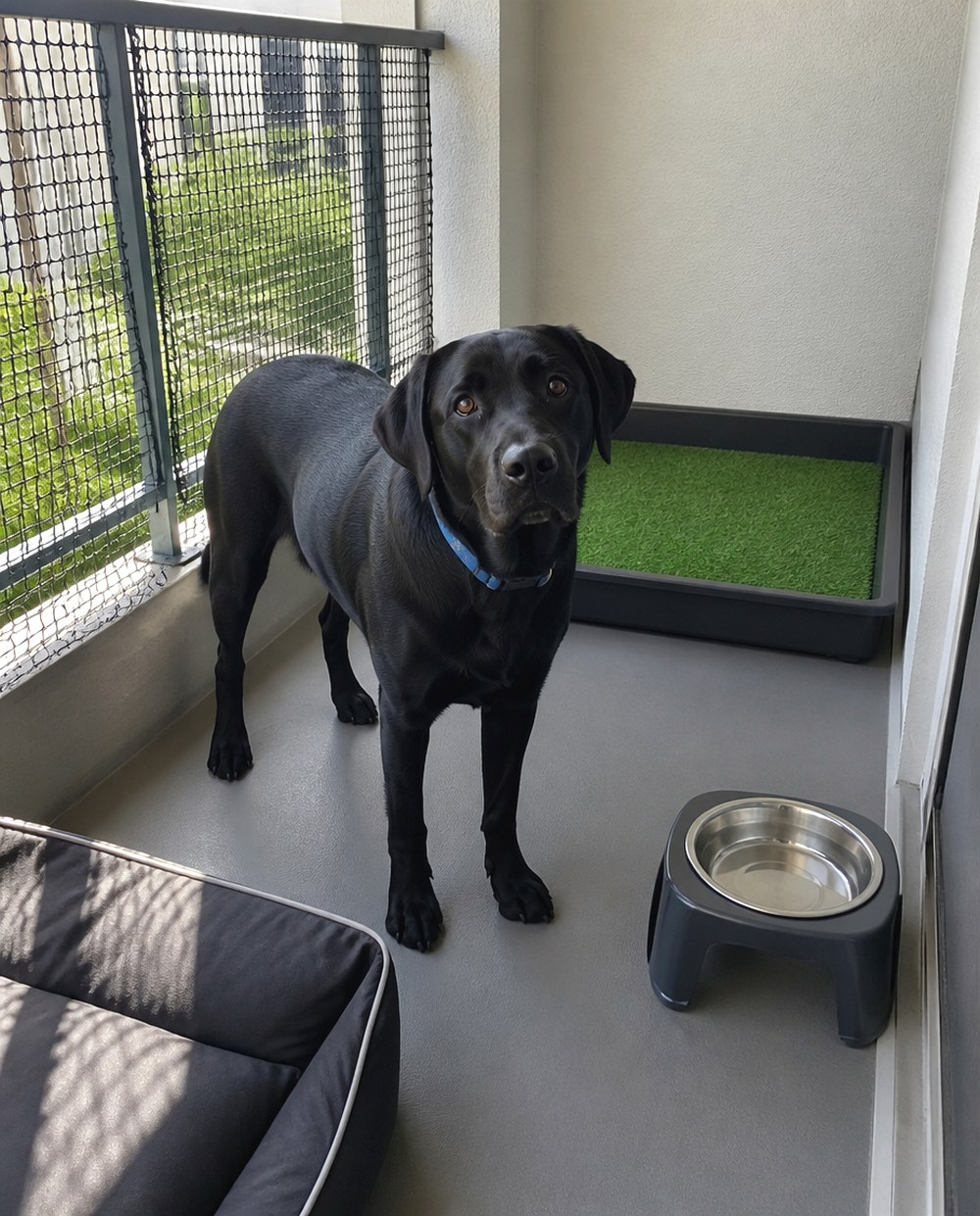
For some apartment households, a balcony potty area can be useful as a backup option, especially when outdoor access is difficult. It works best as a deliberately maintained station rather than a large section of artificial turf covering the balcony.
Choose a contained tray or purpose-made dog potty system sized appropriately for your dog. Place it away from food, water, and the resting area. The base should prevent urine from draining onto neighboring balconies or shared surfaces below.
Cleaning matters as much as placement. Remove solid waste promptly and maintain the system according to its instructions so odor and moisture do not accumulate. Check building and lease rules before creating a balcony toilet area.
A potty station should not become the dog’s only reason to go outdoors. Regular walks still provide movement, sniffing opportunities, social exposure, and a change of environment.
7. Give Balcony Toys Their Own Weather-Safe Storage Box
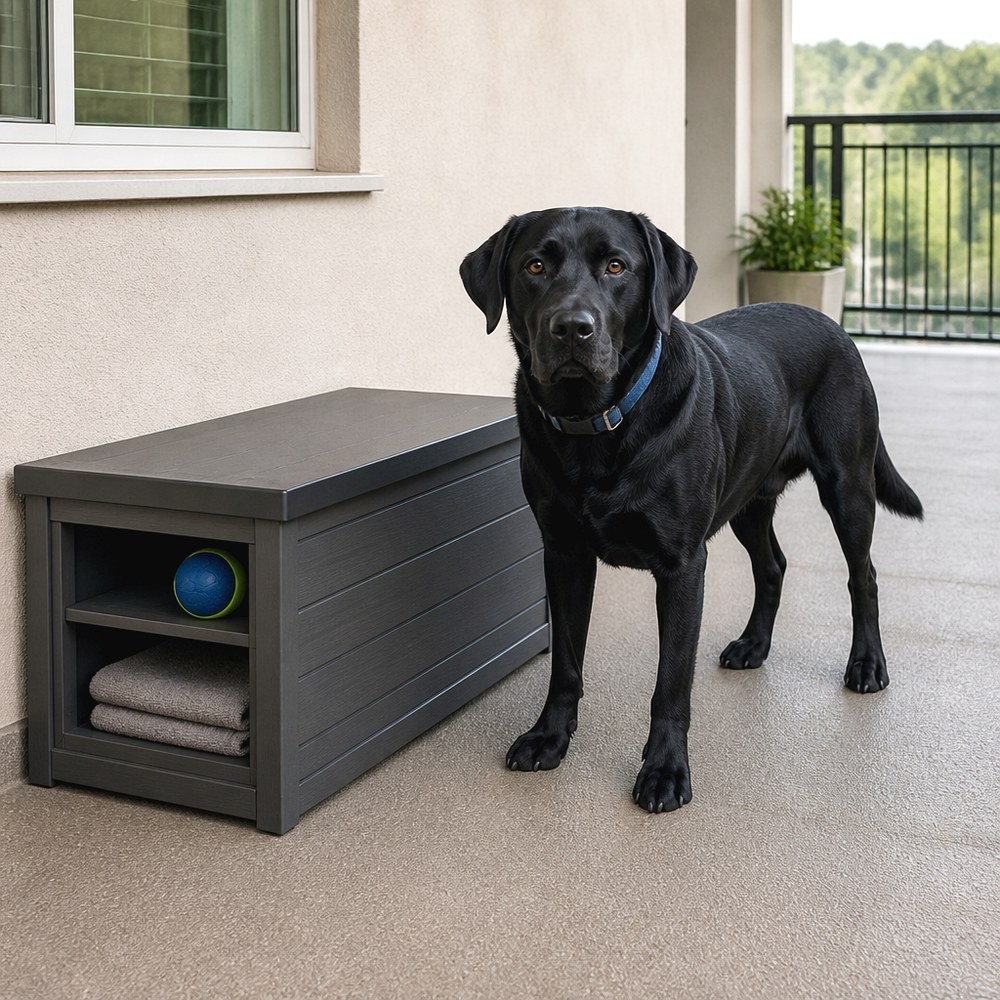
Small balconies become difficult to use when toys, towels, brushes, and cleanup supplies spread across the floor. A compact storage container can keep dog items together without turning the balcony into a storage closet.
Select a weather-resistant box or cabinet that closes securely and cannot be opened by the dog. Place it against the building wall rather than beside the railing. A low unit is generally preferable to tall furniture that could tip or create a climbing route.
Only store items that tolerate the expected temperature and humidity. Medicines, cleaners, food, and anything that could become unsafe in heat should remain indoors in appropriate storage.
For daily convenience, keep balcony-specific items here, such as a washable mat cover, outdoor toy, or clean towel.
8. Leave an Open Stretch for Training and Calm Check-Ins
Not every part of a dog balcony setup needs an object. On a small balcony, empty floor space can be one of the most useful features.
Keep a clear area large enough for your dog to turn around comfortably, stand beside you, or practice calm behaviors already learned indoors. Short sessions involving settling on a mat, checking in with you, or calmly watching the surroundings can make balcony time more structured without encouraging running in a confined area.
This is also useful for dogs that become overexcited by pedestrians, neighboring dogs, birds, or street noise. If your dog cannot disengage from what is happening below, move indoors rather than trying to force a long balcony session.
The open zone should stay free of loose stools, planters, cords, and decorative items that narrow the route to the door.
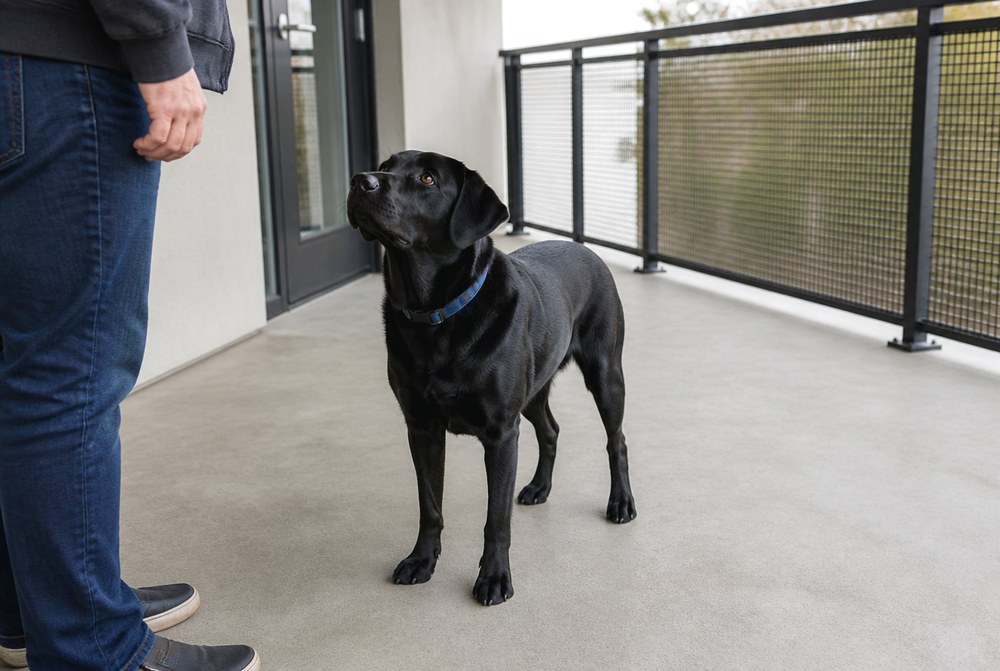
9. Use One Pet-Safe Viewing Spot Instead of Climbable Furniture
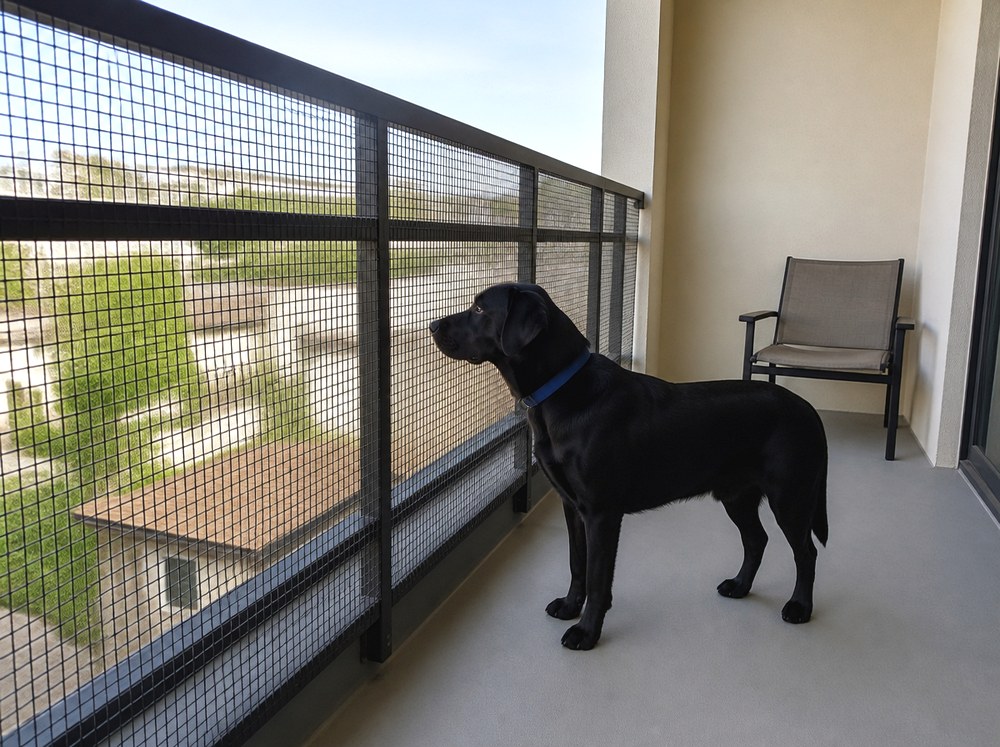
Dogs often enjoy watching activity below, but raising them on benches, chairs, tables, or storage boxes near the balcony edge creates unnecessary risk.
Instead, let the dog observe from floor level behind the secured perimeter. If the lower portion of the barrier blocks some of the view, that can actually help a dog that reacts strongly to passing people or animals.
Arrange your own seating against the building wall when possible, leaving the dog’s observation area at floor level. Avoid positioning furniture where a dog could use it as a step toward the railing.
If watching the street consistently leads to barking, pacing, lunging, or difficulty settling, the most useful balcony change may be reducing the view with an appropriate secure privacy screen rather than trying to create a better lookout.
10. Add a Door-Side Cleanup Station
Balcony messes are easier to manage when the supplies you use most often are close to the door rather than scattered outdoors.
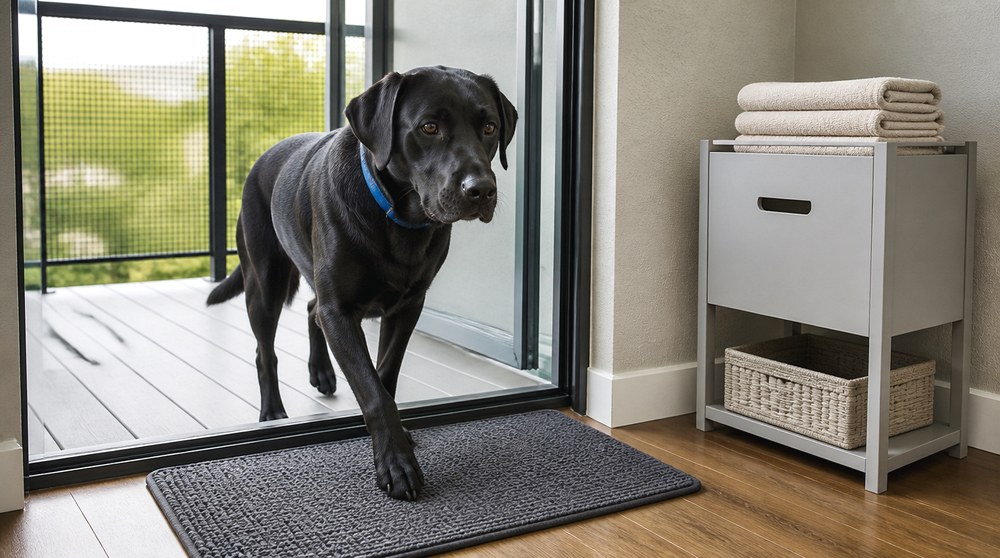
A small indoor or sheltered door-side station can hold clean towels, waste bags, and other routine items that are safe to store there. Keeping supplies on the apartment side of the doorway is often preferable because they stay dry and cannot blow away.
If your dog tracks in moisture or dirt, place a washable mat just inside the door so paws can be dealt with before the dog moves through the apartment. For balcony cleaning, use a pet-appropriate product according to its label and never allow runoff to drip onto balconies or spaces below.
Keep cleaners and other potentially harmful products completely inaccessible to the dog rather than storing them loose outdoors.
You May Also Like


Build the Balcony in the Right Order
The best apartment balcony usually starts with fewer additions than people expect. Secure the railing and remove climbable or loose hazards first. Then establish shade, water, and comfortable footing. After those basics work well, add only the features that match how your dog actually uses the space.
A dog that likes to nap beside you may need little more than a shaded mat and water bowl. A dog that enjoys sniffing may benefit from one supervised enrichment activity. A household that needs an occasional bathroom backup may get more value from a contained potty station than from decorative balcony furniture.
Recheck the setup whenever seasons change. Stronger sunlight, wind, rain, colder temperatures, worn fasteners, or a change in your dog’s mobility can make an arrangement that once worked well less suitable.
Most importantly, treat the balcony as supervised bonus space rather than an outdoor kennel. Bring your dog inside during excessive heat or cold, storms, strong wind, or whenever the environment causes distress. If your dog suddenly shows weakness, breathing difficulty, unusual behavior, or another concerning physical change while outside, move to a safe environment and contact a veterinarian as appropriate.
