Turn an ordinary yard into a more interesting dog-friendly route with simple paths, sniff stops, shade, obstacles, and easy rest points.
Save This Idea on Pinterest

10 Dog Backyard Trail Ideas
Save to PinterestDog backyard trails can turn familiar outdoor space into a more purposeful place for walking, sniffing, exploring, and taking relaxed breaks. The best setup does not need to resemble a formal agility course; even a defined path around the lawn can give your dog a clear route with changing surfaces and interesting stops.
These 10 ideas range from simple mulch loops and shaded fence-line paths to scent stations, senior-friendly routes, and compact zigzags for smaller yards. Compare the amount of space, maintenance, supervision, weather protection, and physical challenge each trail requires before choosing a setup for your dog.
Quick List
- Simple Mulch Loop Trail for Dogs Around the Backyard
- Shady Fence-Line Walking Trail for Dogs on Hot Days
- Curved Grass Path Trail for Dogs Who Love Exploring
- Backyard Scent Stop Trail with Safe Dog Sniffing Stations
- Low-Obstacle Adventure Trail for Active Dogs in the Yard
- Quiet Corner Trail for Senior Dogs with Easy Footing
- Dog Backyard Trail with Rest Stops and Water Breaks
- Natural Log-Edge Trail for Dogs in Rustic Backyards
- Small-Yard Zigzag Trail for Dogs with Limited Space
- Seasonal Backyard Discovery Trail for Dogs with Rotating Features
1. Simple Mulch Loop Trail For Dogs Around The Backyard
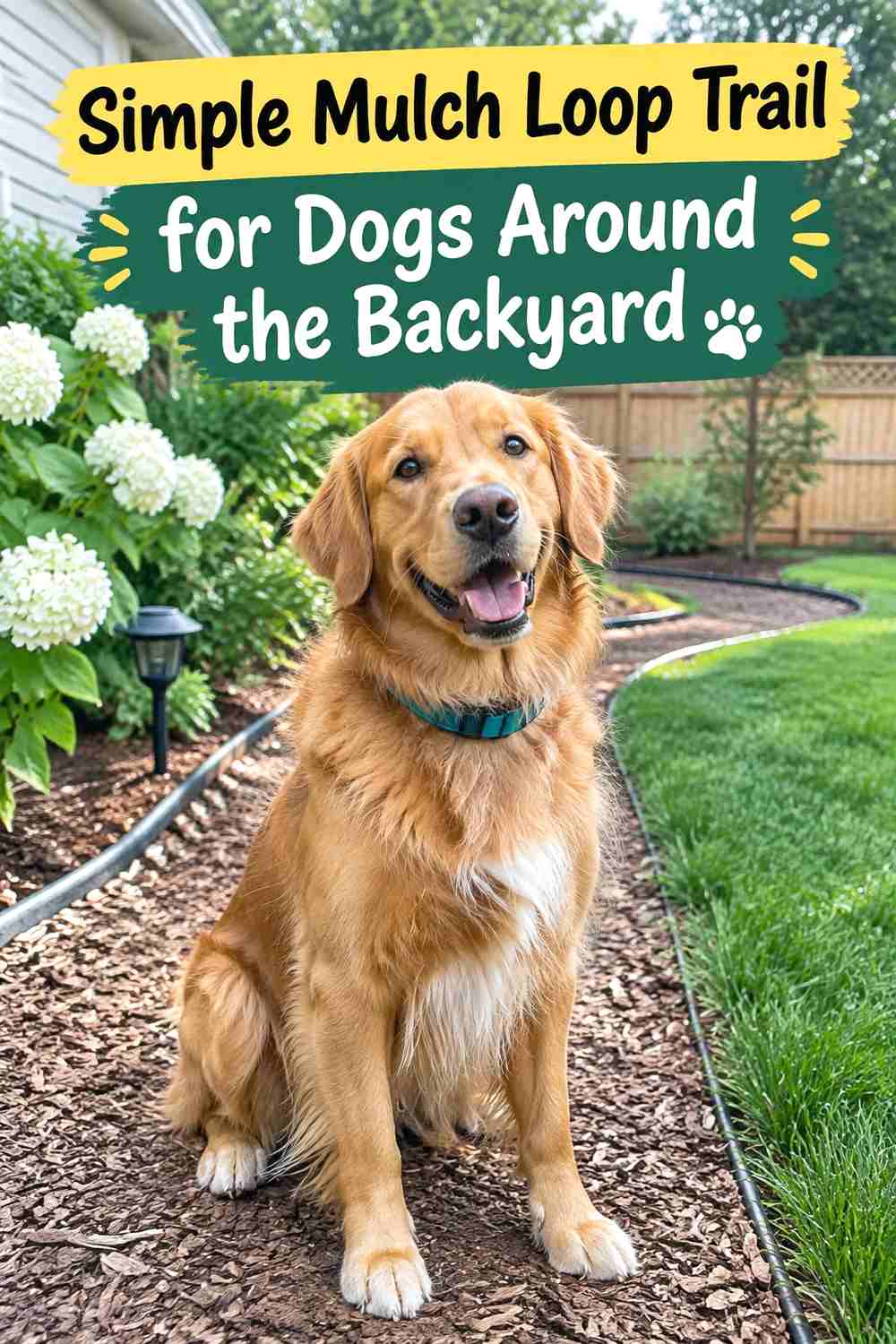
A mulch loop creates a clear walking route that circles the yard without taking over the whole lawn. Use a broad, uncomplicated path around garden edges, trees, or open grass so your dog can follow the same route for sniffing, casual walking, or short training games. Choose a paw-friendly mulch type without sharp pieces, cocoa mulch, or unknown treated material, and keep the surface reasonably level. The loop works especially well for dogs that enjoy repeating familiar routes while still stopping to inspect changing smells. Rake displaced mulch back into place, remove sticks or debris, and check borders regularly so the trail stays easy to walk rather than becoming a digging strip.
Setup Notes
Define the route with lawn edges, fixed garden borders, or other stable features rather than loose decorations. Start with a simple loop and add interest only after your dog is comfortable using it.
Use & Maintenance
Rake thin spots, clear fallen branches, and replace worn or questionable mulch as needed. If your dog repeatedly eats or digs at the material, a different trail surface may be a better fit.
2. Shady Fence Line Walking Trail For Dogs On Hot Days

You May Also Like



A fence-line trail uses the naturally interesting perimeter of the yard while keeping the route close to available shade. Leave a clear walking strip beside the fence, then use shrubs, a shade sail, or mature trees only where they do not create narrow squeeze points or hidden hazards. This setup suits dogs that like checking neighborhood scents and sounds, but it should still offer an easy way to turn back toward the house. On warm days, check the ground temperature and choose shaded sections rather than assuming the whole trail is comfortable. Trim encroaching plants, remove burrs or sharp seed heads, and keep gates secure so the path remains simple to supervise and maintain.
Space & Placement
Keep enough clearance between the trail and fence for comfortable turning, especially for large dogs. Avoid creating dead-end pockets where a dog could feel crowded by another pet.
Comfort & Safety
Shade can make a route more comfortable, but it does not guarantee safe conditions. Give your dog unrestricted access to water and an easy way back indoors when outdoor conditions are uncomfortable.
3. Curved Grass Path Trail For Dogs Who Love Exploring

A curved grass path gives your dog a more exploratory route than a straight lap across the lawn. Shape gentle bends around existing trees, raised beds, planters, or open play areas while keeping enough room for natural turning and stopping. The curves make the yard feel more varied without requiring permanent structures, which is useful for renters or owners who want a low-maintenance option. Let sections grow slightly longer only if the grass stays free of hidden debris, foxtails, thorns, or other irritating plants. Mow the walking line clearly, keep sightlines open, and change one bend occasionally with movable planters or cones so the route stays interesting without becoming confusing.
Best For
This flexible design can suit dogs that enjoy casual exploration but do not need obstacles. It also works well when owners want to preserve most of the lawn for everyday use.
Use & Maintenance
Keep the route visible during mowing and remove anything that becomes hidden in taller grass. Temporary markers should be stable and put away if your dog tries to chew them.
4. Backyard Scent Stop Trail With Safe Dog Sniffing Stations
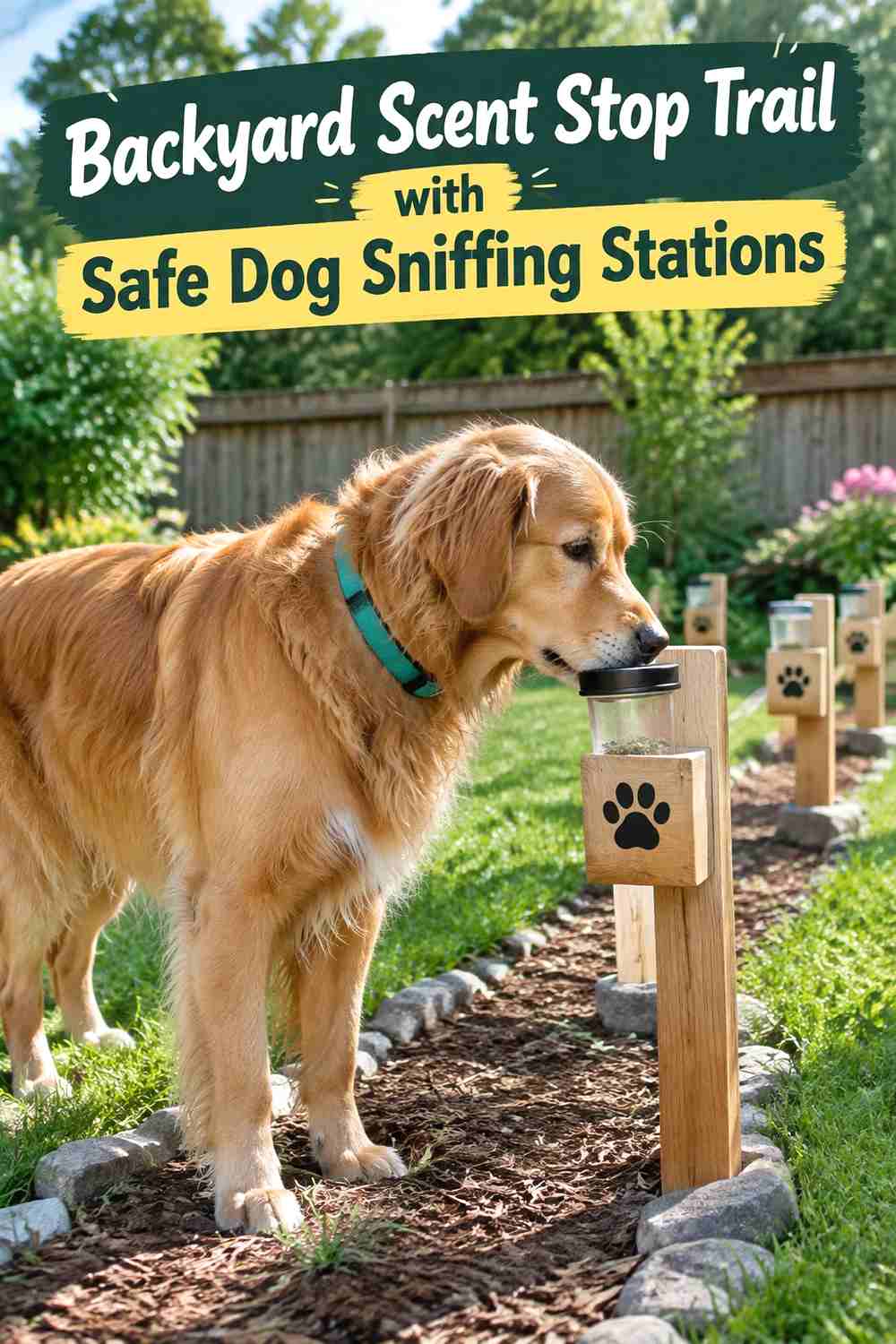
A scent-stop trail adds several designated sniffing points along a simple backyard route. Use safe, familiar objects such as a clean outdoor mat, a sturdy planter base, a patch of grass, or a cardboard scent box placed under supervision, then scatter or hide pet-safe rewards only if that suits your dog’s normal routine. Space the stations far enough apart that your dog walks between them instead of crowding one area. Keep the difficulty easy at first and remove anything your dog starts chewing or tearing apart. Rotating one or two scent locations can refresh the experience while keeping the overall trail predictable. Clean reusable stations and avoid scented oils, chemicals, or unknown plant materials.
Setup Notes
Begin with just a few obvious scent stops so your dog can investigate at a relaxed pace. Add variety gradually rather than filling the entire trail with competing smells.
Pro Tip
Rotate the location or material of one station at a time. This creates novelty while making it easy to notice which setups your dog enjoys and which ones cause frustration or destructive chewing.
5. Low Obstacle Adventure Trail For Active Dogs In The Yard

A low-obstacle adventure trail turns a backyard path into a more active route with simple features to step around, over, or between. Use stable ground-level poles, wide stepping areas, or sturdy cones rather than high jumps or narrow balancing surfaces. Arrange the obstacles with generous spacing so your dog can choose a comfortable pace and bypass any feature that feels awkward. This works best for dogs that enjoy movement and problem-solving without needing an intense agility setup. Keep sessions casual, especially on slippery, wet, or hot ground. Reset anything that shifts, remove damaged items, and simplify the trail for puppies, large dogs, or dogs that seem hesitant around unfamiliar objects.
Pet Type & Life Stage
Adjust obstacle size and complexity to the individual dog rather than copying a fixed course. Young, large, senior, or less confident dogs may be better suited to simple walk-around features.
Comfort & Safety
Every obstacle should remain stable when touched. Skip narrow balancing equipment, high jumps, sharp edges, or anything that requires a dog to perform a movement it is reluctant to attempt.
6. Quiet Corner Trail For Senior Dogs With Easy Footing
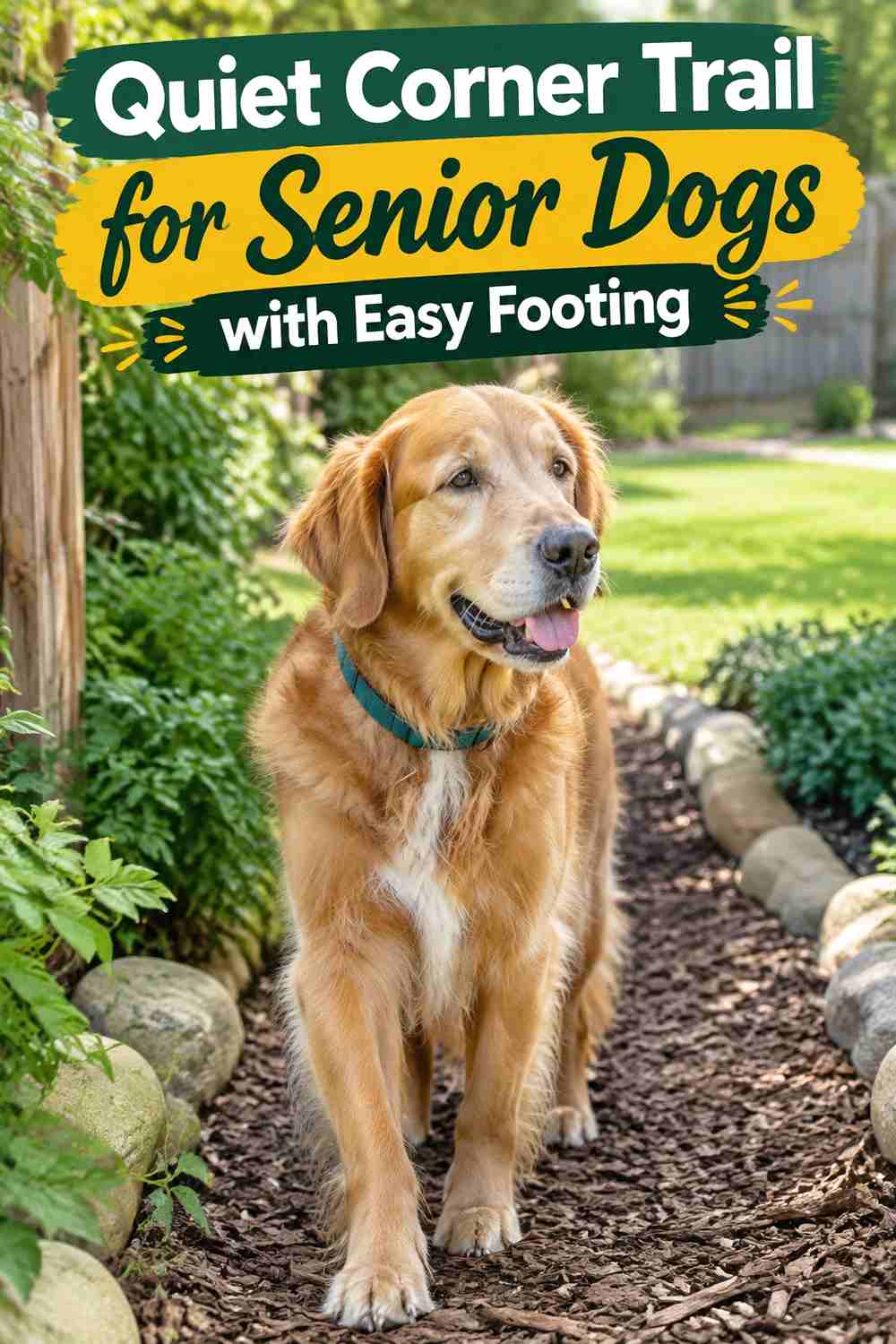
A quiet corner trail gives senior dogs a short, predictable route with smooth footing and an easy destination. Create a gentle path from the door to a shaded resting area, favorite sniff spot, or quiet section of the yard, avoiding steep changes, loose stones, and unnecessary obstacles. Keep the route wide enough for relaxed turns and use stable surfaces with good traction rather than decorative materials that roll underfoot. The goal is easy access, not added challenge. Keep furniture and planters in consistent positions so the layout remains familiar, and provide an alternate shorter route if needed. If your dog suddenly avoids the yard, appears painful, or shows new mobility changes, contact a veterinarian instead of trying to solve the problem with trail changes alone.
Space & Placement
Place the route near an easy entrance and keep essential destinations close together. A shorter, dependable path may be more useful than a long trail that requires repeated turning or uneven transitions.
Use & Maintenance
Watch for muddy patches, slippery leaves, loose edging, or surface changes after rain. Maintaining predictable footing matters more than adding decorative trail features.
7. Dog Backyard Trail With Rest Stops And Water Breaks
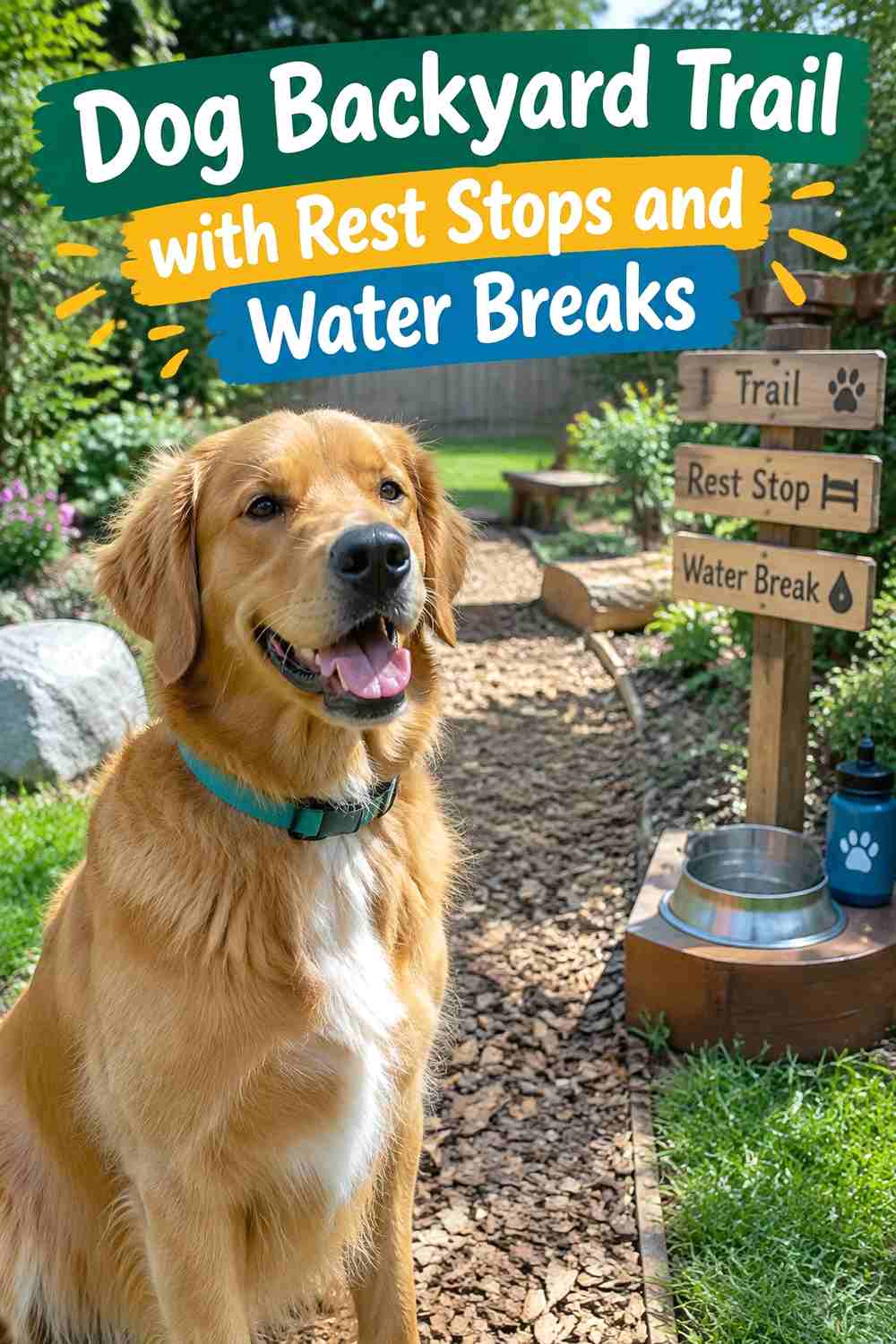
A backyard trail with planned rest stops makes it easy to mix walking, sniffing, and pauses without pushing your dog to stay in motion. Place a few shaded stopping points along the route using a stable outdoor mat, covered patio edge, or another cool, dry surface, with fresh water available nearby. This layout is useful for dogs that prefer frequent pauses, multi-dog households that need structured outdoor time, or yards with sunny stretches between shaded areas. Keep bowls out of direct heat, rinse them regularly, and avoid placing rest spots where insects, mud, or lawn equipment collect. The trail should stay optional, with clear access back to the house whenever your dog is ready to stop.
Setup Notes
Position rest stops where your dog naturally pauses instead of forcing evenly spaced stations. A comfortable shaded area close to the house can be especially practical.
Cleaning Notes
Refresh water regularly and rinse outdoor bowls, mats, and resting surfaces as needed. Allow damp fabric items to dry fully before returning them to the trail.
8. Natural Log Edge Trail For Dogs In Rustic Backyards
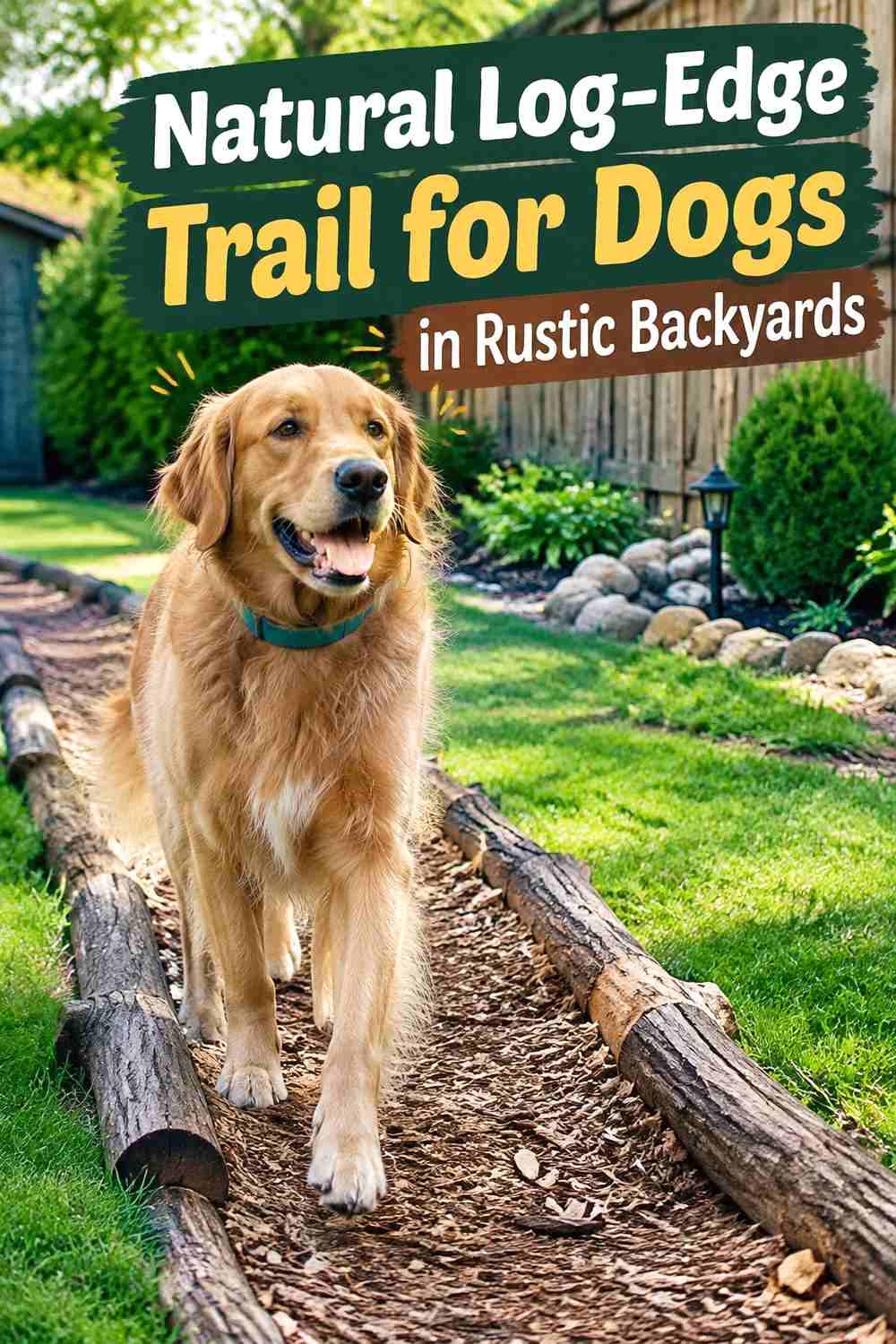
A natural log-edge trail creates a rustic-looking route by using solid logs as visual borders rather than as balancing equipment. Place stable, intact logs beside a dirt, grass, or mulch path so your dog walks between the edges without needing to climb on them. This can define a trail clearly in a larger backyard while blending into a natural landscape. Avoid rotting wood, sharp splinters, exposed nails, treated scraps, or pieces that roll when bumped. Leave openings so your dog can exit the path easily, and keep vegetation trimmed away from the edges. Check the wood after storms or seasonal changes, since moisture and decay can turn a decorative border into a rough or unstable surface.
Best For
This design suits larger natural-looking yards where a path needs clear definition without plastic barriers or permanent hardscaping.
Use & Maintenance
Inspect logs for movement, rot, insects, splinters, or exposed hardware. Replace deteriorating pieces instead of waiting for them to break apart beside the walking path.
9. Small Yard Zigzag Trail For Dogs With Limited Space

A zigzag trail can make a small backyard feel more varied by extending the walking route without adding bulky equipment. Use movable planters, sturdy cones, or lawn-safe markers to create several gentle turns across an open section, leaving enough space for your dog to move naturally rather than making tight corners. Because the layout is temporary, you can straighten it for playtime, mowing, or guests and rebuild it in a few minutes. Keep the turns visible and uncluttered, especially for larger dogs or dogs that move quickly. Rotate the direction occasionally, but avoid changing every element at once if your dog prefers predictable spaces. Store markers when unsupervised if they could become chew toys.
Space & Placement
Favor broad bends over tight switchbacks. In a very compact yard, even three or four gentle direction changes can create a distinct trail without blocking normal household access.
Pro Tip
Use lightweight but stable markers that are easy for you to move and difficult for your dog to knock into accidentally. Fewer well-spaced markers are often more practical than a crowded course.
10. Seasonal Backyard Discovery Trail For Dogs With Rotating Features
You May Also Like



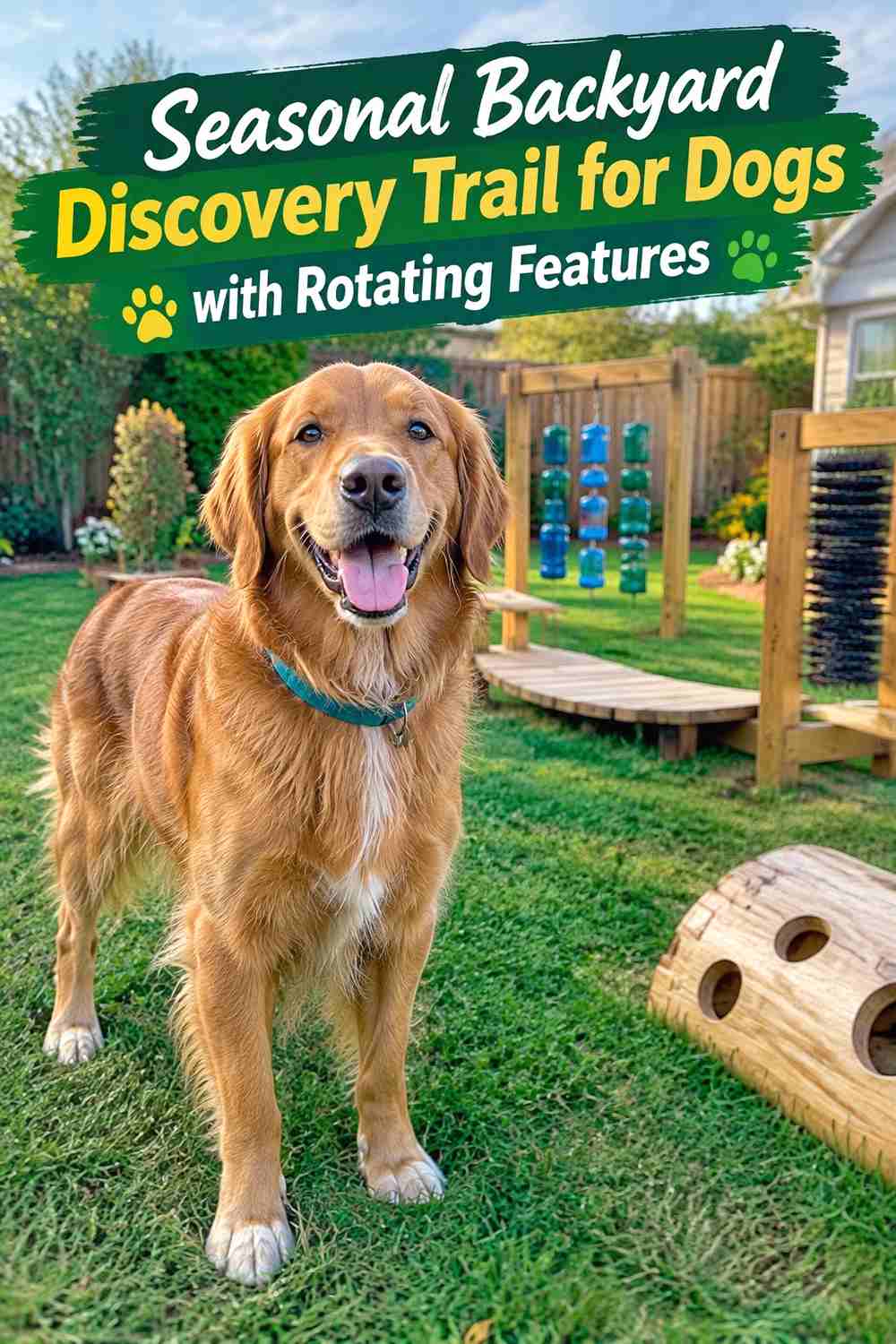
A seasonal discovery trail keeps the same basic backyard route while rotating a few safe features throughout the year. In fall, that might mean a dry leaf-sniff area; in summer, a shaded mat; in cooler weather, a new textured walking patch or supervised cardboard sniff station. The trail stays familiar because the path does not change, while one or two details provide novelty. Use only clean, non-toxic, weather-appropriate materials and remove anything damp, moldy, sharp, or easy to swallow. This idea works well for owners who want variety without rebuilding the yard. Keep seasonal decorations off the route unless they are stable, pet-safe, and unlikely to be chewed, tangled, or knocked over.
Use & Maintenance
Inspect temporary features after rain, wind, or temperature changes. Natural materials should be removed when they become wet, dirty, brittle, moldy, or difficult to supervise safely.
Why It Works
Keeping the main trail consistent while changing a small feature can provide fresh things to investigate without turning the entire backyard into an unfamiliar layout.
How to Choose the Right Idea
Start with your dog’s age, body size, movement style, confidence, and usual backyard habits. A dog that enjoys slow sniffing may get more use from scent stops or a mulch loop, while a dog that likes active movement may enjoy a low-obstacle route. Senior dogs and dogs that prefer predictable environments may be better suited to short trails with stable footing and familiar destinations.
Next, consider your yard. Small spaces favor curved or zigzag layouts, while larger yards can support perimeter loops, natural borders, and several rest stations. Shade, drainage, lawn maintenance, mud, seasonal weather, and access to the house should also affect the design.
Finally, choose a trail you can realistically maintain. A simple route that stays clear, stable, and comfortable is more useful than an elaborate setup that quickly becomes cluttered or worn. Supervise new features until you know how your dog interacts with them, and remove anything that becomes a chewing, tangling, slipping, or swallowing risk.
Final Thoughts
A useful dog backyard trail does not need expensive equipment or a complete landscape redesign. Start with the route your dog already tends to follow, then make that path clearer, more comfortable, or more interesting with one practical feature at a time.
Choose a simple loop, scent trail, shaded path, or compact zigzag first and see how your dog uses it. Their natural pace and preferences can help you decide whether to expand the setup or keep it pleasantly simple.
FAQs
1. How big does a backyard need to be for a dog trail?
It does not need to be large. A small yard can use a curved, perimeter, or zigzag route that creates several direction changes without filling the space with equipment.
2. What surface works well for a dog backyard trail?
Grass, stable soil, appropriate mulch, and other paw-friendly outdoor surfaces can work. Prioritize even footing and remove sharp, toxic, slippery, or easily swallowed materials.
3. Can puppies use backyard trails?
Yes, when the setup is simple and closely supervised. Use easy walking routes with stable surfaces and avoid high obstacles, small loose parts, or physically demanding features.
4. How can I keep a backyard dog trail interesting?
Change one small element periodically, such as a sniff station, route marker, texture, or rest location. You do not need to rebuild the entire path to add variety.
5. How often should I inspect a dog backyard trail?
Check it regularly and after weather events, mowing, landscaping, or heavy use. Remove broken objects, sharp debris, unstable borders, slippery materials, and damaged enrichment items before your dog uses the route again.
CTA
Save your favorite backyard trail idea and explore more practical dog enrichment setups for creating an outdoor space your dog can enjoy safely.
