Keep apartment dogs engaged with compact scent games, foraging puzzles, owner-led play, observation spots, and enrichment setups that are easy to reset and store.
Save This Idea on Pinterest

9 Apartment Dog Enrichment Ideas for Small Spaces
Save to PinterestApartment dog enrichment works best when activities provide something meaningful to sniff, search, solve, observe, or do with you without requiring a large room. Even a hallway, living room corner, or section of kitchen floor can become a useful activity zone.
These nine ideas vary in difficulty, owner involvement, noise, cleanup, and floor space. Rotate them instead of setting everything out at once, start with easy versions your dog can understand, and simplify any activity that causes frustration rather than steady, interested participation.
Quick List
- Easy Indoor Snuffle Mat Enrichment for Apartment Dogs
- Hallway Scent Trail Game for Apartment Dogs Indoors
- Rolled Towel Foraging Puzzle for Small-Space Dogs
- Cardboard Box Search Station for Apartment Dog Enrichment
- Indoor Hide-and-Seek Game for Apartment Dogs and Owners
- Window Watching Enrichment Nook for Calm Apartment Dogs
- Rotating Puzzle Feeder Routine for Apartment Dogs
- Toy Basket Find-It Game for Bored Apartment Dogs
- Calm Lick Mat Enrichment for Apartment Dog Downtime
1. Easy Indoor Snuffle Mat Enrichment For Apartment Dogs
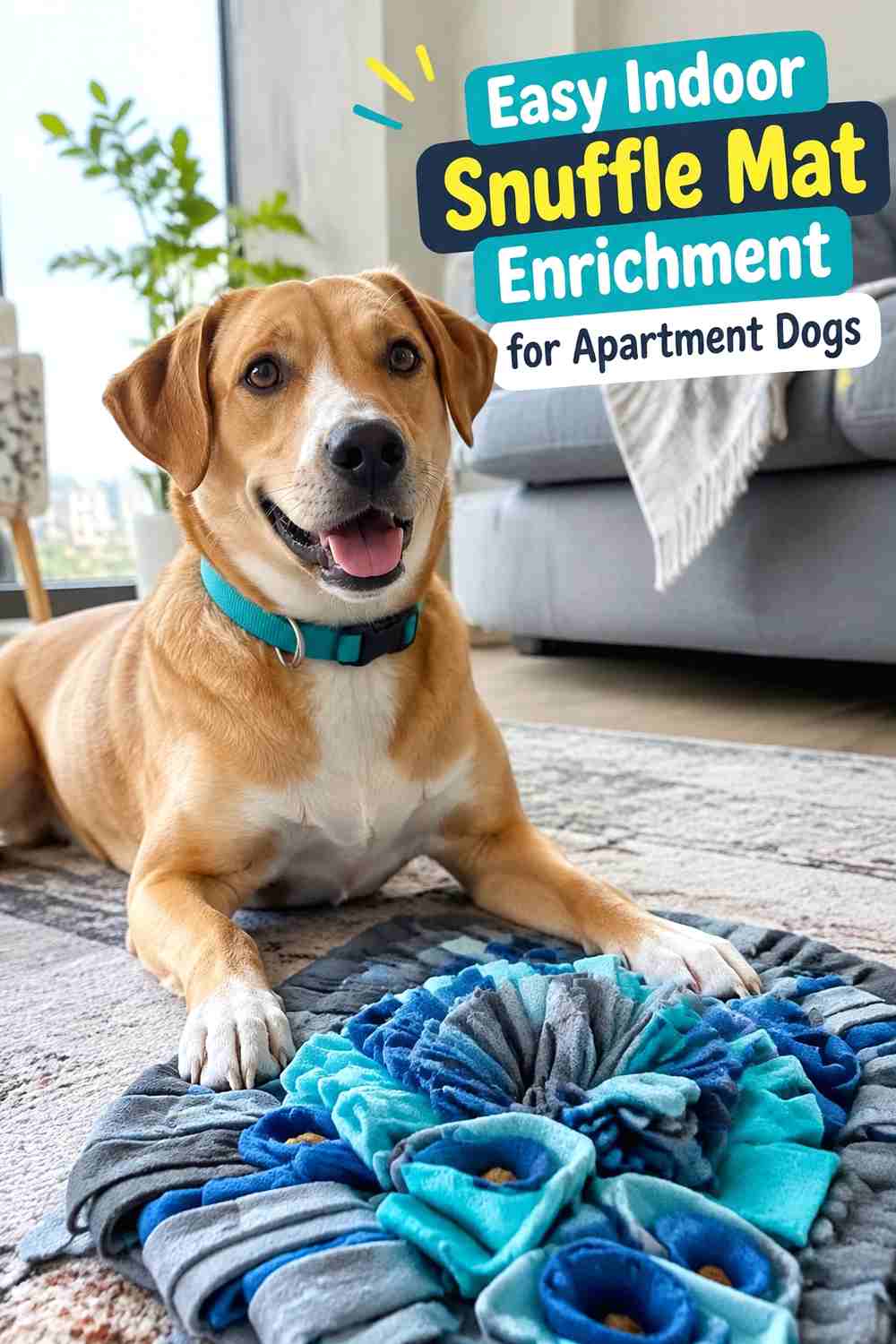
An indoor snuffle mat gives an apartment dog a compact foraging activity without requiring much open floor space. Place the mat on a nonslip surface in a quiet corner and hide part of the dog’s usual food or appropriate treats loosely among the fabric folds. Begin with pieces that are easy to find so your dog learns that sniffing the mat is the goal, then tuck them slightly deeper as confidence grows. Pick the mat up after the activity instead of leaving it available for chewing or shredding. Shake out crumbs after each use and wash it regularly according to its care instructions. If your dog starts pulling apart the fabric instead of searching, switch to a simpler supervised activity.
Best For
This setup works well for dogs that enjoy sniffing and searching but have limited indoor room for larger games.
Cleaning Notes
Use the mat on an easy-clean floor and remove leftover food before storing it.
2. Hallway Scent Trail Game For Apartment Dogs Indoors
You May Also Like


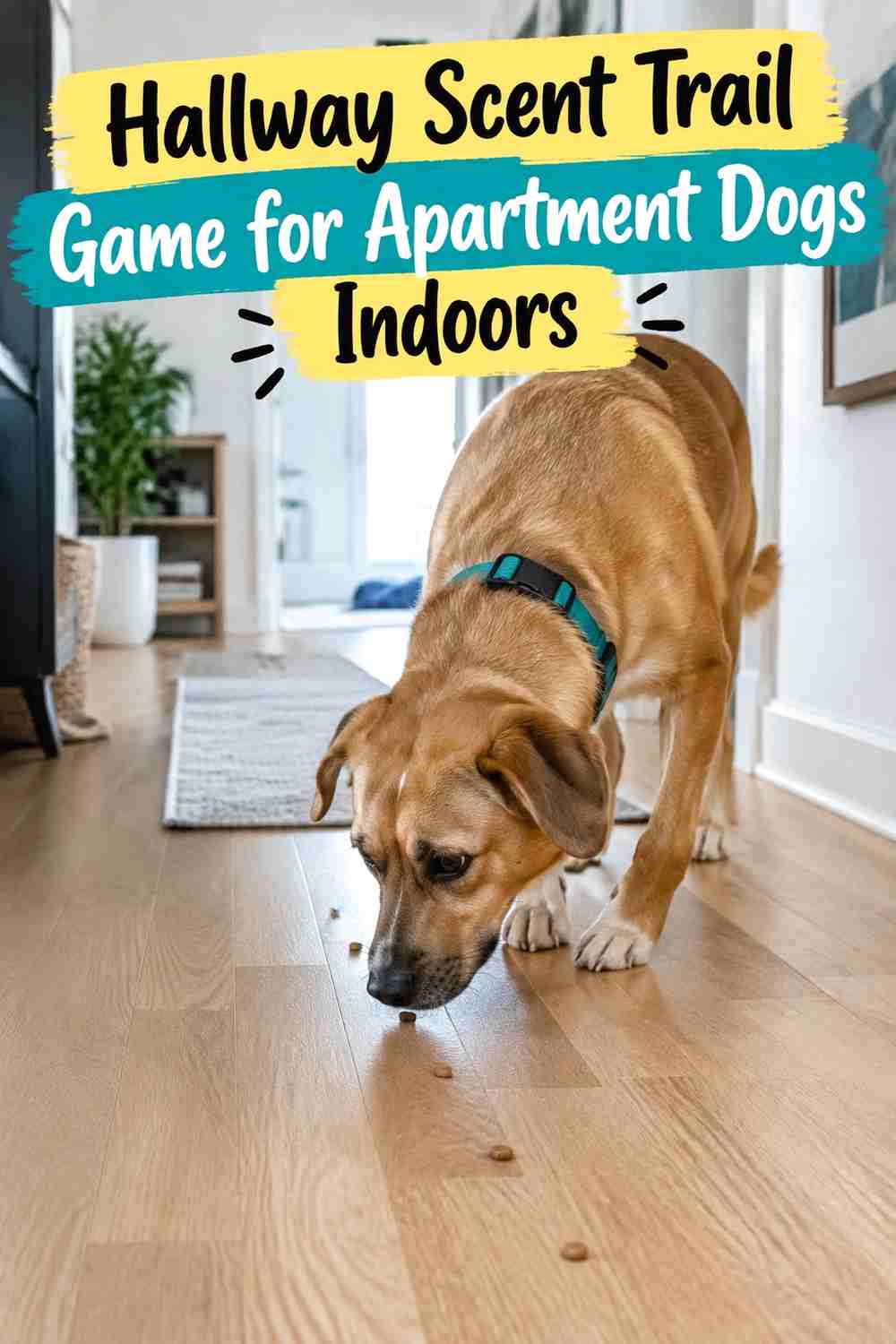
A hallway scent trail turns a narrow apartment space into a simple search game. Place a few pieces of your dog’s usual food or suitable treats at visible intervals along the floor, then gradually make the trail less obvious as your dog understands the activity. You can curve the trail around a doorway, beside furniture, or toward a final toy to add variety without needing extra equipment. Keep the route away from stairs, entry doors, electrical cords, and slippery areas. This activity is easy to scale down for beginners because the first trail can be only a few feet long. End while your dog is still interested rather than extending the search until attention fades.
Setup Notes
Start with a straightforward line and add turns or slightly wider spacing only after your dog is searching confidently.
Use & Maintenance
Wipe the floor afterward if food leaves crumbs or residue, especially in high-traffic apartment areas.
3. Rolled Towel Foraging Puzzle For Small Space Dogs
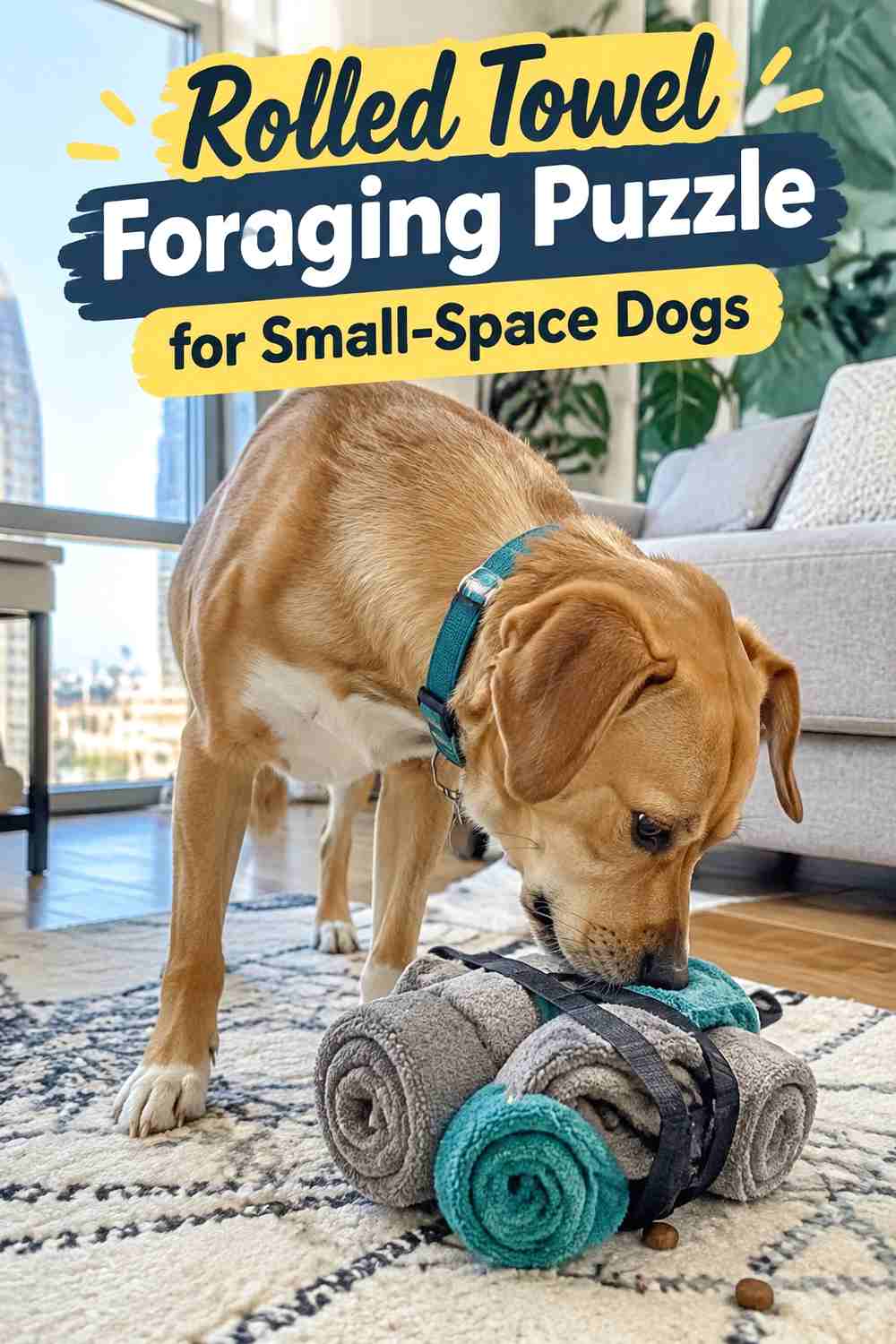
A rolled towel puzzle creates a low-cost foraging activity using something many apartment owners already have. Lay a clean towel flat, scatter a small portion of the dog’s usual food across it, then loosely roll or fold the fabric so the dog has to nose it open. Start with a very loose roll and increase the challenge gradually instead of tying knots or packing the towel tightly. Place it on a nonslip floor where your dog has enough room to move around it without bumping furniture. Supervise closely because some dogs will switch from searching to chewing or tearing fabric. When the food is gone, pick up the towel, shake out crumbs, and wash it as needed.
Best For
This idea suits dogs that enjoy nose work and gentle pawing but do not routinely shred towels or household fabric.
Pro Tip
Change the fold pattern rather than making the towel tighter; variation adds interest without creating unnecessary frustration.
4. Cardboard Box Search Station For Apartment Dog Enrichment
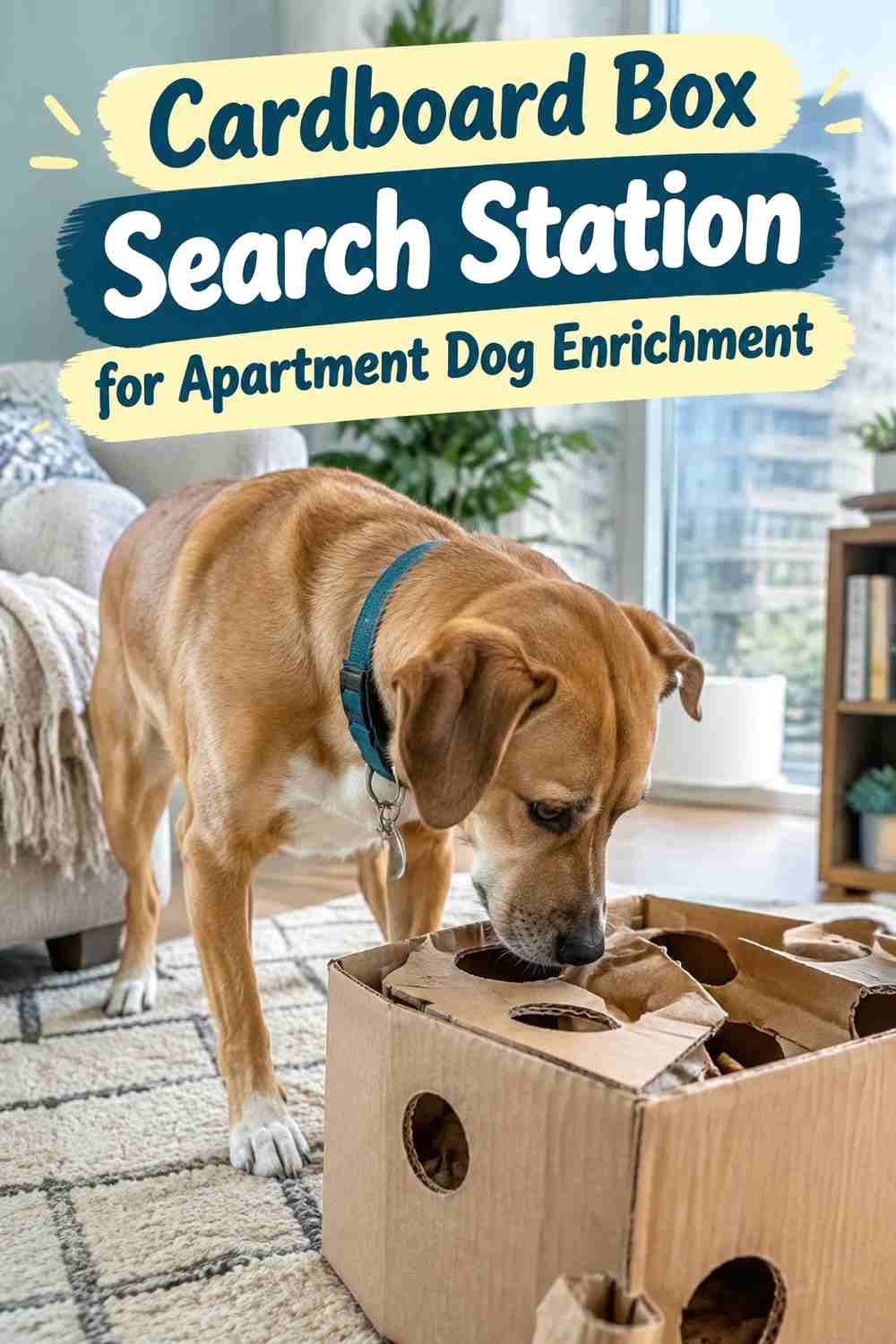
A cardboard box search station gives curious dogs a sniffing and investigation activity that can be packed away after use. Set one or two open boxes on the floor and place a toy or part of the dog’s usual food inside, initially keeping everything easy to see. As your dog learns the game, loosely add crumpled packing paper or an empty second box to create more searching opportunities. Remove tape, staples, labels, plastic packing materials, and small pieces before starting. Supervise the entire activity, especially with dogs that like shredding and swallowing cardboard. Once the session ends, recycle damaged boxes rather than leaving torn material around the apartment.
Setup Notes
Use wide, shallow boxes first so your dog can investigate without needing to climb into a deep container.
Comfort & Safety
Stop the game if searching turns into persistent cardboard eating or rough tearing.
5. Indoor Hide And Seek Game For Apartment Dogs And Owners
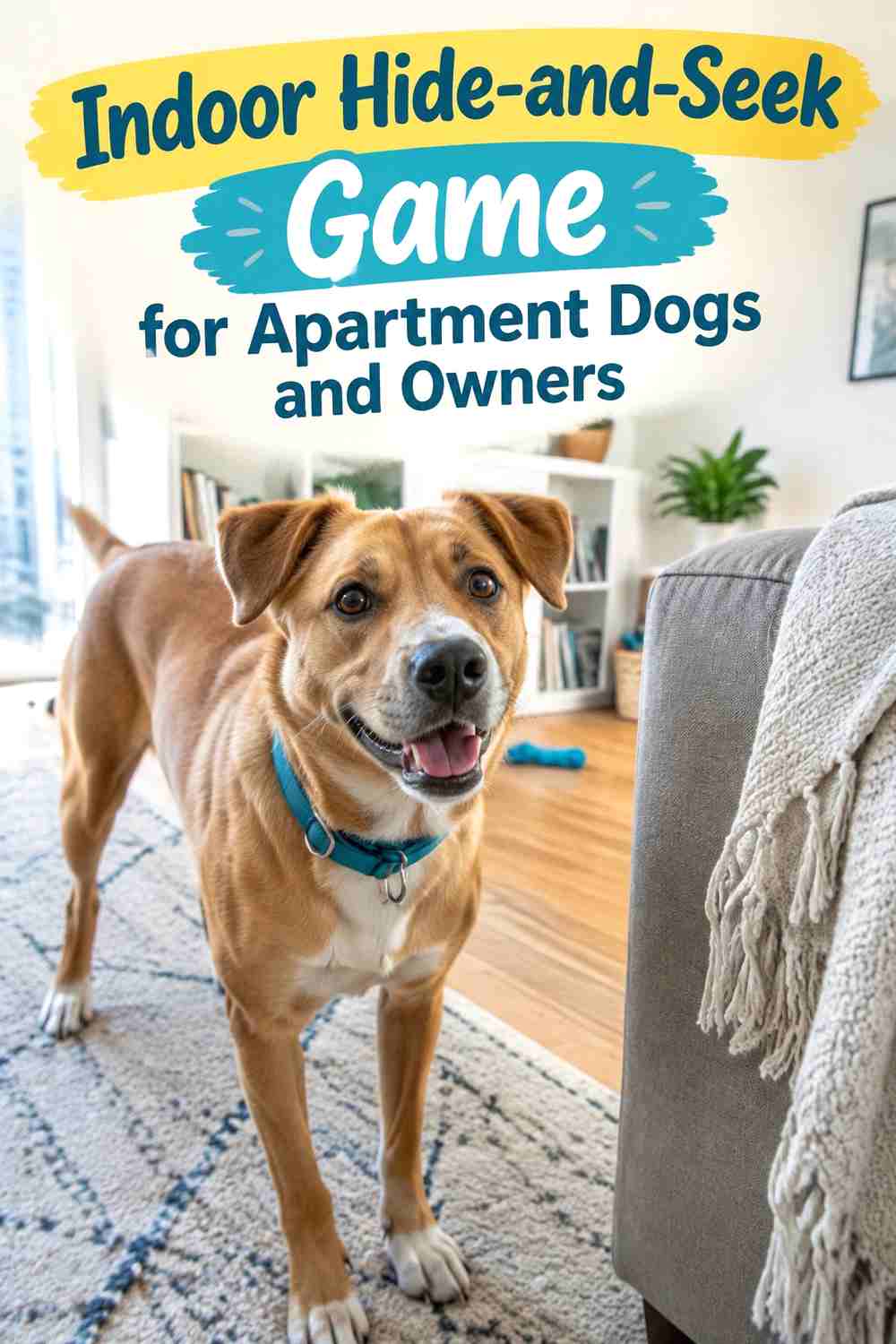
Indoor hide-and-seek adds social interaction to enrichment without requiring special equipment. Have your dog wait with another household member, or begin while they are briefly occupied, then hide somewhere easy such as behind a doorway or beside a sofa and call them once. Reward the successful find with praise, a favorite toy, or another familiar reward. As the dog understands the game, vary your hiding spot while keeping the search area safe and accessible. Avoid shutting yourself inside spaces where the dog might scratch doors or become frustrated. This activity can work in surprisingly small apartments because the challenge comes from locating you, not covering a large distance.
Why It Works
The game combines searching, listening, movement, and interaction with the owner in one compact activity.
Pro Tip
Keep early hiding places obvious so the dog learns the rules before you make the search harder.
6. Window Watching Enrichment Nook For Calm Apartment Dogs
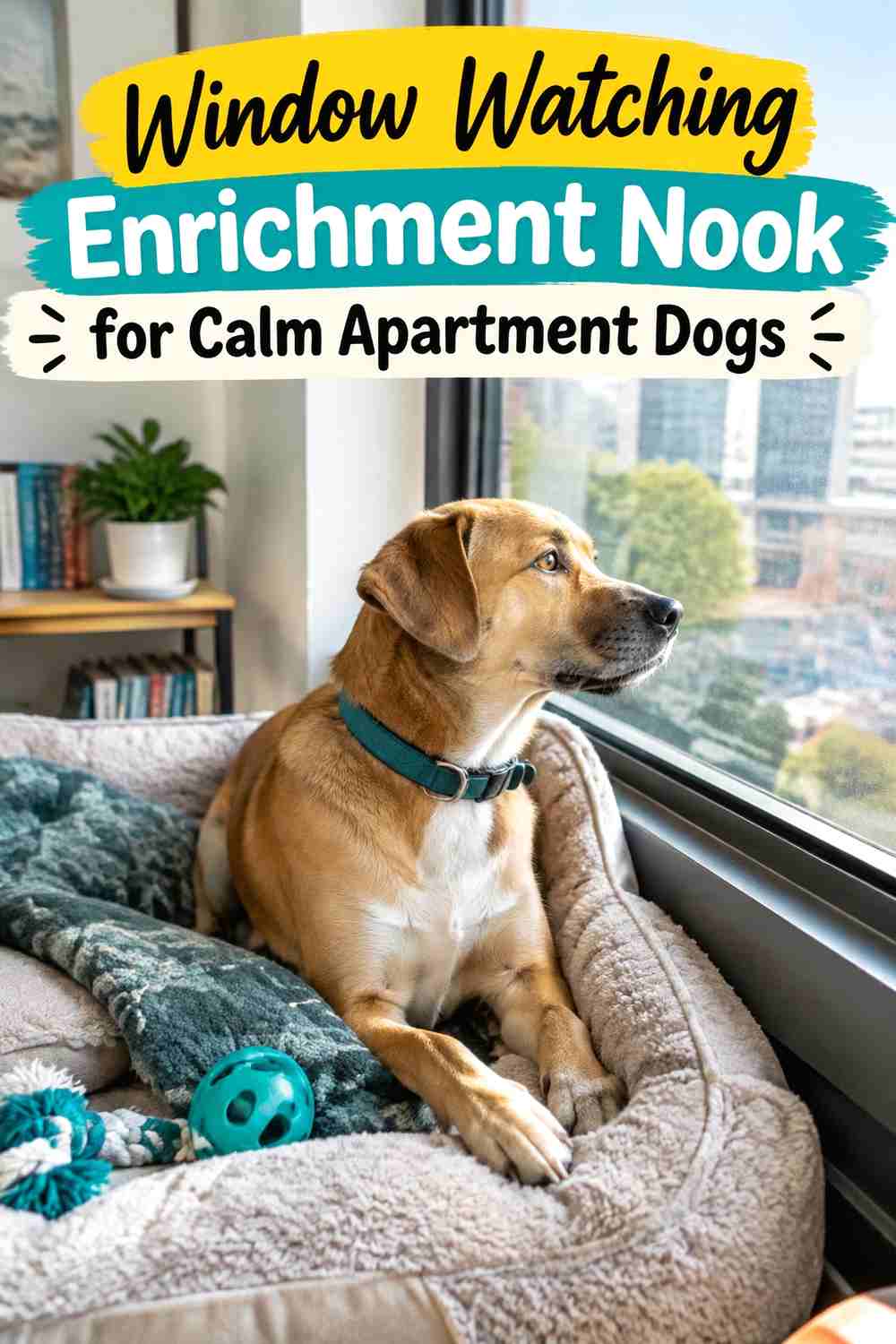
A window watching nook can provide passive enrichment for dogs that calmly observe people, birds, vehicles, or neighborhood activity. Place a comfortable bed or mat near a secure closed window where your dog already chooses to relax, making sure blind cords, plants, and fragile objects are out of reach. The goal is quiet observation rather than encouraging constant barking at every movement outside. If the view repeatedly triggers intense barking, pacing, or fixation, move the resting spot farther from the window or choose a quieter view. Watch the temperature too, since strong direct sunlight can make a comfortable nook overly warm. This idea works best as one option within a varied enrichment routine.
Best For
Choose this setup for dogs that naturally watch outside while remaining relaxed and able to disengage.
Space & Placement
Keep the bed out of narrow walkways and leave enough room for your dog to approach and leave freely.
7. Rotating Puzzle Feeder Routine For Apartment Dogs
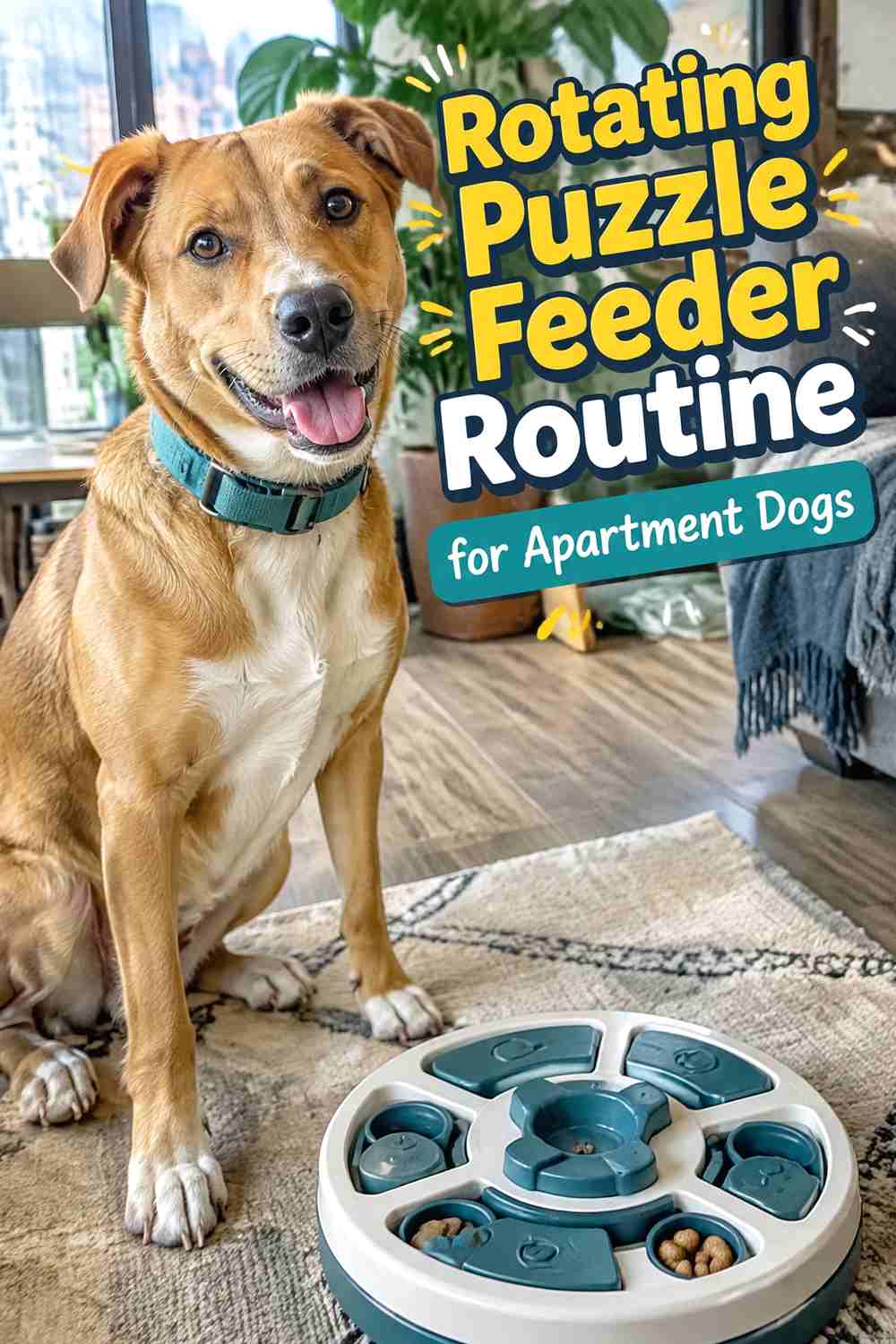
A rotating puzzle feeder routine keeps one compact activity from becoming predictable. Instead of leaving several puzzles on the floor all day, choose one suitable feeder at a time and use part of the dog’s normal meal or another appropriate food option inside it. Begin with an easy configuration and show your dog how the puzzle moves or opens before increasing difficulty. Rotate between two or three different mechanisms across the week so storage stays manageable in a small apartment. Watch the session to make sure the dog is solving rather than chewing pieces or becoming increasingly frustrated. Wash food-contact surfaces thoroughly and inspect moving parts for damage before putting the puzzle away.
Use & Maintenance
Store puzzles clean and dry in one basket or cabinet so enrichment supplies do not create permanent floor clutter.
Best For
This routine fits dogs that enjoy problem-solving and owners who want reusable enrichment with a small storage footprint.
8. Toy Basket Find It Game For Bored Apartment Dogs

A toy basket find-it game turns familiar toys into a search activity instead of simply leaving them scattered across the apartment. Place several safe, familiar toys in an open basket and hide one favorite toy underneath or among the others. Encourage your dog to investigate and locate it, then reset the game with a different target next time. Start with the chosen toy partly visible before making the search harder. Use a stable basket without loose handles, sharp edges, or small decorative pieces, and remove damaged toys during each reset. This approach also supports toy rotation because only a limited selection needs to stay available at once, making cleanup and storage easier in compact homes.
Setup Notes
Begin with three or four toys rather than an overflowing basket so the search remains understandable and manageable.
Cleaning Notes
Vacuum or wipe out the basket regularly because fur, crumbs, and fabric fibers can collect underneath the toys.
9. Calm Lick Mat Enrichment For Apartment Dog Downtime
You May Also Like



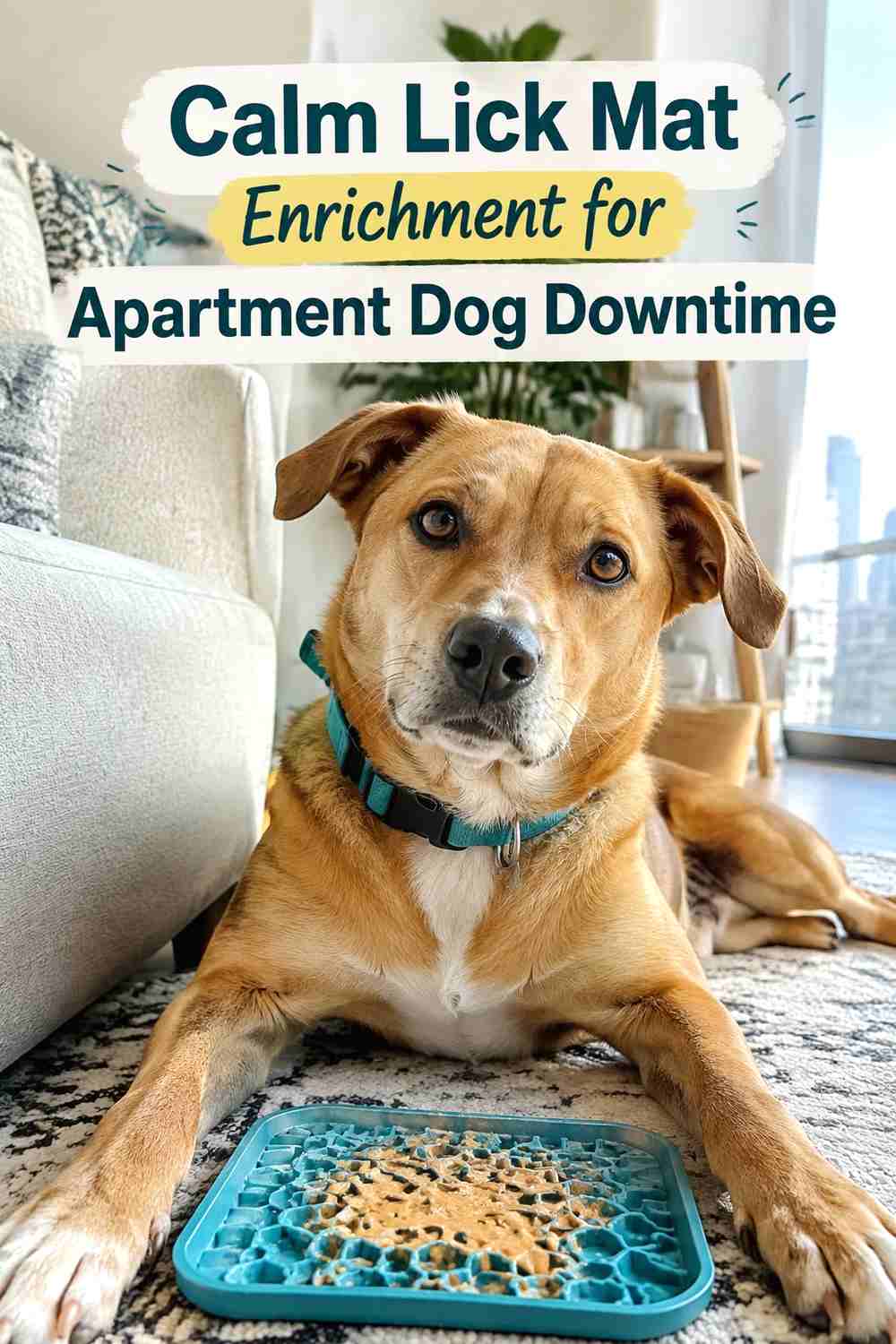
A lick mat can provide a quieter enrichment option when you want an activity that stays in one small area. Spread a thin layer of an appropriate dog-safe food your dog already eats across the textured surface, then place the mat on an easy-clean floor or secure surface. Keep the first session simple so your dog focuses on licking rather than chewing the mat itself. This can be useful after a more active game or during a calm part of the day, but it should not be treated as a cure for anxiety or other behavior concerns. Supervise use, remove the mat when finished, wash it thoroughly, and adjust or skip the activity if your dog tries to tear the material.
Best For
This idea suits dogs that enjoy food-based enrichment and can use the mat without chewing or carrying it away.
Cleaning Notes
Rinse food residue promptly and allow the mat to dry completely before storage.
How to Choose the Right Idea
Match apartment enrichment to your dog’s natural preferences. Dogs that love sniffing may enjoy scent trails, snuffle mats, towel puzzles, or box searches. Dogs that seek interaction may prefer hide-and-seek, while problem-solvers may stay interested in rotating puzzle feeders.
Also consider noise and floor space. Hallway searches and licking activities can stay relatively contained, while cardboard searches may create more cleanup. Window watching only works well when your dog can observe calmly instead of becoming increasingly worked up by activity outside.
Difficulty should remain adjustable. Make new games easy at first, then add challenge gradually as your dog learns what to do. If your dog stops searching, begins chewing the equipment, or looks frustrated, simplify the task rather than pushing through.
Finally, rotate activities and store them between sessions. Apartment enrichment is easier to maintain when a few compact tools serve different purposes instead of permanently filling the floor.
Final Thoughts
Apartment dog enrichment does not depend on having a large indoor space. A hallway, window, towel, cardboard box, puzzle feeder, or short game with you can provide a useful change from the normal routine.
Start with one or two ideas that match how your dog already likes to explore. Keep sessions manageable, rotate activities before they become predictable, and favor setups that are easy to supervise, clean, and put away.
FAQs
1. What is the easiest enrichment idea for a small apartment?
A snuffle mat, simple scent trail, or hide-and-seek game can be started with very little equipment or floor space. Choose the one that best matches whether your dog prefers sniffing or interacting with you.
2. How can I enrich my dog indoors without making a mess?
Use contained activities such as puzzle feeders, lick mats, or a small snuffle mat on an easy-clean floor. Store the activity as soon as the session ends.
3. How often should I rotate apartment dog enrichment activities?
Rotate often enough that the same activity does not become completely predictable. You do not need a rigid schedule; switching among a few different types of games can provide useful variety.
4. What if my dog gets frustrated with food puzzles?
Make the puzzle easier by exposing more of the food, reducing barriers, or demonstrating how part of it works. If frustration continues, switch to a simpler search game.
5. Can window watching count as enrichment for apartment dogs?
It can for dogs that calmly observe and disengage from outdoor activity. If the window repeatedly leads to intense barking or fixation, a quieter resting location is a better choice.
Save your favorite apartment dog enrichment ideas and rotate a few simple games through the week for practical, low-clutter indoor variety.
