A pile of toys on the floor can give a dog plenty of choices without making play especially interesting. When the same balls, chews, tug toys, and squeakers stay available every day, some dogs simply stop paying much attention to them.
Save This Idea on Pinterest
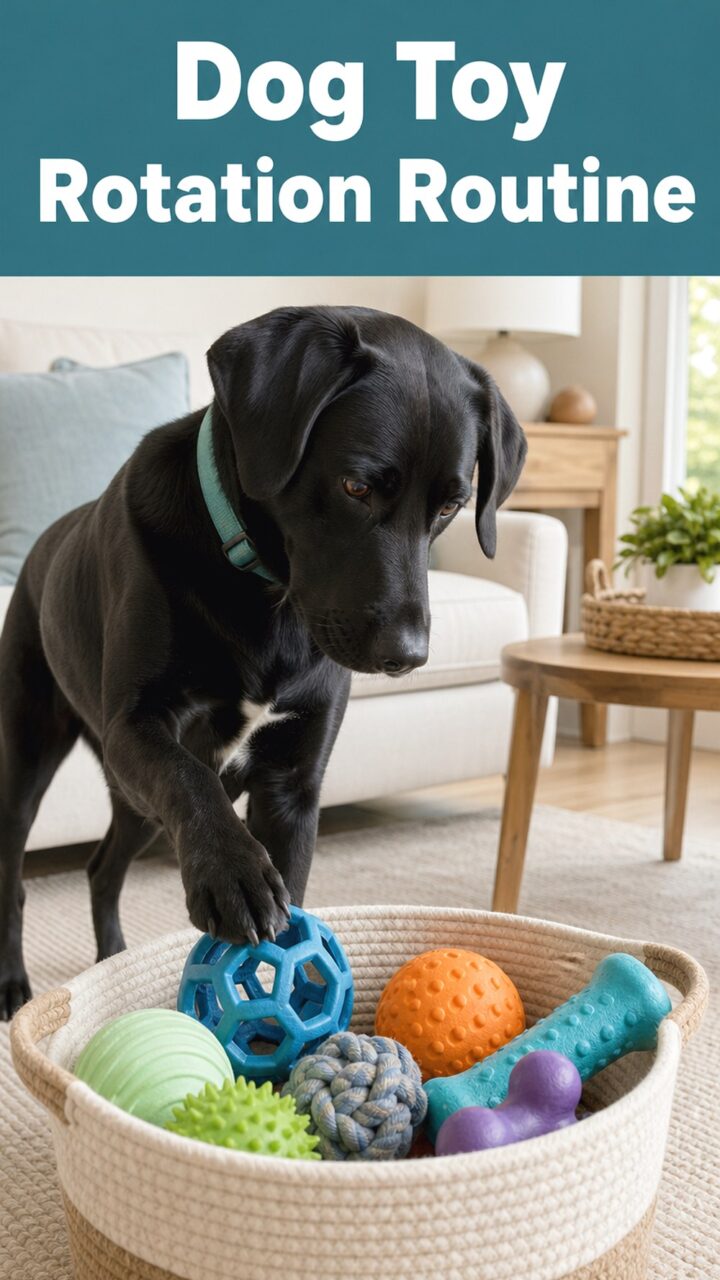
Dog Toy Rotation Routine Keep Play Fresh Without Clutter
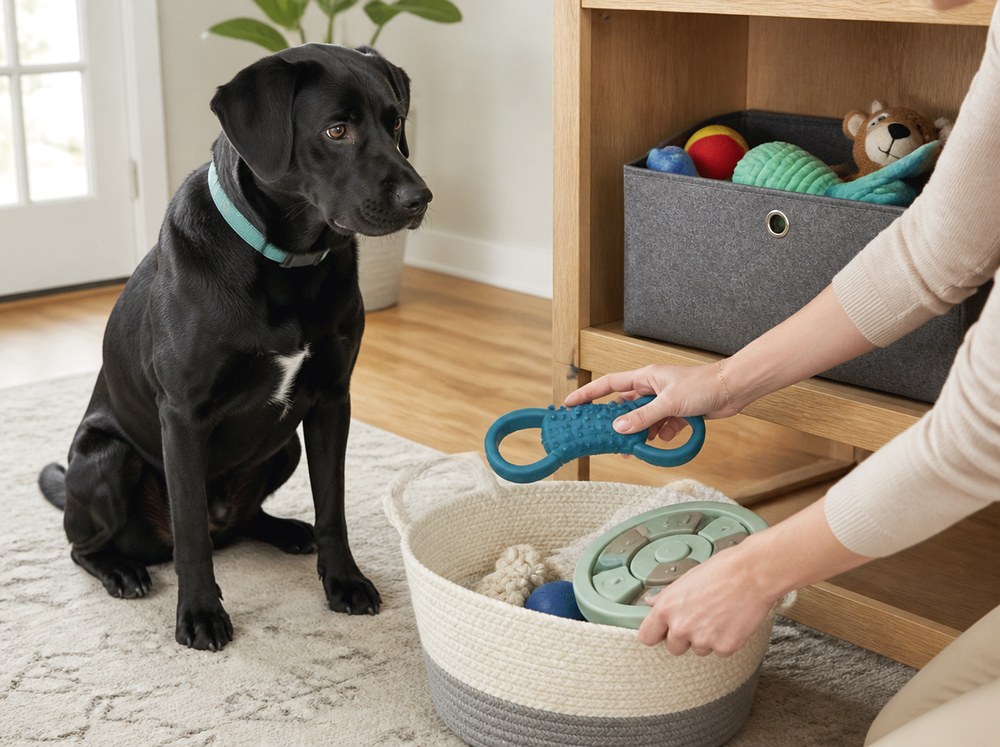
Save to PinterestA dog toy rotation routine changes that by keeping a smaller selection available while the rest are stored away. Every few days, you inspect the current toys, put some away, and bring out a different mix.
The goal is not to constantly entertain your dog with something new. It is to create a manageable collection that includes different kinds of play, suits your dog’s current needs, and gives you regular opportunities to check toys for wear.
Start With a Small Active Toy Set
You do not need to rotate every toy your dog owns on a complicated schedule.
Begin by choosing a small group to keep accessible. For many households, about five to seven toys is a practical starting point, although the number can be smaller for a dog that prefers only a few favorites.
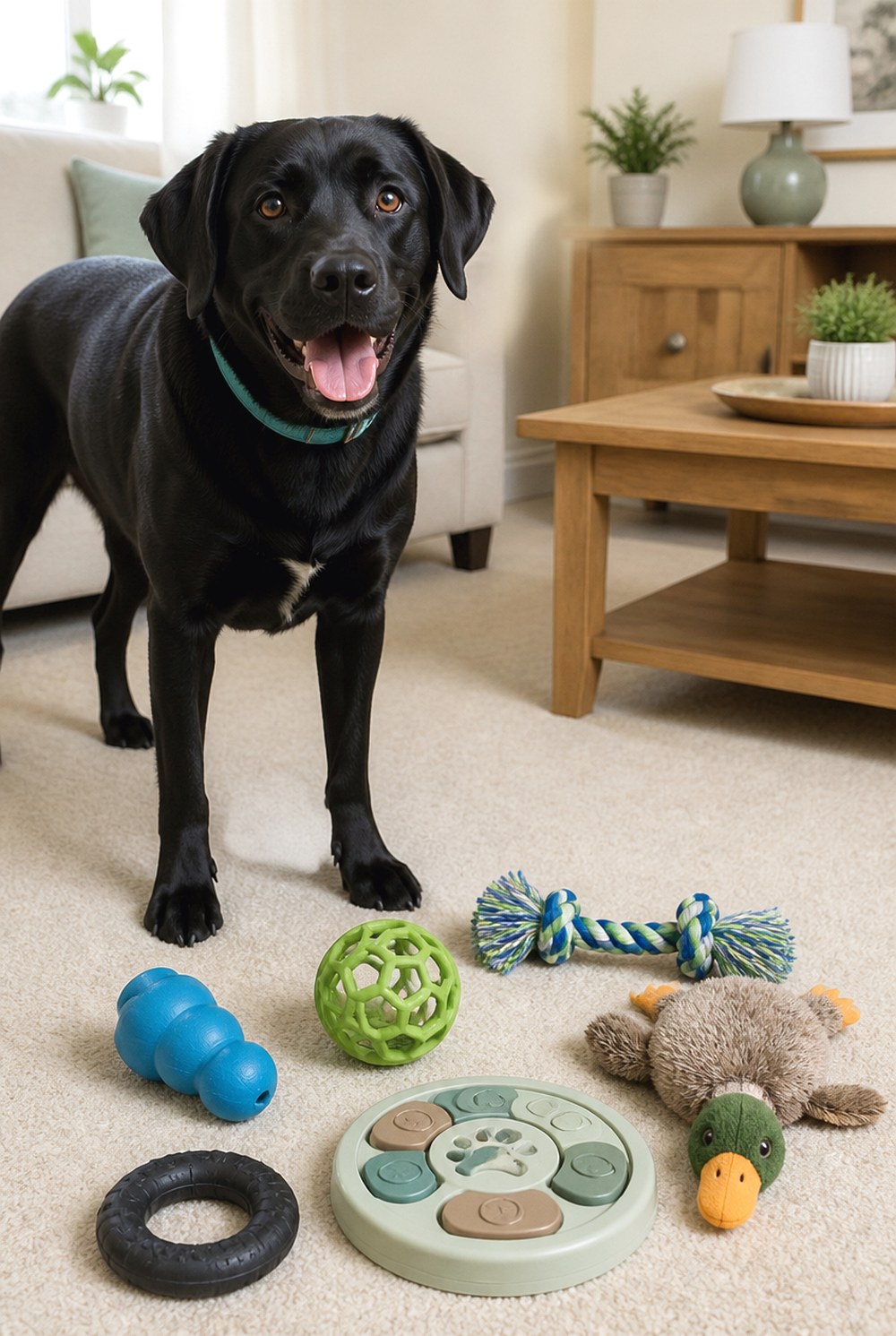
Try to make the active set varied rather than choosing five versions of the same toy. A useful mix might include:
- One durable chew suited to your dog’s chewing style
- One ball or retrieve toy
- One tug toy for interactive play
- One food or puzzle toy
- One softer toy if your dog handles fabric toys safely
- One familiar favorite that remains available through several rotations
This gives the dog different ways to interact with the available toys instead of simply increasing the quantity.
A dog that destroys soft toys quickly, for example, does not need a plush option just to make the collection look balanced. Build the set around how your dog actually plays.
Let Different Toys Do Different Jobs
Rotation works better when you think about what each toy is for rather than dividing the collection randomly.
Independent Chewing
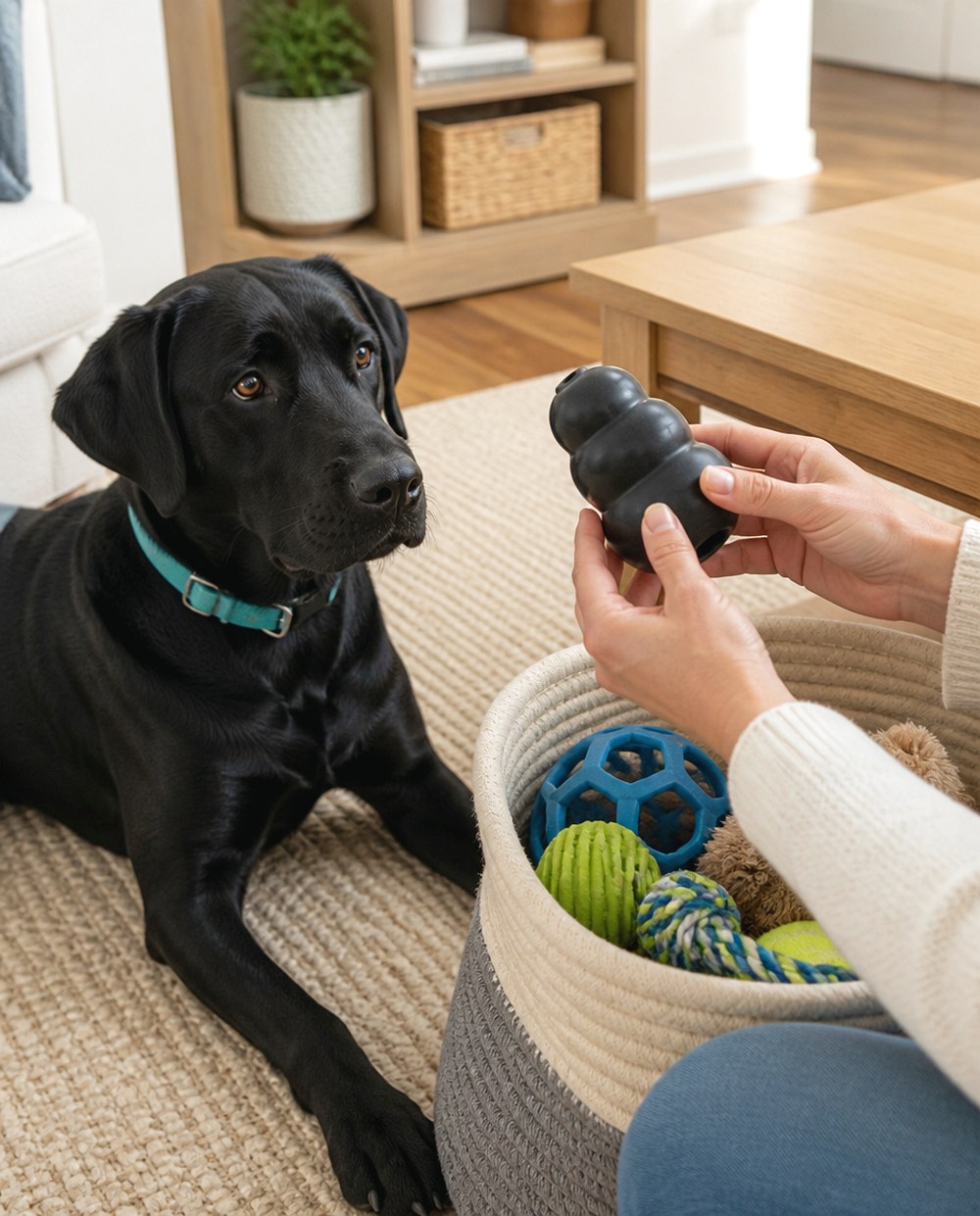
Keep one suitable chew option available for periods when your dog is settling near you or relaxing after activity. Choose toys that are appropriately sized and sturdy for your dog’s chewing habits.
Inspect chew toys frequently. Deep cracks, missing chunks, sharp edges, or pieces that are beginning to separate are reasons to remove a toy rather than return it to storage.
Interactive Play
Balls, retrieve toys, and tug toys can come out when you are actively playing together. They do not necessarily need to remain on the floor all day.
Putting high-energy interactive toys away after a session can also make the difference between “available toys” and “things we use together.”
Food and Puzzle Play
A food-stuffable or puzzle toy can add variety during part of a meal or another appropriate time. Count any food placed inside toward your dog’s normal daily intake rather than automatically adding extra treats.
Food toys should be cleaned according to the manufacturer’s instructions and allowed to dry fully before storage.
Soft or Comfort Toys
Some dogs carry, mouth, or rest near soft toys without damaging them. Others immediately tear fabric, pull out stuffing, or remove squeakers.
Use the toy that fits the dog in front of you. Fabric toys and toys with parts that could be removed warrant supervision when your dog’s play style makes swallowing pieces a possibility.
Use a Rotation Rhythm You Can Actually Maintain
The rotation does not have to happen every morning.
A practical rhythm is to change part of the toy selection every few days. Some households may prefer a weekly reset because it is easier to remember. Others may swap one or two toys whenever the current collection stops getting much attention.
The important part is consistency in the process, not a precise interval.
One workable pattern looks like this:
| Rotation point | What to do |
|---|---|
| During the current rotation | Keep a varied group accessible and notice which toys your dog chooses |
| Every few days | Swap two or three less-used toys for stored options |
| Once a week | Inspect the entire active group and clean toys that need it |
| Before storing anything | Make sure the toy is clean, dry, and still in safe condition |
| Occasionally | Review the storage collection and discard damaged or unsuitable items |
You do not need to replace the entire group at once. Partial rotation keeps familiar choices available while changing enough of the selection to make the toy area feel different.
Keep One or Two Favorites in Regular Circulation
Rotation does not mean every beloved toy has to disappear.
If your dog repeatedly chooses one particular ball or carries the same safe toy from room to room, it can remain part of several rotations. The system should support your dog’s preferences rather than override them.
Think of the collection as having two groups:
Reliable favorites stay available often because your dog genuinely uses them.
Rotating toys move in and out to provide other kinds of play.
A familiar favorite can be particularly useful when the rest of the active set changes. It gives your dog a known option while still allowing you to vary the surrounding choices.
Make the Swap a Quick Inspection Routine
The best time to check a toy is when you are already handling it.
When a toy leaves the active group, look at its entire surface before putting it into storage. Check for:
- Pieces that are cracking or separating
- Torn fabric and exposed stuffing
- Loose squeakers or inserts
- Frayed ropes or fabric strands
- Jagged edges
- Damage that has changed the toy’s size or shape
- Dried food trapped in grooves or openings
A toy that is no longer safe does not become safer because it spends a week in a storage bin. Remove damaged items rather than saving them for another rotation.
Strings, rope fibers, fabric pieces, small components, and toys that can be chewed into swallowable pieces deserve particular care and supervision.
You May Also Like


Store the Off-Duty Toys Out of Reach
The stored half of the system should genuinely be unavailable.
Use a closed cabinet, secured closet shelf, lidded container, or another location your dog cannot independently access. Keeping the reserve toys separate prevents the storage area from becoming another toy pile.
The storage setup should also make rotation easy for you. You might loosely separate toys into broad categories such as:
- Chew toys
- Retrieve and outdoor toys
- Tug and interactive toys
- Food puzzles
- Soft toys
You do not need an elaborate labeling system unless your collection is large. The point is to see quickly whether the next active group includes different forms of play.
Wash or clean a toy as appropriate before putting it away if it is dirty. Store toys only after they are fully dry so damp items are not sealed inside a container.
A Five-Minute Rotation Reset
Once the system is established, changing the toy selection can be brief.
1. Gather the Current Toys
Bring the active toys to one spot so you can see the whole selection rather than grabbing only whatever happens to be nearby.
2. Check Their Condition
Look for damage, grime, loose pieces, or wear that makes the toy unsuitable for continued use.
3. Notice What Was Actually Used
A toy that sat untouched for most of the rotation is a good candidate to store. A safe toy your dog repeatedly chose can stay.
4. Bring Out Different Types
Replace the removed items with toys that change the play options. If you put away a ball and a rubber chew, for instance, you might bring out a tug toy and a food puzzle rather than two more balls.
5. Return the Reserve Collection to Secure Storage
Once the new set is ready, put the remaining toys back where your dog cannot help themselves to the entire collection.
You May Also Like


Adjust the Routine to How Your Dog Plays
A useful rotation for one dog can be frustrating or unsafe for another.
For Heavy Chewers
Keep the collection focused on appropriately sized toys designed for the dog’s chewing intensity, and inspect them frequently. Soft toys may need to be limited to supervised interaction or skipped entirely if they are quickly dismantled.
For Dogs That Lose Interest Quickly
Rotate a smaller portion of the collection more often instead of buying additional toys. You can also change how a familiar toy is used. A retrieve toy can appear during an outdoor session rather than remaining in the living room all week.
For Older Dogs
Choose toys that fit current mobility, mouth comfort, vision, and activity level. A senior dog may prefer gentler interactive play or easier-to-manipulate toys rather than demanding puzzles or prolonged high-impact games.
Sudden reluctance to play, difficulty chewing, obvious pain, weakness, breathing difficulty, or other abrupt behavior changes should not simply be treated as boredom. Contact a veterinarian when a change in play is accompanied by concerning physical or behavioral signs.
For Puppies
Puppies can be especially hard on toys while exploring with their mouths. Choose age- and size-appropriate options and supervise closely. Recheck toys frequently because damage can develop quickly.
What to Do When a Dog Ignores the New Rotation
Do not assume the rotation failed because your dog walks past the basket.
First, consider whether the available toys fit the kind of activity your dog wants at that moment. A dog ready to nap may not care about a fetch toy. A dog hoping to interact with you may ignore a toy lying silently on the floor.
Try using one toy with your dog for a short play session. Roll the ball, begin an appropriate tug game, or prepare a food toy when it fits the day’s feeding plan.
If a toy repeatedly receives no interest across several rotations, you do not have to keep circulating it. Store it for a longer period, donate it if it is clean and suitable for donation, or retire it if it is worn.
The purpose of rotation is not to make every purchase successful. It is to learn which toys deserve space in your dog’s routine.
Multi-Dog Homes Need a Slightly Different System
When several dogs share a home, toy preferences and play styles can differ considerably.
Choose toys that are safe for the dog using them, and supervise shared play when competition, stealing, or guarding is a concern. A toy suitable for a large dog may be unsafe for a much smaller dog if it can be swallowed.
Some households may need separate play sessions or separate toy sets rather than one communal basket. If dogs become tense, freeze, hover over toys, guard access, or repeatedly conflict over resources, avoid forcing them to share prized items.
Keep the System Small Enough to Stay Useful
A dog toy rotation routine should reduce the amount of toy management in your home, not create another chore.
Start with the toys you already own. Put a varied handful into active use, store the rest securely, and make one partial swap after a few days. During that swap, check each toy for wear.
After two or three rotations, you will have a much clearer picture of which toys your dog consistently uses, which categories are missing, and which items are simply taking up space.
That information is more useful than continually adding toys to the pile.
