A laundry room can do more than handle towels and muddy blankets. With the right layout, part of the room can become a useful dog zone for resting, feeding, storing everyday gear, or dealing with wet paws before they reach the rest of the house.
Save This Idea on Pinterest
8 Dog Area Ideas for Laundry Rooms
Save to PinterestThe key is to give the dog area a specific job rather than squeezing a bed into whatever floor space happens to be left. Laundry rooms also need extra safety planning because detergents, dryer sheets, cords, appliances, and cleaning products should never be within a dog’s reach.
These eight dog area ideas work with different room sizes and routines, from compact laundry closets with a little spare wall space to larger utility rooms that can handle a built-in nook.
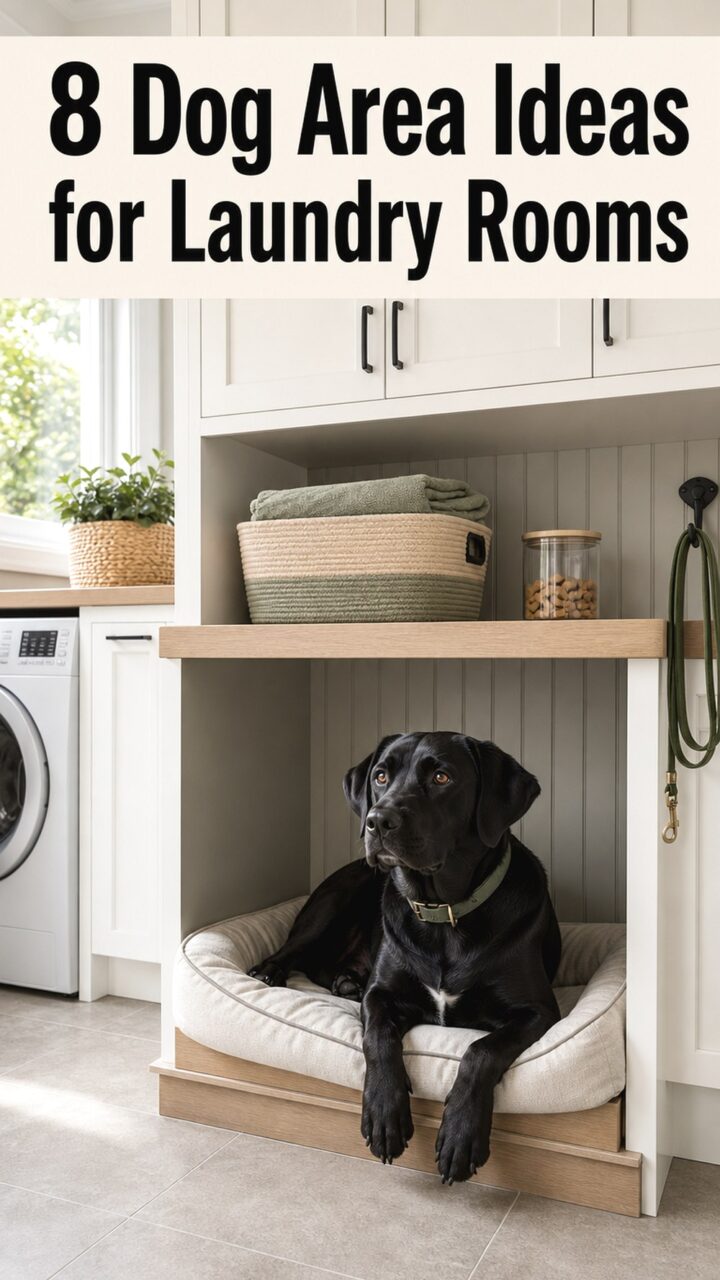
1. Turn the End of a Cabinet Run Into a Built-In Dog Nook
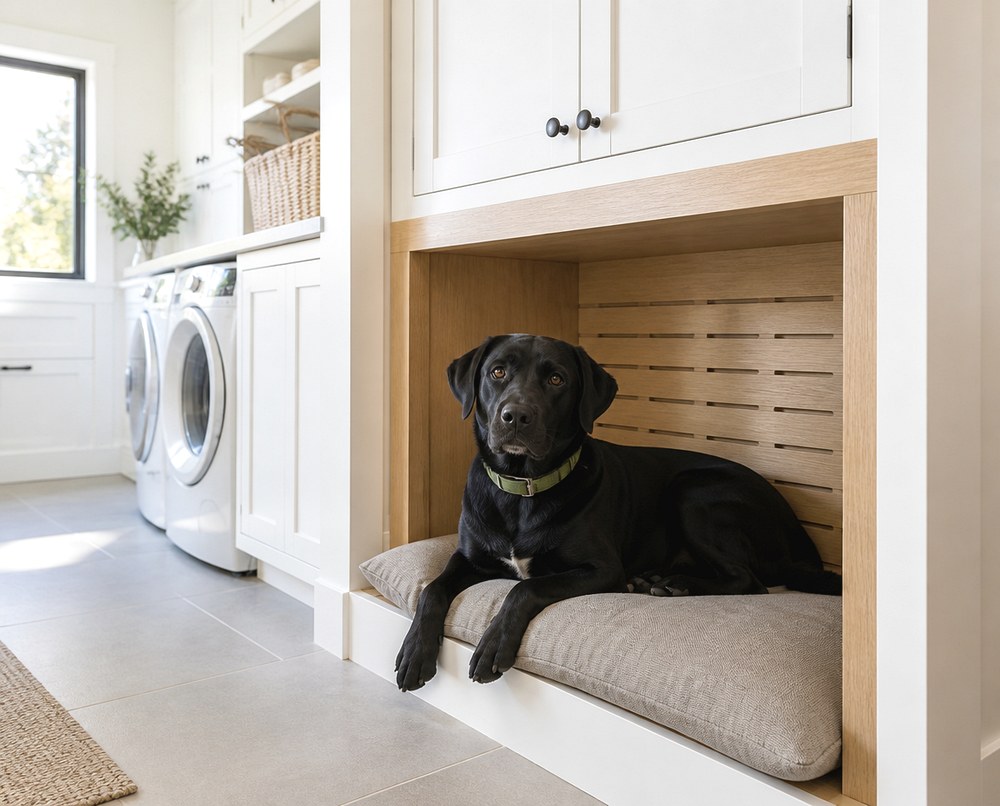
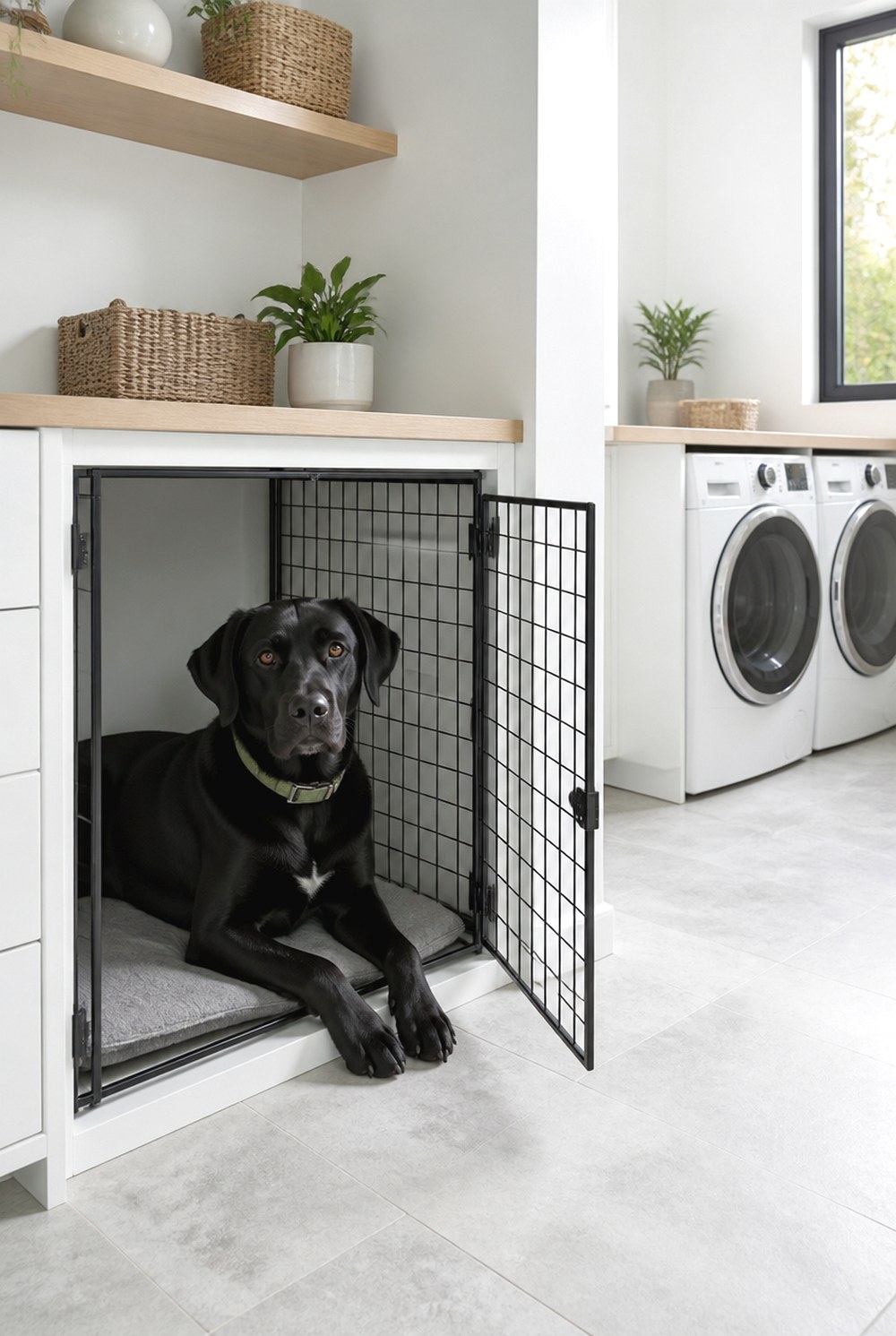
If your laundry cabinetry stops before the wall, that unused end section can become a dedicated resting spot. A recessed nook gives your dog a defined place without placing a loose bed in the middle of a walkway.
Build the opening wide enough for your dog to stand, turn around, stretch, and lie naturally. A removable washable bed or flat cushion makes cleanup easier than permanently upholstered surfaces. Smooth painted panels or sealed wood around the nook can also be wiped down after muddy days.
Placement matters. Keep the nook away from the hottest side of a dryer and avoid positioning it directly beside a machine that shakes or produces noises your dog finds stressful. Good airflow is especially important in a smaller room.
For a finished look, let the cabinetry above the nook continue the same lines as the rest of the laundry room. The dog space then feels intentional rather than added afterward.
2. Create a Dedicated Feeding Station With Easy-Clean Flooring
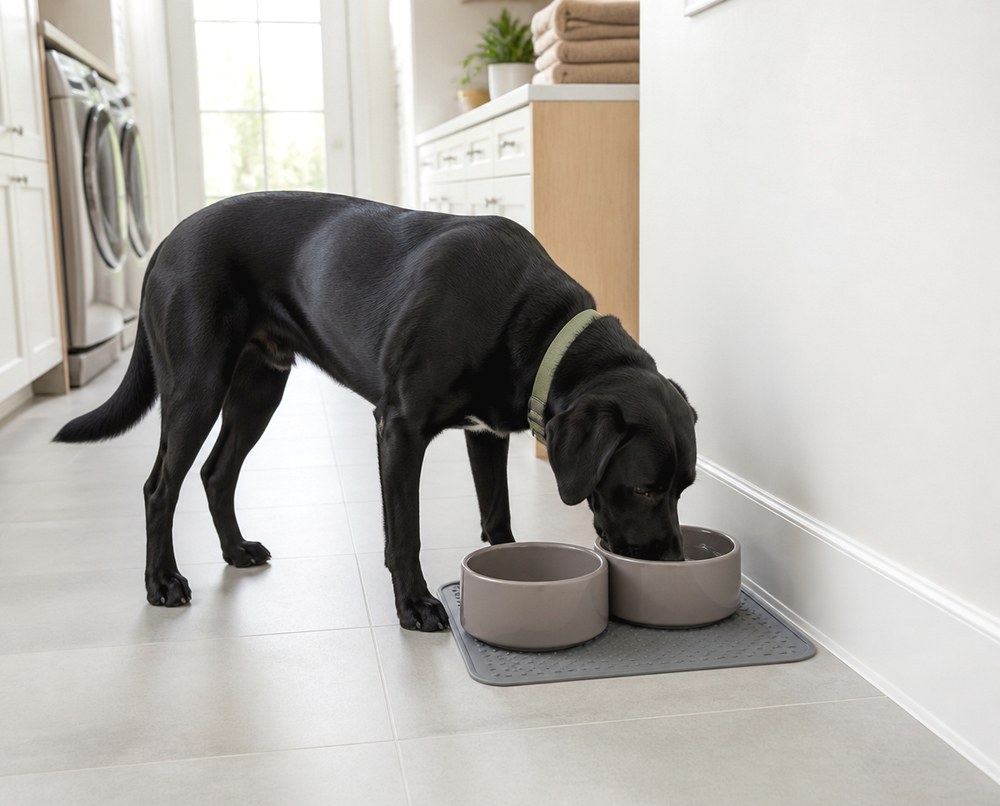
A laundry room can be a practical feeding location when the floor is water-resistant and the bowls can stay away from foot traffic.
Choose a quiet section of wall rather than placing bowls directly in front of the washer, dryer, exterior door, or main walkway. A washable mat beneath the bowls can catch splashes and stray kibble while defining the feeding area visually.
For households that want the bowls out of sight between meals, a sturdy pull-out feeding drawer can work if it locks securely in position while the dog is eating. Another option is a shallow recessed space beneath a lower cabinet, provided there is enough headroom and the bowls do not slide underneath the cabinetry.
Keep dog food in a sealed container inside a separate cabinet rather than beside detergents or laundry chemicals. If your dog tends to investigate cabinets, use secure latches where needed.
Water should remain readily available according to your dog’s normal routine, so avoid a setup that makes the water bowl inconvenient to reach or easy to forget.
You May Also Like


3. Build a Grab-and-Go Walking Gear Wall
Laundry rooms near a garage, mudroom, or back entrance are well suited to storing walking equipment. Instead of piling leashes and harnesses into a basket, dedicate a narrow section of wall or cabinet interior to the items used every day.
Mount sturdy hooks high enough that the dog cannot pull equipment down. Keep the current leash and harness on separate hooks so they can be grabbed quickly, then add a small shelf or closed drawer for waste bags, paw wipes, and a flashlight.
A labeled bin for clean dog towels can sit below or inside an adjacent cabinet. This keeps the walking zone connected to the cleanup routine without turning the floor into a pile of accessories.
Avoid hanging leashes where dangling loops can become accessible to an unattended dog. If your dog chews fabric or straps, an enclosed cabinet is a better choice than open hooks.
This setup works particularly well for owners who come inside with wet paws and want towels and walking gear in the same place.

4. Give Dog Supplies Their Own Closed Cabinet
One of the most useful dog area ideas for laundry rooms requires no extra floor space at all. Dedicate a cabinet or a group of drawers to dog supplies so towels, grooming tools, spare bowls, waste bags, and other routine items have one predictable home.
Separate supplies by how often you reach for them. Everyday items belong between waist and shoulder height. Backup towels, seasonal gear, and unopened supplies can go higher.
Keep potentially hazardous items completely separate. Laundry detergent, stain removers, medicines, pest products, and household cleaners should not share an open dog-accessible storage area. Secure anything that would be harmful if chewed, swallowed, or spilled.
Shallow bins inside a cabinet can prevent small items from disappearing at the back. A deeper lower drawer works well for folded towels or blankets, provided your dog cannot open it.
This approach is especially helpful in a small laundry room because the “dog area” becomes part of the cabinetry rather than another piece of furniture.

5. Set Up a Foldaway Grooming and Towel Station
You do not need a permanent grooming table to make brushing and towel drying more convenient. A section of clear laundry-room floor paired with a nearby towel drawer can become a temporary grooming station whenever you need it.
Keep a washable nonslip mat rolled or folded in a cabinet. When it is time for brushing or drying, place the mat on the floor and bring out only the tools you need. Afterward, shake off or clean the mat as appropriate and put everything away.
Store brushes and combs in a closed drawer rather than leaving them on the floor or countertop. Sharp grooming tools should always be secured where the dog cannot reach them.
The advantage of a foldaway setup is flexibility. The dog gets enough room to stand comfortably during brushing, but the laundry room remains open for normal household use afterward.
A nearby hamper dedicated to dirty dog towels can also prevent damp towels from being mixed with clean supplies.

6. Make a Muddy-Paw Landing Zone Near the Door or Utility Sink
If your laundry room connects to the yard or garage, use the first few feet inside the door as a cleanup zone. This keeps wet paws, loose dirt, and damp walking gear from traveling through the house.
Start with a large absorbent or washable mat that stays flat and does not slide. Store clean towels within arm’s reach in a drawer, basket on a secure shelf, or cabinet.
If the room has a utility sink, it can be helpful for rinsing washable gear or filling a container for cleanup. Do not assume every dog will comfortably fit in or tolerate being washed in a laundry sink. Larger dogs are usually better handled on stable floor-level surfaces rather than being lifted onto slippery fixtures.
Place a covered or elevated hamper nearby for used towels. Keep cleaning products, laundry pods, and stain removers in secured cabinets rather than on open shelving around the landing zone.
The goal is a short routine: come inside, pause on the mat, wipe or dry the paws, hang wet gear safely, and then move into the house.

7. Use a Small Toy-Rotation Cabinet Instead of an Open Toy Pile
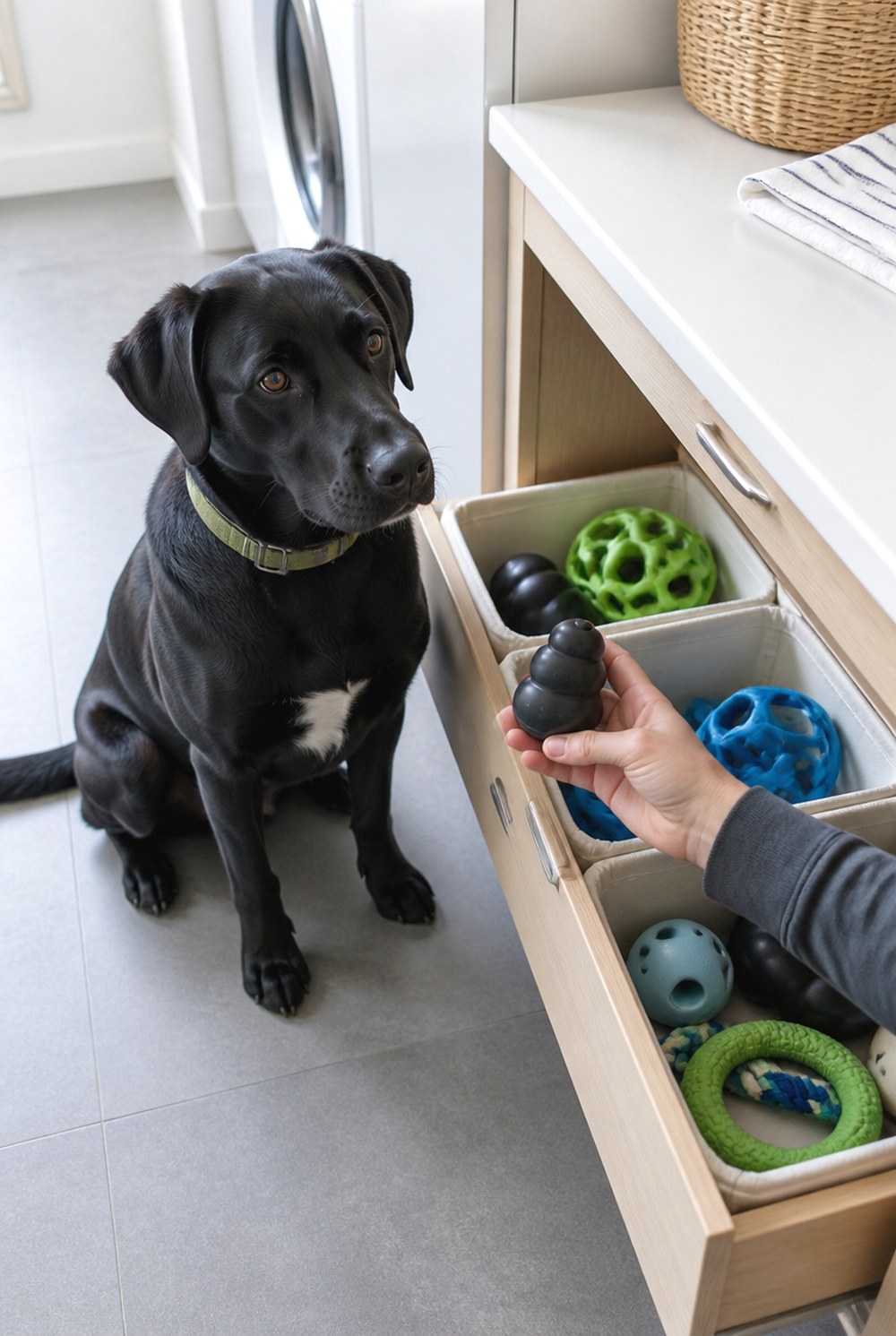
A laundry room can also hold overflow toys without becoming a permanent playroom. The trick is to store most toys out of sight and bring out only a few at a time.
Use one low cabinet or drawer for durable dog toys that are clean and in good condition. Divide the space with bins so balls, rubber toys, and other items do not become one tangled pile.
Before returning a toy to storage, check it for cracks, loose pieces, torn fabric, or damaged seams. Discard items that are no longer safe to use.
This system is particularly useful when the living room tends to collect too many toys. Keeping a rotation in the laundry room lets you swap options without buying more or filling every room with baskets.
If your dog can open cabinets, add a secure latch. Toys intended only for supervised use should remain inaccessible until you are ready to bring them out.
8. Add a Quiet Crate Station for Dogs Who Already Use a Crate Comfortably
In a larger laundry room, a crate can become part of the built-in layout instead of occupying a hallway or living-room corner. This works best for a dog that is already comfortable resting in a properly sized crate.
Choose a location with steady airflow and enough clearance from the washer, dryer, utility equipment, and direct heat. Do not place the crate where an appliance door blocks it or where the dog is exposed to excessive vibration.
The crate needs enough room for the dog to stand, turn around, and lie comfortably. Keep the surrounding floor clear so the entrance is always accessible.
If you incorporate the crate below a countertop, make sure the design does not trap heat or restrict ventilation. A decorative cabinet front should never reduce airflow just to make the crate less visible.
Laundry rooms vary considerably in noise. A dog that becomes uneasy around washer spin cycles, dryer sounds, buzzers, or other machinery may be better off resting somewhere else. The room should suit the dog’s comfort rather than forcing the dog to adapt to the available space.
You May Also Like


Keep the Dog Zone Separate From Laundry Hazards
Whatever setup you choose, treat the dog area and the working laundry area as separate zones.
Detergent, laundry pods, dryer sheets, stain products, medicines, cleaners, hooks, cords, and small objects should stay secured and inaccessible. Keep appliance doors closed when they are not being loaded or unloaded, and check the washer and dryer before every cycle.
Temperature and noise matter too. A room that becomes hot, poorly ventilated, or unusually loud is not a good resting area. Watch how your dog responds to the environment rather than assuming a laundry room will feel comfortable simply because a bed or crate fits there.
If your dog suddenly becomes reluctant to enter the room, appears weak, has difficulty breathing, repeatedly vomits, stops eating normally, develops bathroom changes, or shows other concerning symptoms or sudden behavior changes, contact a veterinarian rather than treating the room setup as the only possible cause.
Start With the Job You Need Most
You do not need all eight ideas in one room. A small laundry area may work best with one supply cabinet and a muddy-paw mat. A larger utility room might comfortably combine a resting nook, walking station, and grooming storage.
Choose the problem that creates the most daily friction now. Give that function a clearly defined space, keep dangerous laundry supplies securely separated, and leave enough open room for both your dog and the people using the appliances. A focused dog zone will usually stay more useful—and much easier to maintain—than a room filled with features you rarely need.
