A dog-friendly bedroom does not have to look like a pet supply room. A few carefully chosen changes can give your dog a comfortable place to sleep while keeping the room tidy, easy to clean, and practical for you.
Save This Idea on Pinterest
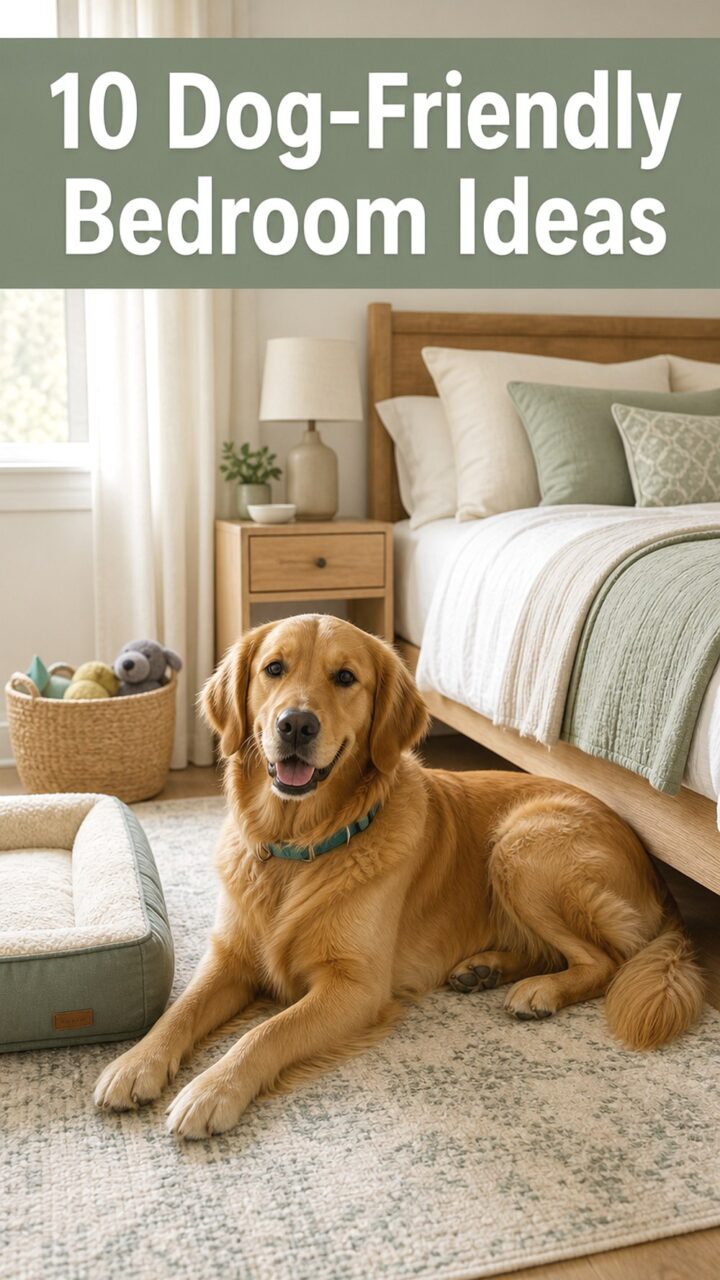
10 Dog-Friendly Bedroom Ideas for Comfort, Safety & Style
Save to PinterestThe most useful changes usually address one of four things: where your dog rests, how safely they move around the room, where their supplies belong, and how easily you can clean up fur or dirt. You also do not need all ten ideas below. Choose the ones that solve an actual problem in your bedroom and fit your dog’s size, mobility, sleeping habits, and house rules.
Build a Better Sleep Setup
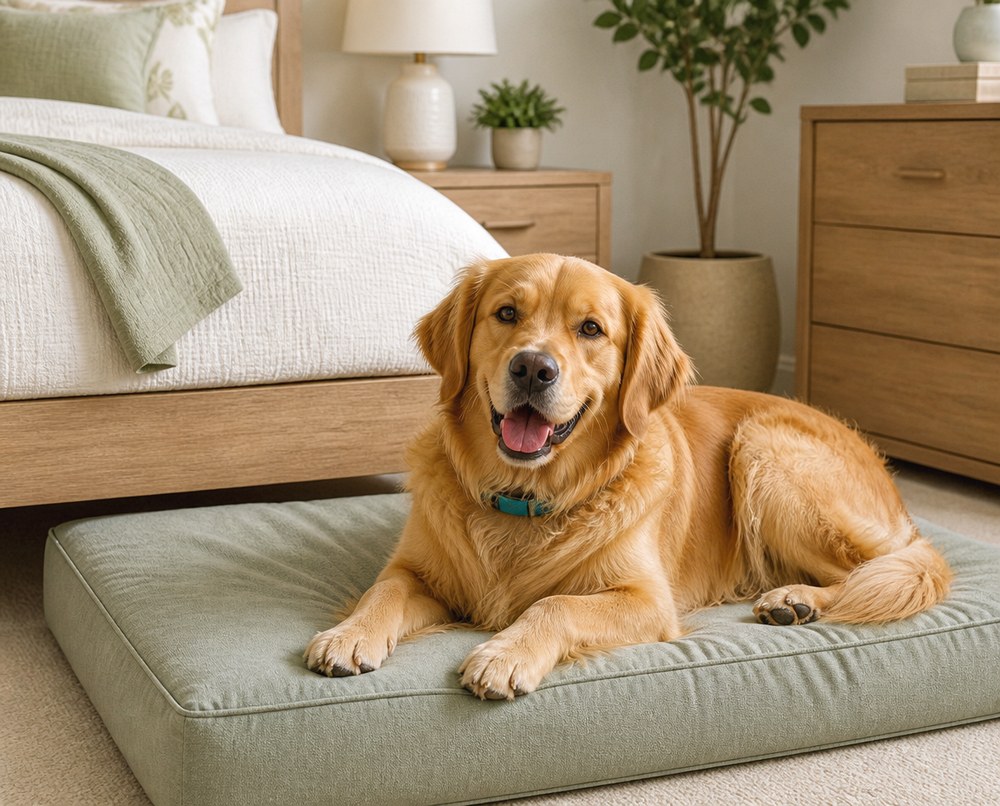
1. Give Your Dog a Dedicated Bedside Sleep Spot
If your dog naturally wants to sleep near you, give that habit a defined place instead of leaving them to settle in a walkway or against the bedroom door.
A supportive dog bed placed beside your bed can work especially well because your dog remains close without taking over the room. Choose a size that allows your dog to lie on their side comfortably rather than curling up only because the bed is too small.
Placement matters as much as the bed itself. Keep it clear of the path you use when getting up at night, and avoid positioning it directly beside a heater, air vent, or drafty doorway.
For dogs that like enclosed spaces, a bed with raised sides may feel more sheltered. Dogs that stretch out may prefer a flatter mattress-style bed. If your dog tends to run warm, look for breathable materials rather than piling on extra blankets.
A removable, washable cover makes bedroom cleanup much easier.
2. Add a Washable Rug for Better Footing
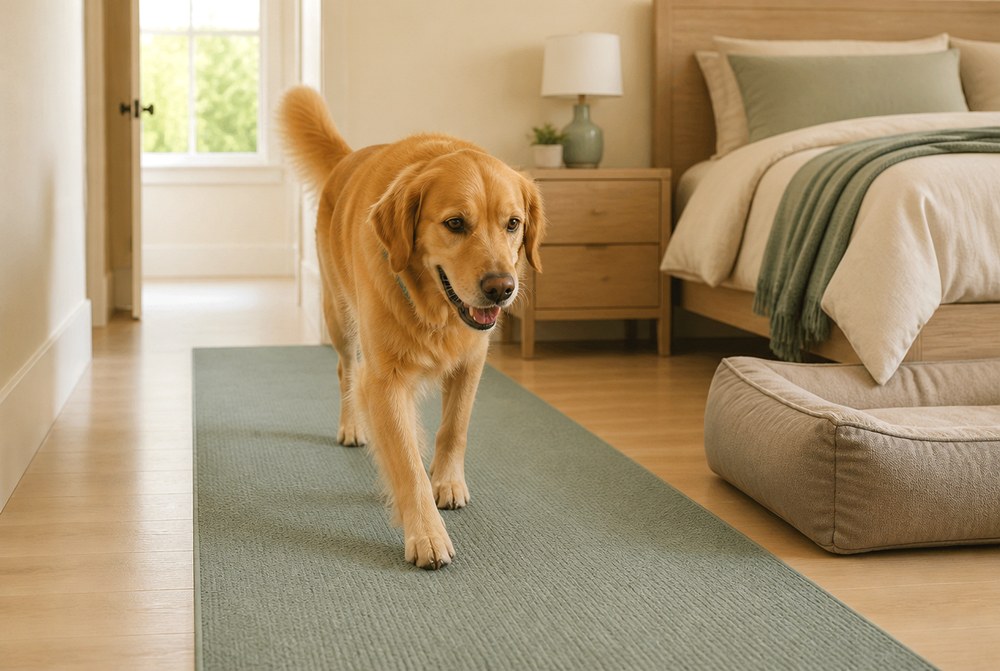
Smooth hardwood, laminate, or tile can become difficult for some dogs to navigate, particularly when they jump up from sleep or turn quickly beside the bed.
A washable rug or runner creates a more secure route between your dog’s bed, the bedroom door, and any other place they regularly use. This can be especially useful for senior dogs and dogs that seem hesitant on slippery floors.
Choose a rug with a stable nonslip backing or use a pet-safe rug pad that keeps the entire surface flat. Avoid curled corners and lightweight mats that slide when a dog steps on them.
The rug should also be easy to vacuum and wash. Bedrooms collect plenty of fur without adding a floor covering that is difficult to maintain.
You May Also Like


3. Use Stable Steps or a Ramp if Bed Access Is Allowed
If your dog sleeps on your bed, repeatedly jumping up and down can be a significant part of their bedroom routine.
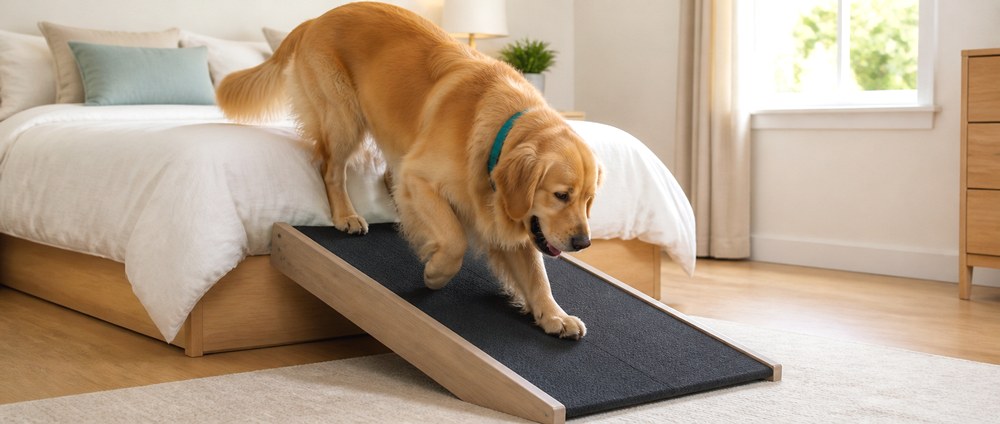
A low, stable set of pet steps or a properly positioned ramp can provide another way on and off the bed. This may be worth considering for smaller dogs, older dogs, or dogs that are less confident about jumping.
The equipment needs to match the height of the bed and the size of the dog. It should have a nonslip surface, remain firmly in position, and provide enough room for your dog to approach without twisting around furniture.
Do not assume every dog will automatically use steps or a ramp. Introduce the setup gradually and keep access supervised until your dog moves across it confidently.
If your dog develops new stiffness, reluctance to jump, limping, or other mobility changes, discuss the change with your veterinarian rather than relying only on bedroom modifications.
Create Calm Without Giving Up Floor Space
4. Turn a Quiet Corner Into an Open Crate Nook
For a dog that already feels comfortable resting in a crate, the bedroom can be a good place to create a calm nighttime nook.
Position the crate against a wall rather than in the middle of the room. Keep enough ventilation around it, and choose a location away from heating equipment and direct drafts. The crate should be large enough for your dog to stand, turn around, and lie down comfortably.
If the crate is being used simply as an optional resting spot, leaving the door secured open allows your dog to move in and out freely.
Avoid stacking belongings on top where they could fall or covering the crate so heavily that airflow is reduced. A fitted mat or appropriate crate bed is usually more practical than filling the space with loose bedding.

5. Make the Window Area a Calm Observation Spot
Some dogs enjoy watching everyday activity outside before settling down. If yours does, you can make the bedroom window area more comfortable without encouraging climbing onto narrow furniture.
For a medium or large dog, this may be as modest as leaving an open patch of nonslip floor near a safely closed window. A low dog bed or sturdy floor cushion can define the spot.
Keep curtain and blind cords completely secured out of reach. Avoid placing unstable stools, lightweight tables, or tall furniture beside the window simply to give your dog a better view.
If outside activity makes your dog bark, pace, or remain on alert rather than relax, this idea may not suit the bedroom. In that case, partially closing a curtain or moving the resting spot farther from the glass may create a calmer sleep environment.

6. Protect the Human Bed With a Washable Dog Layer
If your dog is allowed on your bed, designate the area they use rather than washing the entire comforter every time muddy paws or loose fur appear.
A washable throw or pet blanket laid across the foot or one side of the bed gives you a removable first layer. Choose a fabric that lies flat rather than a slick blanket that bunches when your dog jumps onto it.
Keeping one or two washable covers in rotation is useful during shedding season or wet weather.
This does not replace regular bedding care, but it can make quick cleanups much more manageable. If your dog chews fabric, avoid leaving loose blankets accessible without supervision.

Keep Dog Supplies From Taking Over the Room
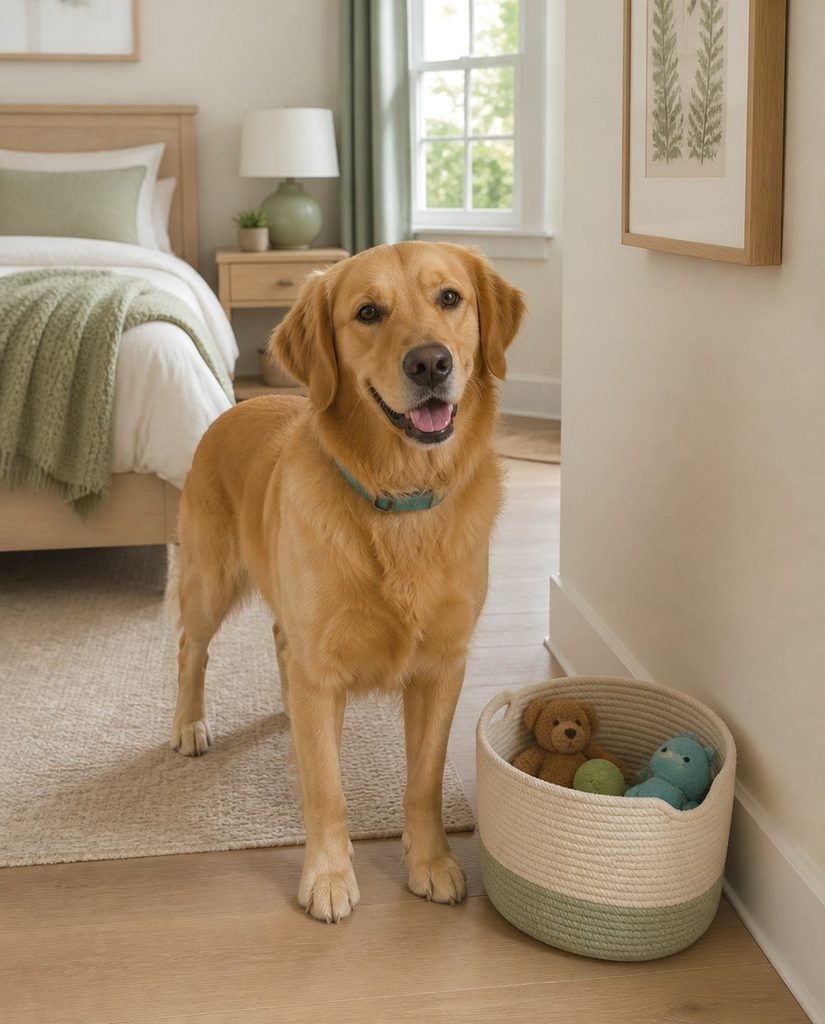
7. Give Toys One Small Bedroom Basket
A bedroom does not need your dog’s entire toy collection.
Instead, keep a small basket with a few quiet nighttime options and store the rest elsewhere. This helps reduce floor clutter while still giving your dog something appropriate to carry, chew, or settle with before bedtime.
Choose a sturdy container without sharp edges, loose woven pieces, exposed staples, or handles that could trap a head or paw. Place it against a wall rather than beside the route you take to the bathroom at night.
Rotate toys periodically instead of expanding the basket every time you buy something new. Remove damaged toys, detached pieces, or anything small enough to create a swallowing hazard.
For bedtime, calmer durable toys usually make more sense than noisy or highly stimulating ones.
8. Create a Contained Water Station
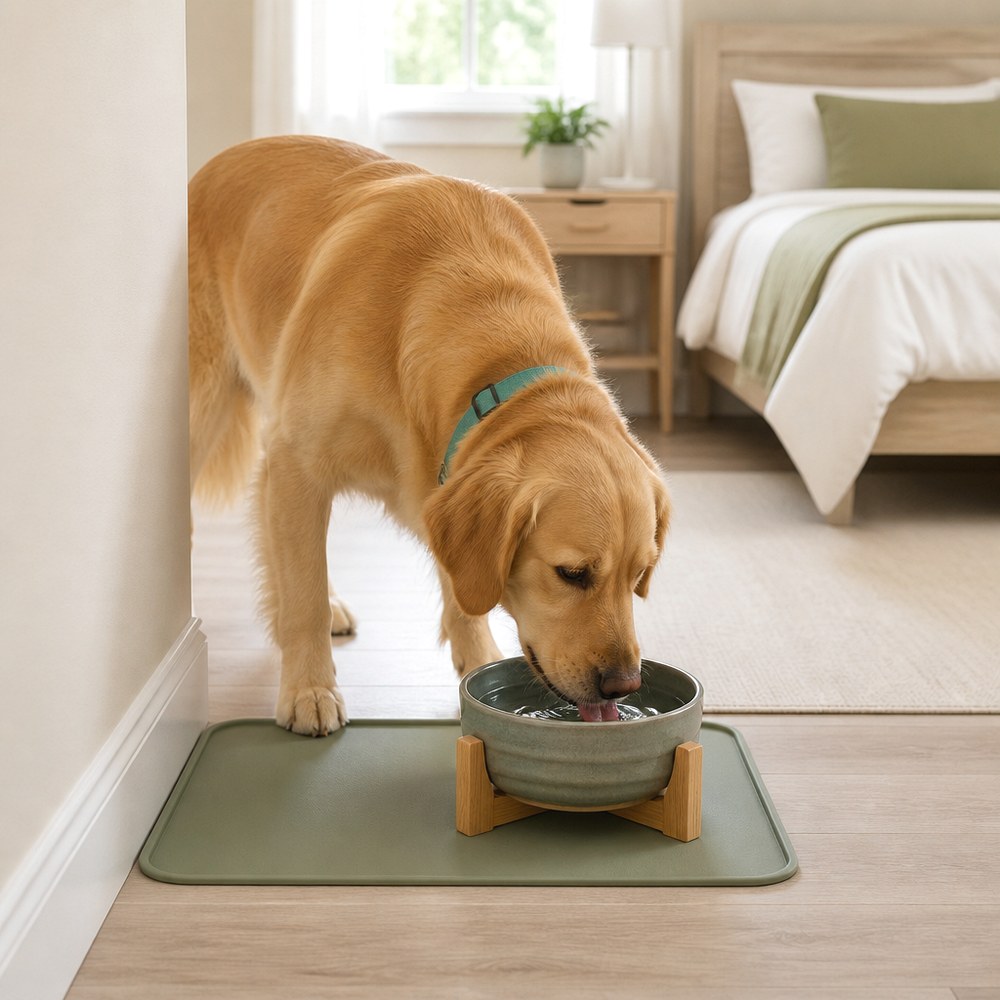
If your dog regularly sleeps in the bedroom with the door closed, accessible water may need a permanent place in the room.
Choose a stable bowl wide enough that your dog is unlikely to tip it while drinking. A waterproof, nonslip mat underneath can catch splashes and keep the bowl from sliding across hard flooring.
The best location is usually against a wall where your dog can reach it easily without putting the bowl directly in a walking route.
Refresh the water routinely and wash the bowl regularly rather than simply topping it off. If your dog suddenly starts drinking much more or much less than usual, that change deserves attention and may warrant a conversation with your veterinarian.
9. Use Closed Storage for Leashes, Grooming Supplies, and Extras
Some dog supplies belong near the bedroom but should not remain accessible to your dog.
A bedside drawer, dresser drawer, or closed cabinet can hold items such as spare waste bags, grooming tools, a folded towel, or an extra leash. Closed storage keeps potentially chewable objects off the floor while preserving a calm bedroom appearance.
Medicines, cleaning products, sharp grooming tools, and other hazardous items need particularly secure storage that your dog cannot access.
Avoid using low open baskets for everything. A dog that likes to investigate may pull out brushes, plastic packaging, clips, or other items that were never intended to become toys.
Assign one small drawer or cabinet section to dog supplies and edit it periodically. The goal is convenient storage, not moving an overflowing pet closet into the bedroom.

Make Nighttime Movement Safer
10. Add a Low, Warm Night Light Along the Walking Route
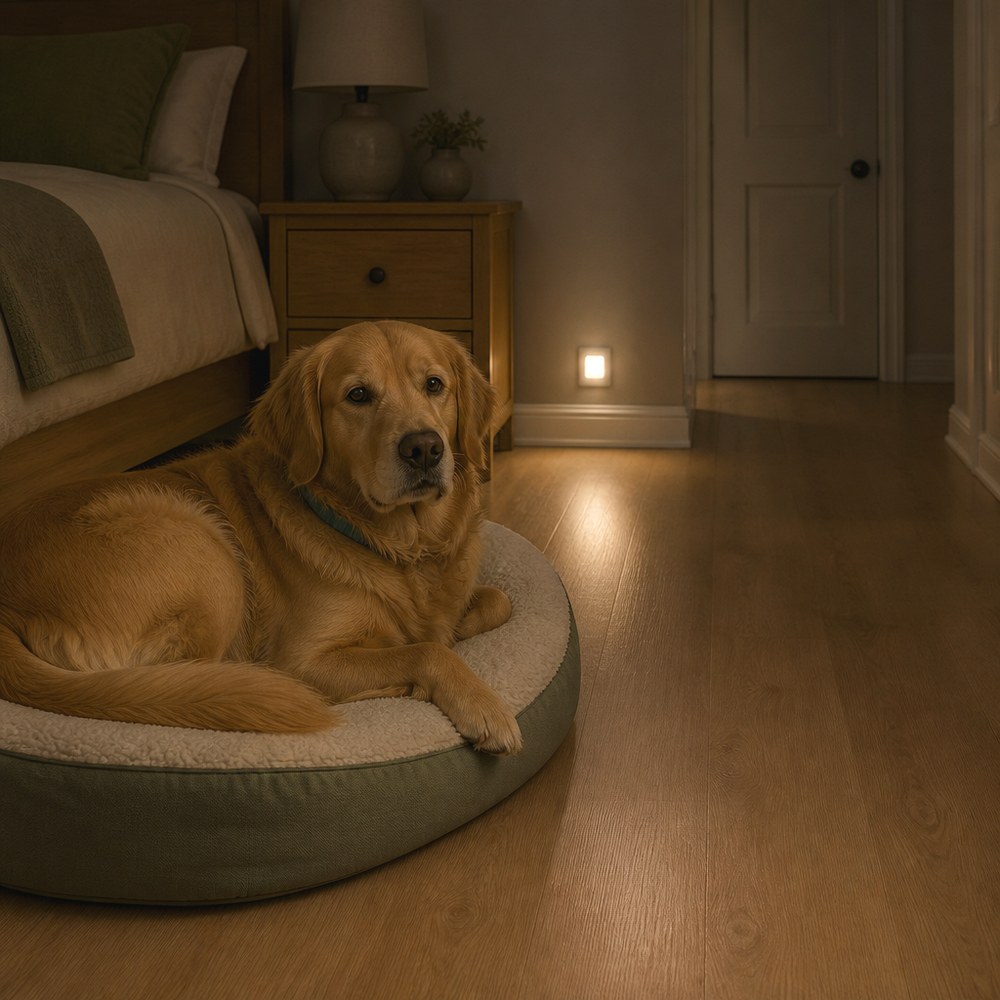
A dark bedroom may be comfortable for sleep, but it can also make water bowls, dog beds, ramps, and sleeping dogs difficult for people to see.
A small night light can illuminate the main walking path without flooding the whole room with bright light. Position it so you can see the floor between the bed and doorway, particularly if your dog tends to change sleeping positions overnight.
Use a securely installed light with no loose electrical cord available for chewing. Avoid placing portable lamps on unstable surfaces where a tail or human hand could knock them over.
The goal is not to keep the bedroom brightly illuminated. You only need enough low-level light to recognize obstacles and avoid stepping near your dog.
You May Also Like


Which Bedroom Changes Should You Start With?
You do not need to redesign the room around your dog. Start with whatever affects everyday comfort or safety most.
If your dog sleeps on the floor, begin with a well-positioned bed and secure flooring. If they sleep on your bed, a washable cover and stable access may be more useful. If the bedroom constantly collects toys and walking supplies, fix the storage before buying more pet furniture.
For an older dog, pay closer attention to traction, walking distance, bed height, and nighttime visibility. A dog that becomes newly hesitant about stairs, jumping, standing, or walking should be evaluated for the underlying change rather than having every difficulty attributed to normal aging.
A puppy may require a different approach. Keep chewable cords, small objects, shoes, medications, cosmetics, and anything else they could investigate completely out of reach. Bedroom freedom should expand only as their behavior and supervision needs allow.
The strongest dog-friendly bedroom is usually the least complicated one: a dependable sleeping spot, clear paths, secure storage, and only the supplies your dog actually uses there.
