A dog crate does not have to look like a temporary wire box dropped into the middle of a finished room. Furniture-style crates can provide the enclosed resting space your dog is accustomed to while giving you a useful tabletop, storage zone, bench, or built-in feature.
Save This Idea on Pinterest
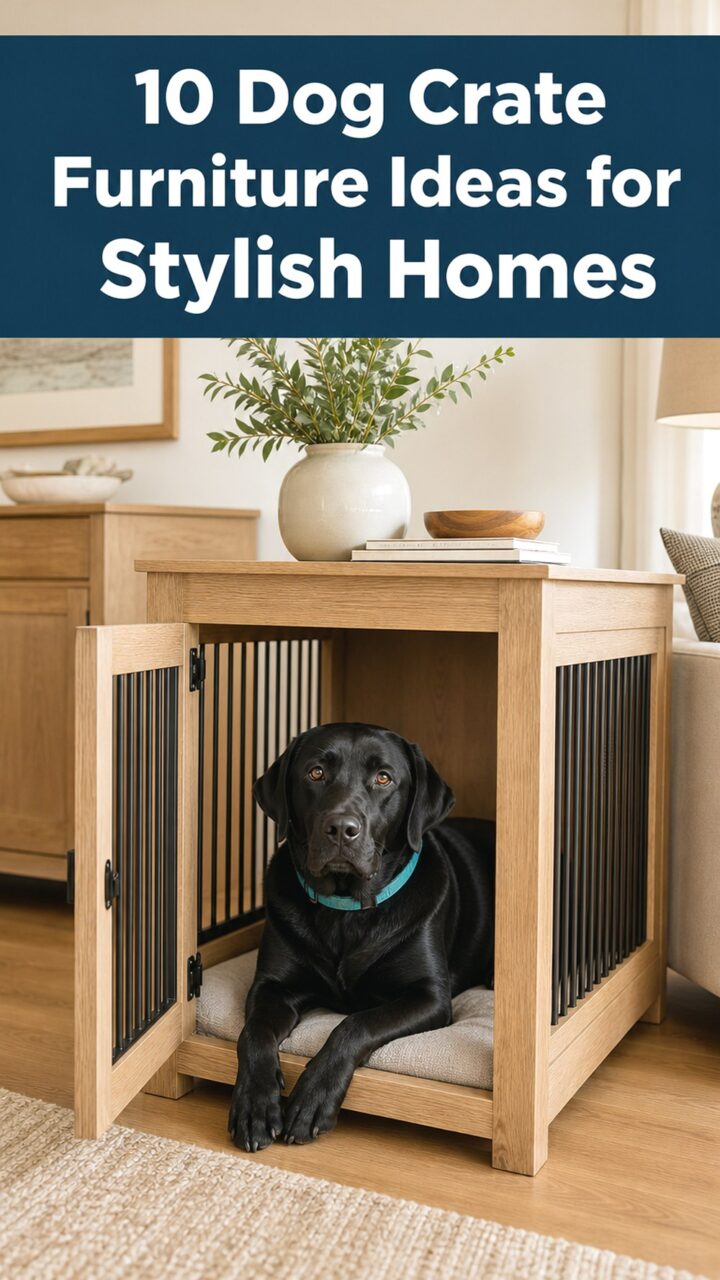
10 Dog Crate Furniture Ideas for Stylish Homes
Save to PinterestThe best design depends on more than appearance, though. A furniture crate still needs enough interior room for your dog to stand naturally, turn around, change sleeping positions, and lie comfortably. It also needs dependable airflow, secure hardware, smooth interior surfaces, and a location that does not become excessively hot or isolated.
The ideas below approach crate furniture as part of the room rather than something to disguise at any cost. Some suit open living spaces, while others make better use of an entryway, bedroom, mudroom, or home office.
Start With the Crate, Then Design the Furniture Around It
Before choosing a style, measure the usable interior rather than judging the crate by its outside dimensions. Thick furniture panels, storage compartments, and decorative framing can make a piece look spacious while reducing the dog’s actual room inside.
A well-planned furniture crate should also have:
- Generous ventilation on several sides rather than one decorative opening.
- A door that opens fully without hitting nearby furniture.
- Strong, stable construction that cannot tip when the dog shifts position.
- Smooth, chew-resistant interior surfaces without exposed screws or splinters.
- A floor that can be cleaned and thoroughly dried.
- Space around exterior vents so walls, baskets, curtains, or stored items do not block airflow.
- A placement away from heating vents, fireplaces, exposed electrical cords, and prolonged direct sun.
Furniture-style crates are best suited to dogs that are already reasonably comfortable in a crate and are not determined escape artists or aggressive chewers. A decorative wooden enclosure should not replace appropriately strong containment when a dog can damage the structure or injure itself trying to get out.
1. A Slim Console Crate for the Living Room Wall
A console-style crate works especially well when a standard crate would otherwise sit along a blank living room wall. The long top becomes a surface for a lamp, a small tray, or restrained decor, while the lower section provides the dog’s resting space.
For a more built-in appearance, choose a finish that repeats an existing material in the room, such as pale oak, walnut, or a painted cabinet color. Slatted sides or metal ventilation panels can look intentional when their lines coordinate with the rest of the furniture.
Leave the area immediately in front of the crate door open. A coffee table, pouf, or large basket positioned too close can turn an attractive setup into an awkward daily obstacle.
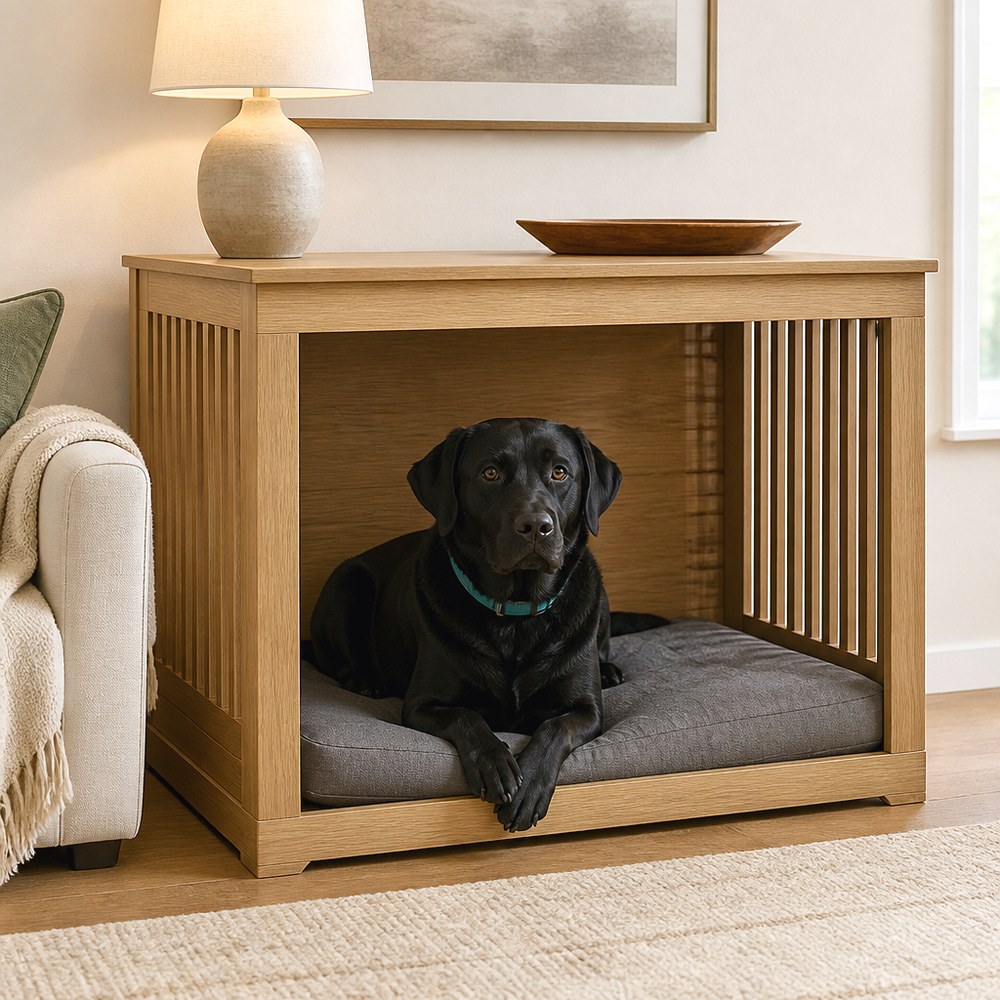
2. A Wide End-Table Crate Beside the Sofa
Instead of placing a separate side table beside the sofa and a crate elsewhere, combine both functions in one substantial piece. This works particularly well in rooms where every square foot matters.
The important word is wide. The furniture should be sized around the dog’s crate requirements rather than squeezed into conventional end-table dimensions. For a large dog, the finished piece may resemble an oversized side cabinet more than a small lamp table.
Keep drinks, candles, breakable objects, and anything that could spill through the ventilation openings away from the crate top. A lamp is more practical when its cord can be routed completely outside the dog’s reach.

You May Also Like


3. A Media Console With the Crate in One Section
A long media cabinet can incorporate a dog crate without making the television appear to sit directly on top of a kennel. The most polished versions divide the furniture visually: one section is the ventilated dog space, while closed drawers or cabinets occupy the other end.
This arrangement solves one of the biggest visual problems with large crates—their width—because the crate becomes part of a longer horizontal furniture line.
Electronics need careful separation from the dog compartment. Cables, power strips, routers, and gaming equipment should be housed where the dog cannot reach them through ventilation slots. Equipment also needs its own airflow rather than venting heat directly toward the crate.

4. A Window-Seat Crate With a Cushioned Top
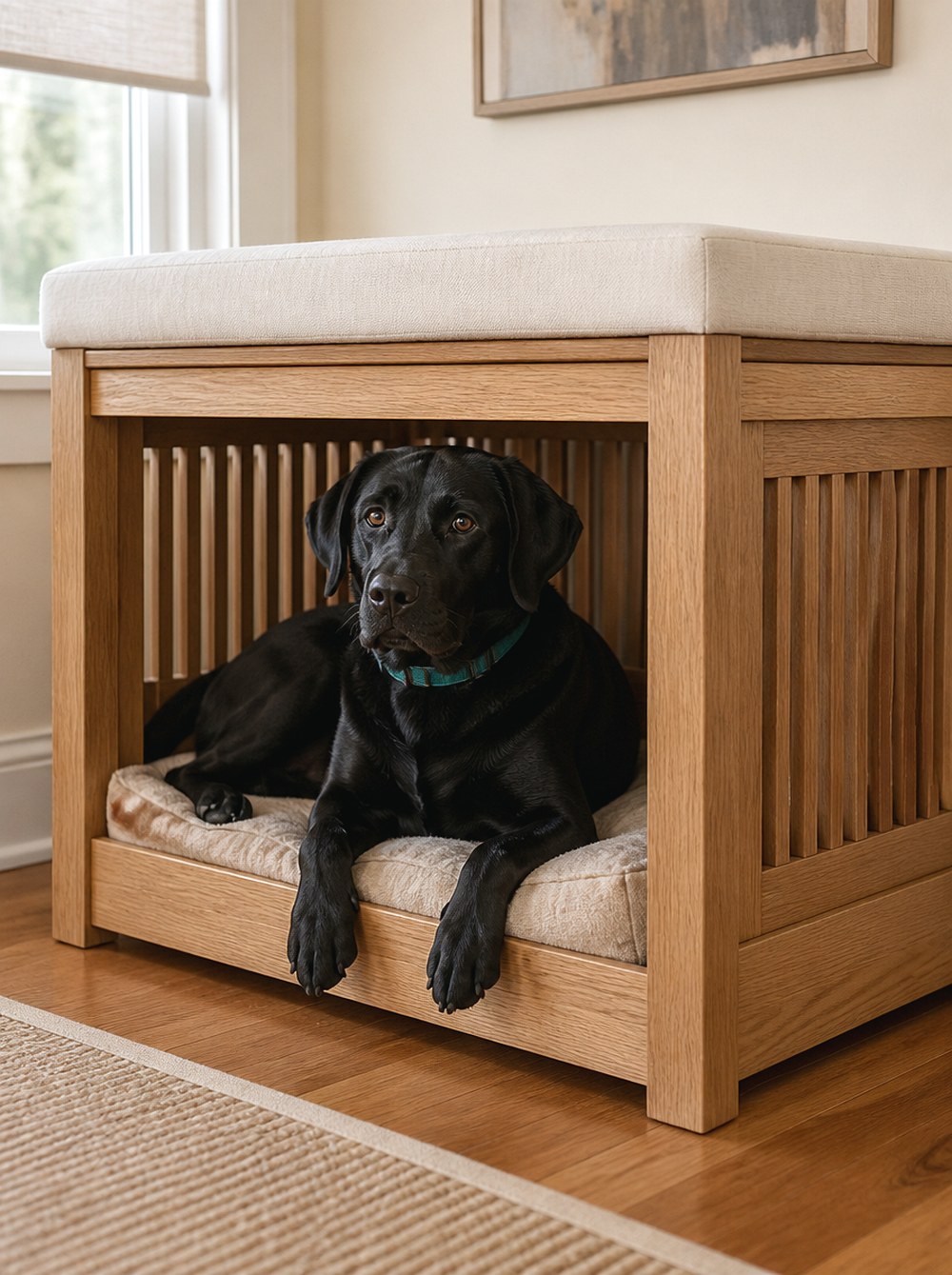
A low crate built to resemble a window seat can give an awkward wall or alcove a stronger purpose. A fitted cushion on top creates occasional human seating while the dog’s crate occupies the base below.
This design requires more attention to location than most. A sunny window can make an enclosed space considerably warmer, especially when afternoon light falls directly through the glass. Choose a window that remains comfortable throughout the day, preserve ventilation around the crate, and use curtains or shades in a way that cannot drape across ventilation panels.
The bench structure also needs to support human weight independently rather than placing unsafe pressure on lightweight crate panels.
5. An Entryway Bench With Hidden Dog Storage Above
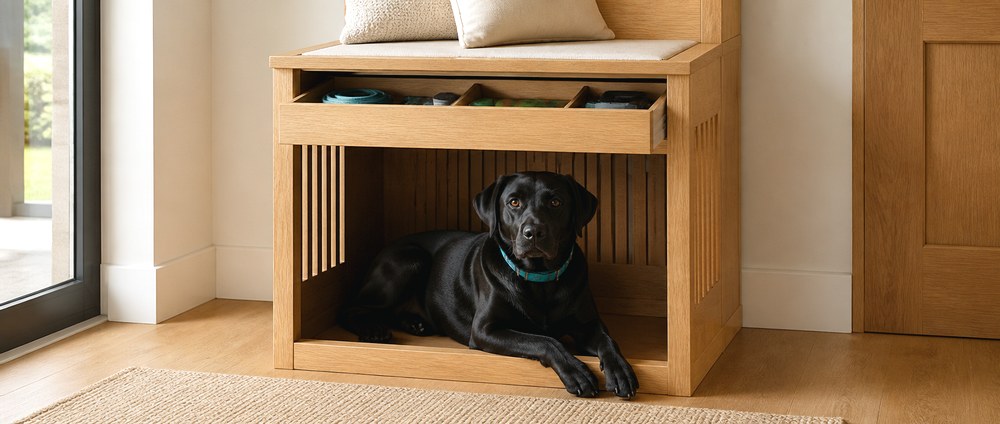
The entryway is one of the easiest places for dog supplies to spread across the floor. A crate bench can address two needs at once: the dog gets a designated resting area, and a shallow upper compartment can hold walking supplies.
Keep leashes, waste-bag rolls, grooming items, and other small objects in a closed compartment that the dog cannot access from inside the crate. Shoes are better stored separately rather than directly beside ventilation openings, particularly when they are wet or dirty.
This placement is most suitable when the entry is relatively calm. If the front door brings constant deliveries, guests, or hallway noise, a quieter room may offer the dog a better resting environment.
6. A Built-In Mudroom Crate With Supply Cabinets
If you are planning cabinetry rather than buying a freestanding furniture crate, the mudroom offers an opportunity to give dog supplies a permanent home.
The crate can occupy the lower center of a cabinet run, with closed storage beside or above it for towels, harnesses, travel gear, and cleaning supplies. The result looks more like fitted millwork than an added pet accessory.
Avoid packing cabinetry tightly around every side of the dog compartment. Ventilated doors plus additional side or rear airflow are much more practical than a solid cabinet box with decorative openings only on the front. Any cleaners, medicines, or small accessories belong in secure storage that the dog cannot access.

7. A Sideboard-Style Crate for the Dining Area
A sideboard crate gives you a broad serving or display surface without adding another standalone piece of furniture to the dining room.
The design works best when it genuinely resembles the proportions of a sideboard: long, low, and visually balanced. Closed cupboards can sit beside the crate rather than above it, making the furniture less top-heavy and keeping storage away from the dog’s ventilation openings.
Do not treat the top as overflow storage simply because it is large. Hot serving dishes, breakable glassware, alcohol, and foods the dog may try to reach are poor choices above an occupied crate. Everyday decor should remain minimal and stable.

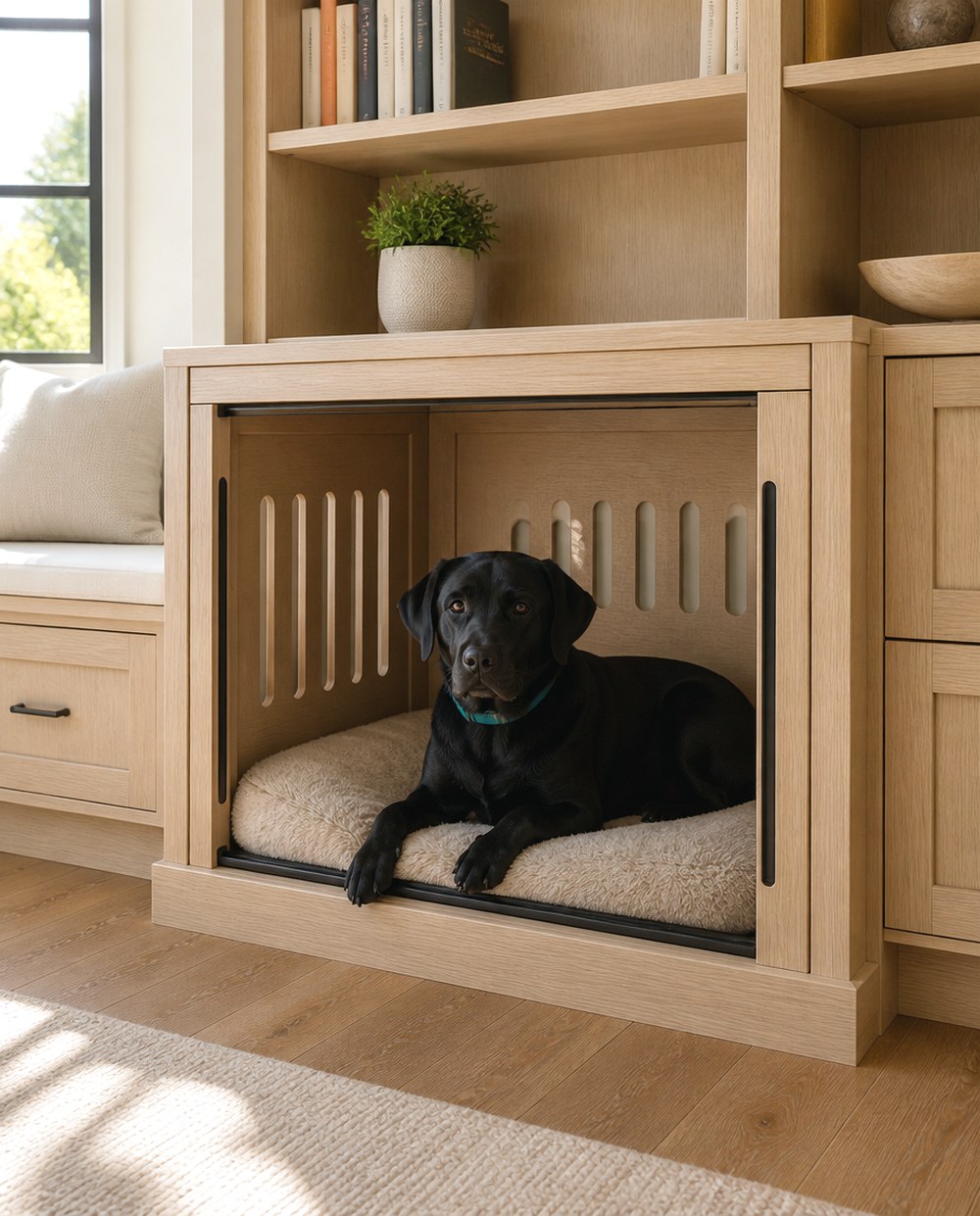
8. A Bookcase-and-Crate Wall Unit
For a room that already needs shelving, integrate the crate at the base of a broader bookcase rather than placing two unrelated pieces side by side.
The strongest arrangement uses proper cabinetry around the crate instead of resting heavy shelving directly on a lightweight crate enclosure. Shelves should be anchored appropriately, and books or decorative objects should not be able to fall through the top or ventilation openings.
Visually, repeating the crate’s slat spacing or frame lines in the shelving above helps the dog area feel planned rather than inserted later.
9. A Low Dresser Crate for the Bedroom
A bedroom crate can be useful for dogs that already sleep comfortably near their household, but a large wire crate may dominate a calm bedroom visually. A long, low dresser-style enclosure gives the same floor area a more finished appearance.
Drawers or cabinets should be positioned beside the crate compartment rather than reducing the interior height the dog needs. Keep bedside charging cables and electrical cords away from the enclosure, even when the dog normally ignores them.
Because bedrooms tend to be quieter, this can also be a good location when the main living room remains active late into the evening.

10. A Desk-Return Crate for the Home Office
For people who spend much of the day working from home, a crate can be incorporated into the return section of an L-shaped desk. The dog gets a familiar resting place nearby without placing a separate crate in the middle of the office.
The crate should occupy a dedicated furniture bay rather than stealing the legroom beneath the main working position. Allow room for the door to open freely and make sure desk equipment cannot drop into the enclosure.
Cable management matters especially here. Route power strips, chargers, computer cords, and headset cables through enclosed channels completely outside the dog’s reach.
You May Also Like


Make the Crate Look Intentional Without Making It Less Functional
The most convincing dog crate furniture usually repeats something that already exists in the room. Matching the wood tone of a coffee table, echoing cabinet hardware, or continuing the lines of built-in storage makes a bigger visual difference than adding elaborate decorative details.
Try to keep the dog’s compartment relatively restrained. Heavily enclosed panels may hide the crate more effectively, but they can also reduce airflow and visibility. Similarly, piling baskets, books, blankets, or decor around ventilation openings defeats the purpose of choosing a well-designed enclosure.
Inside, use bedding that fits the crate without bunching against the door or being pulled through large openings. If your dog tends to shred bedding, select the interior setup based on that behavior rather than on how the crate looks in photographs.
Choose the Location Before You Choose the Finish
A beautiful crate in the wrong place is still a poor setup. Watch how the room functions over a normal day.
A living-room crate may suit a social dog that settles comfortably near household activity. A bedroom location offers more separation when evenings stay busy. Mudrooms and entryways can provide excellent storage but may be noisy if doors open constantly. Window-adjacent designs need extra attention to temperature and sunlight.
Once the location works for the dog, the furniture details become much easier to decide. Measure the interior crate space first, preserve airflow and safe door clearance, then choose the finish, storage, and tabletop features that make the piece belong in the room.
That order produces dog crate furniture that looks deliberate without sacrificing what the crate is actually for: a comfortable, secure resting space.
