Dog bowls have a way of ending up exactly where people need to walk. Add a food bag, scoop, treats, towels, and the occasional splash of water, and a small feeding area can quickly become one of the messiest parts of a kitchen.
Save This Idea on Pinterest
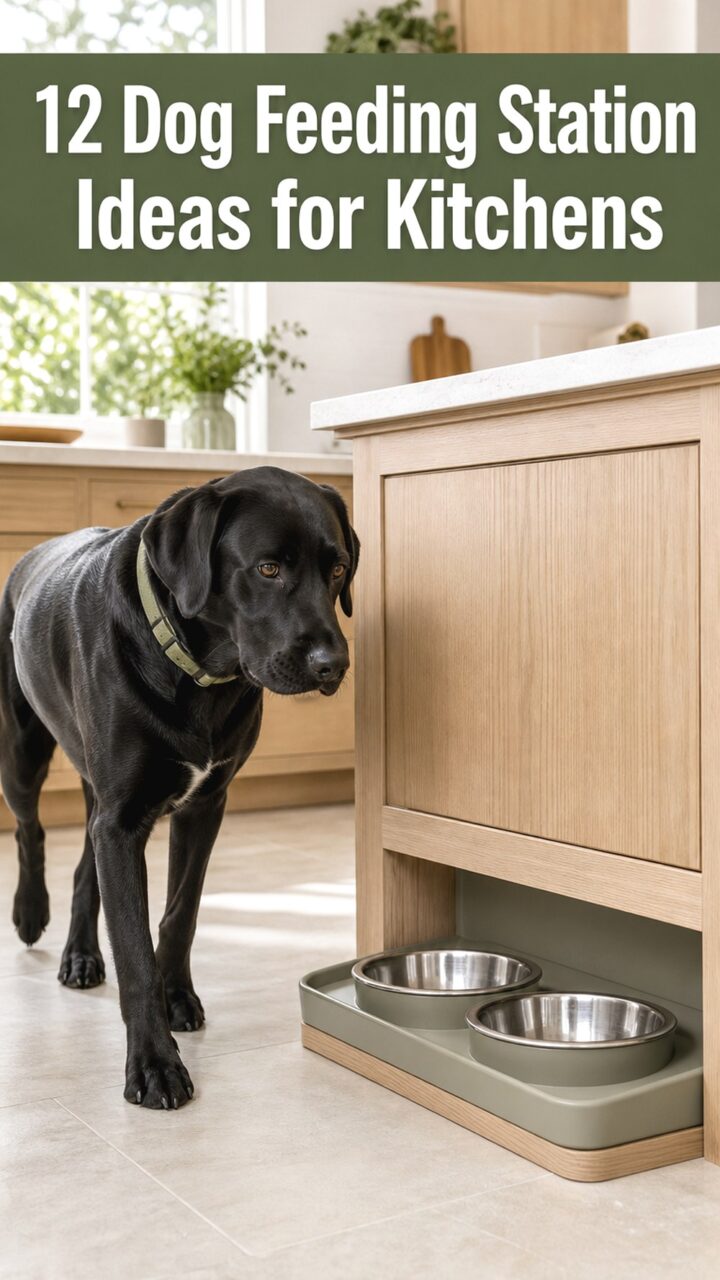
12 Dog Feeding Station Ideas for Kitchens
Save to PinterestA well-planned dog feeding station gives those supplies a defined home without making meals inconvenient. The right setup depends less on how large your kitchen is and more on where your dog can eat comfortably without blocking doors, appliances, or busy work zones.
These 12 dog feeding station ideas for kitchens range from built-in cabinetry to renter-friendly setups, so you can choose a version that fits your available space, storage needs, and cleaning routine.
Built-In Feeding Stations That Blend Into the Kitchen
Built-in options work especially well when you are remodeling, replacing cabinetry, or already have an unused section of lower storage.
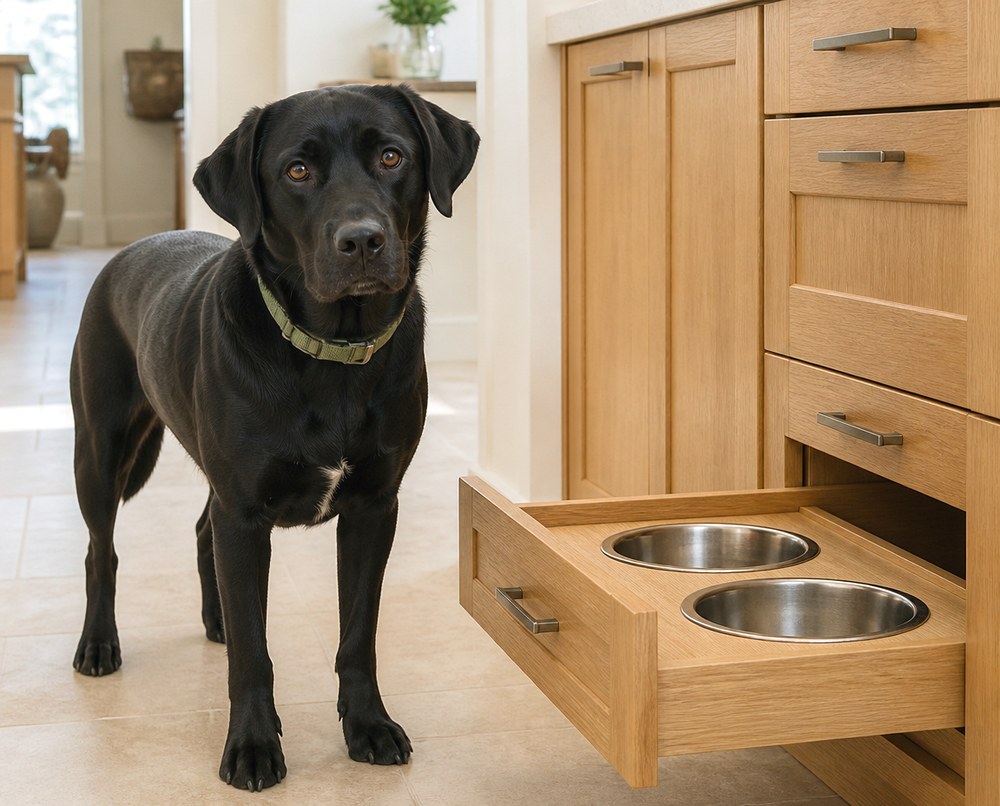
1. Pull-Out Feeding Drawer
A deep pull-out drawer can hold a low feeding platform that disappears into the cabinetry between meals. Instead of placing ordinary bowls loose inside the drawer, use a sturdy insert or tray designed to keep them from sliding.
This arrangement can work well in kitchens where permanent bowls would interrupt a walkway. The drawer stays open while your dog eats and is pushed back in only after the bowls have been removed or cleaned.
Place the drawer somewhere you can leave it fully extended without blocking the refrigerator, oven, dishwasher, or a frequently used doorway. A feeding drawer directly behind the cook’s main work area may look tidy when closed but become frustrating several times a day.
For water, consider keeping a permanent bowl elsewhere if your dog needs unrestricted access throughout the day rather than closing the water inside the cabinet.
2. Recessed Island-End Feeding Nook
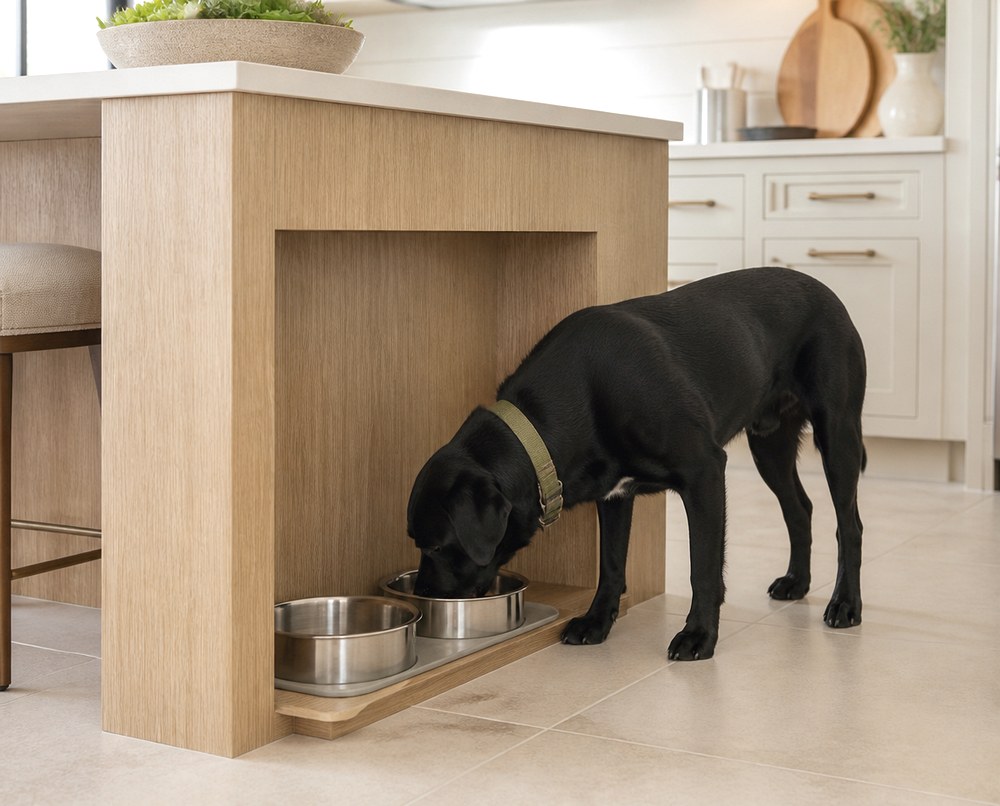
The unused end of a kitchen island can become a shallow feeding bay rather than another cabinet.
Set the bowls several inches back beneath the counter overhang so they are visually contained without being difficult for the dog to reach. A washable mat or removable tray protects the cabinet base and catches drips before they spread across the floor.
This location works best when the island end faces a quieter edge of the room. Avoid putting the nook on the side where stools move in and out or where people regularly pass carrying hot dishes.
If you are planning the nook during a renovation, make the interior surfaces easy to wipe rather than using unfinished wood where water can soak into seams.
You May Also Like


3. Dedicated Lower Pantry Cabinet
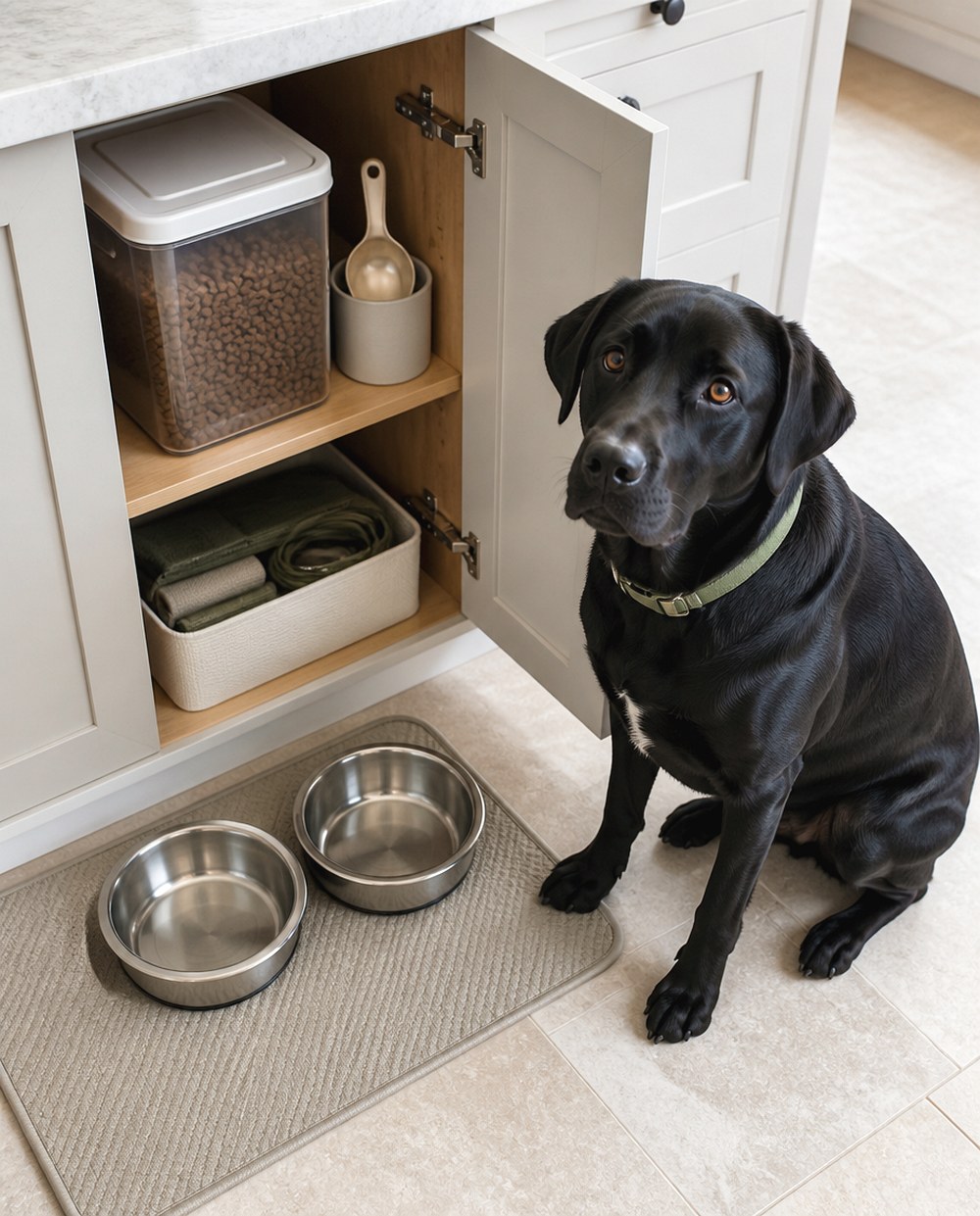
If food storage creates more clutter than the bowls themselves, turn one lower pantry cabinet into a feeding-supply center.
Keep the dog’s food in a securely closed container inside the cabinet, with measuring tools and other feeding supplies stored together. Place the actual bowls on an adjacent section of clear floor instead of expecting the dog to eat inside a cramped cabinet opening.
The advantage is that everything needed for a meal stays within one or two steps. It also keeps large food packaging off the kitchen floor.
Choose containers that are practical for the food you buy and clean them appropriately before refilling. Keep supplements, medications, cleaning products, and other items your dog should not access in separate secure storage.
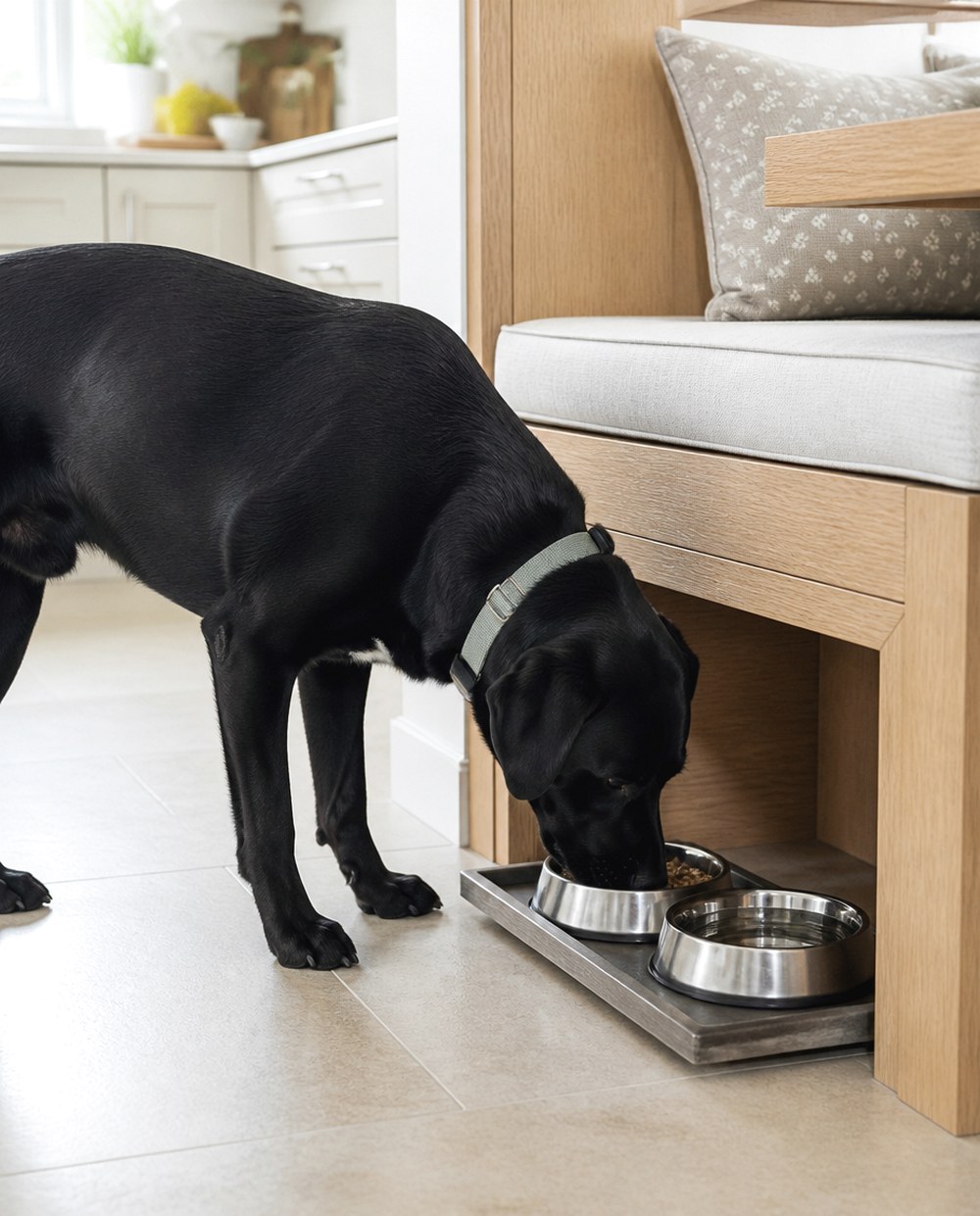
4. Banquette-End Feeding Cubby
A kitchen breakfast bench or built-in banquette can do more than provide seating. The unused end panel can hold a low open cubby sized for a feeding tray.
This is particularly useful when the dining side of the kitchen is calmer than the cooking side. The dog has a designated place to eat while the bowls remain visually connected to the cabinetry.
Keep the opening wide enough that your dog does not have to squeeze the head or shoulders into a confined space. The station should feel like an open floor-level feeding area, not a box.
A removable liner makes cleanup much easier than trying to wipe water from the back corners of a fixed wooden compartment.
Feeding Stations for Kitchens With Limited Floor Space
A small kitchen does not necessarily need a smaller bowl. It needs a better location. The goal is to reclaim unused edges without pushing your dog’s meals into a busy traffic path.
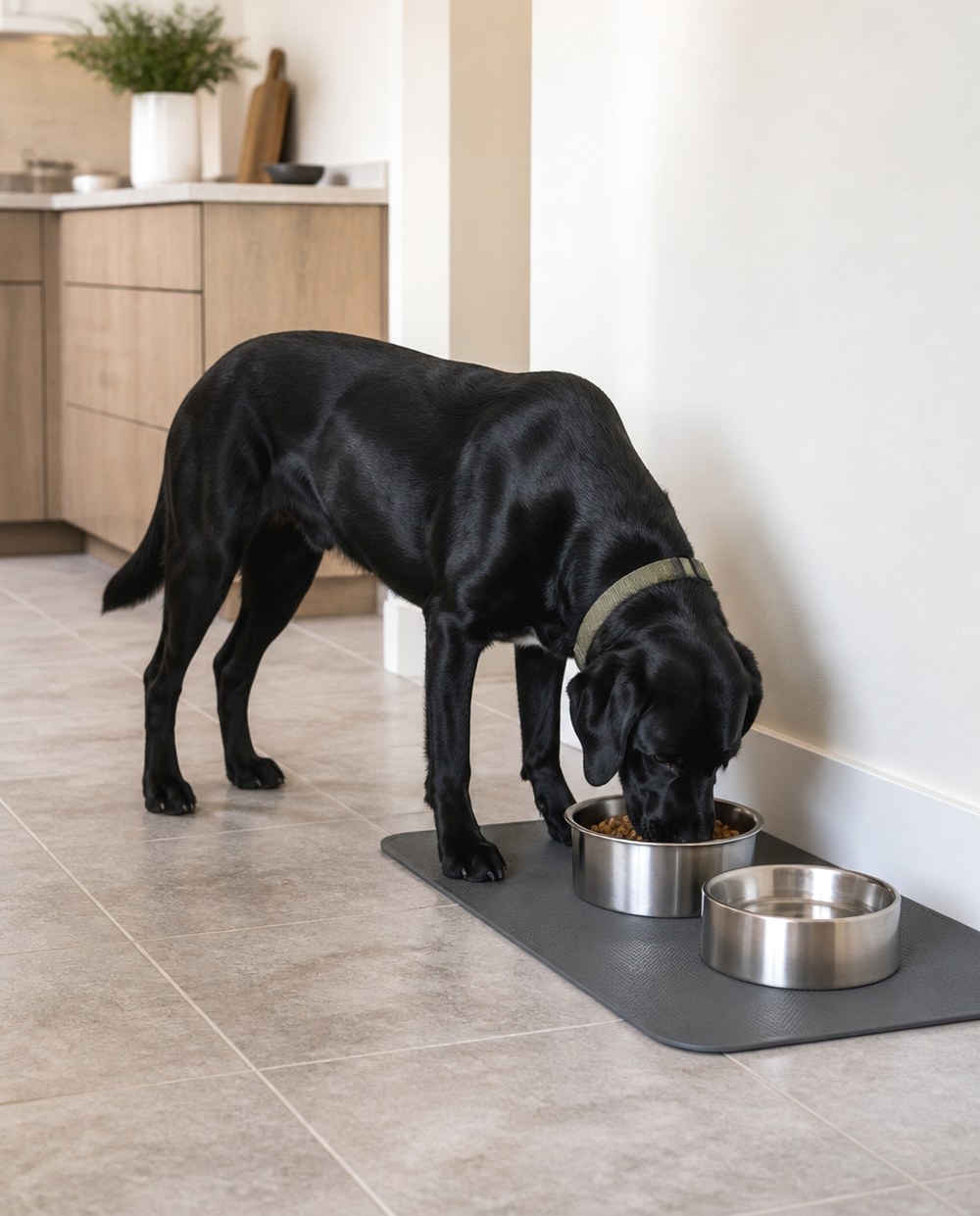
5. Quiet Corner Mat Station
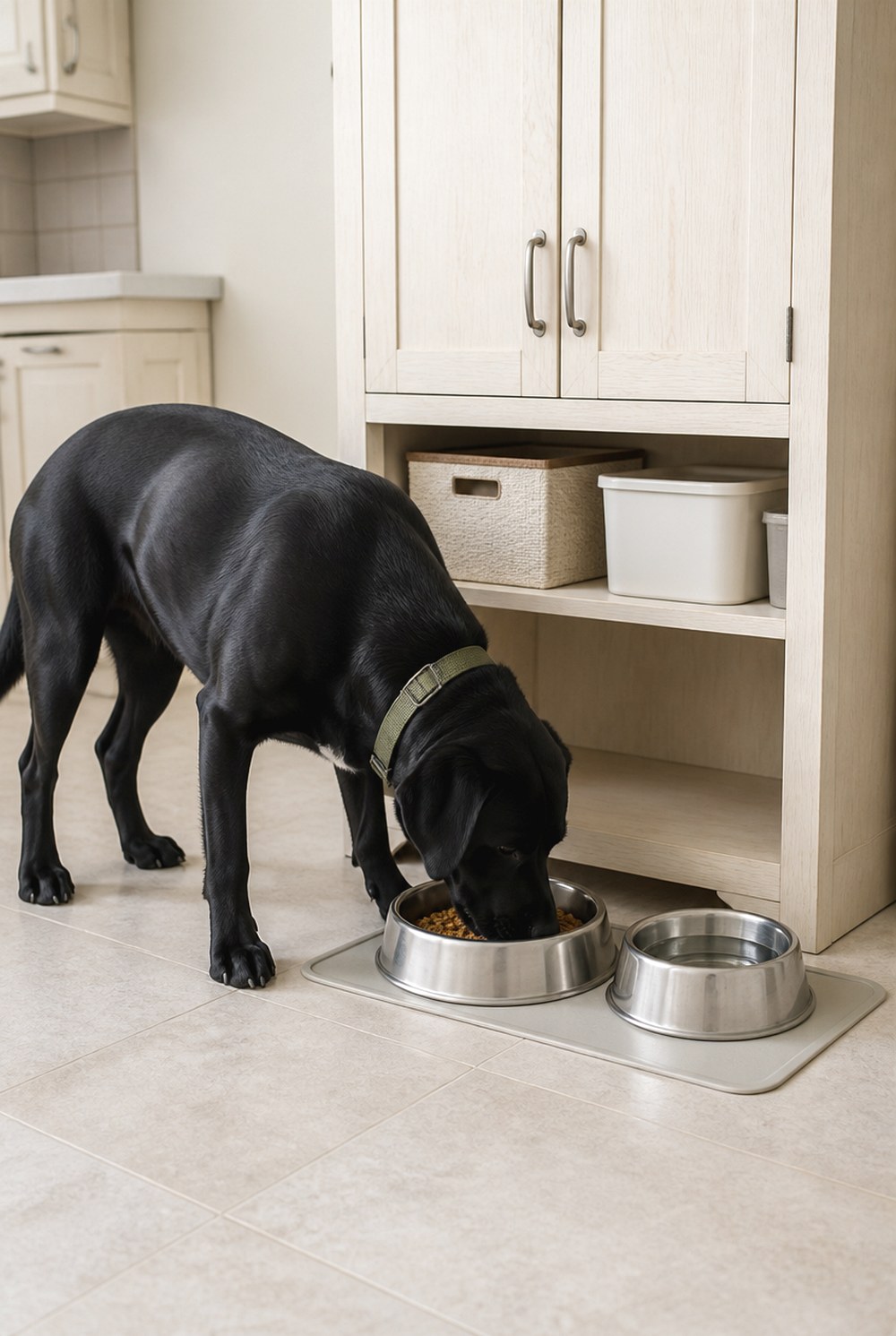
One of the least complicated setups is also one of the most adaptable: claim an unused kitchen corner with a washable feeding mat and two stable bowls.
The difference between a deliberate corner station and bowls randomly placed against a wall is the boundary. Choose a mat large enough to catch ordinary drips and crumbs while keeping all four edges flat so they do not become a tripping hazard.
This is a strong option for renters because nothing has to be installed. It is also easy to move if you discover that the original location is too busy.
Look at the corner from your dog’s perspective before committing to it. Avoid spots directly beside a hot oven, swinging door, trash can, or anything that repeatedly startles or crowds the dog during meals.
6. Slim Wall-Side Feeding Strip
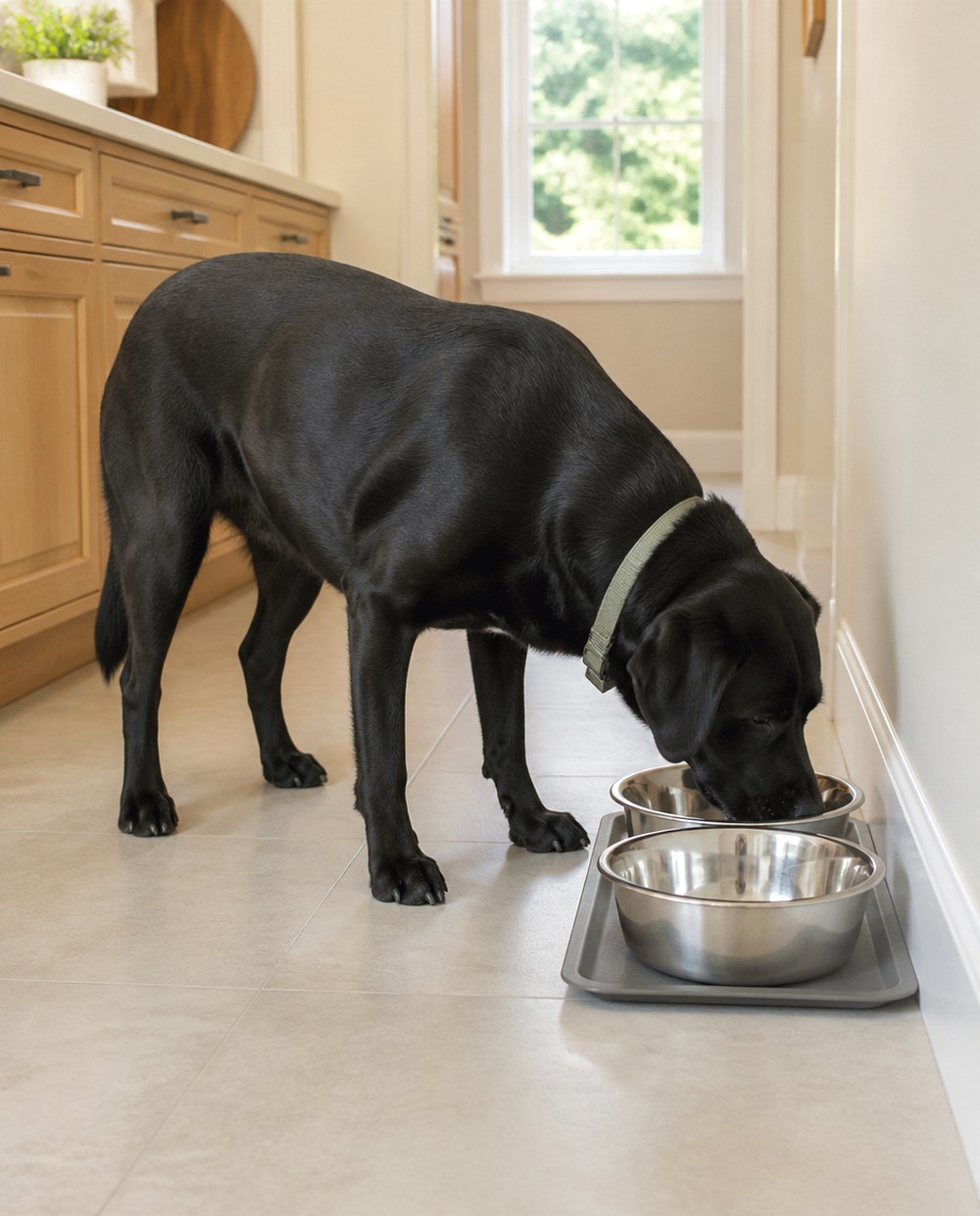
In a galley kitchen or narrow room, a shallow strip along one unused wall may be more practical than a traditional square feeding zone.
Arrange the food and water bowls side by side against the wall on a narrow non-slip tray. The tray should extend far enough to catch spills without projecting excessively into the walkway.
This layout works when the dog can stand parallel to the wall rather than turning sideways across the kitchen. Before setting it up, watch where people’s feet naturally travel between the sink, refrigerator, and exits.
For larger dogs, do not reduce the bowl size merely to make the station fit. It is usually better to find a different location than to make the feeding area awkward.
7. End-of-Cabinet Feeding Zone
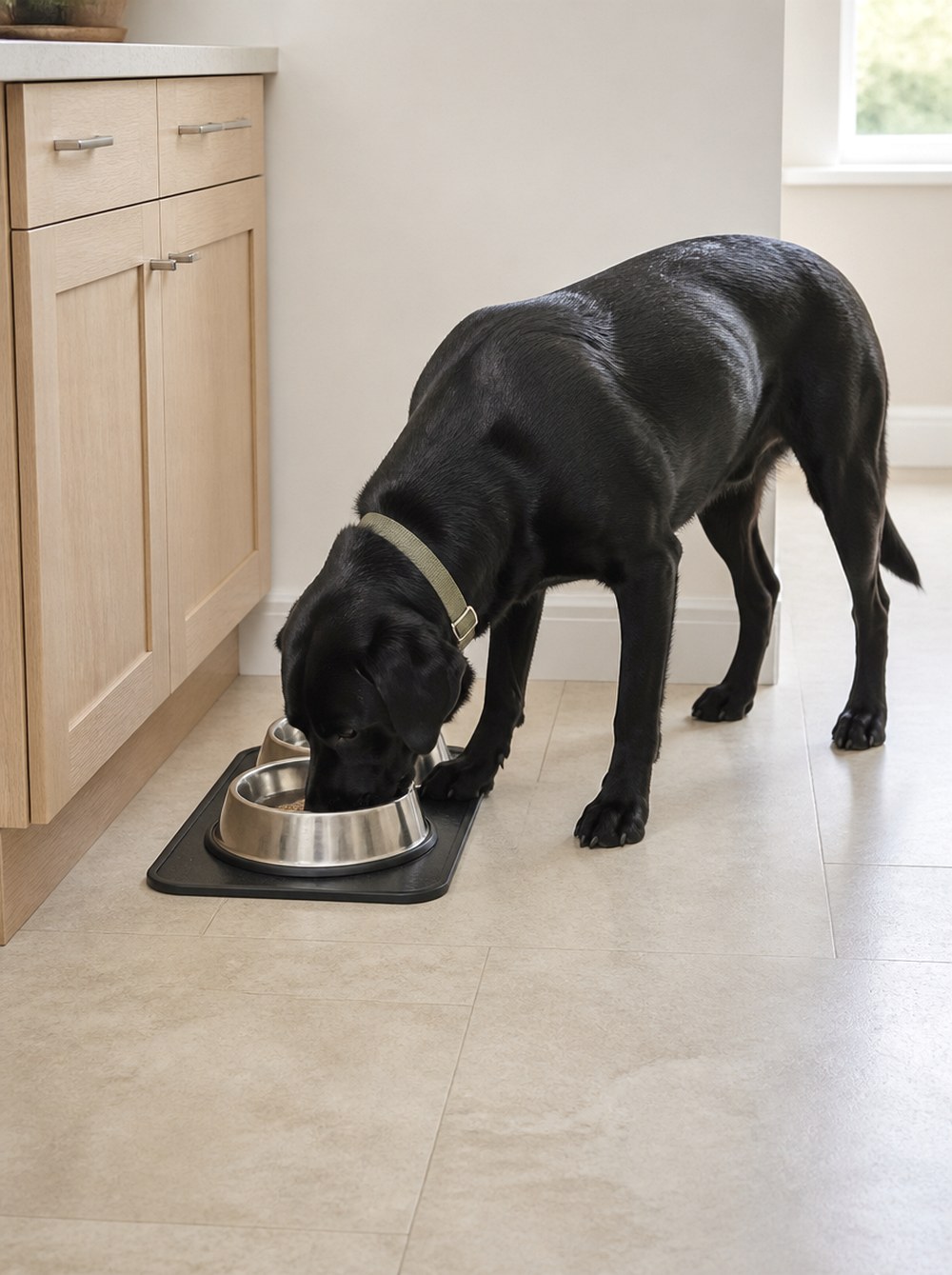
Sometimes the best feeding station is simply the last 24 to 36 inches beyond a run of cabinetry.
Using the cabinet end as a visual boundary keeps the bowls away from the middle of the room without requiring a built-in niche. Add a washable mat, and use the nearest cabinet for food storage only if it can be securely closed.
This setup is especially useful when there is an awkward gap between the cabinets and a dining area or back wall.
Avoid placing hooks, open shelves of treats, or small accessories directly above the bowls where they can be knocked down. The feeding zone should remain intentionally uneventful.
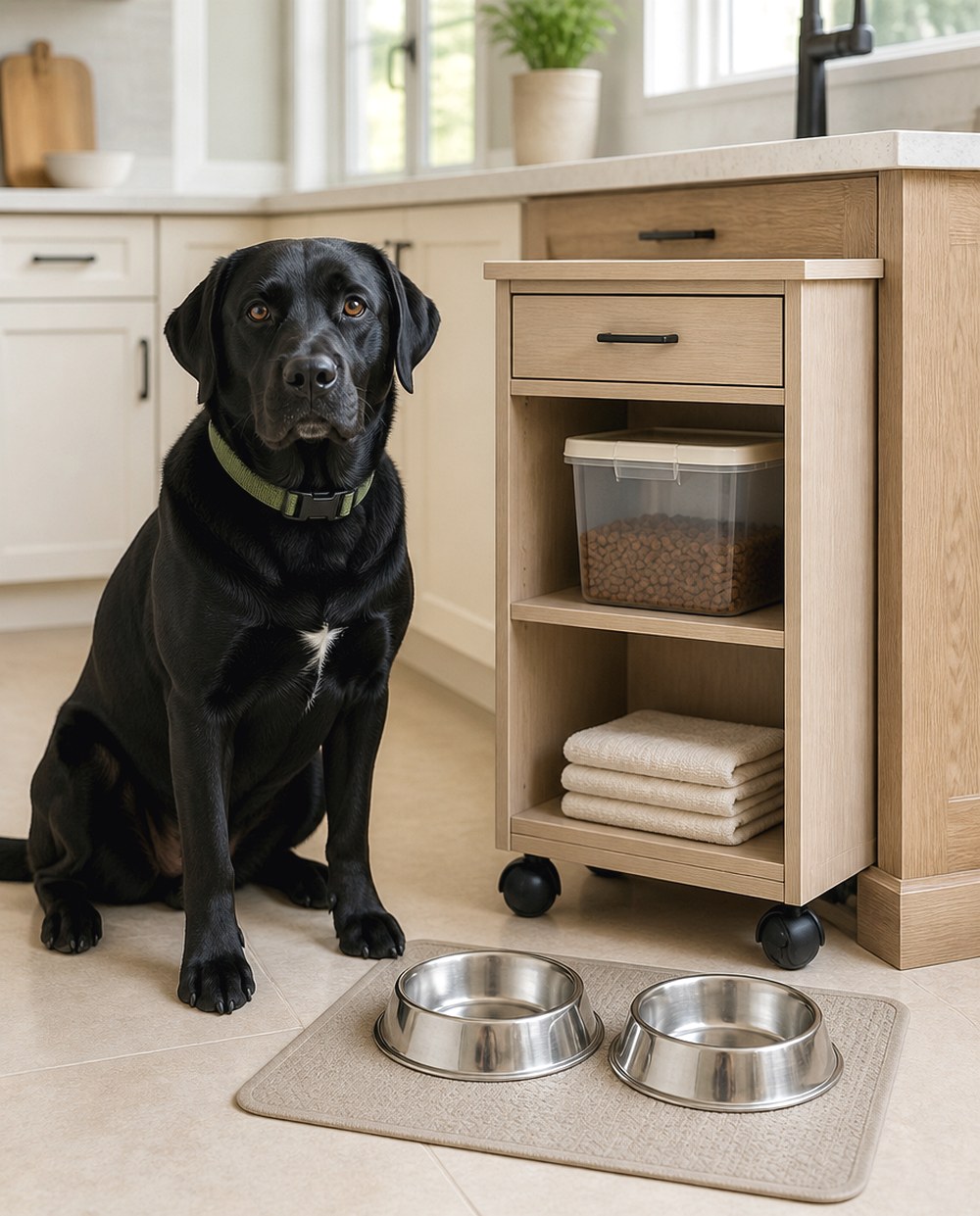
8. Locking Rolling Feeding Cart
A compact utility cart gives feeding supplies a mobile home when permanent cabinetry is not available.
Use the shelves for sealed food containers, clean towels, and larger feeding accessories. Keep anything chewable, breakable, medicinal, or potentially hazardous in secured storage rather than open lower baskets.
The cart itself should not serve as a wobbly bowl stand. Park it in a consistent location, lock the casters, and place the bowls on the floor beside it during meals.
This approach is useful when the kitchen needs to change functions throughout the day. The entire supply station can move for cleaning or entertaining while the dog’s usual eating spot remains predictable.
Feeding Stations Designed Around Cleanup
For dogs that scatter kibble or leave a trail after drinking, the feeding station can be designed around containment rather than storage.
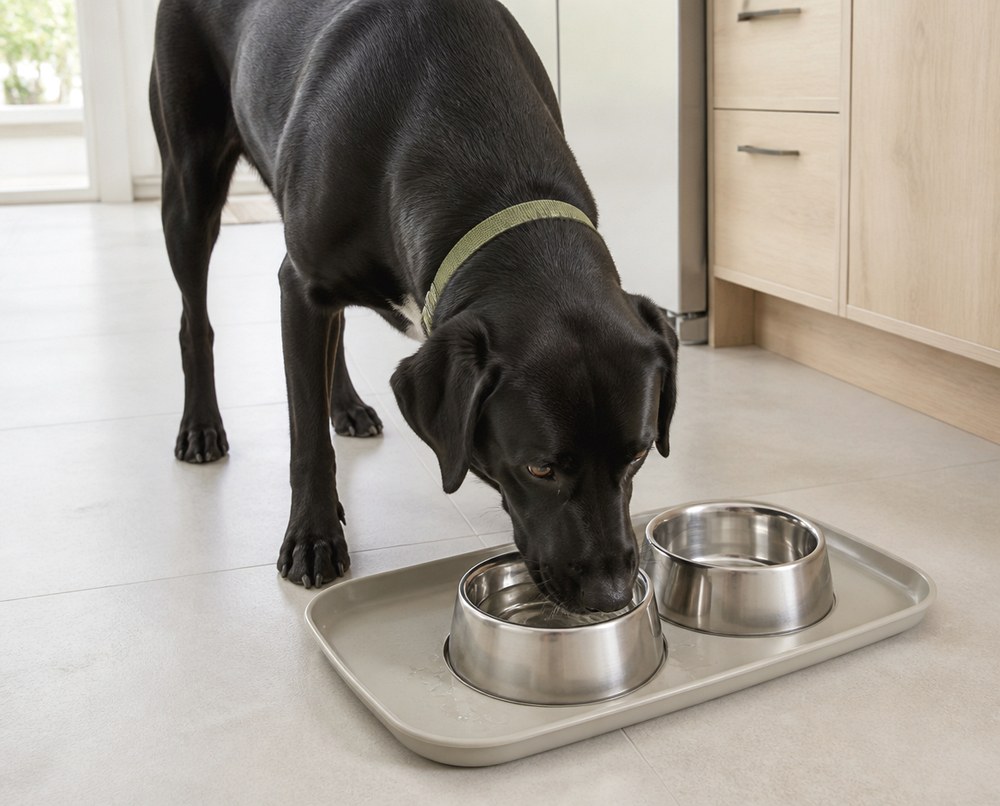
9. Oversized Lipped Tray Station
Instead of putting a small mat beneath each bowl, place the entire feeding setup on one broad, shallow tray with a low raised edge.
The tray creates a defined catch area for water and crumbs while still allowing the dog to approach naturally. Choose a lip low enough that your dog can comfortably step near it without catching a paw.
Because the whole tray can be lifted for cleaning, it works particularly well on floors where water should not sit around seams.
Do not allow collected water or food debris to remain underneath the bowls. A containment tray only makes cleanup easier if it is actually emptied and cleaned regularly.
10. Two-Zone Food-and-Water Setup
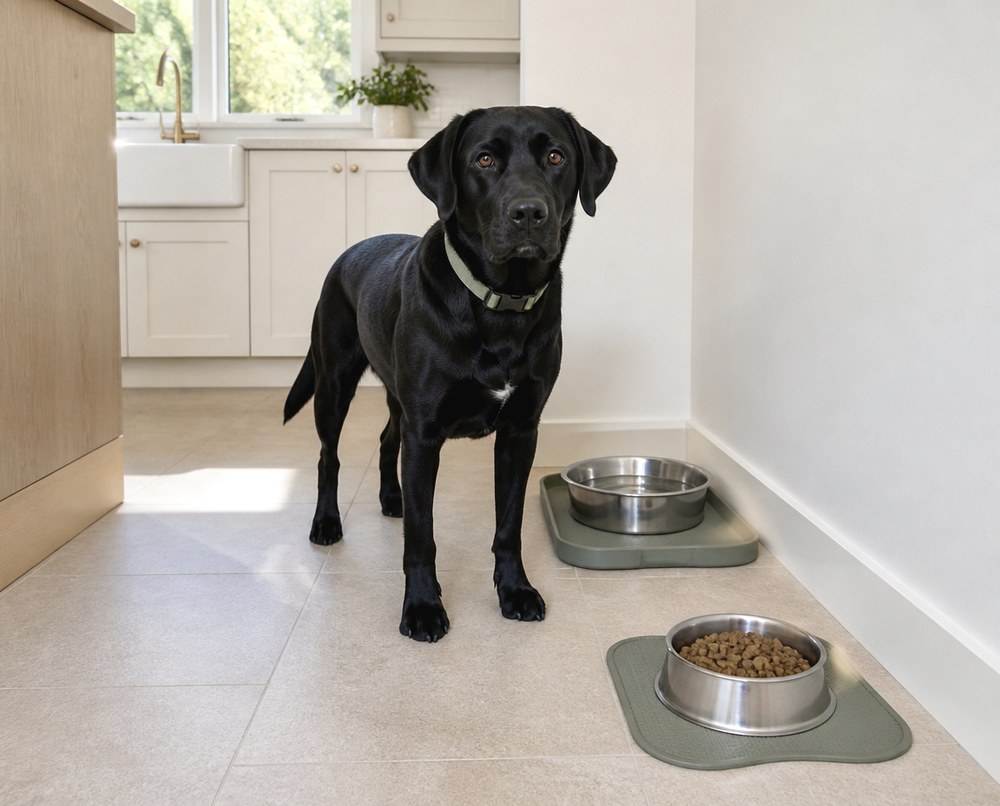
Some dogs leave far more water on the floor than food. In that case, there is no rule saying the two bowls have to sit inches apart.
Create a dry food zone and a nearby water zone. Keep the food bowl on a small cleanable mat, then give the water bowl a larger splash-catching surface a short distance away.
The two areas should still be close enough to feel like one routine rather than making the dog search around the house.
Separating them also prevents spilled water from soaking dry food that falls from the bowl. It can be especially practical with enthusiastic drinkers.
11. Feeding Station With a Nearby Cleanup Drawer
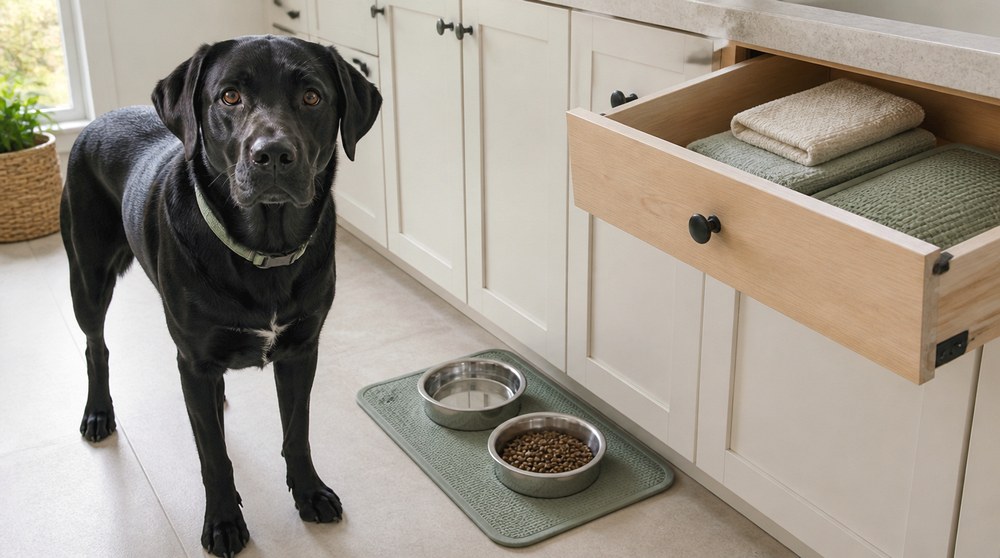
Rather than storing every dog item together, dedicate one shallow nearby drawer to the things you actually use after meals: clean cloths, replacement mats, and other basic cleanup supplies.
The feeding bowls stay on the floor in a comfortable low-traffic position, while the drawer gives you quick access when water reaches beyond the mat or food lands outside the bowl.
Keeping cleanup supplies within reach makes more sense than building a complicated station with several decorative compartments that are rarely used.
Store household cleaners separately and securely. A feeding-area drawer is best reserved for clean, dry supplies that are safe to keep close to bowls.
12. Food Storage Above, Bowls Below
When floor space and cabinet space are both limited, organize the feeding station vertically—but keep only storage vertical.
Place the bowls at floor level where your dog can reach them naturally. Use a closed cabinet or secure drawer immediately above or beside the station for food and feeding supplies.
This keeps the dog’s everyday setup compact without mounting bowls unnecessarily high or leaving food containers accessible on the floor.
If you are considering an elevated feeder for comfort or because of a health concern, there is no universal height that suits every dog. Your veterinarian can help you decide whether a particular feeding position makes sense for your dog’s individual needs.
You May Also Like


How to Choose the Right Kitchen Feeding Station
Before buying storage or changing cabinetry, spend a few days watching how your kitchen actually functions.
The most attractive location is not always the most practical one. Your dog needs enough room to stand and eat without being bumped, while people need to reach appliances and doorways without stepping over bowls.
A good location generally has four qualities:
- Low traffic: The dog is not eating in the main route between the refrigerator, sink, stove, and doorway.
- Easy cleanup: Water and crumbs can be wiped up without moving several pieces of furniture.
- Reliable access: Water remains available according to your dog’s normal needs rather than accidentally being closed inside a drawer.
- Secure storage: Food, medications, cleaners, cords, and small objects remain safely contained.
If you rent or expect to move, start with a mat, tray, corner, or rolling cart before committing to permanent changes. If you are remodeling, a recessed island nook or dedicated cabinet can make the feeding area feel intentional from the beginning.
Keep the Station Comfortable, Not Just Organized
Kitchen organization should never make eating harder for the dog.
Use bowls that are stable and appropriately sized for your dog. Wash food and water bowls regularly using materials and methods appropriate for the bowls you own, and clean feeding mats or trays whenever food residue or standing water accumulates.
Avoid crowding the station with decorative containers, hanging accessories, cords, or anything the dog can knock over. Keep it away from hot appliances and active cooking areas.
Pay attention to changes around meals, too. If your dog suddenly avoids the bowl, appears painful while eating, has trouble swallowing, repeatedly vomits, stops eating, becomes weak, or shows another concerning change, contact a veterinarian rather than trying to solve the problem by changing the feeding-station design.
Start With the Spot Before the Storage
You do not need custom cabinetry to build a feeding station that works.
Choose the quietest practical spot first. Put the bowls there on a washable surface and use it for several days. If your dog can eat comfortably and your household can move through the kitchen without stepping around the station, then decide what storage would improve it.
That order prevents a common mistake: building an impressive feeding area in a location that never suited daily life.
For many kitchens, a defined corner and one nearby cabinet are enough. In others, a pull-out drawer, island nook, or compact vertical storage setup can make better use of space. The best dog feeding station is the one that stays convenient at every meal and remains straightforward to clean.
