A rainy day does not have to become a choice between a restless dog and a miserable hour outside. Most dogs still need their normal bathroom opportunities, movement, mental engagement, meals, and plenty of downtime. The difference is where and how those needs are met.
Save This Idea on Pinterest

Rainy Day Dog Routine Indoor Exercise, Potty Breaks & Calm Time
Save to PinterestA workable rainy day dog routine keeps a few familiar anchors—such as waking, meals, potty trips, and bedtime—while replacing some outdoor exercise with shorter indoor activity blocks. The goal is not to entertain your dog continuously. A better rhythm alternates activity with recovery so the dog has chances to move, think, settle, and sleep.
Here is a flexible routine that works around rain without turning the entire day upside down.
Keep the Morning Familiar
Start the day close to your dog’s usual pattern. If your dog normally goes outside shortly after waking, keep that bathroom break rather than delaying it because of rain.
For steady rain, prepare before opening the door. Put the leash, towel, and any rain gear your dog already tolerates near the exit. Choose a familiar bathroom area and keep the trip focused rather than trying to turn unpleasant weather into a long walk.
Some dogs hurry outside and finish immediately. Others become distracted by puddles, wind, umbrellas, wet grass, or unfamiliar sounds. Give your dog a reasonable opportunity without forcing a prolonged outing in uncomfortable conditions.
Once back inside, towel the coat, legs, belly, and paws as needed. Check between the paw pads for mud, grit, or small debris before your dog settles onto furniture or bedding.
If there is thunder, lightning, flooding, dangerous wind, extreme cold, or another significant weather hazard, prioritize safety and limit outdoor exposure accordingly.

Replace One Long Walk With Several Short Activity Blocks
Trying to reproduce an entire outdoor walk indoors can make a rainy day feel exhausting for both dog and owner. Instead, break movement into several short sessions separated by rest.
A healthy adult dog might have a few minutes of active play in the morning, another session around midday, and a final moderate activity period later in the day. The exact amount depends on the dog’s age, health, fitness, temperament, and usual routine.
Useful indoor options include:
- Walking together through a clear hallway or around furniture with enough space for safe turns
- Short recalls between two people in separate areas of the room
- Gentle tug with an appropriate dog toy
- Fetch over a short distance on a nonslip surface
- Practicing familiar cues such as sit, down, touch, place, or come
- Searching for pieces of the dog’s normal food around one safe room
Avoid encouraging hard sprinting, sharp turns, or jumping on slippery floors. Clear breakable objects and unstable furniture from the activity area first.
A small home can still work. Five focused minutes of movement followed by a thinking activity may be more practical than trying to create a miniature indoor running track.
Turn Breakfast Into Something to Do
Rainy mornings are a useful time to make part of the dog’s regular meal more engaging.
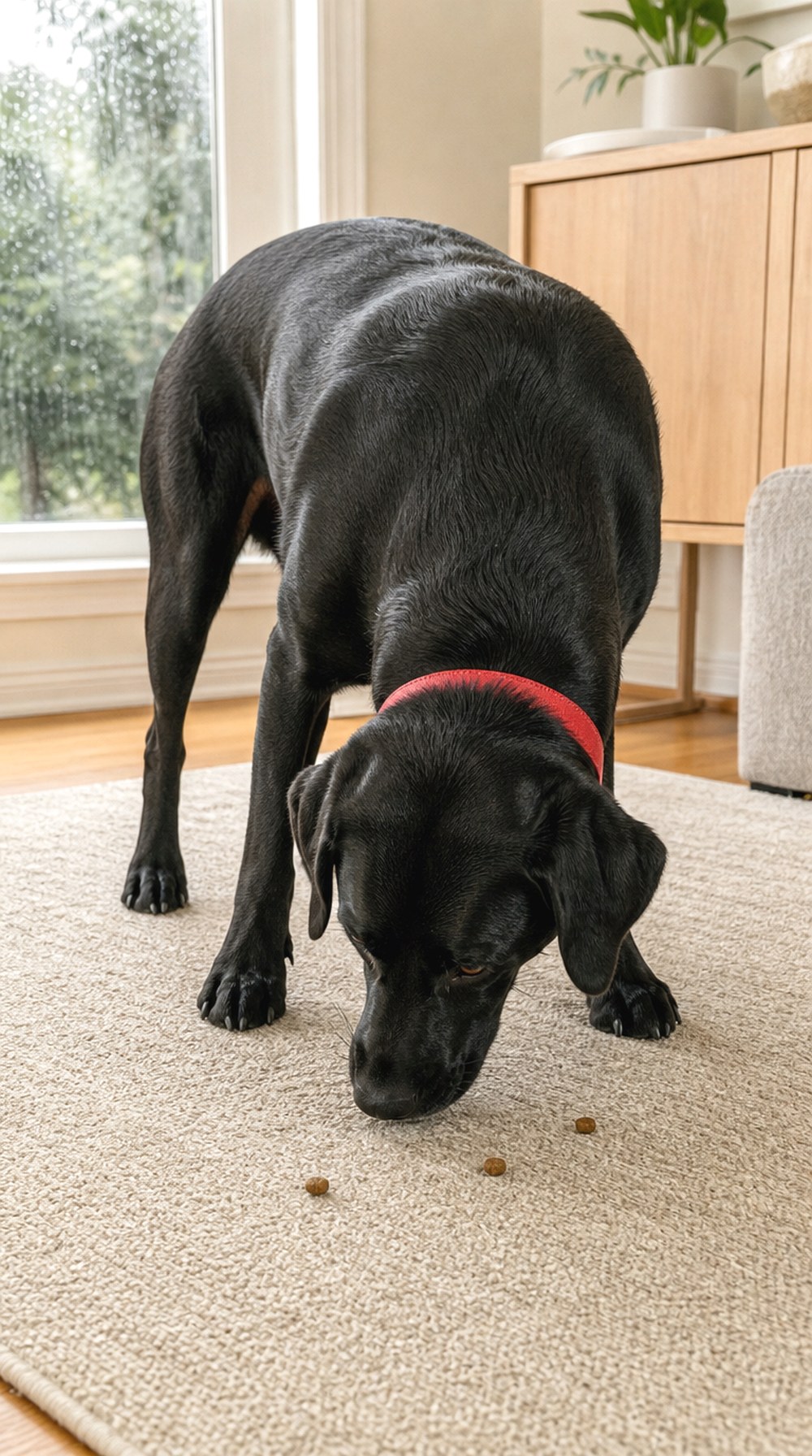
Instead of putting the entire breakfast into a bowl, reserve a portion for a food puzzle, slow feeder, scatter search, or short training session. Count that food as part of the normal meal rather than adding a large amount of extra treats.
For a basic scent search, ask your dog to wait outside one room while you place pieces of food in several easy-to-find locations. Keep everything at floor level and away from cords, trash cans, houseplants, heating equipment, or places where the dog could become stuck.
Begin with obvious hiding places. Once your dog understands the game, gradually make some locations less visible.
Dogs that become frustrated by puzzles may do better with an easier setup. The point is to provide a manageable problem to solve, not to make the meal unnecessarily difficult.
You May Also Like


Let the Dog Come Back Down After Activity
One of the easiest rainy-day mistakes is filling every quiet moment with another game.
Dogs need rest even when they have spent less time outdoors. After breakfast and a short activity session, give your dog an ordinary place to settle. That might be a bed near the family, an open crate the dog already uses comfortably, or another familiar resting area.
Lowering the pace after play helps create a recognizable pattern:
activity → bathroom opportunity → food or enrichment → rest
You do not need to enforce that sequence every time, but repeating a predictable rhythm can prevent the day from becoming one long stream of stimulation.
If your dog wanders around looking for something to do, try a brief familiar cue such as going to a bed or mat, then allow quiet time. A safe, durable chew or food-filled toy may also help some dogs settle if it is appropriate for that individual dog and used according to the product instructions.
Inspect toys regularly and remove anything that is cracking, splitting, or shedding pieces.
Use the Midday Break for Sniffing and Problem-Solving
By midday, an energetic dog may be ready for another task even if the morning included indoor exercise. This is a good time to emphasize the dog’s nose rather than adding more fast movement.
Try a room search using several pieces of the dog’s meal or treats. Another option is to place a few familiar toys around the room and encourage the dog to locate them.
You can also work on practical household behaviors for a few minutes:
- Going to a mat
- Waiting briefly at a doorway
- Responding to a name
- Touching your palm with the nose
- Picking up an appropriate toy
- Settling while you sit nearby
Keep training short enough that the dog remains engaged. Stopping after a handful of good repetitions is often more productive than continuing until concentration disappears.
When the Rain Lightens
If conditions become comfortable and safe, use the opportunity for a short sniff-focused walk rather than assuming you need to make up every missed minute outdoors.
A slower walk that allows time to investigate scents can provide useful mental stimulation even when the distance is modest.
Keep a towel ready at the door so coming home does not turn into muddy tracks through the house.
Build in an Afternoon Quiet Period
Rainy days often happen on days when people are home more than usual. That can unintentionally keep a dog awake.
If your dog normally sleeps through part of the afternoon while the house is empty, preserve some of that downtime. Work, read, cook, or do household tasks while allowing the dog to rest instead of repeatedly initiating interaction.
This matters especially when a rainy day changes the human schedule but not the dog’s need for sleep.
Puppies may need more frequent bathroom trips and much more sleep than adult dogs. Senior dogs or dogs with mobility limitations may benefit from shorter, gentler activity sessions and secure nonslip footing throughout the home.
Give the Evening a Clear Outlet
A dog that has spent much of the day indoors may become more active when the household’s evening routine begins. Plan one useful outlet before expecting the dog to settle for the night.
For a physically active dog, that could mean a short game of tug, controlled indoor retrieving, or a brief outdoor walk if the rain has eased.
For a dog that has already had enough physical exercise, use a scent game or a few minutes of training instead.
One practical combination is:
- Five to ten minutes of controlled movement.
- A short bathroom trip.
- Dinner or part of dinner delivered through calm enrichment.
- A quieter household period afterward.
The exact timing is less important than providing a recognizable transition from activity into rest.
You May Also Like


A Flexible Rainy Day Schedule
There is no need to follow exact times. Use this as a sequence and shift it around your household’s normal schedule.
| Part of Day | Rainy-Day Routine |
|---|---|
| After waking | Bathroom trip, towel and paw check |
| Morning | Breakfast with a short food search or puzzle |
| After breakfast | Brief indoor movement or training |
| Late morning | Rest and normal household downtime |
| Midday | Bathroom break and sniffing activity |
| Early afternoon | Quiet rest |
| Later afternoon | Short training, search game, or gentle play |
| Evening | Safe outdoor walk if possible, or controlled indoor exercise |
| Dinner | Regular meal, optionally using calm enrichment |
| Before bed | Final bathroom opportunity, dry off, settle for the night |
The best version is the one that resembles your dog’s ordinary routine closely enough that the day still feels predictable.
Adjust the Routine to the Dog in Front of You
Rain does not affect every dog in the same way.
A young, high-energy dog may need several brief outlets spread through the day. A calmer adult may be satisfied with scent work, training, and a couple of moderate activity periods. A senior dog may benefit more from gentle movement and comfortable rest than from vigorous indoor games.
Weather tolerance differs too. Some dogs barely notice rain, while others hesitate at the doorway.
Avoid dragging or forcing a reluctant dog into severe weather. For ordinary rain, calm repetition and a familiar bathroom location can help keep trips practical. For dangerous conditions, safety takes priority over routine.
Apartment dogs may require extra planning because reaching an outdoor bathroom area can take longer. Keep the leash and drying supplies ready before each trip and use indoor enrichment between outings rather than waiting for the dog to become restless.
What Not to Turn Into a Rainy-Day Habit
Bad weather can encourage a few routines that are hard to maintain once normal life resumes.
Do not feel obligated to entertain your dog every waking minute. Constant interaction can make it harder for the dog to return to ordinary periods of independent rest.
Avoid compensating for a missed walk with excessive treats. Use part of the dog’s normal food for training and games when practical.
Do not create elaborate indoor obstacles from chairs, unstable stools, slippery blankets, or furniture that can tip. Movement games should use clear space and secure footing.
Be cautious with homemade enrichment involving cardboard, fabric, paper, or small objects. Some dogs shred and swallow these materials. Supervise closely, choose setups appropriate for the dog’s chewing habits, and remove damaged materials promptly.
When Restlessness May Be More Than Boredom
A rainy day can explain some extra pacing or attention-seeking, particularly in a dog accustomed to long outdoor activity. However, not every behavior change should automatically be blamed on the weather.
Contact a veterinarian if your dog develops concerning signs such as pain, breathing difficulty, weakness, repeated vomiting, marked appetite changes, unusual bathroom habits, or a sudden behavior change that does not fit the situation.
For an otherwise healthy dog who simply seems under-occupied, first look at the day’s balance. Has the dog had a bathroom opportunity, some movement, a chance to sniff or solve a problem, regular meals, and uninterrupted time to sleep? Often the missing piece is one of those basics rather than a need for nonstop activity.
Finish the Day Close to Normal
The final part of a rainy day should look much like any other evening.
Give your dog a final bathroom opportunity at the usual point in the routine. Dry wet paws and fur before bed, return bowls, toys, and towels to their usual places, and let the household become quieter.
Tomorrow’s weather may be completely different, so there is little reason to redesign your dog’s life around one wet day.
Keep the dependable anchors, swap in indoor activities where weather removes an outdoor option, and leave room for rest. That balance gives a dog something useful to do without making rainy days an all-day entertainment project.
