A good dog bedtime routine does not need to fill the entire evening with activities. In many homes, the most useful routine is a short sequence of familiar cues that tells the dog the active part of the day is ending.
Save This Idea on Pinterest

Dog Bedtime Routine Ideas for a Calmer, More Predictable Night
Save to PinterestThose cues might include a calm walk, a bathroom break, a few minutes of quiet interaction, and settling in the same sleep area. The exact order can change with your dog’s age, energy level, feeding schedule, and household routine.
The goal is consistency without making bedtime so complicated that it falls apart on busy nights. Start with three or four repeatable steps, then add only the ideas that genuinely help your dog transition from daytime activity to rest.
1. Swap Late Rough Play for a Slow Sniff Walk
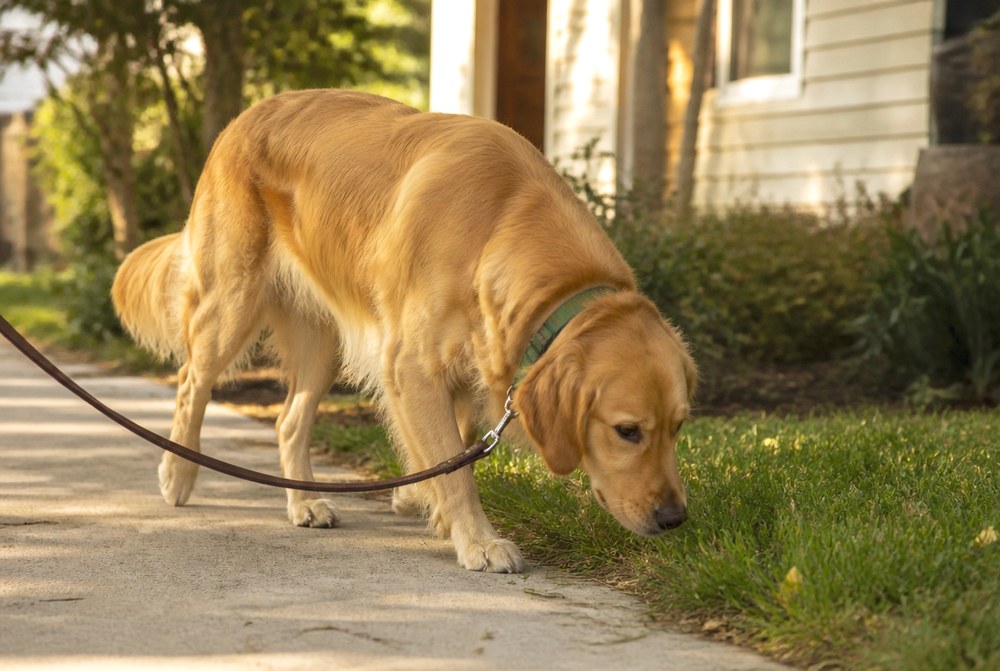
Some dogs settle more readily after they have had a chance to move and investigate their surroundings, but bedtime does not have to follow a vigorous exercise session.
A slow sniff-focused walk can work well because the dog gets an opportunity to explore without turning the final part of the evening into another burst of high-energy play. Let your dog stop at safe places to sniff rather than trying to cover a certain distance.
For an active adult dog, this can follow more substantial exercise that happened earlier in the day. For a senior dog or one with limited mobility, a shorter outing may be more appropriate.
Try to finish energetic games such as repeated fetch or enthusiastic indoor chasing earlier when possible. Some dogs can switch from excitement to sleep quickly, while others remain alert long after the game ends.
2. Give the Evening a Clear Activity Cutoff
You May Also Like


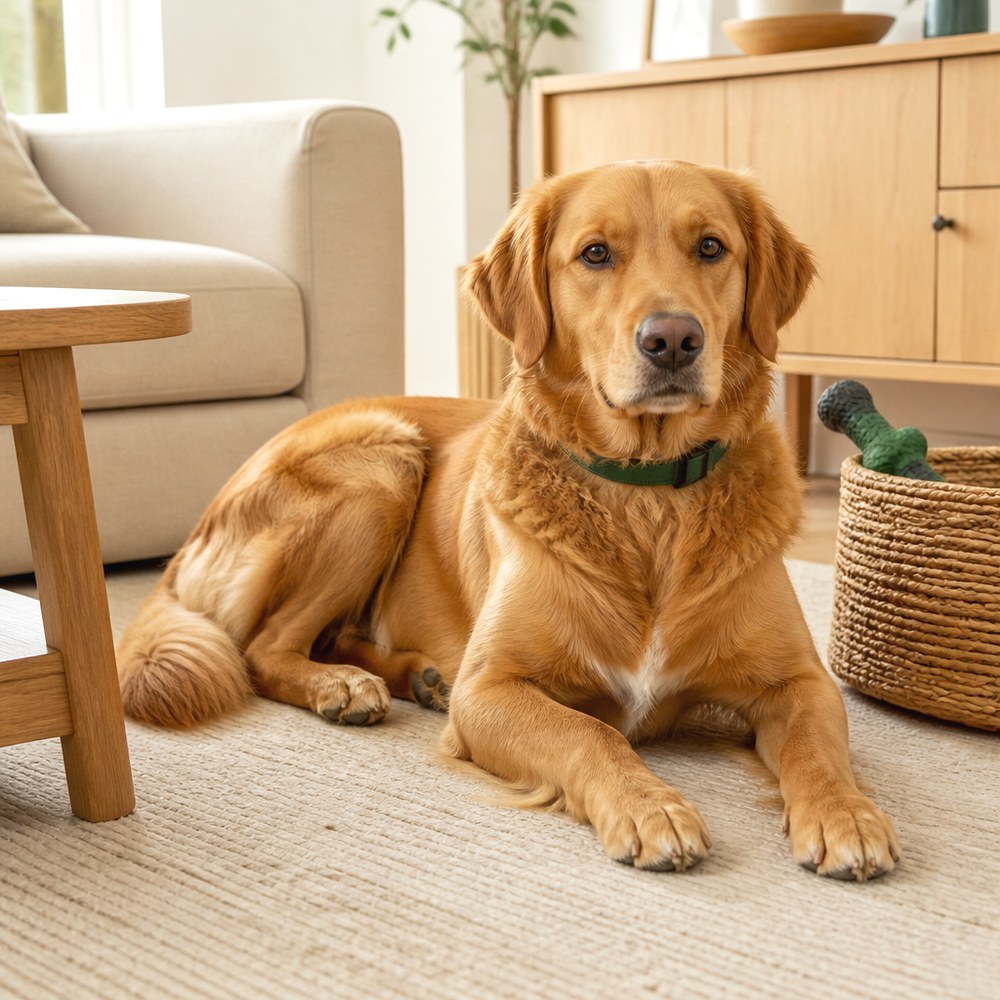
Dogs do not read clocks, but they can learn the pattern of an evening.
If games, visitors, television noise, training sessions, and household activity continue right up until everyone goes to bed, there may be no obvious transition between active time and rest time. Creating a recognizable cutoff helps separate those parts of the day.
That might mean putting high-energy toys away, ending vigorous games, lowering household activity, and moving into quieter tasks.
You do not need to make the home silent. The useful change is simply from stimulating activity to predictable, lower-key activity.
On busy evenings, this transition may be only 15 or 20 minutes before bed. Consistency matters more than creating an elaborate hour-long ritual.
3. Use a Small Portion of Food for Calm Enrichment
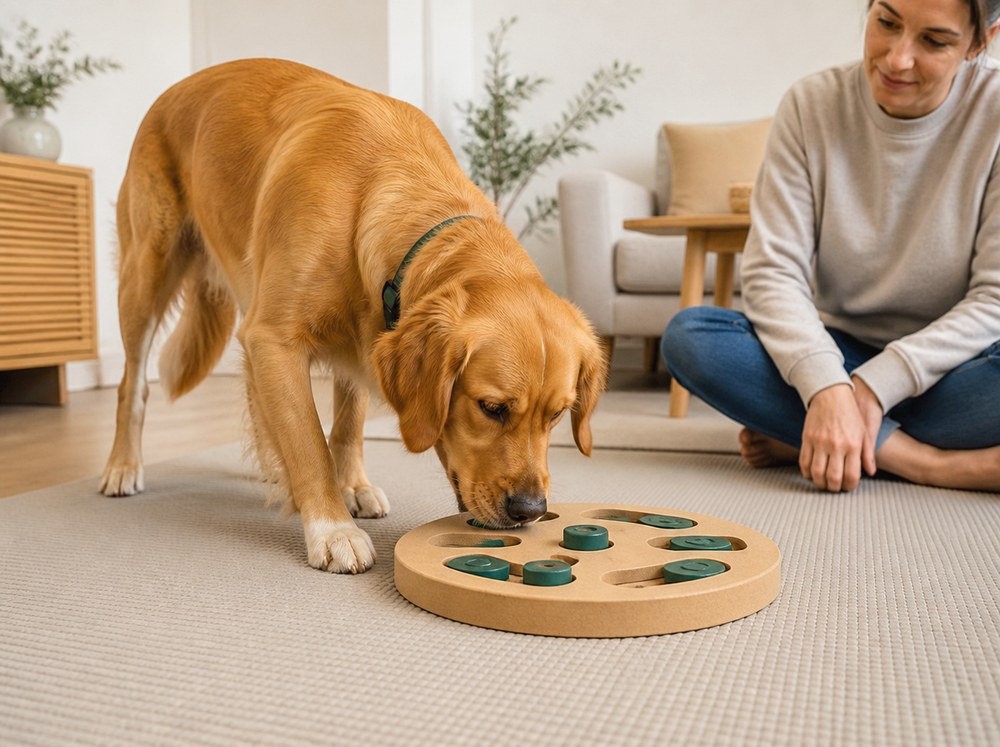
For a dog that still seems mentally busy at the end of the day, a short food-based activity can provide something focused to do without another round of running or wrestling.
You can use part of the dog’s normal meal allowance in a suitable food puzzle rather than automatically adding extra snacks. Choose an item that matches your dog’s chewing style and size, and supervise its use. Remove it if it becomes damaged or pieces begin to break away.
This is most useful for dogs that enjoy food puzzles and remain relaxed while using them. It is less helpful if the activity makes your dog increasingly frustrated or excited.
You also do not need enrichment every night. A dog that is already ready to lie down does not need to be given another task simply because it is bedtime.
4. Make the Final Bathroom Trip Predictable
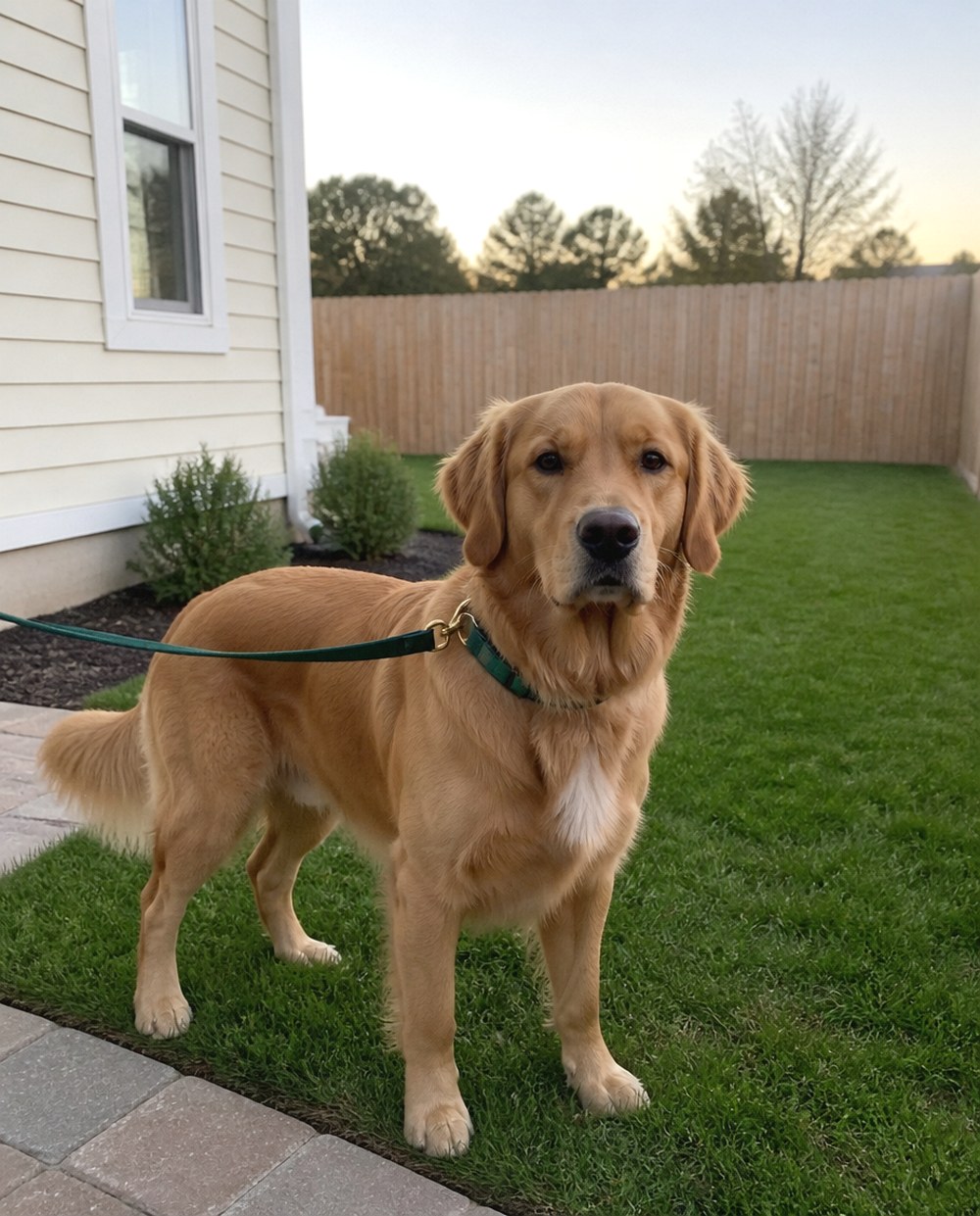
A final bathroom opportunity is one of the most practical bedtime anchors.
Take your dog out calmly and give enough time to use the usual bathroom area without turning the outing into another play session. Using a familiar route or location can help keep the trip predictable.
How late this needs to happen varies. Puppies may need more frequent bathroom opportunities than adult dogs, and some older dogs also need schedule adjustments. Individual health, water intake, feeding time, and routine matter as well.
Avoid deliberately restricting normal access to water simply to reduce nighttime bathroom trips unless your veterinarian has specifically advised a change for medical reasons.
If a previously house-trained dog suddenly begins needing to urinate much more frequently, has accidents, strains, seems uncomfortable, or develops another noticeable bathroom change, contact a veterinarian rather than assuming the solution is stricter scheduling.
5. Build a Two-Minute Settle Cue
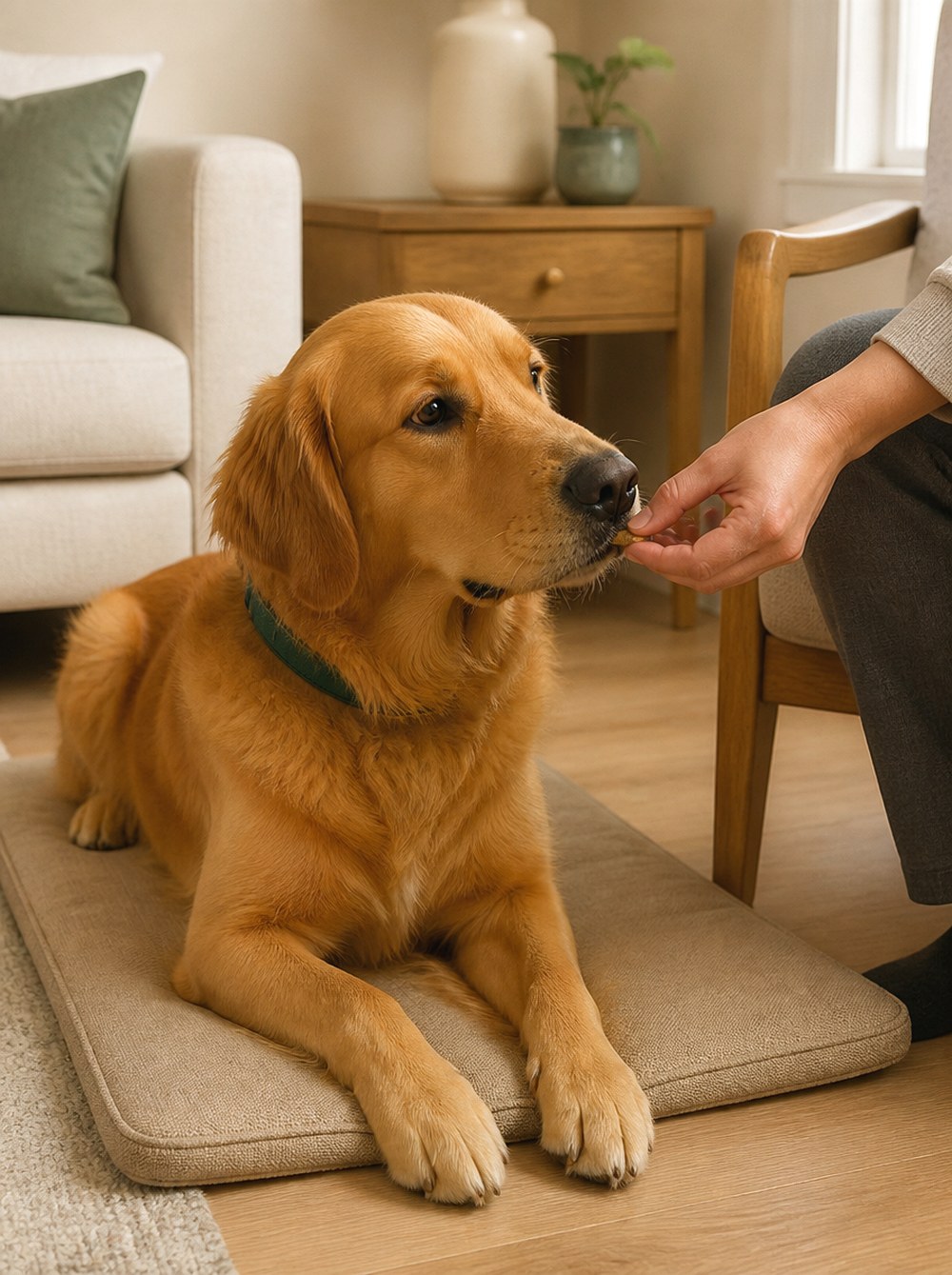
A settle cue can become a useful bridge between moving around the house and lying down for the night.
The routine can be very short. Ask your dog to move to a familiar mat or resting place, reward calm behavior if that is part of your training approach, and spend a minute or two doing something quiet.
The goal is not to repeatedly command the dog to stay perfectly still. It is to make the resting area familiar and rewarding.
If your dog does not yet understand a mat or bed cue, practice it during ordinary daytime sessions first. Bedtime is easier when you are using a behavior the dog already knows rather than trying to teach something new while everyone is tired.
6. Add Quiet Contact Only If Your Dog Enjoys It
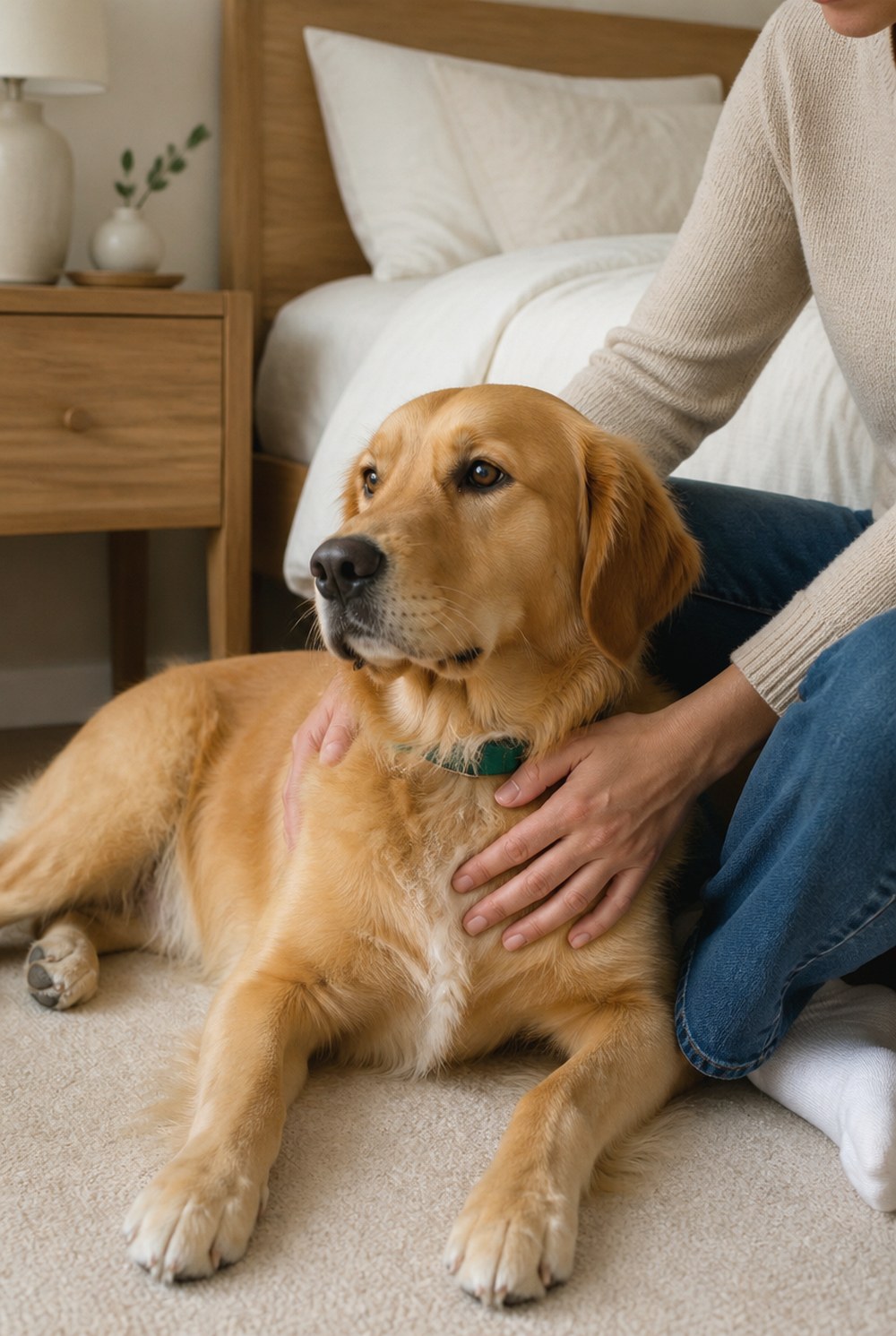
For some dogs, a few minutes of calm contact becomes a recognizable end-of-day cue. This might be gentle petting, sitting together quietly, or a brief brushing session for a dog that already enjoys being brushed.
Pay attention to the dog’s response rather than assuming physical affection is automatically relaxing. A dog that moves away, repeatedly turns its head, becomes restless, or tries to avoid handling may prefer simply resting nearby.
Keep grooming separate if it tends to become a longer task involving nail care, ear cleaning, or other handling your dog finds difficult. Bedtime is usually a better place for familiar, low-pressure interactions.
A routine should make settling easier, not require the dog to tolerate unwanted contact.
7. Keep the Sleeping Spot Consistent
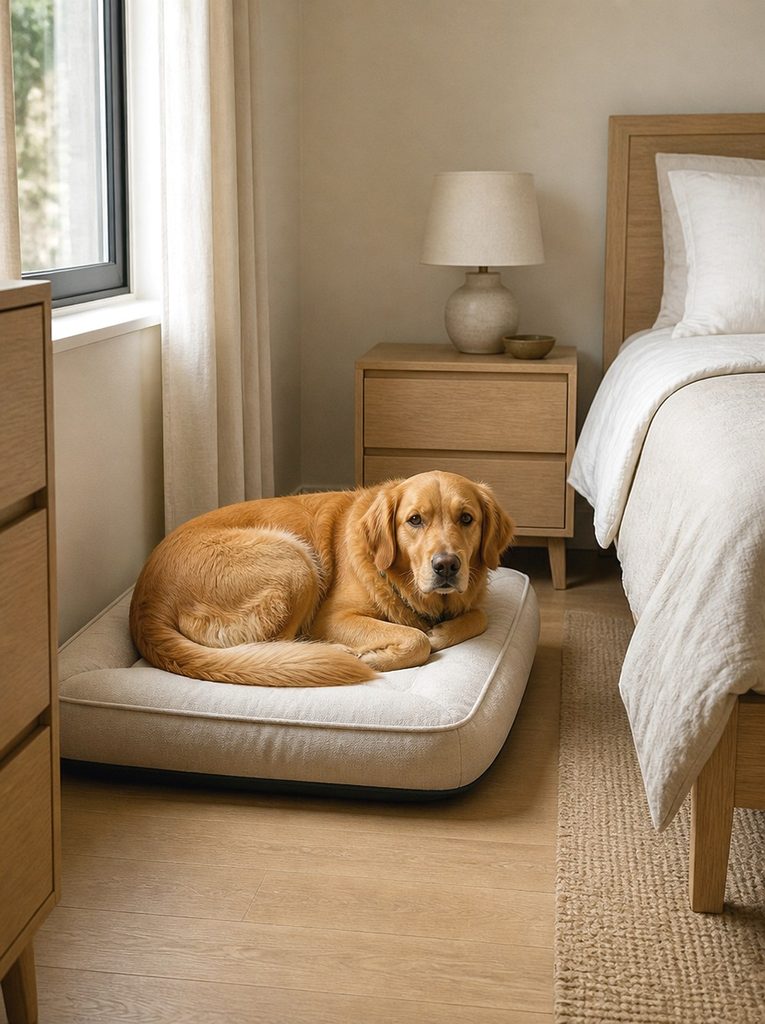
Dogs can sleep in many appropriate household setups, but frequent last-minute changes may make the bedtime sequence less predictable.
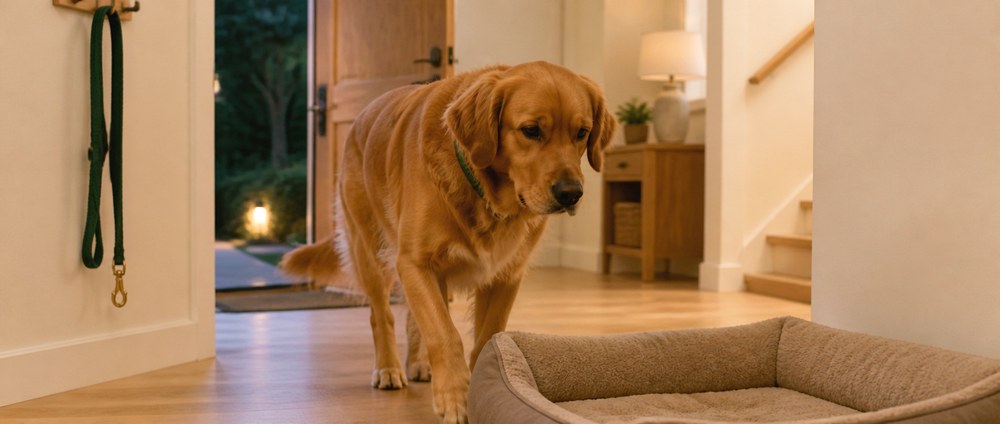
Choose a sleeping location that fits your household and the individual dog. It could be a dog bed in the bedroom, an appropriate crate for a dog already comfortable using one, or another safe designated resting space.
Keep the area away from dangling cords, medications, cleaning products, small chewable objects, and anything the dog might knock over during the night. Bedding should be suitable for the dog’s size and mobility, and damaged bedding should be repaired or replaced if stuffing or loose fabric becomes accessible.
Older dogs may benefit from especially easy access to their resting area. If getting onto a favorite sleeping surface suddenly becomes difficult, or your dog shows stiffness or pain, discuss the change with a veterinarian.
8. Use the Same Household Wind-Down Cues
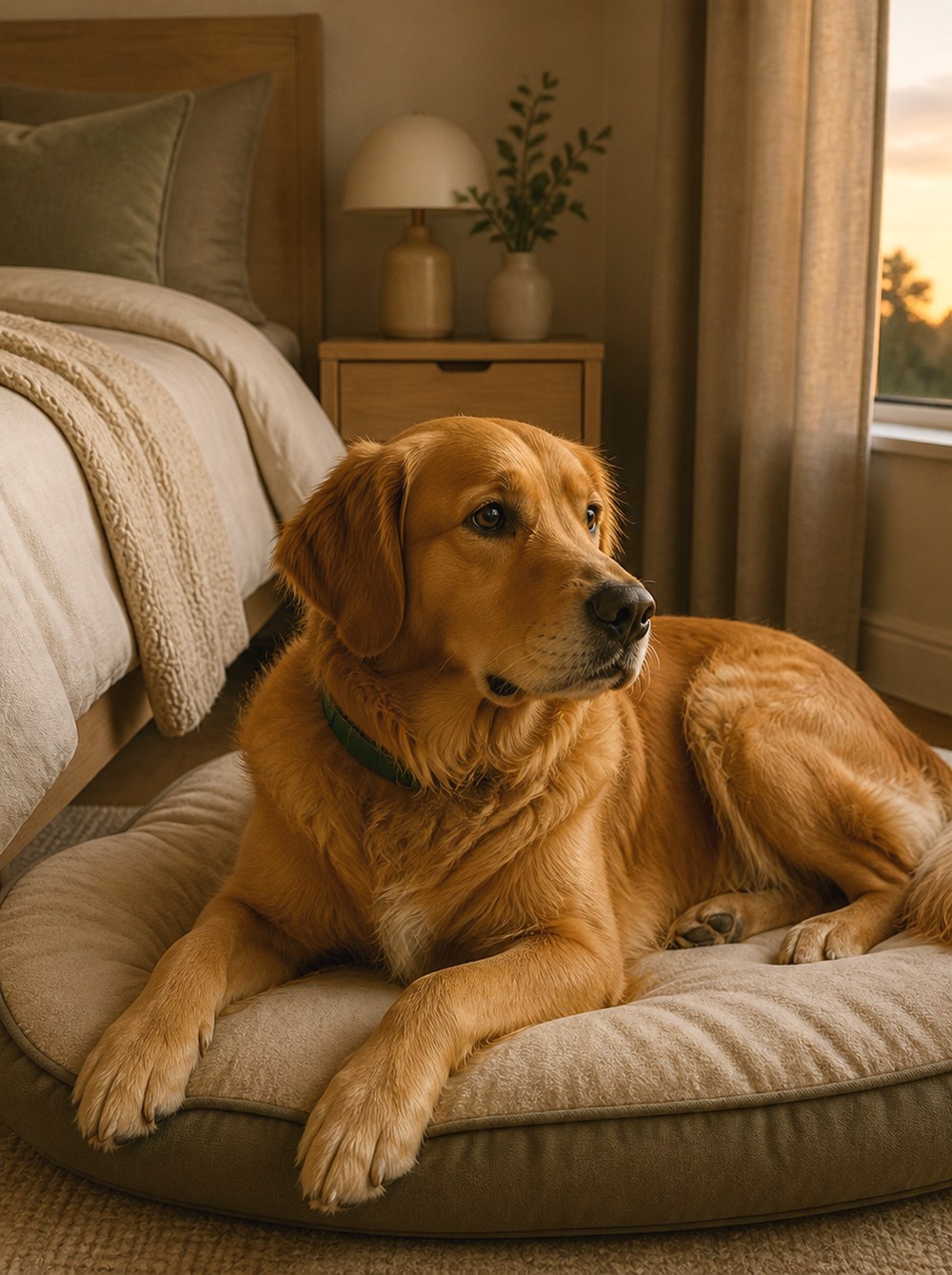
Small environmental changes can become part of the bedtime pattern.
Closing curtains, turning off the television, putting away toys, moving into the bedroom, or reducing general household activity can all signal that the day is winding down.
You do not need a completely dark or silent house. In fact, dogs differ in what surroundings they are accustomed to. The helpful part is that the environment becomes reliably less active.
If outside noises regularly trigger barking, consider whether the sleeping area itself can be moved farther from a busy window or hallway. Environmental management is often more practical than repeatedly correcting a dog for noticing every sound.
Keep any electrical cords or small devices safely out of reach.
9. Keep a Short Version for Late or Chaotic Nights
You May Also Like


A bedtime routine is more useful when it survives the nights when you get home late, have guests, or simply have less time.
Choose a minimum version that includes the steps your dog genuinely needs. For many adult dogs, that might be:
- A calm final bathroom opportunity
- A brief drink or normal access to water as appropriate
- A familiar settle cue
- Moving to the usual sleeping area
You can return to the longer routine the next day.
This prevents a common problem: building such a detailed evening ritual that the dog never experiences a shorter version. A flexible routine still has recognizable anchors even when the timing changes.
Three Ways to Combine the Ideas
You do not need all nine ideas every night. A better approach is to build around your dog’s actual evening behavior.
| Situation | A Practical Bedtime Flow |
|---|---|
| Dog is already tired | Final bathroom trip → quiet contact if wanted → usual sleeping spot |
| Dog still has mental energy | Slow sniff walk → short calm enrichment → final bathroom trip → settle cue → bed |
| Household is running late | Final bathroom trip → brief settle cue → usual sleeping area |
If your dog consistently reaches bedtime restless despite receiving appropriate activity and interaction during the day, look at the whole daily routine rather than continually adding more bedtime stimulation.
Some dogs need their main exercise earlier. Others benefit from more daytime enrichment or a clearer rest pattern.
Adjust the Routine for Puppies and Senior Dogs
Age can change what a realistic nighttime routine looks like.
Puppies may need more frequent bathroom opportunities and more supervision. Expectations for how long a puppy can remain settled overnight should match the individual puppy’s age and development. Keep the route to nighttime bathroom breaks calm and straightforward rather than turning them into play sessions.
Healthy adult dogs often do well with a relatively compact routine once they recognize the pattern.
Senior dogs may need a shorter walk, easier access to the bathroom area, supportive bedding, and fewer obstacles between their sleeping spot and the door.
New nighttime pacing, confusion, vocalizing, weakness, difficulty lying down, appetite changes, repeated vomiting, breathing difficulty, sudden bathroom changes, or other significant changes deserve veterinary attention rather than being treated only as a routine problem.
When the Routine Seems to Make Your Dog More Awake
Sometimes a well-intended bedtime routine becomes stimulating.
If your dog gets more excited as the sequence progresses, look at what happens immediately before the excitement.
A food puzzle may be too challenging. Petting may turn into play. The final walk may be long enough to become a second exercise session. A bedtime treat may prompt the dog to start searching the kitchen for more food.
You do not necessarily need a new routine. Remove or shorten the step that is increasing arousal and keep the cues that reliably lead toward rest.
Also avoid changing several things at once. Keeping the routine relatively stable for a while makes it easier to notice which parts actually help.
Start With Three Reliable Bedtime Anchors
The most workable dog bedtime routine ideas are often the ones you can repeat on ordinary nights.
Begin with a final bathroom opportunity, one calm transition cue, and a consistent sleeping area. If your dog still needs help shifting out of daytime activity, add a slow sniff walk, brief enrichment, or quiet contact based on what your dog actually enjoys.
Bedtime does not have to happen at the exact same minute every night. A recognizable sequence can provide consistency even when the household schedule moves around.
