A dog corner does not need to become a miniature pet-supply store. A well-planned nook can give your dog a dependable place to rest, eat, wait for a walk, or settle with a toy while keeping everyday supplies from spreading across the room.
Save This Idea on Pinterest

10 Minimalist Dog Corner Ideas for a Calm, Clutter-Free Home
Save to PinterestThe strongest minimalist dog corner ideas usually have one clear job. Instead of trying to fit a bed, bowls, toys, grooming supplies, food, coats, and walking gear into the same tiny area, decide what you reach for most often and build the corner around that.
For a cleaner result, keep most storage closed, leave enough open floor space for your dog to turn and lie down comfortably, and choose materials that can handle fur, moisture, and frequent wiping.
1. Build a Low-Profile Resting Nook
Start with the item your dog actually uses: the bed.
A low rectangular bed in a neutral fabric can define a resting corner without making it look visually heavy. Place it against a solid wall rather than in the middle of a traffic route, and leave the area around it mostly empty. One washable blanket can add comfort without creating a pile of bedding.
This approach works particularly well in bedrooms, home offices, and quiet living-room corners. If your dog likes to stretch out, measure the available floor area before choosing the bed instead of squeezing an oversized cushion into the nook.
Keep electrical cords, floor lamps, heaters, and objects that could fall away from the resting area.

2. Use a Storage Bench as the Boundary
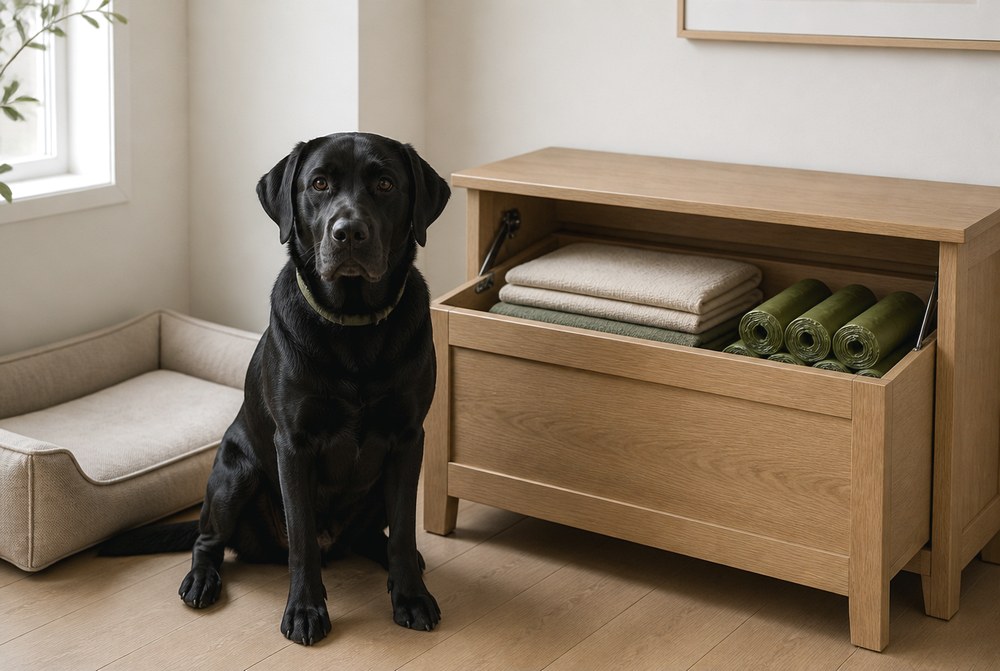
A slim bench can make a dog corner feel intentional while hiding supplies that would otherwise stay visible.
Choose a stable bench with closed storage underneath and place the dog bed beside it rather than directly under a hinged lid. Store spare blankets, unopened waste-bag rolls, seasonal accessories, or other lightweight supplies inside. Frequently used items can stay near the front so you are not digging through the compartment every day.
The bench also creates a visual boundary between the dog zone and the rest of the room without adding a freestanding divider.
Avoid furniture that rocks, tips easily, or has lids that can fall shut unexpectedly. Cleaning products and medicines should be stored separately where your dog cannot reach them.
You May Also Like


3. Create a Vertical Leash Station
When floor space is limited, move walking gear upward.
A narrow rail with two or three secure hooks can hold a leash, harness, and lightweight walking pouch without requiring a bulky entryway organizer. Add a shallow floating shelf above it for owner-only items that need to stay beyond your dog’s reach.
Keep the setup restrained. A hook for every accessory defeats the minimalist effect and makes the wall look busy.
Place the rail where hanging straps will not dangle at mouth level if your dog tends to chew. Hooks and shelves should be firmly anchored rather than attached with weak temporary adhesive.

4. Make the Feeding Area Visually Quiet
Dog bowls can stay accessible without turning the corner into a storage area.
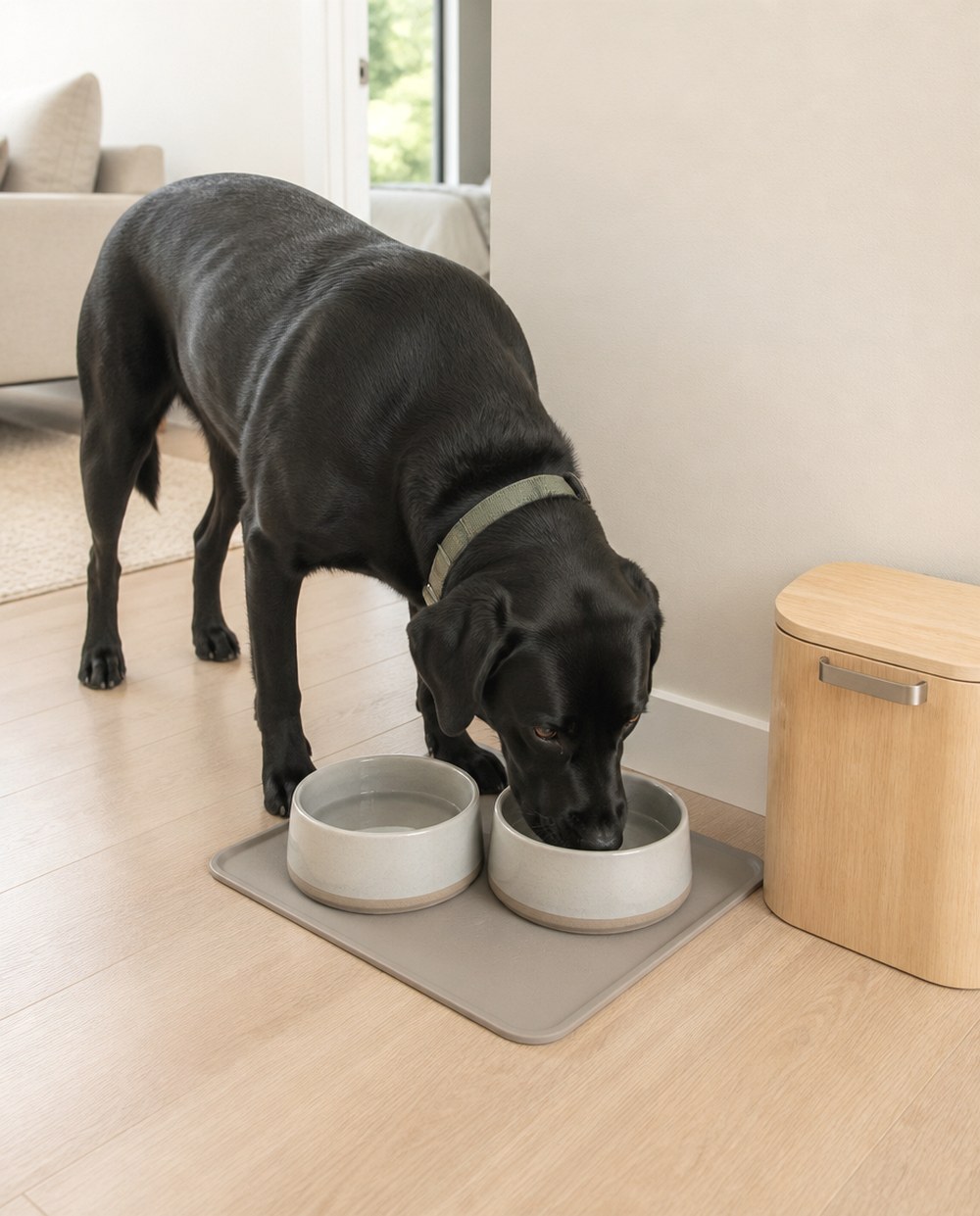
Use two appropriately sized bowls on one washable, non-slip mat. Keep the floor around them clear so spilled water or food can be noticed and wiped up quickly. If food is stored nearby, use a securely closed container placed where your dog cannot help themselves.
A small feeding corner tends to look cleaner when bowls, mat, and storage use similar understated finishes rather than several contrasting patterns.
Wash food and water bowls regularly, refresh drinking water as needed, and replace damaged mats or cracked containers.
5. Keep Only a Small Toy Rotation on Display
Minimalist storage becomes much easier when every dog toy does not have to fit in the room at once.
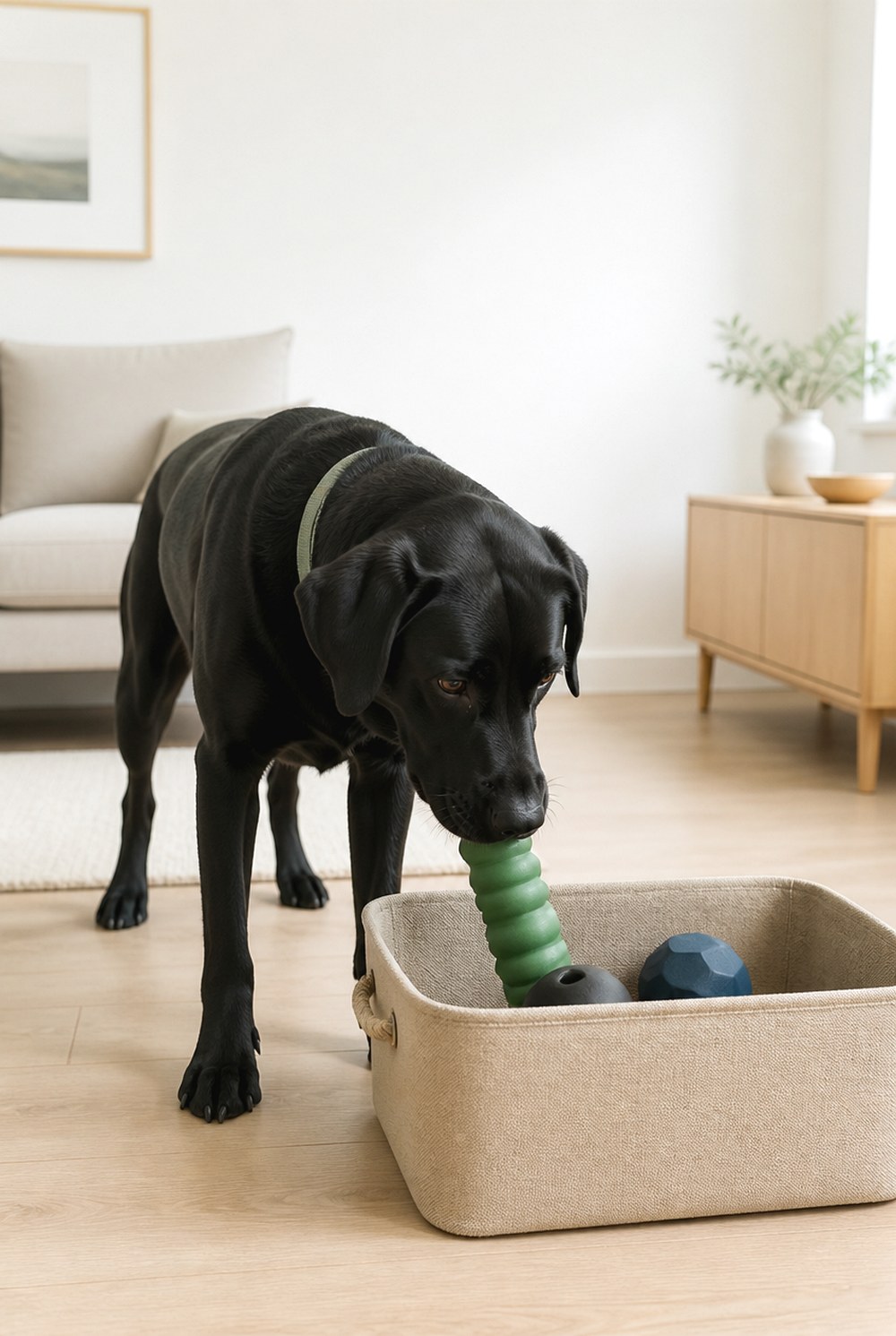
Choose one open basket for a small rotation of durable toys your dog currently uses. Store the rest elsewhere and swap them periodically. The basket should be wide and stable enough that your dog can reach suitable toys without tipping a tall container onto themselves.
This is also a useful opportunity to inspect toys. Remove anything badly damaged or breaking into small pieces instead of putting it back into rotation.
For dogs that chew baskets, skip woven materials and use a sturdy pet-safe container that cannot splinter.
6. Turn an Under-Stair Space Into a Quiet Nook
An open recess under a staircase can become useful dog space without adding another piece of furniture.
The best version is uncomplicated: a fitted bed or mat, good airflow, sufficient headroom, and a clear entrance. Avoid filling the space with decorative shelves that reduce usable room or create objects your dog could knock down.
This setup works only when the recess is genuinely comfortable for the dog. A nook that is dark, cramped, hot, or difficult to exit is not improved by attractive styling.
Keep utility panels, electrical equipment, exposed wiring, and household chemicals inaccessible.

7. Place a Resting Mat Near a Window
Some dogs enjoy having a place where they can rest while still watching what is happening outside.
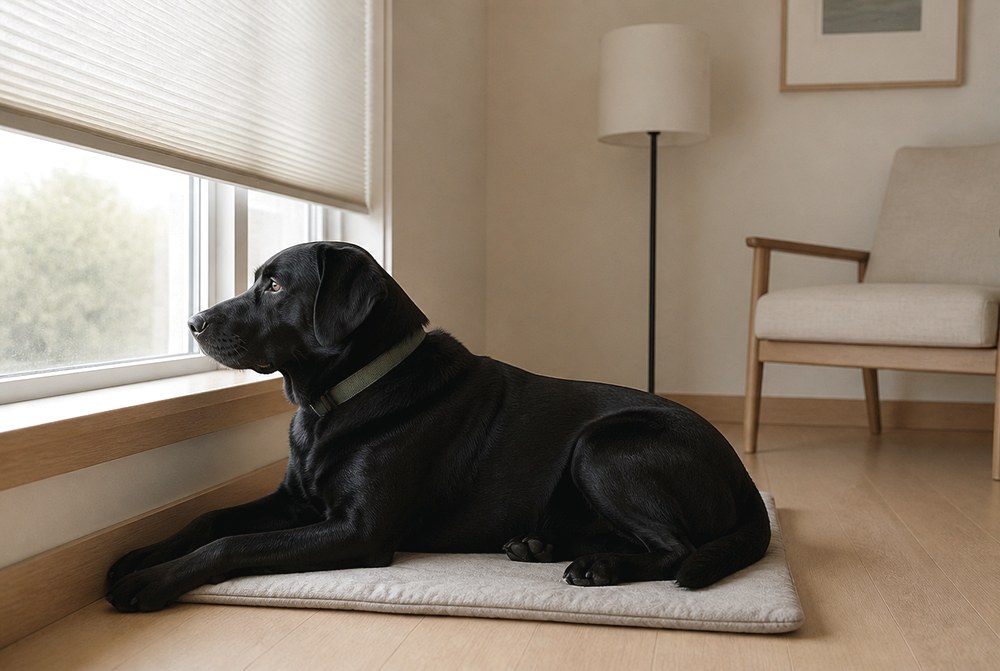
Instead of adding a large raised platform, place a washable flat mat a comfortable distance from a secure window. Keep the sill and surrounding floor clear. If strong afternoon sun heats the area, use normal household shade and give your dog the option to move elsewhere.
This works best as one choice among several resting locations rather than a spot your dog is expected to stay in all day.
Make sure windows and screens are secure, and do not position the nook beside unsecured balcony or exterior access.
8. Hide Grooming Supplies in a Closed Cabinet
Brushes, towels, nail-care tools, and other grooming supplies can make a dog corner look crowded even when they occupy very little space.
A narrow closed cabinet or drawer unit keeps them nearby without leaving tools in reach. Group supplies in small interior containers so you can remove what you need instead of emptying the entire drawer.
This works well when the dog corner is near a laundry area, mudroom, or entryway where quick cleanups already happen.
Sharp grooming tools, medicines, cleaners, and small items should remain secured and inaccessible to your dog.
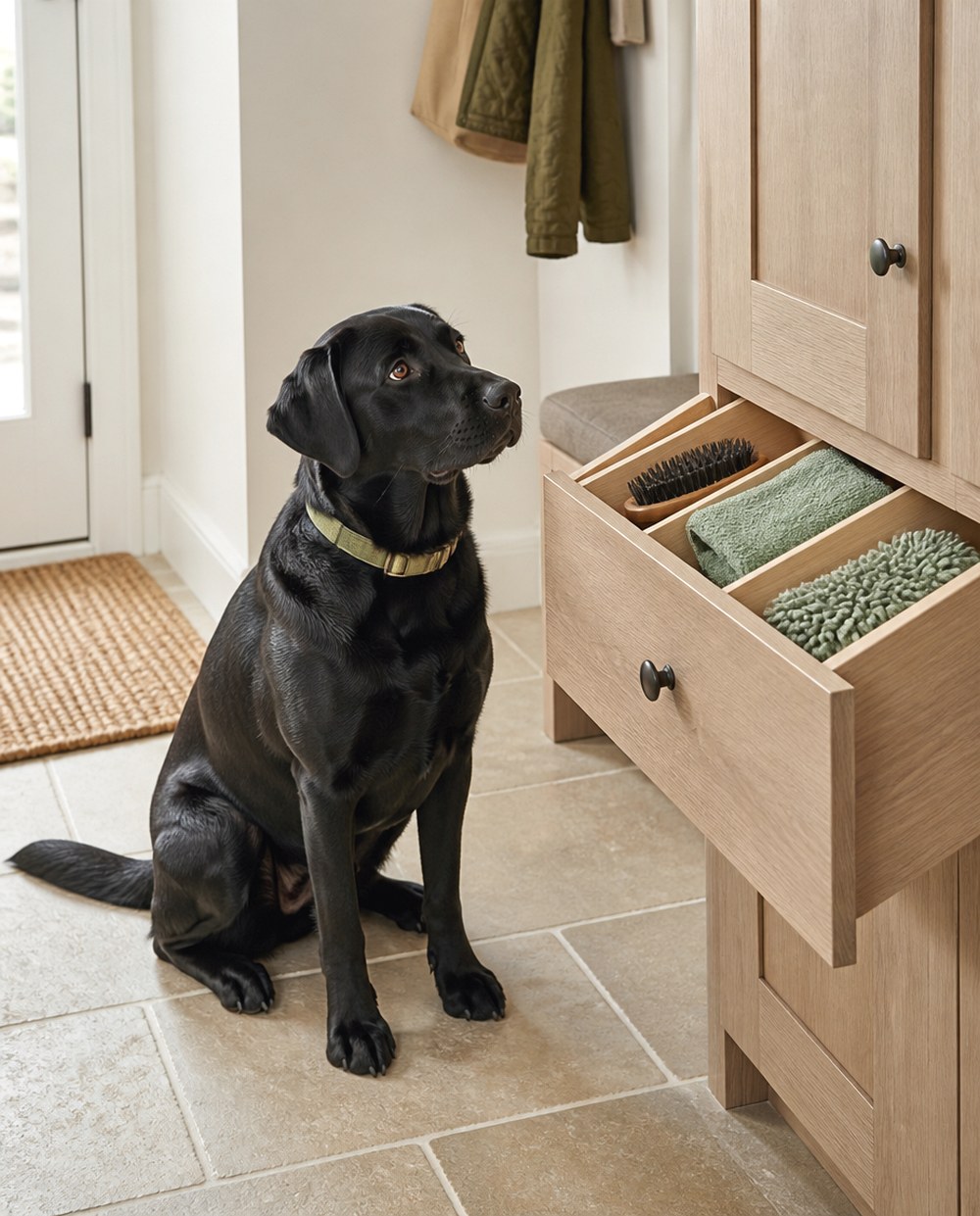
9. Combine the Dog Corner With an Entryway Walk Station
If walks create most of your dog-related clutter, build the nook around the door instead of around a decorative pet bed.
Use a washable floor mat, one wall hook for the daily leash, and a closed drawer or cabinet for backup bags and seasonal walking accessories. A small resting mat beside the station gives your dog a place to wait while you get ready without blocking the doorway.
Keep the walking route clear. Bags, shoes, retractable cords, and loose straps should not become obstacles underfoot.
This arrangement is especially practical in smaller homes because the supplies stay where they are used.

10. Use a Crate Alcove Without Turning It Into a Display
For a dog already comfortable using an appropriately sized crate, placing it in a calm alcove can keep the room visually organized while preserving the crate’s practical purpose.
The crate should remain well ventilated and large enough for your dog to stand, turn around, and lie comfortably. Keep the entrance clear and avoid piling storage on top unless both the crate and furniture arrangement are specifically designed to support it safely.
You do not need decorative signs, shelves, pillows, or hanging accessories around the crate. A restrained setup generally looks cleaner and leaves fewer objects for your dog to reach.
Never cover the crate in a way that creates poor ventilation or excess heat. If your dog shows persistent distress around confinement, discuss the situation with an appropriate veterinary or qualified behavior professional rather than forcing longer crate periods.
You May Also Like


How to Keep the Corner Minimal After You Set It Up
The design matters less than what happens after a few weeks of everyday use. Dog supplies accumulate quickly when every new item gets added to the same nook.
Give the corner a clear capacity. One toy bin stays one toy bin. Walking gear fits on the assigned hooks. Spare bedding stays inside its cabinet or bench rather than beside it.
A short reset can prevent the area from slowly expanding:
- Return leashes and harnesses to their assigned spot after walks.
- Wipe feeding mats and deal with spills rather than allowing bowls to sit in a messy area.
- Launder bedding according to its care instructions.
- Rotate excess toys out instead of enlarging the basket.
- Inspect toys, leads, beds, bowls, and storage for wear or damage.
- Remove unrelated household items that migrate into the dog zone.
The result should still work for your dog first. A beautiful corner that is too cramped, slippery, warm, noisy, or inconvenient will not become more useful because it matches the room.
Choose One Purpose Before You Buy Anything
You do not need all 10 ideas in one corner. In fact, combining too many usually works against the minimalist look.
If the main problem is resting space, start with a bed or quiet alcove. For walk clutter, build the corner near the entryway. For toys, limit visible storage to a small rotation. If the challenge is small-space living, use vertical leash storage or an existing under-stair recess instead of adding more floor furniture.
Start with what your dog uses every day, give those items a fixed home, and leave the rest of the corner open. That negative space is what keeps a practical dog zone from turning into another cluttered storage area.
