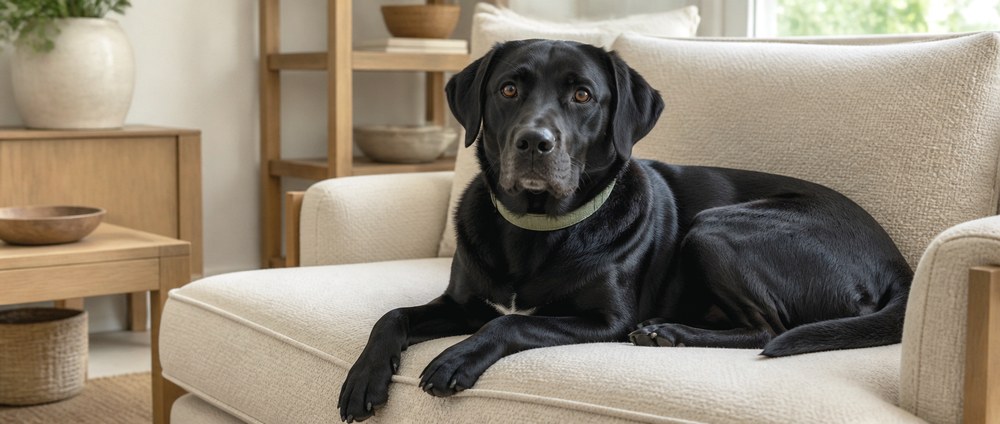
A sofa tends to become one of the hardest-working surfaces in a dog household, even when the dog is not normally allowed on it. Fur settles on the fabric, paws brush against the front edge, and an excited dog can transfer dirt after coming indoors.
Save This Idea on Pinterest

12 Dog-Friendly Living Room Ideas for a Comfortable, Practical Space
Save to PinterestWhen choosing or replacing upholstered furniture, look for tightly woven fabric that can be vacuumed without snagging easily. Removable, washable cushion covers are useful because individual pieces can be cleaned instead of treating the entire sofa.
Color matters less than many people expect. A fabric that visually disguises your dog’s shedding may look cleaner between vacuuming sessions, but washability and durability should come first.
If your dog regularly sleeps on the sofa, make one section the expected spot rather than covering every seat. That keeps cleanup more contained and gives the dog a familiar place to settle.
2. Use a Washable Low-Pile Area Rug
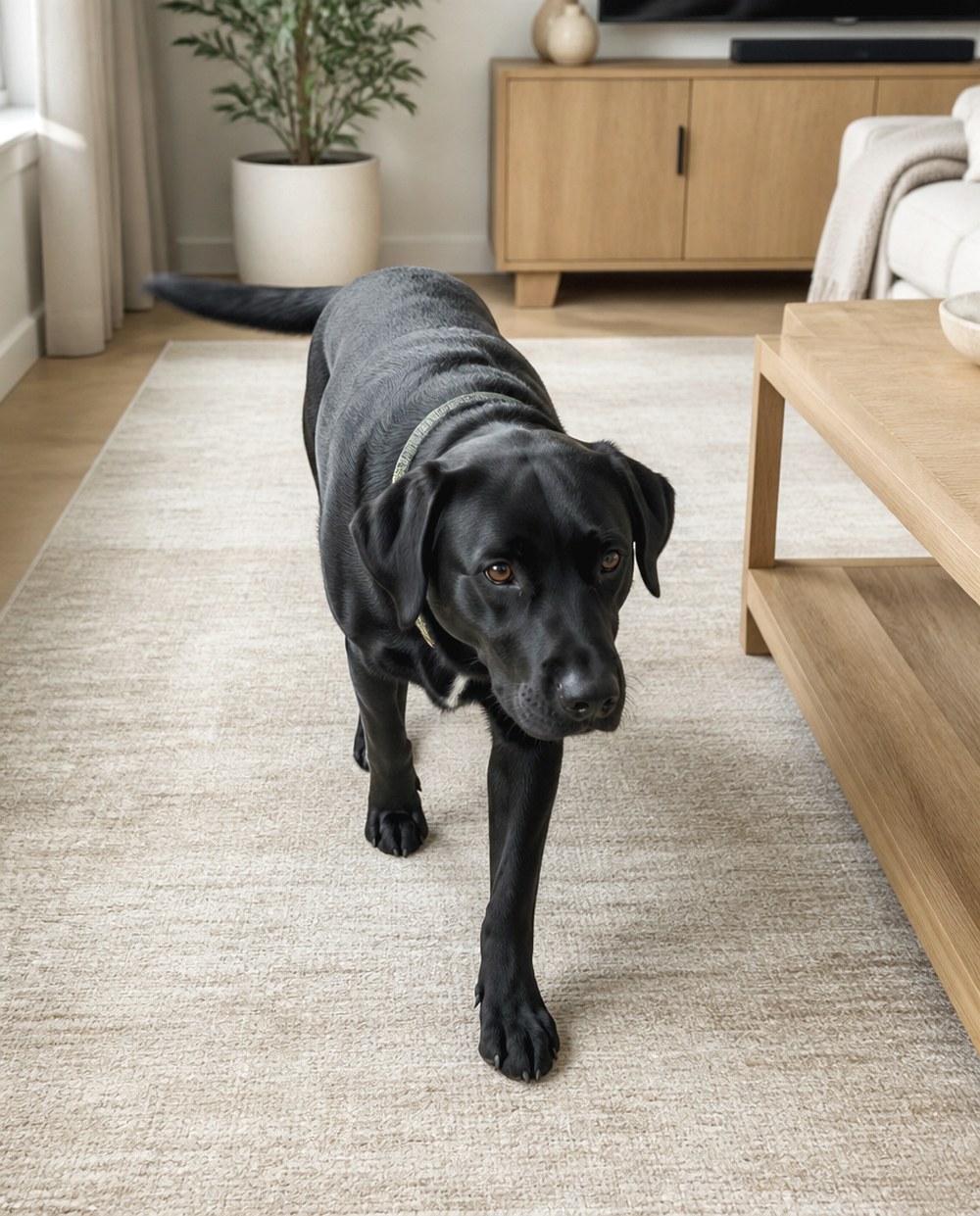
A rug can make hard flooring more comfortable for a dog while also providing useful traction near the sofa or favorite resting area.
Low-pile designs are usually more practical than deep shag rugs in dog-heavy spaces. Fur and crumbs are easier to see and remove, and there are fewer long fibers for claws to catch.
Choose a rug that stays flat rather than bunching beneath running paws. A suitable nonslip backing or rug pad can help keep it stable, depending on the flooring underneath.
Washability is especially valuable near exterior doors or in homes with dogs that frequently return from wet walks. Even when the rug cannot go into a household washing machine, choosing a material that can be cleaned according to its care instructions makes routine maintenance easier.
You May Also Like

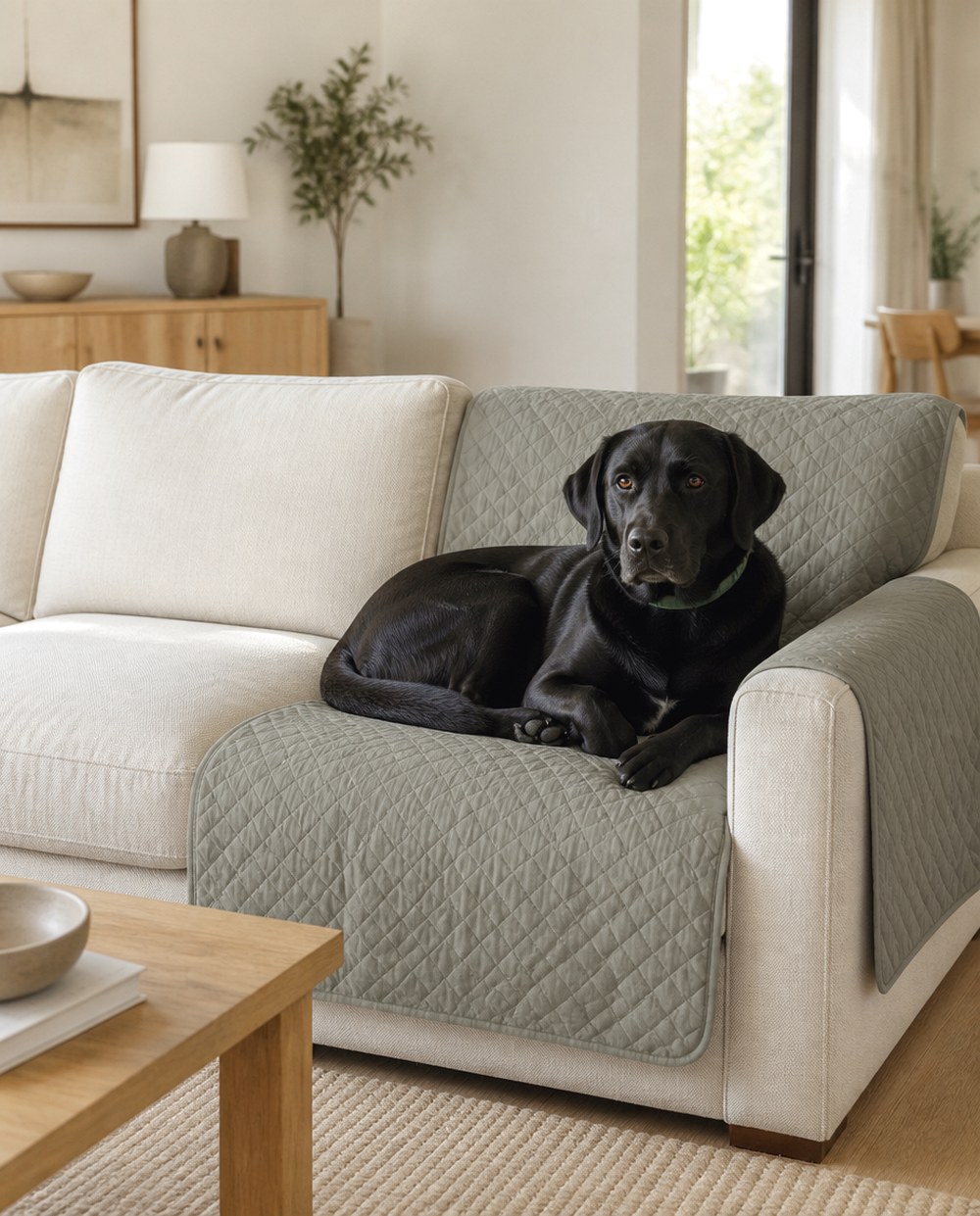
3. Keep a Washable Throw on the Dog’s Favorite Seat
If your dog has claimed one end of the sofa or a particular armchair, a washable throw can protect that high-contact area without covering the entire room in protective layers.
Use one that stays reasonably secure rather than a loose blanket that continually slides onto the floor. Wash it frequently enough to prevent fur, outdoor debris, and normal dog odor from building up.
Keeping two interchangeable throws can also make laundry days easier. One can be in use while the other is being washed and completely dried.
This idea works especially well for households where furniture access is allowed but confined to certain seats.
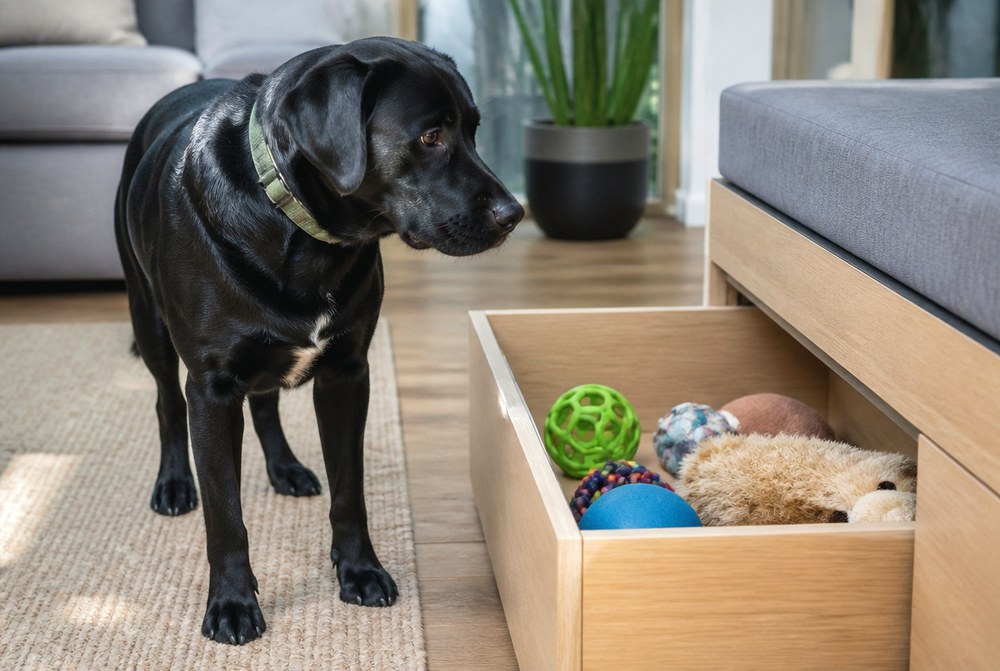
4. Give Toys a Closed or Contained Storage Spot
A basket overflowing with toys may be convenient, but it can quickly become part of the floor clutter. A low cabinet drawer, lidded storage bench, or sturdy basket placed in a consistent location keeps the room easier to reset.
How accessible the storage should be depends on the dog. A dog that calmly selects toys may do well with an open basket. A dog that chews baskets, swallows fabric, or empties every toy at once is better served by storage the owner controls.
Periodically inspect toys before returning them to storage. Remove damaged pieces, exposed stuffing, fragments, or anything that has become small enough to pose a swallowing risk.
Give Your Dog a Place in the Room Without Giving Up the Room
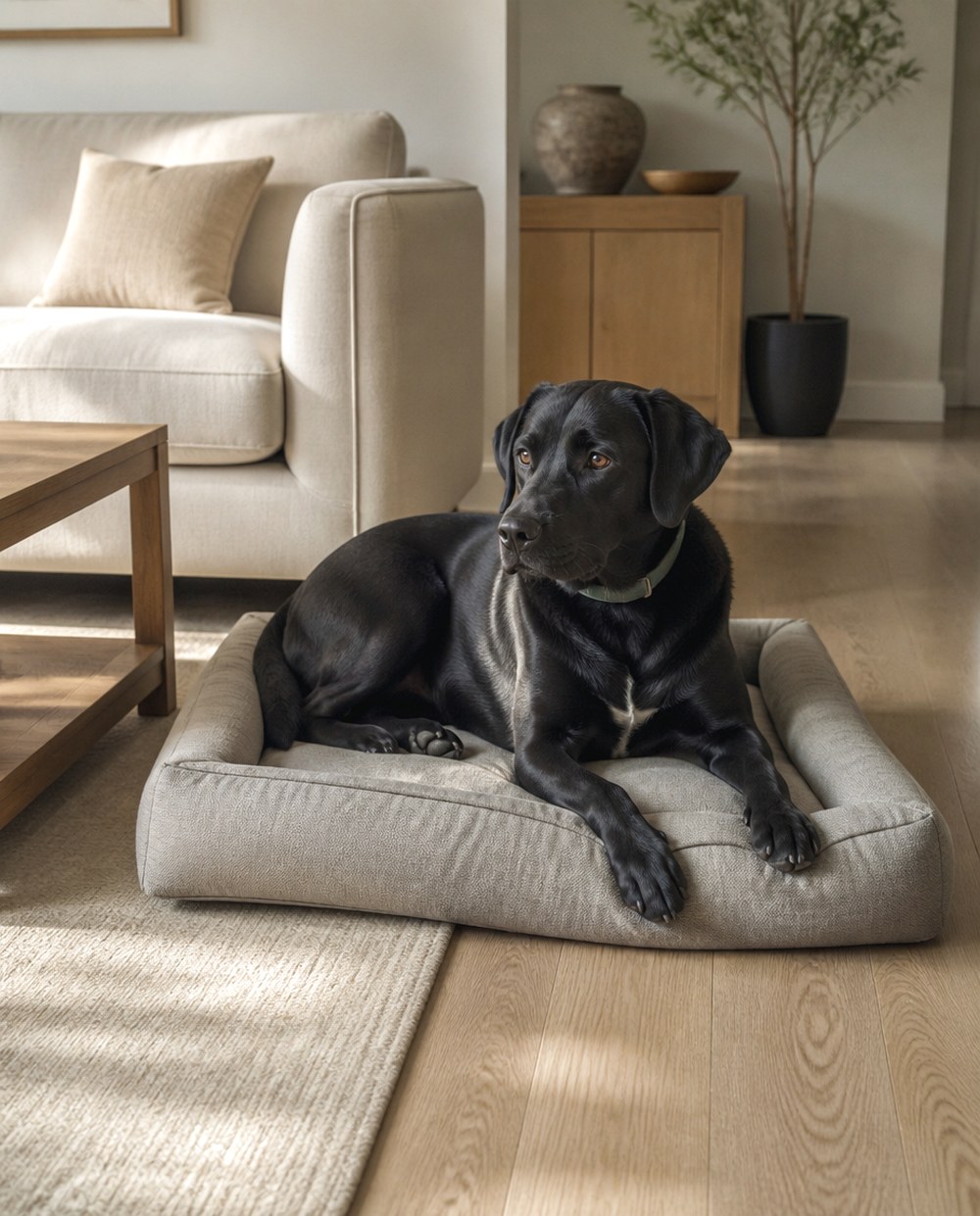
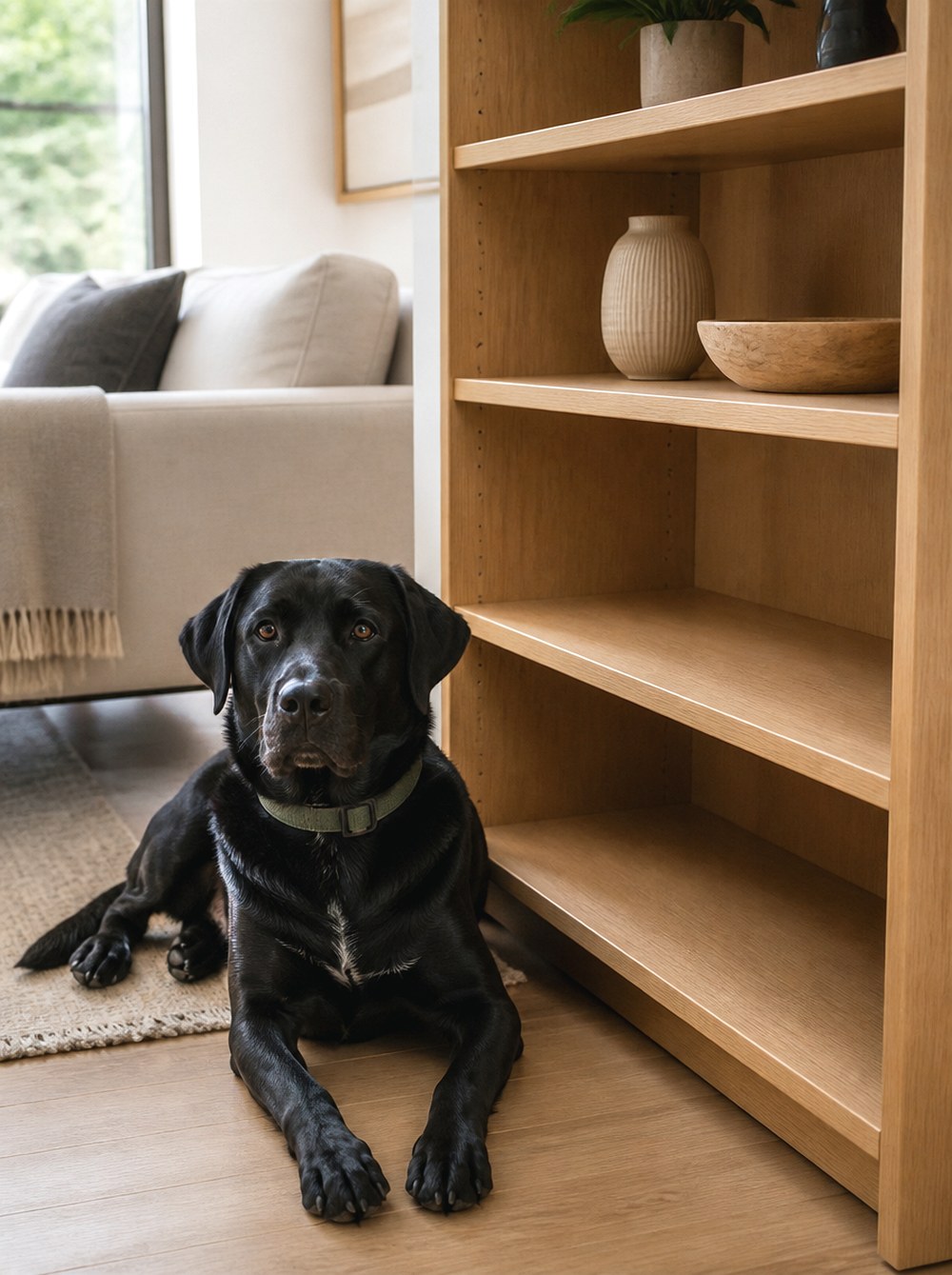
5. Create a Dedicated Resting Zone Beside the Main Seating Area
Dogs often settle more easily when there is a comfortable place close to household activity without being directly in the traffic path.
Place a dog bed beside the sofa, against a wall, or in another protected corner where people are unlikely to step over it. Avoid putting the bed behind a frequently opened door or directly in a narrow walkway.
The location matters as much as the bed itself. Some dogs like being close enough to watch everyone; others choose quieter edges of the room.
For an older dog or one with limited mobility, prioritize easy access and secure footing around the bed. Sudden reluctance to lie down, rise, walk, or use familiar furniture deserves attention, particularly if it represents a new change.
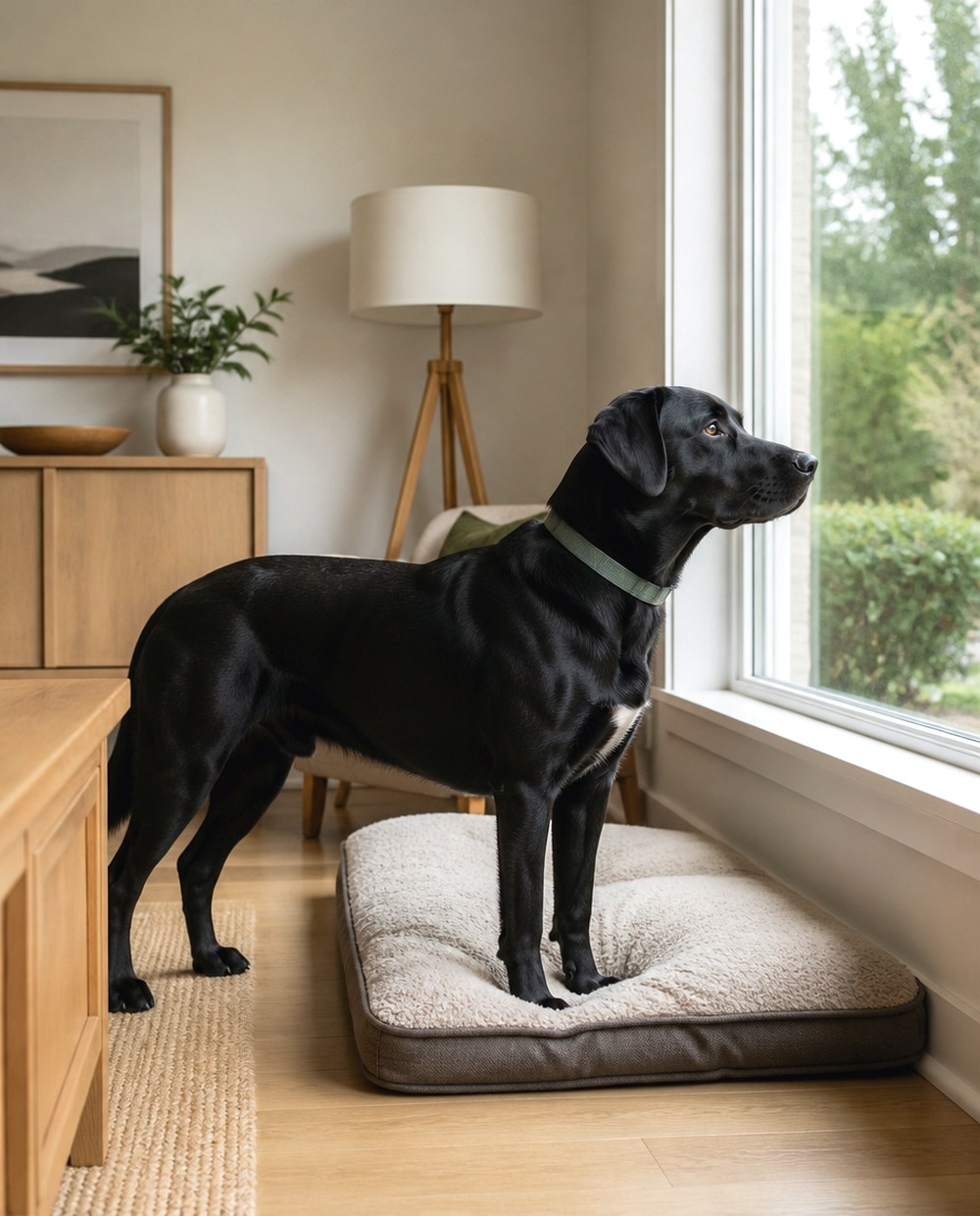
6. Set Up a Safe Window-Watching Spot
A window can provide changing sights and sounds without adding another object to the room. If your dog enjoys watching outdoor activity calmly, position a bed or existing piece of furniture where the view is available without encouraging precarious climbing.
Pay particular attention to blind and curtain cords. Loose loops should not hang where a dog can become tangled or chew them.
Also consider what the view does to your particular dog. A window spot that leads to relaxed watching may be useful; one that triggers repeated barking, pacing, or frantic reactions may need visual screening or a different resting location.
The best window station is one your dog can leave just as easily as they approach it.
7. Build a Small Calm-Enrichment Corner
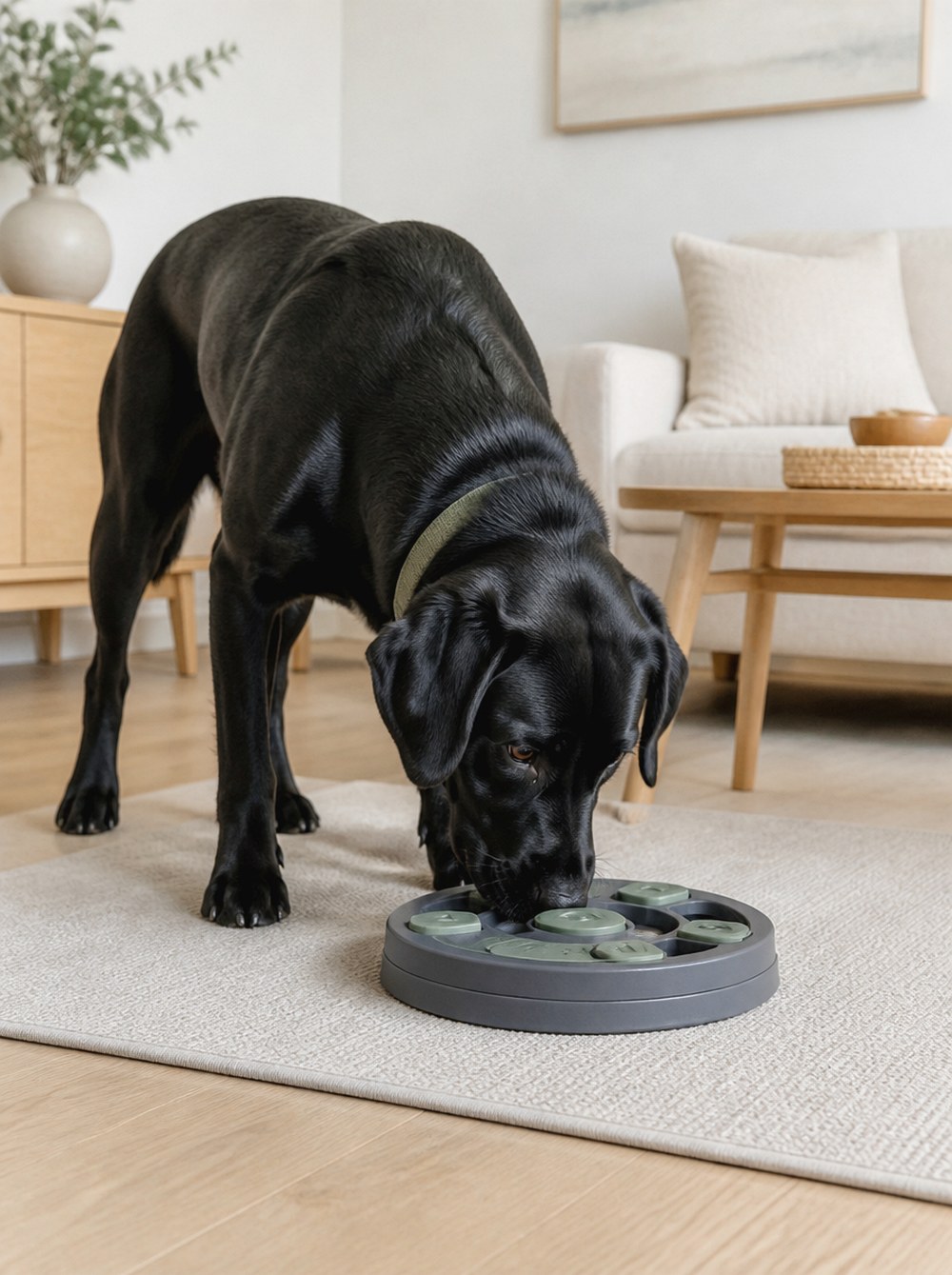
Not every dog activity needs to involve running through the living room. A defined spot for supervised food puzzles, licking activities, or another suitable enrichment item can give the dog something to do without spreading the activity across the furniture.
Choose a location on an easy-to-clean surface or over a washable mat. Introduce one appropriate item at a time rather than leaving a pile of food-filled toys accessible indefinitely.
Any item that can be chewed apart or swallowed should be selected for the individual dog and used with appropriate supervision. Check reusable enrichment items for damage before the next session.
When the activity is finished, put the equipment away. That helps the same corner return to a quiet resting area rather than becoming permanent toy clutter.
8. Add a Tidy Water Station When the Living Room Needs One
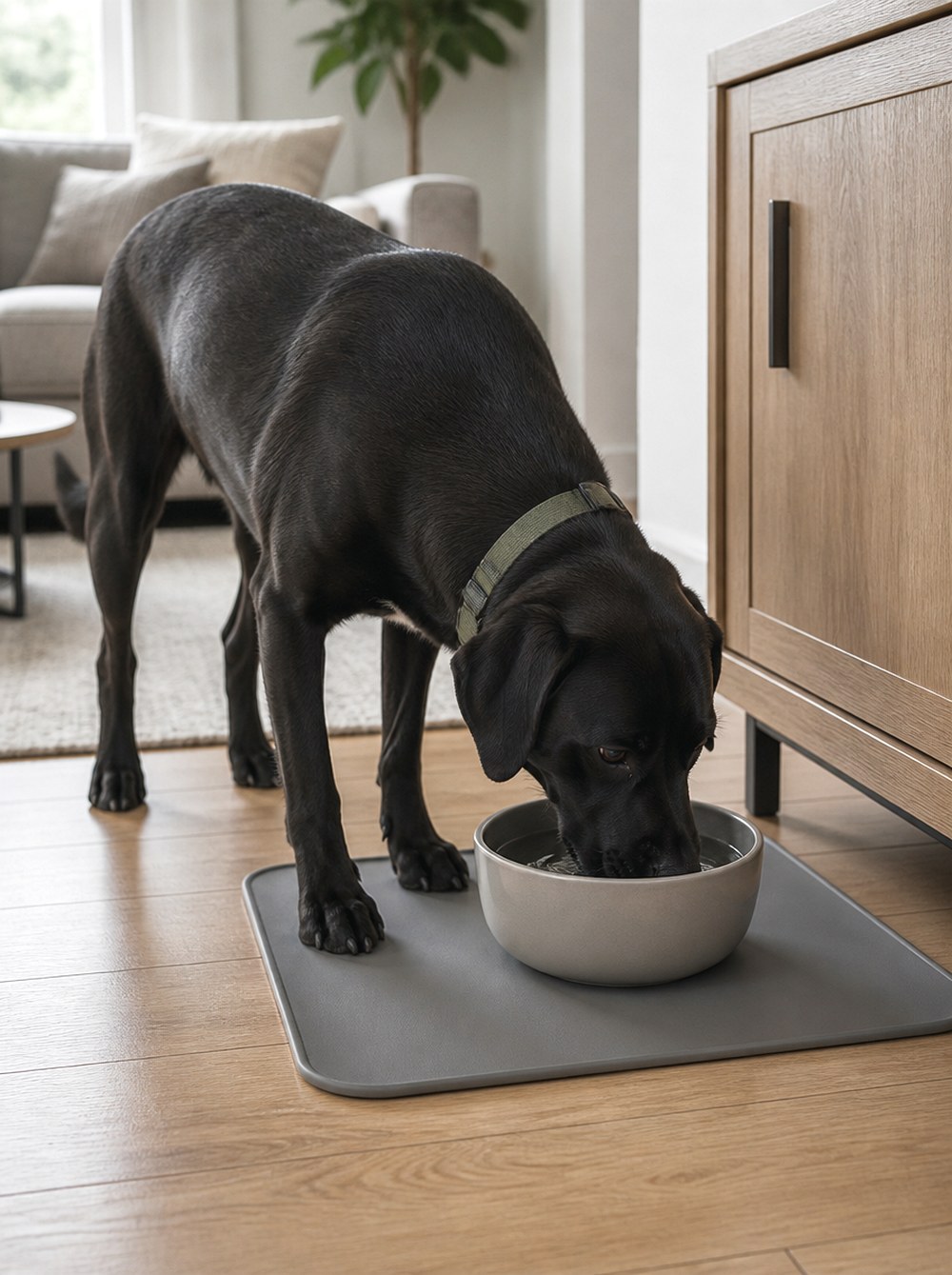
A living-room water station is not necessary in every home. It can make sense, however, in a large house, for a dog that spends much of the day in that room, or when access to the primary water bowl is sometimes inconvenient.
Place the bowl against a wall or cabinet rather than in the center of a walking path. A washable mat or tray can contain minor splashes and help define the station.
Keep fresh water available and clean the bowl routinely. If you notice a significant unexplained change in how much your dog drinks, especially along with appetite, bathroom, energy, or behavior changes, contact a veterinarian rather than trying to solve it through room setup alone.
Make Movement and Everyday Safety Part of the Design
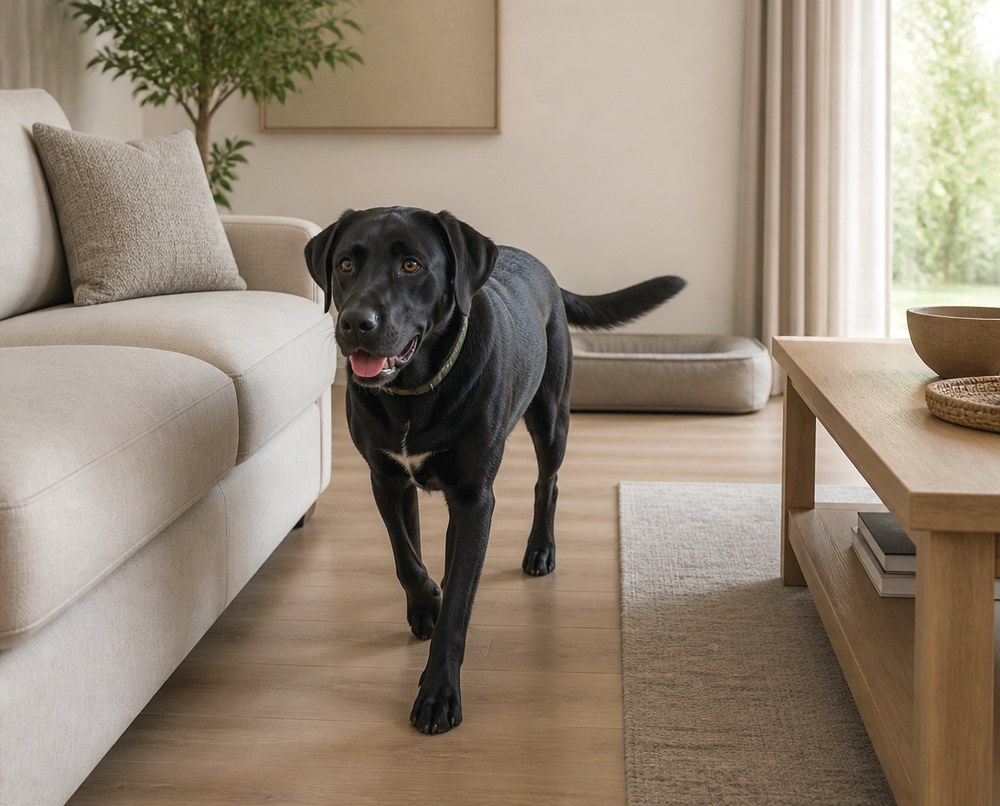
9. Leave a Clear Route Through the Furniture
A stylish furniture layout can still be awkward for a dog if every route requires squeezing between a coffee table, sofa corner, and floor lamp.
Watch how your dog naturally travels through the room. If the same narrow gap causes repeated bumps or sharp turns, move furniture enough to create a more obvious path.
Clear routes are particularly useful around the doorway, dog bed, water area, and places where the dog frequently approaches people.
This does not require pushing every piece of furniture against a wall. The goal is simply to avoid unnecessary obstacles and keep commonly used paths free from baskets, bags, toys, and cords.
10. Route Electrical Cords Out of Reach
Lamp, television, charging, and entertainment-system cords can create tempting or hazardous access points, particularly for puppies or dogs that chew household objects.
Route cords behind furniture where possible and use suitable cord-management solutions to keep them contained. Do not leave loose extension cords crossing the floor or dangling beside a dog bed.
The same principle applies to chargers and small electronics. A phone cable hanging from an end table can be easier for a curious dog to reach than a wall cord hidden behind a cabinet.
If a cord becomes damaged, disconnect it and replace or address it appropriately rather than trying to hide the damaged section from the dog.

11. Favor Stable Furniture With Dog-Friendly Edges
A lightweight side table that tips whenever a tail brushes it is not especially practical in a dog household.
Give preference to stable tables and lamps that are difficult to knock over during normal movement. Rounded or softened furniture corners can also be useful in tight spaces where a dog regularly turns or passes close to a table.
Placement matters, too. A sturdy coffee table can still create a collision point if it sits directly in the dog’s main route through the room.
Avoid putting heavy or breakable objects near the edge of tables where a curious nose, wagging tail, or passing person could send them to the floor.

12. Move Fragile, Toxic, and Chewable Decor Out of the Dog Zone
The final step is often subtraction rather than addition.
Scan the room from your dog’s height. Floor-level decorative objects, accessible candles, medicines, cleaners, small ornaments, hooks, and chewable accessories may be better placed inside secure storage or beyond reach.
Houseplants deserve the same attention. Plant safety varies by species, so do not assume that a decorative plant is harmless simply because it is commonly sold for indoor use. Verify plants before bringing them into a dog-accessible area.
Shelving should be stable, and heavy items should not be balanced where they can easily fall. The room can still have personality; it just helps to keep the lowest levels reserved for items that are safe around normal dog activity.
You May Also Like

Which Changes Should You Make First?
You do not need to redesign the whole living room at once. Start with the parts your dog interacts with every day.
If cleaning is the main frustration, begin with the rug, sofa protection, and toy storage. If your dog regularly ends up underfoot, work on the resting zone and furniture path first. For a young dog that explores with their mouth, cord management and removing accessible hazards move to the top of the list.
A useful dog-friendly room usually has three things in common: the dog has an obvious place to rest, people can keep the room reasonably clean, and normal movement does not put the dog in contact with avoidable hazards.
Make those parts work first. Decorative changes can follow.
