Bringing home a rescue dog can make even a quiet house feel unfamiliar for a few days. Your dog is learning where to sleep, where the door leads, who provides meals, which sounds are normal, and what happens next. You are learning the dog at the same time.
Save This Idea on Pinterest

New Rescue Dog First Week Routine: A Calm 7-Day Plan
Save to PinterestThe most useful first-week routine is not packed with outings, visitors, training sessions, and new experiences. It is built around predictability. Give your dog dependable bathroom opportunities, regular meals, access to water, short low-pressure movement, plenty of uninterrupted rest, and calm time with you.
Some rescue dogs explore immediately. Others hide, pace, sleep heavily, cling to one person, or seem unusually quiet. Adjustment does not follow a fixed timetable, so use the routine below as a framework rather than a deadline.
The First-Week Goal: Make Daily Life Predictable
During the first seven days, focus on a few things your dog can learn to count on:
- Bathroom trips happen frequently and in familiar places.
- Meals arrive on a consistent schedule.
- Fresh water remains available.
- Walks are manageable rather than exhausting.
- Rest is protected.
- People do not constantly approach, hug, handle, or test the dog.
- New rooms, visitors, pets, and activities are introduced gradually.
Keep your dog’s world relatively small at first. A quiet living area, sleeping space, feeding location, and reliable outdoor bathroom route can provide enough variety while your dog begins learning the household.
If the rescue or shelter provided feeding instructions, medication information, veterinary records, behavior notes, or restrictions, follow those directions rather than replacing them with a generic routine.
Days 1–2: Keep the World Small
The first two days are mainly about arrival, observation, bathroom access, food, water, and rest.
Start With a Quiet Home Entry
Take your dog to the intended bathroom area before beginning a tour of the house. Keep the leash secure, especially around doors, gates, garages, and unfenced areas. A newly adopted dog may not yet recognize your home as a place to return to.
After the bathroom opportunity, bring the dog into one prepared area rather than opening every room immediately. Set up:
- A comfortable bed or resting spot
- Fresh water
- A feeding area
- A few suitable toys
- A crate or quiet retreat if the dog is already comfortable using one
- Gates or closed doors to limit access where needed
Allow exploration without repeatedly calling the dog toward you. Sitting nearby and letting the dog decide whether to approach can be more useful than trying to create instant affection.
Offer Frequent Bathroom Opportunities
Even a dog reported to be housetrained can have accidents after a move. New smells, new doors, stress, a different feeding schedule, or unfamiliar signals can temporarily disrupt familiar habits.
Take the dog out after waking, after meals, after active periods, before bedtime, and at additional intervals appropriate for the dog’s age and needs.
Use the same exit and, when practical, the same bathroom area. Quiet praise after the dog eliminates outdoors can help make the pattern clear.
If an accident happens indoors, clean it without scolding. Punishment can make an uncertain dog more nervous without teaching where you want bathroom behavior to happen.
Keep Exercise Modest
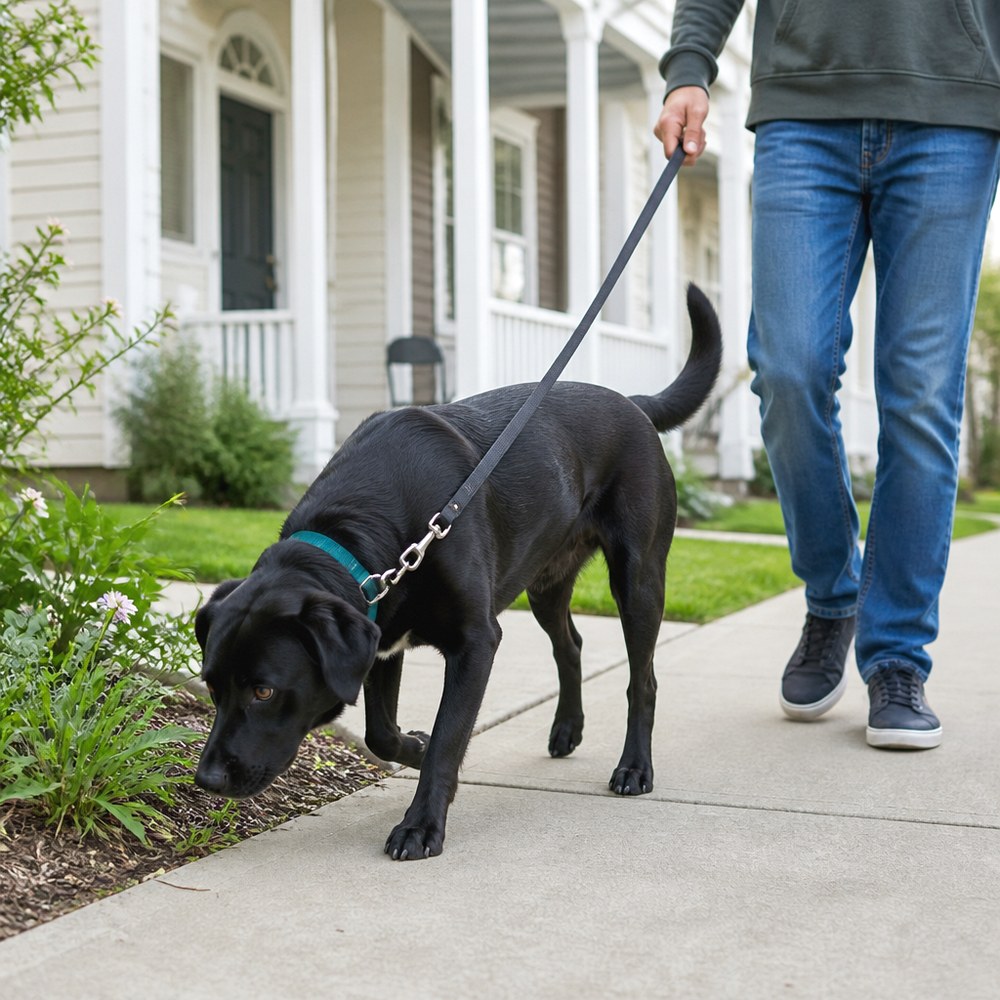
A long hike is not necessary to help a new rescue dog settle. For many dogs, several short leash walks or bathroom outings are more manageable than one highly stimulating adventure.
Stay close to home initially. Skip crowded shopping districts, dog parks, busy patios, large gatherings, and unnecessary introductions.
Your first walks are also a chance to learn what your dog notices. Watch for reactions to traffic, bicycles, dogs, strangers, children, stairs, elevators, or loud noises without deliberately pushing the dog toward them.

Days 3–4: Build Three Reliable Anchors
Once your dog has had a little time to observe the household, begin emphasizing three repeating parts of the day: meals, bathroom trips, and quiet activity.
You do not need exact minute-by-minute timing. The order of events often matters more.
Anchor 1: A Consistent Morning Start
A workable morning might look like this:
- Calm greeting after waking
- Outdoor bathroom trip
- Breakfast
- Another bathroom opportunity when appropriate
- Short walk or gentle exploration
- Rest
Avoid turning the morning into a long training session. Your dog is already processing a large amount of information.
A few practical household skills are enough: following you through a doorway without rushing, calmly waiting while the leash is attached, responding to a name, or moving toward you for a reward.
Anchor 2: Predictable Meals
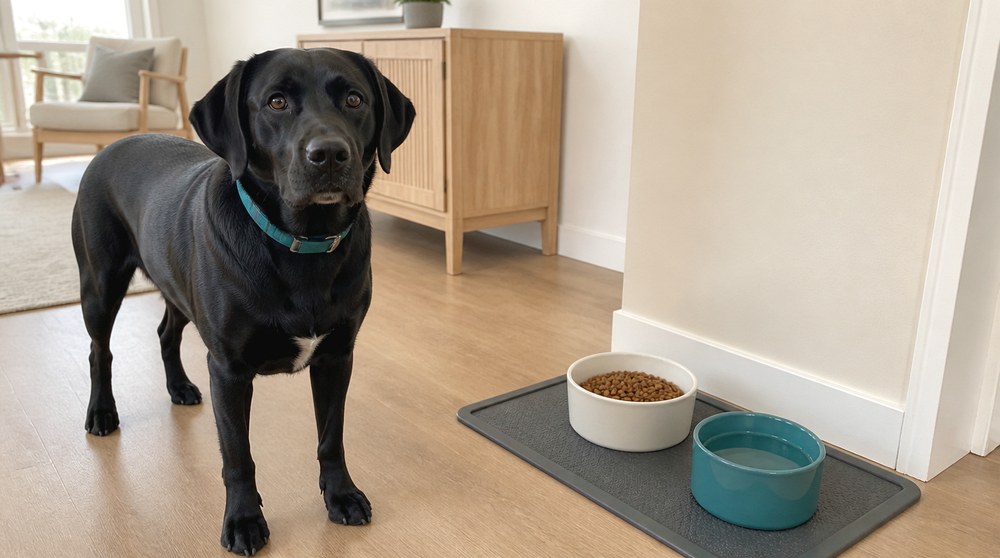
Feed in one quiet location and avoid repeatedly moving the bowl around the house.
The first week is usually not the ideal time to make several unnecessary food changes. If you plan to change diets, consider discussing the transition with your veterinarian, particularly if your dog has a medical history, digestive concerns, allergies, or special nutritional requirements.
Give your dog space while eating. Children and other pets should not crowd the bowl.
After the meal, allow the dog to settle rather than immediately launching into vigorous activity.
Anchor 3: Calm Movement Followed by Rest
A rescue dog may appear energetic while actually being overstimulated. Pacing, jumping, mouthing, barking, inability to settle, or frantic exploration can sometimes mean the environment has become too much rather than that the dog simply needs more exercise.
Try alternating short activity with genuine downtime:
bathroom trip → sniffing walk → water → quiet rest
Sniffing on a manageable walk can give the dog information about the new environment without requiring intense physical exercise.
You May Also Like


A Flexible First-Week Daily Rhythm
Exact times can shift around work, school, and household responsibilities. What helps most is preserving the sequence of familiar events.
| Part of Day | First-Week Routine |
|---|---|
| Early morning | Bathroom trip, breakfast, another bathroom opportunity, brief calm activity |
| Midmorning | Rest in a quiet area |
| Midday | Bathroom trip, short sniffing walk or gentle interaction, water, rest |
| Afternoon | Bathroom opportunity, low-pressure enrichment, quiet household time |
| Early evening | Dinner, bathroom break, calm connection with household members |
| Later evening | Short walk or bathroom trip, quiet indoor time |
| Before bed | Final bathroom opportunity and a consistent sleeping setup |
Puppies, seniors, dogs with medical conditions, and dogs with uncertain housetraining may need more frequent bathroom access or a different meal schedule. Follow veterinary or rescue-specific instructions when they differ from a general routine.
Days 5–7: Add One New Thing at a Time
By the middle or end of the week, you may have a clearer idea of what your dog finds easy and what requires more space.
This is a good point to expand the routine gradually rather than suddenly making the household busy.
Introduce More of the Home Gradually
If your dog has remained comfortable in the initial area, open another room under supervision.
Before expanding access, remove medicines, cleaners, food, cords, small swallowable objects, trash, and anything you do not want chewed. Secure exterior doors and check fences or gates rather than assuming the dog understands the boundaries.
More space is useful only if your dog can manage it comfortably.
Add Short Enrichment Sessions
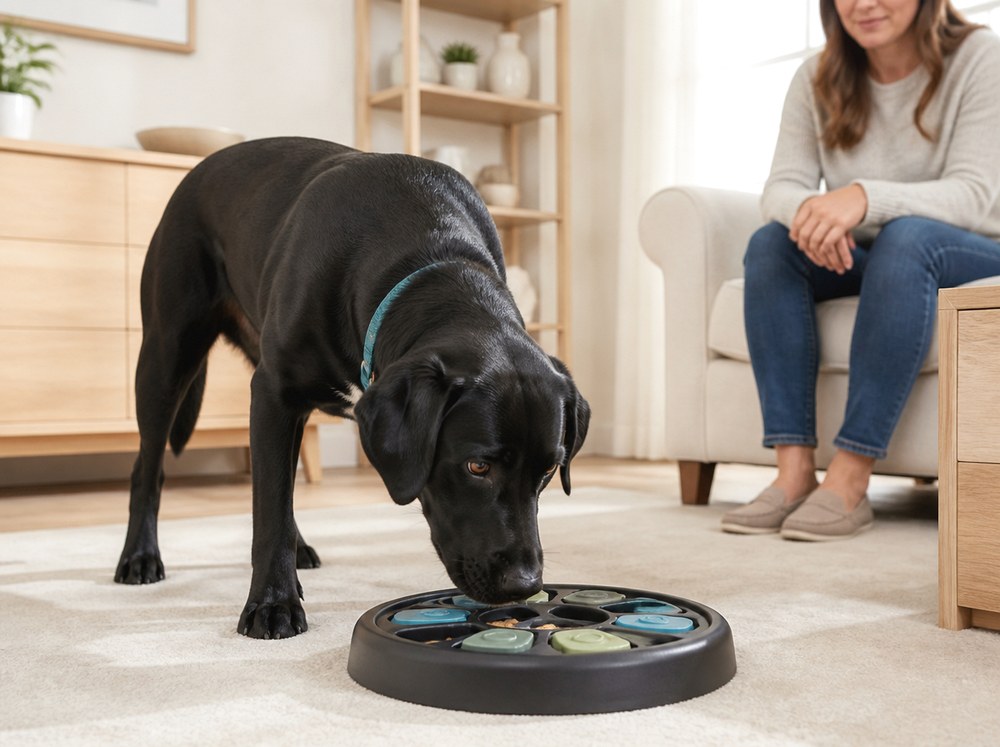
You can now begin experimenting with low-pressure activities such as a suitable food puzzle, scattered kibble in a safe contained area, basic reward-based training, or a durable toy appropriate for the dog’s chewing style.
Keep the session brief enough that the dog can disengage.
Supervise food puzzles and chewable enrichment, remove damaged items, and avoid loose strings, pieces that can be swallowed, or homemade setups that create entanglement or choking risks.
Keep Social Introductions Controlled
A first week does not need to include meetings with everyone who wants to see the new dog.
If you introduce a visitor, one calm person is often more manageable than a room full of guests. Let the dog maintain distance rather than requiring direct interaction.
For children, use close adult supervision and give the dog a retreat that children do not enter. Avoid hugging, climbing on the dog, approaching during meals, or disturbing the dog while sleeping.
If another household pet is involved, use a gradual introduction plan suited to both animals. Gates, distance, separate resources, and short controlled exposures can be useful. Do not force face-to-face interaction because the animals seem curious.
You May Also Like


Protect Sleep and Quiet Time
New rescue dogs can sleep a great deal during their first week. Even when a dog is awake, quiet observation can be valuable.
Place the resting area somewhere the dog can feel included without being in the busiest path through the house. If children or visitors are present, make the resting area off-limits to them.
Try not to repeatedly wake the dog for petting, photos, play, or training.
You may also discover that your dog does not yet want much physical contact. Respecting that boundary can help build trust. Petting should not be the price the dog has to pay for being near you.
Keep Training Small and Useful
Your dog does not need to master a long list of commands in the first week.
Concentrate on skills that make daily routines safer and clearer:
- Recognizing their new name
- Checking in with you voluntarily
- Following a treat or hand target away from a doorway
- Standing calmly while the leash or harness is attached
- Entering the resting area voluntarily
- Briefly settling near you
- Trading an object rather than having it forcibly removed
Use rewards your dog values and stop before either of you becomes frustrated.
If the dog freezes, repeatedly backs away, refuses interaction, or becomes increasingly agitated, reduce the difficulty instead of demanding compliance.
If You Have to Leave the Dog Alone
Do not assume a newly adopted dog is immediately comfortable being alone for a full workday.
If possible, begin with manageable absences and use a dog-safe area. Remove objects that could be swallowed, tangled around the dog, or destroyed.
A crate can be useful for dogs already comfortable with one, but it should not be introduced by forcing a frightened dog inside and then leaving for a long period.
If your schedule requires extended absences immediately, arrange appropriate bathroom opportunities and care based on the dog’s age and needs.
When the Routine Should Get Smaller Again
Progress during the first week is rarely a straight line. A dog that seemed confident yesterday may be more cautious today.
Scale the routine back if you notice that your dog has increasing difficulty settling after outings, repeatedly hides from household activity, becomes frantic around visitors, refuses to move in a certain setting, or appears overwhelmed by interactions.
That might mean returning to shorter walks, fewer visitors, more distance from triggers, or more uninterrupted sleep for a while.
The goal is not to expose the dog to everything within seven days. It is to create enough stability that you can gradually learn what the dog can handle.
Arrange Veterinary Follow-Up
Review the health records supplied by the shelter or rescue and arrange veterinary care according to their instructions and your veterinarian’s recommendations. Bring any vaccination records, medication information, microchip details, previous test results, and known medical history.
The first week also gives you a useful baseline for observing eating, drinking, bathroom habits, mobility, breathing, sleep, skin, and behavior.
Contact a veterinarian when you notice concerning symptoms or sudden changes, including breathing difficulty, weakness, repeated vomiting, significant appetite or bathroom changes, signs of pain, or an abrupt change in behavior. A newly adopted dog’s behavior should not automatically be blamed on stress when a health problem could be involved.
What a Good First Week Actually Looks Like
A successful first week does not require your rescue dog to become outgoing, perfectly housetrained, comfortable alone, friendly with every visitor, and fully settled.
A better measure is whether daily life has become more predictable.
By the end of the week, you may know which door your dog prefers for bathroom trips, how much activity helps before rest, where the dog feels safest sleeping, which household sounds cause concern, and which types of interaction are welcomed.
Your dog may also be starting to recognize a dependable pattern: wake up, go outside, eat, explore a little, rest, reconnect, and settle again.
Keep those reliable anchors in place as you enter the second week. Add new experiences according to the dog in front of you, not according to a deadline.
