A cat toy rotation station gives you one dependable place to decide what stays out, what goes away for a while, and what needs cleaning or replacing. Instead of collecting every ball, kicker, wand, and puzzle in one overflowing basket, you can separate the small selection currently in use from the toys waiting for their next turn.
Save This Idea on Pinterest
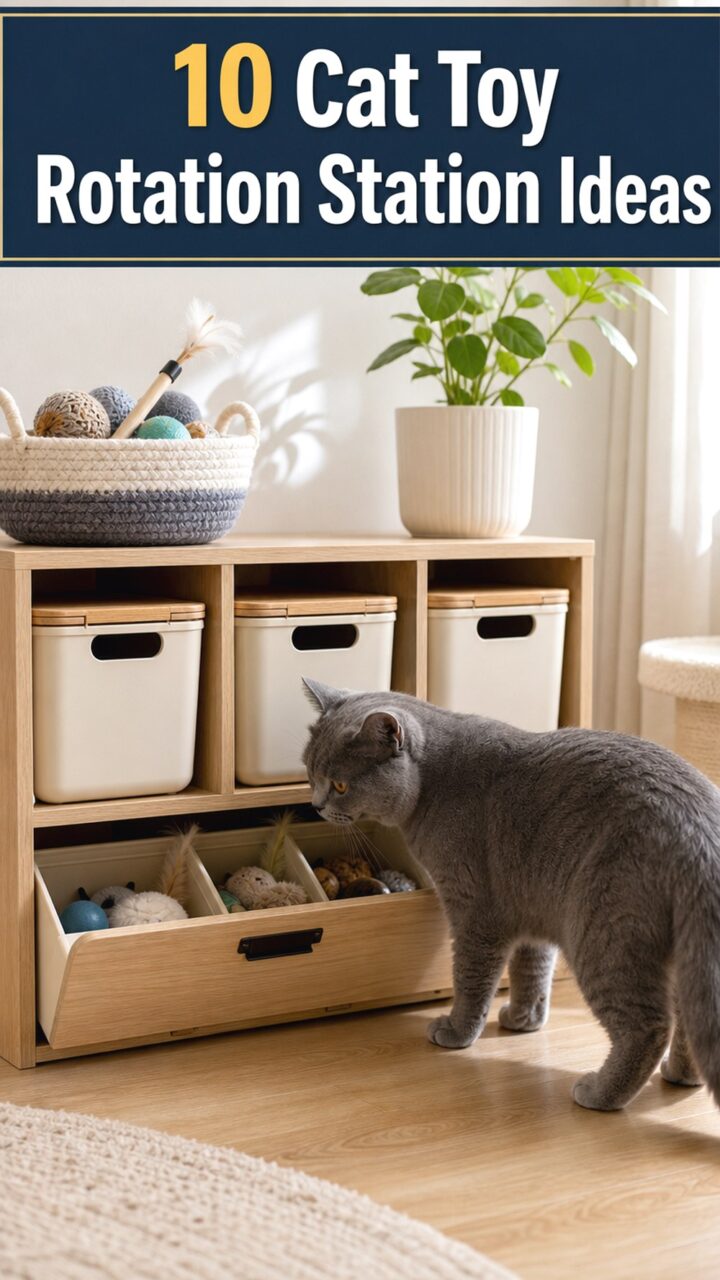
10 Cat Toy Rotation Station Ideas for a Tidier Home
Save to PinterestThe station does not have to be large. A drawer, rolling cart, cabinet shelf, or portable caddy can work if it suits your space and keeps potentially risky toys out of unsupervised reach.
The best setup is the one that makes rotation quick enough to maintain. These 10 ideas range from compact systems to more permanent storage, so you can choose according to your home, toy collection, and usual play routine.
1. Create a “Playing Now” and “Resting” Shelf
One of the clearest rotation systems uses just two storage zones. Give one shelf or compartment to toys that are currently available and another to toys that are resting between rotations.
The active section can hold sturdy balls, larger kicker toys, or other items you are comfortable making available according to their design and condition. Put reserve toys in a closed bin or cabinet so your cat cannot simply pull everything back out.
This setup removes the need for complicated labels or schedules. When the active selection starts feeling repetitive, exchange a few items rather than replacing the entire group at once.
Keep wand toys, strings, ribbons, feathers that can be pulled loose, and toys with small components in the protected section unless you are actively supervising their use.
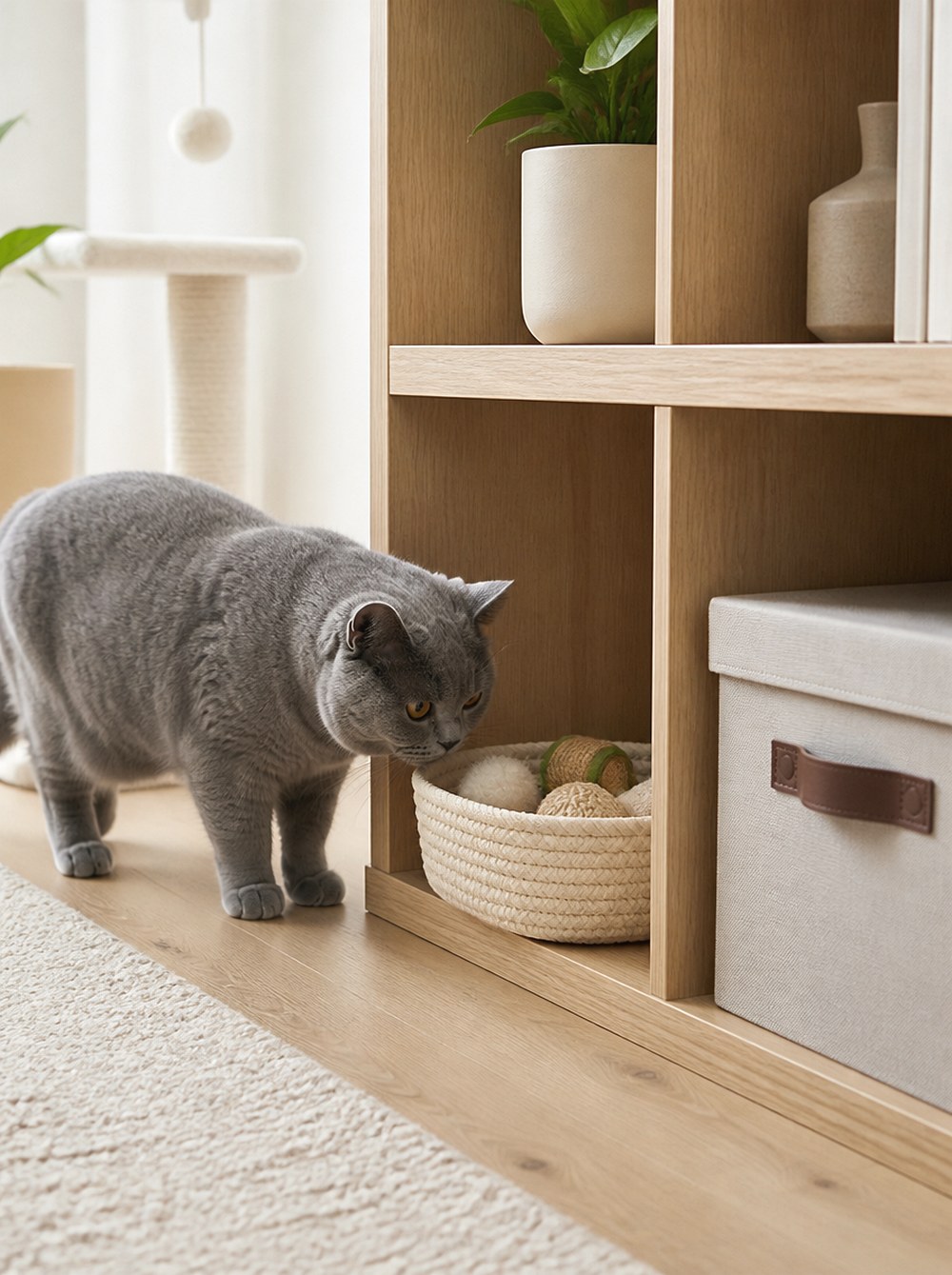
2. Use a Three-Tier Rolling Rotation Cart
A compact rolling cart works well when cat toys are used in several rooms. Each level can have a different job rather than becoming three more places to pile toys.
For example, use the upper tier for the current rotation, the middle tier for interactive toys that come out during supervised play, and the bottom tier for reserve toys inside secure containers.
Choose a cart that is stable and difficult to tip. Closed containers are useful if your cat likes climbing onto furniture, digging through baskets, or carrying toys away before you are ready to use them.
The main advantage is mobility. You can roll the station near the living room for an evening play session, move it out of the way afterward, and keep all the pieces together instead of carrying toys back and forth individually.
You May Also Like
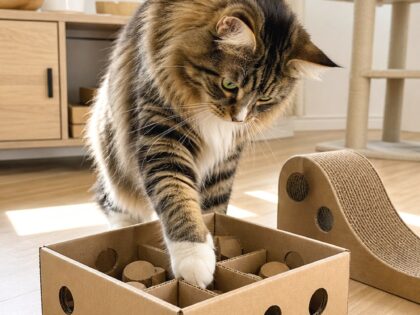


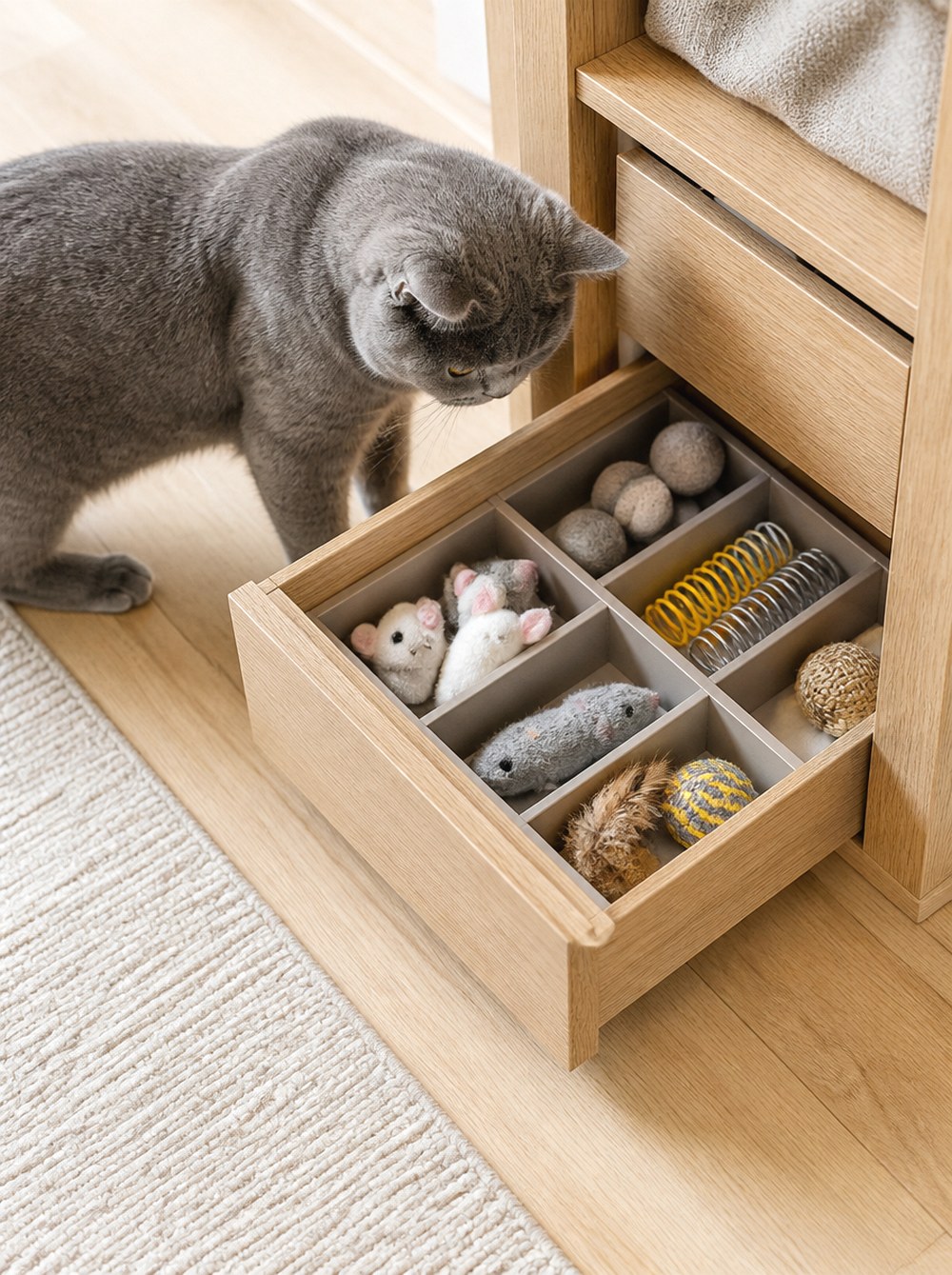
3. Give Small Toys Their Own Divided Drawer
Small toys disappear quickly inside deep baskets. A shallow drawer fitted with removable dividers lets you see what you own without emptying the entire collection onto the floor.
Use separate compartments for items such as balls, plush mice, larger springs, refill pieces for compatible puzzle toys, and other appropriately sized toys. Keep only toys that are intact and suitable for your individual cat.
A drawer station is especially useful when the goal is controlling clutter rather than displaying pet supplies. It can fit inside a media console, hallway cabinet, or other closed piece of furniture near the area where you normally play.
Avoid overfilling the compartments. Leaving some open space makes it much easier to notice damaged items during rotation.
4. Sort Reserve Toys Into Lidded Bins by Play Style
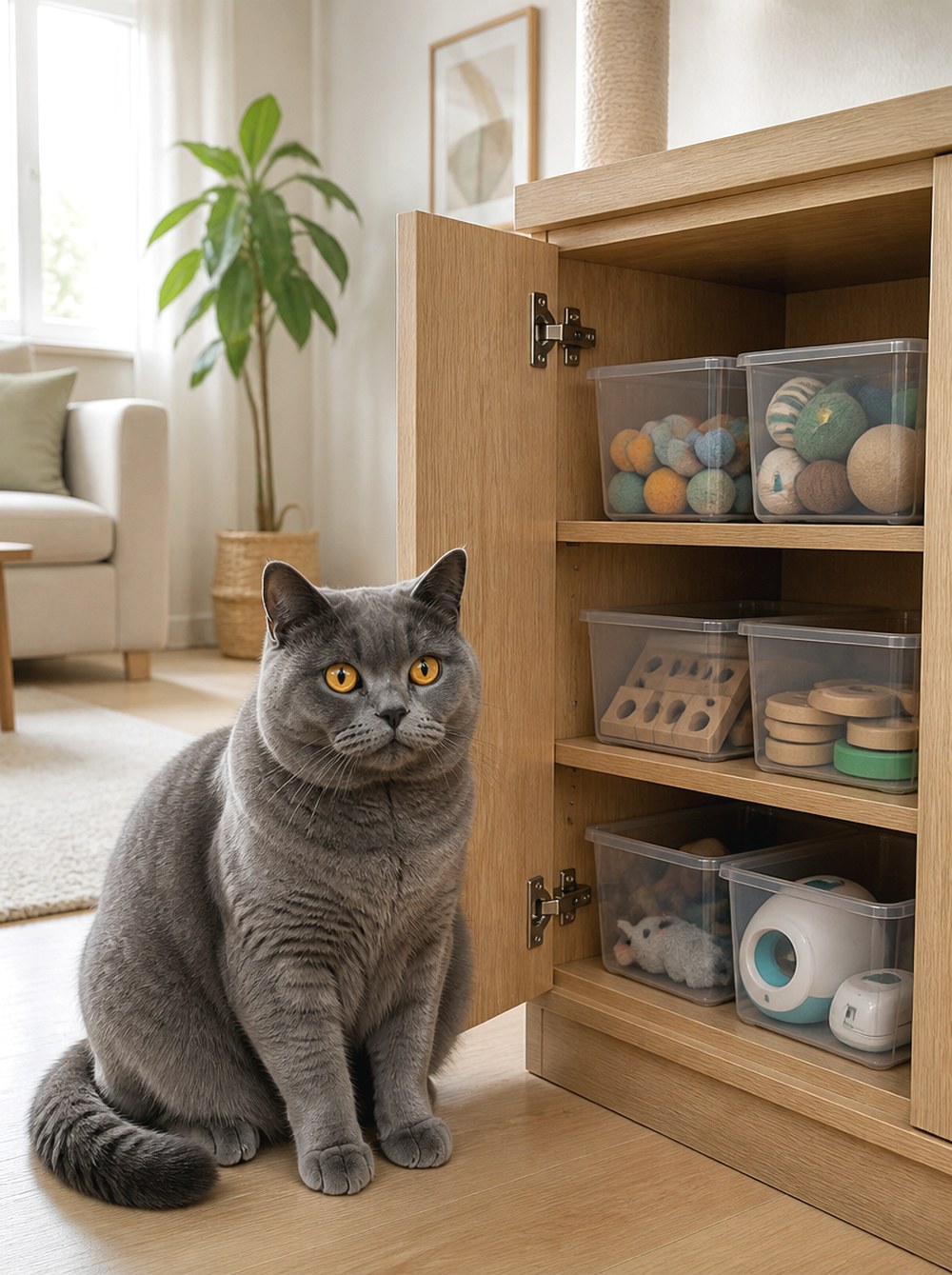
If your cat has a larger collection, sorting by the kind of play each toy supports can make rotations more balanced.
Instead of one container filled with everything, use several small lidded bins. You might have one for chase toys, one for larger kicking or wrestling toys, one for puzzle-related items, and another for supervised interactive toys.
When it is time for a swap, choose one or two items from different categories. This is more useful than repeatedly pulling the first toys you happen to see at the top of a basket.
Clear bins can help you spot contents quickly, while opaque bins create a calmer-looking cabinet. Either works as long as containers close securely and remain clean and dry.
5. Turn a Storage Bench Into a Hidden Toy Station
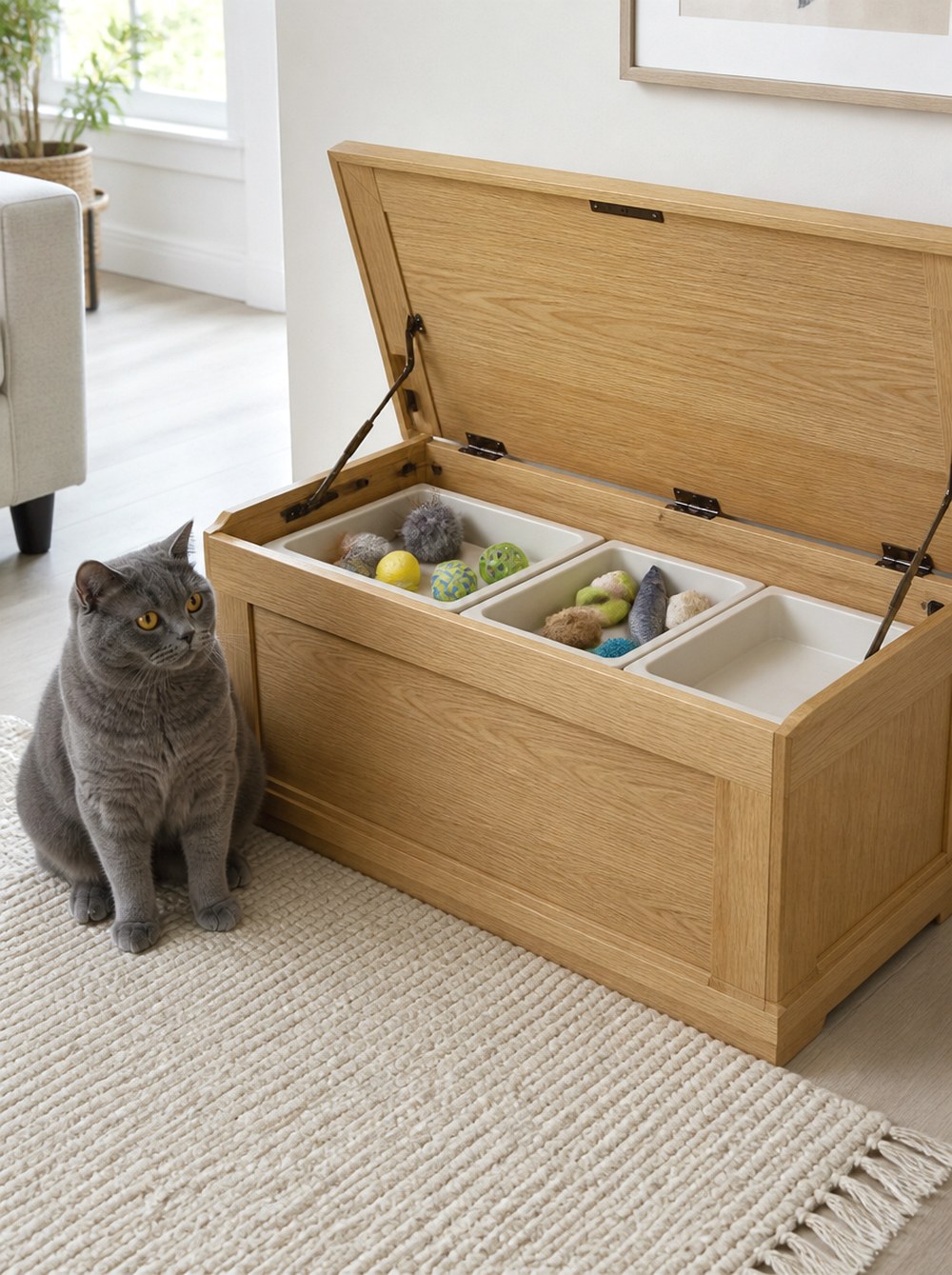
A bench with enclosed storage can hide a surprisingly large toy collection while keeping the room visually calm.
Use shallow containers inside the bench rather than dropping everything into one deep compartment. One tray can hold the upcoming rotation, another can contain reserve toys, and a third can temporarily hold washable toys that need attention before returning to storage.
This works particularly well in living rooms where cat play happens frequently but an exposed pet-supply shelf would add more visual clutter.
Choose a bench with a secure lid and safe hinges. Your cat should not be able to become trapped inside, and the lid should not slam shut unexpectedly. Keep the interior dry and avoid storing cleaning products or unrelated household chemicals alongside toys.
6. Make a Portable Play Caddy for Room-to-Room Sessions
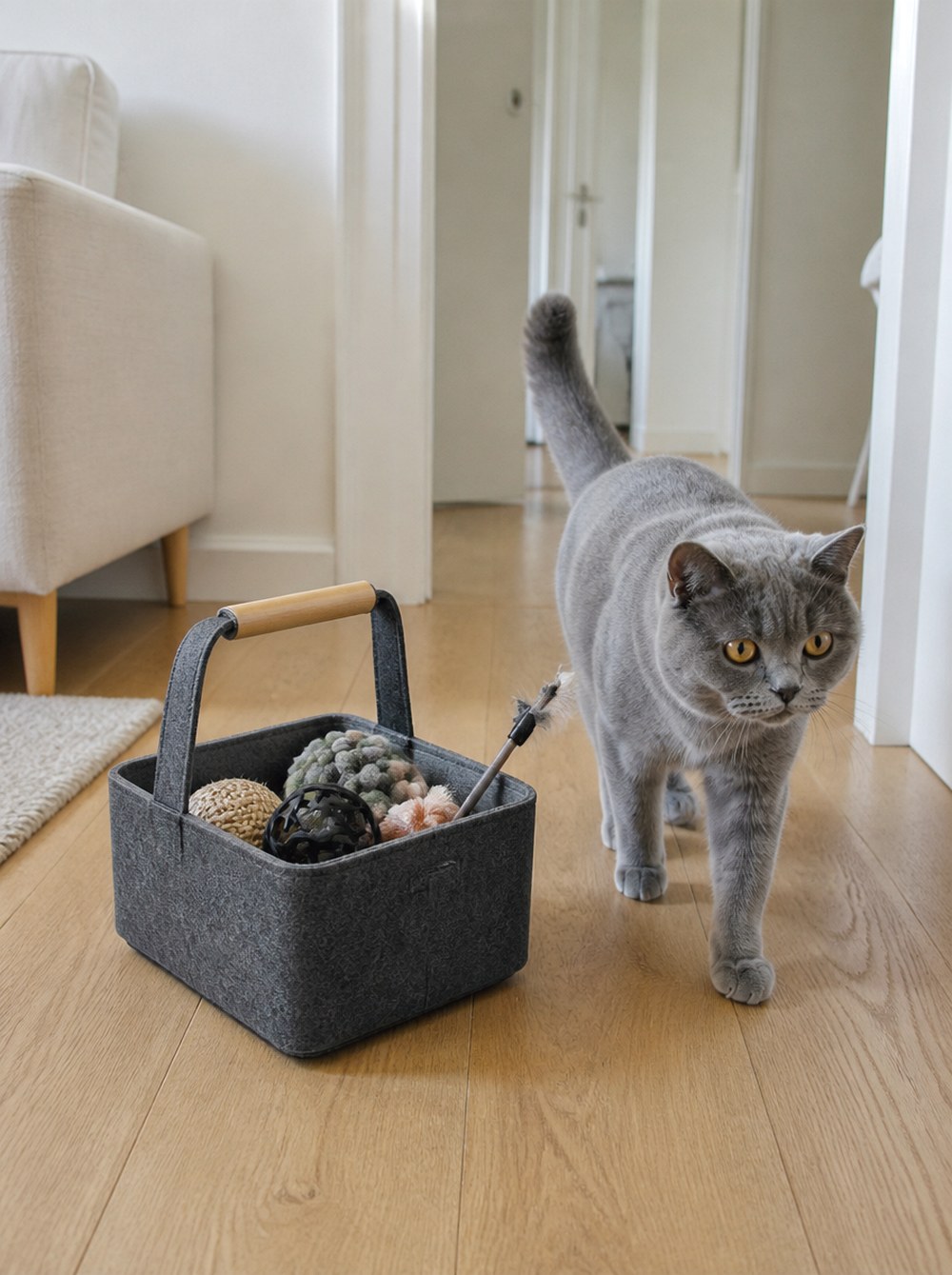
Not every rotation station needs to contain the whole collection. A handled caddy can function as a small working station that carries only the toys planned for the next few play sessions.
Keep your full reserve collection in secure storage, then load the caddy with a few chosen items. After play, return supervised toys to the caddy and put it somewhere inaccessible if the contents include wands, feathers, fabric strips, or similar items that should not be left unattended.
A portable setup works well in homes where play moves between a bedroom, living area, and hallway. It also prevents the familiar problem of toys being left scattered in every room.
Choose a caddy with smooth surfaces that are easy to wipe and inspect.
7. Build a Weekly Rotation Cube
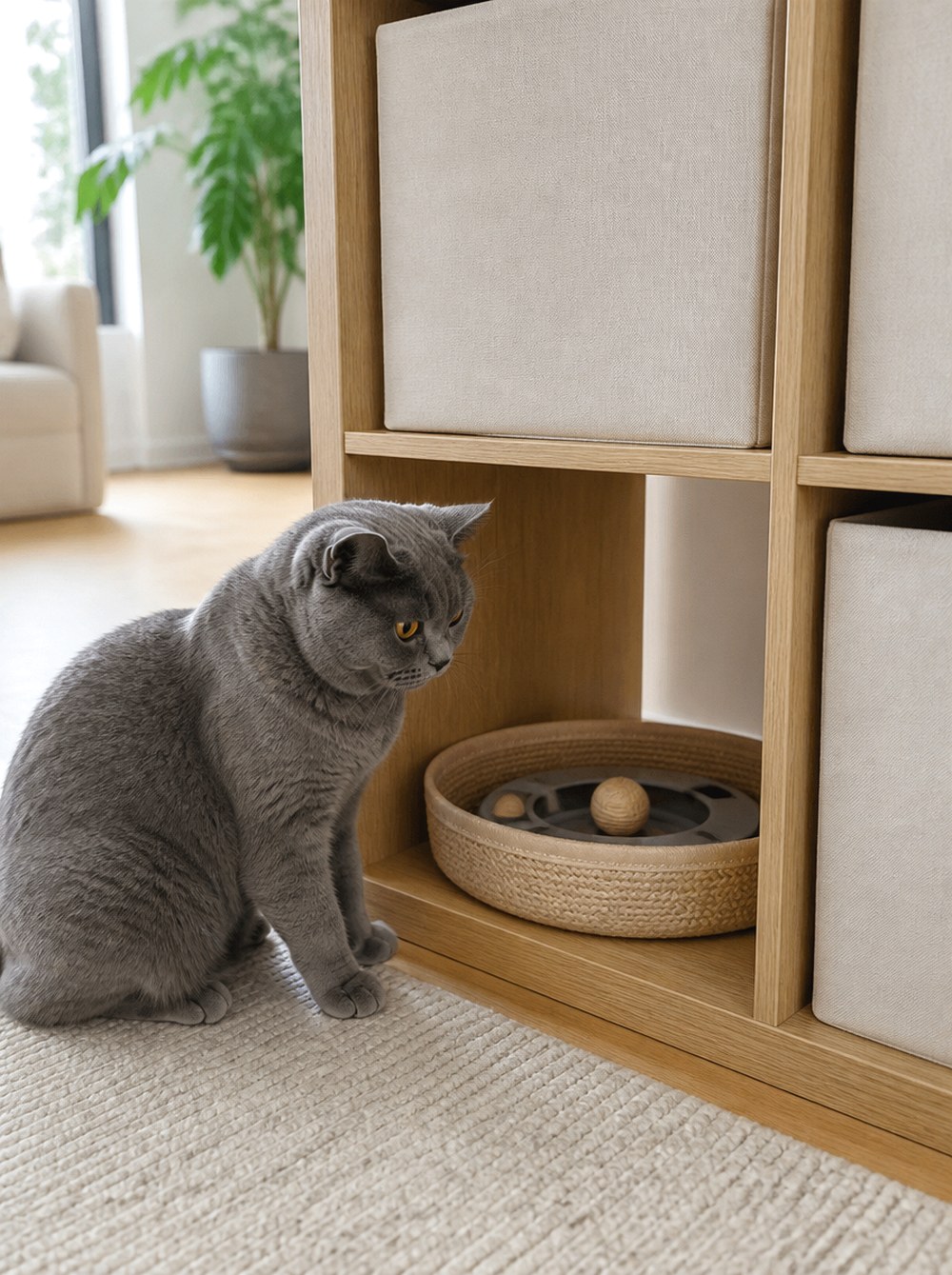
A cube shelf can turn toy rotation into a visible habit without requiring a strict daily schedule.
Use one enclosed cube for the active selection and the remaining cubes for reserve groups. Instead of labeling bins with specific weekdays, you can simply move a fresh reserve bin into the active position whenever you decide it is time for a change.
This keeps the system flexible. A favorite toy can remain in circulation while other pieces rotate around it.
Fabric cubes can work for larger, low-risk toys, but toys with strings, detachable pieces, or tempting fabric parts are better kept inside secure containers where your cat cannot reach them independently. Anchor tall shelving when appropriate so climbing or bumping does not make it unstable.
8. Use a Slim Under-Furniture Reserve Box
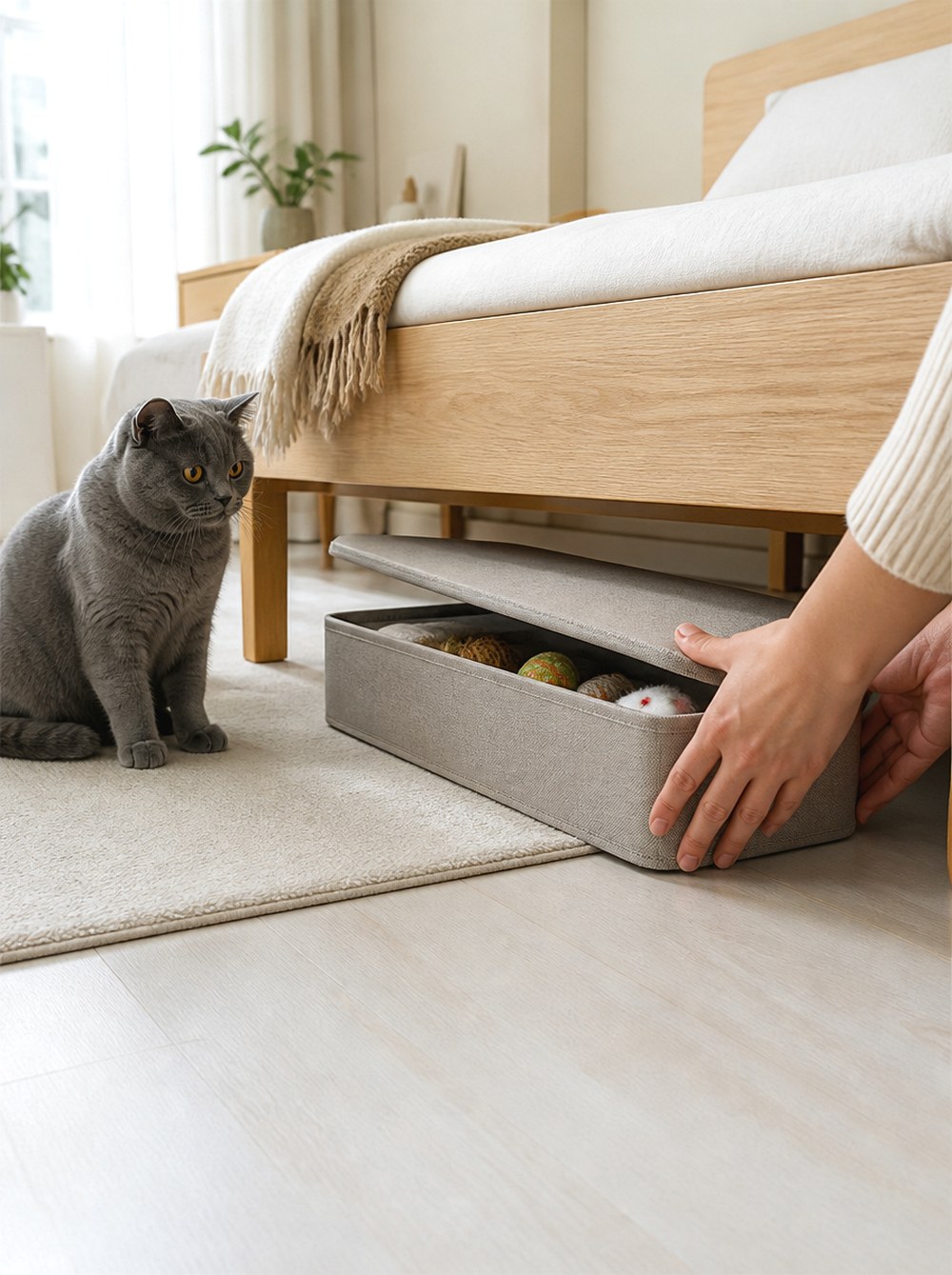
In a small home, unused space beneath a bed or sturdy sofa can become the reserve half of your rotation station.
Choose a shallow container with a secure lid instead of an open tray. That keeps resting toys contained, reduces dust, and prevents your cat from turning reserve storage into an all-night treasure hunt.
Pair the hidden box with one small active basket elsewhere in the room. When you want to rotate, pull out the reserve box, exchange a few toys, inspect everything, close the box, and slide it back into place.
Make sure the container fits without forcing or catching on furniture. Do not use the space if the box could interfere with mechanisms in a reclining sofa or other moving furniture.
9. Dedicate a Closed Wall Cabinet to Cat Toys
When floor space is limited, a securely mounted wall cabinet can keep toy storage compact and inaccessible between play sessions.
Inside, use shallow bins rather than stacking toys loosely. Put frequently rotated toys on an easy-to-reach shelf for humans, with supervised-play items stored securely behind the cabinet door.
This setup is particularly useful for cats that are determined to open baskets or investigate every accessible shelf. It also keeps strings, wand toys, and toys with potentially chewable components out of reach when no one is supervising.
Mount the cabinet securely according to its intended installation method. Avoid open hooks, dangling toys, or cords around the exterior.

10. Combine a Small Rotation Tray With Deep Reserve Storage
For a system that takes almost no effort to maintain, separate daily access from long-term storage.
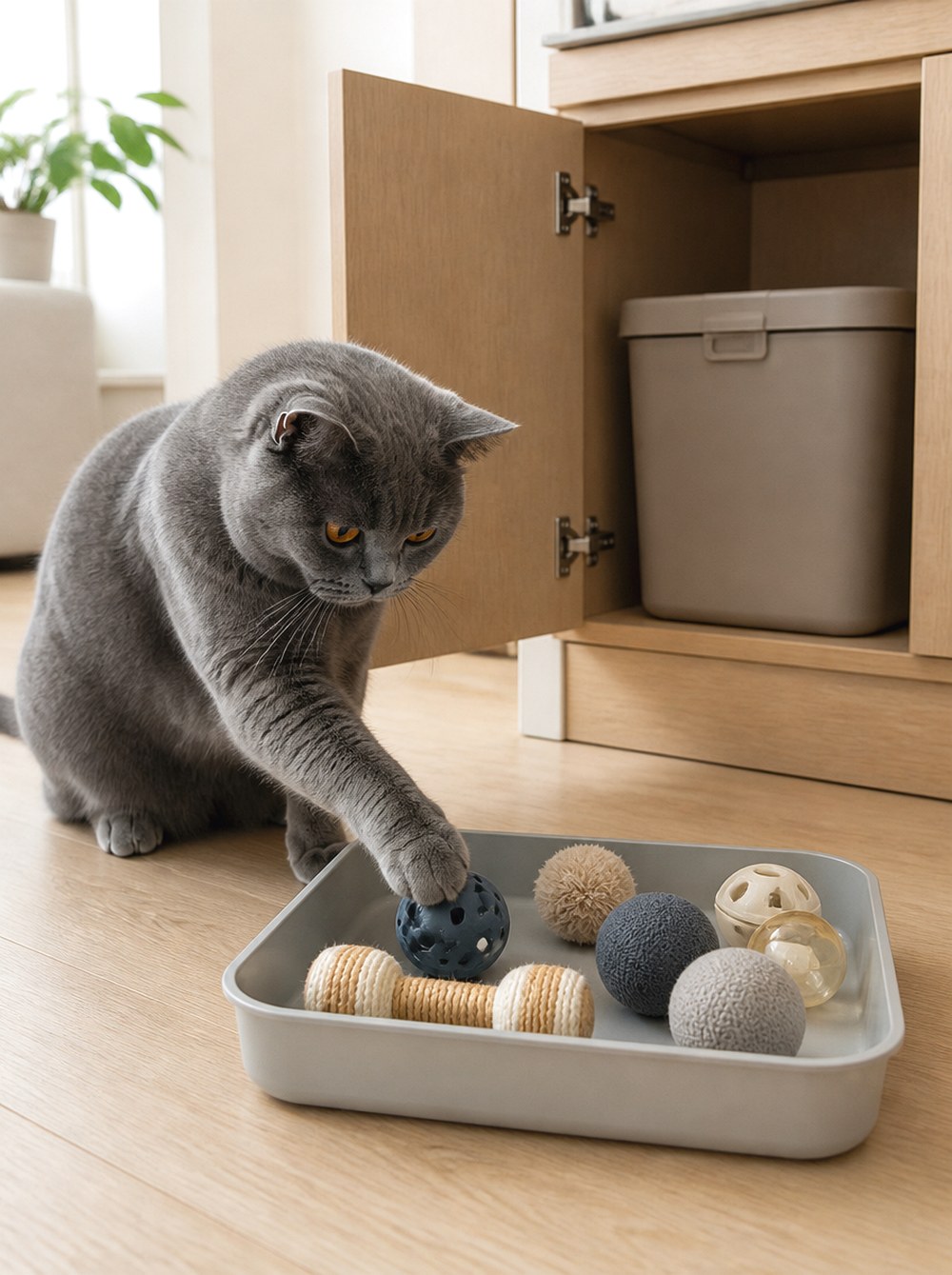
Place a shallow tray or small basket in the normal play area and keep the majority of the collection in a deeper closed cabinet elsewhere. The tray should contain only the current selection, which makes cleanup fast and makes it obvious when the toys need inspection or swapping.
This is especially useful if you already have suitable cabinet storage and do not want to buy a dedicated organizer.
When you rotate, bring out the reserve container, exchange a few items, check toys for damaged seams or loose components, and put the reserve supply away again. Remove damaged toys rather than sending them back into the rotation.
You May Also Like


A Rotation System That Is Realistic to Maintain
The storage furniture matters less than having a clear distinction between toys that are available now and toys that are put away.
Start with a manageable active selection. Keep one or two proven favorites available if your cat uses them regularly, then swap some of the remaining toys when play starts to feel repetitive or when you want to introduce a different type of activity.
Rotation time is also a useful inspection point. Check seams, attachments, surfaces, and moving parts before a toy returns to use. Discard toys that are damaged or have loose pieces that could create a hazard.
Supervised toys should return to secure storage after the session. Strings, ribbons, wand attachments, feathers that can break loose, and small components should not be left where a cat can access them unsupervised.
If a toy suddenly goes unused, changing the storage schedule is not always the answer. Preferences can change, but a broader sudden drop in activity, appetite, bathroom habits, mobility, or normal behavior deserves closer attention and may warrant contacting a veterinarian.
The easiest place to begin is with two containers: one for the current rotation and one secure reserve bin. Once that habit works, you can expand into drawers, categories, carts, or built-in storage without turning toy organization into another household chore.
