Feeding more than one pet can turn a small part of the kitchen into a surprisingly complicated zone. Bowls migrate across the floor, one pet finishes first and investigates another pet’s dinner, food bags collect in corners, and spilled water seems to land exactly where people walk.
Save This Idea on Pinterest
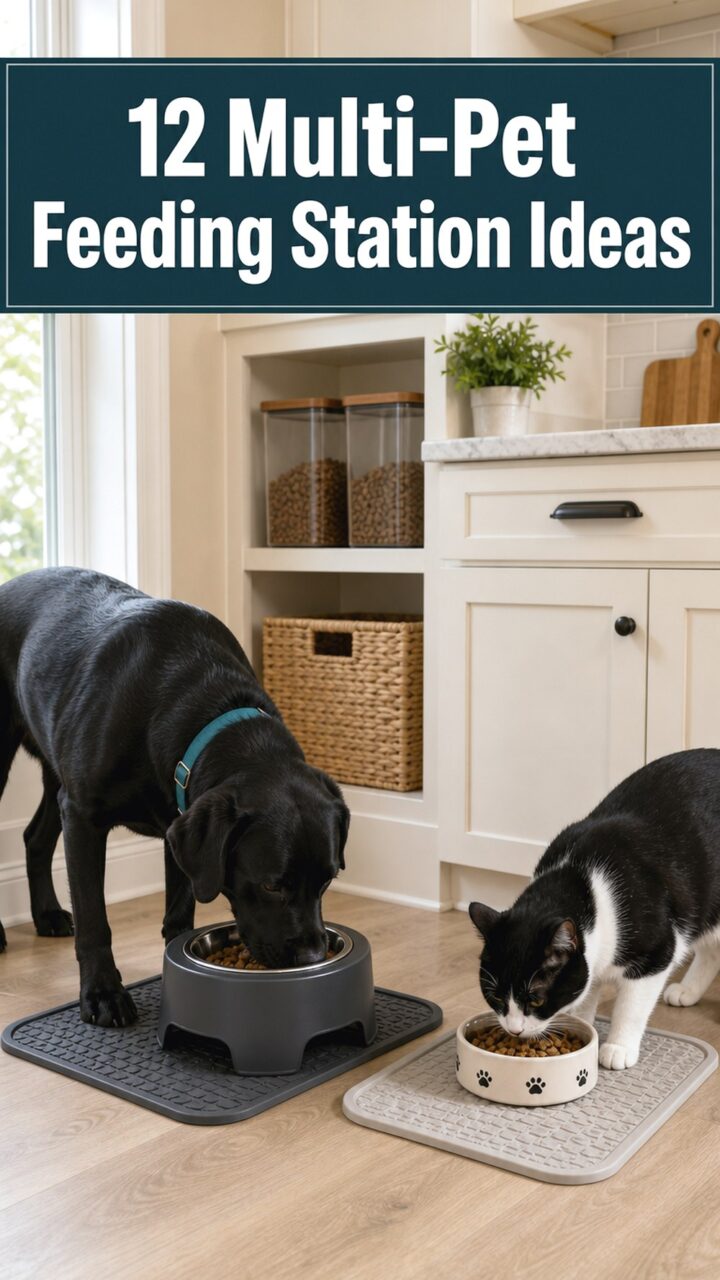
12 Multi-Pet Feeding Station Ideas for Organized Mealtimes
Save to PinterestA useful multi-pet feeding station does more than make bowls look organized. It gives each pet a predictable place to eat, keeps supplies convenient for people but appropriately secured from pets, and makes cleanup manageable.
The right setup depends on how your pets eat. Two relaxed pets may be comfortable several feet apart in the same room. Pets with different diets, food-stealing habits, or tension around meals often need much more separation. The following 12 ideas range from compact shared setups to fully separated feeding zones.
Choose the Setup Around the Problem You Actually Have
Before rearranging the room, decide what you need the station to fix.
| If your main problem is… | Start with… |
|---|---|
| Bowls and mats taking over the kitchen | A defined two-bowl mat or narrow-wall station |
| One pet watching or rushing another | Opposite-corner or divider stations |
| Different foods or portions | Individual meal-prep zones or separate-room stations |
| A dog getting into a cat’s food | A secure raised cat zone or controlled-access area |
| Water splashing across the floor | A contained waterproof tray station |
| Food bags, scoops, and cans creating clutter | A dedicated storage-and-serving cabinet |
| Very limited floor space | A pull-out tray or compact vertical storage setup |
If a pet stiffens, growls, guards a bowl, blocks another pet from approaching food, or repeatedly steals meals, prioritize physical separation rather than trying to make a shared station work.
Feeding Stations for Pets That Can Eat in the Same Room
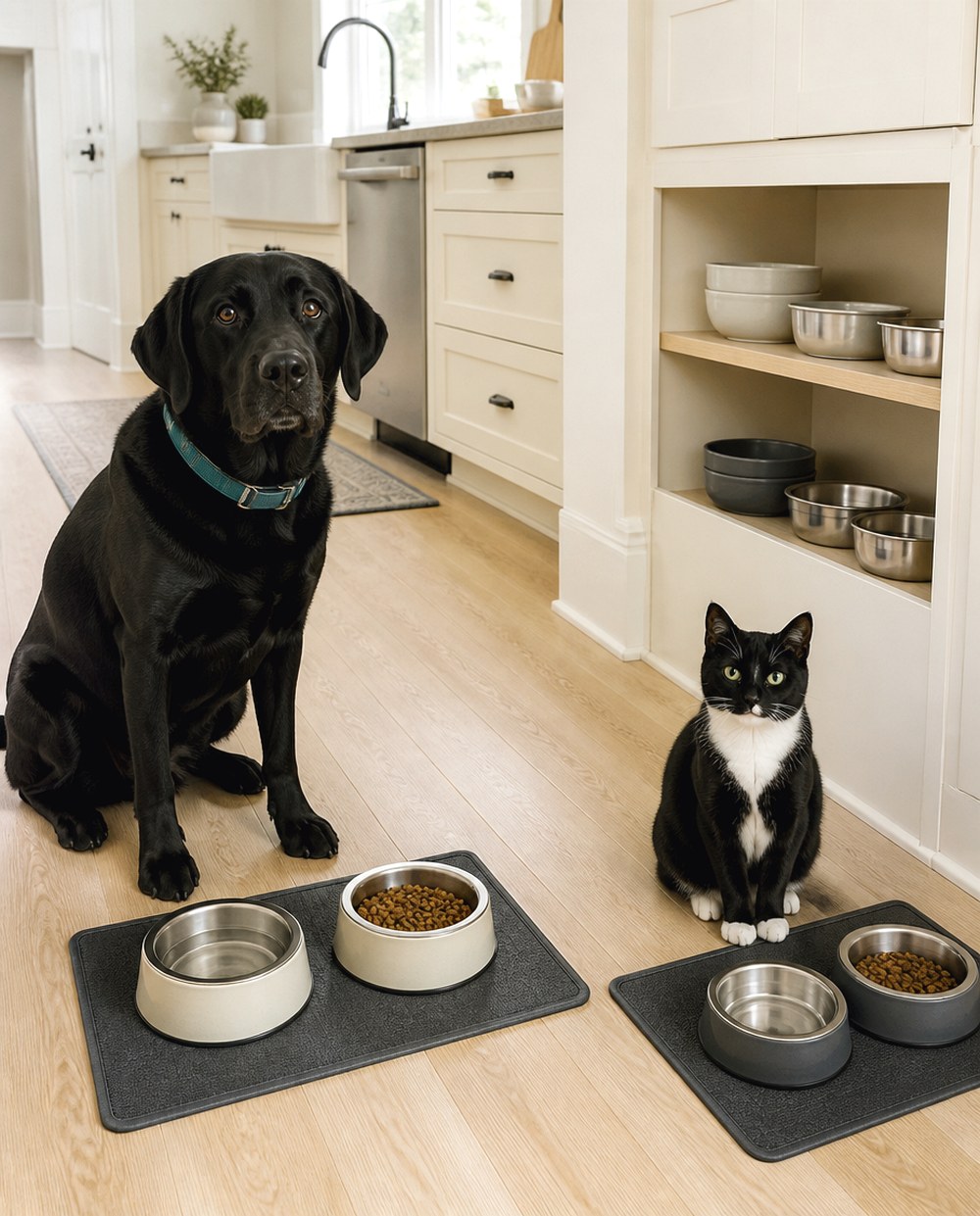
1. Give Each Pet a Clearly Defined Mat
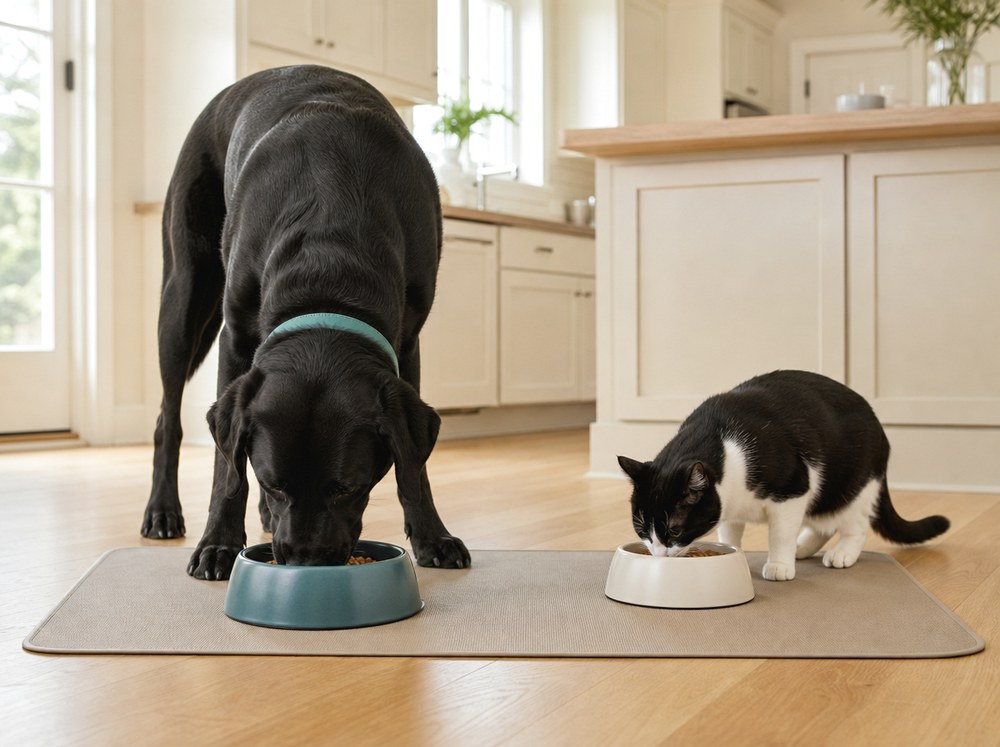
For pets that already eat calmly near each other, one of the least complicated arrangements is a large washable floor mat with a designated bowl position for each pet.
Leave enough space between bowls that neither animal has to lean toward the other pet while eating. The mat creates a visual boundary, catches crumbs and drips, and keeps bowls from gradually spreading across the room.
This setup works especially well when the pets eat on a similar schedule and neither attempts to switch bowls. If one pet regularly finishes first and heads toward the other bowl, increase the distance or move to a more separated arrangement.
2. Use Opposite Corners of the Feeding Area
Sometimes a few extra feet make mealtime noticeably calmer.
Instead of lining bowls up along one wall, place feeding stations in opposite corners of the kitchen, dining nook, or utility room. Angle each bowl so the pets naturally face away from one another.
This arrangement provides more personal space without requiring another room. It can also reduce the temptation for a fast eater to reach the second bowl immediately.
Keep the walking path between stations open so neither pet has to pass directly beside the other to leave.

You May Also Like


3. Add a Visual Divider Between Bowls
Some pets are distracted simply because they can see another animal eating.
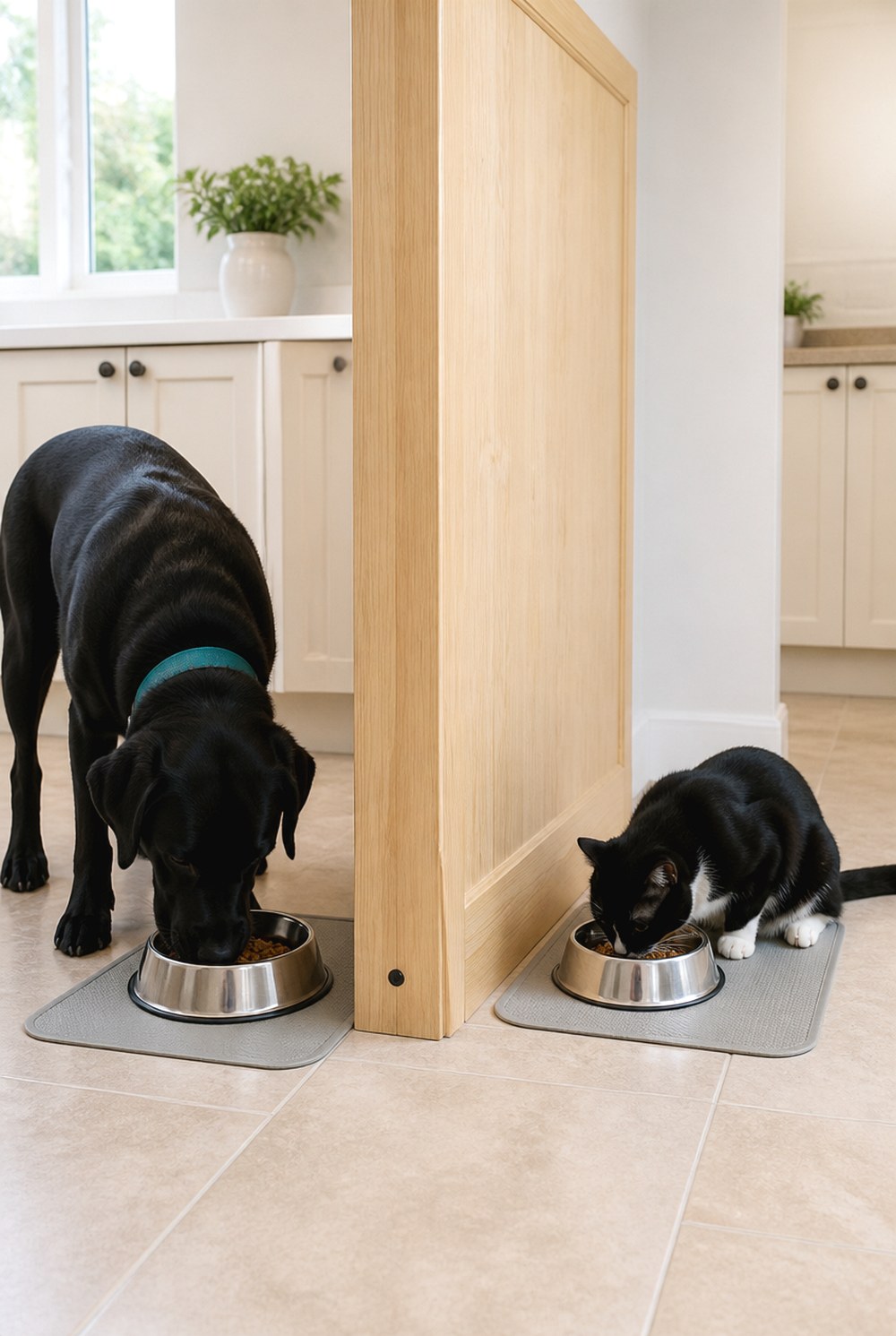
A stable divider can create two small meal zones without taking over the room. A fixed cabinet end panel, securely positioned room divider designed for the space, or furniture arrangement can block the direct sightline while leaving each pet plenty of room to enter and leave.
Avoid lightweight objects that can topple onto a pet. The barrier should also be large enough that pets cannot casually reach around it and access the neighboring bowl.
A divider is useful for distraction, but it is not a substitute for true separation when pets guard food or need strict control over different diets.
Ideas for Small Kitchens and Tight Floor Plans
4. Build the Station Into the End of a Cabinet Run
An unused cabinet end can become a defined feeding spot without adding another piece of furniture.
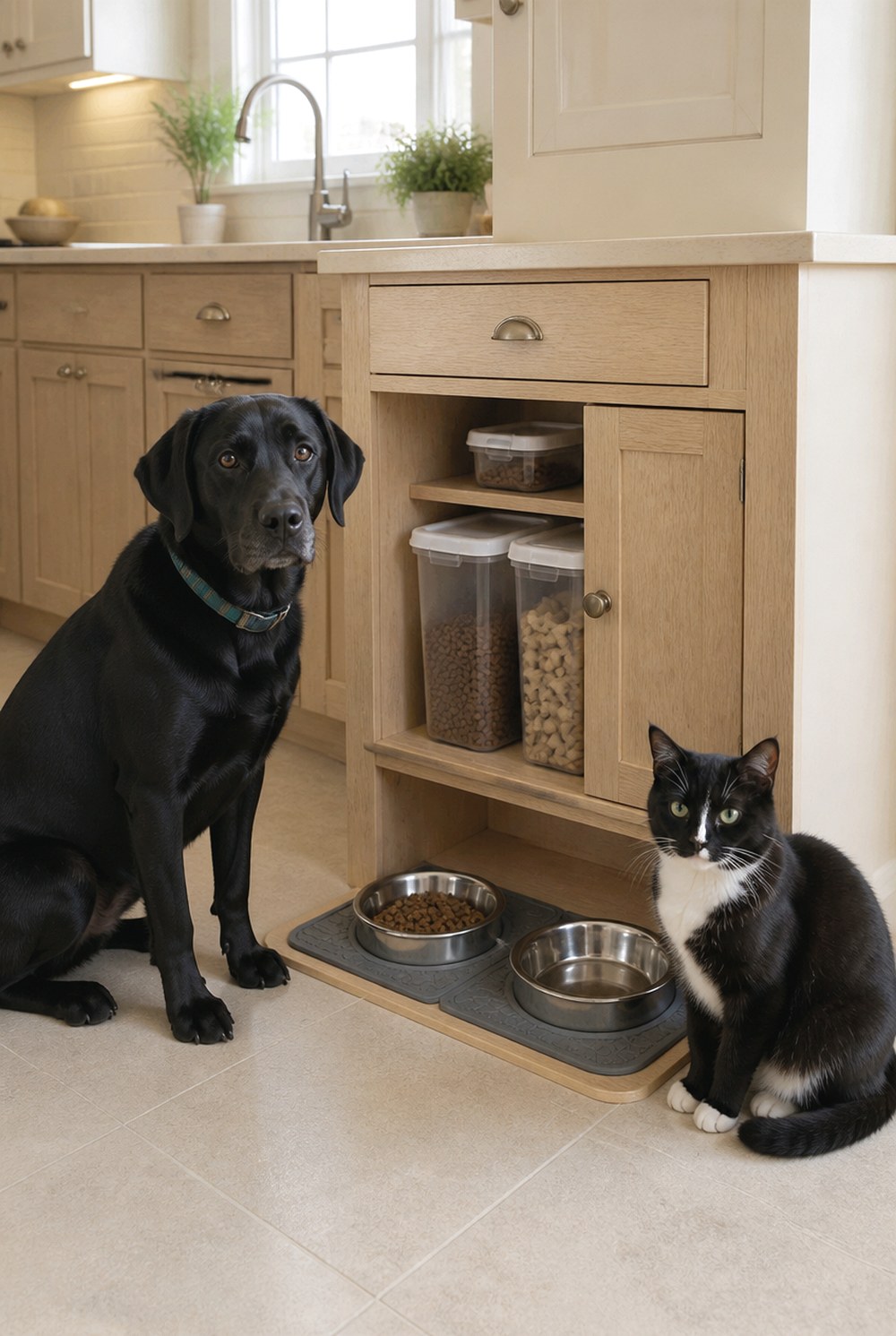
Place the bowls on a washable mat beside the cabinet and dedicate the cabinet above or beside the area to food, sealed containers, and feeding supplies. Keeping all meal-related items in one zone shortens the daily routine and stops scoops, cans, and bags from spreading into unrelated cupboards.
For two pets, use the cabinet area as the supply hub while placing the actual bowls far enough apart for comfortable eating.
Store food securely and keep medicines, cleaning products, and other household supplies separate from the pet-food storage area.
5. Try Pull-Out Feeding Trays
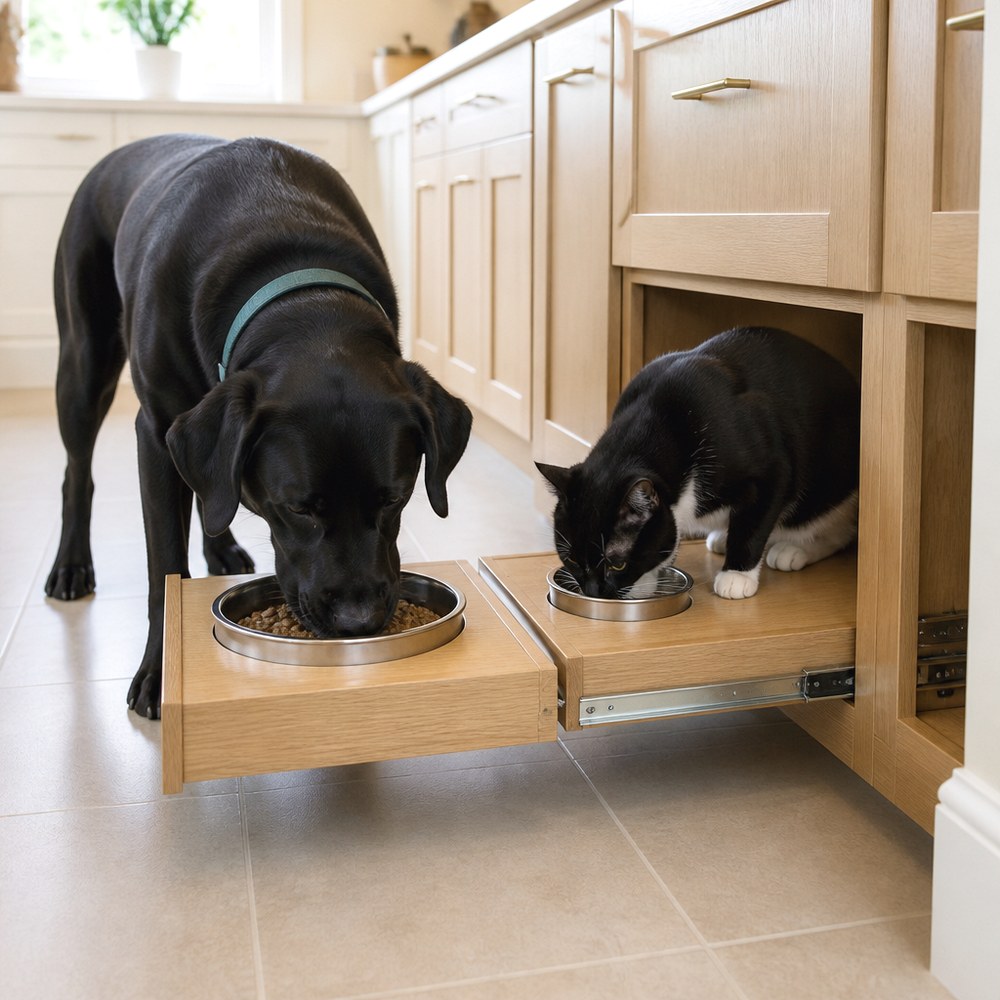
A built-in pull-out tray can give bowls a designated location during meals and free the walkway once feeding time is over.
The tray should extend fully enough that pets can stand in a natural position without squeezing against cabinetry. It also needs to be sturdy, level, easy to wipe, and secure when extended.
This arrangement is best for scheduled meals rather than pets that need continuous bowl access. Two separate trays are generally more practical than squeezing several bowls onto one narrow platform.
Check the floor around the tray after meals so water or crumbs do not disappear underneath the cabinet.
6. Turn a Narrow Wall Into a Feeding Zone
A blank stretch of wall can handle more organization than many kitchens can spare on the floor.
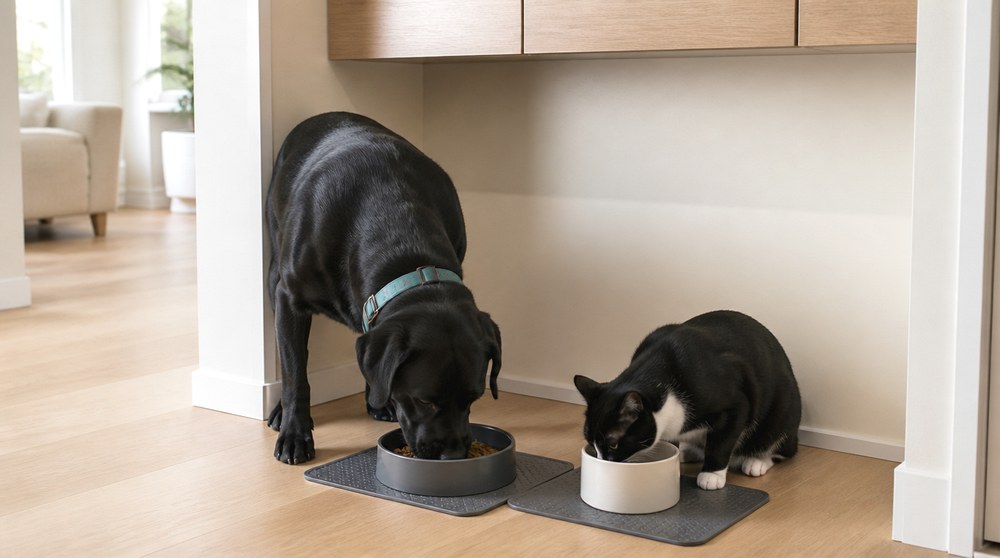
Keep the feeding bowls at floor level on individual mats, then use secure closed storage above for food and supplies. The vertical arrangement keeps the footprint small while giving everything a permanent home.
Avoid hanging hooks, bags, cords, or loose accessories where pets can reach them. Storage should be firmly attached and positioned so nothing can fall into the feeding area.
This approach works particularly well in a utility room, mudroom, or kitchen passage that has usable wall space but little room for another cabinet.
Stations That Make Cleanup Faster
7. Contain Messy Water Bowls on a Waterproof Tray
In many multi-pet homes, the water station creates more mess than the food bowls.
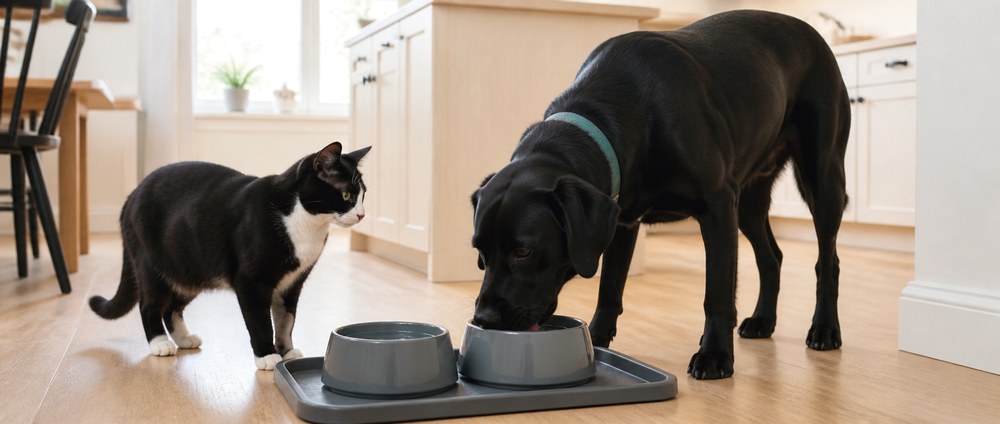
Place one or more appropriately sized water bowls on a wide, shallow waterproof tray with a nonslip base or on a water-resistant mat with raised edges. The containment area should extend beyond the bowls far enough to catch ordinary drips.
Put the station away from doorways and main walking paths, where a damp floor could become a slipping problem.
Shared water may work in some households, but keep enough clean water available for the number and size of pets in the home. Wash bowls regularly and refresh the water according to your normal care routine.
8. Create a Wash-and-Reset Station Near the Sink
When bowls are scattered around the house, collecting and washing them becomes another chore. A feeding zone near the kitchen or utility sink makes resetting the area more efficient.
Keep clean pet bowls together in a dedicated cabinet or drawer, separate from cleaning chemicals. After meals, used bowls can move directly to their usual washing location rather than sitting around the floor.
The feeding space itself should remain far enough from the sink that splashes, dirty dishes, and cooking activity do not interfere with pets while they eat.
The goal is not to place pets underfoot at the sink. It is to keep the entire bowl-cleaning routine within one manageable zone.
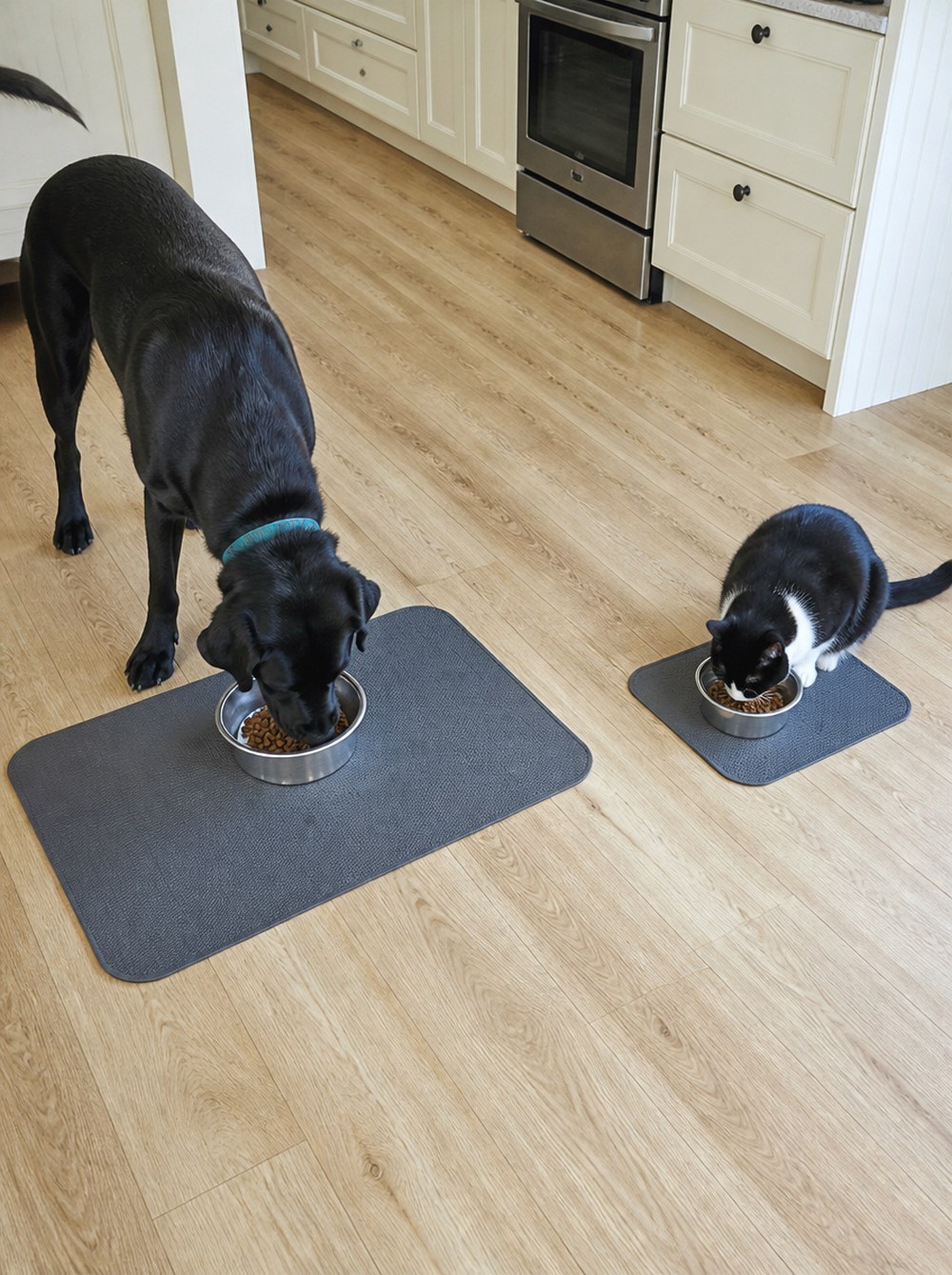
9. Use Individual Washable Mats Instead of One Giant Mat
One oversized feeding mat can be awkward to lift, wash, and dry. Separate mats give each pet a defined zone and make spot cleaning more manageable.
This is particularly useful when one pet is a messy eater while another leaves its area nearly spotless. You can clean the affected mat without dismantling the entire station.
Choose mats that lie flat and do not slide easily under normal use. Leave bare floor between them so the separation remains obvious.
Individual mats are also easier to move farther apart if you discover that your pets prefer more room at mealtime.
Better Organization for Different Foods and Feeding Needs
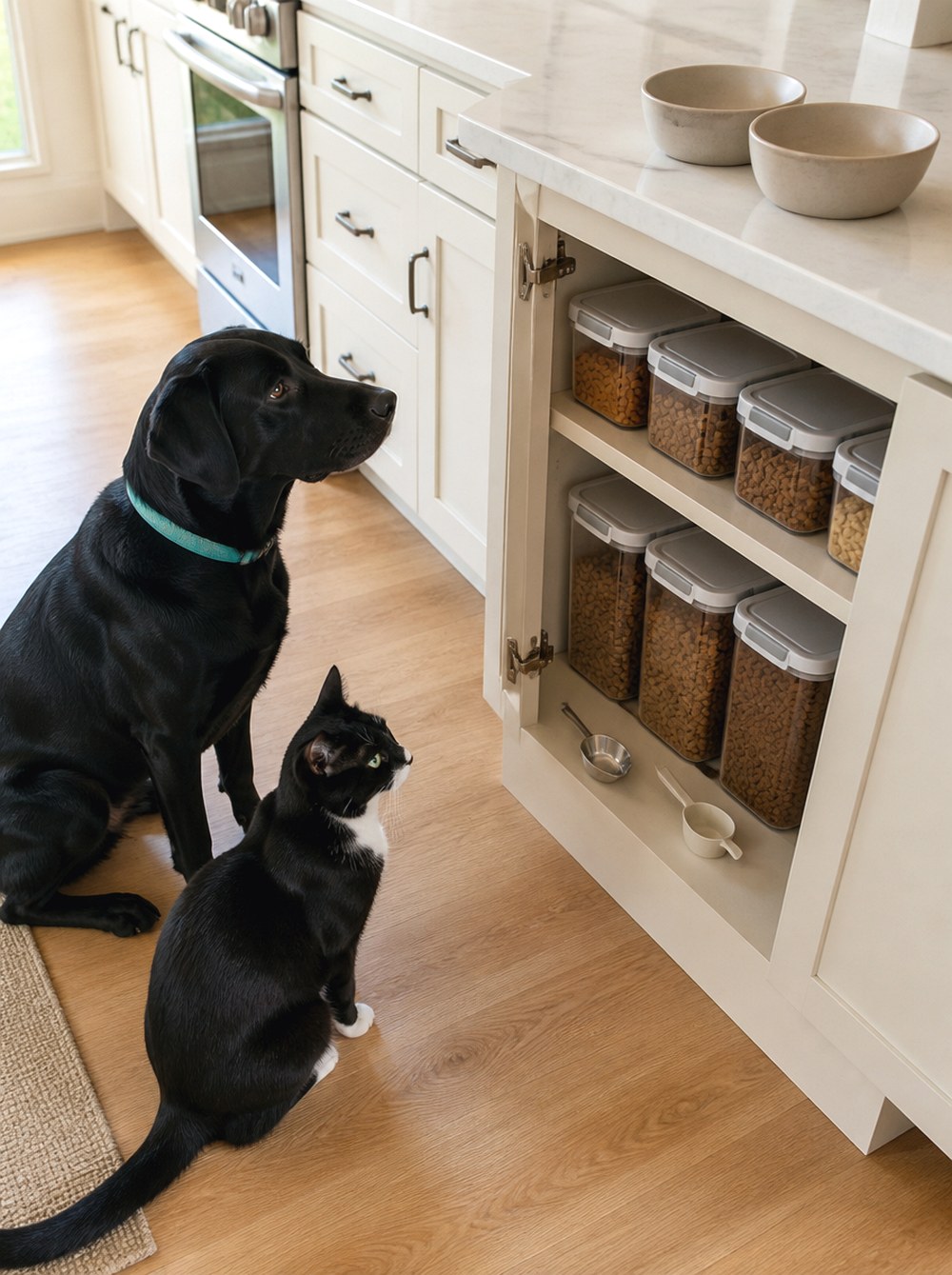
10. Set Up a Labeled Meal-Prep Cabinet
When pets eat different foods, organization matters before the bowls ever reach the floor.
Dedicate one cabinet, pantry section, or enclosed cart to feeding supplies. Give each pet a separate shelf or clearly identifiable container so one food is not accidentally scooped into the wrong bowl.
Store pet food according to its packaging directions and keep it secured from pets. Place scoops or measuring tools with the food they belong to rather than tossing every utensil into one container.
If your veterinarian has prescribed a specific diet or portion plan for an individual pet, a well-separated prep system can also make it easier to follow those instructions consistently.
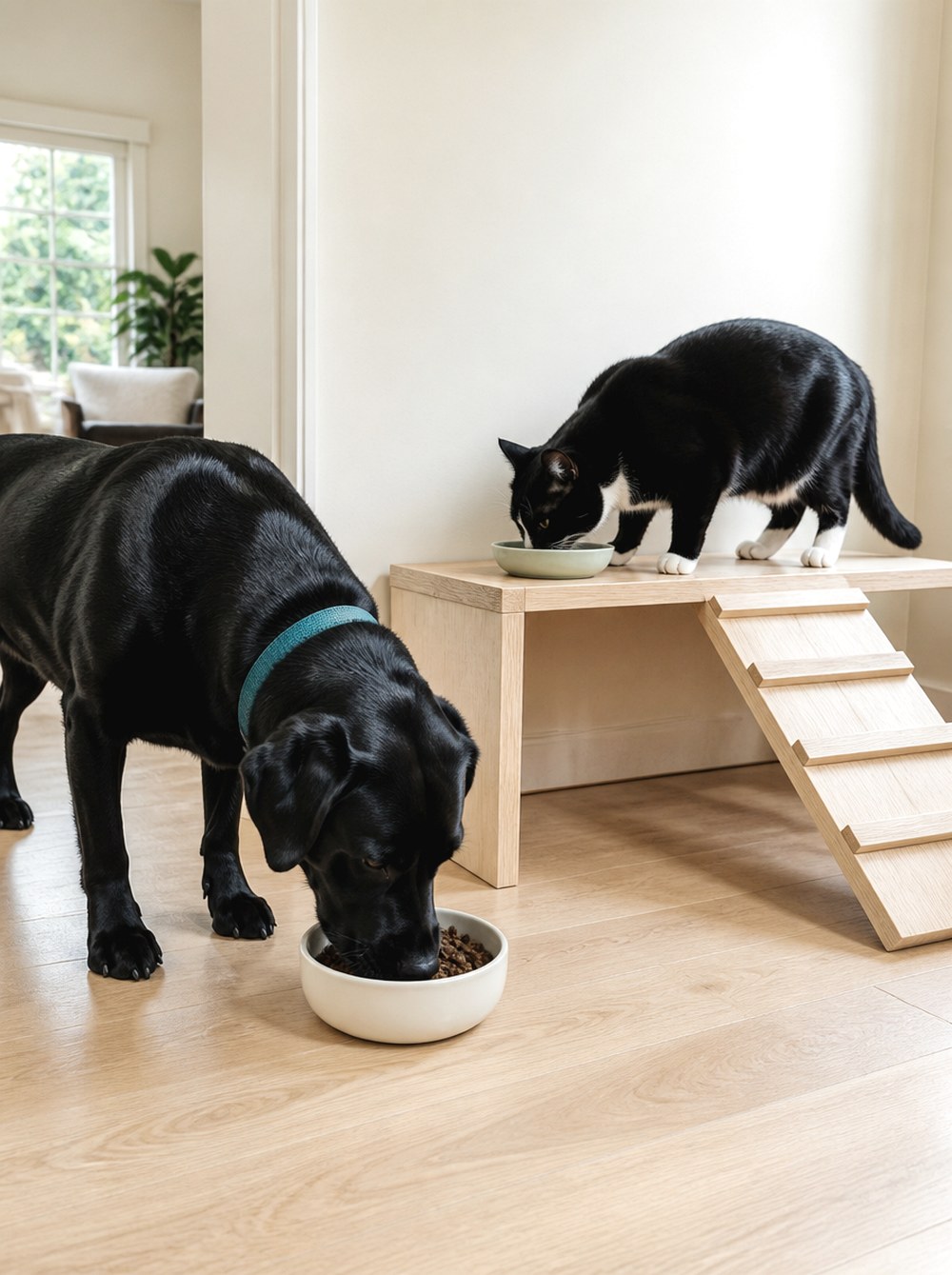
11. Give the Cat a Secure Raised Feeding Shelf
In a mixed cat-and-dog household, vertical space can sometimes keep the cat’s food out of a dog’s reach.
A raised cat feeding platform should be broad, stable, easy for the cat to access, and positioned away from hot appliances, cooking surfaces, open shelves with breakable items, or places where the cat could be cornered.
This is not the same as placing a bowl on a crowded kitchen counter. A dedicated shelf or sturdy feeding ledge gives the cat a defined location while the dog eats at floor level elsewhere.
This arrangement is most suitable when the cat is comfortable jumping or climbing. Senior cats, kittens, and cats with mobility limitations may need a lower, more accessible alternative.
12. Create Separate-Room Meal Stations for Maximum Control
Sometimes the most organized feeding station is not one shared station at all.
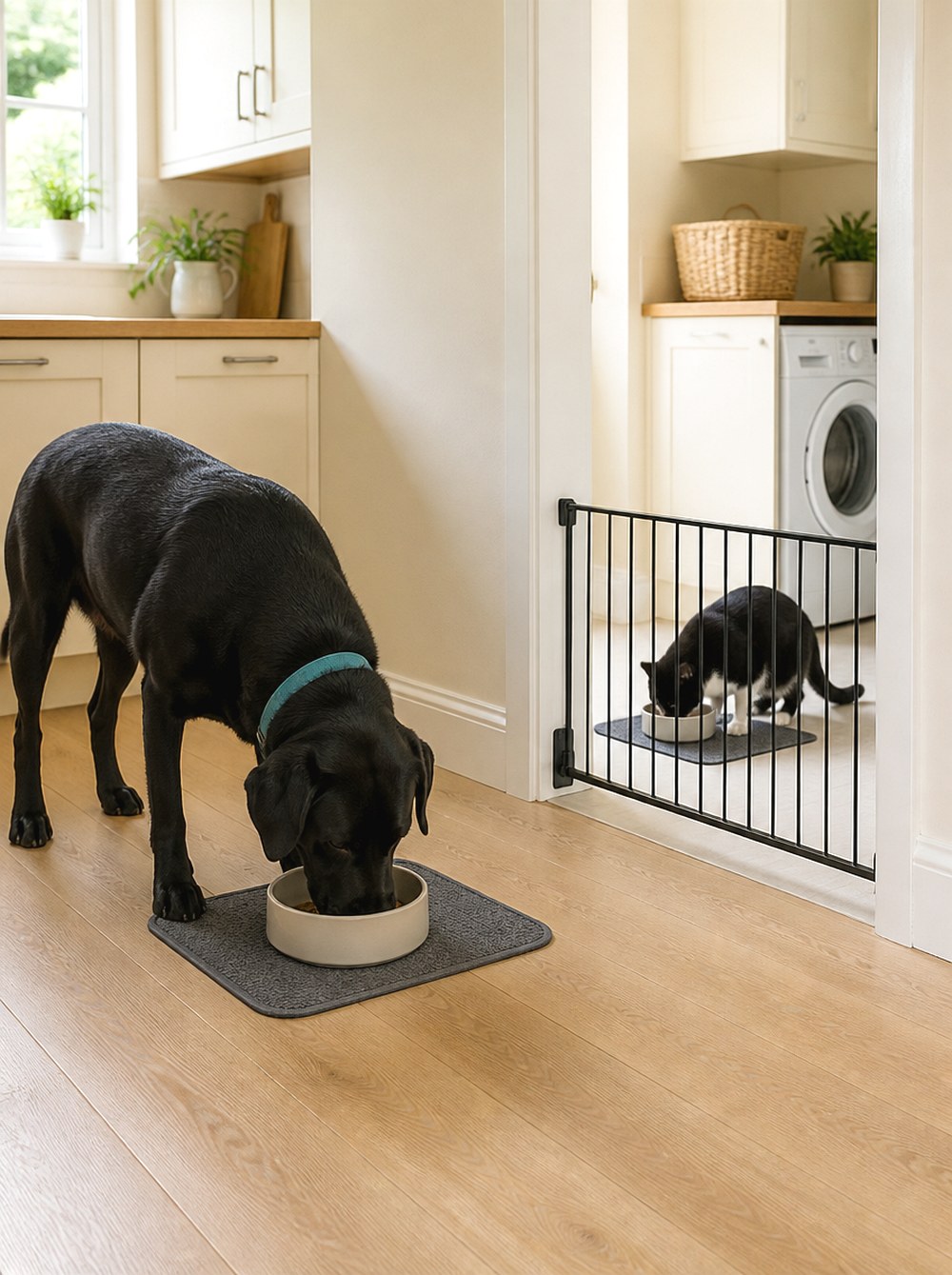
Pets that eat different diets, steal from one another, need individual monitoring, or become tense around food may do better eating in separate rooms. A kitchen corner might belong to one pet while another uses a utility room, quiet bedroom area, or other suitable space.
Prepare both meals from one organized supply area, then serve them at their individual stations. Closing a door or using an appropriate secure barrier during the meal can prevent bowl swapping more reliably than trying to supervise two pets every second.
Once both animals have finished, collect the bowls before reopening the shared area if that suits their feeding plan.
For persistent food guarding, threatening behavior, or conflict between pets, avoid forcing close feeding and seek guidance from a qualified veterinary or behavior professional.
You May Also Like


A Feeding Station Should Make Mealtime More Predictable, Not Just Prettier
Organization works best when it reflects how the pets actually behave.
A matching pair of bowls placed side by side may look tidy, but it is a poor arrangement if one pet feels pressured. Likewise, an elaborate cabinet is not especially useful if daily food is stored somewhere else and everyone still has to cross the kitchen several times at each meal.
Start with the friction point you notice most often. If it is clutter, establish one storage zone. If it is spilled water, contain the water station. If it is food stealing, increase distance or use separate rooms.
After changing the setup, watch how each pet approaches, eats, and leaves. Comfortable pets should be able to reach and leave their feeding space without being blocked by another animal.
Sudden appetite changes, difficulty eating or drinking, repeated vomiting, weakness, bathroom changes, or other concerning changes deserve veterinary attention rather than an organizational fix.
