Sharing a pet room does not mean asking a dog and cat to use everything together. A more workable setup gives each animal its own places for eating, resting, toileting, and getting away from attention while still keeping supplies conveniently located in one room.
Save This Idea on Pinterest
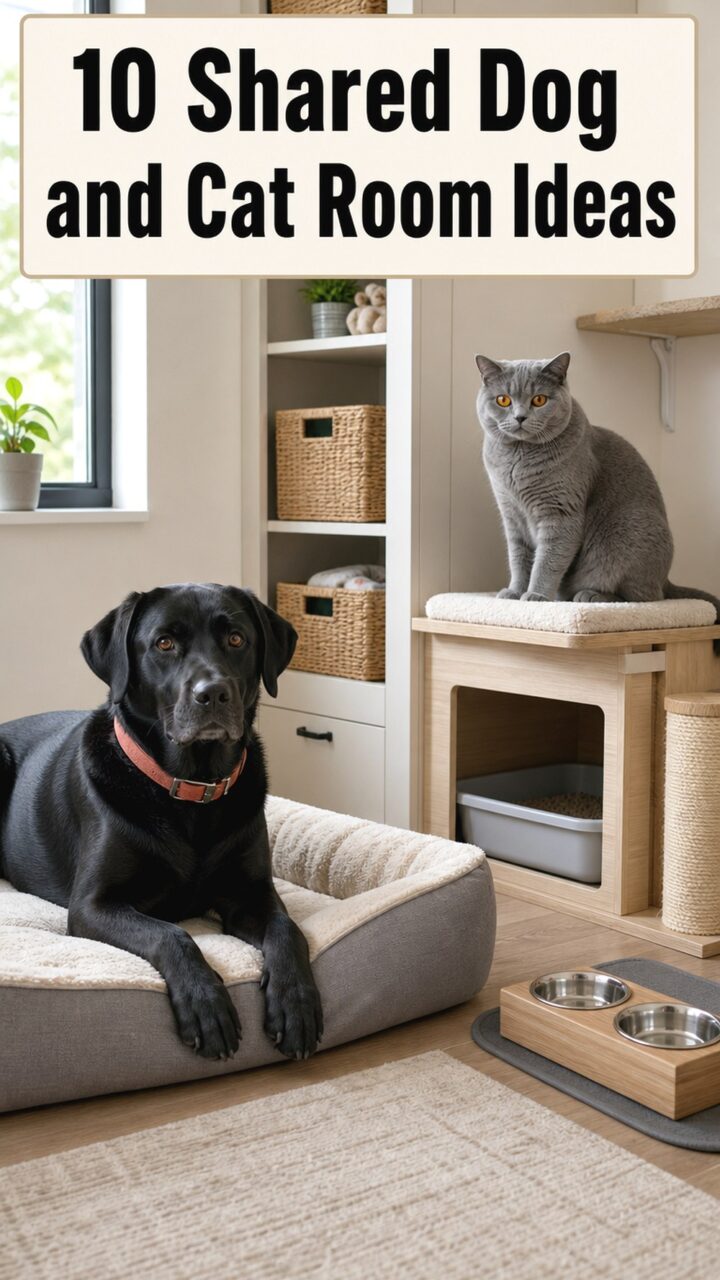
10 Shared Dog and Cat Room Ideas for a Calm, Practical Space
Save to PinterestCats often benefit from height and dog-free retreat options, while dogs generally need comfortable floor space and clear walking paths. Food bowls and litter areas also deserve more separation than a decorative matching setup might suggest.
The best shared dog and cat room ideas use those differences instead of fighting them. The following ten setups address distinct problems, from feeding and litter access to toy clutter and quiet time.
1. Divide the Room Into Floor and Vertical Zones
You can create meaningful separation without dividing a room in half. Let the dog use most of the comfortable floor-level space while giving the cat safe vertical territory.
A sturdy cat tree, securely installed wall shelves designed for cats, or a stable window perch can create a route above the dog’s main resting area. Keep the dog’s bed, larger toys, and water station on the floor where there is enough room to stretch and turn around.
The useful part of this arrangement is choice. A cat that wants distance can move upward rather than having to pass close to the dog, and the dog still has a usable room instead of being crowded by furniture.
Avoid arranging cat shelves so the only way down is directly beside the dog’s bed or food bowl. The cat should have more than one comfortable route when possible.

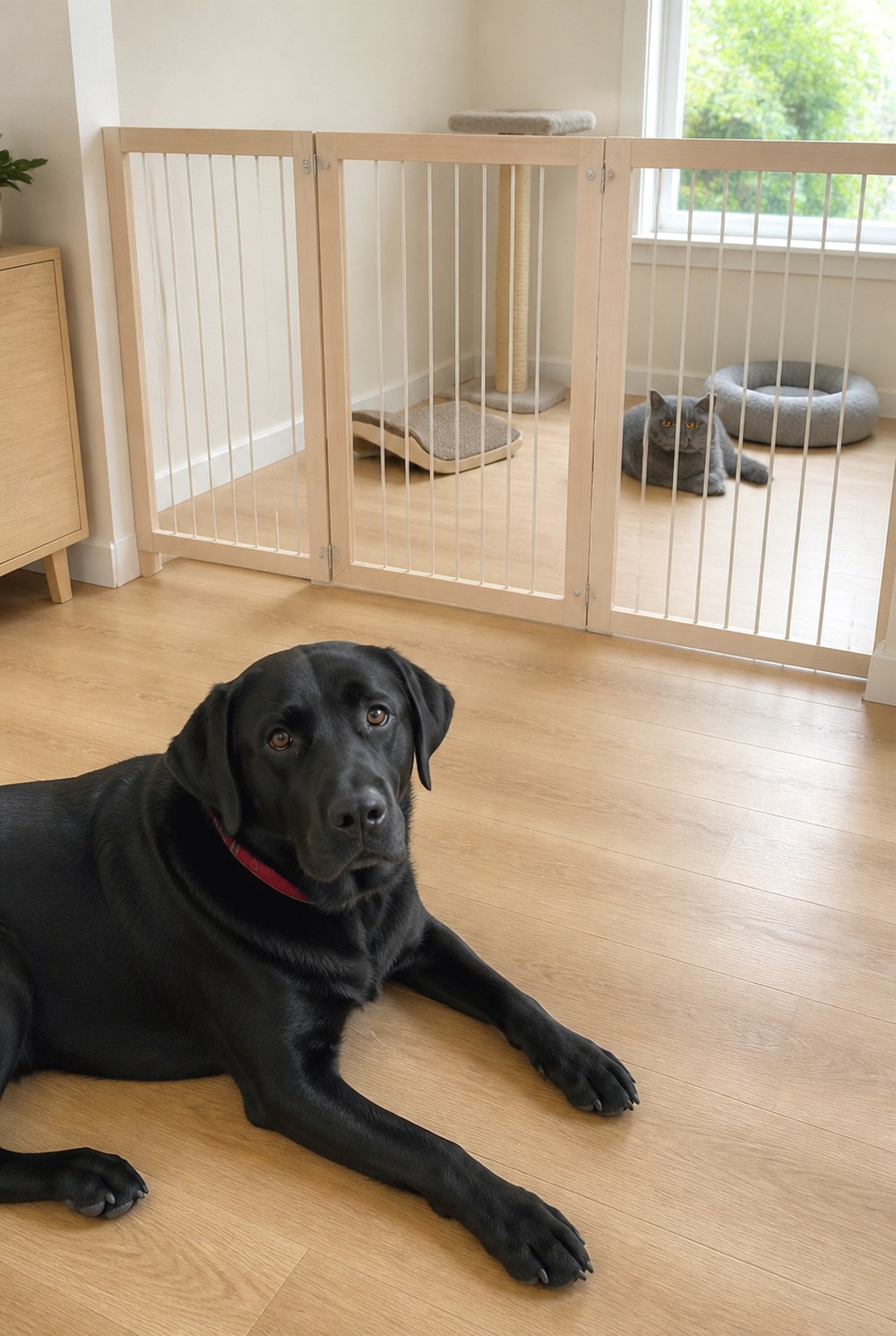
2. Add a Cat-Only Retreat Behind a Pet Gate
Even pets that normally get along can benefit from an area where interaction is optional. A cat-only section is particularly useful in a shared room because it gives the cat somewhere to rest without being followed.
Depending on the room, you might use a securely installed pet gate with a cat-sized opening or another appropriately designed barrier that the cat can pass while the dog cannot. Behind it, place a bed, scratching surface, water, or another resource the cat uses frequently.
Keep the retreat large enough that the cat does not feel trapped. It should not be a narrow dead end with the dog able to block the entrance from the other side.
This zone can also be useful when the dog is enthusiastic about play but the cat is finished socializing.
You May Also Like


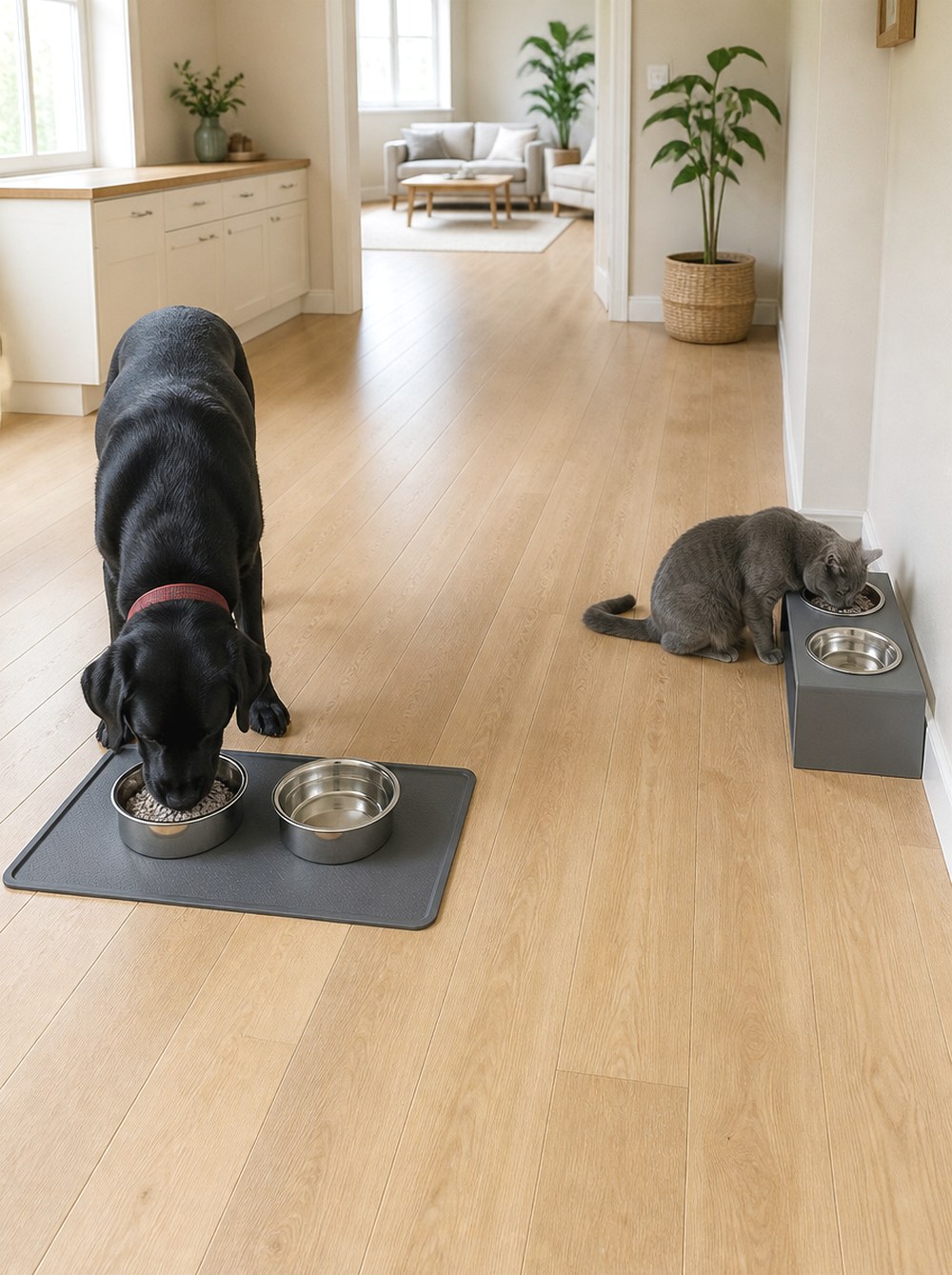
3. Put Dog and Cat Feeding Stations in Separate Areas
Matching bowls placed side by side may look tidy, but separate feeding stations are usually more practical in a multi-pet room.
Place the dog’s bowls in one accessible floor-level area and the cat’s food somewhere the dog cannot casually reach. The exact arrangement depends on the pets and their mobility. An elevated cat feeding station can work in some homes, while another room section protected by an appropriate barrier may work better in others.
Separation helps prevent one pet from hovering over the other’s meal or finishing unattended food. It also lets you notice more easily if one pet suddenly eats less than usual.
Water access should remain convenient. If the pets comfortably share a water source, keep it away from litter and high-traffic doorways. Some households may prefer more than one water station.
4. Create a Dog-Resistant Litter Zone
The litter box deserves its own plan rather than being squeezed wherever floor space remains. In a dog-and-cat room, the goal is to give the cat convenient access while discouraging the dog from reaching the litter.
A properly sized litter cabinet, a gated cat-only area, or a protected room corner can work, provided there is adequate airflow and the cat can enter and exit comfortably. The setup should also let you remove the box easily for regular cleaning.
Do not make the space so enclosed that odors and moisture accumulate, and do not force the cat through an awkward opening merely to hide the box.
Food and water should be located elsewhere. Keeping the toileting area visually and physically separate also makes the entire shared room easier to maintain.

5. Give Each Pet a Separate Sleep Spot
A shared pet room needs at least two genuinely appealing resting places. Otherwise, the more confident pet may repeatedly claim the best location.
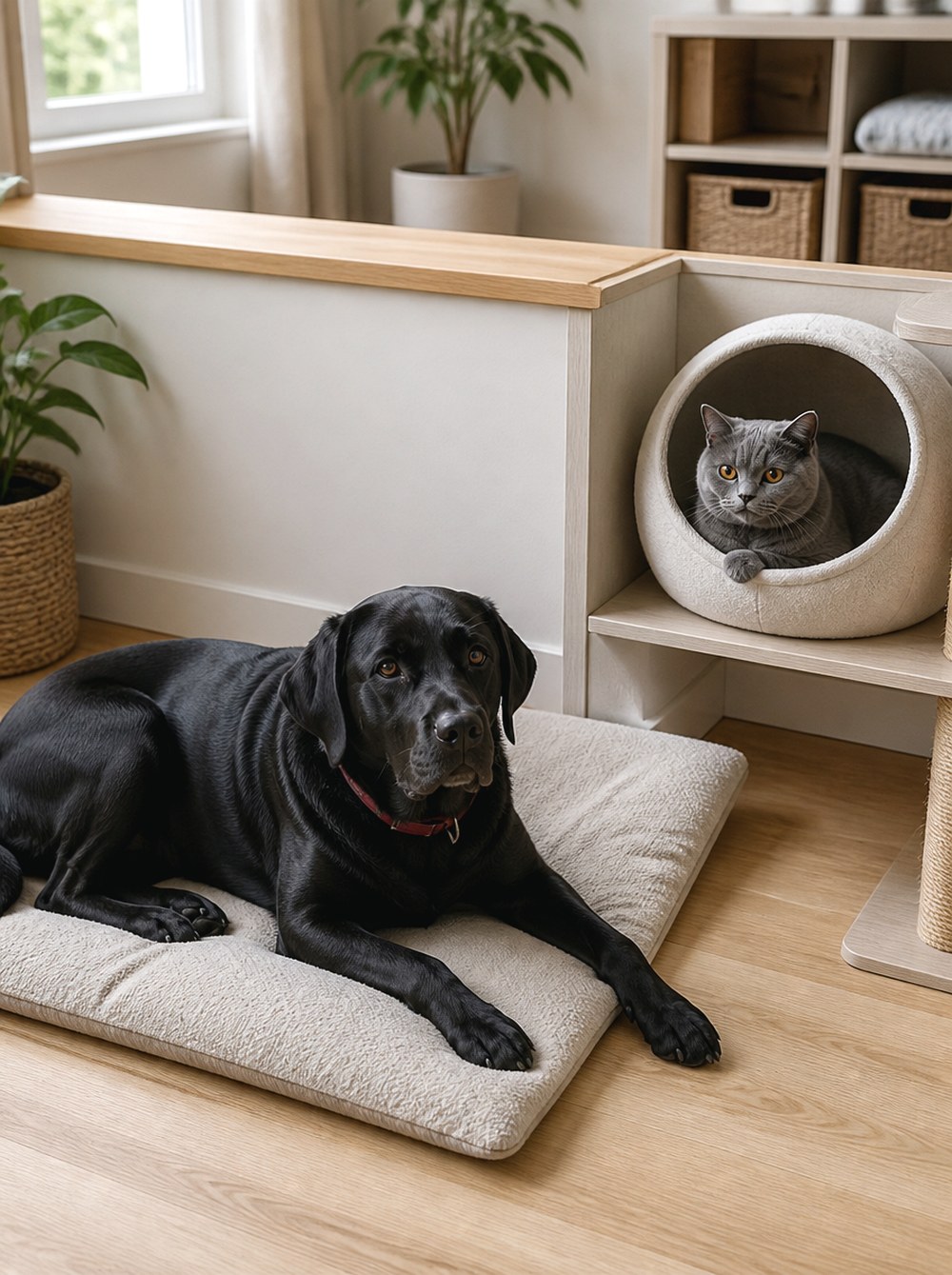
For the dog, that might be a washable bed against a quiet wall where people do not constantly step past. The cat may prefer an enclosed bed, padded shelf, window perch, or raised sleeping platform.
Do not place both beds inches apart simply to create a symmetrical photograph. Some dogs and cats enjoy sleeping near each other, but they should be able to rest at a comfortable distance too.
Watch which locations they choose on their own. A pet repeatedly sleeping somewhere other than the designated bed may be telling you that the chosen spot is too exposed, too warm, too noisy, or too close to the other animal.

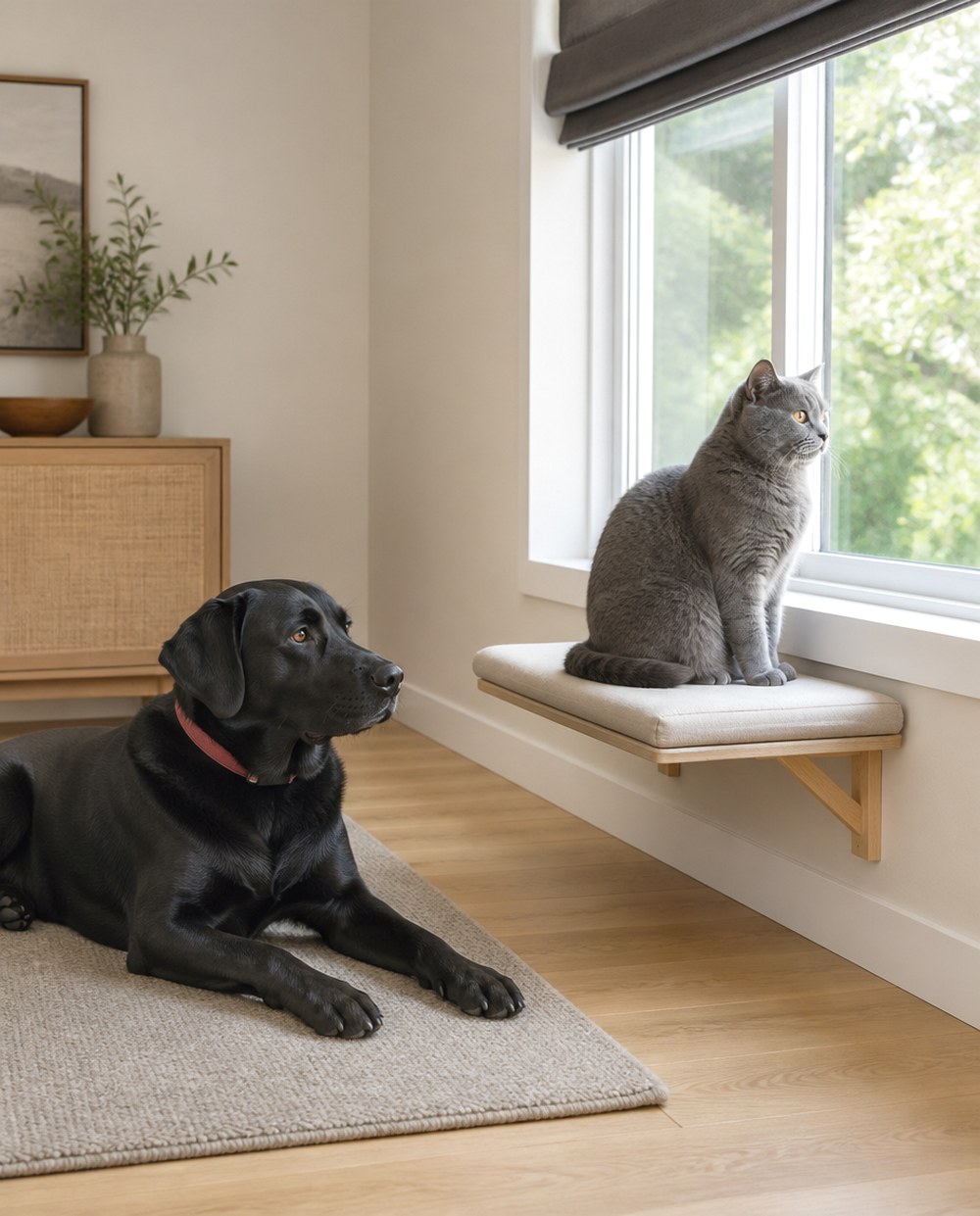
6. Build a Shared Window Zone Without Forcing Them Together
A window can become useful enrichment space for both pets when it is arranged in layers.
Give the cat a secure raised perch with a clear outside view. A few feet below or beside it, place a comfortable dog mat where the dog can rest without blocking the cat’s route up or down.
This setup uses one part of the room for two different preferences: elevated observation for the cat and a comfortable resting or watching location for the dog.
Keep blind cords and similar dangling items secured out of reach. If the window opens, make sure the screen or other barrier is appropriate and secure rather than relying on an ordinary insect screen to contain a pet.
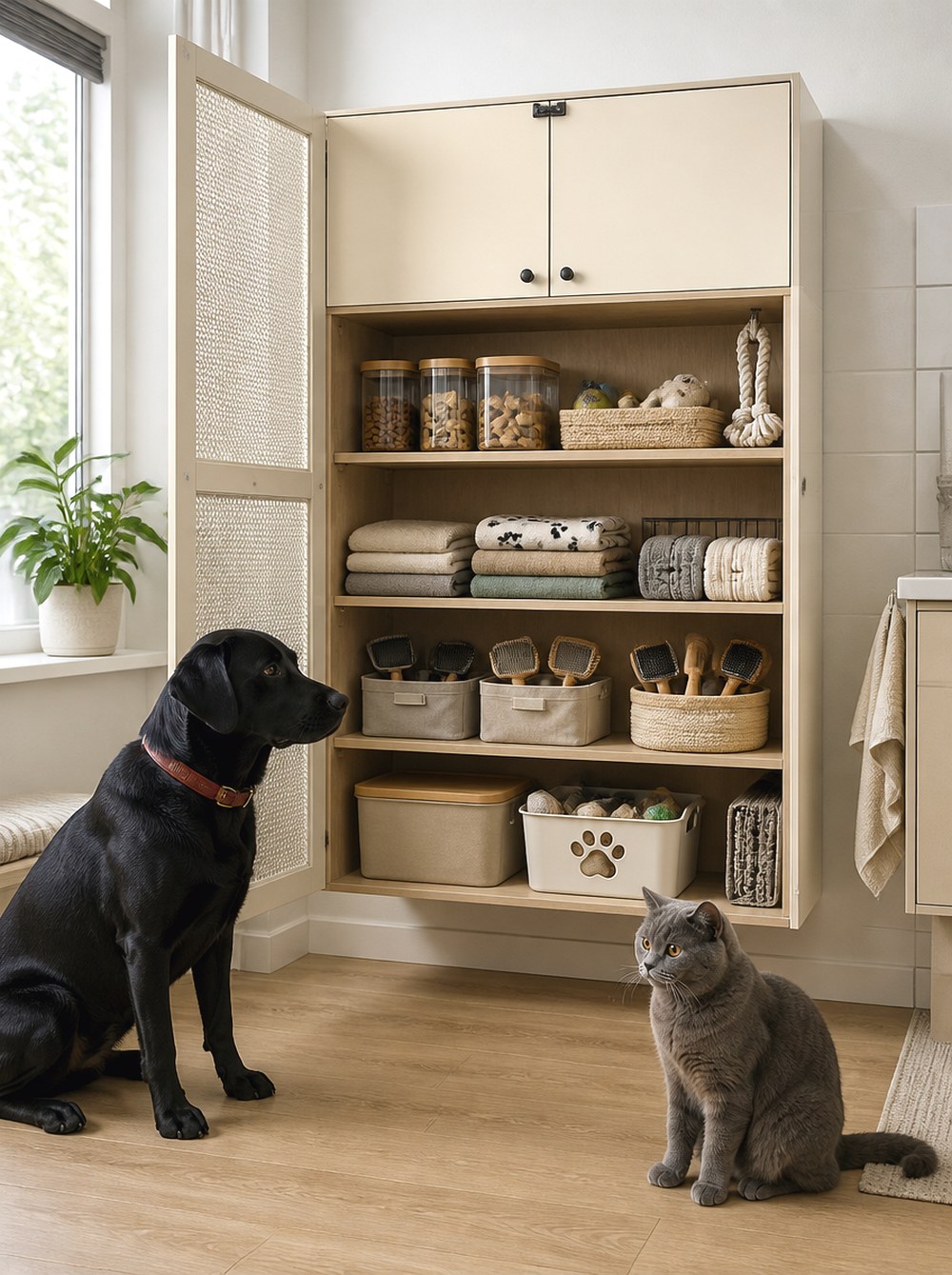
7. Use a Closed Supply Cabinet With Separate Dog and Cat Sections
A shared pet room can quickly become a collection of brushes, treats, toys, waste bags, grooming supplies, and spare bowls. One closed cabinet keeps those supplies nearby without leaving tempting objects within reach.
Divide the interior by purpose. One shelf might hold dog-walking supplies, another cat-care supplies, and a third shared cleaning or linen items. Small labeled bins inside the cabinet can keep similar items from becoming mixed together.
Keep medicines, cleaners, sharp grooming tools, small chewable pieces, and anything potentially hazardous in secure storage the pets cannot access. Frequently used safe items can occupy the easiest-to-reach shelf for humans.
Closed storage also makes the room feel calmer because visual clutter is reduced without sacrificing convenience.
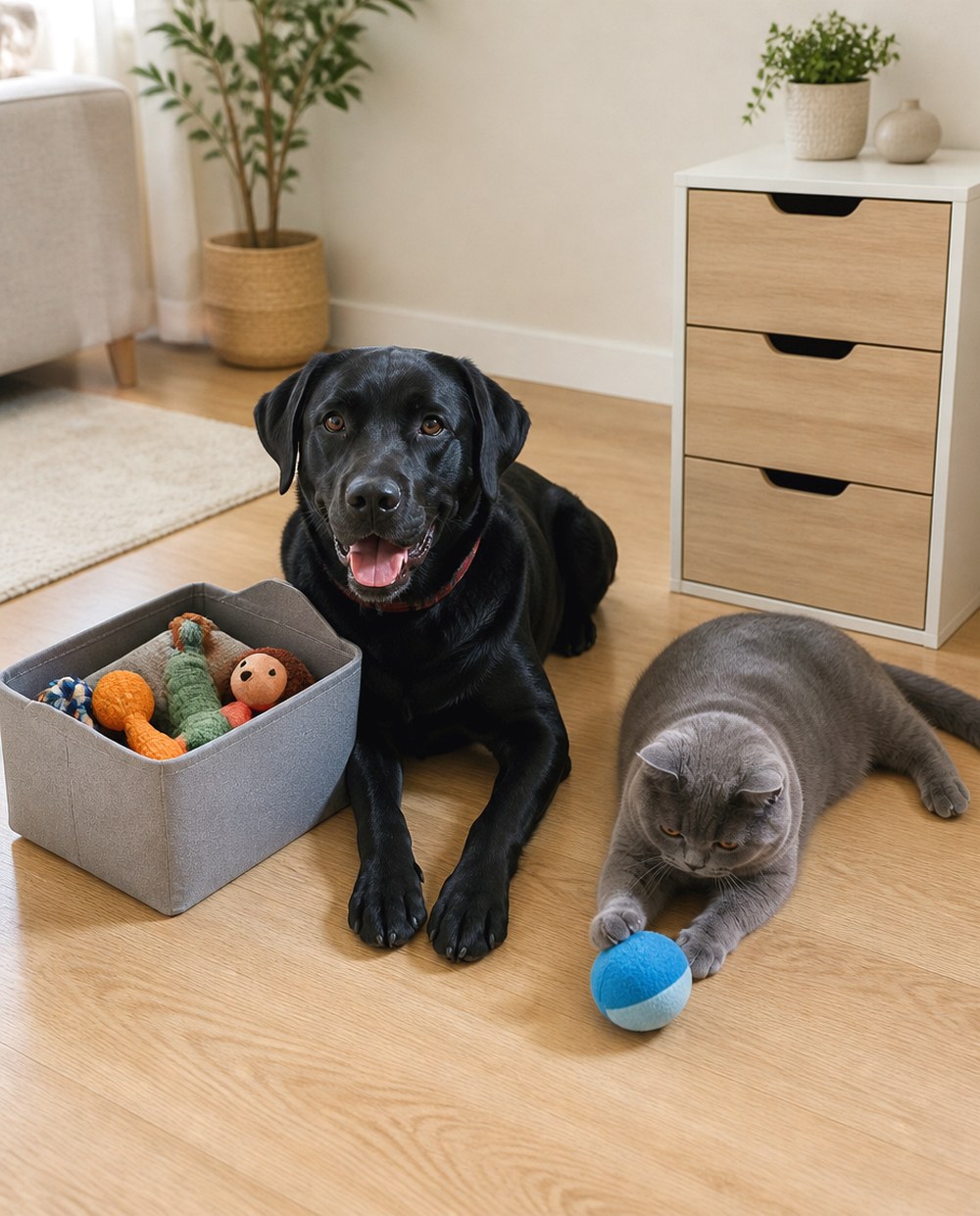
8. Make Two Toy Stations Instead of One Mixed Basket
A single overflowing basket may be convenient for people, but it can make it harder to manage toys suited to different species and play styles.
Use a sturdy floor basket or low bin for appropriately sized dog toys. Store cat toys separately in a closed drawer or container that can be opened during supervised play, especially when toys include strings, feathers, or small components.
Rotating a smaller selection of toys can keep the room less cluttered and makes it easier to notice damaged items. Remove toys that are breaking apart or have loose pieces rather than returning them to storage.
Separate toy stations also prevent the dog’s larger chew toys from burying the cat’s lightweight play items.
9. Keep a Clear Central Path Through the Room
Sometimes the best room improvement is the empty space you deliberately leave.
Avoid filling every wall and corner with pet furniture. A clear path from the entrance to the major resource areas helps the dog move without squeezing past the cat and gives the cat more options for crossing the room.
This matters especially in a smaller room. Place bulky beds and storage against walls, keep feeding mats out of the main doorway, and avoid creating narrow passages between furniture.
If either pet has reduced mobility, prioritize non-slip surfaces and uncomplicated routes rather than adding more climbing or decorative pieces.
An open circulation path also makes sweeping, vacuuming, and spot cleaning considerably easier.

10. Add a Flexible Quiet-Time Zone
A shared room works better when it can change with the pets’ needs. A quiet-time zone gives you a place for calm rest without permanently dedicating another part of the house to one animal.
For a dog, this might be a comfortable mat or open resting area in a low-traffic corner. For the cat, pair the zone with nearby height or a protected hide so the cat can choose proximity or distance.
A movable but stable room divider may help visually separate the area, provided it cannot easily tip onto either pet. The point is not to isolate the animals as punishment. It is to create a lower-stimulation corner for resting after play, visitors, or a busy part of the day.
If either pet regularly appears frightened, guards access to resources, chases the other pet, or prevents the other from eating, resting, or using the litter box, room décor alone is not the solution. Increase separation and seek appropriate professional guidance. Sudden behavior changes should also be discussed with a veterinarian.
You May Also Like


What Makes a Shared Pet Room Work
The strongest shared-room designs provide access without requiring constant interaction. A dog should not have to pass the cat’s litter box to reach a bed, and a cat should not need to squeeze beside the dog’s food to reach a favorite perch.
Start with the resources that can cause the most conflict or inconvenience: food, litter, water, sleeping places, and escape routes. Once those locations work, add storage and enrichment around them.
It is also worth observing the room from each pet’s perspective for a few days. Look for blocked paths, repeated hovering around food, competition for one bed, or a cat that hesitates before crossing the floor. Those small behaviors can tell you more about the layout than a perfectly coordinated set of furniture.
A successful shared room does not need to look identical on both sides. It needs to give both animals usable space, safe choices, and enough separation to relax.
