A new year is a useful reason to reset the pet supplies that have slowly spread through drawers, closets, counters, and entryways. The goal is not to create a picture-perfect storage system. It is to make everyday pet care faster, cleaner, and easier to maintain.
Save This Idea on Pinterest
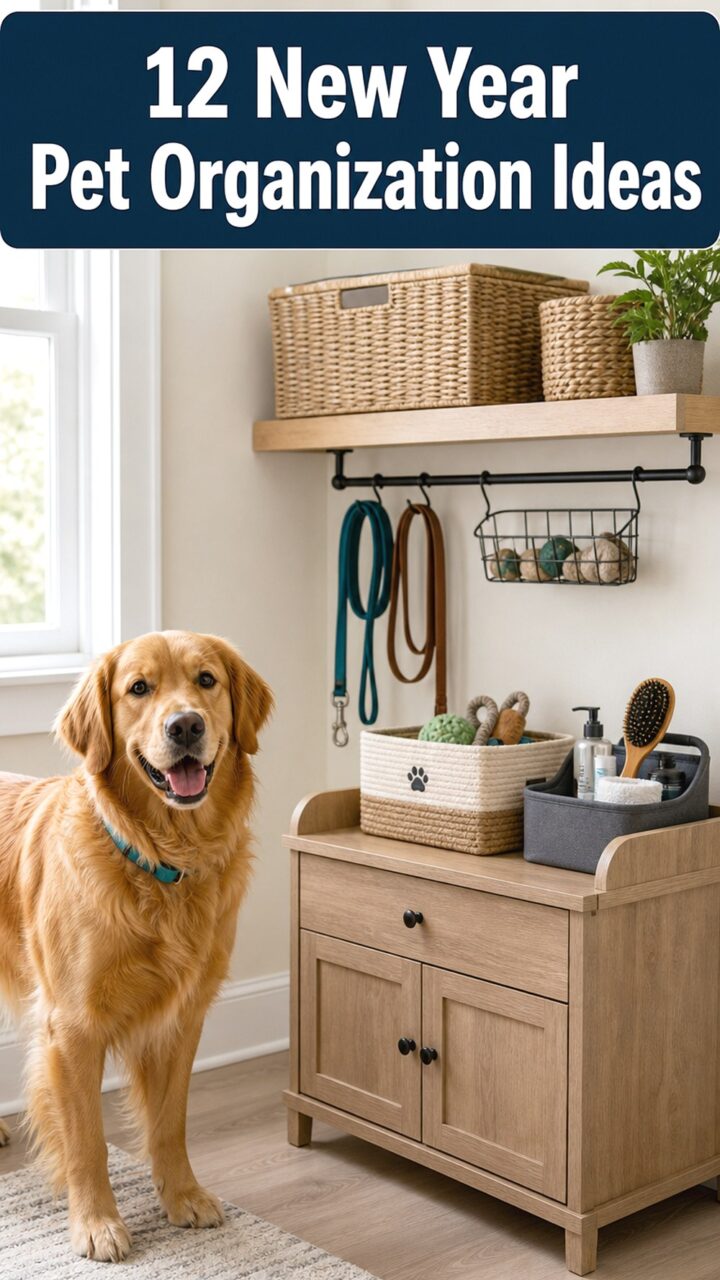
12 New Year Pet Organization Ideas for a Tidier Home
Save to PinterestStart by gathering supplies by purpose: walking, feeding, play, grooming, cleaning, travel, and health care. Discard damaged toys, expired products, empty packaging, and anything that is no longer safe to use. Then give the remaining items homes based on how often you reach for them. Daily supplies should be convenient. Rarely used gear can move farther out of the way.
These 12 New Year pet organization ideas focus on the places where clutter tends to return—and on systems that can keep working after January.
Reset the Supplies You Reach for Every Day
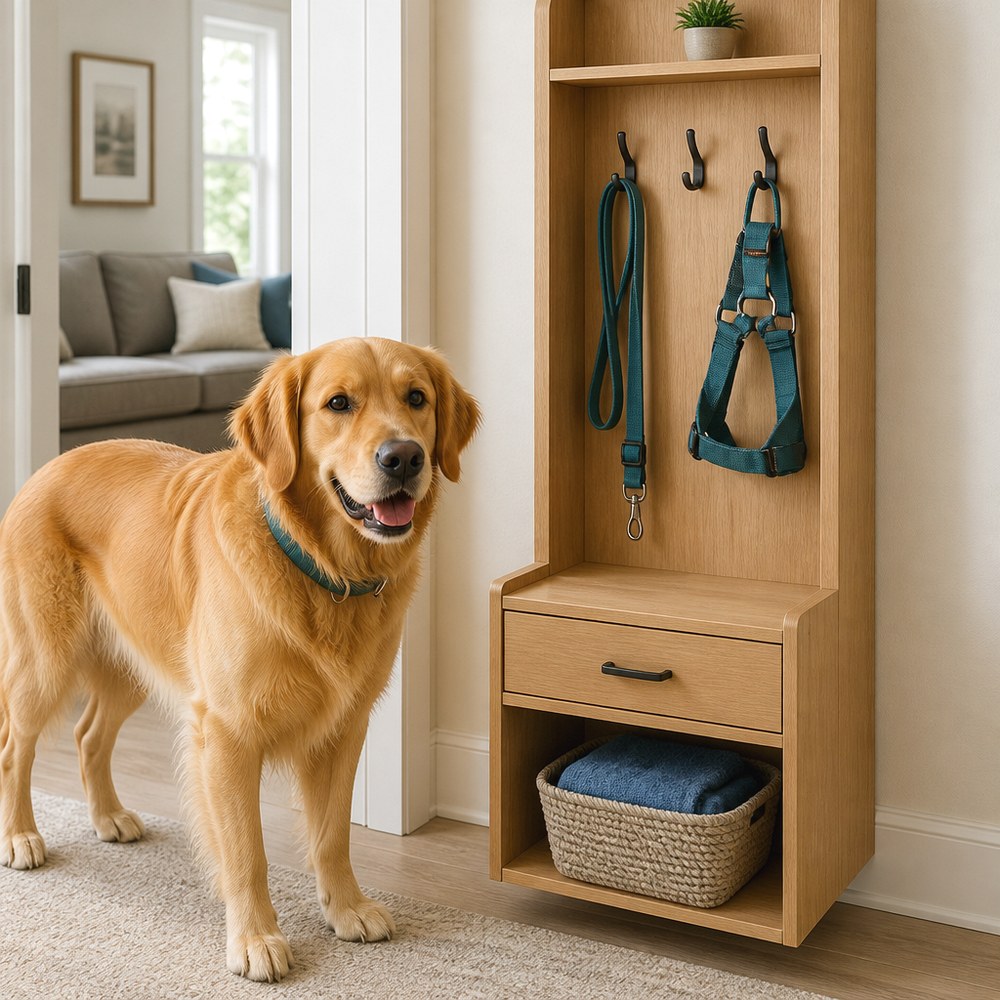
1. Build a One-Stop Entryway Walk Station
Leashes, harnesses, waste-bag rolls, towels, and other walking supplies are easiest to manage when they live near the door you normally use.
Install secure hooks at an appropriate height for leashes and harnesses, then add a small basket or drawer for sealed waste-bag rolls and other lightweight accessories. A washable tray or basket can hold a towel for muddy paws.
Avoid loading an unstable freestanding rack with heavy equipment. Hooks should be firmly secured, and dangling straps should remain out of reach if your pet tends to chew them.
The biggest benefit is not just a tidier entryway. You can see what is missing before you leave instead of searching multiple rooms for one piece of gear.
2. Turn One Drawer Into a Daily Pet-Care Drawer
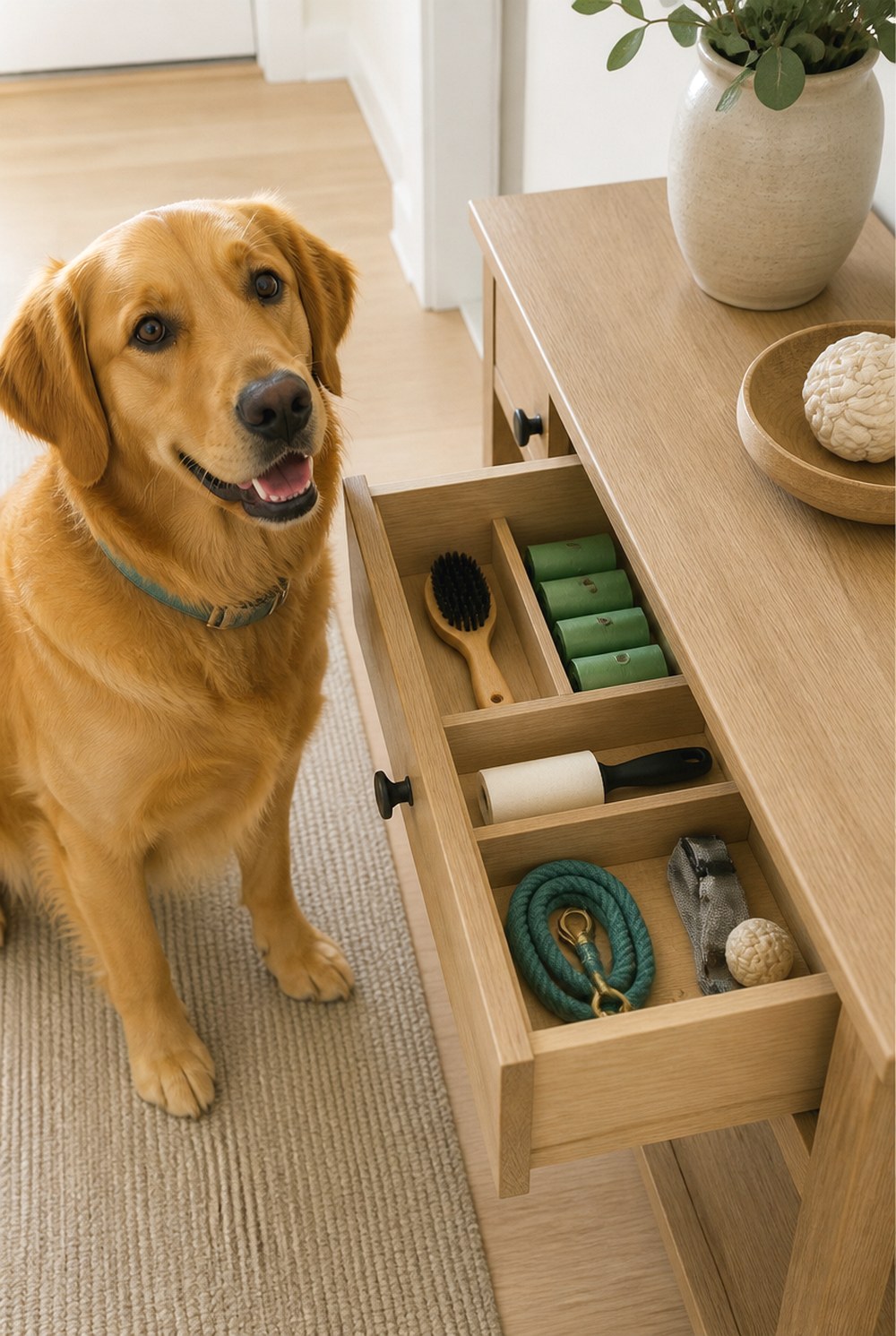
Small supplies cause disproportionate clutter because they are easy to leave on counters. Designate one shallow drawer for the items you use frequently but do not want sitting in view.
Depending on your routine, it might hold a brush, spare waste-bag rolls, sealed grooming wipes intended for pets, a lint roller, or other everyday accessories. Shallow dividers keep small items from forming one mixed pile.
Do not use this drawer for medication, cleaning chemicals, or anything dangerous if your pet could potentially open or reach it. Those supplies belong in secured storage.
A good daily drawer should be selective. If it becomes the destination for every miscellaneous pet item, it will quickly stop saving time.
You May Also Like


3. Give Feeding Supplies Their Own Shelf
Feeding supplies often end up divided between a pantry, countertop, cabinet, and refrigerator. Bring the nonrefrigerated daily items into one defined feeding zone.
Choose a cabinet or pantry shelf close to the bowls. Keep food properly sealed according to its packaging instructions, and retain the original package information so you do not lose feeding directions, lot details, or expiration information. If you use a secondary container, a practical approach is to place the original food bag inside a clean container that closes securely.
Keep scoops and other feeding accessories clean and separate from household cleaning products.
A dedicated shelf also makes inventory easier. You can notice that food is running low without discovering it at the next meal.

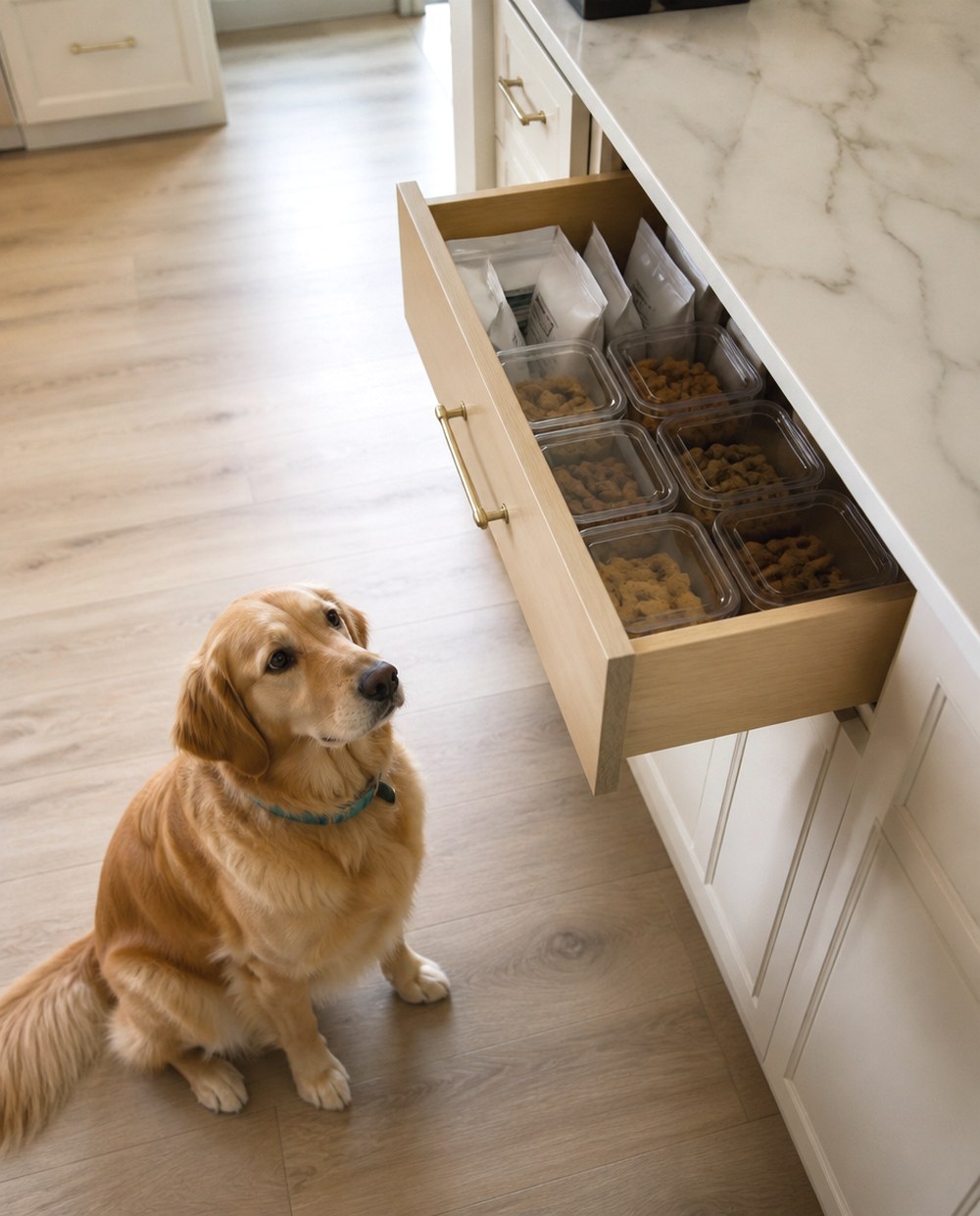
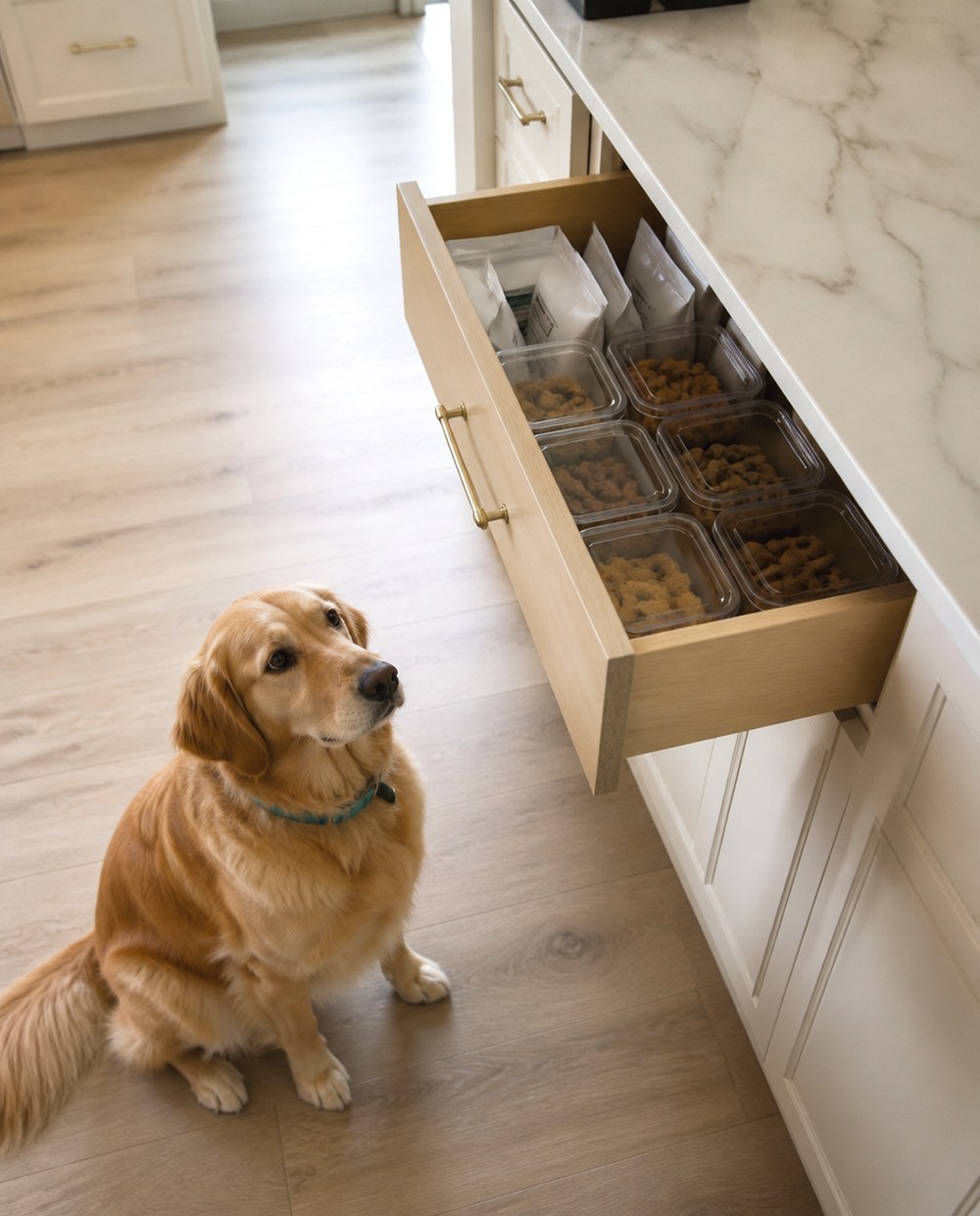
4. Create a Small Treat Zone Instead of Several Treat Stashes
Treats tend to migrate into coat pockets, kitchen drawers, training bags, and random containers. Consolidating them makes it easier to know what is already open.
Choose one cabinet shelf or drawer and use sealed containers that protect the contents from moisture and curious pets. Keep the original packaging information available when treats are transferred to another container.
If you use several kinds of treats, organize them by purpose rather than simply filling more containers—for example, everyday training pieces and longer-lasting items that require supervision.
Keep the entire zone inaccessible to your pet. A storage system should reduce accidental access rather than make treats easier for the dog to reach.
Control Toy and Enrichment Clutter
5. Use a Two-Basket Toy Rotation
Instead of keeping every toy on the floor, divide safe, usable toys into two groups. Keep a small selection available and store the second group in a closet or secured cabinet.
Rotating the selection periodically can also make it easier to notice wear. Inspect toys when you swap them. Discard pieces that are broken, splintering, unraveling, or small enough to create a swallowing risk.
For the active basket, choose a container with smooth edges and enough space that toys are not piled precariously. If your dog chews baskets, use a sturdier container and supervise access.
The stored basket does not need to be large. The point is to reduce visual clutter and make inspection part of the organization routine.
6. Separate Supervised Enrichment Gear From Everyday Toys
Food puzzles, lick mats, fillable enrichment toys, and other interactive items are easier to manage when they do not disappear under a pile of balls and plush toys.
Give these supplies a separate washable bin or cabinet shelf near the area where you prepare them. Clean and dry reusable items according to their care instructions before putting them away. Storing damp enrichment gear in a closed container can create odors and make the storage area unpleasant.
If an activity involves fabric, cardboard, small components, or chewable materials, supervise its use and remove damaged pieces promptly.
This separate zone also prevents you from accidentally overlooking enrichment items that need washing before their next use.

Make Grooming and Cleanup Faster
7. Assemble a Portable Grooming Caddy
If brushing supplies live in one bathroom while nail-care supplies and towels live elsewhere, grooming creates extra trips through the house.
A handled caddy can keep appropriate grooming tools together and move to the place where you actually use them. Include only items that belong in the grooming routine, such as brushes, combs, and pet-specific care supplies.
Store the caddy in a secured cabinet when it is not being used. Sharp grooming tools should never remain where a pet or child can reach them.
A portable setup works especially well when grooming happens in different rooms, because you do not have to dedicate permanent counter space to the supplies.

8. Add a Washable Paw-and-Mud Station
Rainy walks can turn an organized entryway into a pile of damp towels. Give dirty-day supplies a separate landing place.
Use a washable or wipeable basket for clean paw towels, plus a designated place for damp items to go directly to the laundry instead of back into storage. Keep the basket close enough to the entrance to be convenient without blocking the walkway.
If you use a pet-appropriate cleaning product, store it separately and follow the product label. Do not leave cleaners where your pet can access them.
The important distinction is clean versus used. A basket filled with both becomes a source of odor and confusion rather than an organization system.

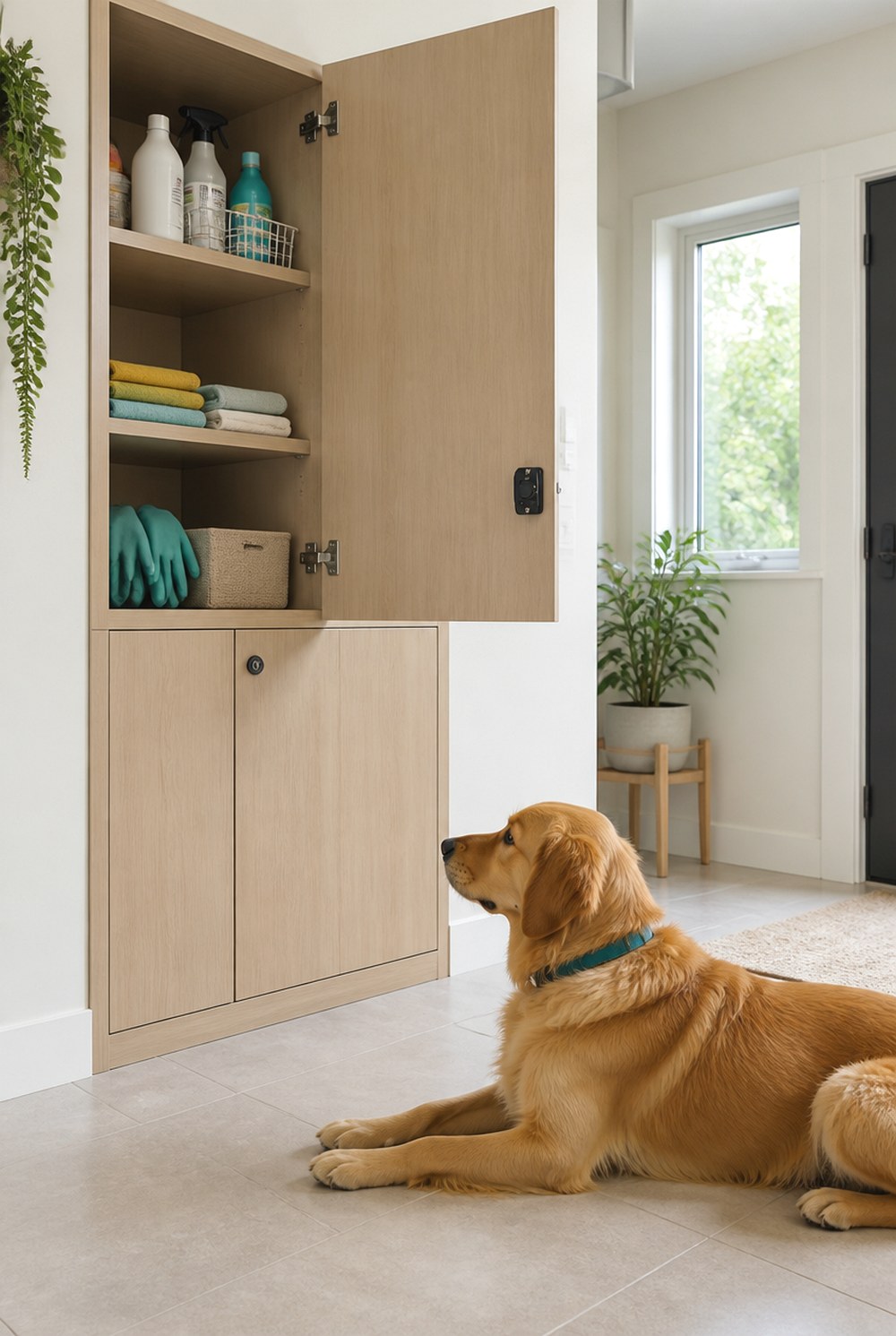
9. Lock Cleaning Supplies Into One Pet-Safe Utility Zone
Pet cleanup supplies should be convenient for people without being accessible to pets.
Choose a secured utility cabinet for pet-appropriate cleaners, washable gloves, spare cloths, and cleanup tools. Keep products in their original containers and follow their label directions. Avoid transferring cleaners into food containers or unlabeled bottles.
Do not mix cleaning products, and keep strong fragrances, essential oils, medications, and other potentially hazardous household items away from your pet.
Organizing cleanup products separately from grooming and feeding items also lowers the chance that a cloth, scoop, or container will accidentally be used for the wrong purpose.
Organize the Supplies You Need Less Often
10. Pack a Dedicated Pet Travel Bag
Travel items are easy to forget because many of them are rarely used at home. Keeping a partially prepared pet travel bag avoids rebuilding the packing list before every outing.
Store clean collapsible bowls, a spare leash if appropriate, waste bags, a towel, and other nonperishable travel basics together. Add food, water, medication, identification information, and destination-specific items when preparing for the actual trip rather than leaving sensitive supplies packed indefinitely.
Review the bag several times a year. Replace damaged equipment and remove anything that has expired or no longer fits your pet.
Store the bag in a dry closet where it is easy for you to reach but not available for chewing.

11. Create a Secure Pet Records and Health-Care Cabinet
Paperwork and health supplies should not share the same open basket as toys and leashes.
Keep vaccination records, insurance documents, identification information, veterinary paperwork, and other important records together in a folder or document box. Digital copies can provide a useful backup where appropriate.
Any medications, supplements, or medical supplies should remain in their original packaging and be stored securely according to their instructions, completely out of your pet’s reach. Do not move pills into decorative containers simply to make the cabinet look coordinated.
This is primarily an organization system, not a treatment plan. Questions about medication, concerning symptoms, sudden behavior changes, appetite changes, repeated vomiting, breathing difficulty, weakness, or bathroom changes belong with a veterinarian.

12. Set Up a New Year “Use, Donate, Replace” Review Zone
The easiest way to prevent pet clutter from rebuilding is to create a regular exit path for items you no longer need.
During your New Year reset, sort usable supplies into three decisions. Keep what still fits your routine. Set aside clean, safe, unwanted items that a local shelter or rescue confirms it can accept. Discard damaged, contaminated, or unsafe items rather than donating them.
For equipment that needs replacement, keep a short shopping note instead of storing the worn-out version as a reminder.
A temporary review bin on a high closet shelf can hold suitable donation items until you are ready to take them out. Do not let it become permanent storage. Revisit the pet zones every month or two and remove new clutter before it spreads.
You May Also Like


A New Year Reset That Is Easier to Maintain
The most useful pet organization system is the one that matches where supplies are actually used. A beautiful basket in the wrong room will eventually sit empty while the leash, brush, or towels return to the counter.
Start with the pet zone that causes the most daily frustration. Remove what no longer belongs there, group the remaining supplies by task, and give the items you use most often the easiest-to-reach safe storage.
Once that area works, move to the next. You do not have to reorganize the entire house in one day. A few clearly defined homes for walking, feeding, play, grooming, cleanup, and travel supplies can make the New Year reset much easier to keep throughout the months ahead.
