A heavy snow day can shrink a dog’s normal routine surprisingly fast. A long walk may become a short bathroom trip, the yard may be difficult to use, and icy sidewalks can make outdoor exercise a poor choice. The goal indoors does not have to be exhausting your dog. A better snow-day plan mixes sniffing, problem-solving, training, controlled movement, play, and periods of settling.
Save This Idea on Pinterest

10 Snow Day Dog Activity Setup Ideas for Indoor and Outdoor Play
Save to PinterestThese 10 snow day dog activity setup ideas use ordinary rooms and dog-safe supplies to create different kinds of engagement. You can choose one or two for a quiet day or rotate several short sessions when your dog has more energy. Keep sessions suited to your dog’s age, mobility, training level, and interest rather than trying to make every activity last as long as possible.
Pick a Setup for the Kind of Day You Have
| If your dog needs… | Try… |
|---|---|
| Quiet mental work | Scent Box Search or Toy-Finding Game |
| More indoor movement | Hallway Recall Lane or Low-Impact Obstacle Path |
| Short training practice | Three-Station Training Circuit |
| Interactive play | Non-Slip Tug Zone |
| Independent enrichment | Food Puzzle Rotation Station |
| A calmer activity | Window-Side Settle Station |
| A snow-specific experience | Indoor Snow Dig Bin or Backyard Snow Scent Trail |
Before setting anything up, clear slippery floors, cords, breakable objects, children’s toys, and anything small enough to swallow. Food activities should use part of your dog’s normal daily food allowance when practical. Supervise anything involving cardboard, fabric, food toys, or loose household objects, and remove damaged items before they can become swallowing hazards.
Quiet Setups for Sniffing and Problem-Solving
1. Make a Scent Box Search
Turn part of the living room into a small search area using several clean cardboard boxes large enough that your dog cannot accidentally swallow them. Leave every box open and remove tape, staples, packing material, and labels that may peel off.
Start by placing a piece of kibble or another familiar dog-safe treat inside one obvious box. Once your dog understands the game, place several empty boxes around the room and hide food in only one or two.
The activity becomes more interesting because your dog must use scent rather than simply follow your hand to the reward. For a beginner, keep the boxes separated and the food easy to reach. More experienced dogs can search a larger arrangement.
Do not encourage a dog to shred or eat the cardboard. If your dog immediately chews boxes instead of searching them, switch to sturdy dog-safe food puzzles or another activity.

2. Set Up a Toy-Finding Game
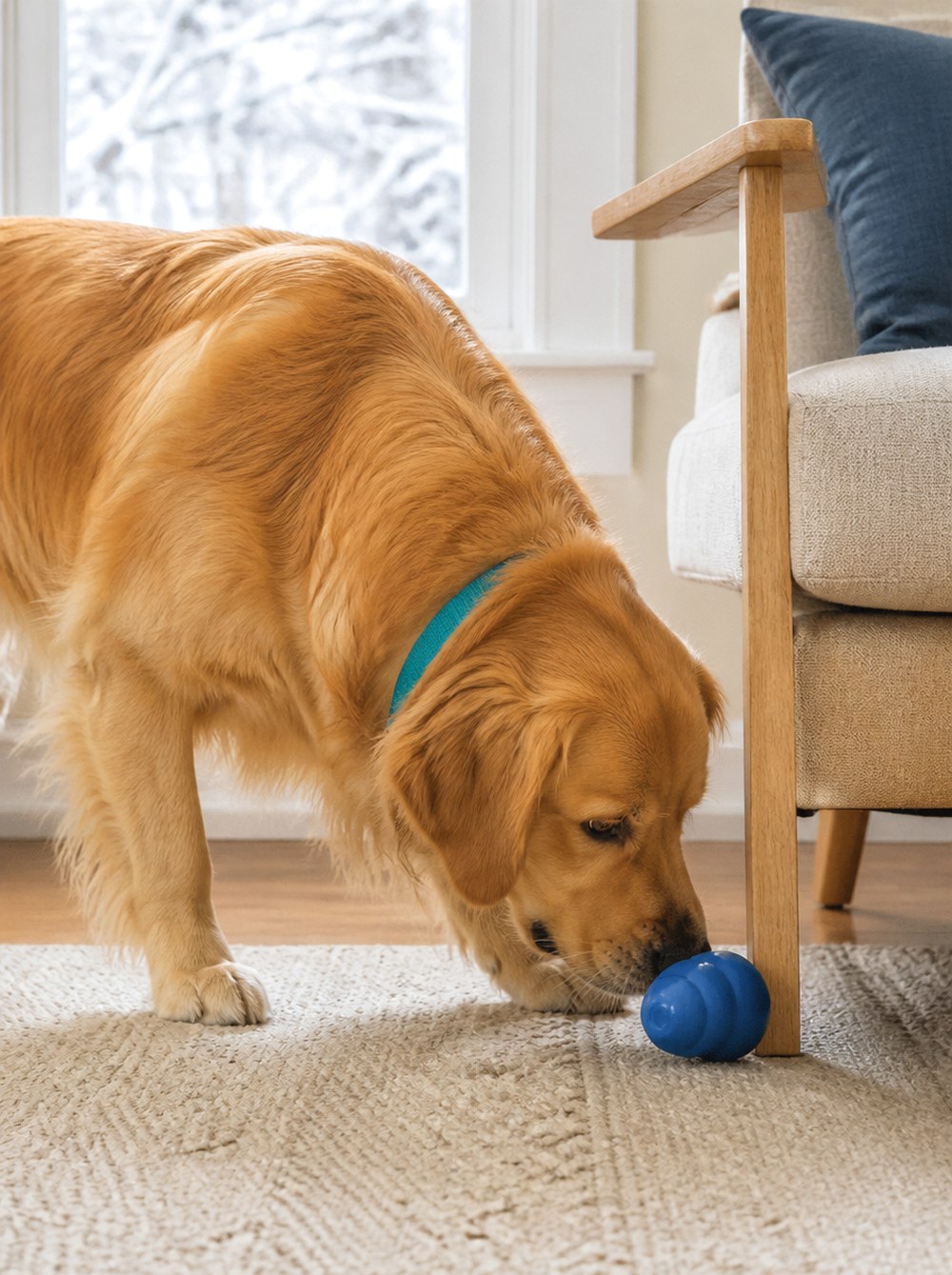
Instead of hiding food, choose one familiar toy and create a room-to-room search.
First let your dog see and sniff the toy. Ask for a brief stay or have another person keep the dog in a separate area while you place the toy somewhere visible. Release the dog and encourage a search.
After a few successful rounds, make the hiding locations less obvious: beside a chair leg, near the dog bed, or partially behind a large basket. Keep the toy at floor level rather than placing it somewhere your dog might climb or knock furniture over to reach.
Dogs that know individual toy names can eventually search for a particular item from a small group. Dogs that do not can still play using the same toy each round.
You May Also Like


3. Build a Food Puzzle Rotation Station
A snow day is a useful time to bring several forms of enrichment into the routine, but putting every toy on the floor at once can turn the setup into clutter.
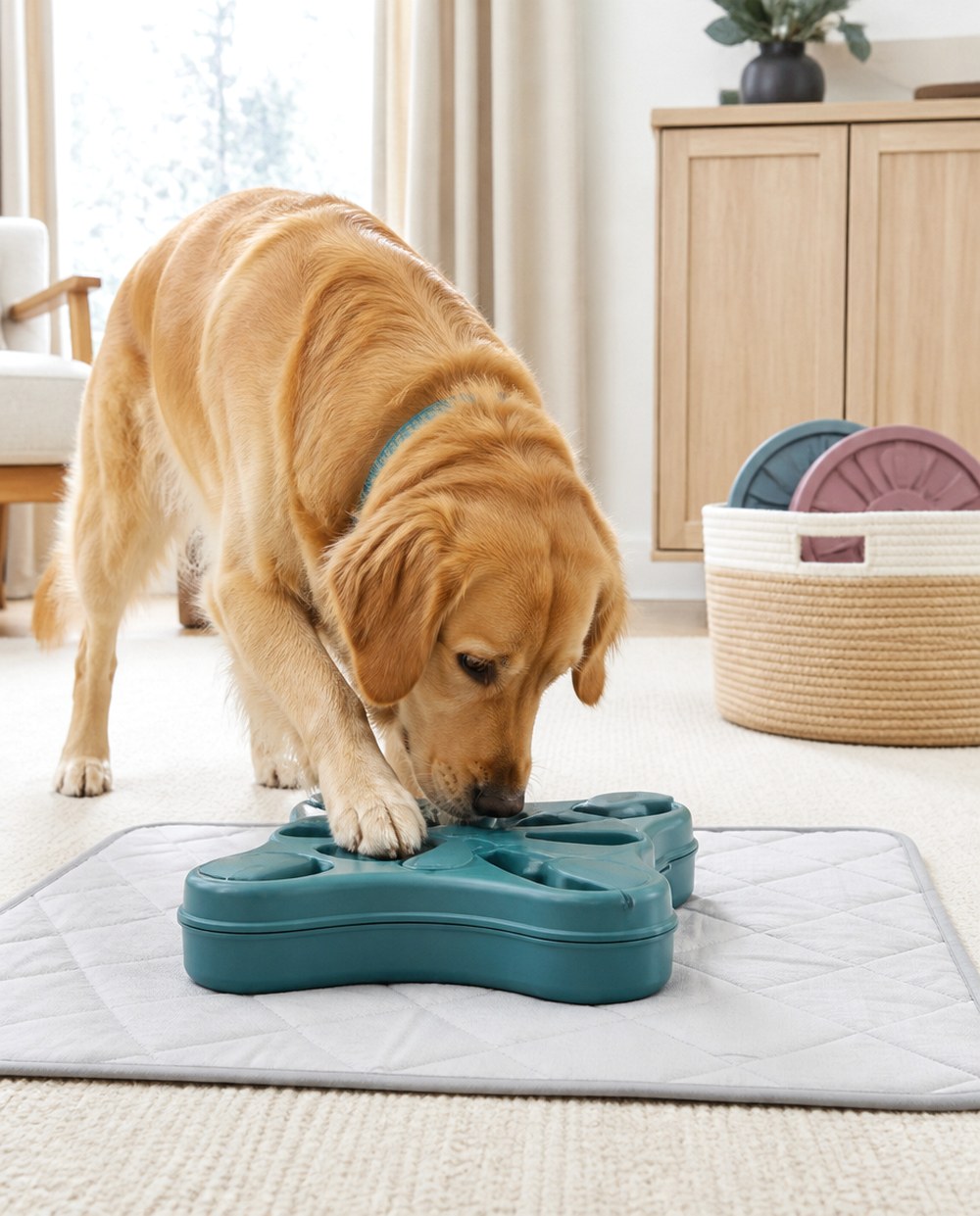
Choose one sturdy food-dispensing toy or puzzle at a time and place it on a washable mat. Add an appropriate portion of your dog’s regular kibble or another suitable food, then put the remaining puzzles away.
When your dog finishes and has had a break, you can use a different puzzle later in the day. Changing how the food is accessed gives the dog a new task without requiring constant running.
Choose products that match your dog’s size and chewing habits. Inspect them for cracks or missing pieces, follow the manufacturer’s directions, and supervise if your dog is likely to chew the puzzle itself.
Setups for Dogs That Need to Move
4. Create a Hallway Recall Lane
A clear hallway can become a controlled movement space without turning the house into a racetrack.
Place one person at each end if two people are available. Take turns calling the dog from one end to the other and rewarding a successful arrival with praise, a few seconds of play, or a piece of the dog’s normal food.
Working alone? Place a mat at one end. Send your dog to the mat, walk to the other end, and practice calling the dog back if those cues are already familiar.
Keep the floor dry and non-slip. Shorten the distance for puppies, seniors, or dogs with mobility limitations, and avoid rapid turns on slick flooring.

5. Arrange a Low-Impact Obstacle Path
An indoor obstacle path does not need jumps, balancing acts, or unstable furniture. In fact, keeping everything at floor level makes the setup more useful for a wider range of dogs.
Arrange three or four large training cones or other stable markers with plenty of walking space. Guide your dog around one cone, between two markers, around a chair with ample clearance, and onto a non-slip mat.
The purpose is controlled navigation and attention, not speed. Change the route after a few repetitions so your dog has to watch where you lead rather than memorizing one pattern.
Skip narrow squeezes and raised obstacles. Dogs with pain, stiffness, recovering injuries, or noticeable mobility changes need appropriately modified activity, and veterinary guidance may be appropriate when movement suddenly becomes difficult.

6. Make a Non-Slip Tug Zone
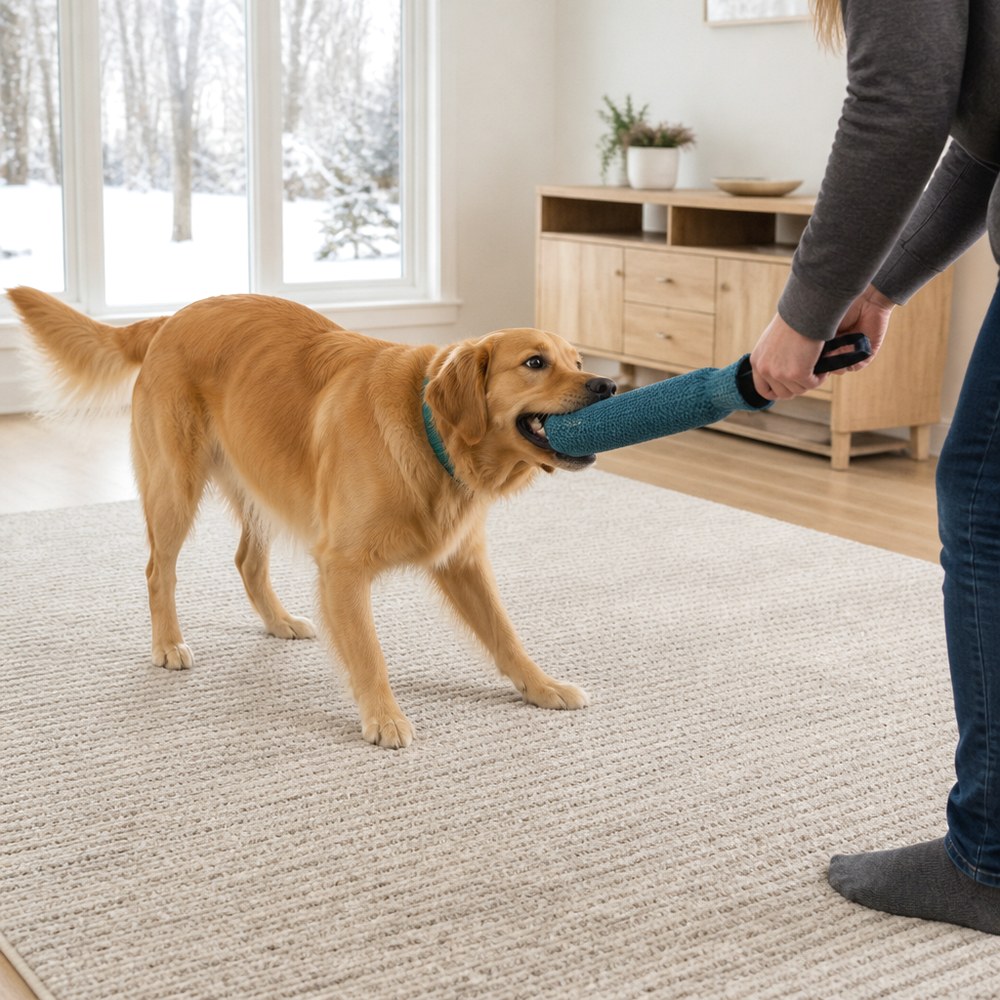
For a dog that enjoys interactive play, designate one area rather than allowing tug to travel through the whole house.
Choose a roomy section of carpet or place a large non-slip rug on the floor. Remove nearby tables, lamps, and breakable objects. Use a durable tug toy sized appropriately for your dog.
Keep the game controlled with familiar cues such as “take it” and “drop” if your dog knows them. Periodic pauses can keep the session from becoming frantic and make it easier to transition to another activity afterward.
Avoid lifting or swinging a dog by the toy. Replace frayed or damaged tug toys, and do not leave loose strands where they can be swallowed.
Short Training Setups With a Clear Job
7. Build a Three-Station Training Circuit
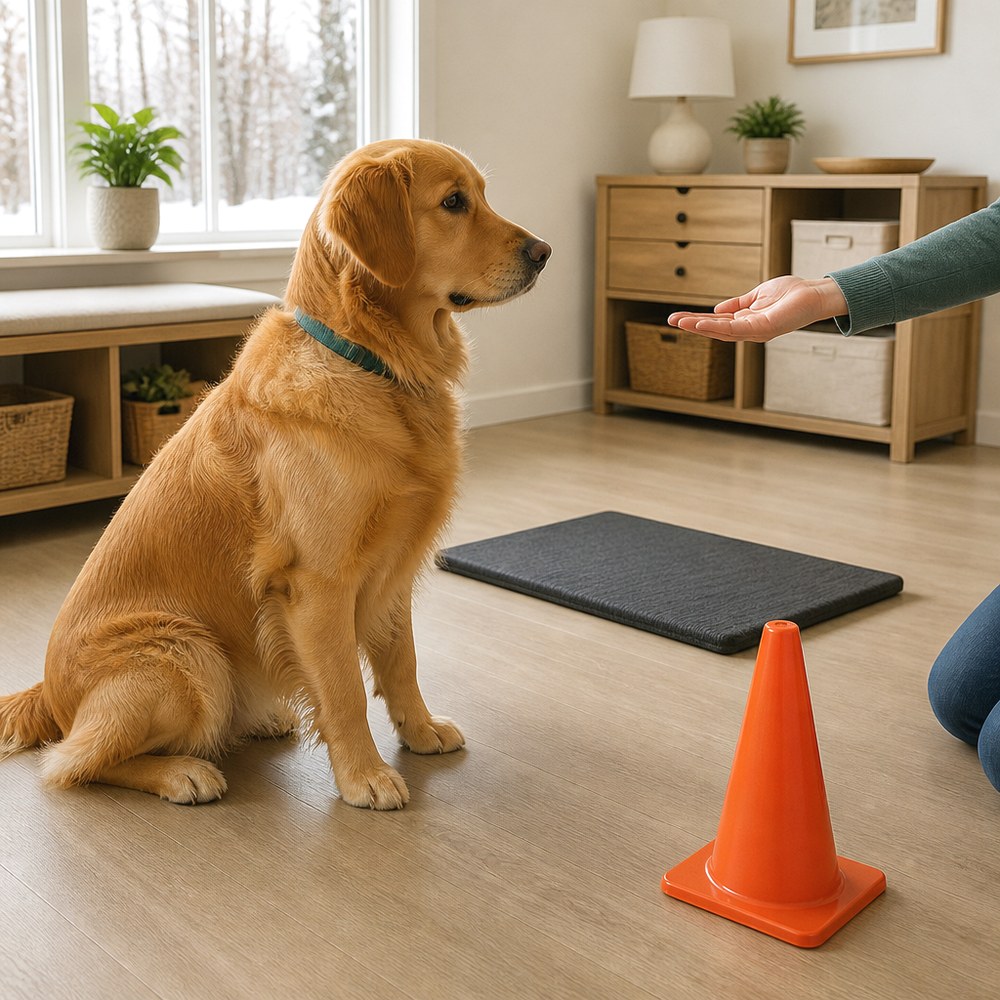
Instead of practicing one cue repeatedly, create three small stations around one room.
For example:
- Station one: Sit beside a chair.
- Station two: Touch a hand target near the doorway.
- Station three: Settle briefly on a mat.
Walk calmly from one station to another, reward the requested behavior, and continue. The physical movement is modest, but the dog must keep switching tasks and paying attention to the next cue.
Use behaviors your dog already understands at first. If you are teaching something new, work on that skill separately before adding it to the circuit. A short successful round is more useful than extending the session until attention disappears.
8. Turn Toy Cleanup Into a Training Game
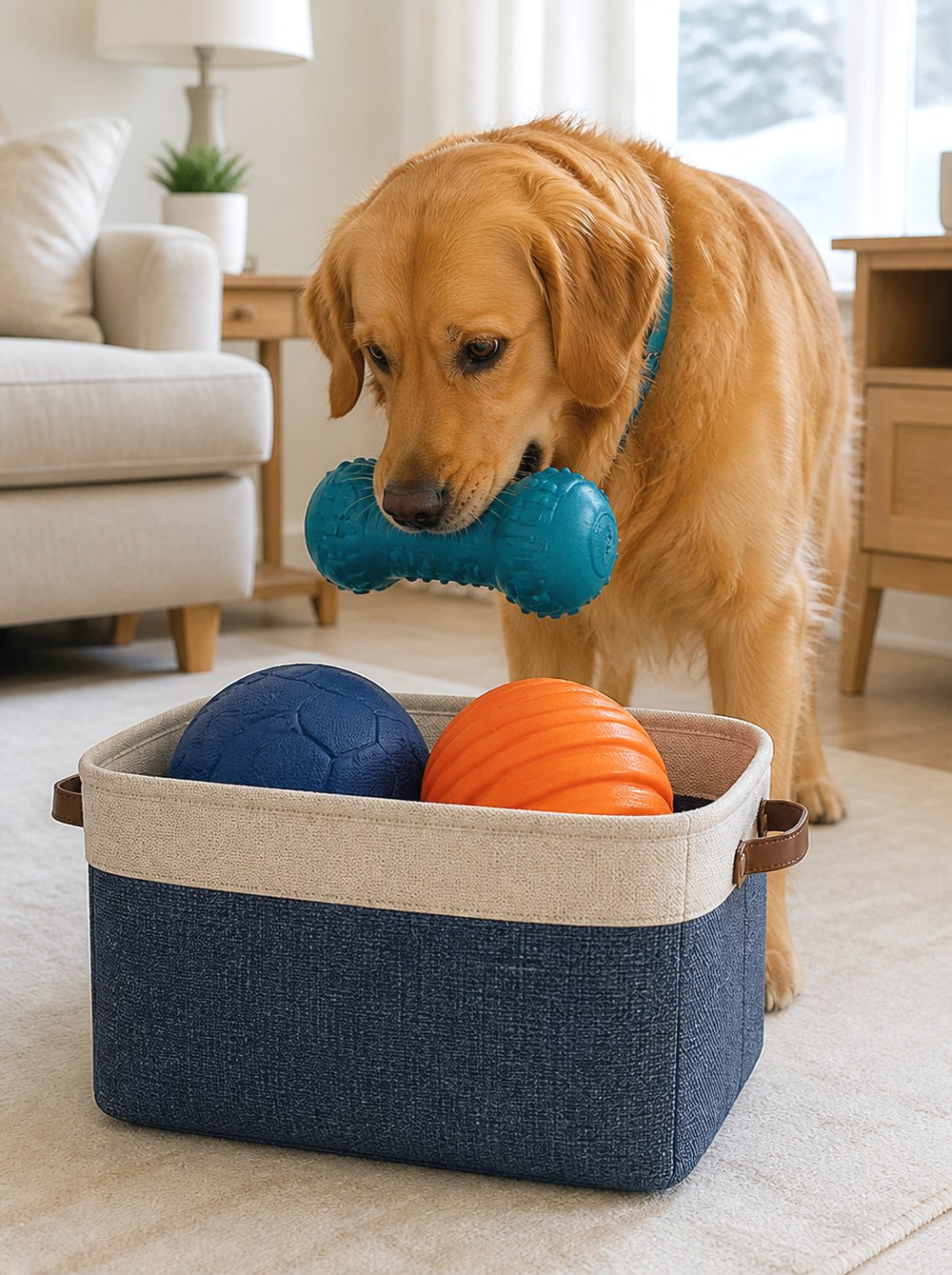
A sturdy open toy basket can become the centerpiece of a useful training session.
Start with one durable toy and position the basket nearby. If your dog already knows how to pick up an object, encourage the dog to bring it toward the basket and reward progressively closer attempts. Eventually, the goal is for the toy to land inside.
Do not expect a complete cleanup behavior in one session. For many dogs, the first snow day may only involve picking up the toy and moving toward the container.
Use a low, stable basket with no sharp wire edges or handles that could trap a collar or paw. Remove small toys that are not appropriate for your dog’s size.
Snow-Day Setups for Slowing Down
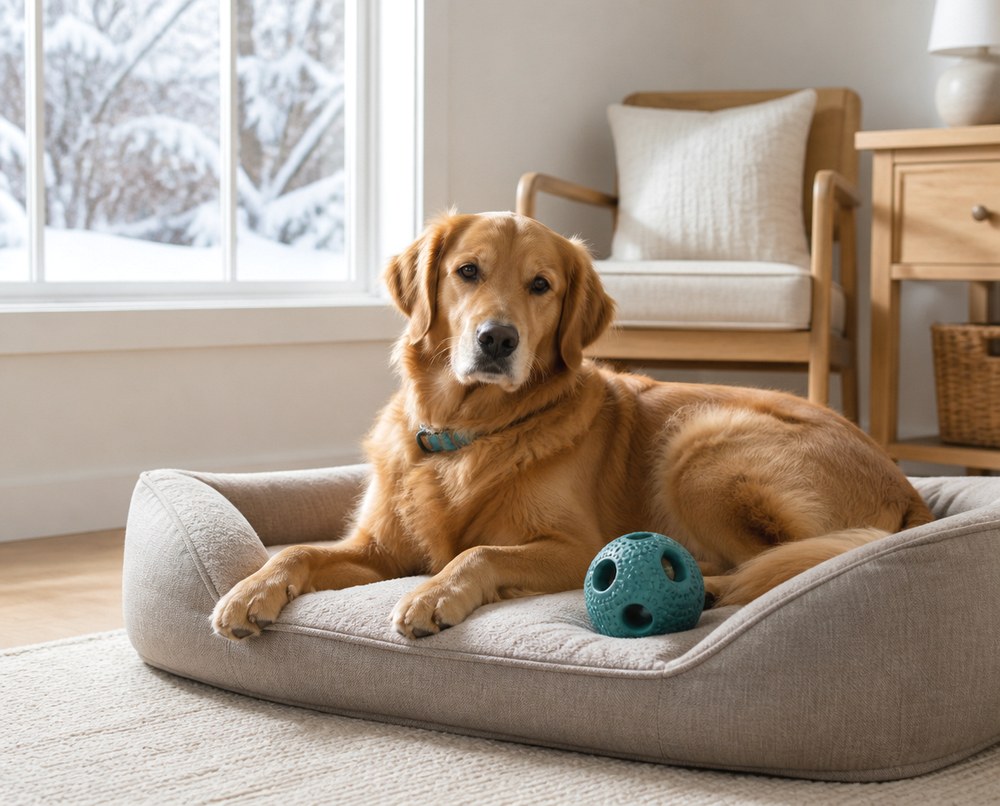
9. Create a Window-Side Settle Station
Not every snow-day activity needs to raise your dog’s energy. A defined rest station can help separate active sessions from quiet parts of the day.
Position the dog’s regular bed or mat several feet back from a secure closed window where daylight comes in. Add a familiar durable chew or food toy if appropriate for your dog, then encourage calm resting.
If watching pedestrians, wildlife, or snowplows tends to trigger persistent barking, move the bed farther from the window or choose a quieter location. The point is a comfortable place to decompress, not a front-row seat to something your dog finds upsetting.
This station works well after a scent game, training circuit, or indoor play session.
When You Want to Bring the Snow Into the Activity
10. Make a Supervised Snow Exploration Bin
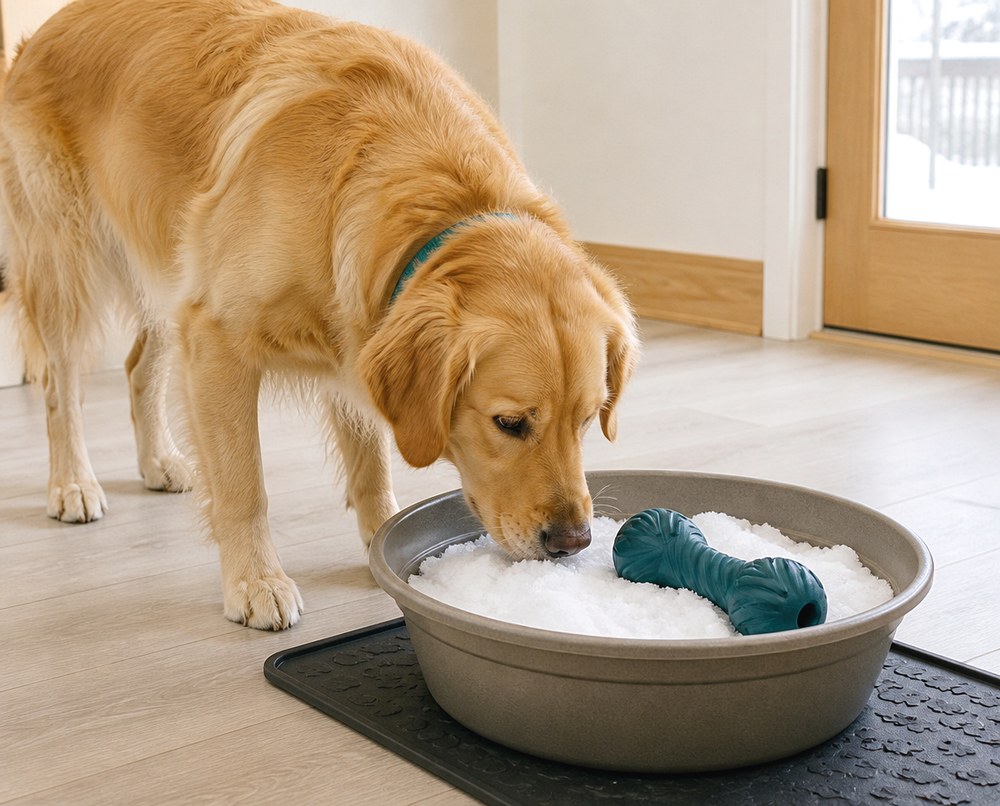
A shallow indoor snow bin gives a dog a chance to investigate the day’s unusual texture and scent without spending a long period outside.
Bring in a small amount of clean, fresh snow from an area that has not been treated with deicer, salt, chemicals, or other contaminants. Put it in a wide, shallow, sturdy tub on a waterproof mat near the entryway.
Let your dog sniff and paw at the snow. You can place one or two large familiar toys on top to encourage exploration without burying anything small enough to become difficult to find.
Keep this activity brief and supervised. Some dogs may try to eat large quantities of snow, while others will lose interest immediately. Remove the bin if your dog begins chewing the container or becomes overly focused on consuming the snow. Dry wet paws and the surrounding floor afterward to prevent slipping.
You May Also Like


Use Short Activity Blocks Instead of One Long Session
Snow-day enrichment usually works better as several distinct moments rather than one continuous stretch of entertainment. A dog might spend several minutes searching boxes in the morning, practice a few training stations later, play tug in the afternoon, and settle with a food puzzle before resting.
Watch what happens after each activity. If your dog is still focused and relaxed, another brief round may work. If the dog becomes frustrated, frantic, tired, or uninterested, switch to rest rather than continually increasing the difficulty.
Puppies and senior dogs may benefit from shorter movement periods and more rest. High-energy adult dogs may enjoy several active blocks, but indoor space still calls for controlled movement rather than repeated high-speed chasing or sharp turns.
Outdoor bathroom breaks should also match the conditions. Snow can hide ice, sharp debris, and treated pavement. Check paws after going outside and shorten exposure when conditions are severe. Contact a veterinarian for concerns such as weakness, breathing difficulty, sudden pain, repeated vomiting, appetite or bathroom changes, or an unexpected change in behavior.
A Practical Snow-Day Rotation
You do not need all 10 setups in one day. A balanced indoor sequence might look like this:
Morning: Scent Box Search after the first outdoor bathroom trip.
Late morning: Hallway Recall Lane followed by a rest period.
Afternoon: Three-Station Training Circuit or Low-Impact Obstacle Path.
Early evening: Tug Zone or Toy Cleanup Game.
Wind-down: Food Puzzle Rotation Station or Window-Side Settle Station.
On another snow day, change the combination. Rotating the type of challenge gives your dog something different to do without requiring you to constantly buy new toys or transform the entire house.
The best place to start is with the setup that matches the need you are seeing right now. A dog pacing around the living room may benefit from controlled movement, while a dog already physically tired from playing outside may get more from a scent search or calm food puzzle.
