A good summer dog routine at home should help your dog stay cool, drink enough water, get gentle movement, avoid peak heat, and settle comfortably indoors. Hot weather can make a normal day feel harder for a dog, especially if your home gets warm in the afternoon or your dog usually expects long walks.
Save This Idea on Pinterest
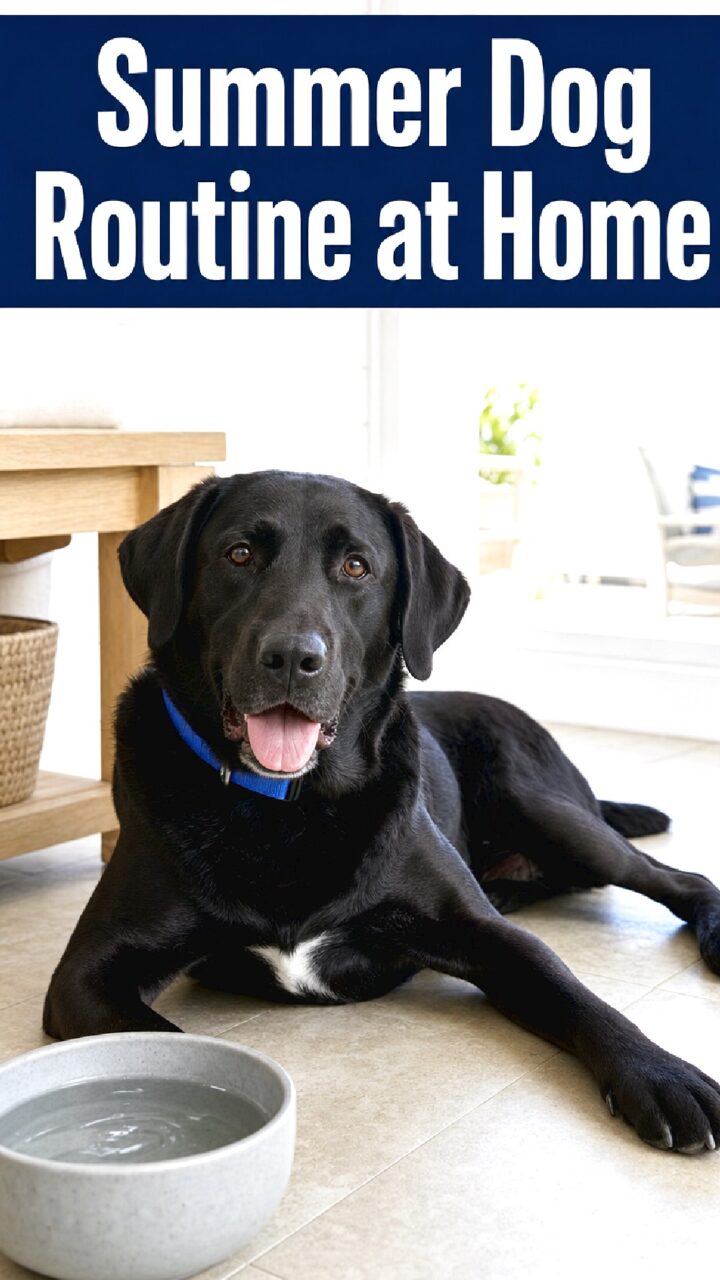
Summer Dog Routine at Home A Cool, Calm Daily Plan for Hot Days
Save to PinterestThe goal is not to fill the day with activity. It is to place the most active parts of the routine during cooler hours, keep the middle of the day calm, and give your dog predictable care without pushing them into heat stress. A steady summer routine can include short outdoor breaks, indoor enrichment, cool rest spots, regular water checks, and a quiet evening reset.
Start the Day Before the Heat Builds

Morning is usually the best time for movement during summer. If your dog needs a walk, backyard time, or a more energetic potty break, place it early while the ground and air are cooler.
Before heading outside, check the temperature of pavement, patios, decks, or artificial turf. If a surface feels too hot for your hand, it is too hot for your dog’s paws. Choose grass, shade, or a shorter route instead.
A practical summer morning routine might include:
- A potty break in a shaded area
- Fresh water before and after going outside
- A short walk or slow sniffing session
- Breakfast after your dog has had a few minutes to settle
- A quick body check for burrs, irritated paws, or signs of overheating
Keep morning activity calmer than you might in spring or fall. A dog does not need to come back exhausted for the routine to work. Sniffing, gentle walking, and a few minutes of training indoors can meet the need for attention without adding too much heat.
Build the Routine Around Cool Indoor Anchors
Exact times are less important than dependable anchors. In summer, your dog benefits from knowing when to expect food, water refreshes, bathroom breaks, rest, and attention.
Water Anchor
Start with water. Refill the bowl in the morning instead of only topping it off. In warm weather, water can collect fur, drool, dust, and food crumbs more quickly.
Place the main bowl somewhere your dog can reach easily but where it will not sit in direct sunlight. If your home has multiple floors or your dog spends time in different rooms, consider a second bowl in the main rest area.
Do not force your dog to drink, but make water easy to find. After outdoor breaks, indoor play, or a nap in a warm room, calmly guide your dog toward the bowl.
Rest Anchor
Summer rest should be intentional. Many dogs naturally sleep more during hot afternoons, and that is not a problem as long as they are comfortable and behaving normally.
Set up a cool resting area with:
- Shade
- Airflow
- A washable mat or bed
- Access to water
- Space away from sunny windows
- A quiet corner where your dog will not be stepped over
Tile, sealed wood, or a cooling mat used according to its instructions may feel better than a thick plush bed during the hottest part of the day. Some dogs still prefer a soft bed, so give options instead of forcing one surface.
Bathroom Anchor
Summer potty breaks should be shorter during high heat. For most dogs, quick and frequent can be better than one long outdoor stretch in the afternoon.
Use shaded routes, avoid hot surfaces, and watch your dog’s body language. If your dog is pulling toward the door, slowing down, lifting paws, panting heavily, or looking for shade, end the break promptly.
Keep Midday Quiet, Cool, and Low-Pressure

You May Also Like


The middle of the day is usually the wrong time for hard exercise. At home, this part of the routine should feel slower.
Instead of outdoor activity, use low-heat indoor enrichment. The best summer activities let your dog use their nose or brain without racing around the house.
Good midday options include:
- A few minutes of basic cue practice
- A food puzzle used under supervision
- A towel with kibble loosely rolled inside
- A calm “find it” game with a few treats hidden in safe, reachable spots
- A chew that is appropriate for your dog’s size and chewing style
- Quiet grooming with a brush your dog already accepts
Keep sessions short. Five to ten minutes can be enough, especially for dogs who get warm quickly or lose interest after breakfast.
Food puzzles and fabric activities should be supervised. Remove damaged toys, loose threads, broken plastic pieces, or anything your dog might chew apart and swallow.
Use a Flexible Summer Home Schedule
This sample routine can be adjusted for your dog’s age, health, bathroom needs, and your work schedule.
You May Also Like


| Time of Day | At-Home Routine | Summer Adjustment |
|---|---|---|
| Early morning | Potty break, gentle walk, water, breakfast | Use cooler hours for movement |
| Late morning | Rest, water check, quiet attention | Move bed away from direct sun |
| Midday | Short potty break, indoor enrichment | Avoid long outdoor activity |
| Afternoon | Nap, water refresh, calm check-in | Keep rooms shaded and ventilated |
| Early evening | Potty break, gentle play, dinner | Wait until surfaces cool |
| Night | Final bathroom break, settle area, fresh water | Keep the routine calm and predictable |
This schedule does not need to be strict. A summer dog routine at home works best when it protects your dog from heat while still giving enough structure.
For example, on a very hot day, the evening walk may become a five-minute potty break plus a short indoor training game. On a milder day, your dog may be comfortable with a longer shaded walk after sunset.
Make the House Easier for Summer Rest
A few small home changes can make the routine smoother.
Close blinds or curtains in rooms that heat up quickly. Move beds away from windows that get direct afternoon sun. Keep water bowls where they will not be kicked, spilled, or warmed by sunlight.
If your dog follows you from room to room, create more than one resting option. A mat in the kitchen, a bed in the living room, and a cool spot near your workspace may prevent your dog from lying in an uncomfortable area just to stay near you.
Be careful with fans and cords. A fan can help move air, but cords should be tucked away so your dog cannot chew them or trip over them. Do not aim intense airflow at a dog who cannot move away from it.
Adjust Activity by Your Dog’s Energy Level
Not every dog needs the same summer routine.
Low-Energy Dogs
A lower-energy dog may be content with short potty breaks, a little sniffing, and calm companionship. Do not add extra games just because the day looks empty. Rest is part of the plan.
High-Energy Dogs
A high-energy dog may need more indoor structure. Use short sessions spread through the day instead of one long workout. Try two minutes of cues before breakfast, a puzzle at midday, and a calm scent game in the evening.
Senior Dogs
Senior dogs may need more frequent bathroom breaks, softer rest areas, and closer heat monitoring. Keep outdoor time brief during warm hours and watch for stiffness, weakness, or sudden changes in appetite, drinking, bathroom habits, or behavior.
Puppies
Puppies need supervision, naps, and frequent potty breaks. Summer heat can tire them quickly, so avoid long outdoor play. Keep chew items safe, remove small objects from the floor, and end activity before the puppy becomes overtired.
Watch for Heat Trouble
Summer routines should leave your dog relaxed, alert, and able to cool down after brief outdoor time. Heavy panting after a potty break can happen, but it should improve once your dog is indoors, resting, and near water.
Contact a veterinarian promptly if you notice concerning symptoms such as weakness, repeated vomiting, collapse, breathing difficulty, confusion, pale or very dark gums, heavy panting that does not ease, sudden behavior changes, or refusal to eat or drink. These signs need professional guidance.
Do not try to diagnose the problem at home. Move your dog to a cooler area, offer water, and seek veterinary advice.
Create an Evening Reset
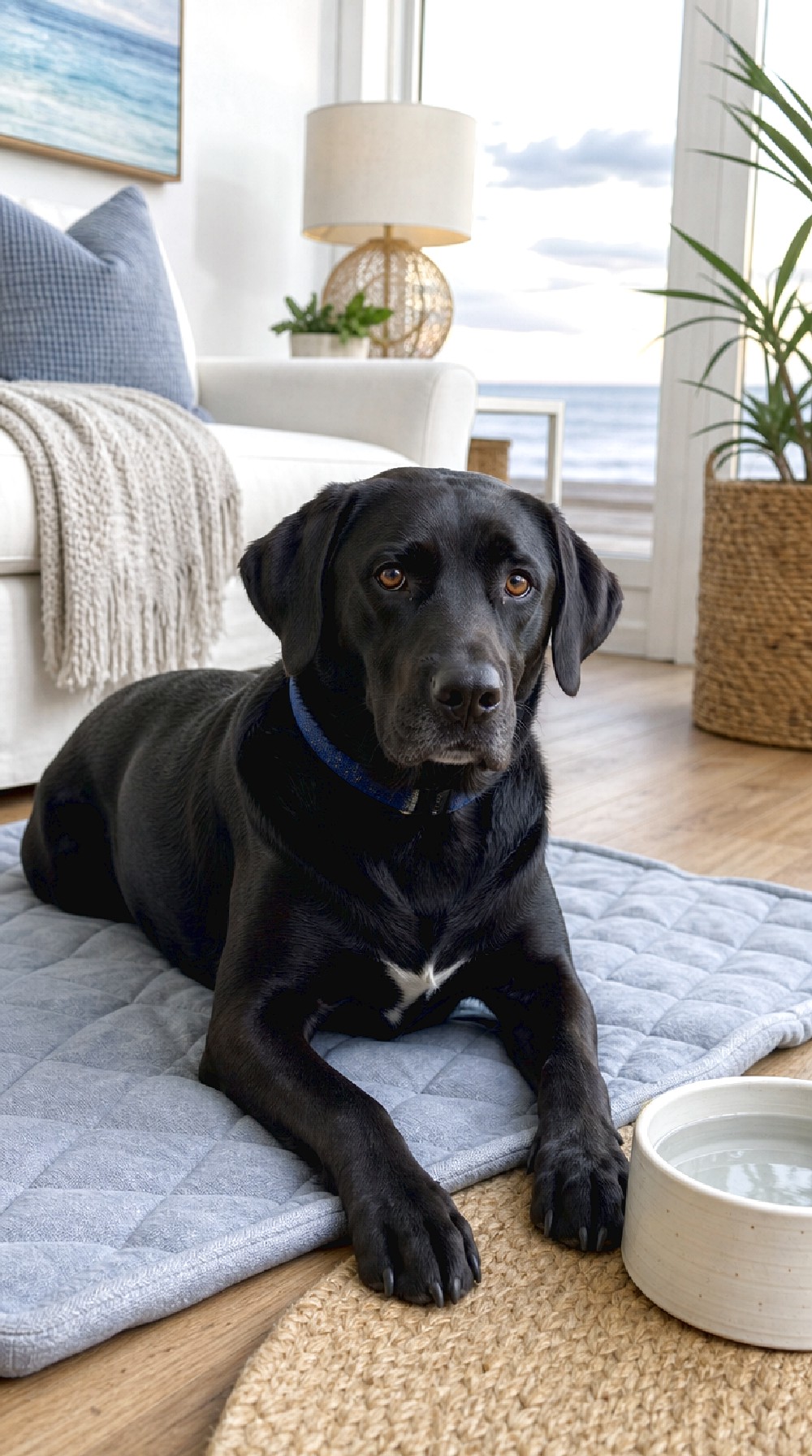
Evening is often the second best time for gentle activity, but only after the air and walking surfaces have cooled.
Start with a surface check. Pavement can hold heat long after sunset. If the ground is still hot, use a shaded yard, grass, or a very short potty route.
A good evening reset might include:
- A short outdoor break
- Dinner after your dog settles
- Fresh water
- A calm indoor game
- Brushing if your dog enjoys it
- A final check of paws, ears, and coat
- A predictable bedtime resting spot
This is also a good time to clean up the day’s supplies. Wash dirty bowls, put away food puzzles, remove damaged toys, and reset the water station for the next morning.
Where Summer Routines Usually Break Down
The most common problem is treating summer like every other season. Long walks, hard fetch, sunny patios, and hot car rides can become risky quickly.
Another issue is waiting too long to refresh water. A bowl may still look full but be warm, dirty, or tucked in a room your dog is not using.
The routine can also fail when indoor enrichment becomes too intense. Fast hallway fetch, jumping games, and rough play can heat a dog up indoors. Choose slower activities when the weather is already working against them.
Finally, watch the rest area. A bed placed in a sunny corner may be comfortable at 8 a.m. and too warm by 2 p.m. Check the room during the hottest part of the day, not only when you first set it up.
A Simple Busy-Day Version
On a packed day, keep only the most important anchors:
- Fresh water in the morning
- Early potty break before the heat rises
- Breakfast and a calm rest area
- Short shaded bathroom breaks
- One supervised indoor enrichment session
- Evening water refresh and final potty break
This stripped-down version still protects your dog’s comfort. You can add walks, grooming, or extra play when the weather and your schedule allow.
Start With the Coolest Parts of the Day
A summer dog routine at home works when it respects heat instead of fighting it. Put movement in the cooler hours, keep afternoons calm, refresh water often, and make rest areas easy to choose.
Begin with two changes: move active time to early morning or later evening, and create one dependable cool resting spot. Once those are working, add short indoor enrichment and a simple water-check habit. Small adjustments can make summer days feel steadier and safer for your dog.
