A homemade obstacle course can give an indoor cat a new reason to climb, investigate, duck, step, and problem-solve without requiring much floor space or expensive equipment. The best course is not necessarily the tallest or most complicated one. It is the one your cat chooses to explore.
Save This Idea on Pinterest
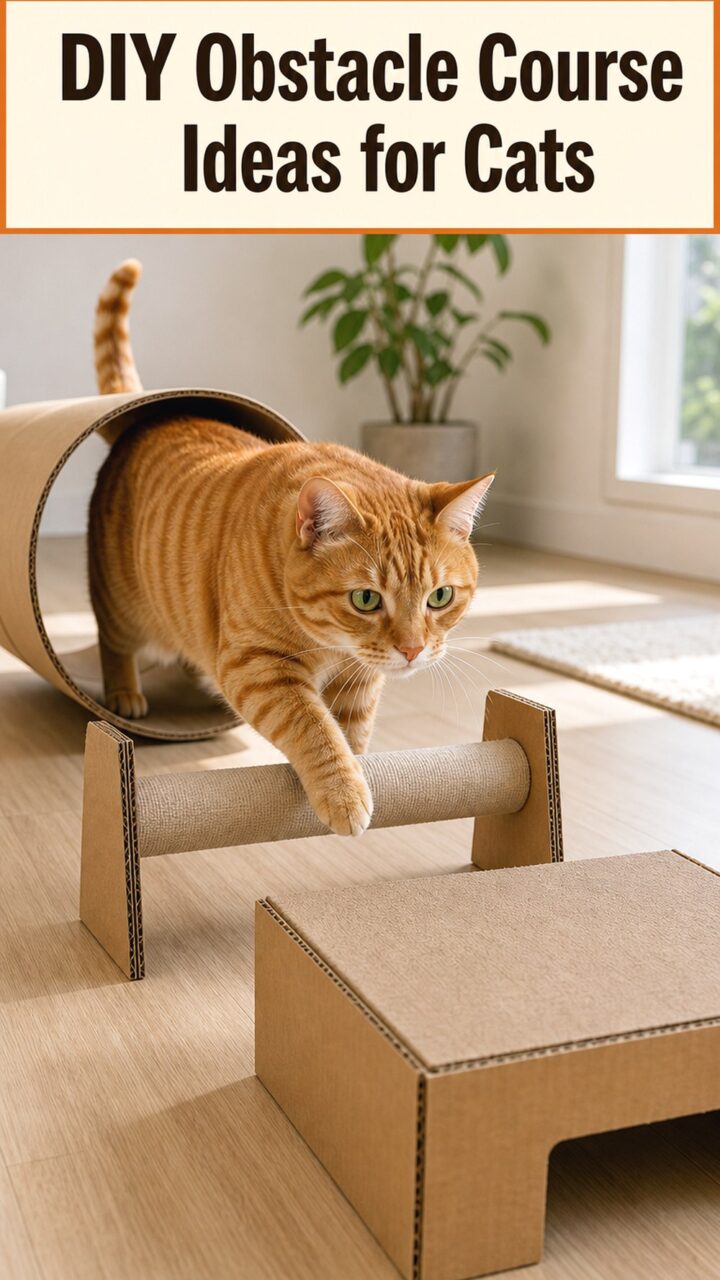
DIY Obstacle Course Ideas for Cats: 9 Safe Indoor Setups
Save to PinterestStart with two or three obstacles placed far enough apart that your cat can see an obvious path. Cardboard boxes, rolled towels, stable stools, open-bottom containers, and familiar furniture can all become course pieces. Once your cat understands the setup, you can rearrange individual stations rather than rebuilding everything.
Keep the challenge low at first. A successful course should encourage natural feline movement, not require a cat to leap over something intimidating or squeeze through an uncomfortable space.
Build the Course Around Your Cat’s Confidence
Before choosing obstacles, consider how your cat normally moves through the house.
| Your cat’s style | Good starting obstacles | Keep the challenge |
|---|---|---|
| Cautious or new to games | Wide tunnel, treat checkpoints, open box | Low and spacious |
| Curious adult | Tunnel, weave, stepping boxes, low hurdles | Moderate with several choices |
| Highly active cat | Longer route, direction changes, climbing transitions | Varied rather than excessively high |
| Senior or less mobile cat | Floor-level paths, wide openings, low platforms | Short, stable, and easy to exit |
A course does not need to be completed in order. Some cats will inspect one station, walk away, and return later. That still provides novelty and exploration.
Use treats, a favorite toy, or your own movement to invite investigation rather than pushing or placing your cat onto an obstacle. Wand toys can help guide movement during supervised play, but put them away afterward so strings and cords are not left accessible.
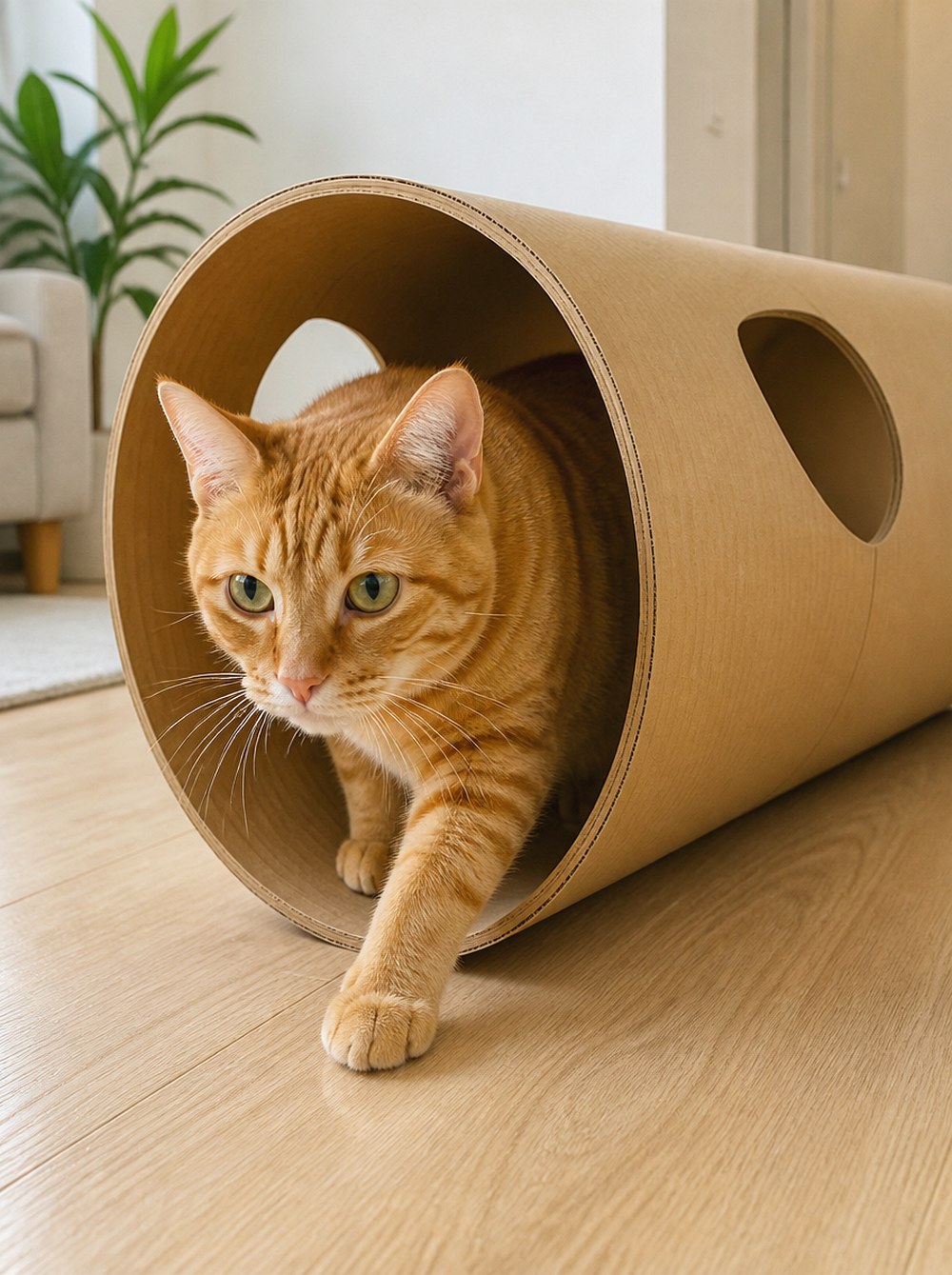
1. Make a Cardboard Tunnel Crawl
A long cardboard box is one of the easiest ways to create a clear beginning for an obstacle course. Open both ends so your cat can see an escape route. If you have several smaller boxes, align them to form a wider passage, but keep the joins stable and free from staples, tape loops, or sharp cut edges.
Cutting a large side opening halfway through the tunnel gives the cat another choice. One cat may walk straight through while another may enter through the side and exit from the end.
For a hesitant cat, make the tunnel very short at first. Place a treat just inside the entrance rather than at the far end. As confidence grows, move the reward farther through the passage.
2. Create a Rolled-Towel Hurdle Lane
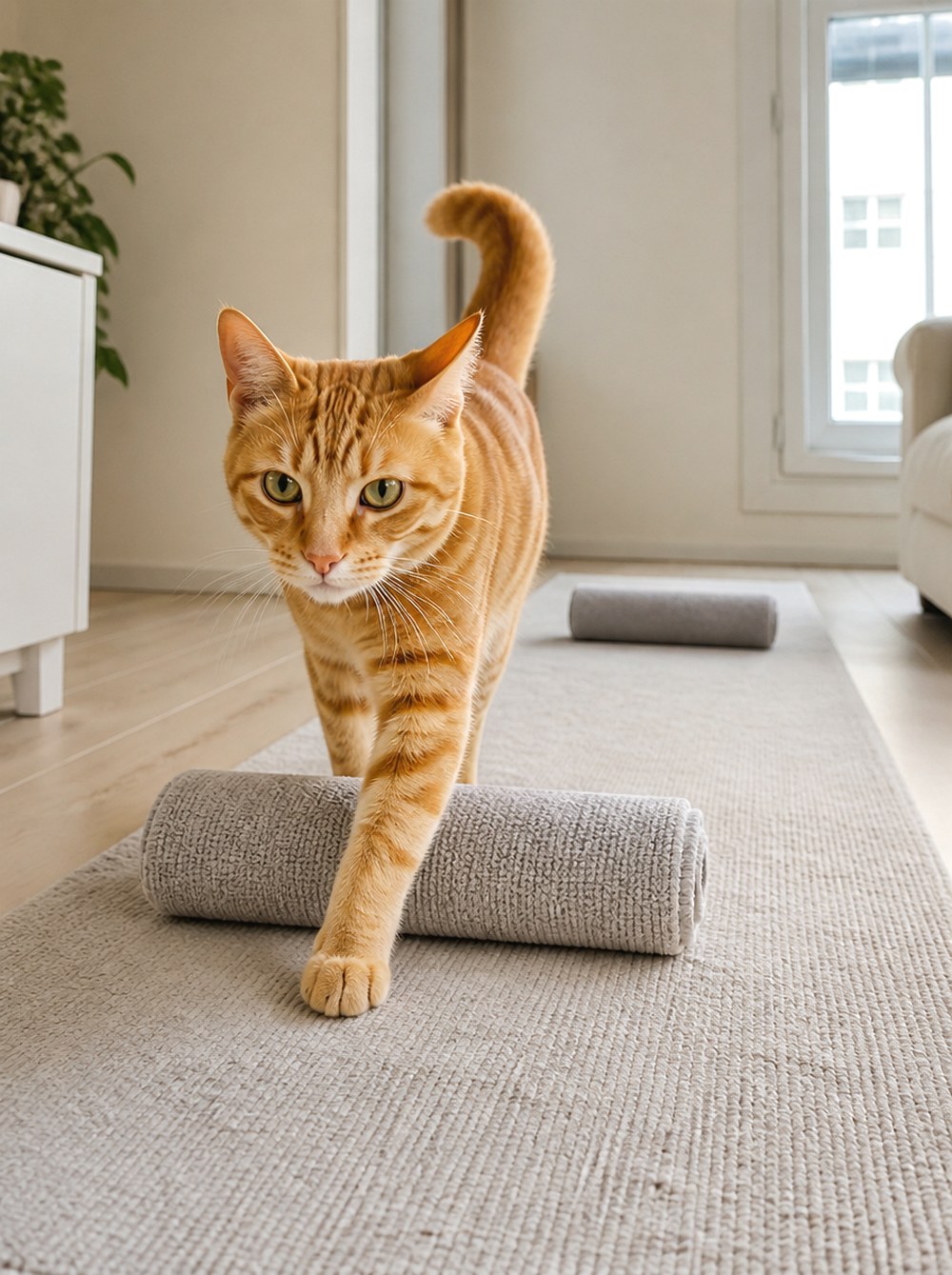
Low hurdles introduce stepping and small jumping movements without requiring rigid equipment. Roll two bath towels tightly and place them across the route several feet apart.
Begin with rolls low enough that your cat can simply step over them. If your cat confidently hops across, you can make one roll slightly thicker, but avoid turning the course into a high-jump challenge.
Soft hurdles have an advantage: if a cat clips one with a paw, it moves instead of creating a hard collision point. Place the hurdles on a non-slip floor or rug so neither the cat nor the obstacle slides during the approach.
This station works especially well between two more enclosed activities, such as a tunnel and an open box, because it changes the type of movement.
You May Also Like


3. Build a Stepping-Box Path
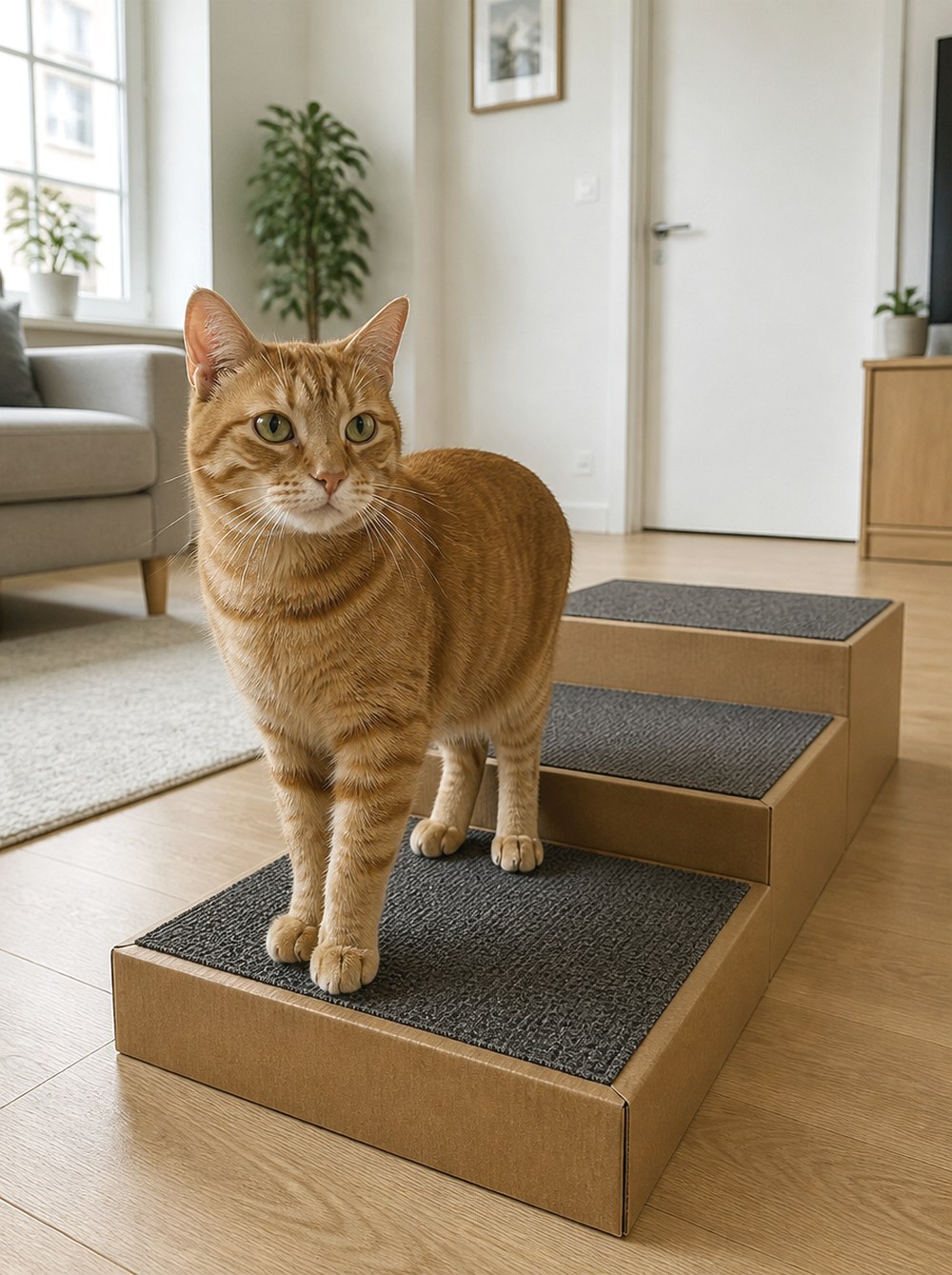
Cats often enjoy changing elevation, but a homemade course does not need tall platforms. Use two or three sturdy, shallow boxes as stepping stations.
Choose boxes that will not buckle under your cat’s weight. Close and secure the bottoms, place them on a non-slip surface, and test them with your hands before allowing your cat onto the route. A folded towel or non-slip mat on top can improve footing if the cardboard surface feels slick.
Space the boxes so your cat can step or make a small hop between them. Instead of arranging them in one straight line, offset the second box slightly to encourage a change of direction.
For a senior cat or one with limited mobility, keep every platform very low and close together. If climbing or jumping suddenly becomes difficult for a cat who previously moved comfortably, that change is worth discussing with a veterinarian.
4. Turn Dining Chairs Into a Wide Weaving Route
A pair of sturdy dining chairs can create a change-of-direction station without adding another homemade object to the room.
Position two or three chairs with generous gaps between the legs. Guide your cat around the outside of one chair, through the center gap of the next, and toward the following obstacle. The goal is not a tight slalom. Cats need enough room to turn without bumping their whiskers, hips, or tail against furniture.
Keep every chair fully on the floor and remove anything hanging from the backs. Avoid chairs that tip easily when nudged.
You can encourage the route with a toy moved slowly along the floor. Some cats will follow the intended path; others will invent a shortcut. Treat the shortcut as information—you may need wider spacing or a clearer next station.

5. Add a Cardboard Doorway Challenge
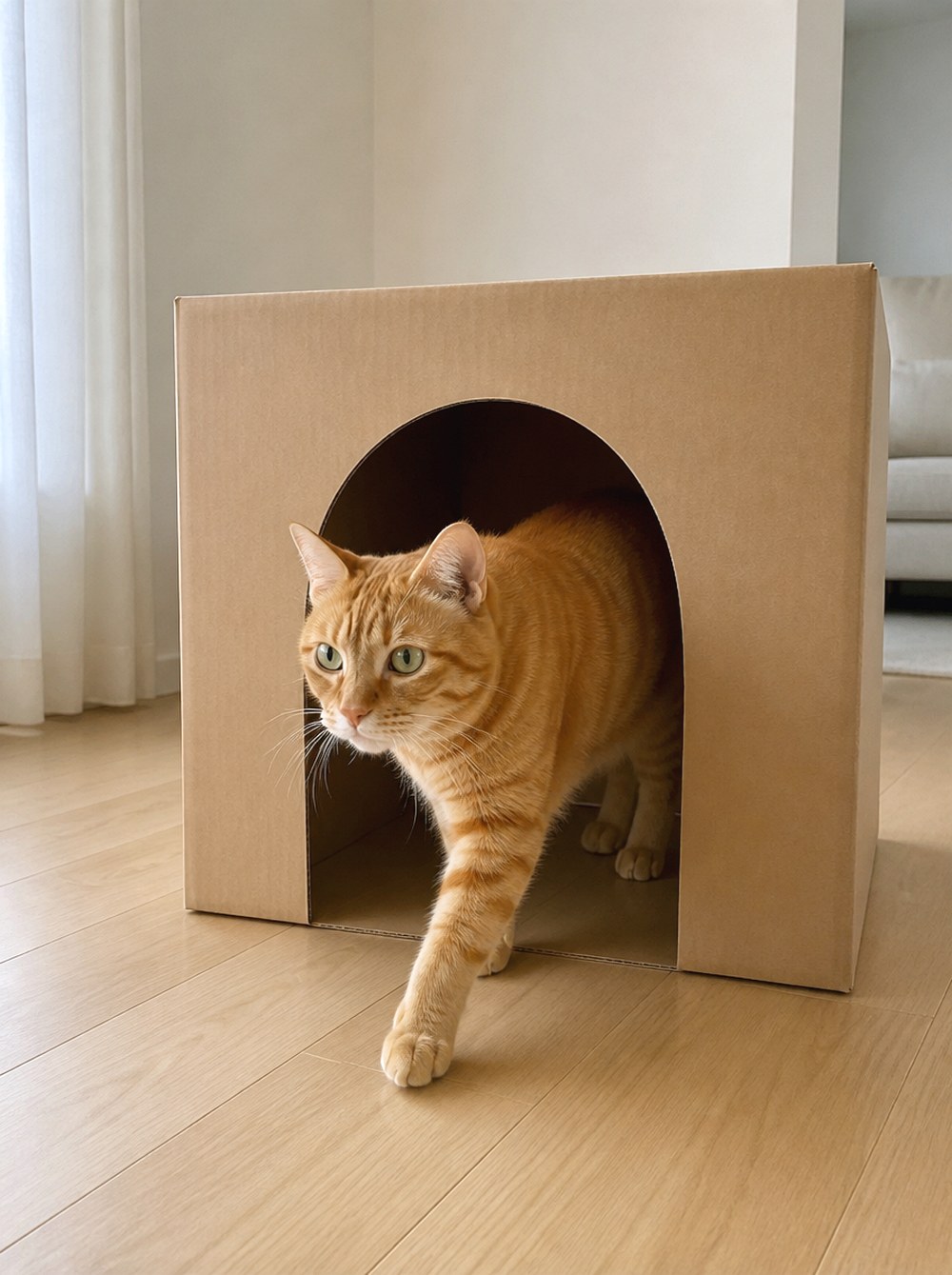
Instead of asking your cat to crawl through a long tunnel, create a single upright cardboard doorway that acts as a visual checkpoint.
Use a broad, sturdy box placed on its side and cut a large arch-shaped opening in both facing panels. The opening should comfortably accommodate your cat without requiring a squeeze. Stabilize the box so it cannot roll or collapse when brushed.
This station is useful for cats that dislike enclosed tunnels. They still pass through a defined obstacle, but they can see the room on both sides.
Later, move the doorway to a different point in the course or rotate it slightly. A familiar obstacle in a new position can make the route feel different without introducing an unfamiliar object.
6. Make an Open-Box Pause Station
Not every obstacle needs continuous movement. An open box can become a deliberate pause point between more active stations.
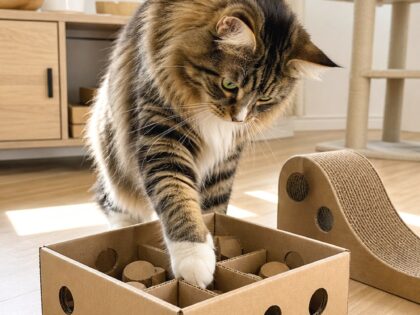
Choose a box large enough for your cat to stand and turn around comfortably. Fold or remove the top flaps so they do not spring inward. Place the box directly along the course and drop one or two pieces of your cat’s usual food or an appropriate treat inside.
The cat has to enter, investigate, find the reward, and decide where to go next. That makes the station more about searching and decision-making than physical difficulty.
If you are using food, keep the amount small enough that the obstacle course does not become an extra meal. For cats on a veterinary diet or with dietary restrictions, use part of their normal food allowance if appropriate rather than introducing unfamiliar treats.

7. Create a Blanket-Over-Chair Hideaway
For a course that already has several open stations, add one sheltered section using a stable chair and a lightweight blanket.
Drape the blanket over the chair so it creates a roomy passage underneath while leaving both the entrance and exit easy to find. Keep the fabric well away from the cat’s feet rather than bunching it across the path.
This obstacle changes the lighting and visual feel of the course without requiring a difficult movement. A confident cat may walk directly through. A cautious cat may stop underneath and observe before continuing.
Avoid using heavy blankets, loose strings, fringe, or anything that can wrap around a paw. Supervise the setup and remove the blanket when play is over if your cat tends to chew or pull fabric.

8. Use a Floor-Mat Target Path
If your cat is not interested in climbing, build part of the obstacle course entirely at floor level.
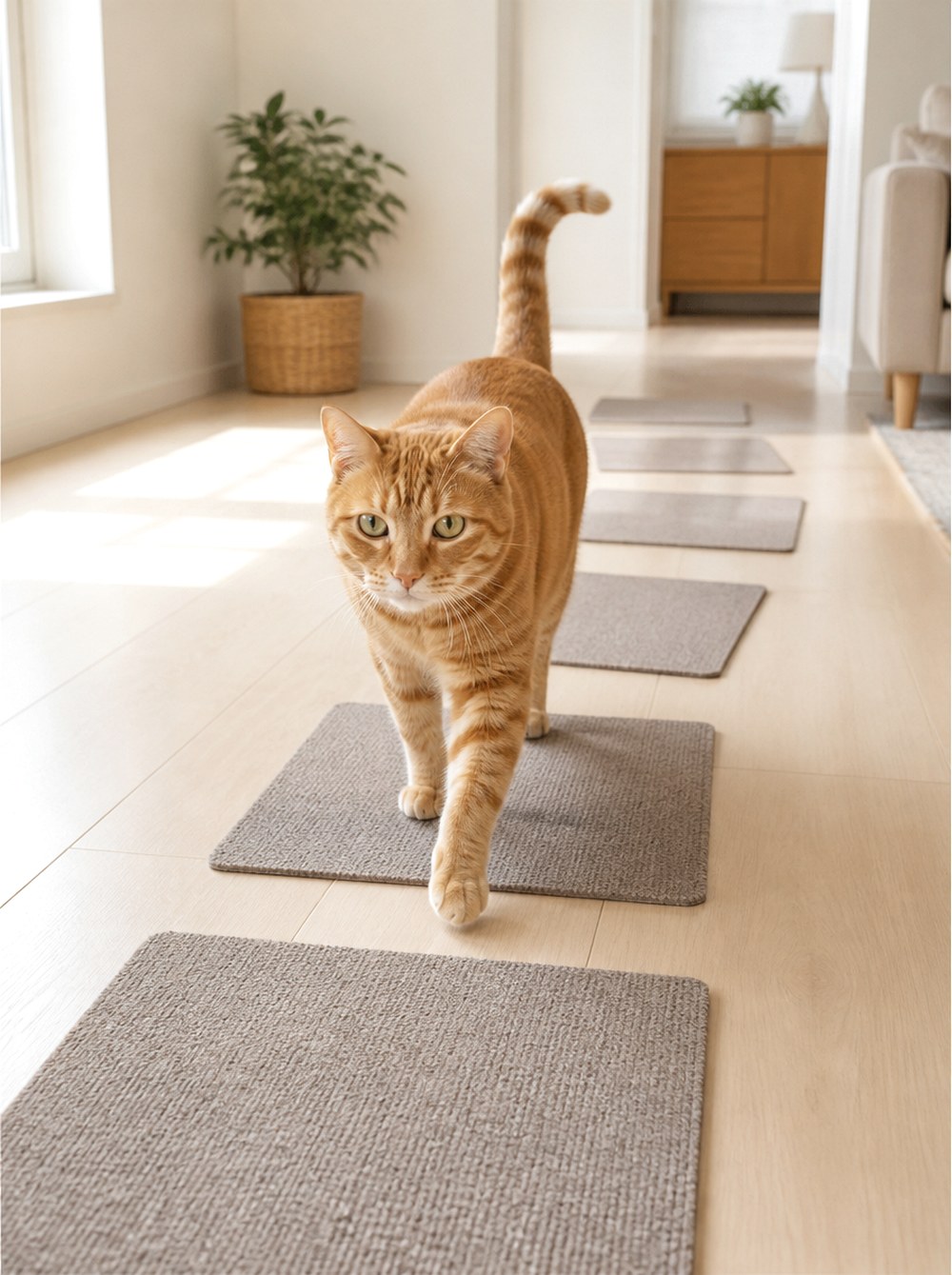
Place several small non-slip mats, carpet squares, or folded towels across the room with comfortable gaps between them. Each one becomes a target the cat can step onto before moving to the next.
You can vary the direction of the path—forward for two targets, slightly left for the next, then right toward the finish. This creates route-following without requiring jumping.
For a first attempt, reward any interaction with the targets rather than insisting on perfect foot placement. Over time, you can place the mats farther apart while keeping the distance within your cat’s comfortable stride or small-hop range.
Make sure every surface lies flat. Skip rugs or fabric pieces that slide, curl upward, or catch claws.
9. Finish With a Stable Lookout Platform
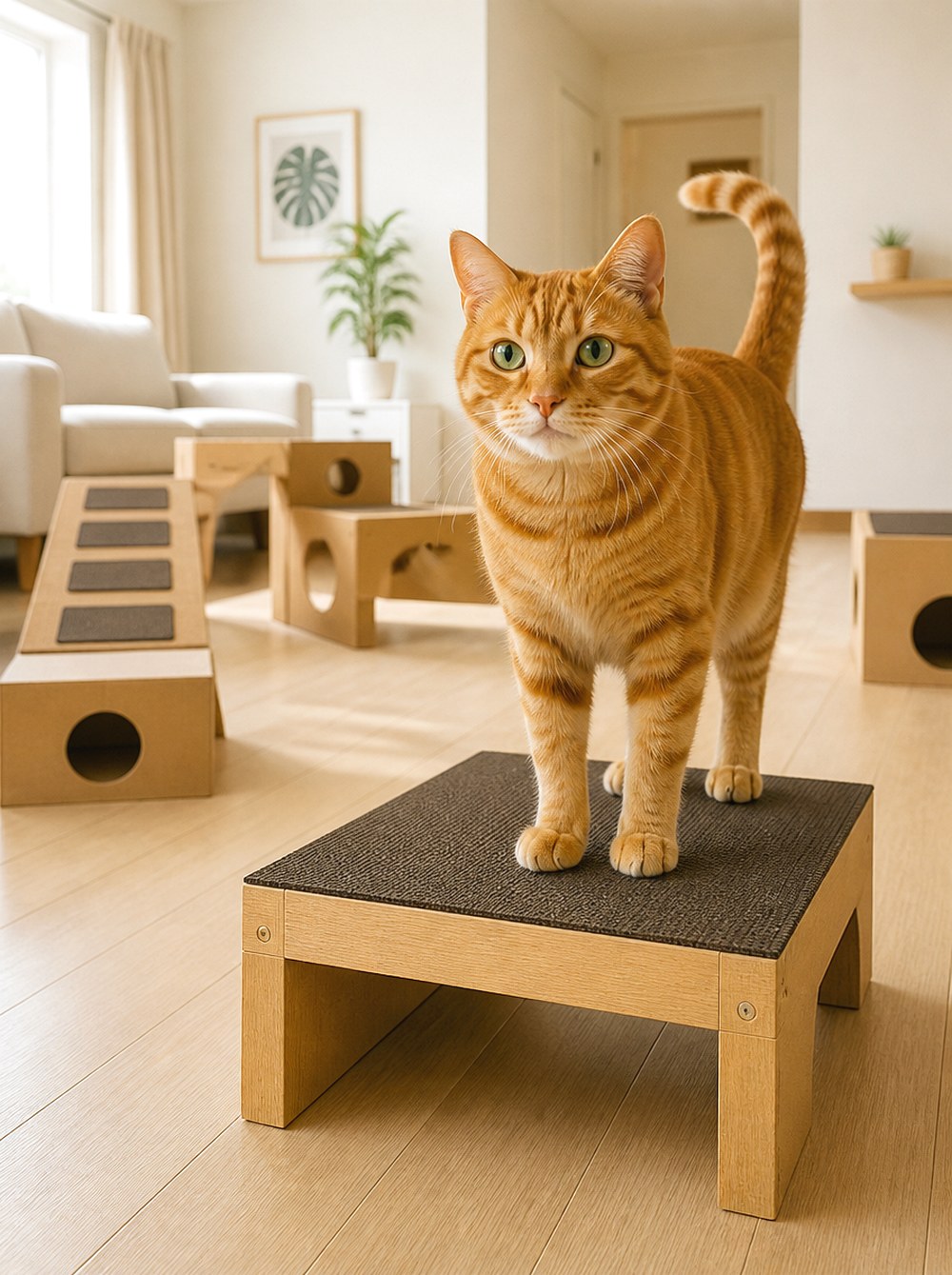
Give the course an obvious destination by ending at a low, stable platform. A sturdy footstool, broad pet step, or strong low box can work if it cannot tip or slide.
Place a non-slip mat on top and leave open floor space around every side. The finish should feel like a comfortable place to stop rather than another difficult jump.
Once your cat reaches the platform, offer a small reward, a brief play session, or simply allow time to look around. Ending at a predictable station can help a cat learn the route, especially when you keep the rest of the course unchanged for the first few sessions.
Do not position a platform beside an unsecured window, balcony, tall drop, hot appliance, or unstable furniture. Height adds little value if it makes the setup less safe.
You May Also Like


How to Connect the Obstacles Into One Course
You do not need all nine ideas at once. In many homes, three to five stations create a better course because the route remains clear.
One beginner combination could be:
- Cardboard tunnel
- Rolled-towel hurdle
- Open-box pause station
- Floor-mat target path
- Low lookout platform
Leave open space between stations so your cat has room to approach, turn, and retreat. Run the course in both directions if your setup allows it. After several sessions, replace only one obstacle or change one location. Keeping some familiar pieces makes the new layout easier to understand.
For a small apartment, use a tunnel, doorway, and mat path in the same strip of floor, then put everything away afterward. For a cat that prefers climbing, use stepping boxes and a stable finish platform while keeping heights modest.
Make the First Session Short
Set up the course while your cat is elsewhere if moving boxes and furniture makes them wary. Then allow free investigation.
A few minutes may be enough for the first session. Stop while your cat is still comfortable rather than repeatedly directing them through the route. Signs that the setup may be too difficult include repeatedly avoiding one obstacle, crouching and refusing to approach, scrambling for footing, or leaving the room whenever the course appears.
Modify the obstacle instead of trying to persuade the cat through it. Widen a tunnel, lower a hurdle, shorten the route, or remove a platform.
A cat that walks around an obstacle is not failing. The course is supposed to provide voluntary activity and exploration.
Keep DIY Materials Cat-Safe
Homemade courses need a quick inspection before each use. Cardboard softens, tape loosens, and fabric can develop threads or holes after repeated play.
Remove or repair any item that is damaged. Keep staples, rubber bands, twist ties, plastic packaging, hooks, cords, small loose pieces, and sharp cut edges out of the course. Supervise activities involving cardboard, fabric, food, or toys that your cat might chew.
Test every box, stool, and chair for stability before the cat uses it. Avoid balancing objects on furniture or creating narrow elevated routes where a missed step could cause a fall.
If your cat shows sudden reluctance to jump, limping, weakness, breathing difficulty, obvious pain, or another significant change in movement or behavior, stop the activity and contact a veterinarian rather than trying to exercise through the problem.
Change the Route, Not Everything at Once
The easiest way to keep a DIY obstacle course interesting is to preserve a few familiar stations and change one feature at a time. Turn the tunnel ninety degrees. Move the open box from the middle to the end. Replace a hurdle with a floor target. Reverse the starting point.
Those small changes create a new route without filling the room with more equipment.
Start with whatever you already have that is stable, clean, and cat-safe. A box, two rolled towels, and a low finish platform are enough for the first course. Your cat’s choices will show you which type of obstacle is worth adding next.
