A litter box needs to be easy for your cat to reach, but that does not mean the surrounding area has to look unfinished. With the right layout, the litter zone can feel like an intentional part of a bathroom, hallway, laundry room, or quiet corner instead of a collection of plastic containers and cleaning supplies.
Save This Idea on Pinterest
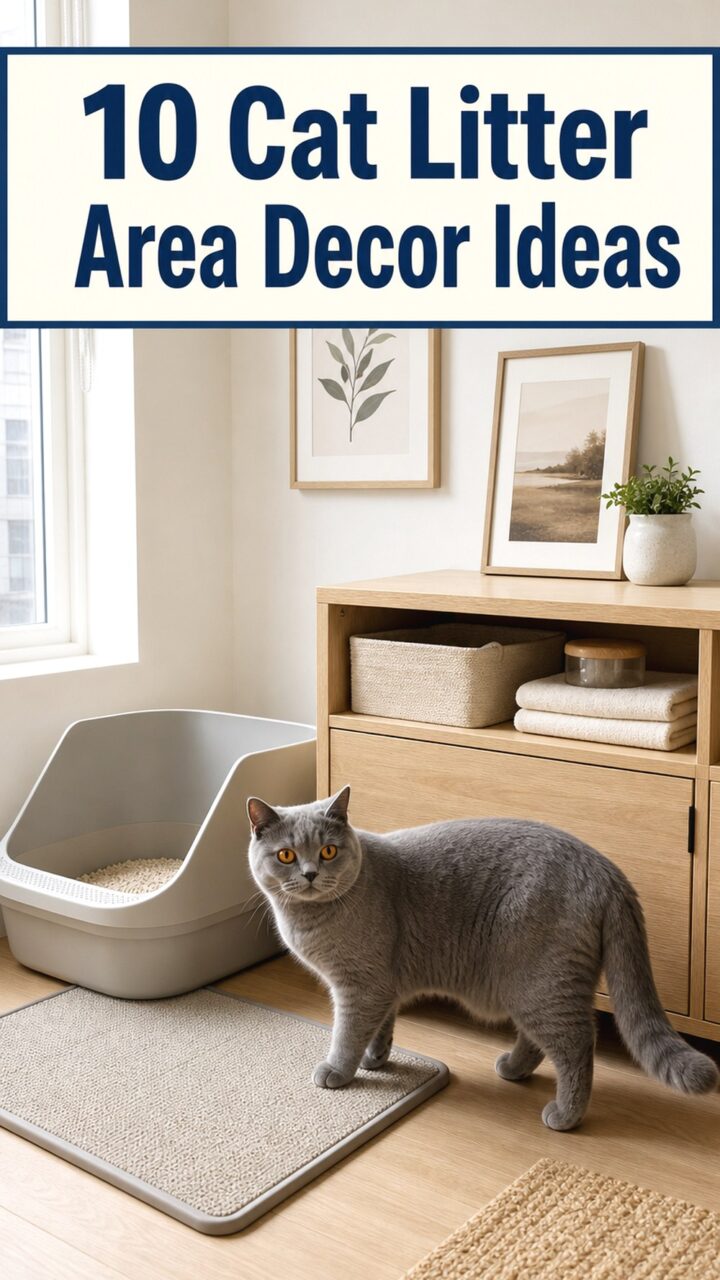
10 Cat Litter Area Decor Ideas That Look Tidy and Work for Cats
Save to PinterestThe best cat litter area decor ideas work around the cat rather than around the appearance of the room. That means preserving enough space to enter and turn comfortably, keeping the box ventilated, making daily scooping convenient, and avoiding decorations that create obstacles.
Start with the box location your cat already accepts, then improve the surfaces, storage, colors, and visual boundaries around it. A successful makeover should make the area easier to maintain as well as nicer to see.
1. Turn a Low Cabinet Into a Furniture-Style Litter Station
A low cabinet or credenza can make a litter area blend into a living space when an exposed box feels visually distracting. Look for furniture designed for litter-box use or a properly adapted piece with a generously sized entrance and adequate ventilation.
The inside should provide enough room for the actual litter box rather than forcing your cat into a cramped enclosure. A removable interior tray or washable liner can make stray litter easier to handle, while doors that open fully give you quick access for scooping.
Keep the top restrained. One framed print or a small decorative tray placed well away from the entrance is usually more practical than filling the surface with objects that can fall.
This arrangement works particularly well along a quiet hallway wall or in a larger bathroom where the cabinet can visually match other furniture.

2. Use a Slatted Divider to Create a Small Litter Nook
You do not always need to hide the litter box itself. Sometimes screening the surrounding corner is enough.
A stable partial divider with wide vertical slats can soften the view from the rest of the room while leaving the litter area open to airflow. Position it so the cat has a direct, roomy route in and out rather than requiring a sharp turn through a narrow opening.
This treatment is useful in open-plan apartments where a box has to share space with a hallway, laundry area, or home office.
Choose a divider finish that repeats another material already in the room, such as light oak shelving. The repetition makes the litter zone look integrated rather than improvised.
Make sure the divider is sturdy and cannot tip if bumped.

You May Also Like



3. Frame the Box With a Washable Wall Panel
Litter areas often look messy because the wall immediately behind the box becomes visually worn or marked. Turning that wall surface into a deliberate feature can solve both a cleaning and a decorating problem.
Install a smooth, washable wall panel behind the box in a finish that coordinates with the room. Large-format tile, an appropriate washable wall covering, or another securely installed easy-clean surface can visually define the zone.
A panel extending slightly wider than the litter box creates a framed effect without surrounding the cat.
For a subtle look, use a warm neutral tone close to the wall color. For more definition, choose a soft contrast such as muted gray against cream walls.
Keep seams and edges securely finished so there are no loose pieces for a curious cat to investigate.

4. Coordinate the Litter Mat With the Room
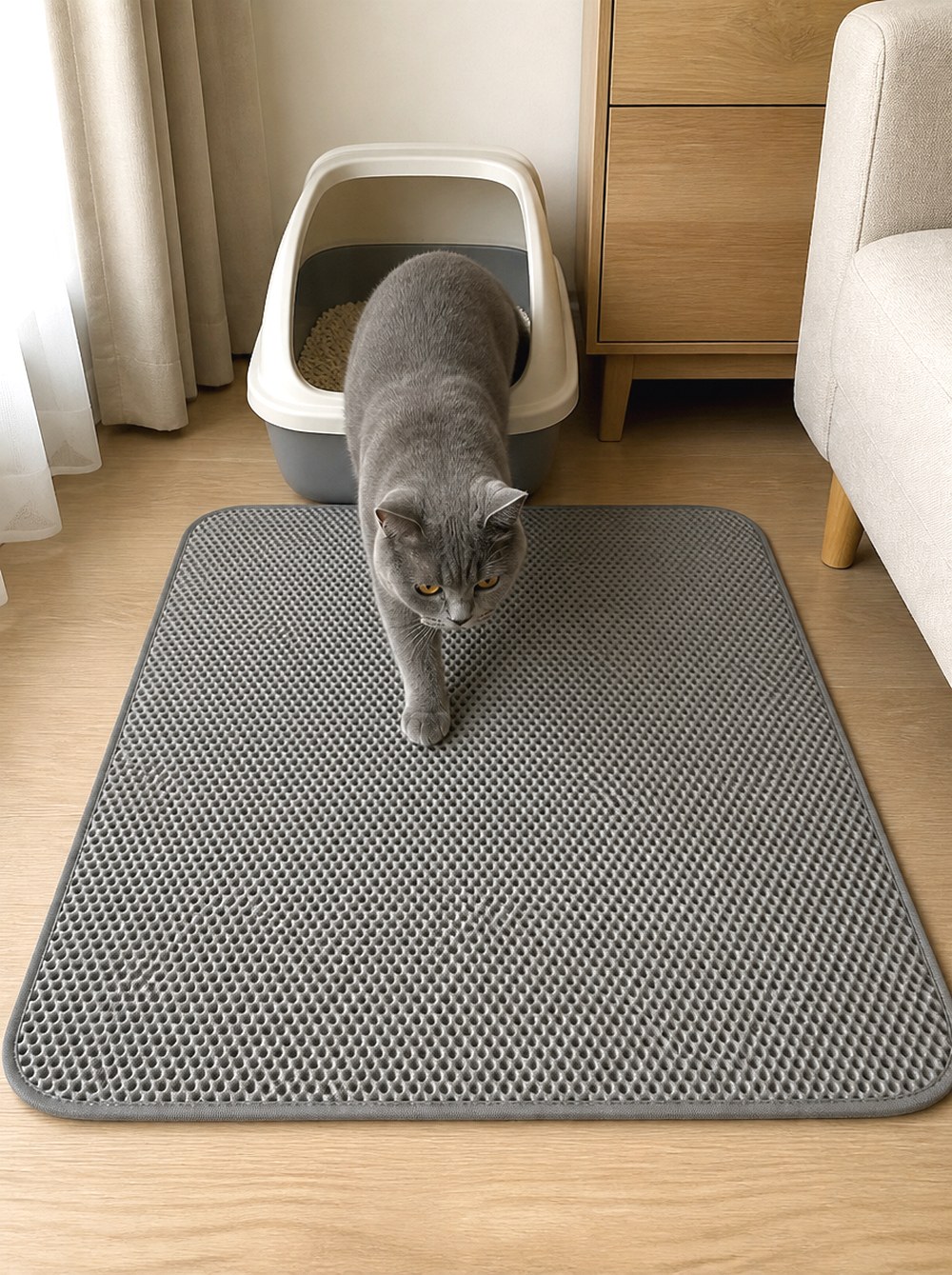
The litter mat is often one of the most visible parts of the setup, so treating it as part of the room’s color palette can make an immediate difference.
Choose a washable litter-catching mat that is large enough to cover the main exit path from the box. Instead of picking a random color, repeat a tone already used in the room—charcoal from the towels, warm beige from the flooring, or muted gray from the cabinetry.
In a larger space, you can visually align the mat with a nearby washable runner, but avoid piling thick rugs directly around the litter box. The surface should stay flat and stable so your cat can walk comfortably.
The goal is not to disguise scattered litter with a patterned rug. It is to give stray granules a practical landing area that can be shaken out or cleaned regularly.
5. Add a Floating Supply Shelf Above Owner Reach
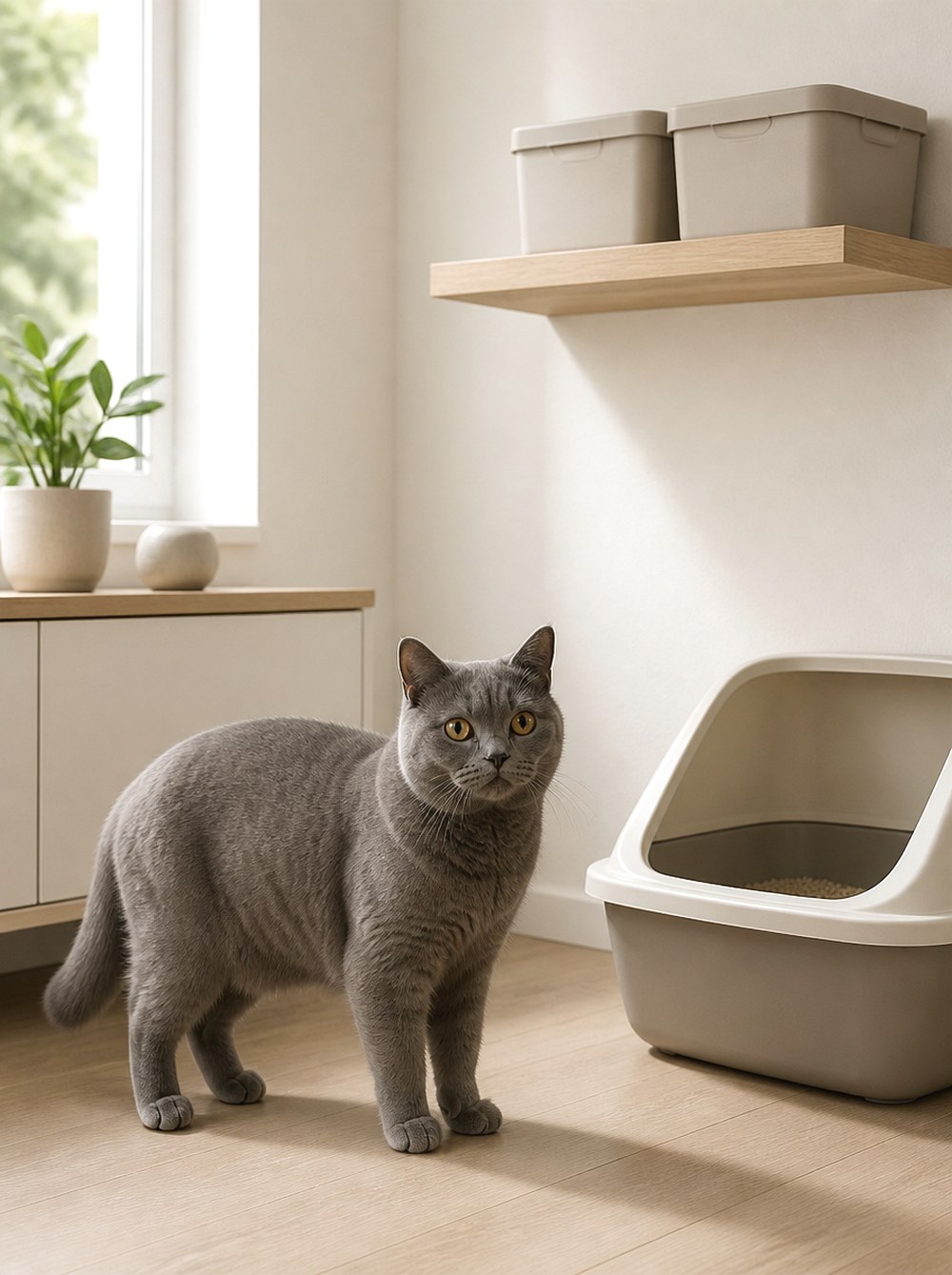
Litter bags, spare liners when appropriate for the box, cleaning cloths, and other maintenance supplies can make a tidy litter area look cluttered quickly. Moving owner-only supplies upward frees the floor while keeping them nearby.
Install a securely anchored shelf high enough that it does not reduce your cat’s headroom or invite access from nearby furniture. Use two or three matching opaque bins or lidded containers instead of lining up product packaging.
Cleaning products, medicines, and anything potentially harmful should remain securely stored where the cat cannot access them.
Keep daily-use items minimal. A shelf packed with baskets may technically be organized but still makes a small area feel crowded.
6. Give the Scoop Its Own Washable Dock
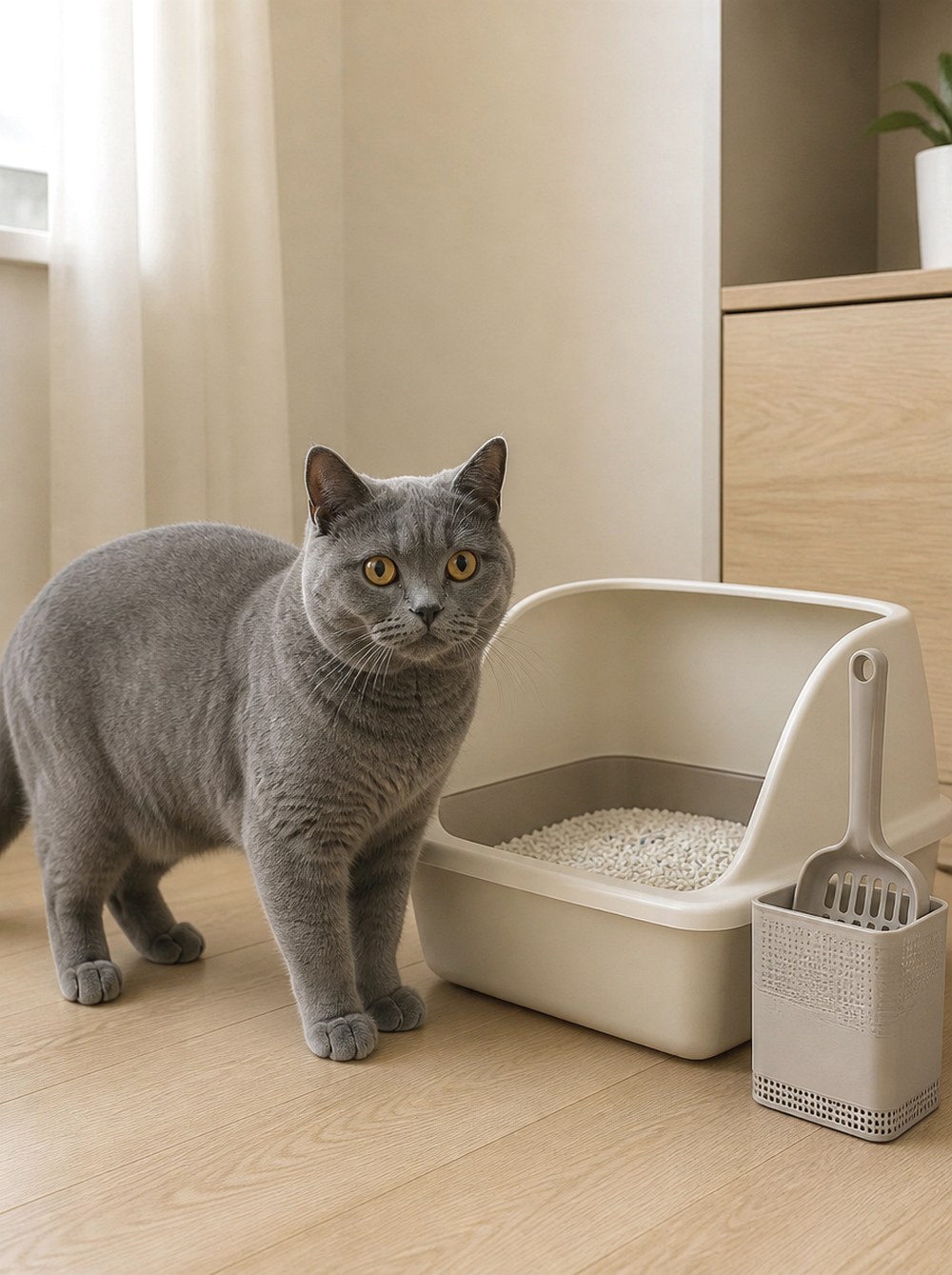
A litter scoop left on the floor or leaning against the wall can make even a carefully decorated corner look unfinished.
Give it one designated storage point beside the box. A narrow, washable scoop holder on a stable base keeps the tool contained between uses. If the scoop comes with a purpose-made holder, positioning it neatly along the less visible side of the litter box can reduce visual clutter.
Choose a holder with a finish that coordinates with the box or floor instead of trying to turn the scoop into a decorative object.
Because this item needs frequent cleaning, function matters more than elaborate styling. Avoid fabric baskets or porous decorative containers that are difficult to sanitize.
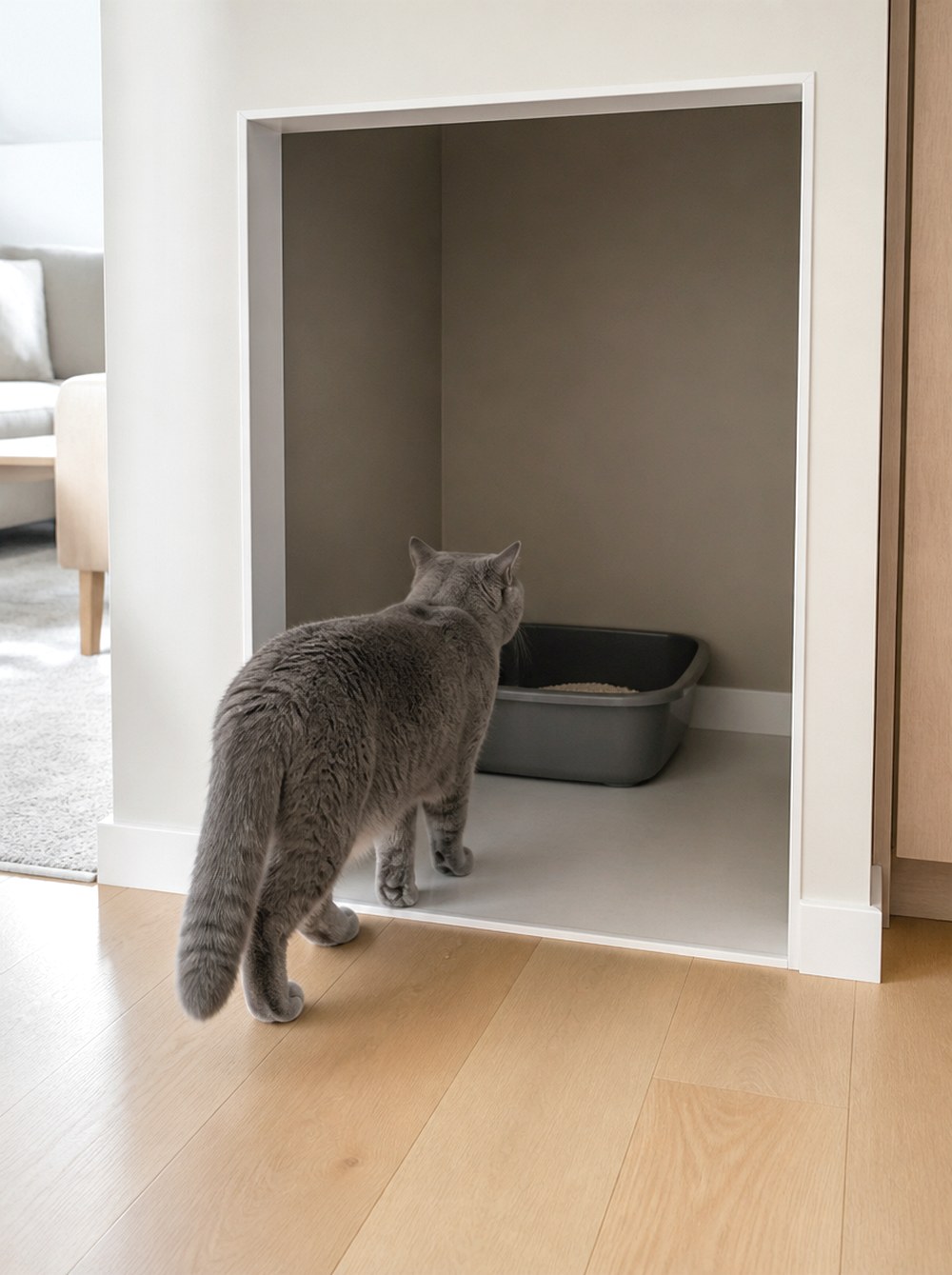
7. Build a Small Litter Alcove With Trim
An existing wall recess can become a polished litter area without fully enclosing the box.
Paint the alcove in a slightly deeper version of the room color, then use simple trim around the opening to make it look architectural. Keep the interior open and roomy, and select finishes that tolerate routine wiping.
This approach is particularly effective in a laundry room or wide hallway recess because it gives the litter box a clear visual home without adding another piece of furniture.
Measure around your cat’s movement, not just around the litter pan. There should be comfortable room to approach, enter, turn, and leave.
If your current alcove is too narrow, do not force the box into it purely for appearance
8. Decorate Upward With a Small Gallery Wall
When floor space is limited, the safest decorative space may be the wall above the litter zone.
A compact arrangement of two or three securely mounted prints can add color without placing extra objects near the box. Botanical illustrations, abstract shapes, or quiet line drawings can work well; using artwork rather than live plants also avoids adding tempting leaves near the litter area.
Hang frames securely and avoid dangling cords, lightweight decorations, or pieces that could be knocked loose.
Leave some blank wall around the arrangement. Negative space helps a practical corner feel intentional without making it busy.

9. Use a Narrow Storage Bench Beside the Zone
If the litter area sits in a wide hallway or mudroom, a narrow storage bench can help connect it visually with the rest of the space.
The bench should sit beside the litter zone, not over the box or directly in the cat’s route. Use the closed interior for sealed bags of clean litter or other appropriate supplies, provided the bench is sturdy and the contents are safely contained.
A flat top can serve as ordinary room furniture, but avoid turning it into a launching point directly over the litter box. Position it with enough separation that the cat can use the box without feeling cornered.
Repeating the same wood finish used elsewhere in the home makes the litter station feel like part of a larger storage plan.

10. Create a Color-Blocked Litter Corner
You can make an exposed litter box look intentional without hiding it at all.
Paint or finish the wall immediately behind the box in a defined block of color that visually marks the litter station. A warm taupe, soft gray, or muted clay tone can provide enough contrast to give the corner structure while keeping the overall room calm.
Align the color block with the width of the litter mat or nearby storage so the design feels deliberate.
This is one of the least complicated options for renters or small homes because it does not require bulky furniture around the box. If painting is not suitable, a securely installed removable wall treatment intended for the surface may provide a similar effect.
Finish the area with one practical storage item and leave the rest clear.
You May Also Like


Keep the Decor From Working Against the Litter Box
A litter station can look polished and still fail if the decorative plan makes the cat reluctant to use it.
Before adding anything, check the route from the room to the box. The cat should not have to squeeze between furniture, step over storage, push through fabric, or enter a dark enclosed compartment just because that arrangement looks cleaner.
Ventilation also matters. Fully sealing a litter box inside furniture may concentrate odor and make maintenance less pleasant. Enclosures should provide adequate interior room and airflow.
Keep scented accessories out of the litter zone. Strong fragrances, essential-oil diffusers, and heavily perfumed products are unnecessary additions, and some substances can be unsafe around cats.
The area should also remain easy for you to inspect. Daily scooping, litter tracking, unusual waste, or a sudden change in how often the box is being used are much easier to notice when decor does not obstruct your view.
If your cat suddenly avoids the litter box or develops concerning changes in urination, bowel movements, appetite, behavior, mobility, or general condition, contact a veterinarian rather than assuming the issue is decorative or behavioral.
Choose the Idea That Solves Your Biggest Visual Problem
You do not need to remodel the entire litter area at once.
If scattered supplies are the problem, start with closed storage. If the box dominates the room, consider a divider, cabinet, alcove, or color-blocked wall. If the corner simply feels unfinished, coordinating the litter mat and adding securely mounted wall art may be enough.
Keep the box accessible while making everything around it easier to clean and easier to live with. A litter area tends to look better when it contains fewer visible objects, not more decoration.
