A small home does not have to mean giving up a good window spot for your cat. The most useful setups take advantage of space that is already there: the sill, glass, wall, window recess, or a piece of furniture doing another job.
Save This Idea on Pinterest

10 Cat Window Perch Ideas for Small Homes
Save to PinterestThe right choice depends less on the size of the room than on how the window is built. A deep sill may need nothing more than a secure padded surface, while a window with almost no sill may work better with a suction-mounted hammock or narrow wall shelf. Renters may prefer removable options, while homeowners can make better use of permanent wall-mounted perches.
Whichever setup you choose, keep the window itself secure. An insect screen should not be treated as fall protection, and blind or curtain cords should be kept where a cat cannot become tangled in them.
A Quick Way to Choose a Perch
| Your space | Perch style to consider |
|---|---|
| Wide existing sill | Padded sill perch |
| Almost no floor space | Suction-cup hammock |
| Narrow sill | Clamp-on platform |
| Empty wall below window | Floating shelf |
| Multipurpose room | Fold-down perch |
| Unused vertical corner | Slim cat tower |
| Need more storage | Window storage bench |
| Furniture already touches window | Anchored bookcase-top perch |
| Tall room with little free floor | Tension-pole system |
| Deep window recess | Recess-mounted hammock |
No-Floor-Space Window Perches
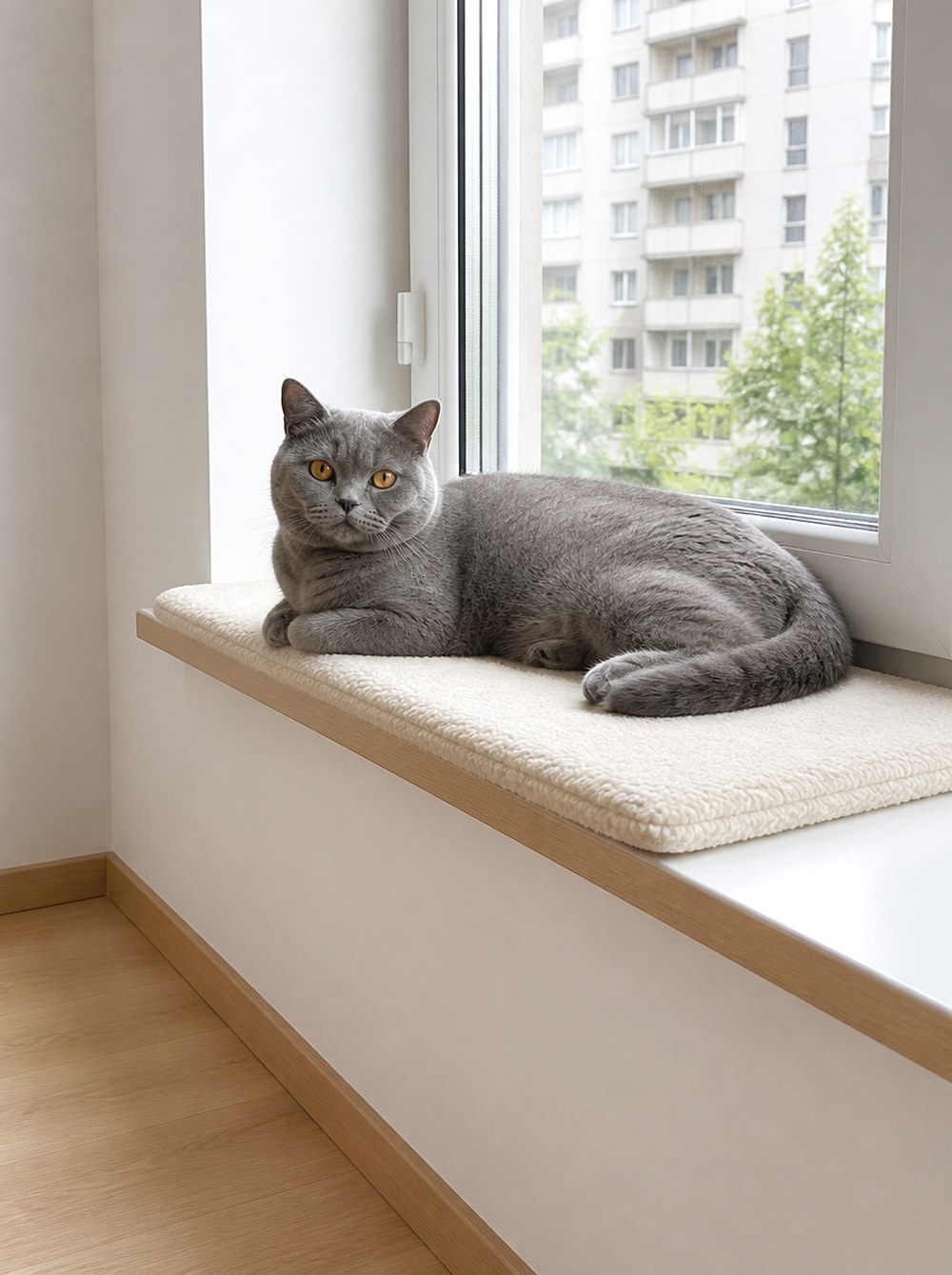
1. Turn a Wide Window Sill Into a Padded Perch
Sometimes the best small-home solution is to avoid adding furniture altogether. If the sill is already deep enough for your cat to sit and turn comfortably, add a fitted pad with a nonslip underside rather than installing a separate perch.
Choose a pad that stays fully on the sill instead of hanging over the edge. A washable cover is especially useful because window areas collect fur, dust, and condensation. If the sill surface is slippery, place a secure nonslip layer underneath rather than relying on a loose folded blanket.
This setup works particularly well in kitchens, bedrooms, and narrow rooms where even a small cat tree would interrupt the walking path.
Before using the spot, check that the window latch works properly. If the window opens, limit access to unsafe openings and do not assume a standard insect screen can hold a cat leaning or jumping against it.
2. Use a Suction-Cup Window Hammock
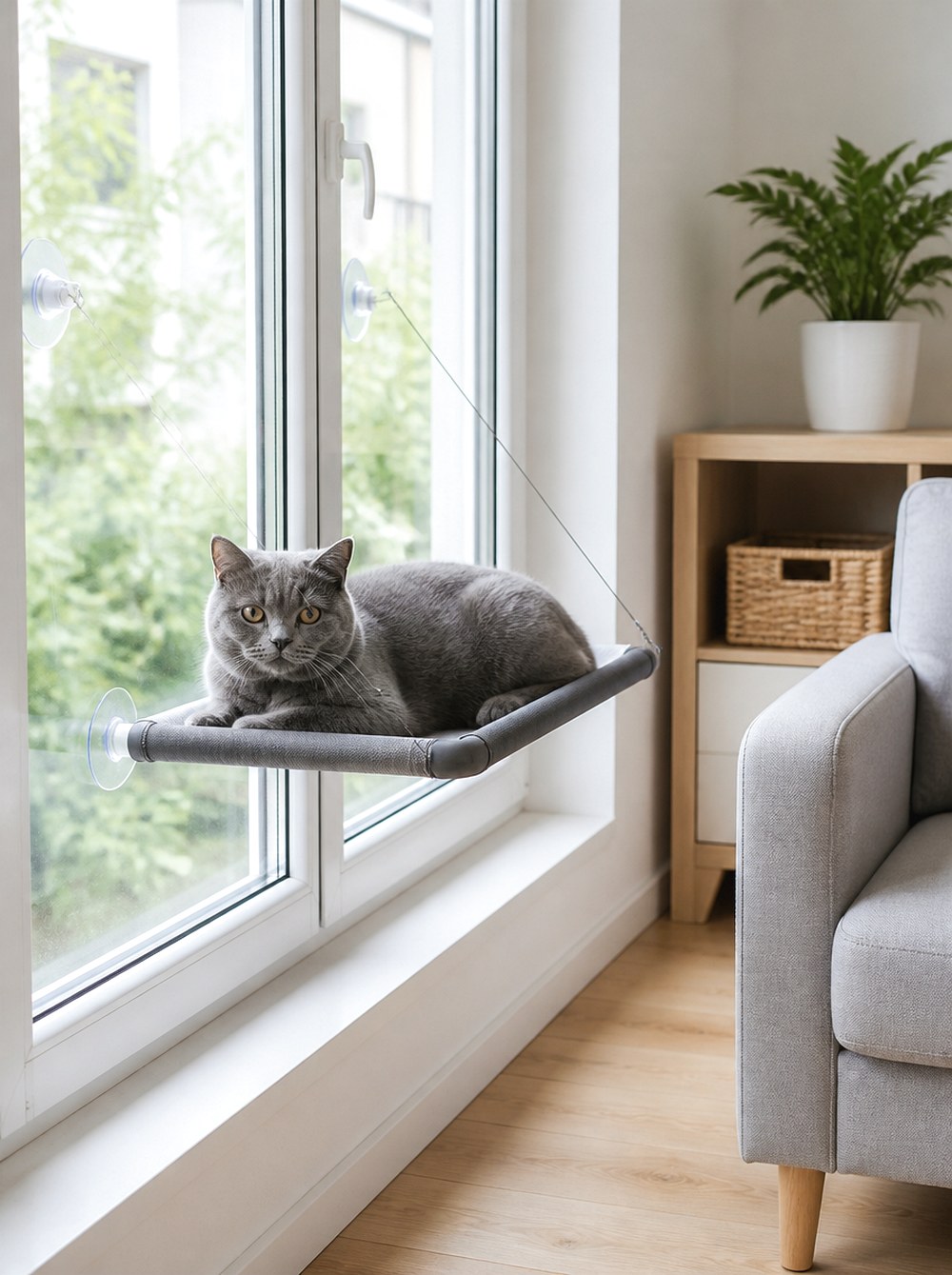
A glass-mounted hammock keeps the entire perch above the floor, making it a strong option for studios, compact bedrooms, and rooms where furniture already fills the usable wall space.
The main consideration is the mounting system. Follow the manufacturer’s installation and weight instructions, clean the glass as directed, and inspect the suction cups and support cables regularly. If anything begins to loosen, remove the perch until it can be secured again.
Position it at a height your cat can reach comfortably. A nearby sofa arm, stable stool, or other secure surface can provide an intermediate step for cats that do not enjoy making a large jump.
A hammock also leaves the sill clear, which can be useful when the sill itself is extremely narrow.
You May Also Like



3. Add a Clamp-On Sill Platform
If the window has a sill but it is too narrow for comfortable lounging, a clamp-on perch can extend the usable surface without adding legs to the floor.
This style can work well for renters because some designs attach mechanically to the sill rather than requiring holes in the wall. Compatibility matters, though. The sill needs the right shape and strength for the mounting system, and the clamps should not interfere with opening, closing, or locking the window.
Choose a platform large enough for the cat’s body rather than one that only supports the front paws. A washable, grippy top surface can help prevent sliding during jumps.
Periodically check the attachment points, particularly if your cat tends to leap onto the platform rather than climbing up gently.

Make an Empty Wall Work Harder
4. Install a Floating Shelf Below the Window
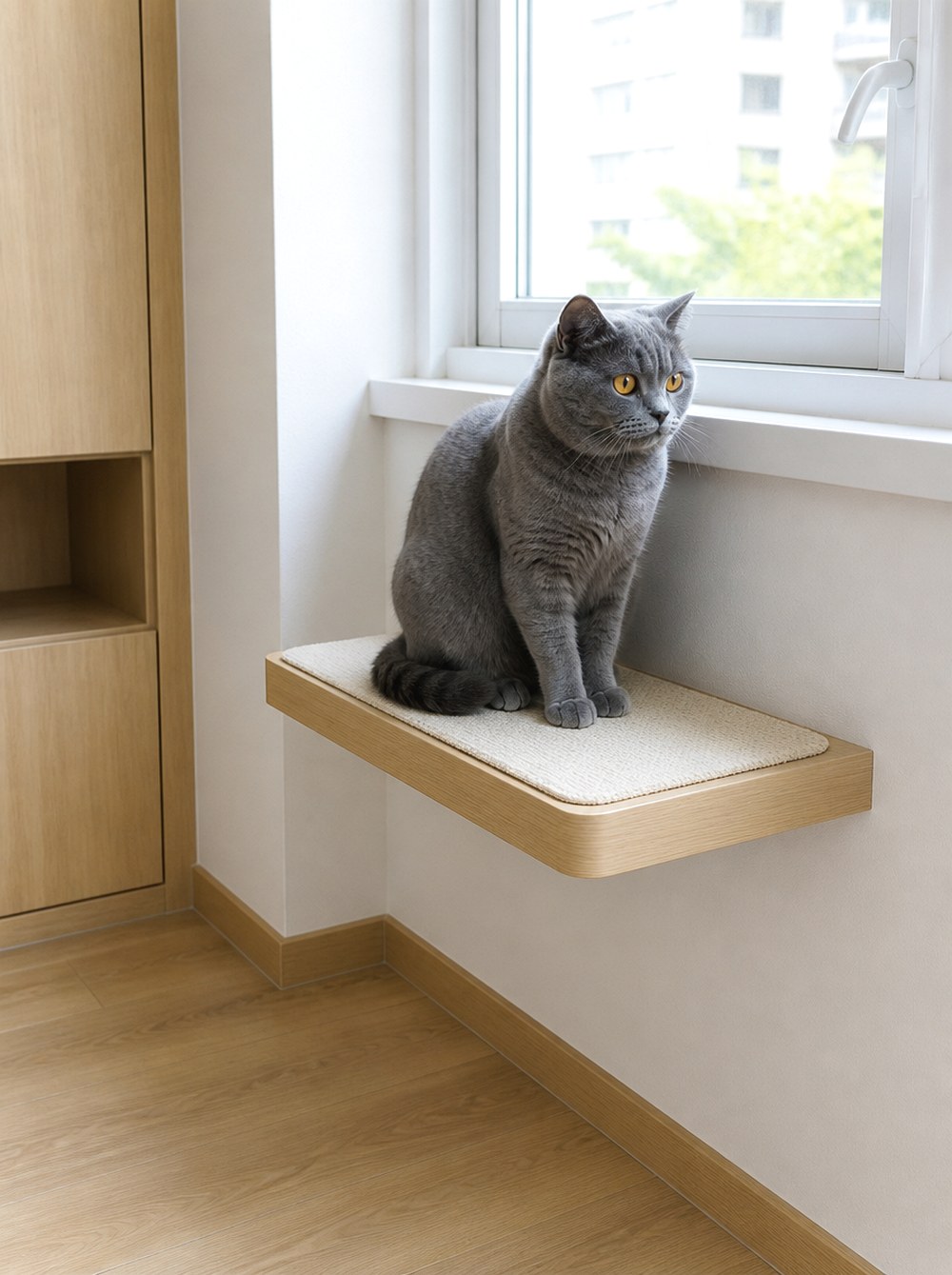
A wall-mounted cat shelf turns a strip of unused wall into a permanent viewing platform. It is especially useful when the sill is shallow but the wall beneath the window is clear.
Instead of mounting the shelf directly against the glass, position it where the cat can sit comfortably without blocking the window mechanism. The shelf needs appropriate anchors or attachment to suitable structural support for the wall type and expected load.
A low-profile carpet tile, fitted mat, or other secure traction surface can make the landing less slippery. Avoid loosely draped fabric that can slide when the cat jumps.
This is also one of the cleaner-looking options for a living room because the shelf can visually match existing cabinetry or trim instead of looking like a separate piece of pet furniture.
5. Choose a Fold-Down Wall Perch
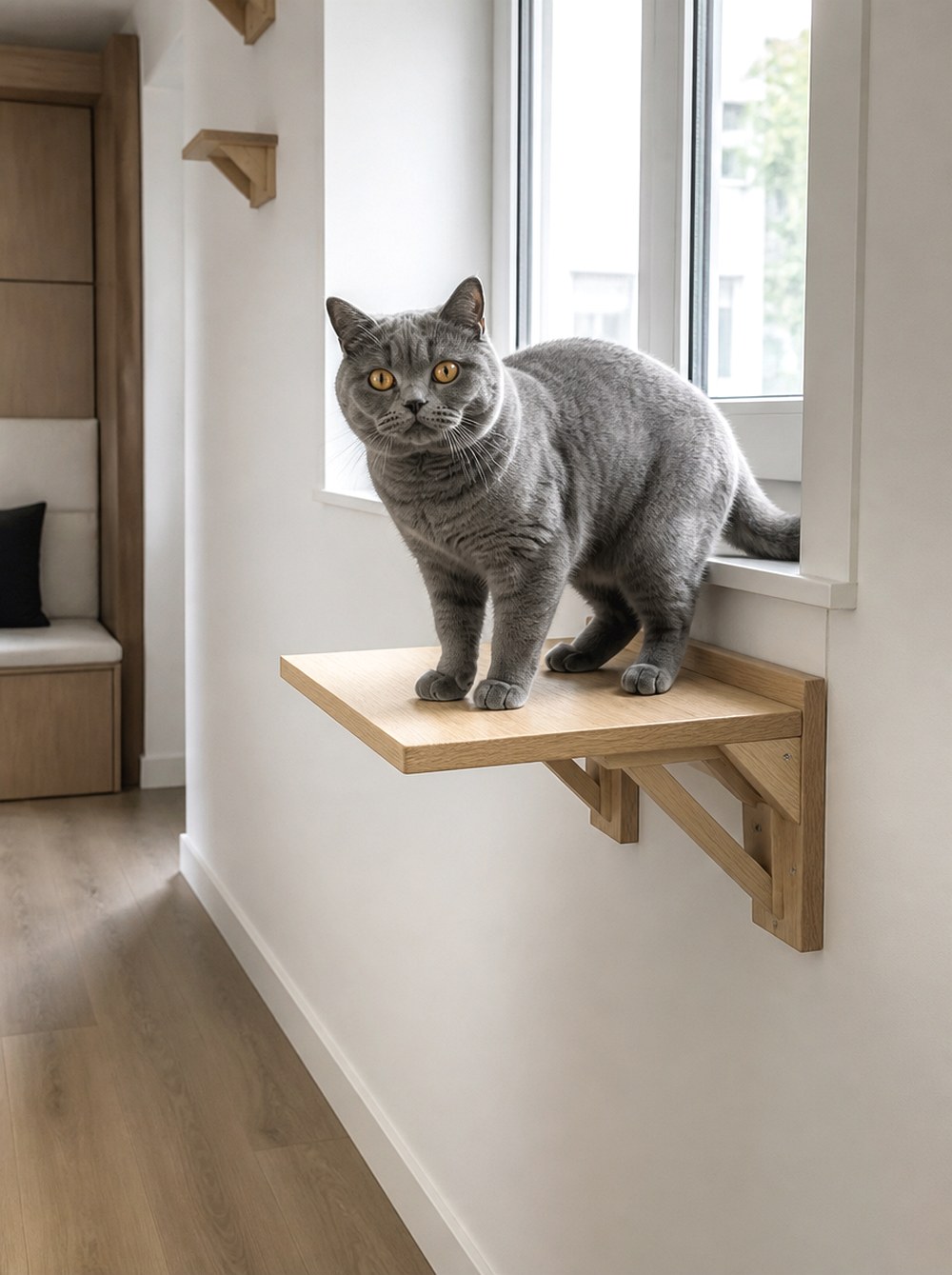
In a room that serves several purposes, even a permanent shelf may feel intrusive. A fold-down perch gives the cat a window seat when needed and can sit nearly flat against the wall at other times.
This idea makes sense beside a desk, in a narrow bedroom, or near a walkway where projecting furniture would otherwise be inconvenient. Look for a design with a secure open position so it cannot collapse while the cat is using it.
The folded perch should also stay firmly closed when not in use. Any moving joints or brackets need to be positioned so paws and tails cannot be pinched.
Because the platform moves, inspect the hardware periodically rather than treating it as a set-it-and-forget-it installation.
Let Existing Furniture Do Double Duty
6. Place a Slim Vertical Cat Tower in the Window Corner
A full-size cat tree can overwhelm a small room, but a narrow vertical tower can use height without claiming much floor area.
Place it beside the window rather than directly in front of the entire opening. A model with a small footprint and an upper platform close to sill height gives the cat a viewing spot while leaving more of the room open.
Stability matters more than height. Use the anti-tip or anchoring system provided for the product, especially when the tower has a narrow base. The top platform should remain steady when the cat jumps onto it from another surface.
This choice can also provide more than a window view: lower platforms offer climbing routes without requiring another separate piece of furniture.

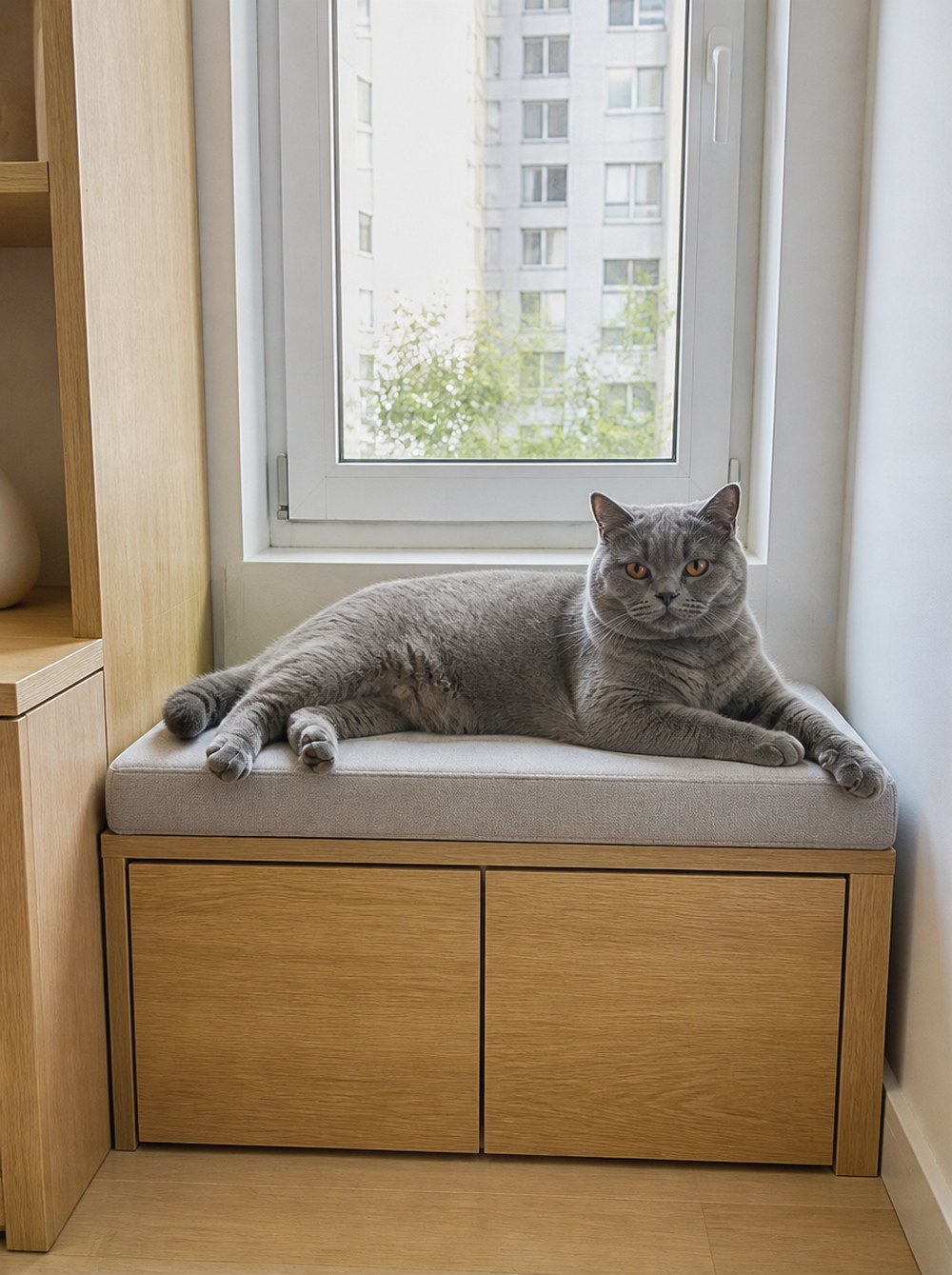
7. Build the Window Perch Into a Storage Bench
When every piece of furniture needs to justify its footprint, combine the window seat with closed storage.
A low bench can hold cat blankets, grooming supplies, or other household items while its top becomes the viewing perch. Keep the surface clear enough for the cat to lie down comfortably and use a fitted cushion or mat that will not slide off.
Closed compartments are usually more practical than open baskets for items the cat should not access. Medicines, cleaners, cords, and small swallowable objects belong in properly secured storage elsewhere or in compartments the cat cannot open.
This approach works particularly well beneath a low window in a living room or bedroom.
8. Create a Perch on Top of an Anchored Bookcase
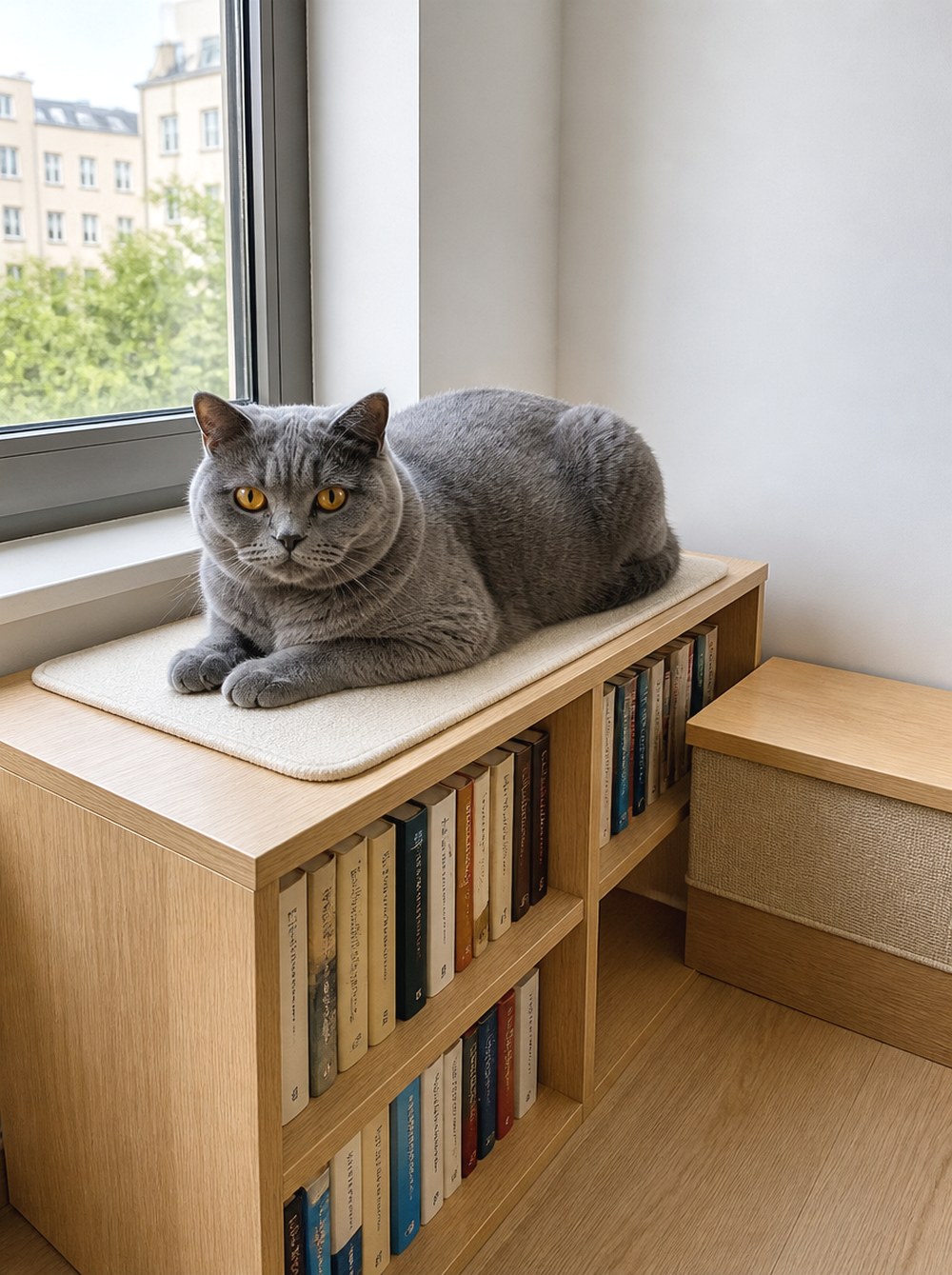
If a short bookcase already sits beside or beneath the window, its top may be able to serve as a perch without introducing another piece of furniture.
This works only when the furniture itself is stable and appropriately anchored. A tall, narrow, or lightweight bookcase that can tip should never double as a jumping platform unless it has been safely secured according to its design and wall type.
Keep the top surface uncluttered and add a fitted nonslip pad. Your cat also needs a reasonable route up and down; avoid layouts that require jumping through fragile décor or landing on unstable objects.
The result can be particularly efficient in a small home office, where one footprint provides storage for people and a window seat for the cat.
Use Vertical or Awkward Window Space
9. Try a Floor-to-Ceiling Tension-Pole Perch
A tension-pole cat system can provide several resting levels while using a very small patch of floor. It is especially useful beside tall windows where conventional furniture would block too much light.
Install the system only where the ceiling, floor, and product design are suitable for it. Follow the manufacturer’s instructions for tension and placement, and check periodically for movement.
For a window-focused setup, position one upper platform so the cat can see outside without having to balance against the glass. Lower platforms can create a gradual route upward, which may be more practical than one large jump.
Do not place the system where it interferes with curtains, window handles, or an exit route through the room.
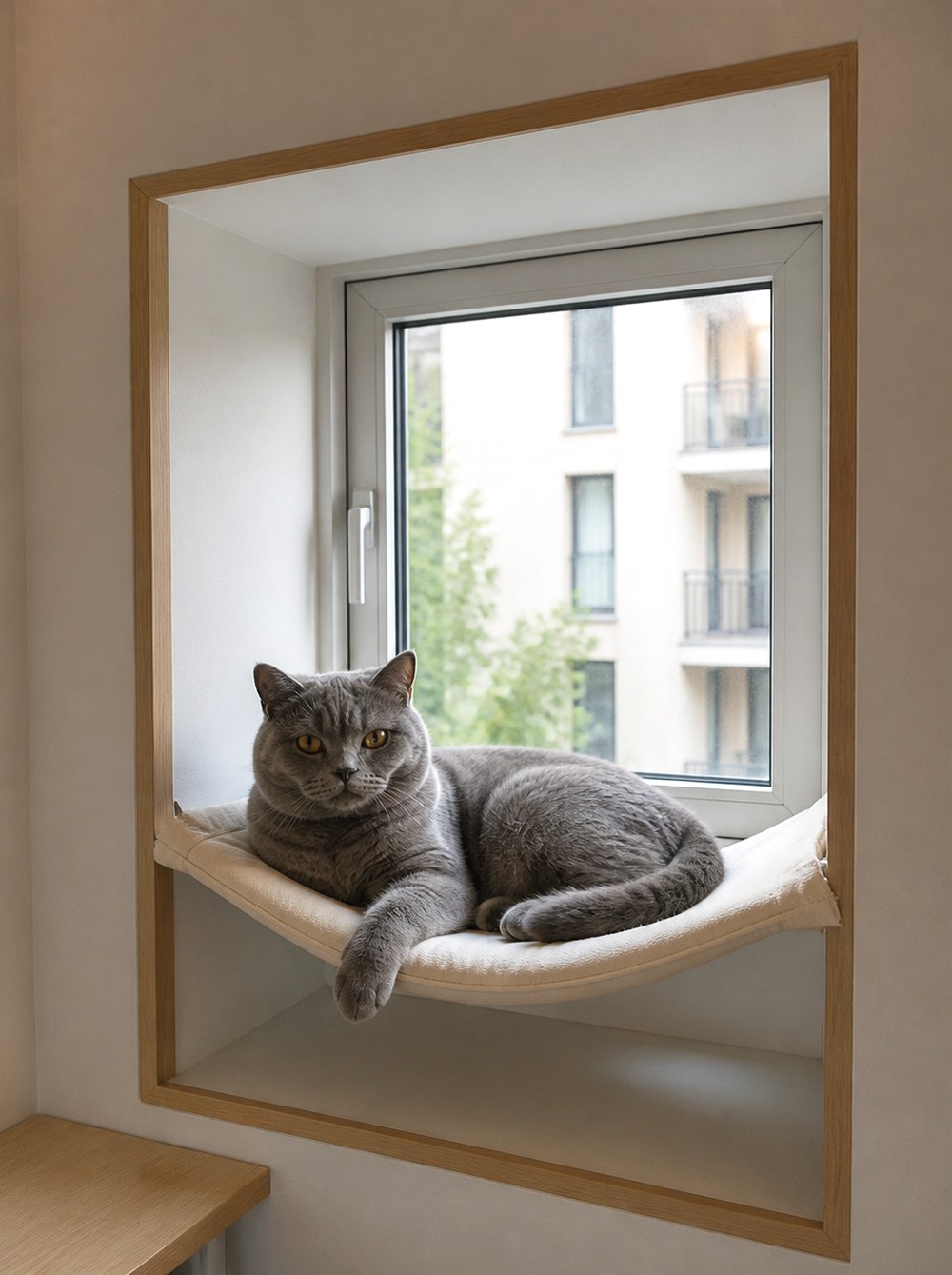
10. Stretch a Secure Hammock Across a Deep Window Recess
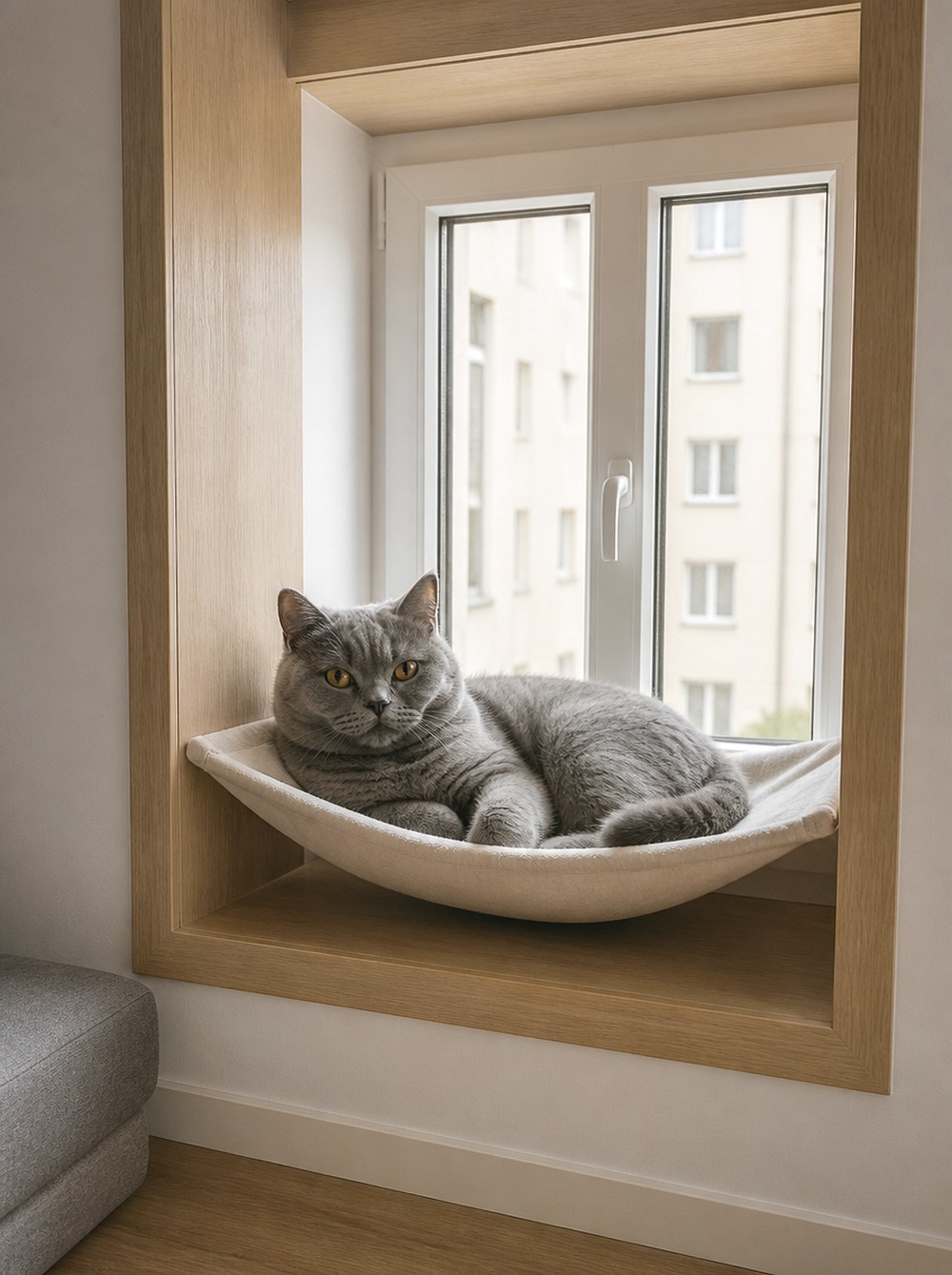
Some apartments and older homes have windows set several inches back from the surrounding wall. That recess can become usable cat space without extending into the room.
A properly designed hammock or fabric platform can span between secure mounting points on the sides of the recess, leaving the sill or floor underneath available. Unlike a suction hammock, this setup uses the architecture around the window rather than attaching to the glass.
The mounting method must suit the wall material and the expected load. Keep fasteners fully secure and inaccessible to the cat, and use fabric designed to remain taut rather than sagging dramatically.
Because the hammock sits inside the recess, make sure it does not interfere with the window latch or encourage access to an unsafe opening.
You May Also Like


Make the Window Area Safe Before Your Cat Moves In
A good perch should feel stable when the cat steps onto it, jumps onto it, shifts position, or pushes off to leave. Recheck wall fasteners, suction cups, clamps, tension systems, and furniture anchors periodically rather than assuming they will remain unchanged indefinitely.
Keep blind cords, curtain ties, electrical cables, breakable decorations, and small objects away from the landing area. If your cat can reach the window from the perch, make sure the window cannot open far enough to create an escape or fall risk.
Screens deserve particular attention. Standard insect screens are made primarily to keep insects out, not to restrain a cat. A cat pushing against one may dislodge it.
Also think about the route to the perch. A high window seat is much more usable when the cat has secure intermediate surfaces instead of having to make an awkward leap from the floor.
For older cats or cats with mobility limitations, lower perches and gradual step-up routes may be more comfortable. If a cat suddenly becomes reluctant to jump, seems painful, weak, unsteady, or shows another abrupt change in normal behavior, contact a veterinarian rather than assuming the perch itself is the only problem.
Pick the Perch That Uses Space You Already Have
In a small home, the strongest window-perch idea is usually the one that adds the least unnecessary furniture. Start by looking at what surrounds the window now.
A wide sill may only need a secure pad. Empty glass can support a properly installed window hammock. An unused strip of wall can hold a shelf, while a bench or anchored bookcase can provide storage and a viewing spot at the same time.
Choose one setup that matches your window construction, your cat’s jumping comfort, and the amount of permanent installation you are willing to do. Once it is secure, keep the route clear and inspect the attachment points as part of normal household upkeep.
