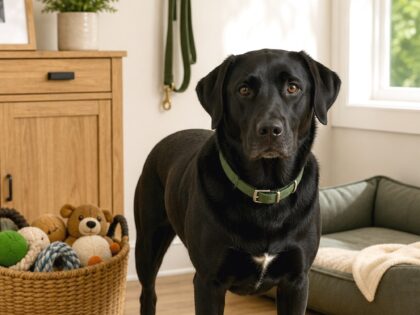
Dog supplies tend to spread according to where they are used: leashes gather by the door, toys migrate across the living room, grooming tools disappear into bathroom drawers, and travel gear ends up in whichever closet still has space.
Save This Idea on Pinterest
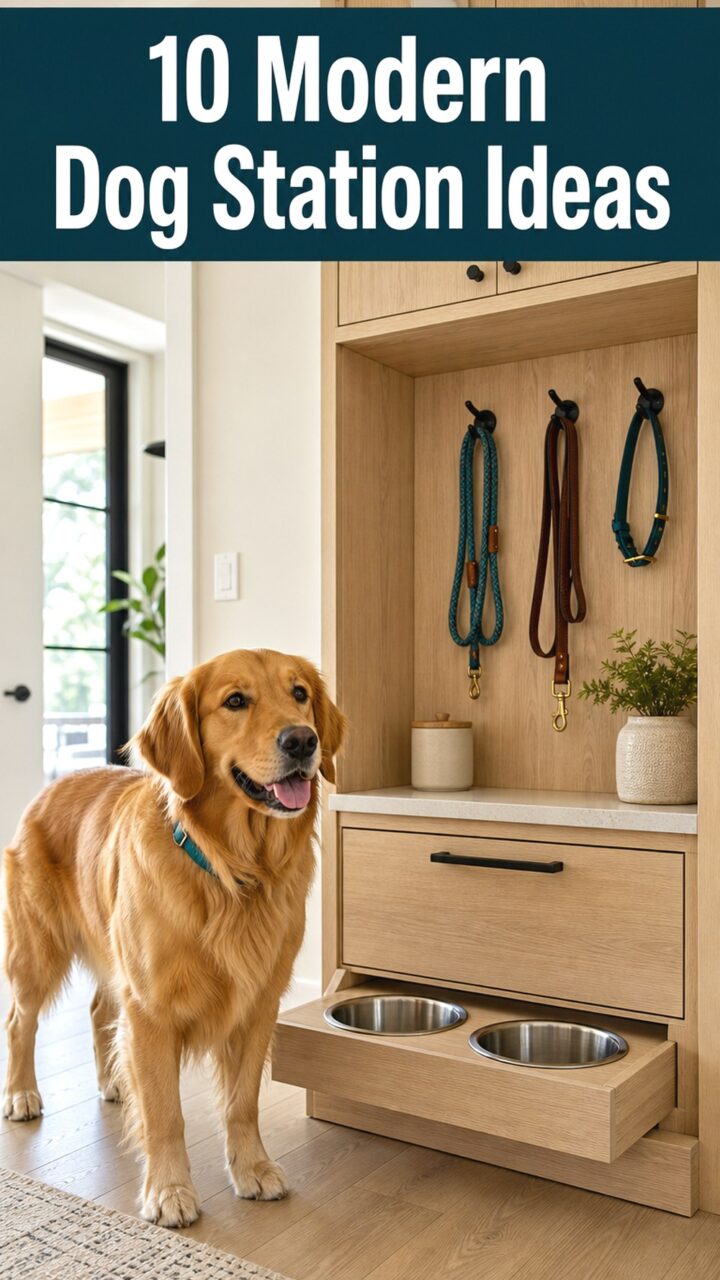
10 Modern Dog Station Ideas for an Organized Home
Save to PinterestA well-planned dog station gives one part of that routine a permanent home. It does not need to be a large custom cabinet. A slim console, wall-mounted organizer, drawer, rolling cart, or section of an existing cupboard can work just as well.
The most useful modern dog stations are designed around what you reach for together, not around storing every dog item in one place. These 10 ideas cover walking, meals, play, cleanup, grooming, rest, travel, and even dog-related technology without turning the house into a pet-supply showroom.
1. Build a Walk-and-Go Entry Station
A leash station near the door eliminates the hunt for walking supplies just as your dog realizes it is time to leave.
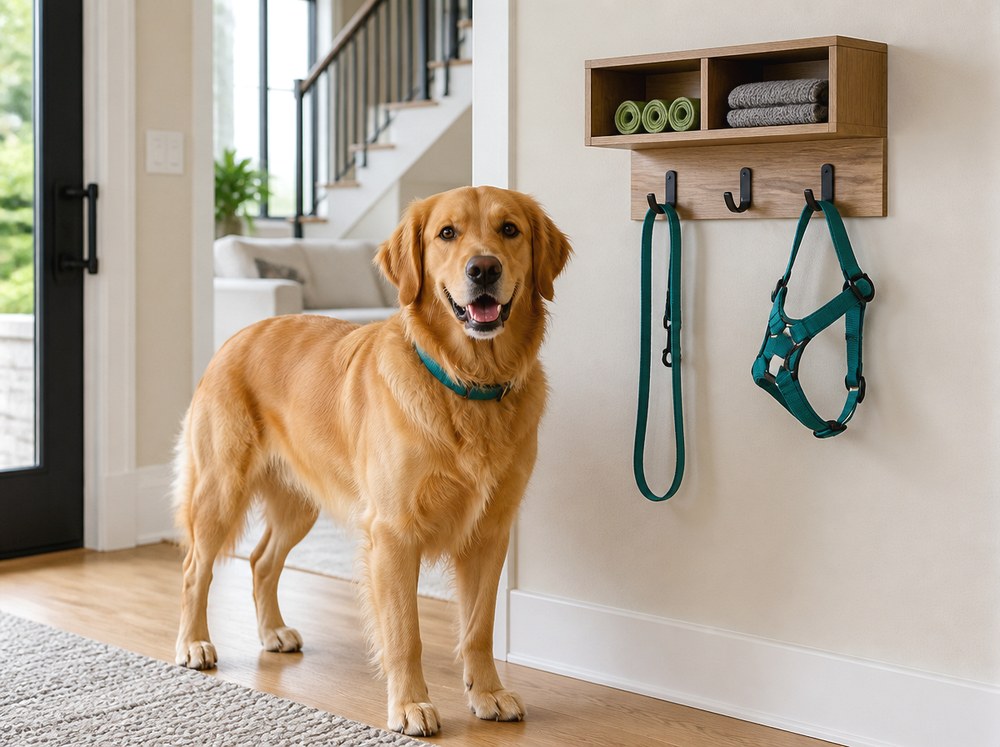
Use a narrow wall section, entry cabinet, or small section of a coat closet. Mount sturdy hooks high enough that the dog cannot pull down hanging equipment. Give everyday items their own spots: leash, harness, waste-bag holder, reflective gear, and a small towel for damp paws.
For a more finished appearance, combine matte-black hooks with a white oak shelf or shallow cabinet. A closed upper compartment can hold backup rolls and seasonal accessories while the items used every day stay visible.
Avoid piling equipment on the floor. Besides creating clutter, loose straps can become tempting chew items. Check hooks and mounting hardware periodically, especially if heavier gear hangs from them.
2. Add a Mudroom Paw-Cleanup Station
If wet grass, dirt, or snow regularly follows your dog indoors, organize the cleanup where the mess first arrives.
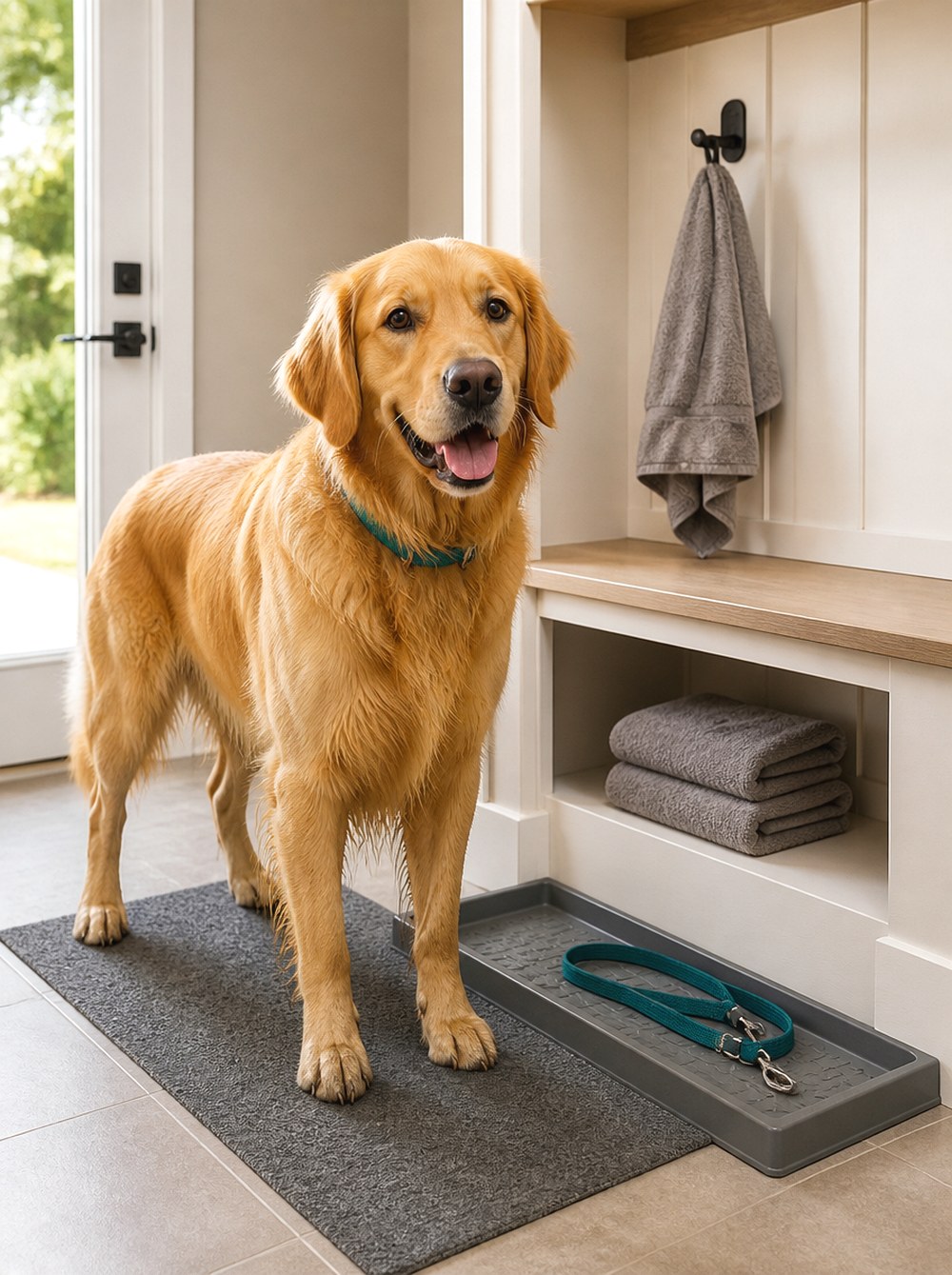
A mudroom bench or entry cabinet can hold washable towels, a paw-cleaning cloth, and other routine cleanup supplies. A waterproof tray beneath the bench provides a temporary place for damp walking gear without putting it on finished flooring or tossing it into a basket with dry supplies.
Open baskets look attractive, but anything the dog might chew is better behind a door or in a secure drawer. Keep household cleaners elsewhere or in inaccessible storage rather than mixing them with towels and dog gear.
A wall hook for a damp towel also helps it dry instead of disappearing into a closed bin while wet.
You May Also Like

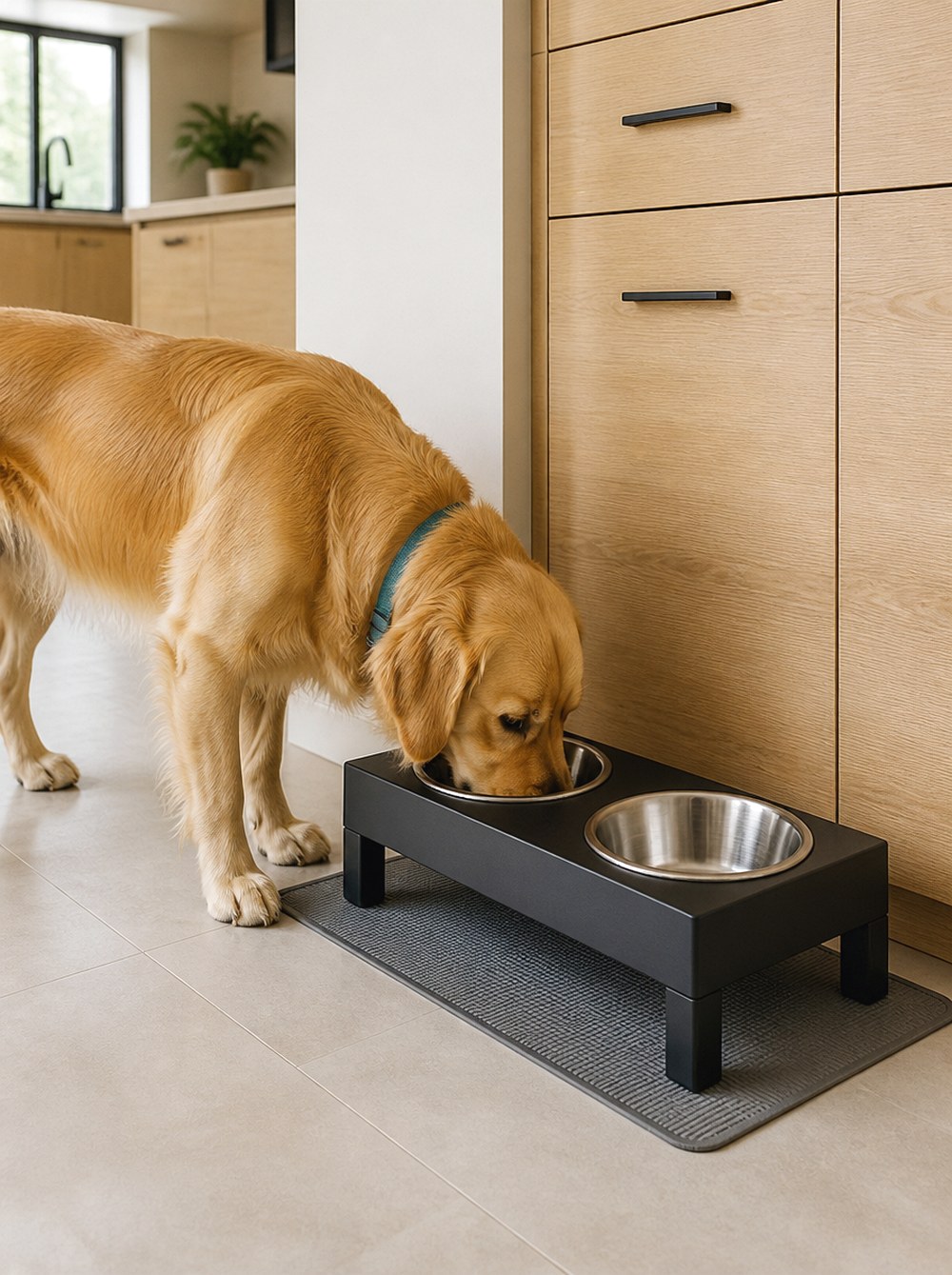
3. Create a Streamlined Feeding Console
Instead of surrounding the bowls with bags, scoops, cans, and miscellaneous supplies, let the feeding area do one job well.
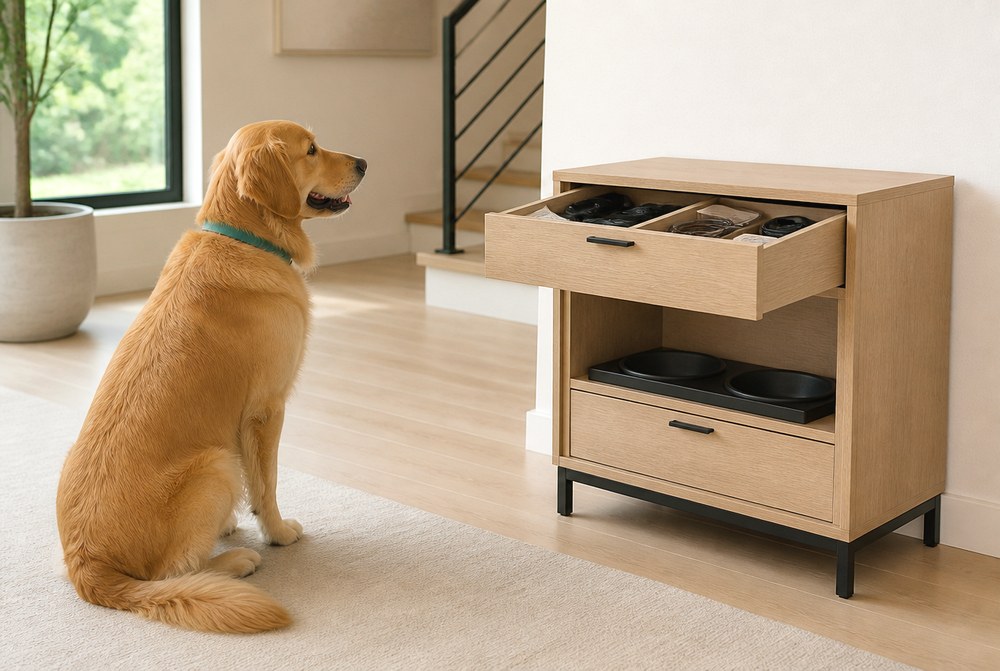
A low console or section of kitchen cabinetry can place bowls at floor level while keeping food and accessories in enclosed storage nearby. Choose a bowl setup that can be lifted out for regular washing rather than permanently trapping bowls inside a hard-to-clean recess.
A wipeable mat underneath catches splashes and crumbs. Nearby drawers can hold clean feeding accessories, while unopened or stored food should remain in secure packaging or an appropriate closed container according to its storage directions.
If your dog tends to investigate cabinets, use doors and drawers that stay firmly closed.
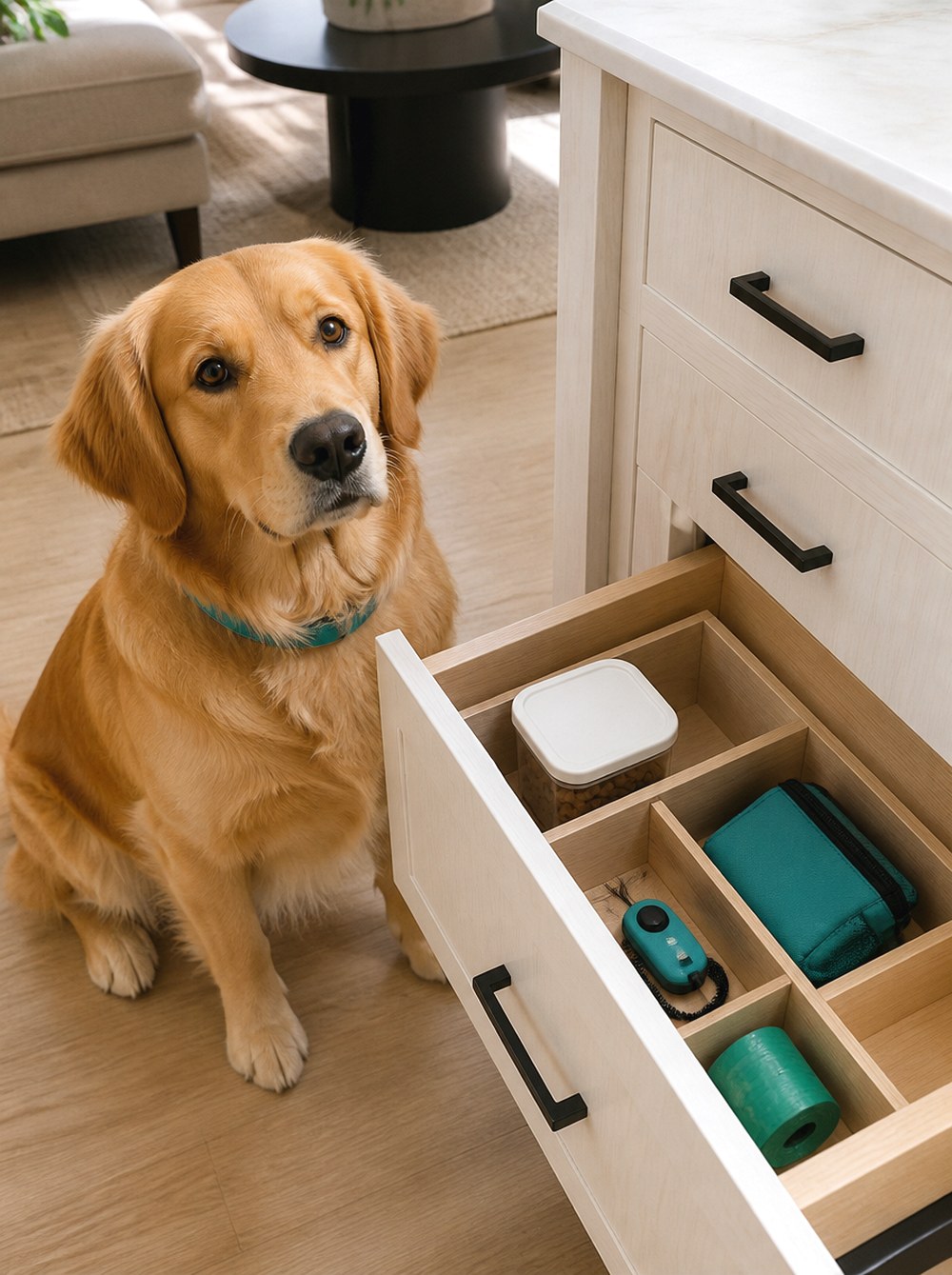
4. Turn One Kitchen Drawer Into a Training Station
Training supplies do not need an entire piece of furniture. One well-placed drawer can be more useful.
Choose a drawer near the room where short training sessions commonly happen. Use removable dividers for sealed treats, a clicker if you use one, spare waste bags, and a small training pouch.
Keeping this station compact prevents it from becoming a catchall. Treats should remain securely contained and inaccessible to the dog when the drawer is closed.
This setup is especially helpful when you want to reinforce calm everyday behavior without walking to a distant pantry or closet first.
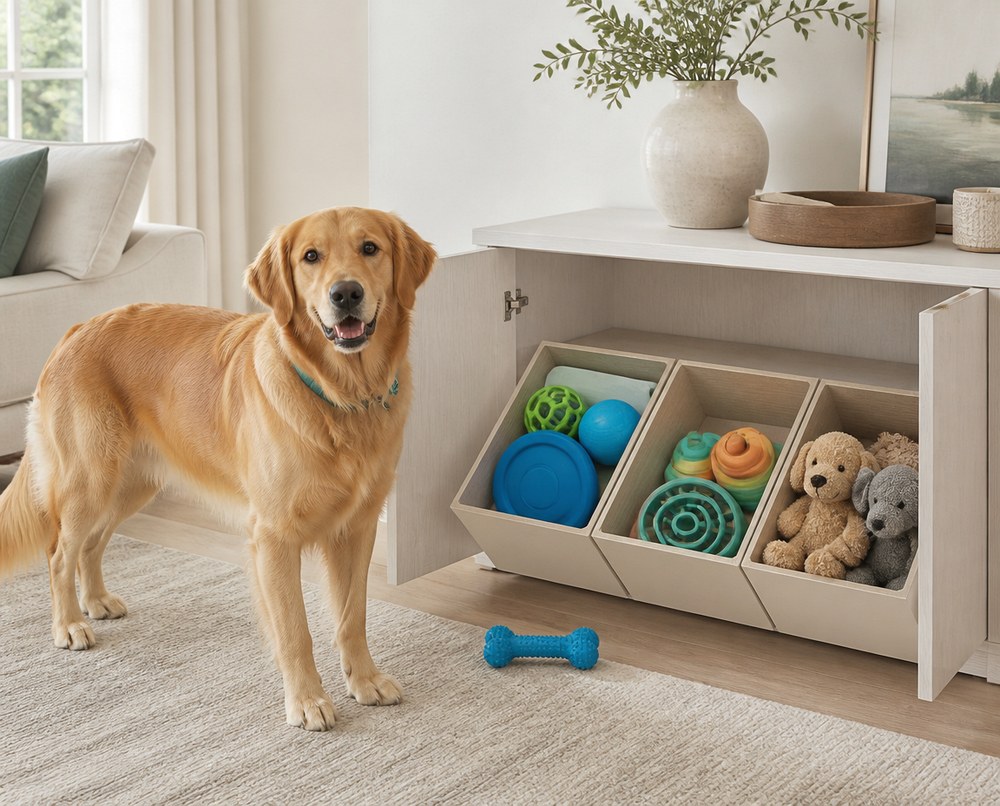
5. Hide Toy Clutter in a Rotation Cabinet
One giant basket often creates two problems: the room still looks cluttered, and the toys at the bottom are rarely used.
A low cabinet with several interior bins makes toy rotation easier. Keep a manageable selection available and store the rest behind closed doors. Separate categories that matter in your household, such as fetch toys, supervised puzzle items, and washable plush toys.
Before returning toys to storage, inspect them for loose pieces, torn seams, exposed stuffing, or other damage. Discard damaged items rather than putting them back into rotation.
For dogs that open cabinets or chew containers, use secure storage rather than a floor-level open basket.
6. Make a Calm Rest Station Part of the Living Room
A dog station can organize downtime as effectively as supplies.
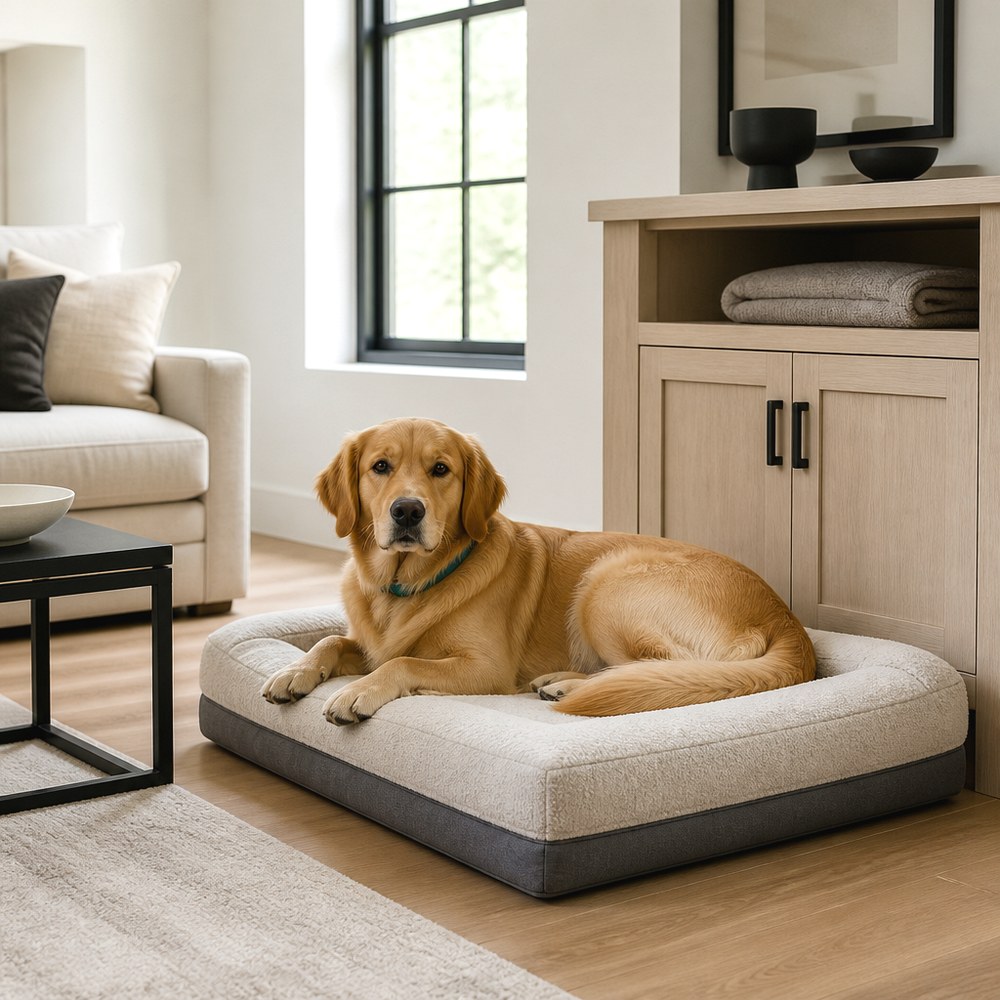
Create a defined resting area with a comfortable dog bed positioned away from busy walkways, heating vents, and frequently opened doors. A nearby closed cabinet or floating drawer can hold a spare washable cover and a few quiet-time items.
The modern look comes from treating the area as part of the room rather than squeezing a bed into leftover space. Matching the bed and nearby storage to the surrounding furniture keeps the zone visually quiet.
Give the dog enough room to enter, turn around, stretch out, and leave without navigating around furniture.
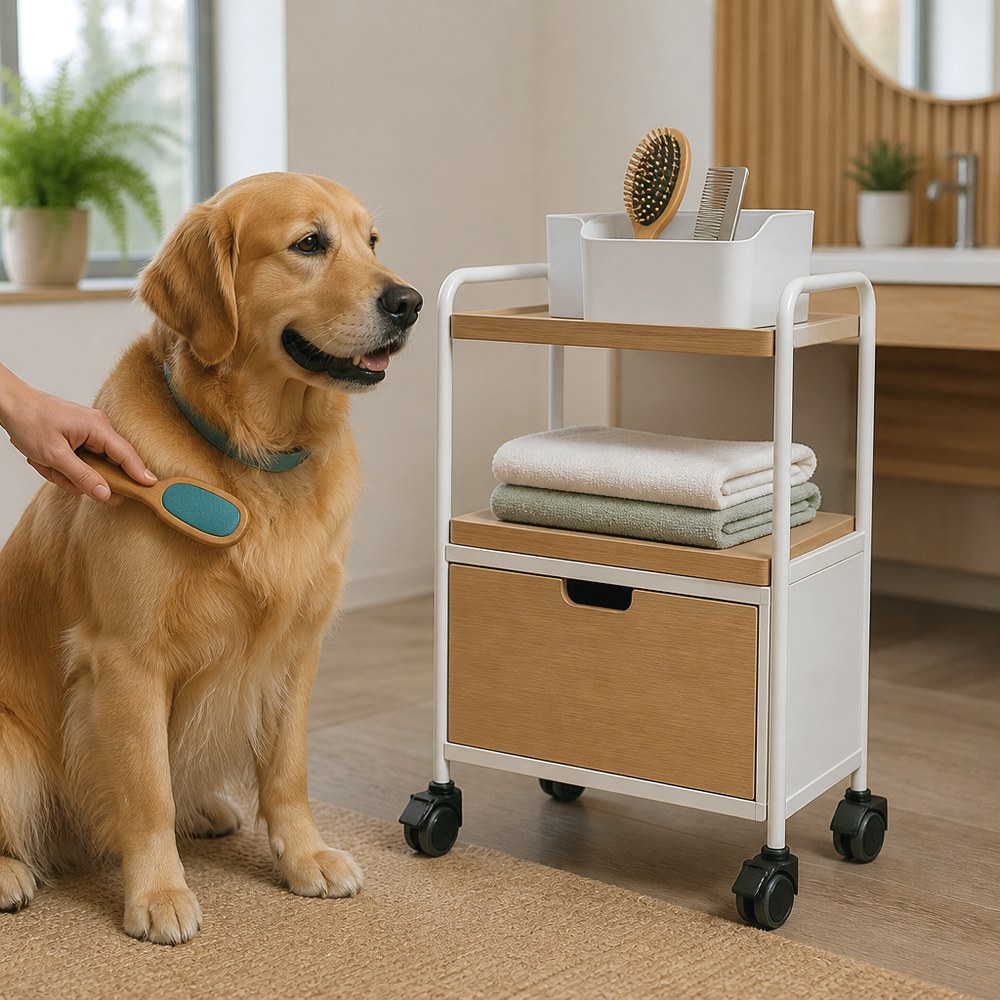
7. Use a Rolling Grooming Cart
Grooming supplies are often needed in more than one room, which makes a portable station more practical than permanent wall storage.
Choose a stable cart with locking wheels or use a compact handled caddy that can be put away after grooming. Brushes, combs, clean towels, and other routine grooming supplies can be separated into compartments so you are not searching mid-session.
Sharp grooming tools, small accessories, and anything chewable should remain in secured storage rather than an open lower cart shelf.
The main advantage here is mobility: roll the station to a bright, comfortable grooming area, then store it out of the dog’s reach when finished.
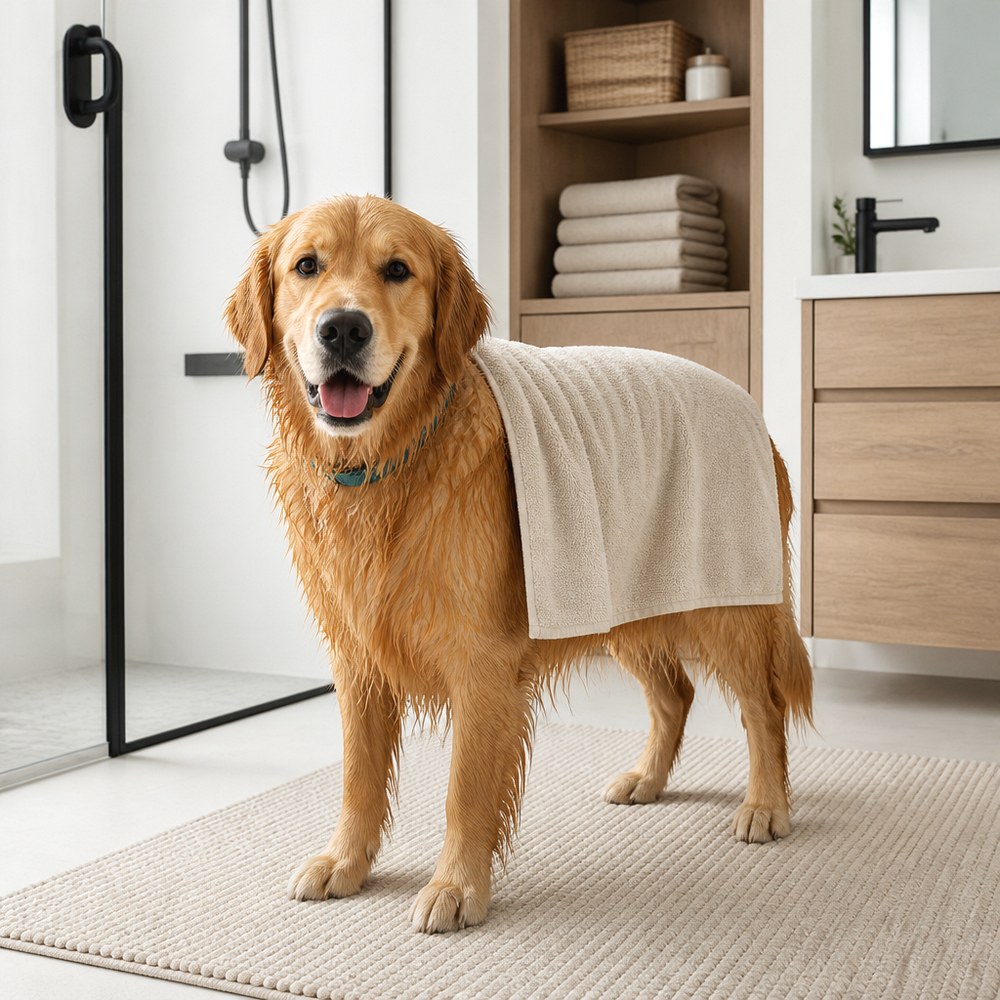
8. Set Up a Bathroom Drying Niche
Bath time becomes less chaotic when the towels are already within reach.
Dedicate one bathroom cubby or enclosed shelf to dog towels and washable bath accessories. Keep them separate from household cleaning products. A nearby nonslip mat gives your dog a more stable place to stand while being towel-dried.
Avoid creating a decorative station filled with bottles the dog can knock over. The most useful version is restrained: clean towels, the specific bathing supplies you actually use, and closed storage where necessary.
Dry wet towels fully before returning them to the cabinet.
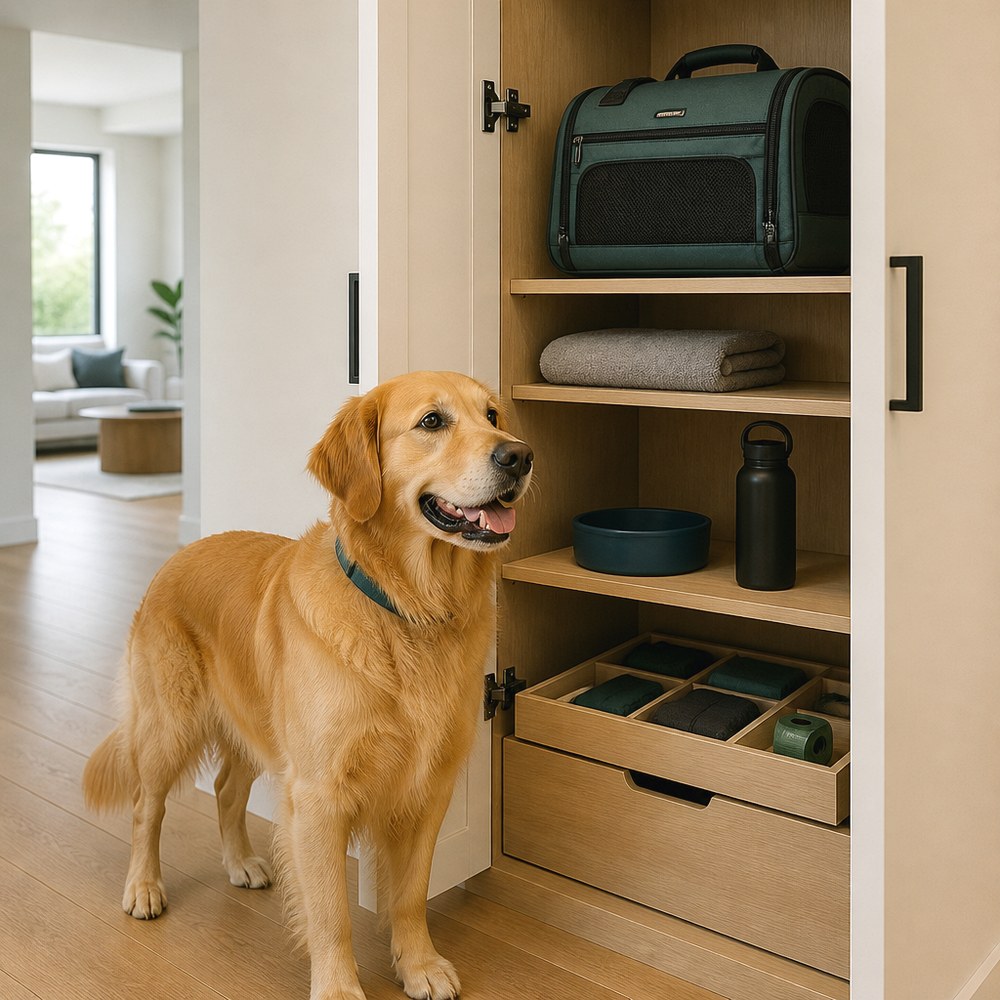
9. Assemble a Grab-and-Go Travel Station
Dog travel gear is easier to use when it does not have to be assembled from five rooms before every outing.
Reserve one closet shelf or cabinet for a travel bag, portable water setup, spare towel, cleanup supplies, and other equipment routinely taken in the car. Keep the bag partly packed with nonperishable basics, then add trip-specific items before leaving.
A labeled checklist attached inside the cabinet door can help you remember items that should not live permanently in the bag, such as food or time-sensitive necessities.
Do not leave a packed travel bag within chewing reach, especially if it contains food, small components, or straps.
10. Add a Secure Dog-Tech Charging Drawer
Modern dog gear can introduce a new kind of clutter: charging cables, tracker accessories, rechargeable safety lights, and small electronic parts.
Instead of leaving these on a countertop, dedicate a drawer or high cabinet shelf to dog-related electronics. Use cable management to keep cords contained, and store batteries and small parts completely out of reach.
If a device needs to charge, follow its manufacturer’s charging and safety instructions and keep the charging area dry, ventilated as appropriate, and inaccessible to the dog. Do not charge electronics beside the water bowl or inside a container not intended for charging equipment.
A small section of the same drawer can also hold printed emergency contacts or copies of frequently needed dog information, keeping the station useful even when nothing is charging.
You May Also Like


How to Make Several Dog Stations Look Like One System
You do not need matching custom cabinetry throughout the house. A few repeated details can make separate stations feel intentional.
Choose one or two finishes already present in your home, such as white oak, black metal, cream fabric, or clear drawer organizers. Use the same understated storage style where it makes sense, but let the function determine the container. Wet towels need different storage from clean grooming tools, and a leash hook has different requirements from a food cabinet.
The bigger priority is location. Put each station close to the moment when you use it:
| Daily need | Useful location | Storage approach |
|---|---|---|
| Walks | Entryway | Hooks and shallow cabinet |
| Dirty paws | Mudroom or entrance | Towels, mat, waterproof tray |
| Meals | Kitchen or feeding area | Closed cabinet and washable mat |
| Training | Main activity area | Divided drawer |
| Toys | Living space | Rotation cabinet |
| Rest | Quiet living-room zone | Bed and closed side storage |
| Grooming | Flexible | Locking cart |
| Bathing | Bathroom | Towel niche and nonslip mat |
| Travel | Closet near exit | Elevated grab-and-go shelf |
| Electronics | Dry elevated cabinet | Secured charging drawer |
Start With the Station That Removes the Most Daily Friction
There is little benefit in creating 10 stations at once. Start with the place where supplies currently pile up or where you repeatedly lose time.
For many homes, that means the entryway, feeding area, or toy storage. Give that routine a fixed location, remove supplies that do not belong there, and see what you actually reach for during the next week. The finished station will usually need less storage than expected.
Once the first zone works naturally, use the same approach elsewhere: store the item near its point of use, keep dog-accessible areas safe, and hide backup supplies instead of displaying everything. That creates a home that feels organized without making every room look devoted to dog gear.
