An indoor cat does not need an entire room devoted to play. A sunny window, a clear strip of hallway, one sturdy climbing structure, or even a well-placed cardboard setup can turn unused household space into somewhere a cat can watch, stalk, climb, scratch, and investigate.
Save This Idea on Pinterest
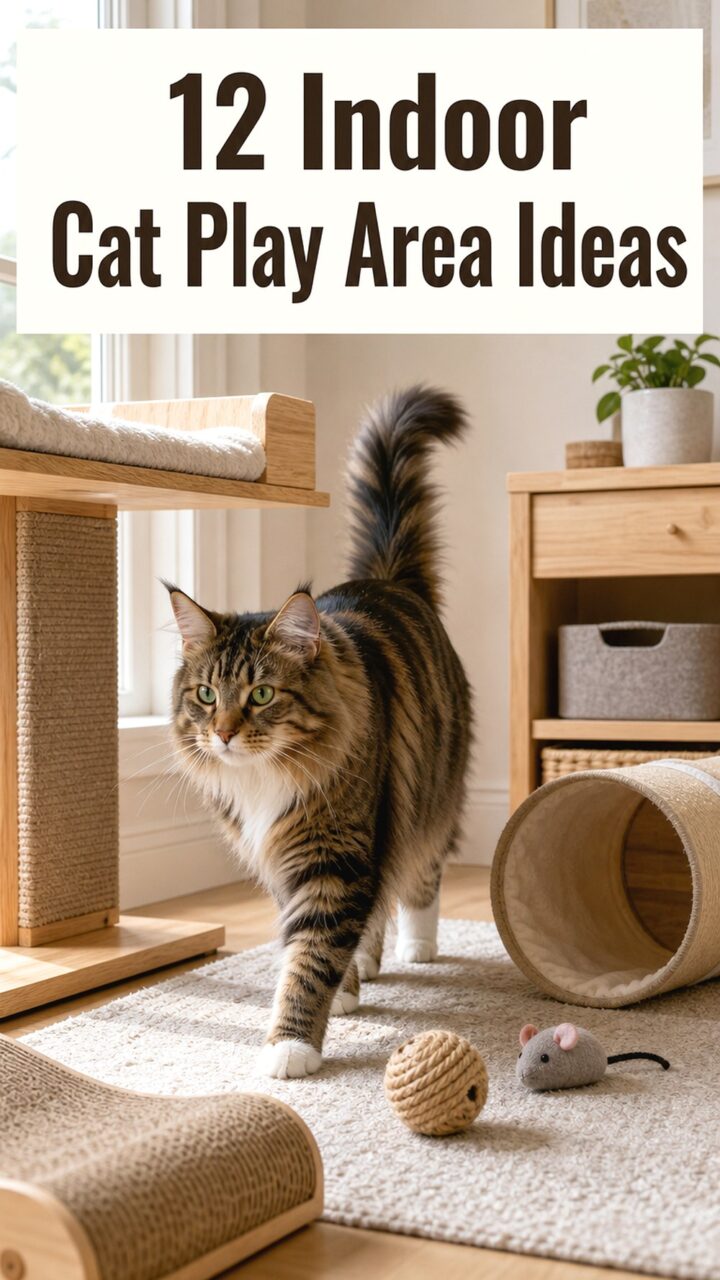
12 Indoor Cat Play Area Ideas for a More Engaging Home
Save to PinterestThe most useful indoor cat play area ideas do more than scatter toys around the floor. They give the cat a reason to use the space. Some support climbing, others create short bursts of chase play, and a few work well when the cat is entertaining itself.
You can combine several of these ideas in a larger home or choose two or three that fit a small apartment. Pay attention to which movements your cat already seeks out, then build around those preferences.
Build Upward for Cats That Like to Climb and Watch
Height gives many cats a useful change of perspective without taking up much floor space. The key is creating stable routes rather than isolated high surfaces that are difficult to reach or leave.
1. A Window Perch Lookout
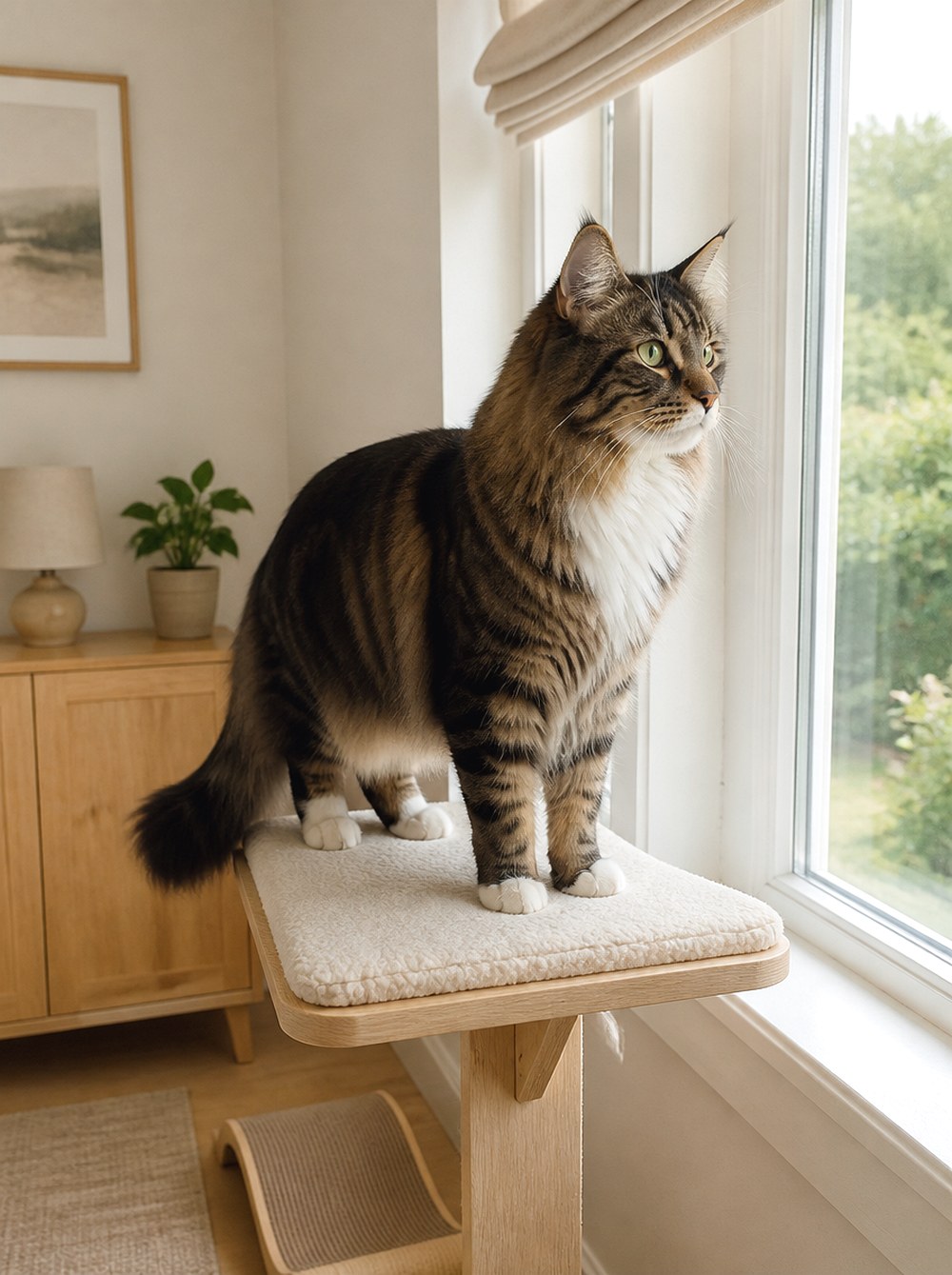
A window play area works especially well for a cat that spends time watching birds, pedestrians, leaves, or changing light. Use a sturdy cat perch, wide windowsill, or stable piece of furniture positioned beside a securely closed window.
Leave enough room for the cat to turn around and settle comfortably. A scratch pad or one durable toy nearby can make the area useful after the watching session ends, but the view itself should remain the main attraction.
Avoid relying on an ordinary insect screen to contain a cat at an open window. Keep blind cords and curtain loops secured out of reach.
2. A Secure Wall-Climbing Route
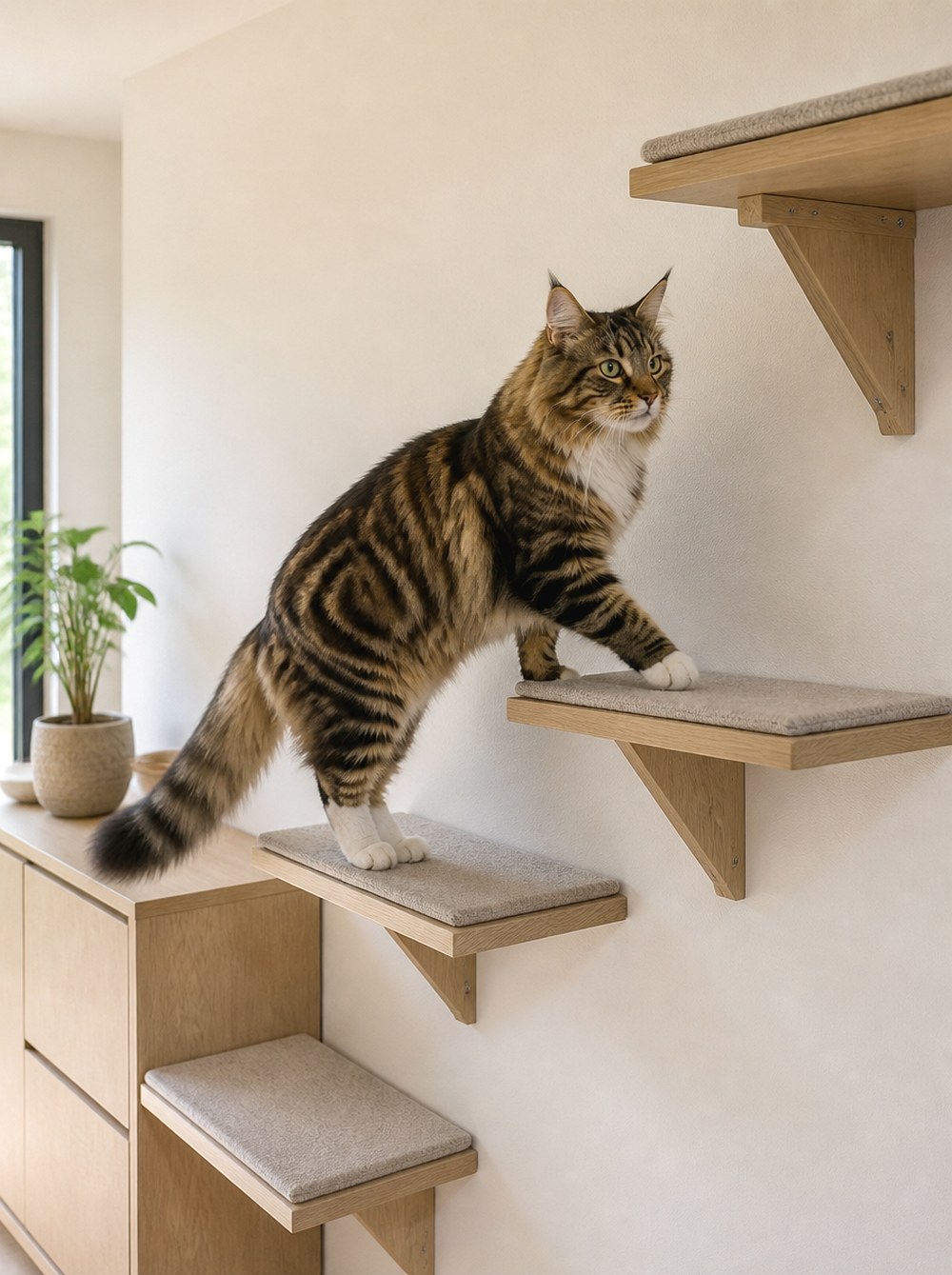
Wall-mounted cat shelves can turn a narrow room into a climbing zone while keeping most of the floor clear. Instead of placing shelves randomly, arrange them as a route: a low starting point, several reachable steps, and a wider resting platform near the top.
Surfaces should provide dependable footing rather than slick bare wood. Every shelf and bracket needs to be installed securely for the cat’s weight and movement, with no unstable furniture used as an improvised launch point.
A route is more practical than a single high shelf because the cat has a predictable way both up and down.
You May Also Like


3. A Low Step-and-Platform Course
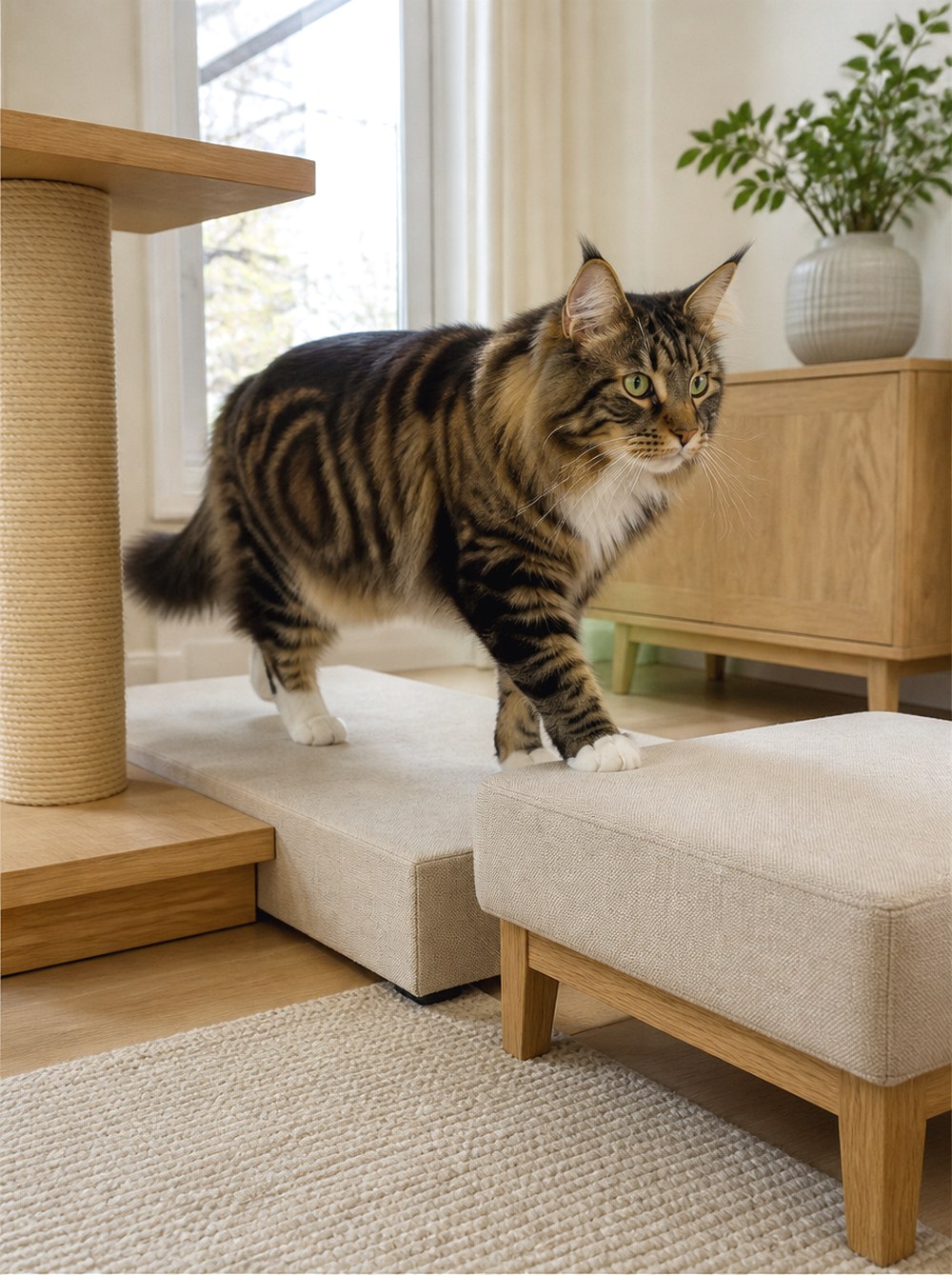
Not every climbing area needs to reach the ceiling. A low course made from a stable cat tree, broad step platforms, and a firm ottoman can create changes in height without requiring long jumps.
This setup is useful in rooms where wall mounting is not practical. It can also be adapted for a senior cat or a cat with limited mobility by keeping the height differences small and providing wide landing surfaces.
Arrange the pieces so the route has a clear beginning and end. Avoid narrow stools, rolling furniture, or lightweight objects that can tip when pushed off-center.
Create Space for Stalking, Chasing, and Pouncing
Cats often play in short bursts. A good chase area does not have to stay permanently filled with toys; it mostly needs safe clearance and a layout that allows the cat to accelerate, hide, and pounce.
4. A Clear Hallway Chase Lane
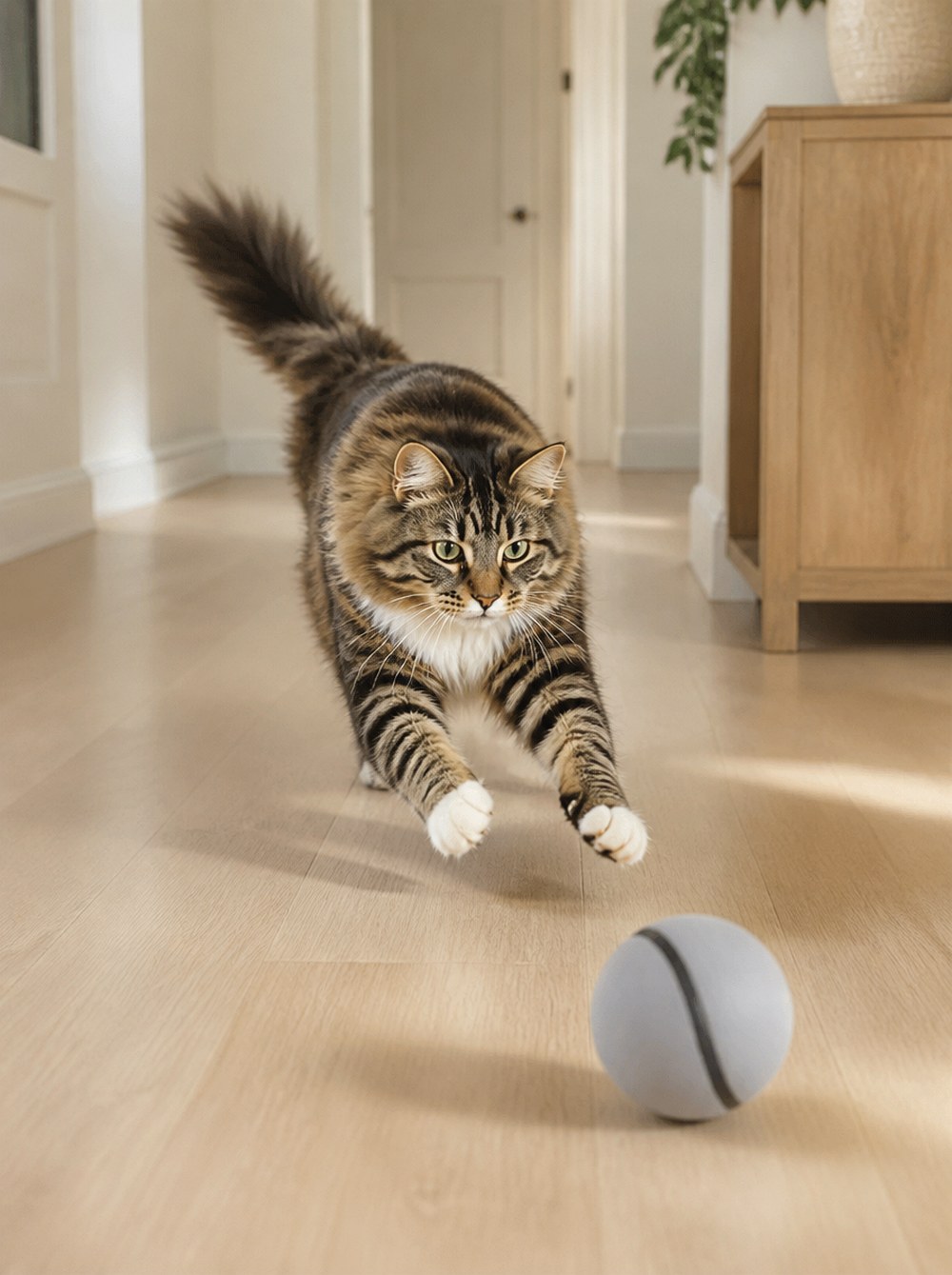
A hallway can become one of the most useful play spaces in a small home. Move shoes, bags, cords, and breakable objects out of the path so the cat has a clean runway.
Roll a larger cat-safe ball or toss a familiar lightweight toy along the floor for short chase sessions. A toy should be large enough that it is not a swallowing hazard and durable enough to withstand normal play.
This setup works because the long, uncomplicated route encourages running without requiring permanent play furniture.
5. A Tunnel Ambush Corner
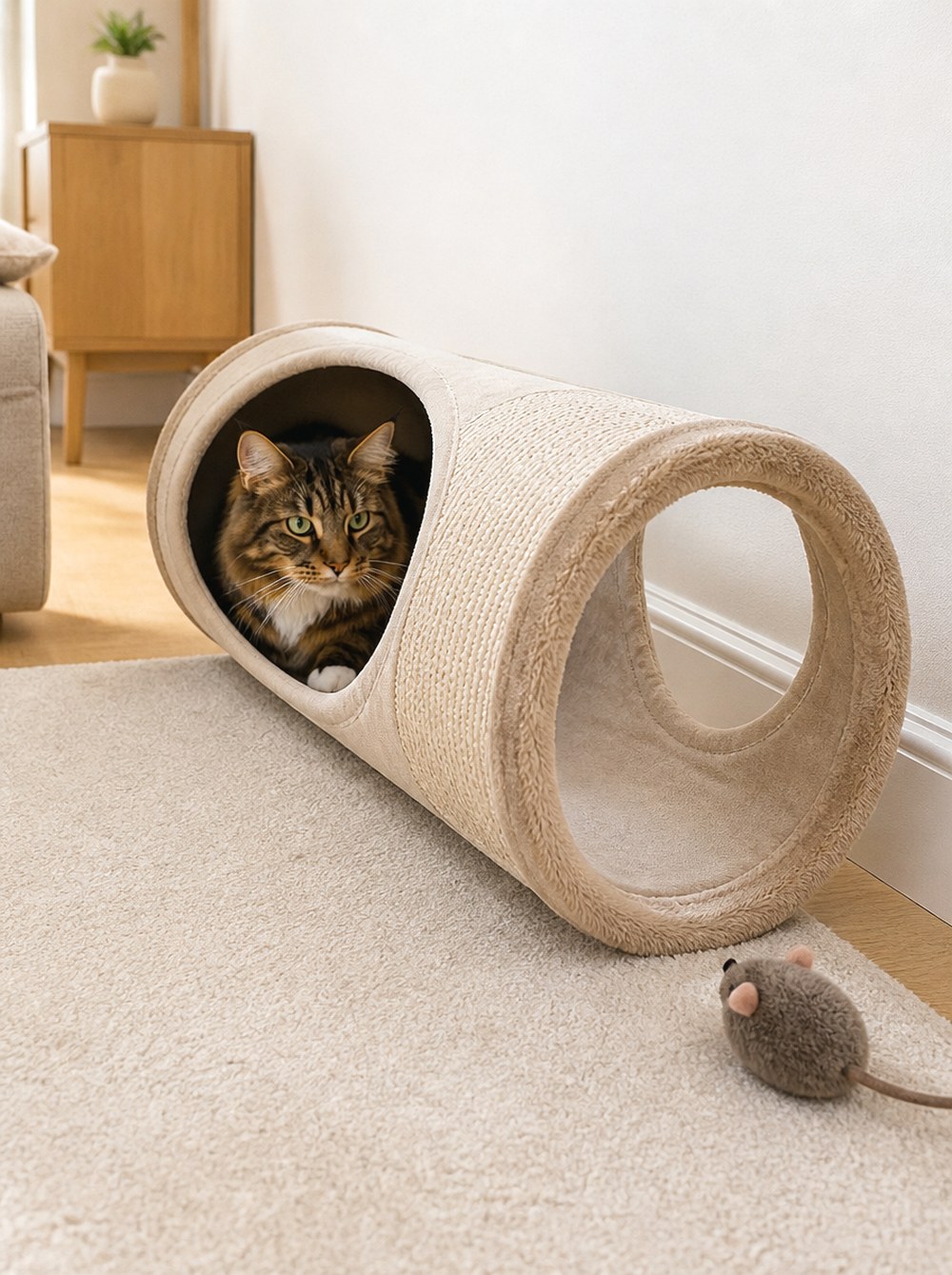
A cat tunnel adds concealment as well as movement. Place one beside a wall or at the edge of the living room rather than directly in a busy walkway.
A tunnel with more than one opening lets the cat enter, turn, stalk, and exit without feeling trapped. During interactive play, move a toy past the outside of an opening so the cat can wait and pounce.
Check fabric tunnels regularly for exposed wire, damaged seams, or loose pieces. Replace a damaged tunnel instead of continuing to use it.
6. A Wand-Toy Pounce Zone
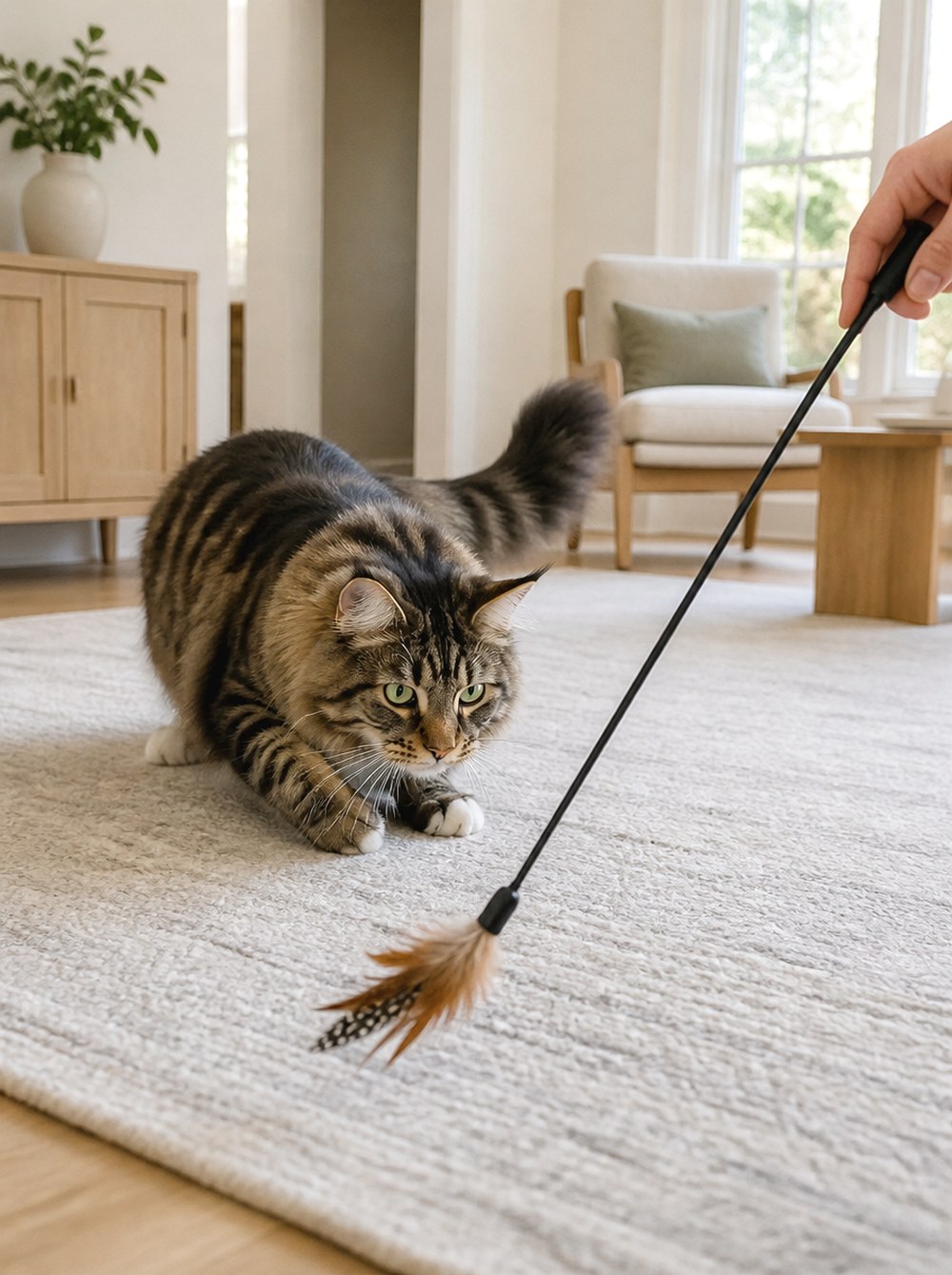
Interactive wand play works better when the cat has enough space to track and pounce without colliding with table legs or slippery objects. Choose a section of rug or carpet where the cat has dependable footing and several feet of open space.
Move the toy along the ground, behind a safe object, or briefly out of view rather than holding it directly in the cat’s face. Short pauses give the cat opportunities to watch and stalk before moving again.
Wand toys, strings, ribbons, and similar attachments should be put away securely after supervised play rather than left accessible.
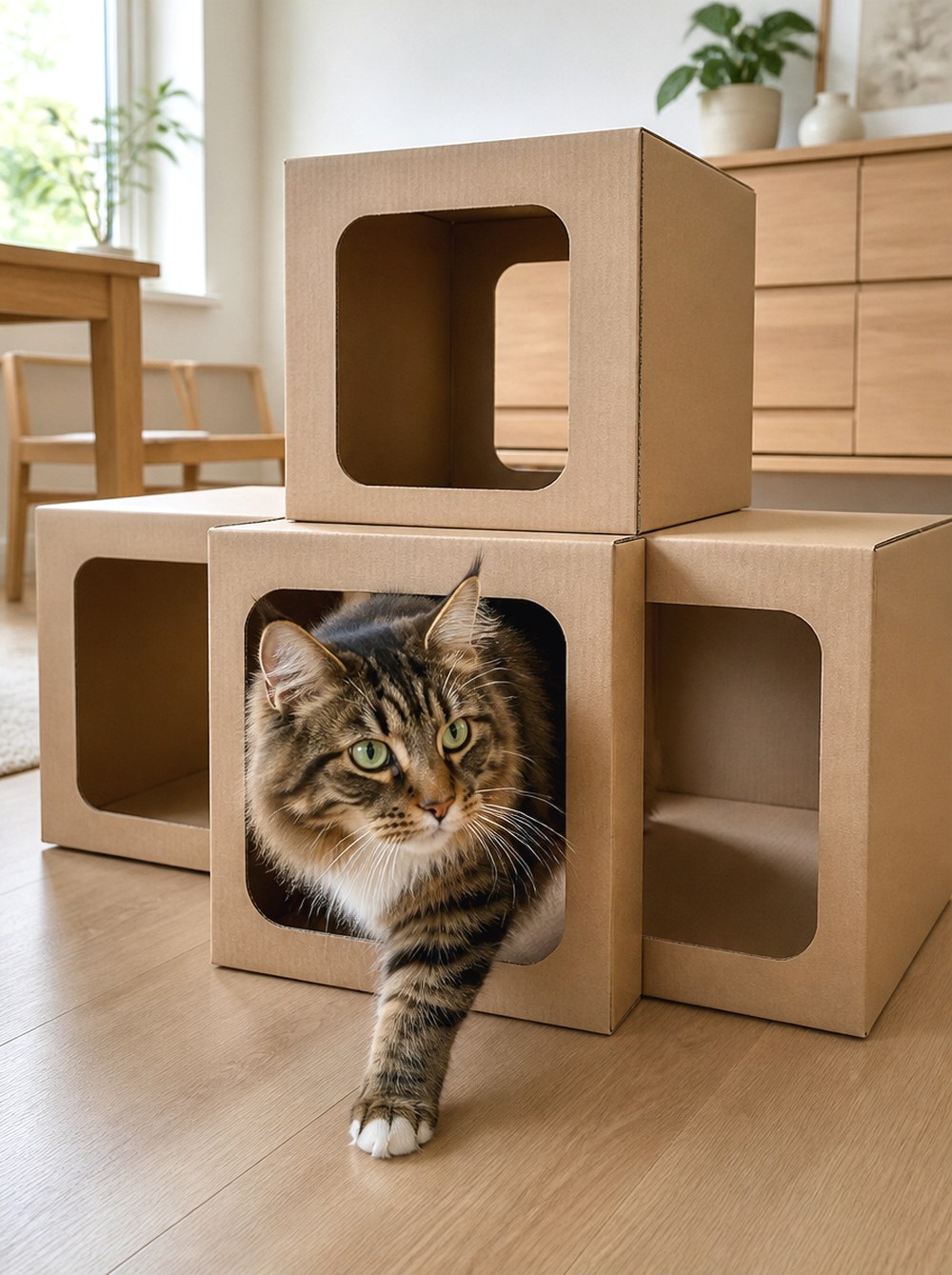
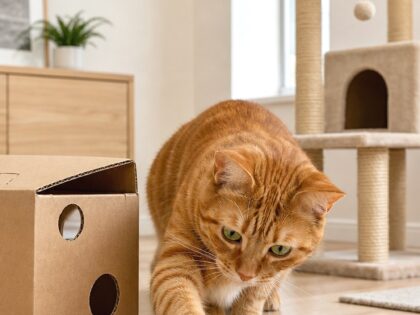
7. A Rearrangeable Cardboard Box Maze
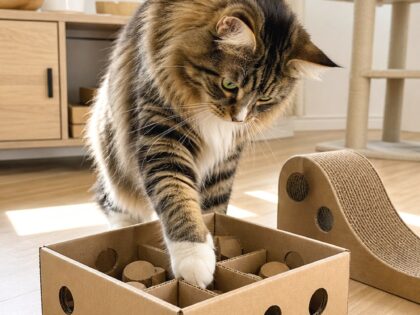
Several sturdy cardboard boxes can create a hiding and exploration area that changes without buying new furniture. Use boxes large enough for the cat to enter comfortably, remove tape, staples, and loose packaging, and create wide openings rather than small holes that could catch a head or paw.
Arrange two or three boxes so there are multiple entrances instead of one enclosed dead end. Changing the orientation occasionally can renew interest.
Cardboard wears down, so inspect edges and remove pieces that have become wet, heavily torn, or easy to chew into small fragments.
Add Independent Play Without Filling the Room With Toys
Some play areas work best when they give a cat something to investigate without constant human involvement. These zones can stay relatively compact and still serve different needs.
8. A Puzzle-Feeding Station
For a cat that enjoys working for food, designate one washable area for a cat-appropriate puzzle feeder. A hard floor or easy-clean mat makes scattered pieces easier to find and clean up.
Start with a puzzle the cat can solve without becoming frustrated. The goal is exploration and manipulation, not making meals unnecessarily difficult.
If food from a puzzle is part of the cat’s regular diet, account for it within the cat’s normal daily food rather than treating every puzzle session as additional feeding. A veterinarian can help with individual feeding needs if weight, appetite, or health is a concern.
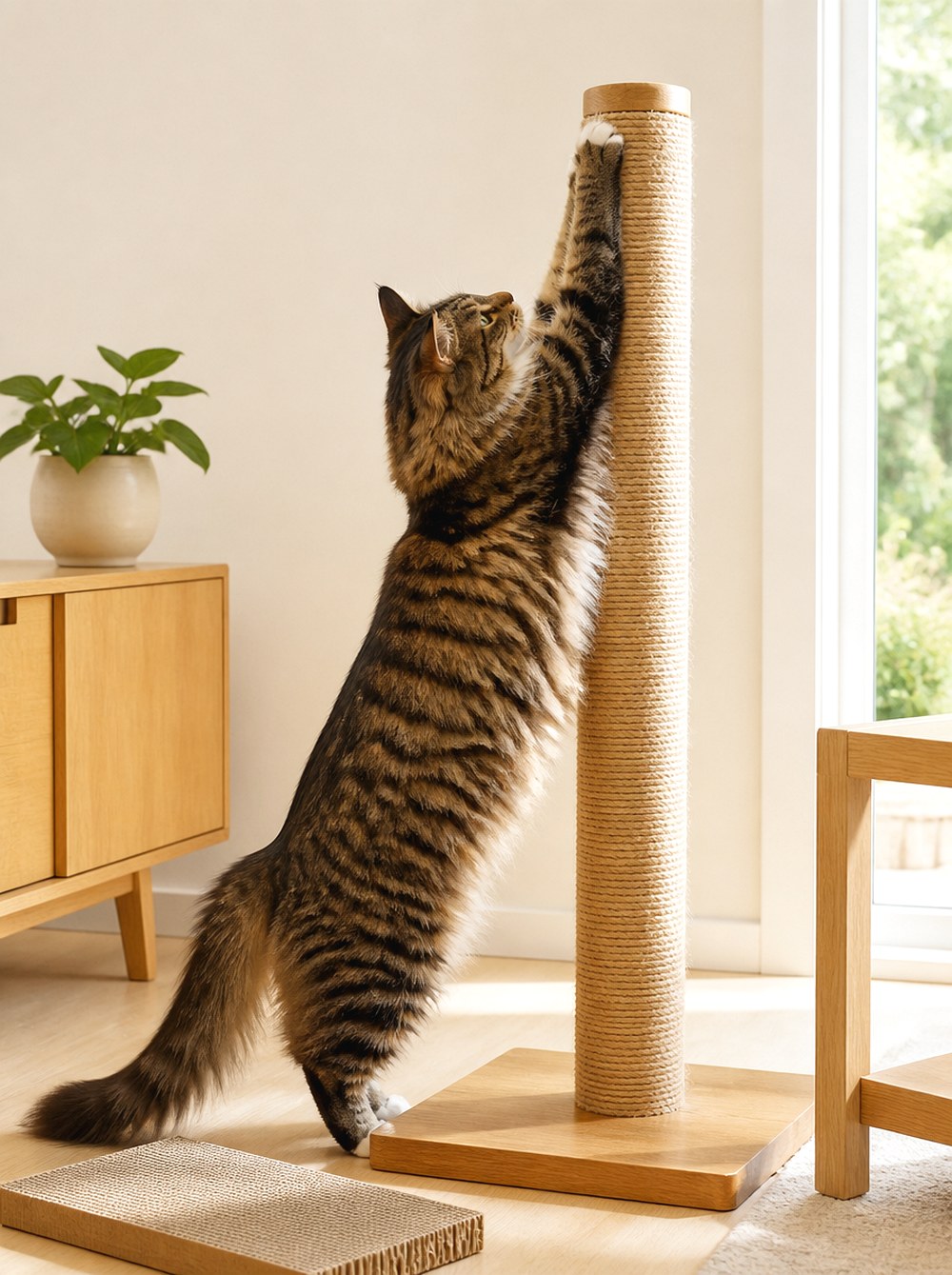
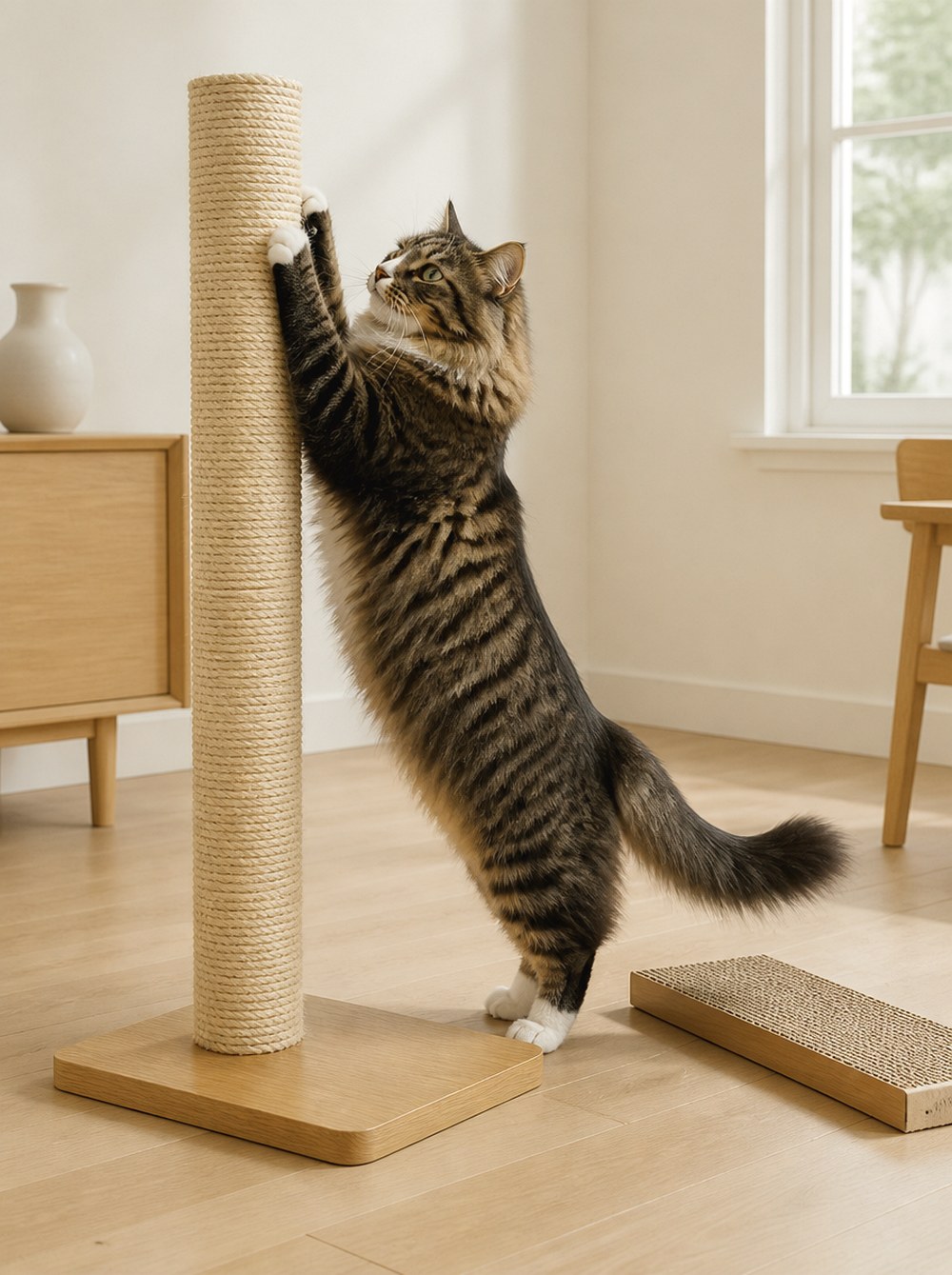
9. A Scratch-and-Stretch Hub
Scratching is a physical activity as well as a normal maintenance behavior. A play area built around a tall, stable scratching post gives the cat somewhere to stretch fully and transition into other activity.
Place the post where the cat already spends time rather than hiding it in an unused room. A horizontal scratcher nearby can offer a different body position without requiring a large setup.
The vertical post should resist tipping when the cat leans or pulls against it. Replace or repair scratching surfaces when structural parts become loose.
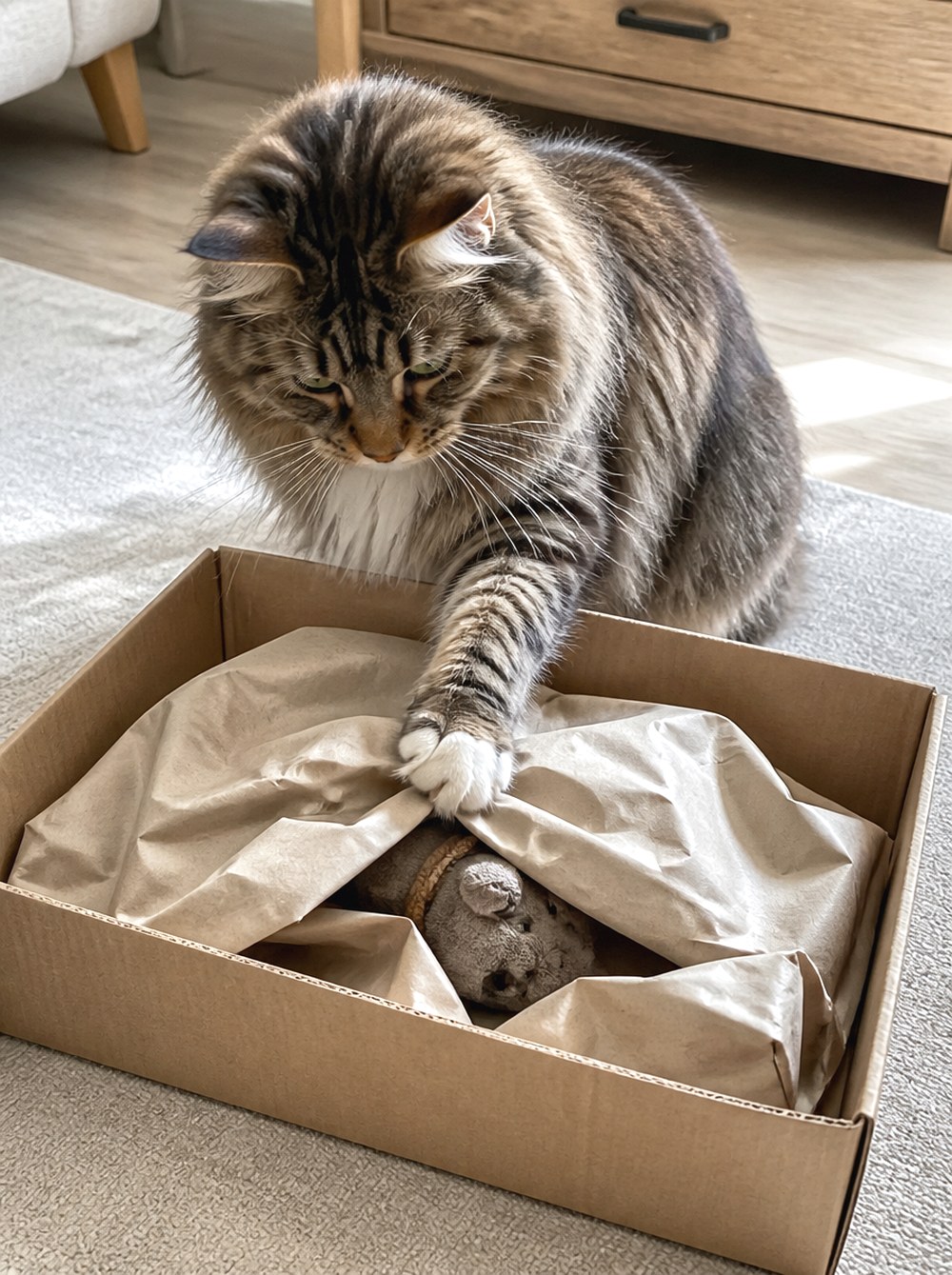
10. A Supervised Paper Dig Box
Some cats enjoy pawing through light materials and investigating sounds and movement. A shallow, broad cardboard box filled with a few large sheets of loosely crumpled plain paper can create a temporary digging zone.
Keep the paper pieces large rather than shredding them into small bits. Hide a familiar durable toy partially beneath one sheet to encourage pawing and searching.
Because paper and cardboard can be chewed or torn, supervise this activity and remove the setup if the cat begins eating pieces rather than simply batting or digging.
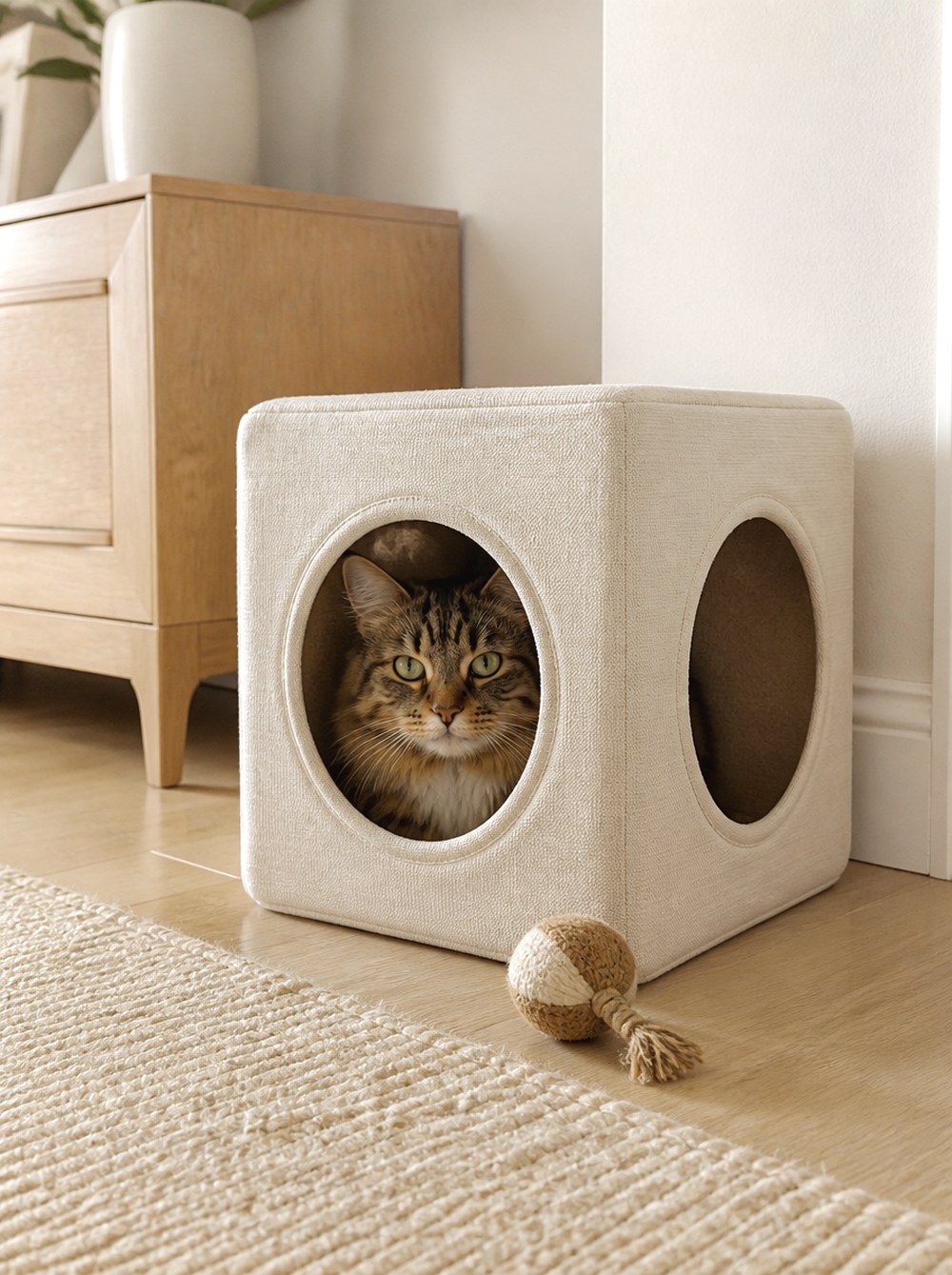
11. A Two-Exit Hideaway Den
A hiding place can become a play space when the cat can watch activity from cover and leave in more than one direction. A sturdy fabric cube designed for cats or a broad cardboard hideaway can work well.
Place it near the edge of a room where the cat can observe without being in the center of foot traffic. During play, a toy can move briefly past one entrance, creating a peek-and-pounce opportunity.
Two exits are particularly useful because the den remains a choice rather than a trap. Keep entrances unobstructed.
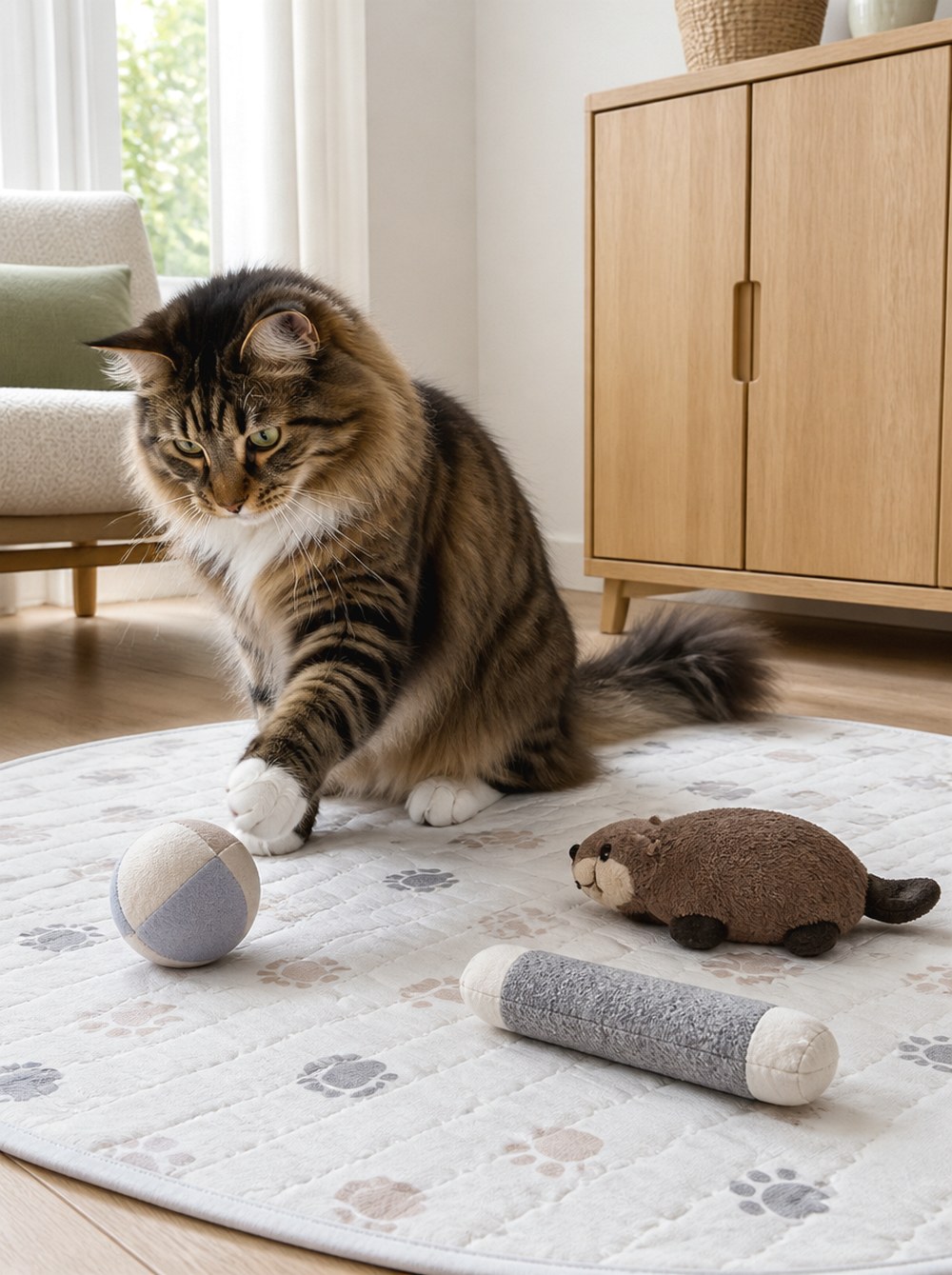
12. A Rotating Play Island
If toys tend to spread through the whole house, create one defined play island using a small rug or washable mat. Keep only two or three safe toys available there at a time and store the rest out of reach.
The value of this setup is rotation rather than quantity. A soft ball might appear for several days, then be replaced by a durable kicker toy or another familiar item. Changing the small selection can make the area feel different without continually adding more objects.
Inspect toys during each rotation. Discard damaged items with exposed stuffing, loose components, or pieces that could be swallowed.
You May Also Like


Match the Area to the Cat, Not the Room
You do not need all 12 setups. A cat that constantly seeks the top of furniture may use a climbing route more than a floor puzzle, while a cat that waits behind doorways may respond quickly to a tunnel or two-exit hideaway.
Age and mobility matter too. Long jumps, steep wall routes, and fast chase sessions may not suit every cat. Low platforms, wide surfaces, shorter play periods, and accessible resting spots can make the same room more usable for a senior or less-mobile cat. If a cat suddenly stops jumping, playing, eating normally, using the litter box normally, or shows other significant behavior or mobility changes, contact a veterinarian rather than assuming the issue is boredom.
For a small home, start with one vertical area and one floor-based activity. A window perch paired with a clear hallway chase lane, for example, serves two different types of play without turning the room into a permanent obstacle course.
The strongest indoor play area is one your cat actually returns to. Watch which spaces receive repeated attention, keep those setups safe and stable, and rotate or remove the ones that consistently go unused.
