Weekends can change almost everything about an indoor cat’s environment. You may wake up later, spend more time at home, invite people over, clean the house, or settle in for a long afternoon on the couch. Your cat notices those changes even if the food bowl and litter box stay in the same places.
Save This Idea on Pinterest

Weekend Routine for Indoor Cats A Balanced Saturday and Sunday Plan
Save to PinterestA useful weekend routine does not need to copy your weekday schedule minute by minute. Instead, keep a few familiar anchors—meals, litter care, activity, quiet rest, and bedtime—while using your extra time for longer play sessions and enrichment.
The goal is a weekend that feels interesting without becoming so different that Monday morning is a shock.
Keep the Main Daily Anchors Familiar
Cats often respond well when important parts of the day happen in a reasonably predictable order. Exact times can shift, but a dramatic weekend change may lead to early-morning demands, persistent meowing around meals, or restless behavior when the weekday routine returns.
Try to keep these parts of the day relatively steady:
- Meal times
- Litter box cleaning
- Morning and evening interaction
- Opportunities for active play
- Quiet resting periods
- Your usual nighttime routine
You do not need to wake at your weekday alarm time just to satisfy a schedule. If breakfast normally happens early, however, moving it several hours later every Saturday may be harder for your cat than shifting it gradually or keeping the meal close to its regular window.
Automatic feeders can help households that want to sleep later while maintaining a consistent breakfast schedule.
Saturday Morning: Start With Familiar Needs Before Adding Excitement
A calm weekend morning begins with the same basic priorities your cat expects on any other day.
Check the water bowl or fountain, serve breakfast according to your cat’s normal feeding plan, and scoop the litter box. While cleaning, take a quick look at urine and stool patterns rather than treating litter care as a purely household chore. Sudden changes in frequency, appearance, or litter box use can deserve attention.
Once those basics are handled, give your cat a little social time on their terms. Some cats will immediately ask for play. Others may prefer to sit near you while you drink coffee or move around the kitchen.
This is also a useful time for a short active session because many cats are ready to move after waking and eating.
Try a Short Hunt-Style Play Session
A wand toy can imitate the changing speed and direction of prey more effectively than simply waving a toy in front of the cat’s face. Move it along the floor, briefly hide it behind furniture, pause, and allow your cat opportunities to stalk and pounce.
Several focused minutes may be more satisfying than a much longer session in which the toy moves constantly.
Always supervise toys with strings, ribbons, feathers, or detachable pieces. Put them away after play rather than leaving them accessible.

Let the Middle of the Morning Slow Down
More time at home does not mean your cat needs constant entertainment.
After breakfast and play, many indoor cats will naturally settle into grooming, window watching, or sleep. Give your cat access to familiar resting places rather than repeatedly waking them because you happen to be available.
A comfortable weekend home might offer several choices:
- A raised perch
- A quiet covered bed
- A sunny resting spot that does not overheat
- A secure window-viewing area
- A cat tree away from busy household traffic
Windows should have secure screens or remain safely closed. An open window is not a safe enrichment activity unless it has been specifically secured to prevent escape or falls.
This quiet period is useful for people too. You can run errands, work around the home, or relax without feeling that your cat needs another activity every few minutes.
Turn Part of Saturday Into Exploration Time
Weekends offer room for enrichment that is harder to fit into a rushed weekday morning.
The most useful activities encourage a cat to sniff, search, investigate, climb, scratch, or work out how to reach something. You can rotate activities rather than putting every toy in the house on the floor at once.
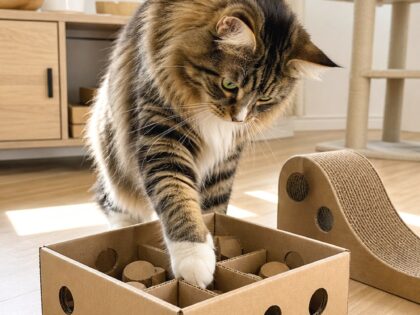
For example, place part of your cat’s normal food allowance in an appropriate food puzzle, set out a cardboard box with handles or loose tape removed, or move a familiar toy to a new but safe location.
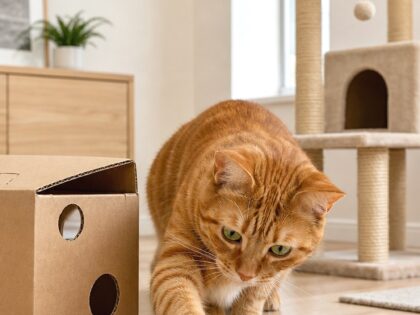
A cardboard box can be surprisingly interesting because it changes the physical environment without requiring complicated equipment. Check it for staples, tape, exposed adhesive, small pieces, or damaged cardboard before use.
Food puzzles should also match the individual cat. Begin with an easy setup so the activity does not become frustrating, and count food used in the puzzle as part of the cat’s normal daily intake rather than automatically adding extra treats.

You May Also Like


Protect the Afternoon Nap
An indoor cat may sleep through a large part of the afternoon even when the household is busy.
That is normal daily behavior for many cats, and weekends do not need to become an all-day entertainment program. In fact, a cat that has been repeatedly encouraged to stay active may simply become overstimulated or leave the room in search of peace.
If Saturday is your cleaning day, make sure your cat still has a quiet room or resting zone away from vacuuming, visitors, and frequently opened doors.
Keep household cleaners, medicines, sewing supplies, cords, small hardware, and other potentially hazardous items secured. When cleaning pet areas, use a pet-appropriate product according to its label and allow surfaces to dry as directed before your cat uses them again.
This is also a convenient point in the day to wash food bowls when needed and check whether frequently used bedding, scratching surfaces, or toys are becoming worn.
Late Afternoon Is a Good Time for Another Activity Block
After a long rest, many cats are ready for another period of interaction.
You can vary this session so the weekend does not become a repetition of the morning. Instead of another wand-toy chase, try an activity that involves climbing, searching, or following you through a safe area of the home.
A few options include tossing an appropriate lightweight cat toy down a clear hallway, placing a few pieces of the cat’s normal food in easy-to-find locations, or encouraging movement between stable cat furniture.
Do not force exercise if your cat walks away. Interest, posture, and willingness to participate are better guides than trying to reach a fixed number of minutes.
Senior cats and cats with mobility limitations may prefer shorter sessions with activities kept at floor level. If jumping, walking, appetite, breathing, bathroom habits, or general behavior changes suddenly, contact a veterinarian rather than assuming the cat simply needs a different routine.
Keep Dinner From Becoming the Whole Weekend Event
If everyone is home, cats may receive more snacks than usual simply because more people are available to give them.
Keeping meals measured can prevent the weekend from quietly adding a large amount of extra food. If several people share pet-care duties, decide who is responsible for meals and treats so feeding is not accidentally duplicated.
You can make dinner more engaging without increasing the total amount of food. For a cat that already uses food puzzles comfortably, part of the meal can be delivered through one while the remainder is served normally.
Fresh water should remain available throughout the day regardless of feeding style.
Build a Calm Saturday Evening
Indoor cats often become more active again in the evening, particularly after a quiet afternoon.
A focused play session before your own wind-down can give that energy somewhere appropriate to go. Follow it with the usual evening meal or quiet routine if that matches your cat’s established pattern.
Afterward, reduce stimulation rather than beginning another high-energy activity just before you want the household to settle.
Dimmer household activity, familiar resting places, and a predictable sequence can help communicate that the active part of the evening is ending.
You May Also Like


Sunday Should Feel Enjoyable, Not Like a Second Schedule Overhaul
Sunday can follow much of the same pattern as Saturday: meals, litter care, active periods, naps, enrichment, and evening wind-down.
The main difference is that Sunday evening gives you a chance to make Monday easier.
If you allowed breakfast or bedtime to drift significantly on Saturday, begin moving them closer to the weekday pattern. You do not need to create an abrupt correction. The idea is simply to avoid turning Sunday night into a completely different schedule from Monday morning.
You can also reset the cat’s environment by:
- Scooping and tidying the litter area
- Refilling commonly used supplies
- Checking the water station
- Putting away supervised toys
- Rotating one or two enrichment items
- Returning furniture or resting areas moved during cleaning
- Preparing measured food portions if that helps your weekday routine
That environmental reset can be as useful as adjusting the clock.
A Flexible Weekend Schedule
You do not need to organize your Saturday and Sunday by the minute. Think in blocks instead.
| Part of Day | Weekend Routine |
|---|---|
| After waking | Water check, breakfast, litter scoop, brief interaction |
| Morning | Active hunt-style play |
| Late morning | Independent rest or window watching |
| Midday | Short enrichment or food puzzle |
| Afternoon | Long quiet rest period |
| Late afternoon | Second activity or exploration session |
| Evening | Dinner, interaction, litter check |
| Before bed | Calm play if wanted, then familiar wind-down |
A cat that prefers three very short play sessions may do better with that arrangement than one long session. Another cat may enjoy a substantial morning session and then spend most of the day asleep.
Use the schedule as a framework, not a quota.
When Your Weekend Is Busy
A workable routine should survive real life.
If you are out for much of Saturday, prioritize the anchors rather than trying to squeeze every activity into the hour before leaving. Provide fresh water, normal meals, a clean litter box, appropriate independent enrichment, and a comfortable resting environment.
Before heading out, put away toys that require supervision, including strings and anything with small or easily detached parts.
When you return, a focused play session and ordinary evening routine may be more useful than trying to compensate with nonstop attention.
Likewise, if guests visit, give your cat access to a quiet retreat containing familiar resting options and necessary resources. Do not require a shy cat to participate in social activity.
Adjust the Routine to the Cat in Front of You
Age, health, personality, and previous habits matter more than copying an idealized schedule.
A young, energetic indoor cat may seek several vigorous play periods. A relaxed adult may prefer one or two focused sessions followed by long naps. A senior cat may enjoy gentle floor-level movement, food-search activities that require less climbing, and especially easy access to resting spots and litter facilities.
Watch what happens after each part of the routine. A useful plan should leave your cat able to settle rather than continually searching for stimulation.
Changes in routine can affect behavior, but persistent or sudden changes should not automatically be blamed on boredom. Contact a veterinarian if you notice concerning signs such as marked weakness, breathing difficulty, repeated vomiting, appetite changes, unexpected bathroom changes, signs of pain, or a sudden major shift in normal behavior.
The Best Weekend Routine Has a Few Reliable Anchors
You can make Saturday and Sunday more interesting without turning them into two completely different days.
Keep meals and basic care reasonably predictable. Add one or two meaningful opportunities for active play and exploration. Allow plenty of uninterrupted rest. Then use Sunday evening to guide the household back toward its weekday rhythm.
That combination gives an indoor cat something valuable from the weekend—more opportunities to engage with the home and with you—without making Monday feel like the routine disappeared overnight.
