Weekends create an unusual problem for dogs whose owners work Monday through Friday. You finally have more time for walks, play, errands, outings, and lounging together, but changing every part of your dog’s schedule can make Monday harder than it needs to be.
Save This Idea on Pinterest
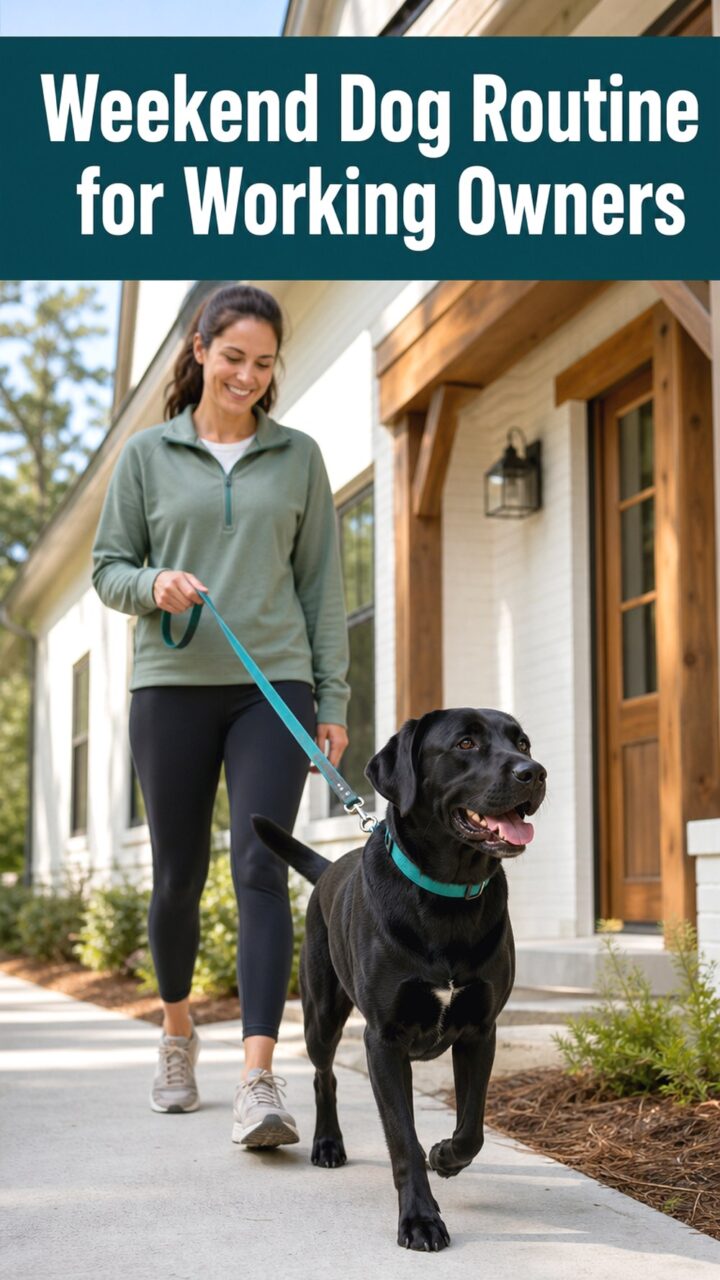
Weekend Dog Routine for Working Owners A Practical Saturday and Sunday Plan
Save to PinterestA useful weekend dog routine does not have to copy the workweek hour by hour. Instead, keep a few familiar anchors—bathroom breaks, meals, activity, and rest—while using your extra time for longer walks, training, enrichment, and companionship.
The goal is a weekend that feels richer without becoming completely unpredictable. Saturday can hold the bigger adventures. Sunday can gradually return to the rhythm your dog will follow once the workweek starts again.
Keep These Parts of the Weekday Routine Familiar
Dogs do not need every activity to happen at the exact same minute each day. Still, familiar sequences can make daily life easier to understand.
For a working owner, three weekend anchors are especially useful.
Morning bathroom and breakfast: A slightly later morning may be workable for some adult dogs, but delaying the first bathroom opportunity by several hours simply because you can sleep in may be uncomfortable.
Regular opportunities for movement and bathroom breaks: Your dog may get more outings on the weekend, but the basic pattern of going outside throughout the day should remain dependable.
An evening wind-down: Keeping dinner, the final bathroom trip, and bedtime reasonably close to the normal pattern makes Sunday night and Monday morning less abrupt.
You can change what happens between those anchors. That is where the weekend becomes more interesting.
Saturday Morning: Start Familiar, Then Add More Time Outside
Saturday is a good day to expand the morning rather than completely rearrange it.
Begin with the same basic sequence your dog knows from a workday: wake up, bathroom trip, breakfast if that is your normal order, and some early movement.
The difference is that you do not have to rush out the door afterward.
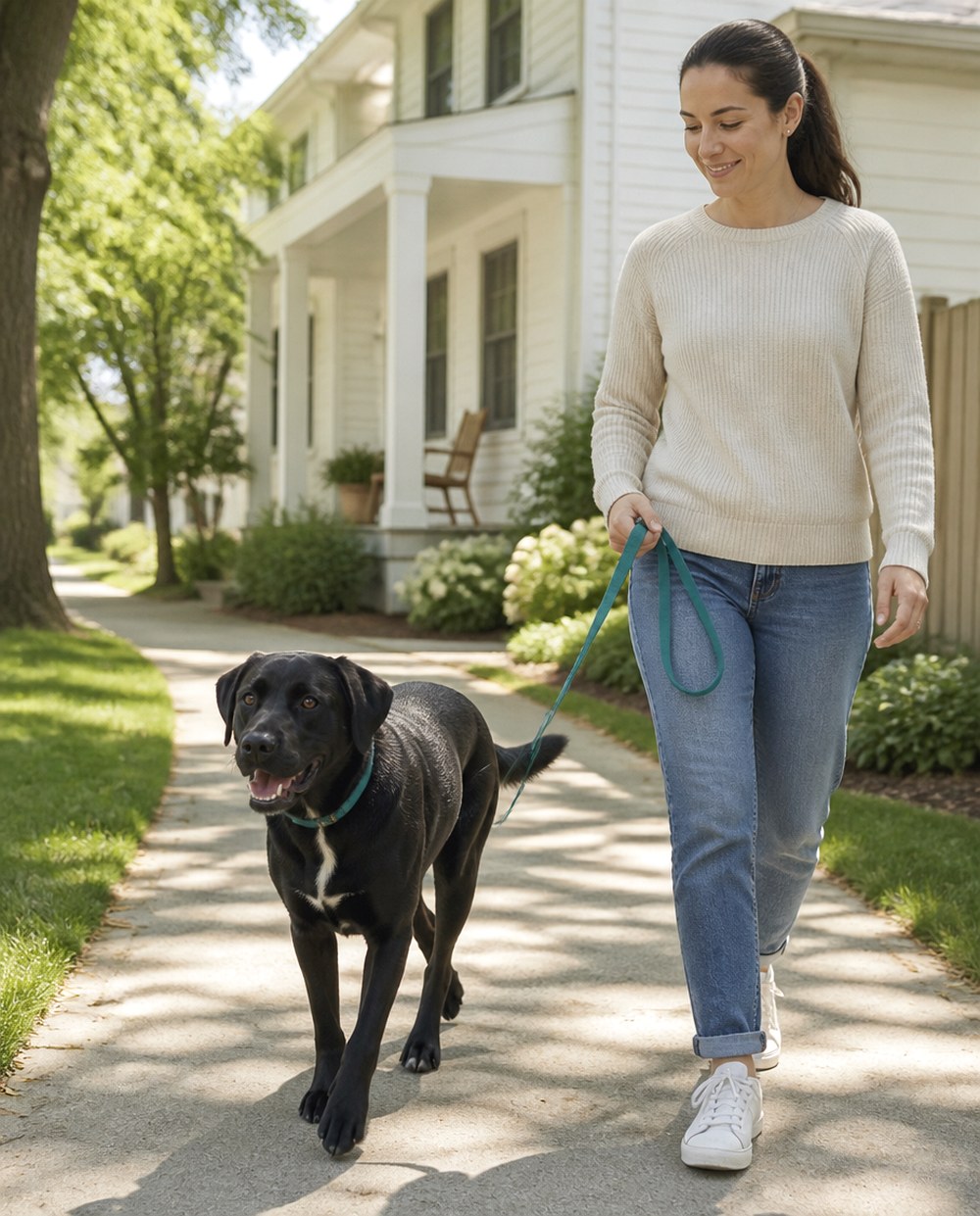
Instead of fitting everything into a short pre-work window, you might take a longer neighborhood walk, visit a familiar trail, spend time sniffing around a quiet park, or add a few minutes of training.
Sniffing is worth allowing rather than treating the entire walk as a march from one point to another. A relaxed exploration period gives the dog something different to process even if you use the same neighborhood route.
For a high-energy adult dog, the morning may include more active walking or play. A lower-energy dog may be satisfied with a slower outing followed by time near the family.
Avoid turning Saturday morning into an endurance test
More free time does not mean your dog needs hours of continuous activity.
Watch your dog’s normal response to exercise and adjust for age, fitness, weather, terrain, and mobility. Hot weather can also change what is appropriate; cooler morning periods may be better for outdoor activity.
Dogs showing unusual weakness, breathing difficulty, pain, or sudden reluctance to exercise should not simply be pushed through the activity. Concerning or sudden changes deserve veterinary guidance.
Let the Middle of the Day Include Real Downtime
One of the easiest weekend mistakes is entertaining a dog constantly because you are home.
If your dog normally rests for part of the workday, weekend downtime still has value. A dog that spends Saturday being followed from activity to activity may have trouble settling when the house becomes quiet again on Monday.
After a morning outing, give your dog a chance to drink, settle, and sleep.
You can work around the house, read, prepare food, or handle weekend chores while your dog rests nearby. The point is not to ignore the dog. It is to preserve the idea that being home together does not require continuous interaction.
For dogs that struggle to settle when their owner is present, you can make calm periods more deliberate. Provide their normal resting spot and keep part of the household routine quiet.
This also creates a practical window for errands.
If your adult dog is accustomed to spending appropriate periods alone during the workweek, a short weekend errand can help prevent every Saturday and Sunday from becoming nonstop companionship. Keep departures and returns calm rather than turning them into major events.
Puppies, senior dogs, and dogs with individual bathroom, health, or supervision needs may need shorter intervals and more frequent check-ins.
Saturday Afternoon: Choose One Main Activity
Working owners often have a long list of things they would like to do with their dog on the weekend. Trying to pack several major activities into one afternoon can produce an overtired dog and an exhausted owner.
Choose one main activity instead.
That might be:
- A longer walk in a new but manageable location
- A backyard play session
- A short training session followed by a sniffing game
- A pet-friendly visit your dog already handles comfortably
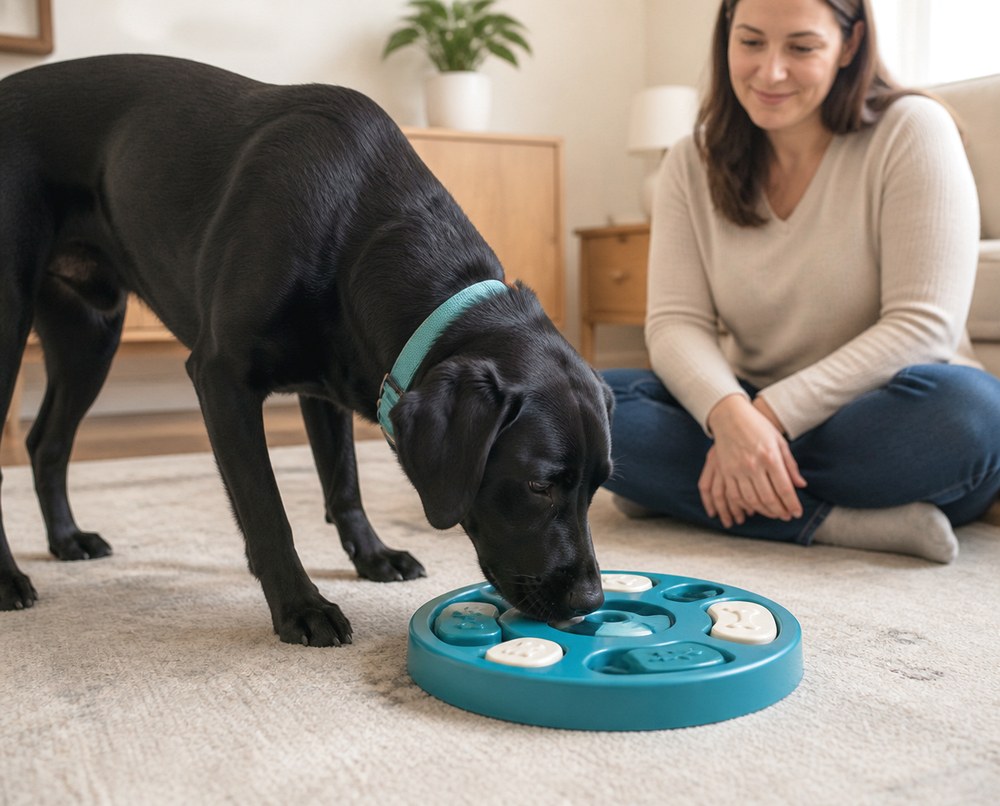
- A food puzzle or supervised enrichment session at home
- A quiet grooming and handling session if your dog is comfortable with it
Consider what the morning already included.
If you took a long walk before breakfast, the afternoon does not need another strenuous outing. A calmer scent activity or training session may fit better.
If Saturday morning was occupied by household tasks, the afternoon can hold the longer walk.
This keeps the day balanced instead of treating exercise as something that has to be accumulated in one exhausting block.
Have an indoor version ready
Rain, heat, poor air conditions, or scheduling changes do not have to erase the routine.
A short indoor training session, supervised food puzzle, hide-and-seek game with appropriate items, or several brief play periods can provide engagement when a long outdoor outing is not practical.
Supervise activities involving food puzzles, fabric, cardboard, or chewable materials as appropriate for your dog. Remove damaged items and keep strings, cords, small objects, medications, cleaners, and other unsafe household items out of reach.
You May Also Like


Keep Saturday Evening Quieter Than the Afternoon
Saturday night can be relaxed even if the day was active.
Offer dinner according to your normal feeding routine, provide the usual bathroom opportunities, and let activity taper down as the evening progresses.
A short walk after dinner may be enough after an active day. If Saturday was quieter, the evening walk can carry a little more movement.
The important part is the transition.
A dog that spends the afternoon hiking, the early evening wrestling with toys, and the late evening greeting visitors may never get a clear signal that the day is winding down.
Dim household activity naturally, put away exciting toys, and let your dog settle in the place they normally rest.
This gives the weekend a recognizable end instead of making Saturday feel like one long event.
A Flexible Saturday Schedule
The exact clock times matter less than the order and balance of the day. A typical adult dog’s Saturday might look something like this:
You May Also Like


| Part of Day | Weekend Routine |
|---|---|
| Early morning | Bathroom break and normal morning check-in |
| Morning | Breakfast and a longer walk or sniffing outing |
| Late morning | Water, calm household time, and rest |
| Midday | Bathroom opportunity and brief interaction |
| Early afternoon | Quiet rest or an owner errand |
| Later afternoon | One main activity, training session, or outing |
| Evening | Dinner and bathroom break |
| Later evening | Short walk or calm activity |
| Before bed | Final bathroom opportunity and normal wind-down |
This is a framework rather than a universal schedule. A puppy may need much more frequent bathroom trips and supervision. A senior dog may do better with shorter activity periods spread across the day. Individual feeding plans and veterinary recommendations should take priority.
Sunday Morning: Enjoy the Weekend Without Drifting Too Far
Sunday can still include extra time with your dog, but it helps to notice how far the weekend schedule has moved from Monday morning.
If your weekday starts early, sleeping several hours later on both weekend mornings and then suddenly returning to an early Monday start creates a much larger schedule change.
A modest shift is usually easier to manage.
After the first bathroom break, use Sunday morning for an activity you can end without leaving the dog exhausted. A neighborhood walk, gentle training session, or relaxed sniffing outing works well.
Sunday does not have to compete with Saturday.
In fact, making Sunday slightly calmer can help create a natural bridge back into the workweek.
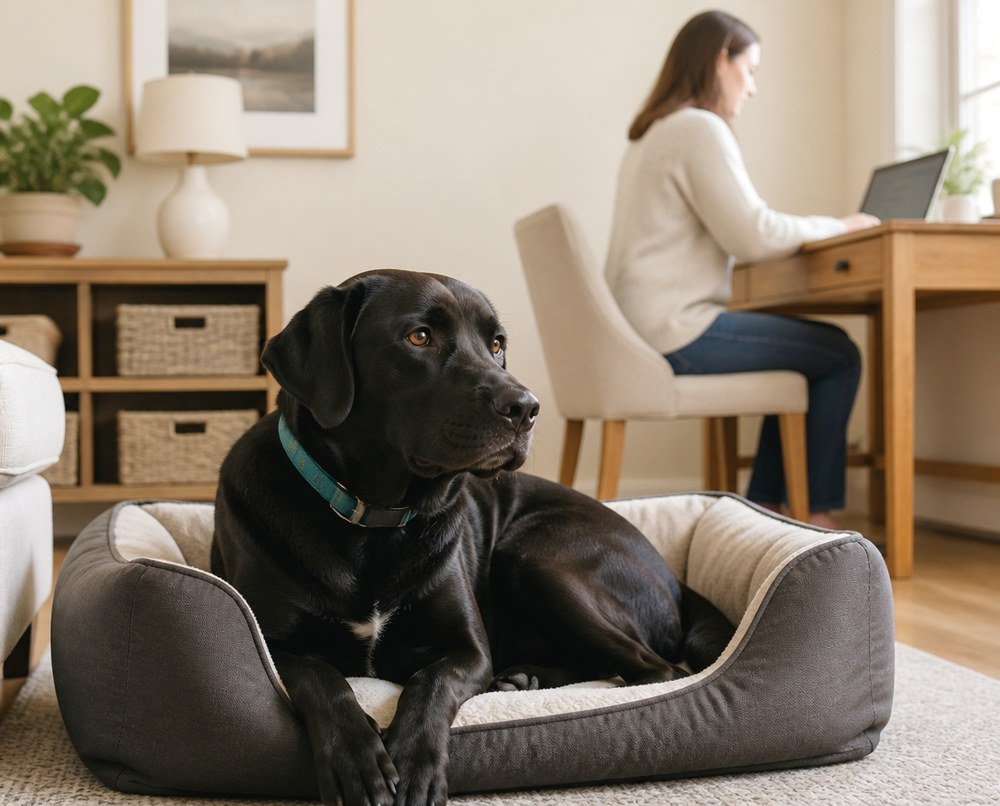
Use Sunday Afternoon to Practice Normal Independence
If Monday will involve several hours when you are working away from your dog, Sunday afternoon should not necessarily involve constant physical closeness.
Include a normal rest period while you do something else.
You might handle laundry in another room, work at a desk, prepare for Monday, or leave for a short appropriate errand while your dog follows their usual safe home routine.
For dogs that are comfortable with their normal weekday setup, this maintains continuity.
However, a dog showing significant distress when left alone needs more than simply longer forced absences. Separation-related behavior can have different causes, and persistent distress is worth discussing with a veterinarian or qualified behavior professional.
Sunday Evening Is the Reset Point
Sunday evening is where the weekend routine can make Monday noticeably smoother.
Move dinner, the evening walk, the final bathroom trip, and bedtime toward the schedule you normally follow before a workday.
You do not need to make Sunday evening rigid. The goal is simply to stop the weekend schedule from drifting later and later.
Prepare your dog’s weekday items at the same time you prepare your own.
Fill the walking-bag supply area, place the leash where it belongs, check that food is ready according to your normal feeding system, and put away weekend-only gear.
This small household reset has two benefits: Monday morning requires fewer decisions, and your dog sees familiar cues associated with the regular weekday sequence.
What Should Change Between Weekdays and Weekends?
The weekend should add opportunities, not create an entirely different lifestyle.
Here is a practical comparison:
| Weekday | Weekend |
| Shorter pre-work activity | Longer or more relaxed morning activity |
| Larger block of independent rest | Rest periods mixed with family time |
| Limited midday interaction depending on schedule | More frequent check-ins when appropriate |
| Short after-work outing | One larger activity can happen earlier |
| Predictable evening wind-down | Similar evening anchor, with more flexibility beforehand |
The biggest change is usually duration, not the basic needs being met.
Your dog may walk longer, train a little more, accompany you somewhere appropriate, or receive extra enrichment. Meals, bathroom access, rest, and the transition to bedtime remain recognizable.
Adjust the Weekend Routine to the Dog in Front of You
Not every working owner should follow the same Saturday and Sunday plan.
For puppies
Puppies generally need more supervision, more frequent bathroom opportunities, plenty of rest, and shorter activity periods. A weekend packed with visitors and outings can quickly become overwhelming.
Keep the day manageable and preserve nap opportunities rather than using the weekend to provide constant stimulation.
For high-energy adult dogs
Use the extra weekend time for purposeful activity, but balance physical exercise with sniffing, training, and rest.
Simply extending every walk may not be the most practical answer. Different kinds of engagement can make the day more varied without requiring continuous strenuous exercise.
For senior dogs
A senior dog may prefer several shorter outings to one ambitious weekend adventure.
Pay attention to footing, temperature, recovery after activity, and changes in mobility. New stiffness, pain, weakness, appetite changes, bathroom changes, breathing difficulty, or sudden behavior changes warrant veterinary attention.
For apartment dogs
The routine can work without a yard.
Use scheduled outdoor bathroom trips, neighborhood sniffing walks, indoor training, and calm enrichment. Hallways, balconies, and shared spaces should not be treated as unsupervised play areas, and balconies should always be securely enclosed if a dog has access to them.
Where Weekend Routines Usually Go Off Track
The first problem is sleeping far later than the dog’s normal bathroom schedule allows. A weekend lie-in is appealing, but your dog still needs an appropriate opportunity to go outside.
The second is doing too much on Saturday. A long hike, dog-friendly outing, visitors, vigorous play, and a late night can be a lot in one day.
Another common problem is eliminating all independent time. If your dog receives continuous attention from Friday evening through Sunday night, the transition to Monday can feel much sharper.
Finally, some owners let Sunday night drift late because Monday has not started yet. Restoring the usual evening sequence on Sunday is one of the easiest ways to protect the weekday routine.
Build the Weekend Around Three Reliable Anchors
You do not need an hour-by-hour weekend dog schedule to create consistency.
Start with three dependable points:
- A morning bathroom, meal, and movement sequence.
- A balanced middle of the day that includes both engagement and genuine rest.
- A Sunday evening wind-down that leads naturally back to Monday.
Once those are in place, weekends can stay flexible. Take the longer walk. Add the training session. Spend an afternoon outside together. Stay home and have a quieter day when the weather or your schedule calls for it.
The useful routine is the one that gives your dog more weekend time with you without making the workweek feel like a completely different life.
