Dog toys tend to migrate. A ball rolls under the sofa, a tug toy lands near the coffee table, and the basket that looked tidy in the morning can spill across the floor by evening.
Save This Idea on Pinterest
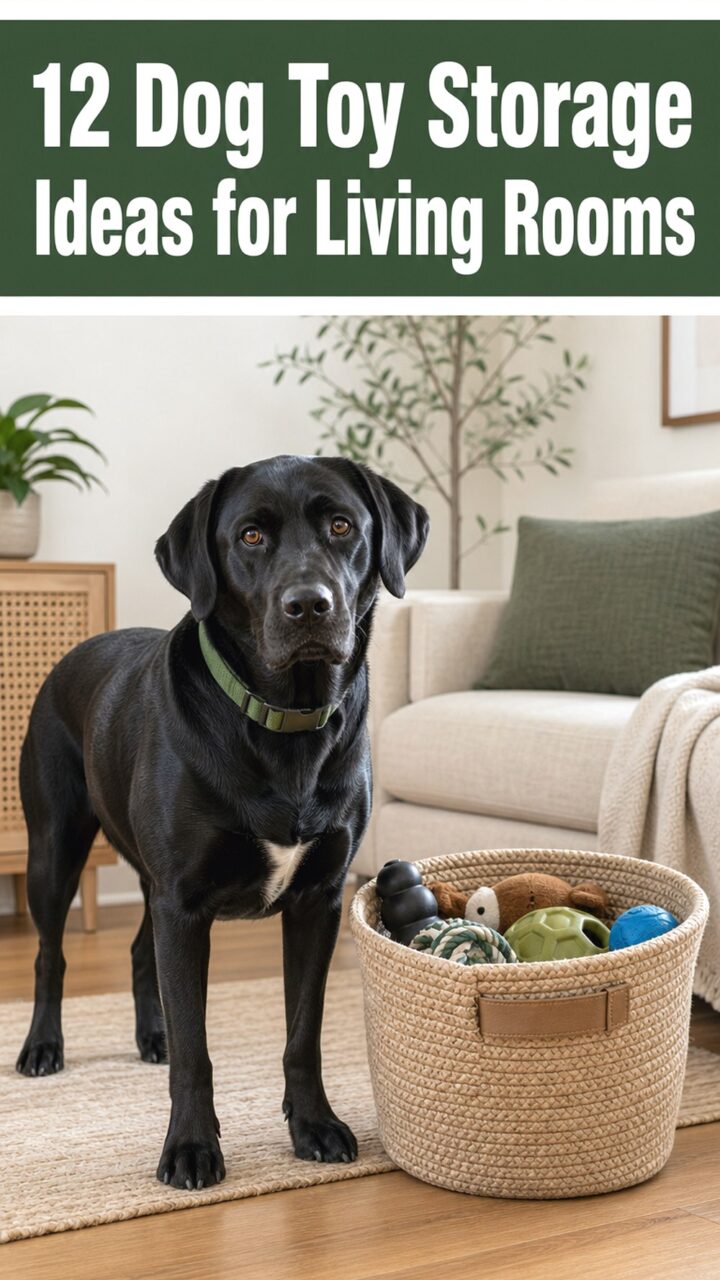
12 Dog Toy Storage Ideas for Living Rooms
Save to PinterestLiving-room storage works best when it does more than hide clutter. It should make cleanup quick, keep frequently used toys within reach, protect toys that need supervision, and fit naturally with the furniture already in the room.
The right solution depends on how your dog plays. A dog that independently chooses soft toys needs a different setup from a heavy chewer whose toys are brought out only with supervision. These 12 dog toy storage ideas cover open, hidden, vertical, portable, and rotation-based options so you can choose a system that suits both your dog and your living space.
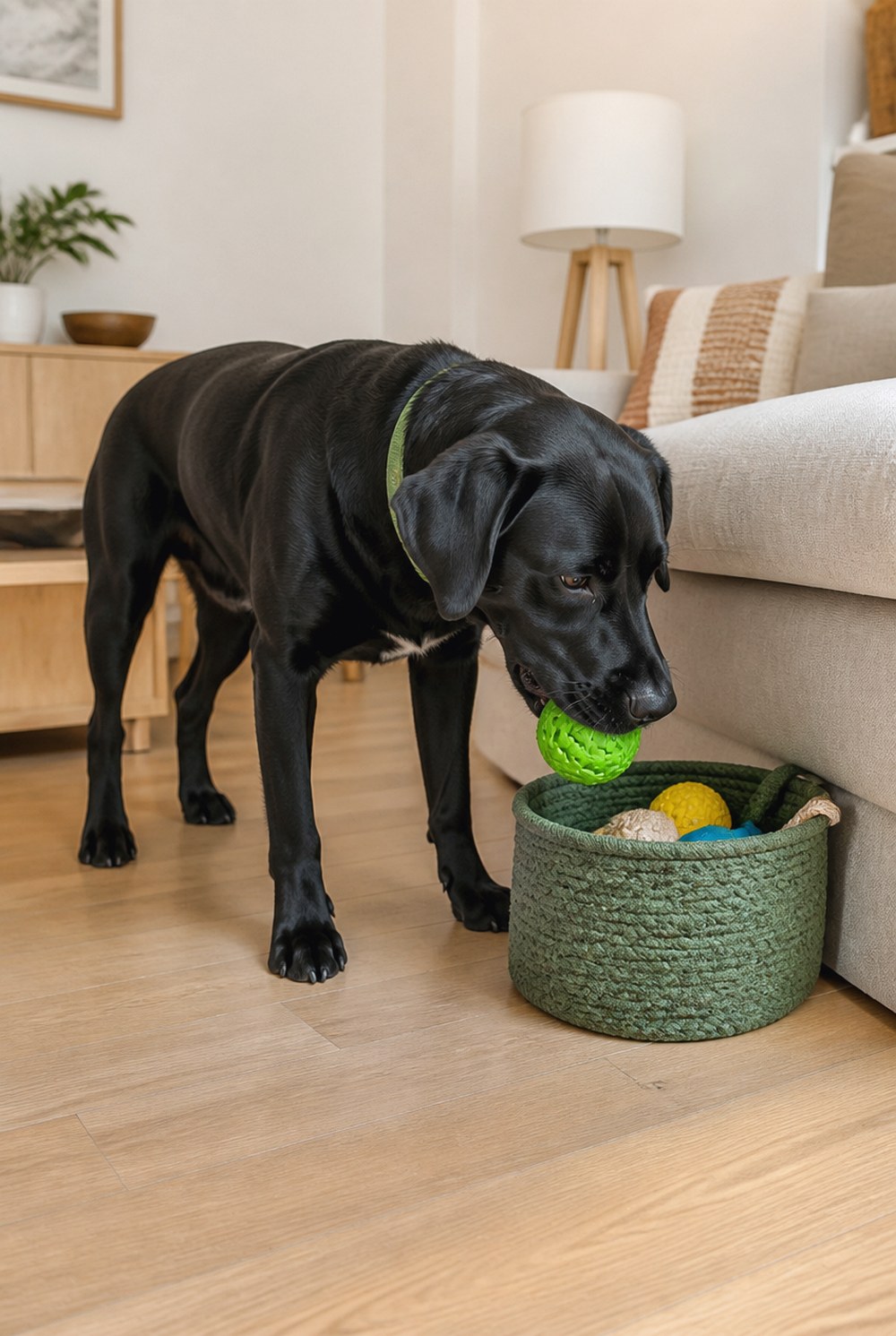
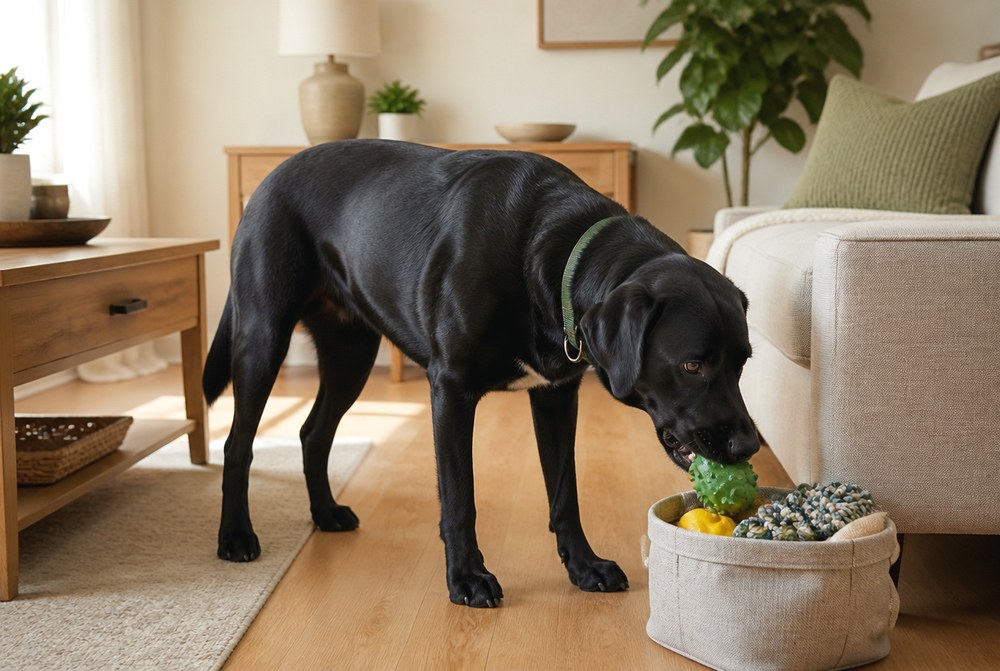
1. Use a Low Open Basket for Everyday Favorites
A low basket works well for toys your dog is allowed to access independently. Place it beside a sofa, console, or wall where it will not interrupt the main walking path.
Choose a basket with a wide opening so your dog does not have to push its head through handles or narrow gaps. A rigid fabric bin, smooth plastic basket, or sturdy woven-look container is often easier to maintain than a delicate natural-fiber basket if your dog likes to chew storage containers.
Keep the contents limited to a manageable group of favorite toys rather than filling the basket to the top. When toys are visible and loosely arranged, both you and your dog can find what you want without dumping everything onto the floor.
Washable or wipe-clean materials are useful because toys often return to storage carrying saliva, fur, and outdoor dirt.
2. Slide Shallow Toy Bins Under a Console Table
A console table can turn otherwise unused floor space into a designated toy station.
Measure the open space beneath the table and choose one or two shallow bins that slide out without scraping the furniture. This arrangement works particularly well when you want toys accessible without making a large basket the visual focus of the room.
Two bins can also separate toys by use. For example, one can hold everyday fetch and carry toys while the other stores puzzle toys or supervised items that you bring out yourself.
Avoid overfilling the bins. If handles, ropes, or plush limbs constantly catch when the container slides underneath the table, the system quickly becomes frustrating.
You May Also Like


3. Give an Ottoman a Second Job as Hidden Toy Storage
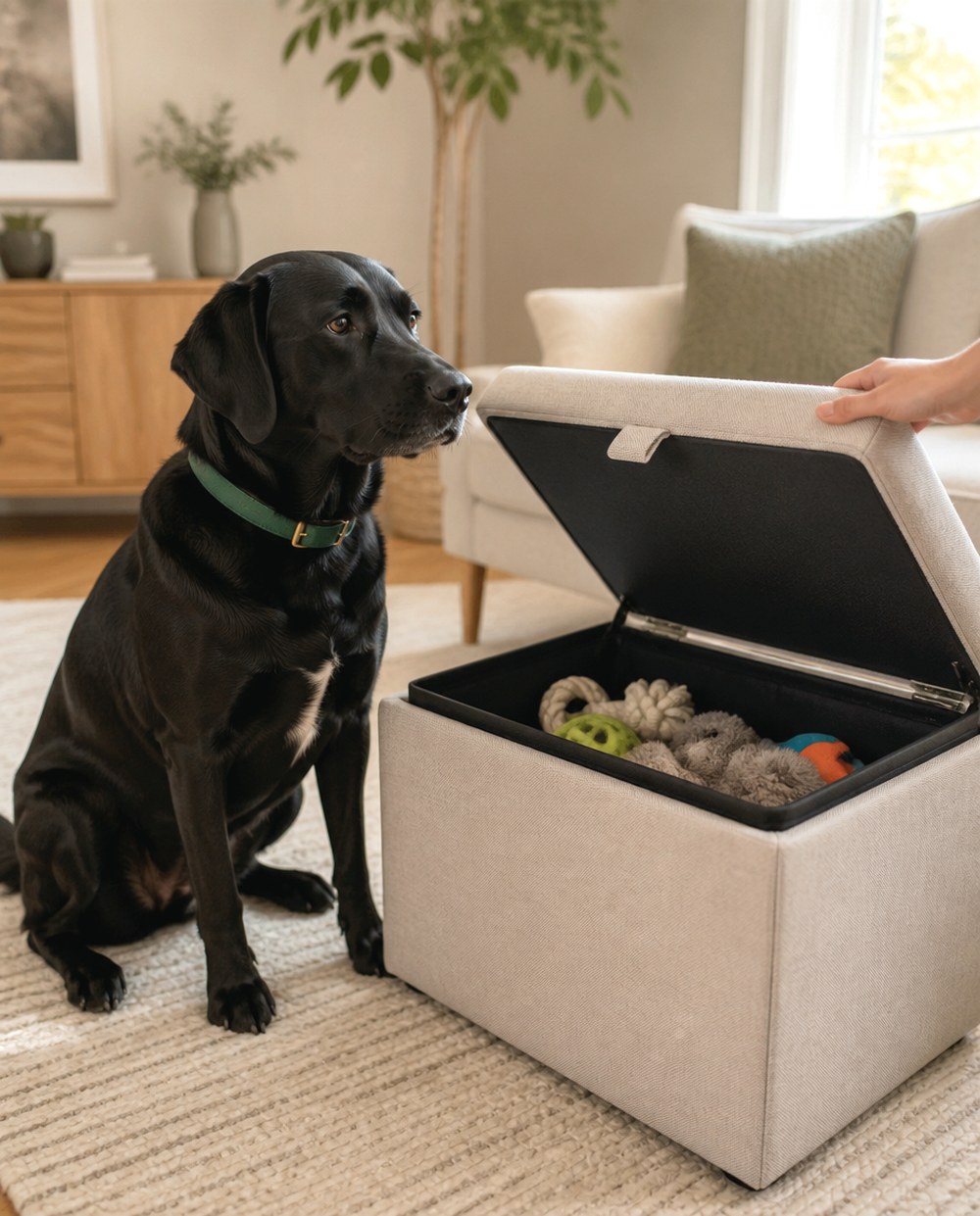
A storage ottoman is useful when you want dog supplies completely out of sight between play sessions.
Instead of adding another container to the room, choose an ottoman with an interior compartment and use part or all of it for toys. This is especially helpful in small living rooms where each piece of furniture needs to earn its floor space.
An ottoman is better for owner-managed storage than unrestricted dog access. Keep the lid closed and bring toys out yourself, particularly if the lid is heavy or hinged. Dogs should not be encouraged to push into furniture lids that could close unexpectedly.
A removable fabric liner or smaller internal bin makes the compartment easier to clean.
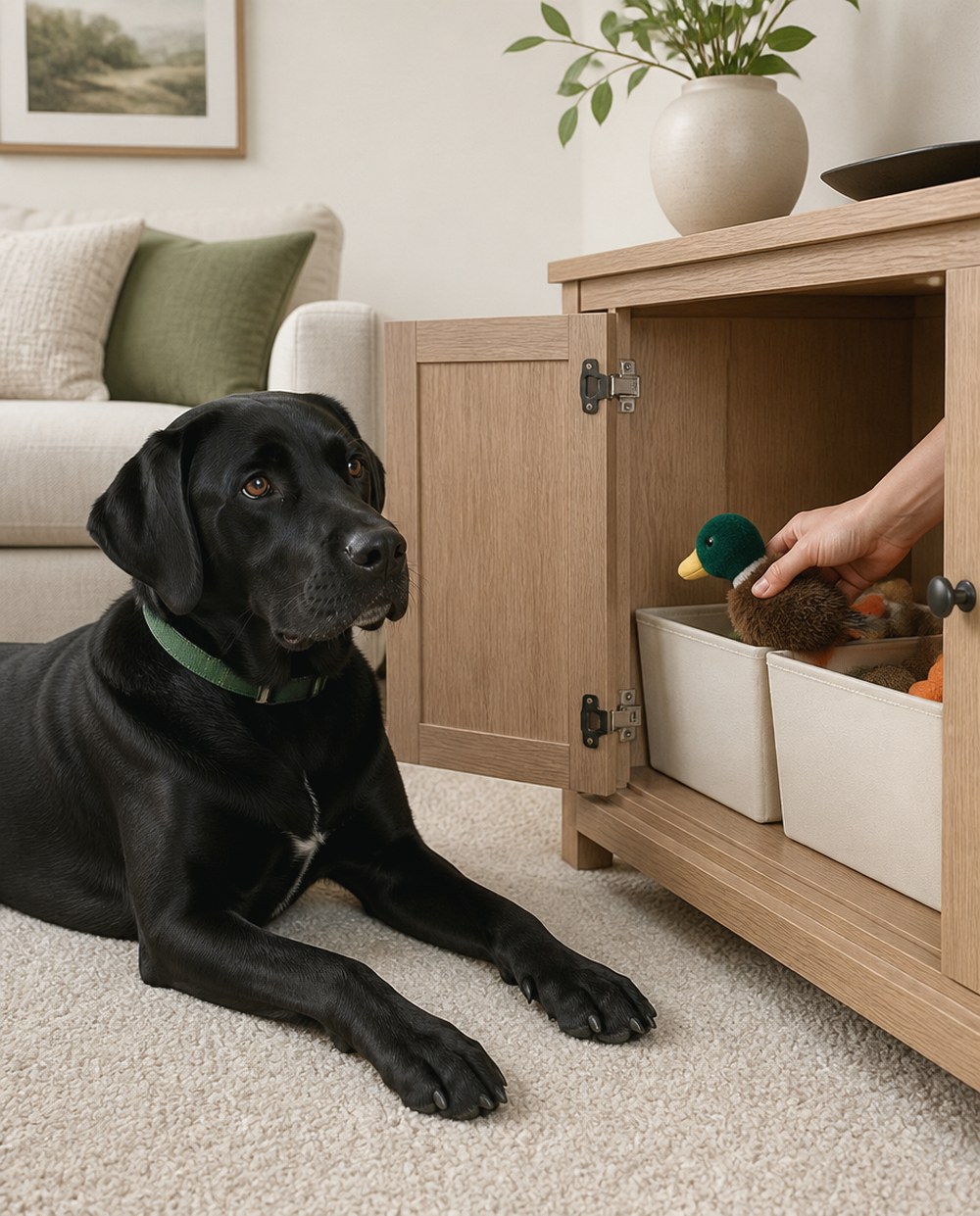
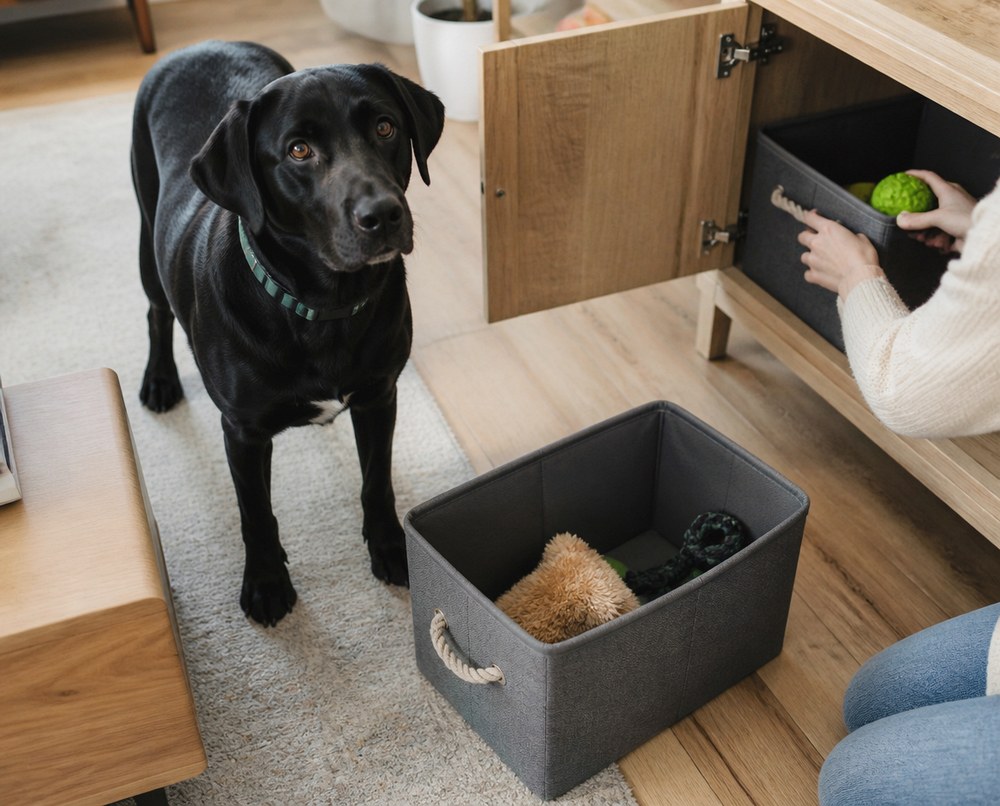
4. Dedicate One Lower Media Cabinet to Dog Toys
A closed media cabinet can hide a surprisingly large toy collection while keeping the living room visually quiet.
Reserve one lower cabinet or deep drawer for pet items rather than spreading them through several locations. Use small containers inside to stop balls, chews, and puzzle pieces from becoming one mixed pile.
This is a good choice for dogs that chew baskets, empty every open bin, or need supervised access to most toys. It also gives you a place for toys with detachable parts that should not remain on the floor unattended.
Keep cords, batteries, remotes, and electronic accessories in a completely separate compartment.
5. Add a Narrow Rolling Cart Beside the Sofa
A slim rolling cart is useful when the living room also serves as the main play and enrichment area.
Different levels can hold different categories: frequently used toys on one shelf, enrichment equipment on another, and cleaning cloths or other owner-handled supplies higher up. The cart can be moved closer during playtime and rolled back into a corner afterward.
Choose a stable cart with locking wheels and position it where your dog cannot knock it into furniture. Items that should not be freely accessed belong in closed containers or on a level the dog cannot reach.
This setup is particularly practical when you regularly rotate activities instead of leaving every toy available all day.

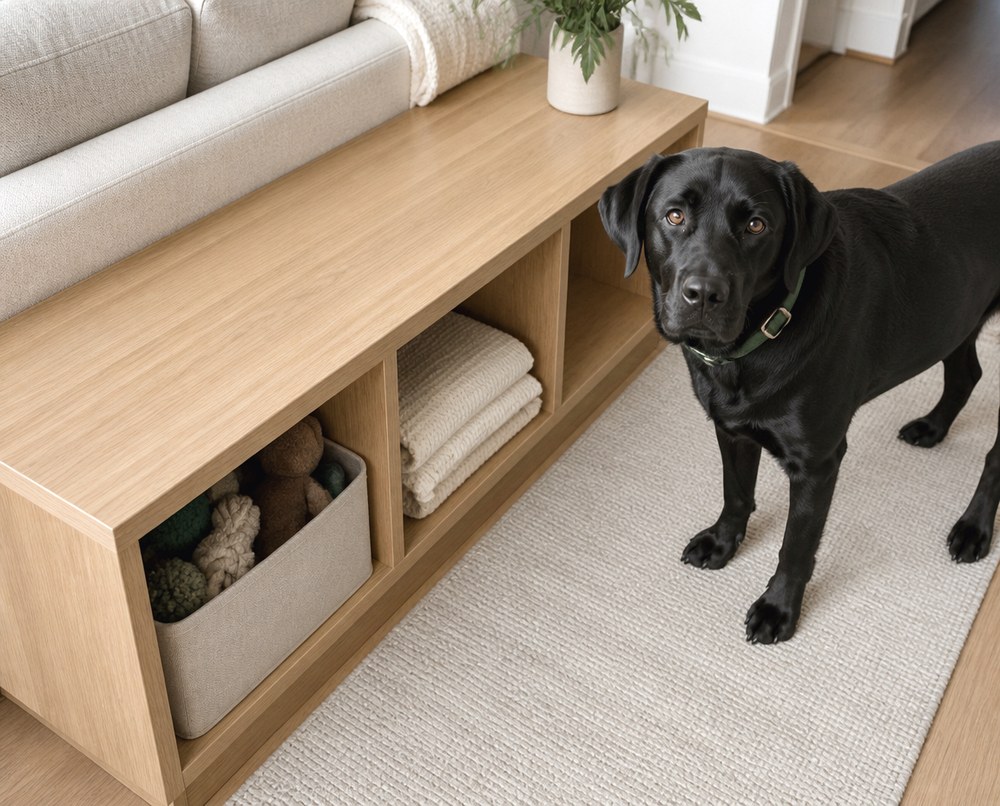
6. Use a Bench With Built-In Cubby Storage
A low bench with cubbies creates defined storage without requiring several separate baskets around the room.
Place sturdy bins inside the cubbies and dedicate each one to a useful category. A household with many toys might separate soft toys, balls, and durable rubber toys. A smaller collection may need only one pet bin, leaving the remaining cubbies for blankets or household items.
The advantage is containment: even when the baskets are full, their outer edges stay aligned with the furniture instead of drifting into the room.
If your dog has access to the lower bins, use containers without looped handles that could catch a jaw, paw, or collar.
7. Turn a Deep Drawer Into a Toy Drawer
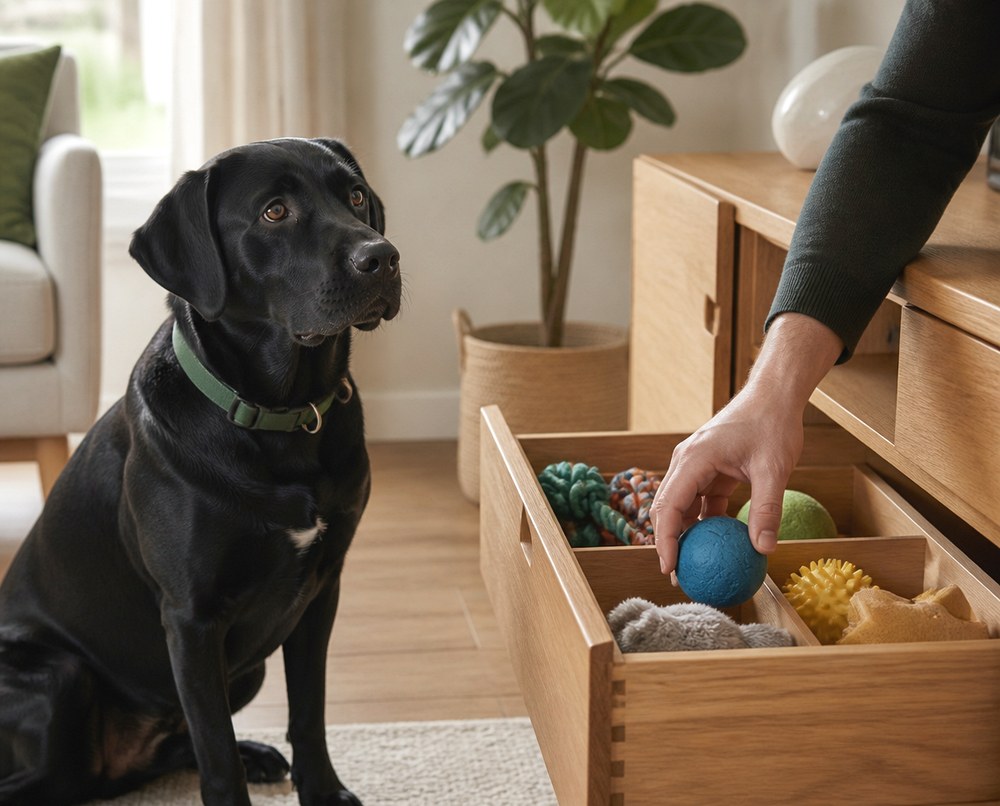
Deep drawers are one of the least visually intrusive dog toy storage ideas for living rooms.
A drawer in a sideboard, built-in unit, or low cabinet can hold toys completely out of view. Shallow internal dividers or small bins keep balls from rolling to the back and make it easier to separate toys that should be used only under supervision.
This approach also works well if you prefer to choose the day’s toys rather than letting your dog browse the entire collection.
Before dedicating a drawer to dog gear, check that it opens smoothly and does not become overloaded. Heavy toys piled into a lightweight drawer can strain the runners.
8. Create a Small Wall-Mounted Toy Station
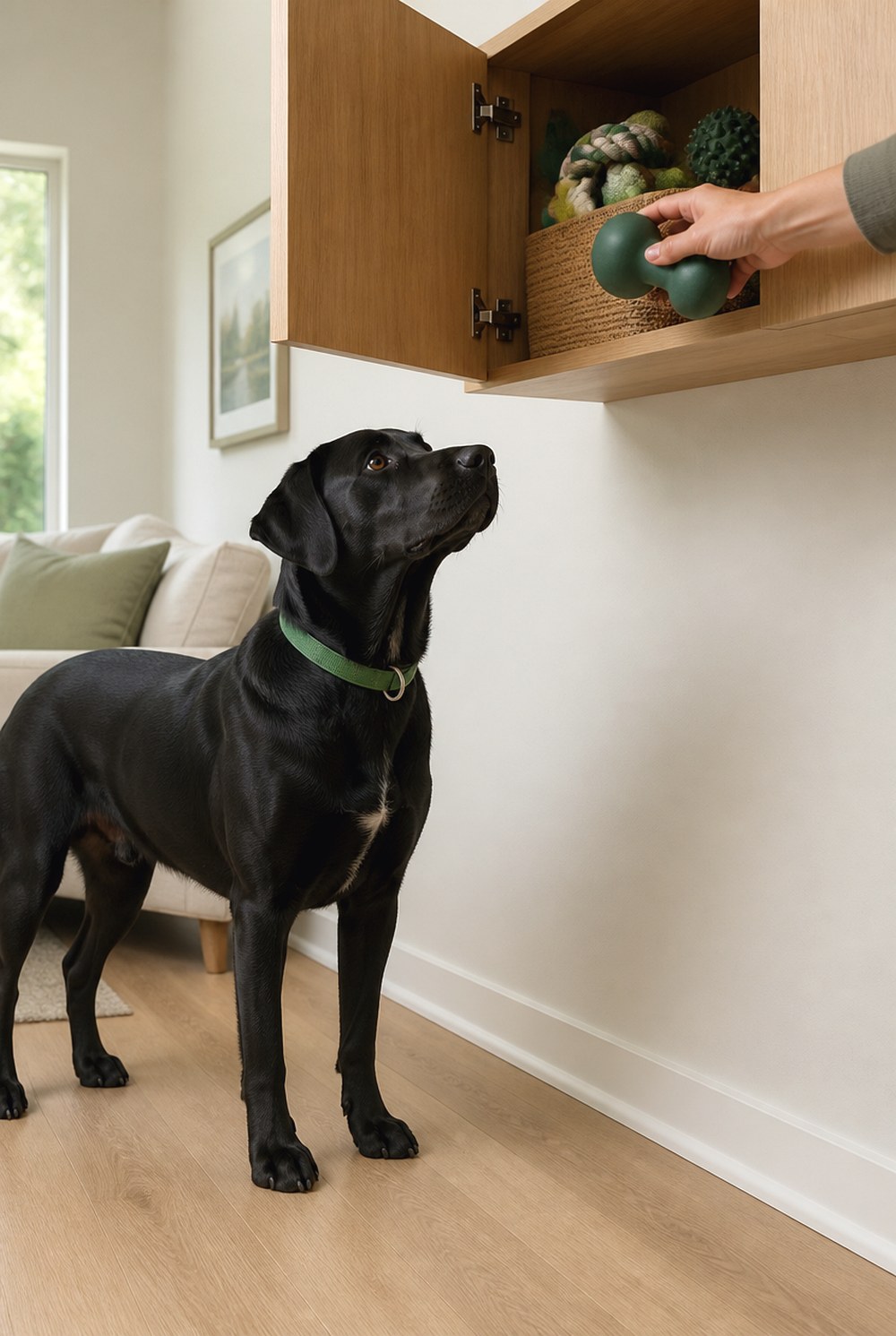
When floor space is limited, move some storage upward.
A shallow wall-mounted cabinet or sturdy enclosed wall box can hold owner-managed toys without occupying another patch of floor. Position it near the dog’s play area but high enough that the dog cannot paw at doors or pull items down.
Wall storage is particularly useful for puzzle components, refillable enrichment toys, or accessories that you want to keep together between uses.
The unit must be securely installed for its intended load. Avoid exposed hooks, dangling cords, or hanging toy loops where a dog could become caught.
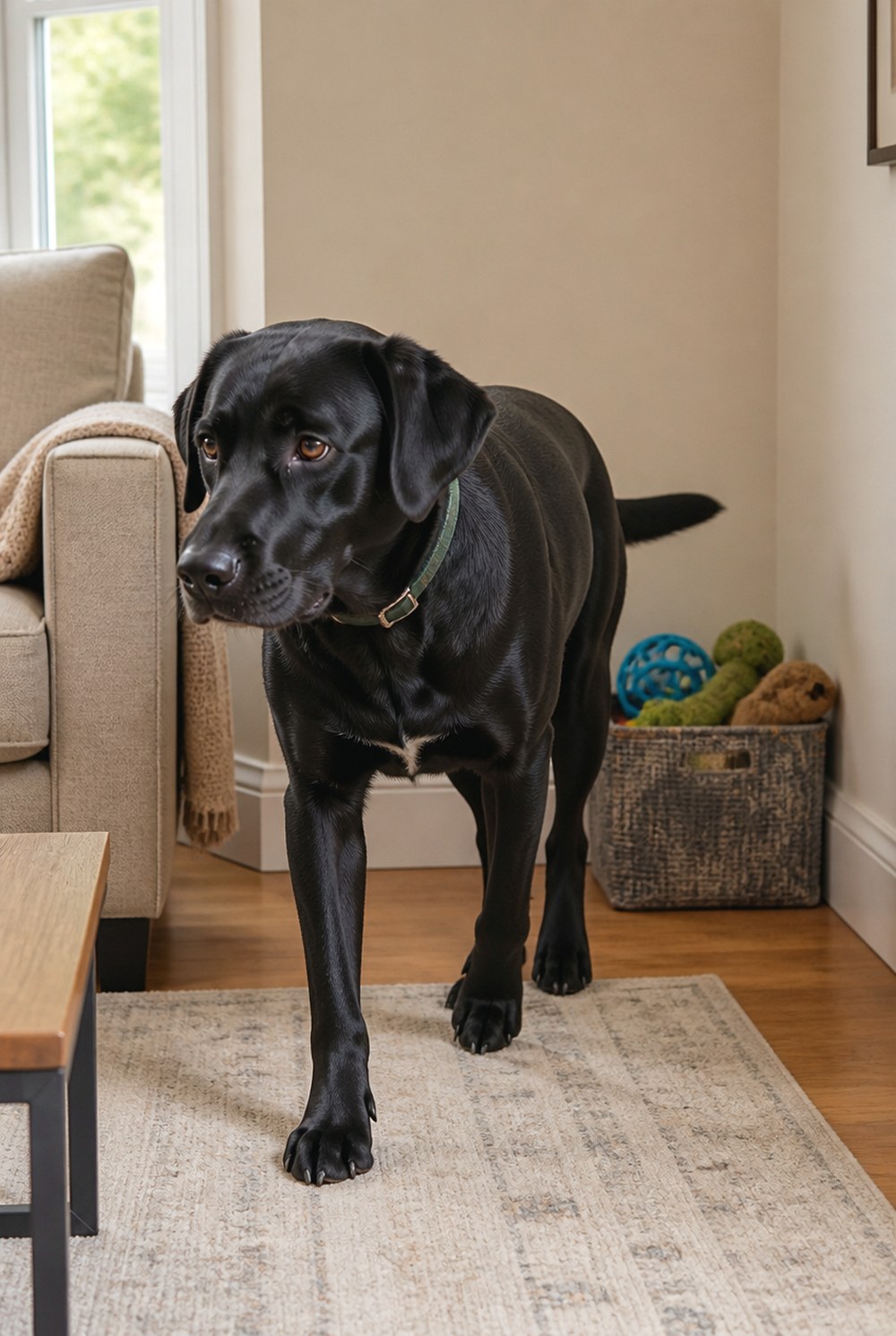
9. Tuck a Structured Basket Into an Empty Corner
An awkward living-room corner can become useful storage without adding another large piece of furniture.
Choose a structured basket that keeps its shape when partially empty and place it between the sofa and wall, beside an armchair, or under the edge of a window area. The goal is to use dead space without blocking vents, doors, or walking routes.
This works best for larger lightweight toys that would otherwise look untidy on shelves.
For dogs that chew natural fibers or fabric containers, use a smooth, durable bin instead. A storage container should not become an unsupervised chew toy.
10. Keep a Lidded Box for Supervised-Only Toys
Not every toy belongs in an open basket.
Food puzzles, toys with removable components, heavily valued items, or toys that your dog tends to dismantle may be better stored where only you can retrieve them.
A sturdy lidded box inside a cabinet or on a stable shelf keeps these items separate from everyday toys. Labeling the container can also help other household members understand that its contents should not simply be left on the floor.
Choose a lid that closes securely but does not create a situation where your dog can push its head into the container. Keep the box closed when it is not being handled by a person.

11. Build a Two-Bin Toy Rotation System
If your dog owns more toys than comfortably fit in the living room, storage does not have to mean keeping all of them nearby.
Use one accessible bin for the current selection and a second closed bin in a cabinet for toys that are temporarily out of rotation. Periodically swap a few pieces instead of replacing the entire collection at once.
Rotation reduces visible clutter and gives you a natural opportunity to inspect each toy before it returns to use. Look for tearing, cracked rubber, loose pieces, exposed stuffing, or damage that could make continued play unsafe.
A rotation system is also useful for learning which toys your dog actually uses instead of storing dozens that are regularly ignored.
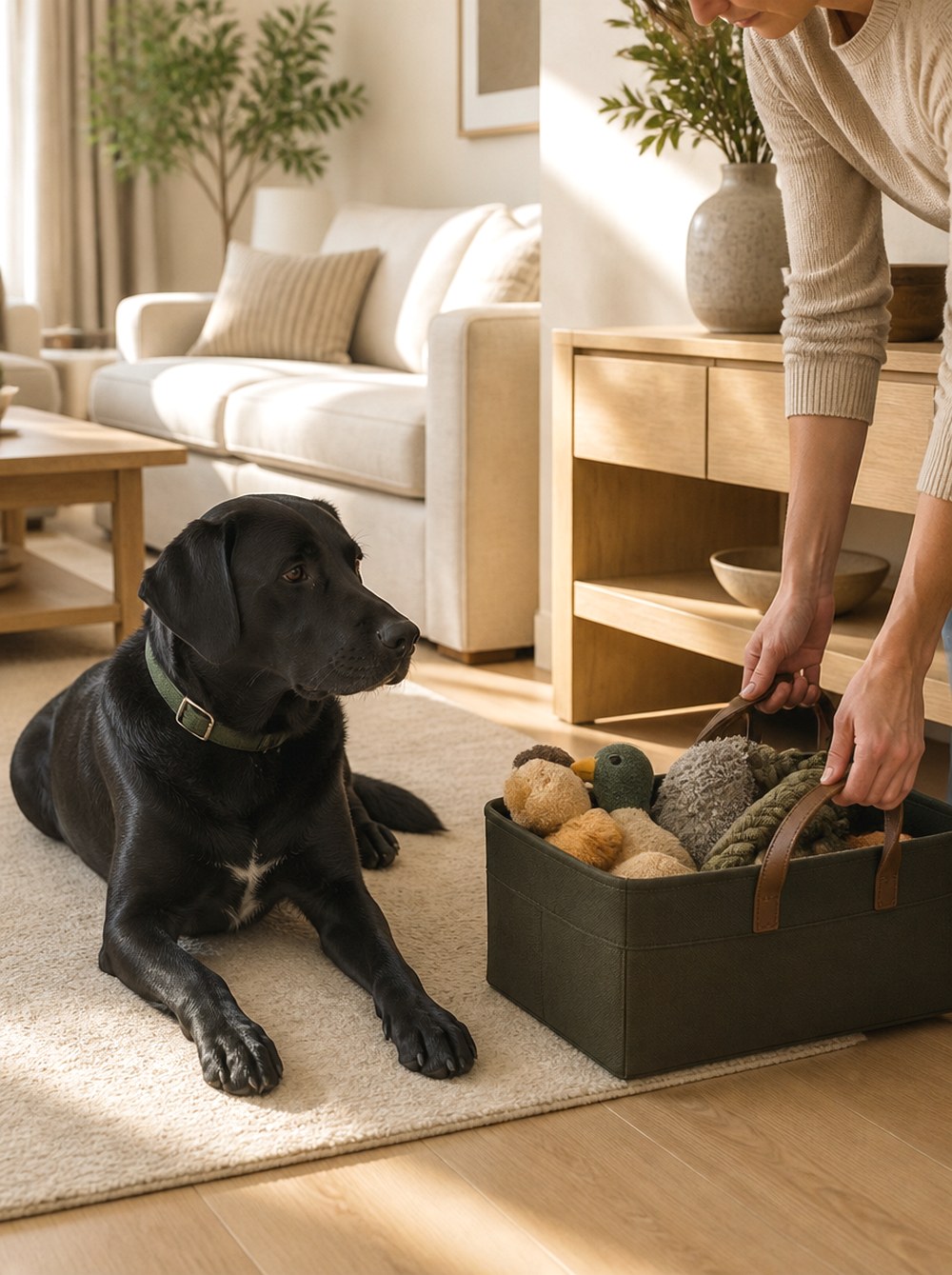
12. Use a Portable Toy Caddy for Fast Evening Cleanup
A portable caddy is useful when dog toys regularly spread across more than one part of the living room.
Choose a wide, stable container with comfortable human handles and carry it around the room during cleanup. Once everything is collected, the caddy can slide into a cabinet, beneath a console, or onto a designated lower shelf.
This system is less about permanent display and more about making the reset fast enough that it actually happens. It also works well in homes where the dog’s play space moves between the living room, office, and another indoor area.
Do not let your dog play with or pull on carrying handles. If the caddy remains accessible, choose a design without long loops.
You May Also Like


Match the Storage to How Your Dog Uses Toys
The most attractive storage system will not stay organized if it fights your household’s normal habits.
For a dog that calmly chooses its own toys, a low basket or cubby may be all you need. If toys are generally brought out for structured play, a drawer, cabinet, ottoman, or lidded container gives you more control. Small living rooms often benefit from furniture that performs two jobs or storage that uses wall space instead of additional floor space.
It can also help to divide toys into three groups:
- Always available: sturdy toys your dog can safely use as appropriate for them.
- Owner-managed: puzzles, special play items, or toys that need closer supervision.
- Out of rotation: clean, undamaged toys stored elsewhere until you swap them back in.
That distinction makes it easier to decide what belongs in open storage and what should remain closed away.
Keep the System Clean and Safe
Toy storage needs occasional attention because putting every item back into the same container can hide wear and dirt.
When you reset the storage area, check toys for damaged seams, loose pieces, cracks, or parts that are beginning to break away. Remove toys that are no longer safe for your dog’s play style.
Clean toys according to their material and manufacturer guidance, and allow washed items to dry before returning them to a closed bin. Wipe or wash the storage container as needed rather than continually putting clean toys into a dirty basket.
Keep toy storage separate from household cleaners, medicines, batteries, electrical cords, and other items that should never be mixed with pet supplies.
A Living Room That Can Reset Quickly
You do not need to hide every sign that a dog lives in the house. The more useful goal is giving every toy a logical place to return to.
Start with the location where toys already gather. If they collect beside the sofa, place storage there instead of across the room. If your dog empties open baskets immediately, switch to owner-managed storage. If floor space is scarce, use a cabinet, drawer, console, or secure wall unit before adding another freestanding bin.
A storage system that matches your dog’s access needs and takes only a short reset to maintain is far more likely to keep the living room comfortable day after day.
