Apartment Dog Daily Routine
Living in an apartment changes how a dog’s day is organized. There is usually no back door to open for a quick bathroom trip, indoor space is limited, and barking or restless pacing can affect nearby neighbors. That makes planning more useful than simply trying to tire a dog out whenever there is spare time.
Save This Idea on Pinterest
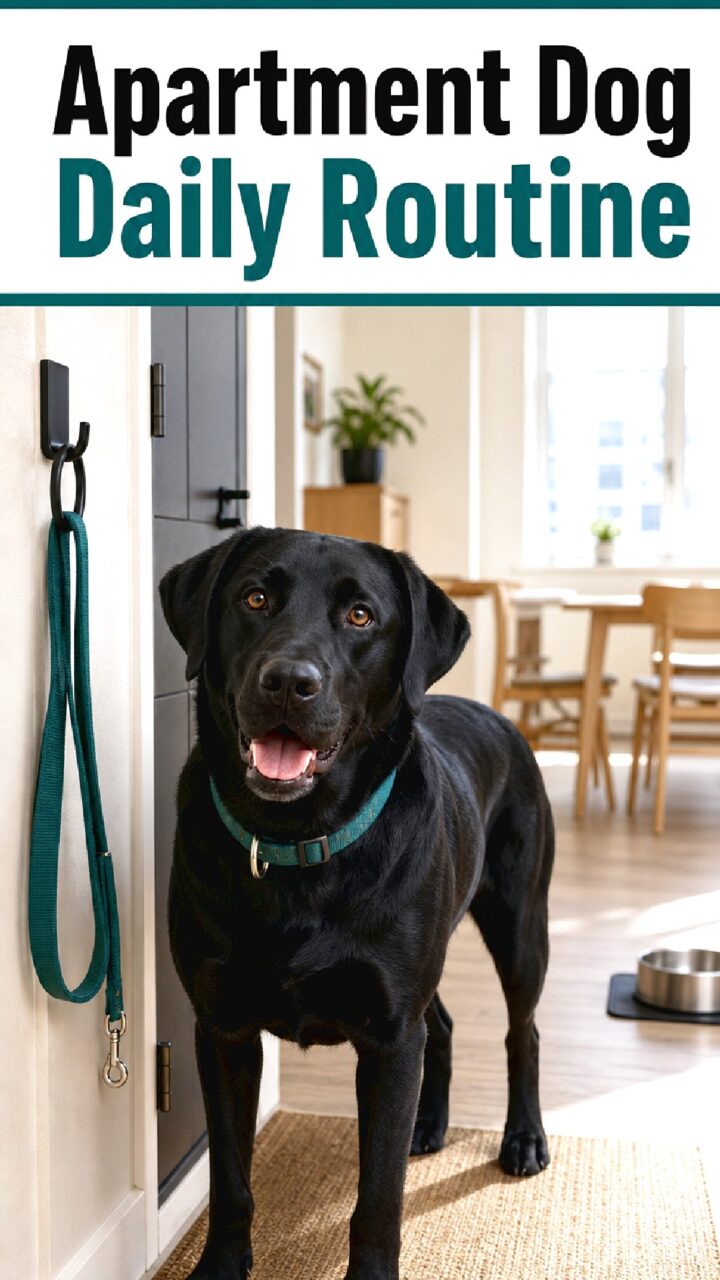
Apartment Dog Daily Routine: A Realistic Small-Space Schedule
Save to PinterestA workable apartment dog daily routine revolves around a few dependable anchors: bathroom trips, meals, purposeful outdoor movement, quiet indoor enrichment, and enough uninterrupted rest. The exact times can shift around work, weather, elevators, and household schedules.
For many healthy adult dogs, the goal is not constant entertainment. A better day alternates activity with calm periods so the dog learns that apartment life includes both going out and settling comfortably at home.
Start the Morning With an Outdoor Reset
The first outing of the day does more than provide exercise. For an apartment dog, it is also the first bathroom opportunity after several hours indoors.
Take the dog outside shortly after waking rather than beginning the morning with a long stretch of household chores. In a high-rise building, remember that getting outside may include waiting for an elevator, walking through a lobby, and reaching an appropriate bathroom area.
Once outside, give the dog enough time to sniff and relieve itself instead of treating the trip as a rushed lap around the building.
A useful morning outing might combine:
- A bathroom opportunity
- Several minutes of relaxed sniffing
- Steady walking appropriate for the individual dog
- A few brief check-ins or familiar cues
- A calm return to the apartment
A young, energetic adult may benefit from a longer morning walk, while an older dog or a dog with limited mobility may do better with a shorter outing and additional brief trips later.
The neighborhood matters too. A dog living beside a quiet residential block may walk comfortably first thing in the morning, while a dog in a busy downtown building might do better before sidewalks become crowded.
Keep the Return Home Uneventful
Coming back inside is the beginning of the dog’s first settling period.
Put the leash and walking supplies in a consistent place, offer access to fresh water, and allow a few minutes for the dog to transition from outdoor stimulation to indoor calm. If breakfast is part of the morning routine, serve it according to the dog’s normal feeding plan.
Avoid turning every return home into another high-energy play session. The ability to settle after a walk is particularly valuable in a small home.

Build a Calm Block Into the Workday
One of the easiest mistakes in a small apartment is assuming a dog needs activity whenever it is awake.
Dogs also need opportunities to sleep and rest without being repeatedly interrupted. After the morning walk, bathroom break, and meal, many adult dogs can transition into a quieter part of the day.
Create a dependable resting area away from the busiest household traffic. It might be a dog bed beside a desk, a mat in the living room, or another comfortable spot where the dog can stretch out without blocking a doorway.
If you work from home, avoid responding to every stare, toy drop, or movement with play. Constant interaction can make it harder for some dogs to settle when you eventually become busy.
Instead, let the rhythm become predictable: activity happens, needs are met, and then the apartment becomes quiet.
Use Enrichment Without Filling the Floor With Toys
Small homes quickly become cluttered if every dog toy remains available all day.
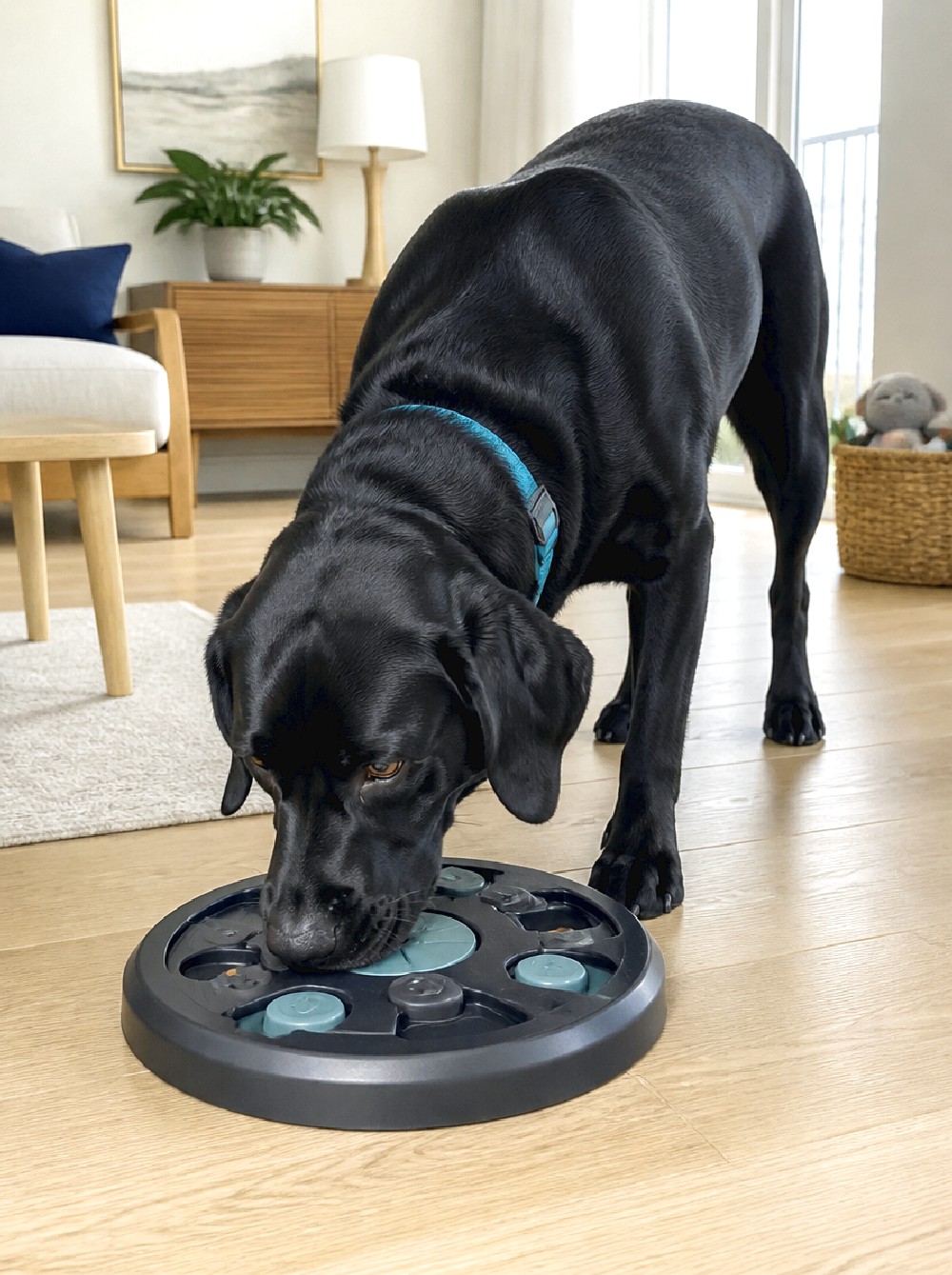
Keep a modest rotation rather than covering the apartment with objects. Depending on the dog, suitable options might include a durable food puzzle, a dog-safe chew, or a supervised enrichment activity that encourages sniffing or problem-solving.
Choose items that are appropriate for the dog’s size and chewing habits. Supervise activities involving chewable materials, fabric, cardboard, strings, small components, or food puzzles when needed, and remove damaged objects before pieces can be swallowed.
An enrichment session does not have to last all morning. A short period of purposeful engagement followed by rest often fits apartment life better than continuous stimulation.
You May Also Like


Make the Midday Trip Count
Apartment dogs cannot usually wander into a yard when they need a bathroom break. That makes the midday outing an important part of the routine rather than an optional bonus.
The timing depends on the dog’s age, health, individual bathroom habits, and the length of the household’s workday. Puppies generally need a different and more frequent schedule than healthy adults, and senior dogs may also need additional opportunities.
For a typical adult dog, the midday trip can serve several purposes at once:
- Provide another bathroom opportunity.
- Break up a long indoor period.
- Allow a little sniffing and environmental exploration.
- Add gentle movement before another period of rest.
This outing does not have to become the dog’s longest walk. Even a relatively short, purposeful trip can create a useful transition in the day.
If the dog is regularly unable to remain comfortable until someone returns home, the routine needs to change. Depending on the household, that might mean adjusting work hours, returning home midday, or arranging appropriate help.
Sudden house-soiling or a noticeable change in normal bathroom habits is different from a scheduling problem. A veterinarian should be contacted when bathroom changes are sudden or accompanied by other concerning signs.
Prevent Apartment Noise From Becoming the Afternoon Activity
Hallway footsteps, closing doors, elevators, delivery workers, and neighboring dogs can create repeated bursts of stimulation.
Try to arrange the dog’s resting space so it is not directly beside the front door if noises there consistently trigger alert behavior. Closing visual access to especially stimulating windows may also help some dogs remain calmer.
The objective is not to make the apartment silent. It is to prevent every building sound from becoming an event.
It can also help to keep departures and arrivals relatively ordinary. A dog that has already had a bathroom trip, some movement, and an opportunity to settle has a more useful foundation for quiet time than a dog left with pent-up energy and no routine.
For dogs showing persistent distress when left alone, destructive behavior around exits, or other serious separation-related difficulties, individualized professional guidance may be more appropriate than simply adding more exercise.
Give the Evening Walk More Time Than the Quick Trips
For many apartment households, the evening offers the best opportunity for a more substantial outdoor period.
Once work or school is finished, take advantage of the time for a walk that lets the dog move, sniff, and explore at an appropriate pace. Distance alone does not determine the value of the outing. A dog that spends part of the walk investigating scents and changing environments may get more from it than from being hurried along the same short route every day.
Depending on the dog’s needs, the evening block can include:
- A neighborhood walk
- A quieter route with more sniffing
- Brief training practice
- An appropriate play session
- A different walking route for environmental variety
Apartment living does not automatically require extremely long walks. Breed tendencies, age, fitness, weather, health, and individual energy all matter.
Watch the dog rather than treating a mileage target as the goal.

Use Indoor Activity for Quality, Not Maximum Intensity
An apartment does not need to become a miniature dog park.
Indoor activities work best when they fit the available floor space and do not create excessive jumping, sliding, barking, or collisions with furniture.
Good small-space options may include short training sessions, scent-search activities using appropriately placed items, calm toy interaction, or working on behaviors such as going to a mat.
Avoid repeatedly throwing toys down narrow hallways if the floor is slippery or the dog has to make sharp stops and turns around furniture.
If the dog still seems restless after an adequate outdoor outing, consider what kind of need remains. The answer might be mental engagement, another bathroom opportunity, social interaction, or simply help transitioning into rest—not necessarily another hour of vigorous activity.
Keep Dinner and the Late Evening Predictable
Dinner can act as another daily anchor.
Feeding does not need to happen at the exact same minute every evening, but a generally predictable sequence helps organize the rest of the night. For example:
evening walk → water and settling → dinner → quiet household time → final bathroom trip → bed
The order can be adjusted around your dog’s normal feeding routine and household schedule.
After dinner, shift toward lower-key activity rather than continuously building excitement until bedtime. This might mean resting near the family, gentle interaction, or a quiet enrichment activity.
Apartment dogs benefit from learning that nighttime household movement does not always mean another adventure is starting.
Finish With a Final Bathroom Opportunity
The last trip outside should be practical and calm.
Its main purpose is to give the dog an opportunity to relieve itself before the overnight period. It does not need to match the length or excitement of the evening walk.
Keep the transition back inside quiet. Put away the leash, check that fresh water is available as appropriate, and allow the dog to move toward its normal sleeping area.
In buildings with elevators or shared corridors, a short leash and attentive handling can make late-night trips easier when unexpected neighbors or dogs appear.
You May Also Like


A Flexible Apartment Dog Schedule
The clock matters less than the sequence. A healthy adult dog’s day could look something like this:
| Part of day | Routine anchor | What it accomplishes |
|---|---|---|
| Early morning | Bathroom trip and walk | Relief, movement, sniffing, transition into the day |
| After the walk | Water, meal if scheduled, settling | Moves from outdoor activity to indoor calm |
| Morning | Rest with optional short enrichment | Encourages independent downtime |
| Midday | Bathroom and movement break | Interrupts a long indoor stretch |
| Afternoon | Rest or brief interaction | Keeps the day balanced rather than constantly active |
| Early evening | Longer walk or outdoor activity | Provides movement, exploration, and engagement |
| Evening | Dinner and quiet household time | Creates a predictable wind-down |
| Before bed | Final bathroom trip | Prepares for the overnight period |
Shift the times to suit the household. Consistency does not require living by a stopwatch.
Adjust the Routine to the Apartment You Actually Have
A fifth-floor studio and a ground-floor apartment create different daily logistics.
High-rise buildings
Allow extra time for elevators and shared hallways. If your dog becomes overexcited around other dogs in tight spaces, avoid assuming every elevator ride will provide enough room for comfortable interaction.
Studios and small one-bedroom apartments
Prioritize clear walking paths and one dependable resting area. Rotate enrichment items instead of storing everything on the floor.
Apartments with balconies
A balcony should not substitute for supervised outdoor walks or appropriate bathroom arrangements. Keep balcony access secure and never leave a dog exposed to fall risks, excessive heat, or unsafe gaps.
Busy urban neighborhoods
Choose quieter walking windows when practical. A short calm route may suit some dogs better than forcing every outing through crowded sidewalks.
Bad-weather days
Bathroom trips still need to happen, but the rest of the activity mix can change. Shorter outdoor periods can be paired with appropriate indoor training or enrichment when severe weather makes a normal walk unsuitable.
When the Routine Needs More Than a Schedule Change
Routine problems are not always routine problems.
Contact a veterinarian when a dog develops concerning changes such as repeated vomiting, breathing difficulty, weakness, pain, sudden behavior changes, significant appetite changes, or unexpected changes in bathroom habits.
Likewise, a dog that suddenly refuses normal walks or becomes dramatically less active should not simply be pushed through the usual schedule.
For a healthy dog whose routine is merely inconsistent, start smaller: make the first morning outing, an appropriate midday opportunity, the main evening activity, and the final bathroom trip dependable. Once those anchors are working, enrichment and training can fit between them without turning the apartment into an all-day activity center.
