A pet welcome station gives the things you reach for every day one dependable home near the door. Instead of searching for a leash while your pet waits impatiently, carrying a muddy towel across the house, or finding waste bags only after you have put your shoes on, you can keep those items where the routine actually begins and ends.
Save This Idea on Pinterest
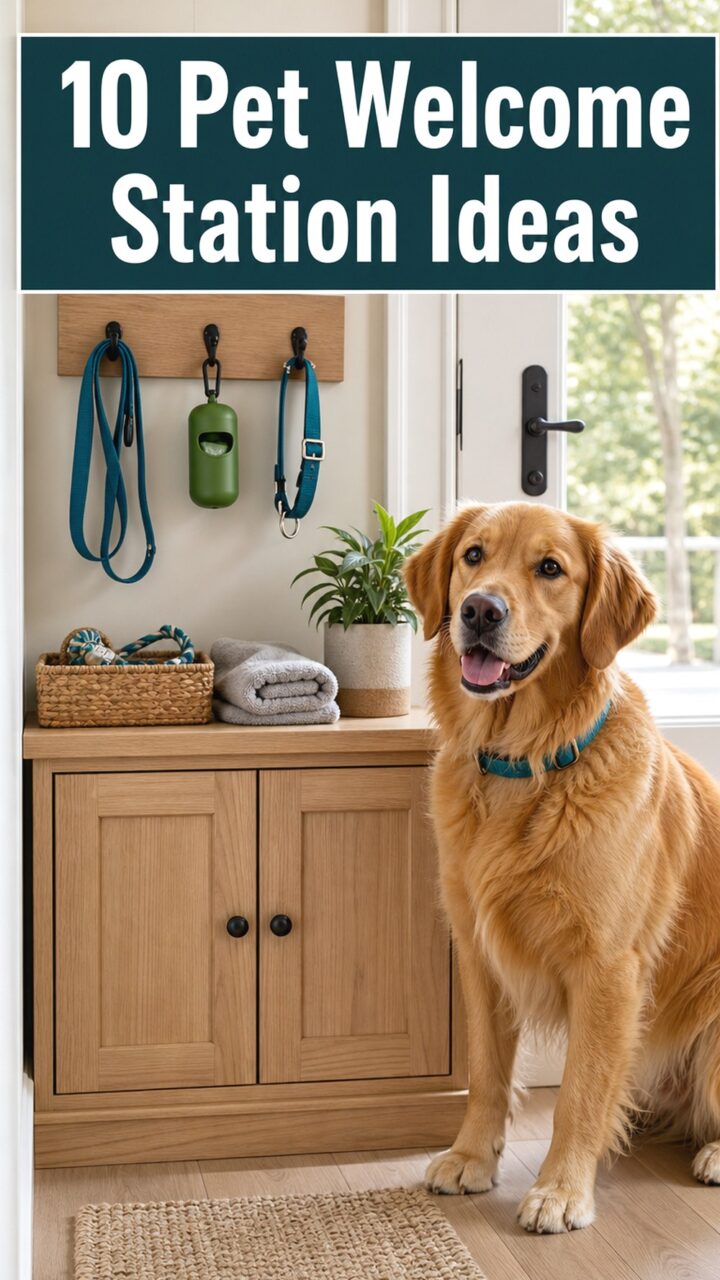
10 Pet Welcome Station Ideas for a Tidier Entryway
Save to PinterestThe best station is not necessarily a large piece of furniture. A few well-placed hooks may be enough for one household, while another may need a bench, drawer, or cabinet for several categories of supplies. These ten pet welcome station ideas focus on different storage problems, so you can choose the setup that fits your entryway, your pet, and the way you come and go.
1. Wall-Mounted Walk Gear Station
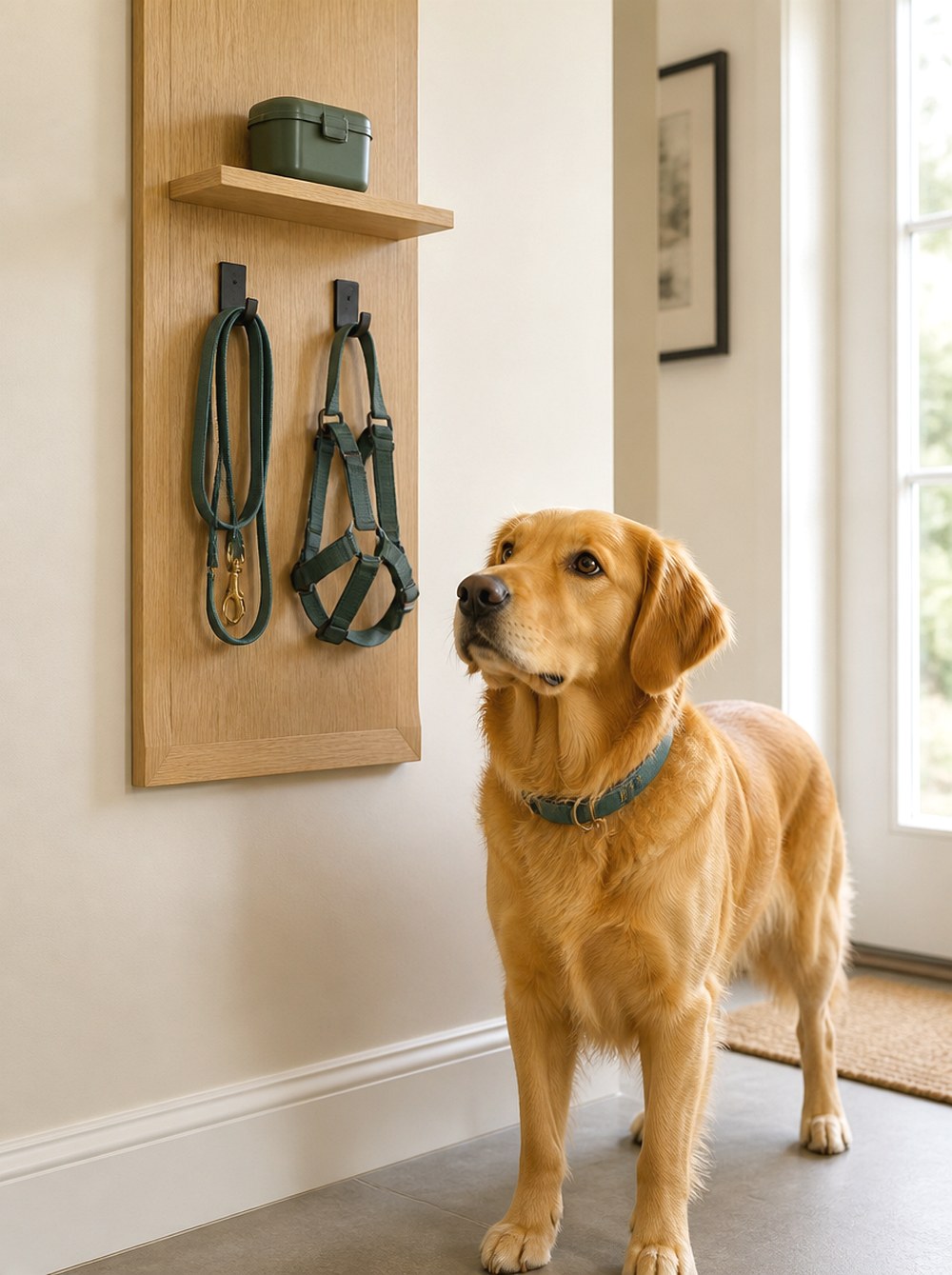
If leashes, harnesses, and collars tend to land on doorknobs or countertops, move the whole walking routine onto a small section of wall.
Install sturdy hooks at a convenient adult height and dedicate one hook to each item you use regularly. A narrow shelf above the hooks can hold a closed container of waste-bag rolls, a compact flashlight, or other small walking supplies. Keeping loose accessories in a container prevents the shelf from becoming another catch-all.
This setup works especially well in narrow entryways because it uses almost no floor space. It also makes the pre-walk routine more predictable: harness, leash, bags, then out the door.
Make sure hooks and shelving are securely mounted for the weight they will hold. Keep dangling straps high enough that a pet cannot chew or become tangled in them.
2. Entry Bench With Hidden Pet Storage
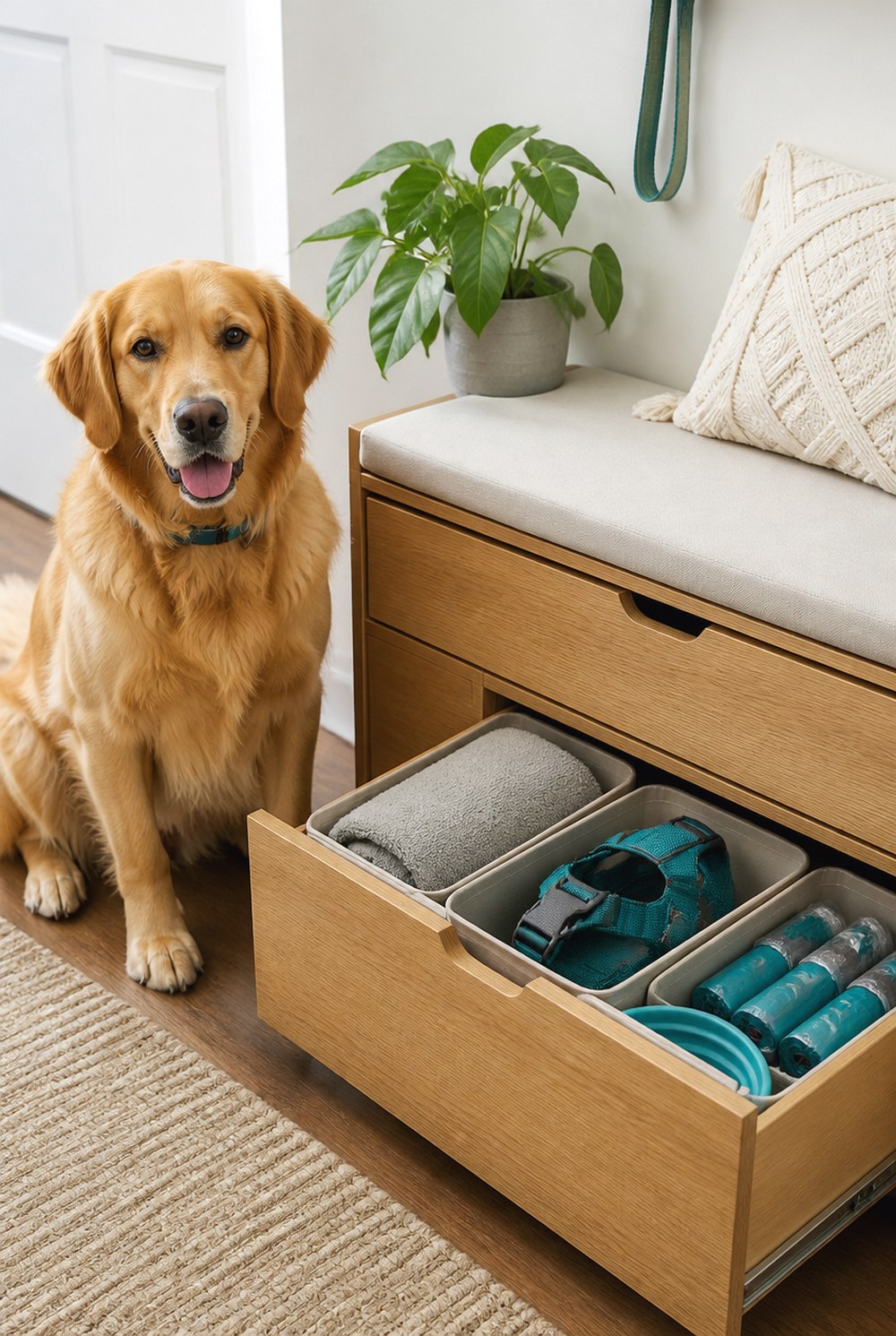
A storage bench combines two useful entryway functions: somewhere to sit while putting on shoes and somewhere to hide bulky pet supplies.
Use the interior for items that do not need to remain visible, such as spare harnesses, an extra towel, seasonal walking gear, or a portable water bowl. Dividers or small washable bins can keep the compartment from turning into one large pile.
A bench is especially useful when the front door opens directly into a living area. When the lid or drawer closes, the pet equipment disappears rather than becoming part of the room’s visual clutter.
Choose a stable bench that will not tip or slide when someone sits down. Hinged lids should close safely without trapping fingers, paws, or tails, and anything a pet should not access should remain securely enclosed.
You May Also Like


3. Grab-and-Go Walking Basket
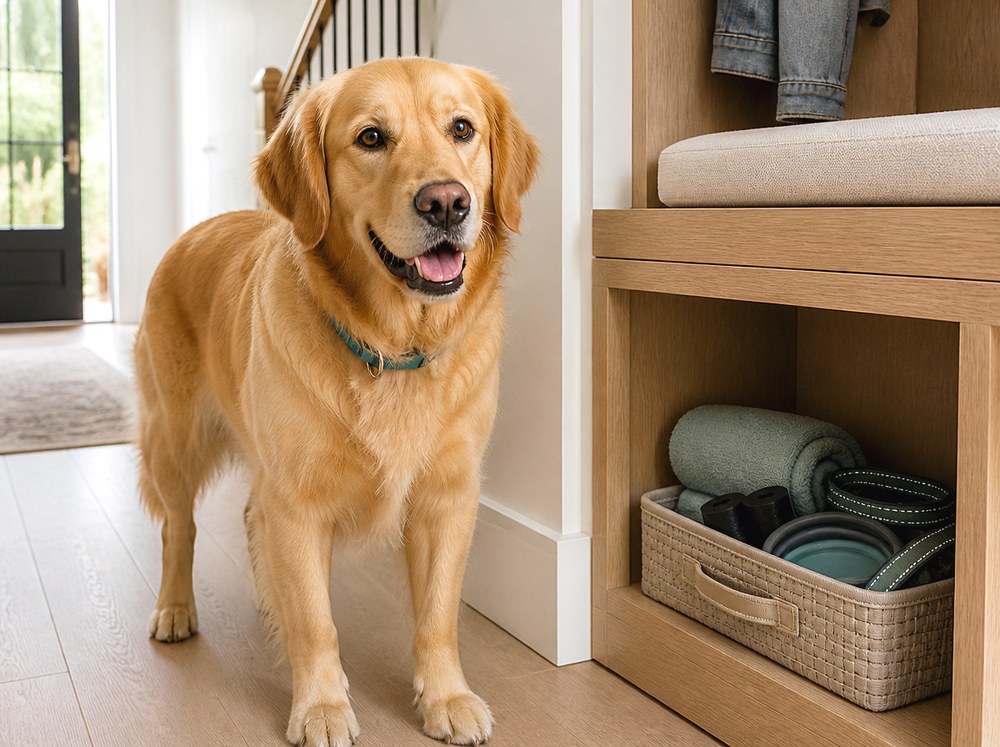
Not every pet welcome station needs permanent cabinetry. A handled basket gives frequently used walking equipment a defined home while remaining portable.
Place it on a shelf, inside a cubby, or on a stable bench rather than in the middle of the floor. Fill it only with items you routinely take outside. Depending on your routine, that might include waste bags, a towel, a portable bowl, and a reflective accessory used for low-light outings.
The key is restraint. Once mail, keys, toys, and unrelated household items start entering the basket, it becomes harder to find the supplies you actually need.
A washable or wipe-clean basket is practical near an exterior door. Check handles and woven materials periodically for damage, particularly if your pet tends to chew.
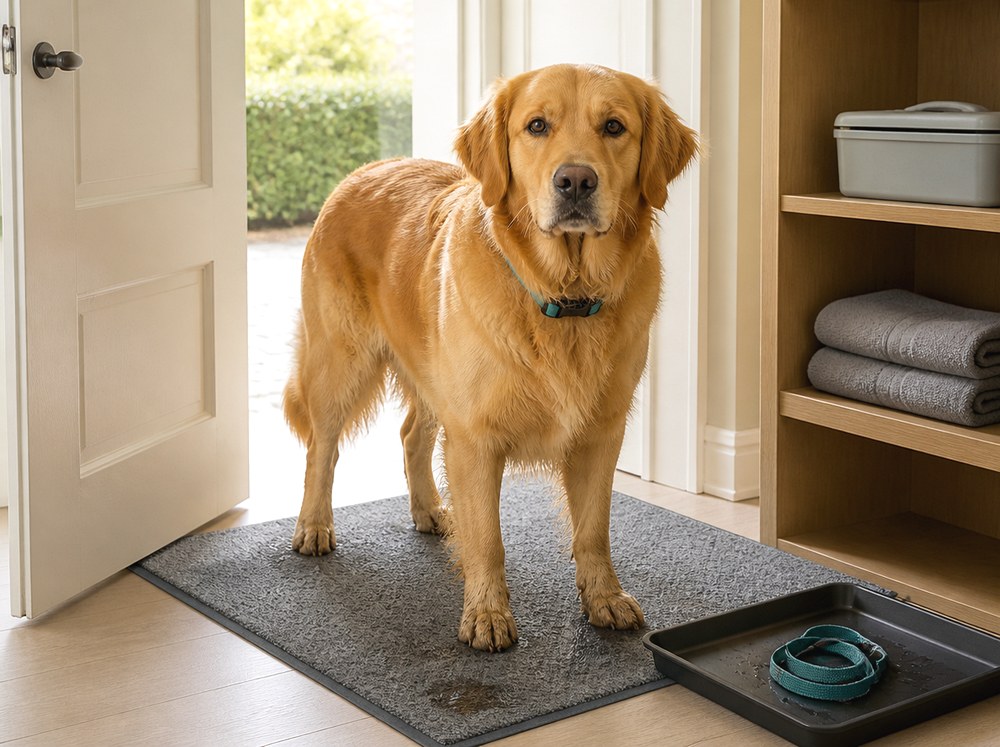
4. Muddy-Paw Cleanup Zone
For homes where walks regularly end with wet paws, dirt, or snow, build the welcome station around what happens when the pet comes back inside.
Keep an absorbent washable mat immediately inside the door, then store clean pet towels within arm’s reach. A shallow waterproof tray can provide a temporary place for damp walking gear while it dries instead of letting moisture collect on wood furniture.
If you use paw-cleaning products or wipes, choose products intended for the purpose and use them according to their labels. Keep containers closed and stored where pets cannot chew or lick them.
This station is most useful when every item has a clear sequence: step onto the mat, towel off, remove wet gear, then continue into the home. That helps contain the mess to one manageable area.
5. Drawer-Style Pet Command Center
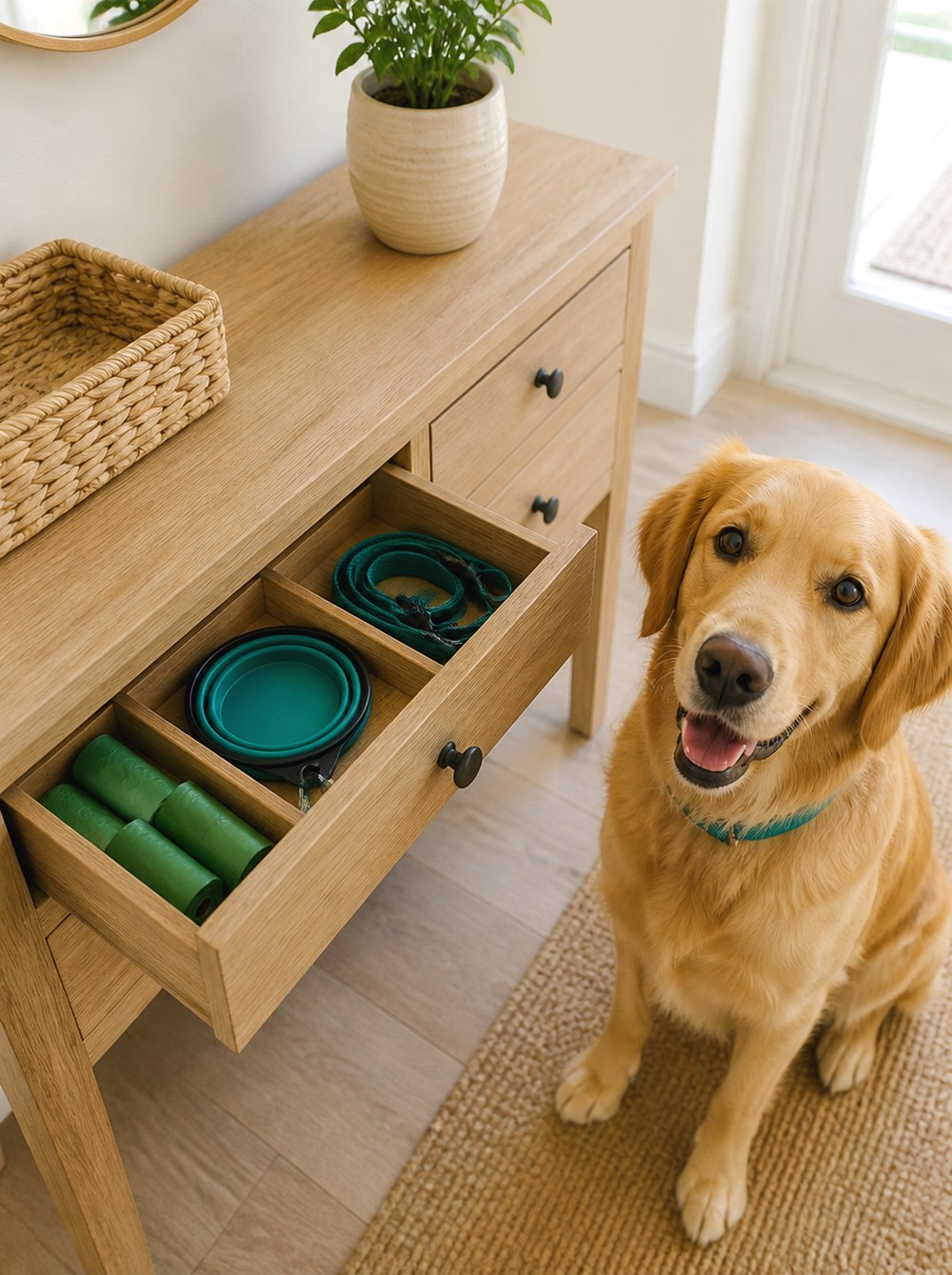
If you prefer an entryway that looks almost pet-supply-free, dedicate one or two drawers in a console to daily essentials.
Drawer organizers can separate categories that are annoying to search for when mixed together. One compartment might hold waste-bag rolls, another a spare leash attachment, and another a compact travel bowl. Larger items can occupy a deeper drawer below.
This arrangement is particularly useful for households that already have an entry console and do not want to add more furniture.
Avoid storing veterinary medications, household cleaners, or anything hazardous in a casually accessible pet-supply drawer. Those items belong in appropriate secure storage. If your pet can nose or paw drawers open, choose storage that closes reliably.
6. Vertical Peg-Rail Station for Small Spaces
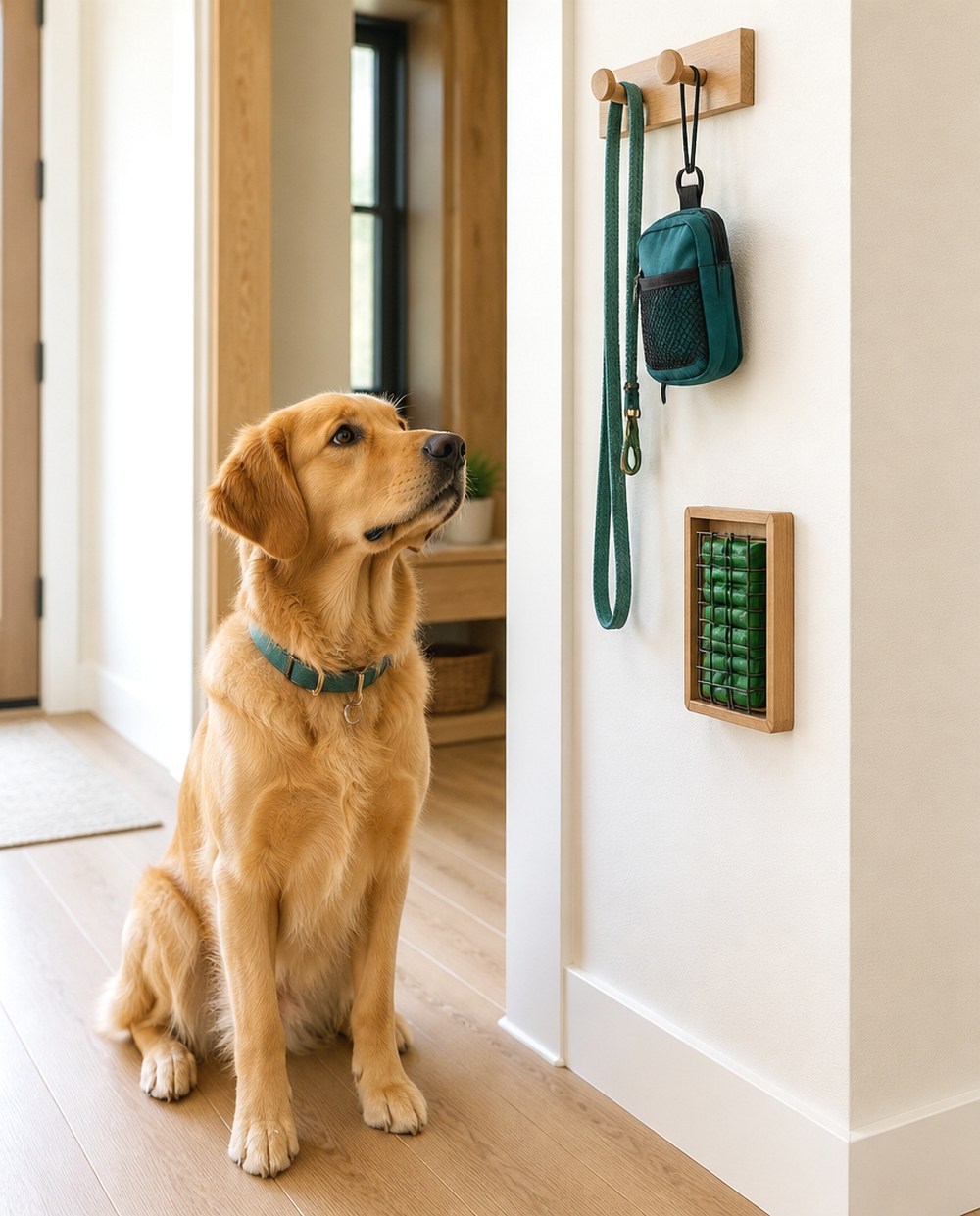
A narrow peg rail can turn a strip of unused wall into a practical pet station, making it a strong choice for apartments or compact hallways.
Use the rail for a leash, lightweight walking pouch, and other hanging gear. Pair it with one small wall-mounted basket or shelf instead of expanding the station across the entire wall.
Vertical storage works best when you protect the walking path. Nothing should stick out far enough to catch clothing, bags, or a leash as you move through the doorway.
Place chewable or looped items above your pet’s reach and secure every component properly to the wall. The goal is to free floor space, not create dangling objects at pet level.
7. Towel Ladder With a Walk-Return Shelf
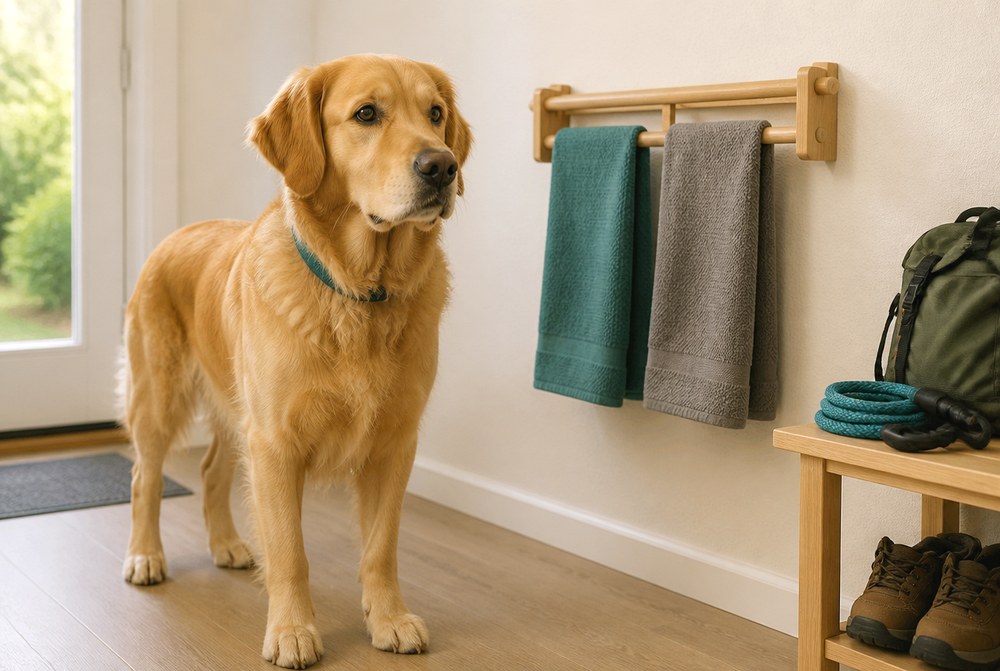
When damp towels are the main source of entryway clutter, create a station that separates clean, in-use, and ready-to-wash textiles.
A securely positioned towel ladder or wall rail can hold one or two pet towels without filling a basket with damp fabric. Add a small shelf nearby for dry walking accessories so wet and dry supplies do not get mixed together.
This arrangement makes sense for rainy climates, dogs that walk several times each day, or homes near muddy trails. It also makes it obvious when clean towels need replenishing.
The rack should be stable and inaccessible to a pet that pulls on hanging fabric. Do not leave long towels trailing onto the floor where paws can become tangled.
8. Closed Treat-and-Training Shelf
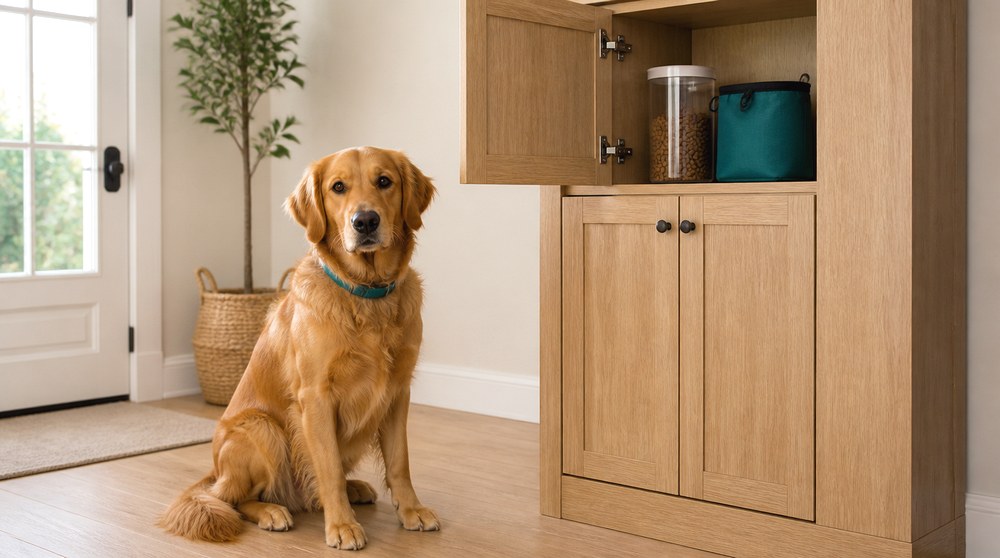
A few rewards near the door can be useful when practicing calm exits, check-ins, or cooperative leash handling. The storage, however, should be designed around secure access rather than an open treat bowl.
Use a sealed container inside a closed cabinet or on a high shelf the pet cannot reach. Keep only a small working supply there rather than turning the welcome station into long-term food storage.
You can place a treat pouch beside the container so it is ready to pick up before a walk. Afterward, empty or store the pouch securely if leaving food inside would encourage your pet to investigate it.
Treats should fit your pet’s normal diet and individual needs. A veterinarian can help if you have questions related to medical dietary restrictions.
9. Pet Travel Launch Pad
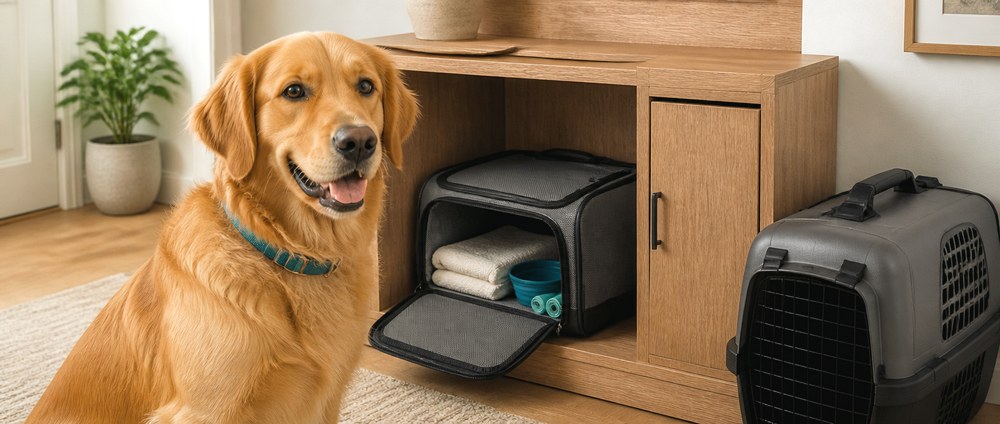
If your pet frequently travels by car, visits family, attends training classes, or joins you on day trips, dedicate part of the welcome station to equipment that leaves the house less often but still needs to be easy to find.
A sturdy lower cabinet or deep cubby can hold a travel bag stocked with nonperishable basics such as a spare bowl, waste bags, and a clean towel. A securely stored carrier can also live nearby when appropriate for the pet and available space.
Keeping travel supplies together reduces last-minute searching without mixing them into your everyday walking equipment.
Inspect carriers, bags, buckles, and straps periodically for wear. Travel restraints and carriers should be appropriate for the pet and used according to their product instructions.
10. Full Welcome Cabinet for Multi-Purpose Storage
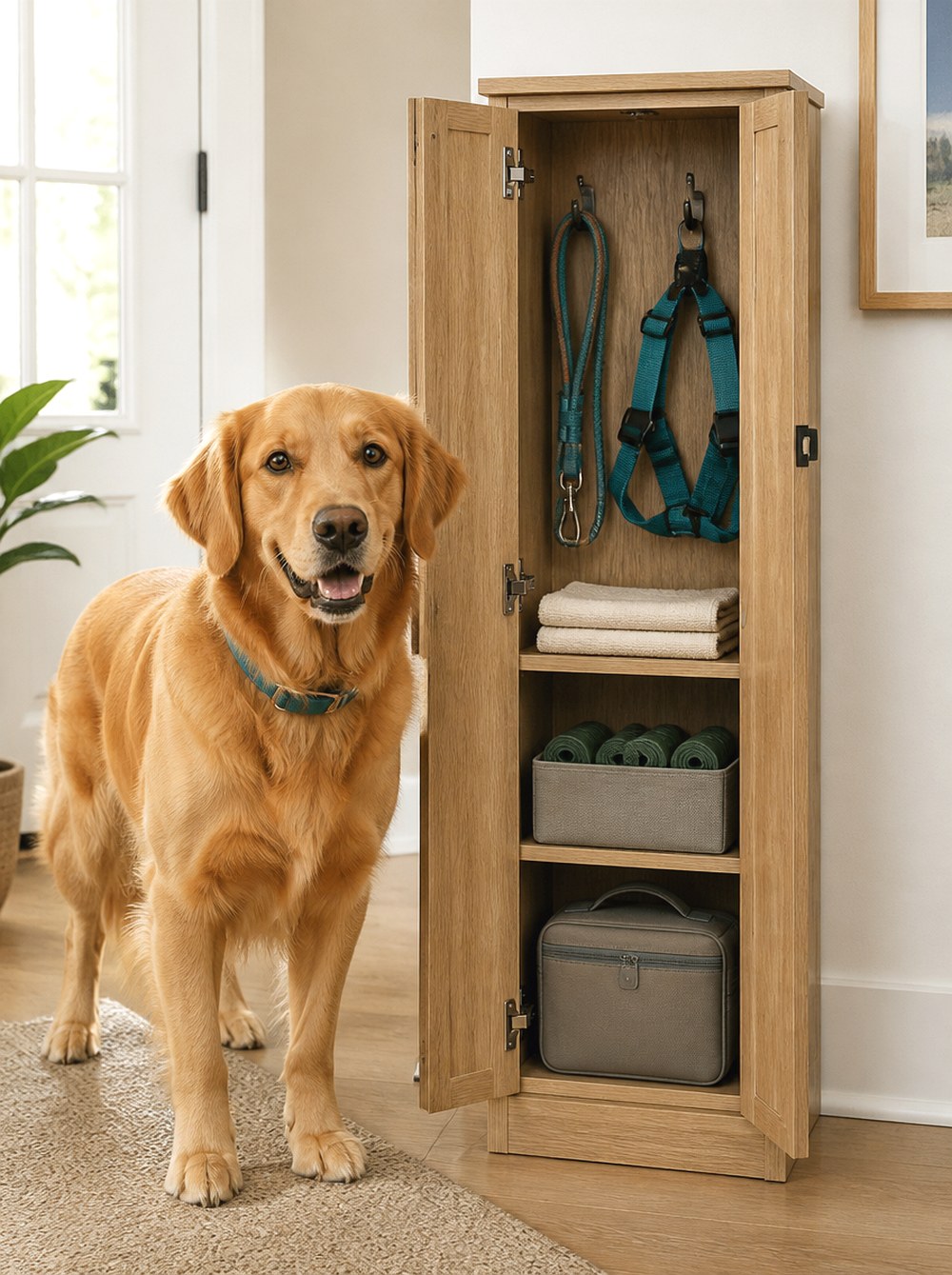
For households with enough room, a narrow cabinet can combine several pet welcome station functions without spreading supplies across the entryway.
Divide the cabinet by purpose rather than simply stacking everything together. Daily walking gear can stay near hand level, towels can occupy a ventilated shelf, backup supplies can go higher, and travel equipment can sit in a deeper lower compartment.
Closed storage is particularly useful when you have a curious pet because most items disappear behind doors between uses. It also gives you room to keep less-frequently used supplies without leaving them visible.
Avoid turning the cabinet into storage for every pet item you own. Bulky food bags, medications, grooming tools, cleaning products, and rarely used equipment may be better kept in dedicated locations suited to their storage needs.
A useful welcome cabinet contains what helps you enter or leave the house—not an entire pet-care inventory.
You May Also Like


Choose a Station Based on Your Actual Bottleneck
Before buying baskets or adding furniture, notice what usually goes wrong at your door.
| If your main problem is… | Start with… |
|---|---|
| Leashes and harnesses scattered around | Wall-mounted walk gear station |
| Very little floor space | Vertical peg-rail station |
| Mud and wet paws | Muddy-paw cleanup zone |
| Visible clutter | Drawer-style command center |
| Damp towels | Towel ladder and return shelf |
| Supplies needed on most outings | Grab-and-go walking basket |
| Frequent car trips or day outings | Pet travel launch pad |
| Several categories of entryway gear | Full welcome cabinet |
A smaller station that solves one recurring problem is usually more useful than a large setup filled with items you rarely reach for.
Keep the Station Working After the First Week
Pet welcome stations tend to become cluttered when unrelated objects creep into them. A brief reset can prevent that.
Return the leash and harness after each outing, replace the towel when it becomes damp or dirty, refill waste bags before the last roll is gone, and remove anything that no longer belongs near the door. Inspect hooks, handles, baskets, straps, and other frequently handled equipment for damage.
Keep the floor around the station clear so neither people nor pets have to navigate around loose bags, shoes, or trailing gear. Any food, small objects, cleaners, medicines, cords, or chewable materials should remain securely stored according to their intended use and out of inappropriate reach.
The goal is not to create a decorative pet corner. It is to make leaving and returning home smoother while giving everyday supplies a logical place to go.
