Pet toys have a way of spreading across a living room even when the rest of the space is fairly organized. A ball rolls under the coffee table, plush toys gather beside the sofa, and larger enrichment toys never quite fit into the small basket that was supposed to hold everything.
Save This Idea on Pinterest
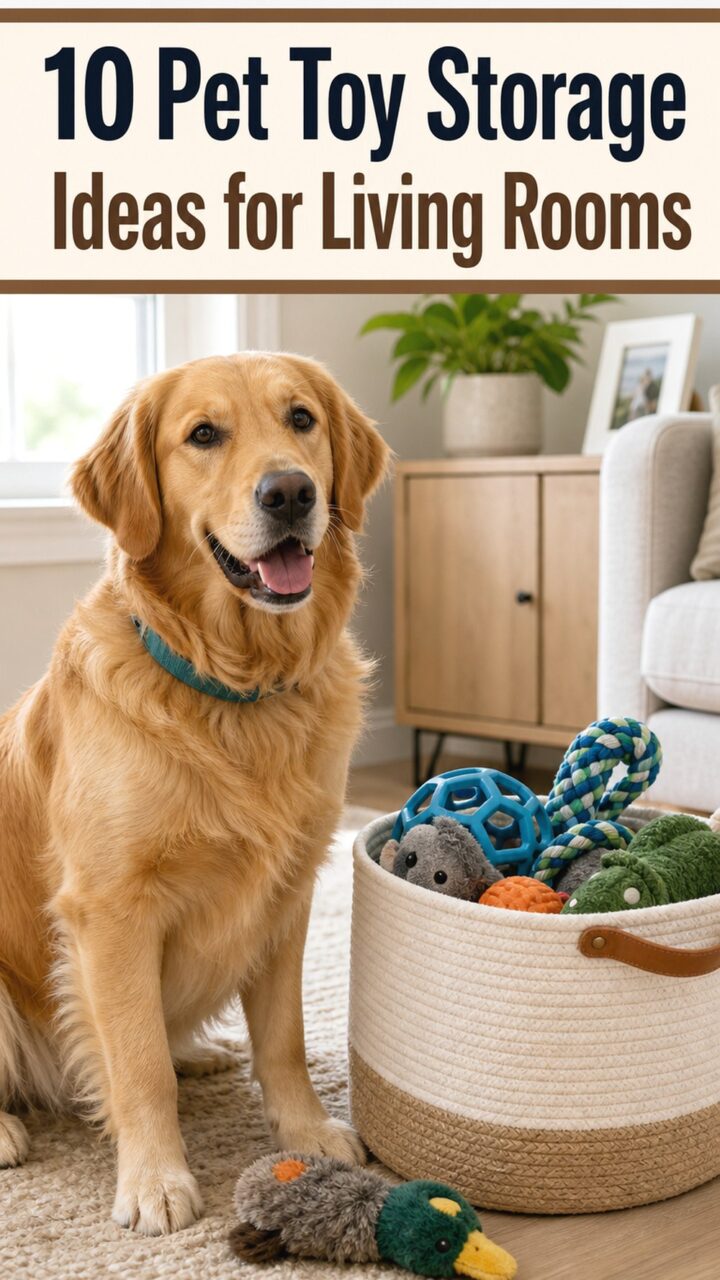
10 Pet Toy Storage Ideas for Living Rooms That Control Clutter
Save to PinterestA better storage setup should do more than hide clutter. It should make frequently used toys easy to reach, keep damaged or messy items separated, and fit naturally with the furniture already in the room.
The right solution depends on how many toys you keep, how much floor space you have, and whether your pet is allowed to choose toys independently. These 10 pet toy storage ideas solve different living-room problems rather than simply giving you ten versions of the same basket.
1. Use a Low, Wide Basket for Everyday Favorites
A low basket works well when your pet has a small collection of toys that are used every day. The wide opening makes it easy to see what is inside, so you are less likely to dig through a deep container looking for one particular ball or tug toy.
Place it beside a sofa, console, or other spot that does not interrupt the main walking path. A basket with a broad, stable base is less likely to tip when a dog noses through it.
If your pet is allowed to choose toys, keep only safe, durable options in the accessible basket. Toys that require supervision, contain food, or have small removable pieces are better stored elsewhere.
Washable fabric bins and smooth-sided baskets are usually easier to maintain than materials with deep woven gaps that trap hair and crumbs.
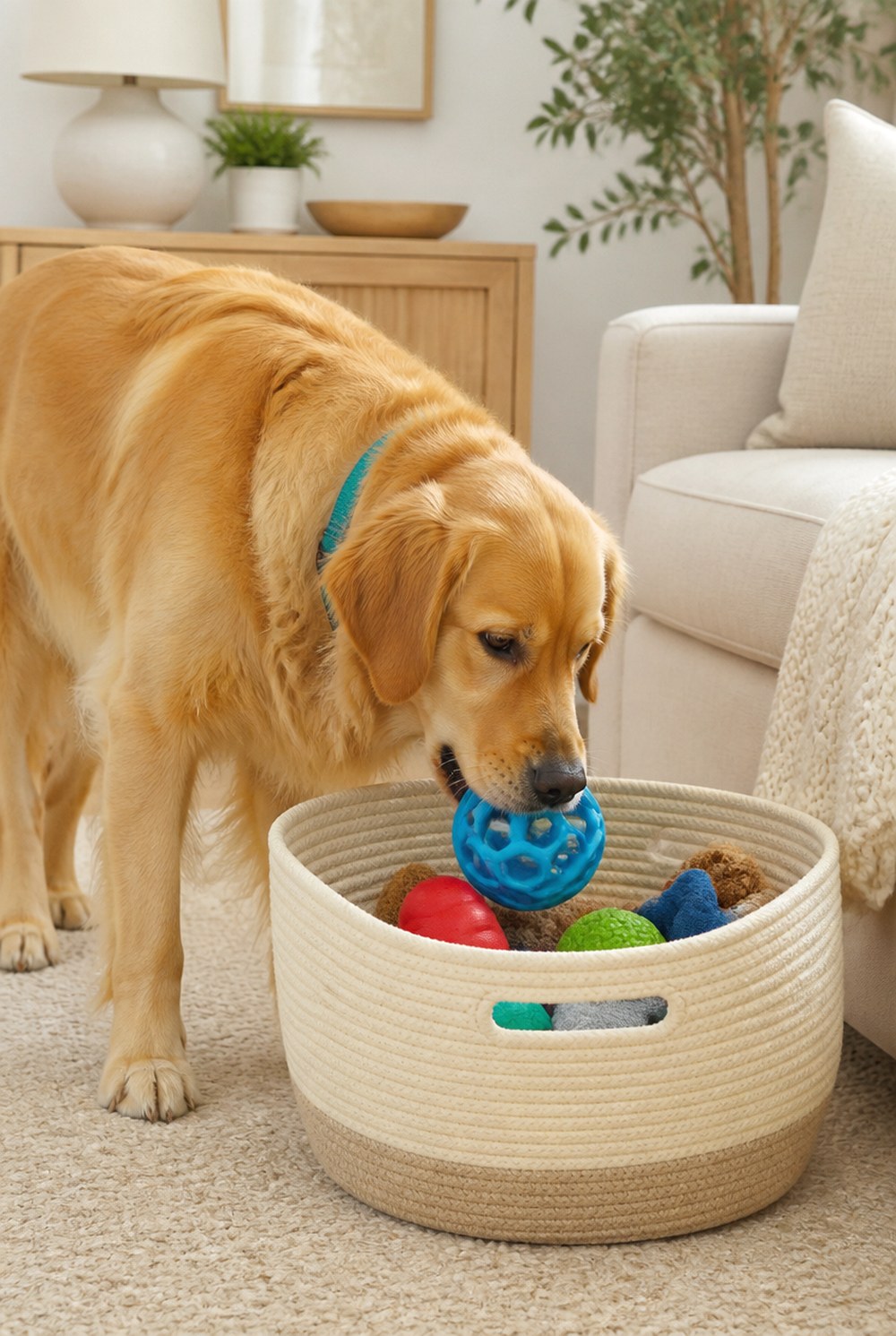
2. Turn a Storage Ottoman Into a Hidden Toy Cabinet
When you want the room to look less like a dedicated pet zone, a storage ottoman can keep toys completely out of sight.
Choose a model with enough interior space for bulky plush toys, balls, and enrichment items. Dividers or small interior bins can prevent everything from becoming one large pile.
The main advantage is that the furniture serves two jobs: it provides living-room seating or a footrest while using space you would have occupied anyway.
A closed ottoman is particularly useful for toys that should not remain available without supervision. Make sure the lid is secure and cannot unexpectedly fall on a pet investigating nearby. If your dog chews furniture edges, closed storage should also be positioned where persistent chewing can be noticed and redirected.
You May Also Like


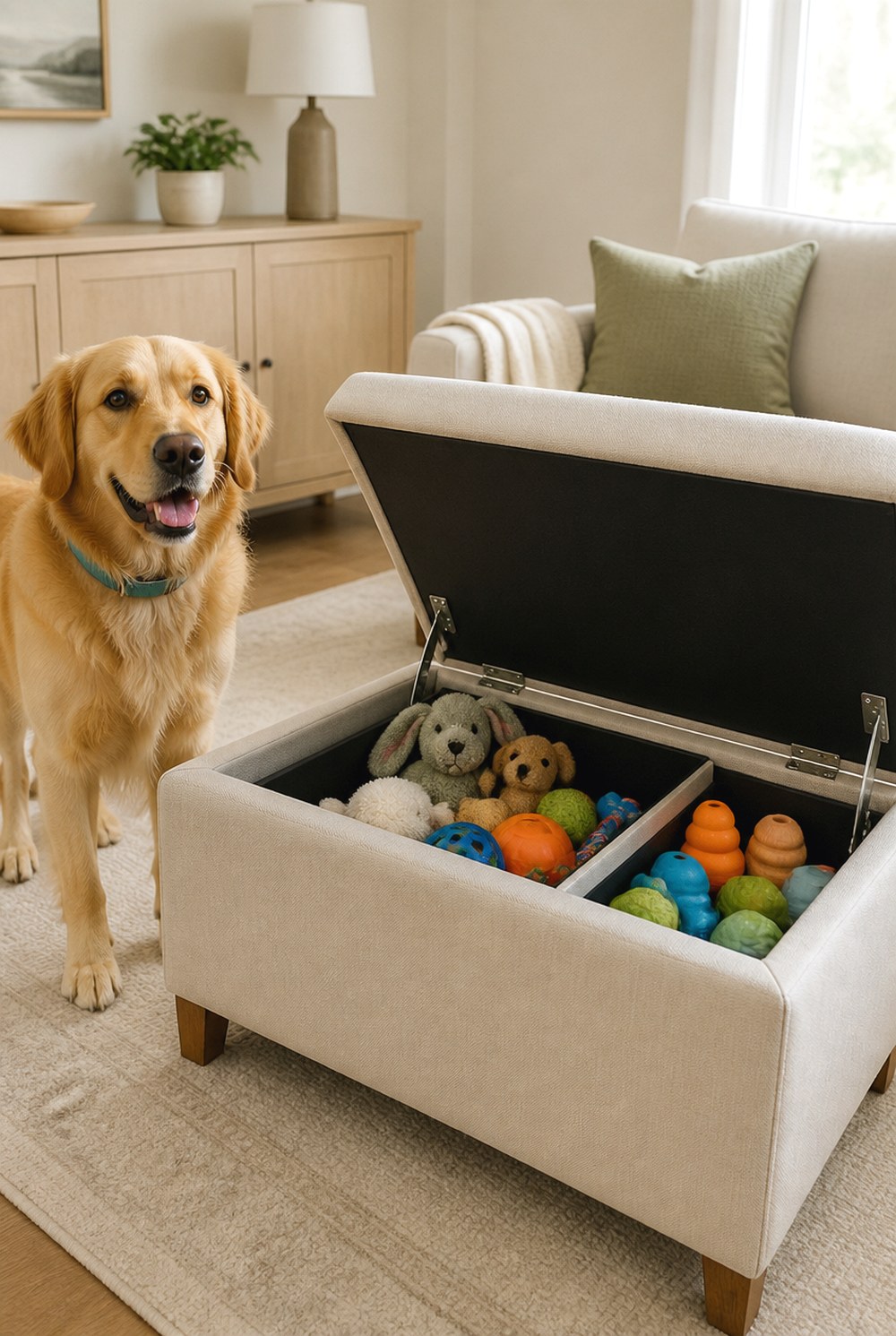
3. Give the TV Console One Dedicated Toy Drawer
A spare drawer in a media console can become surprisingly effective pet storage, especially in a small living room where another basket would take up valuable floor space.
Reserve one drawer entirely for toys rather than mixing them with batteries, electronics, remotes, candles, or other household items. A few shallow organizers can separate balls from chew toys and grooming or training accessories if those items also belong in the room.
This setup works best for toys you bring out yourself rather than toys the pet retrieves independently.
Before using a media cabinet, check what else is stored nearby. Electrical cords, batteries, small electronic parts, and similar objects should remain securely separated and inaccessible to pets.
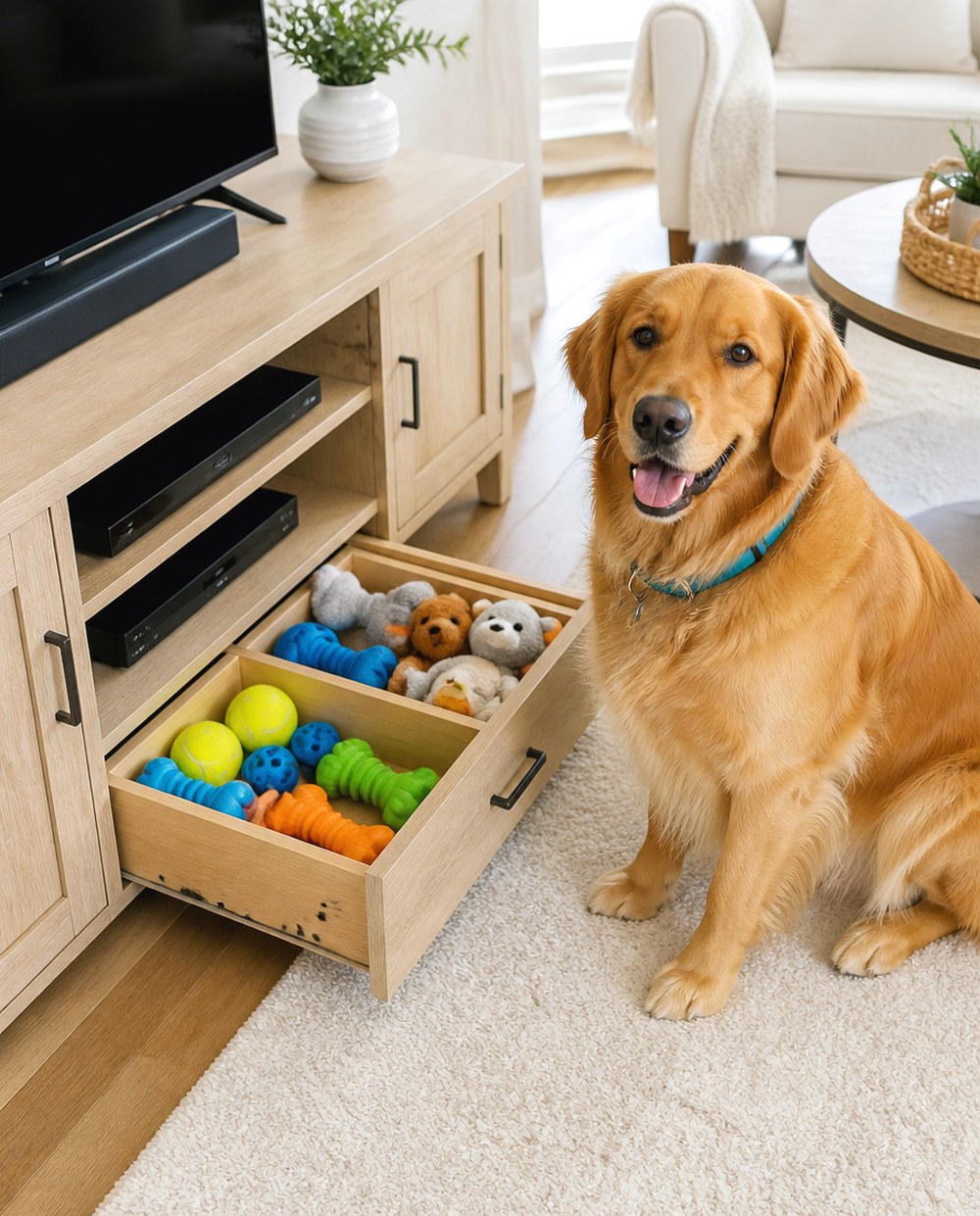
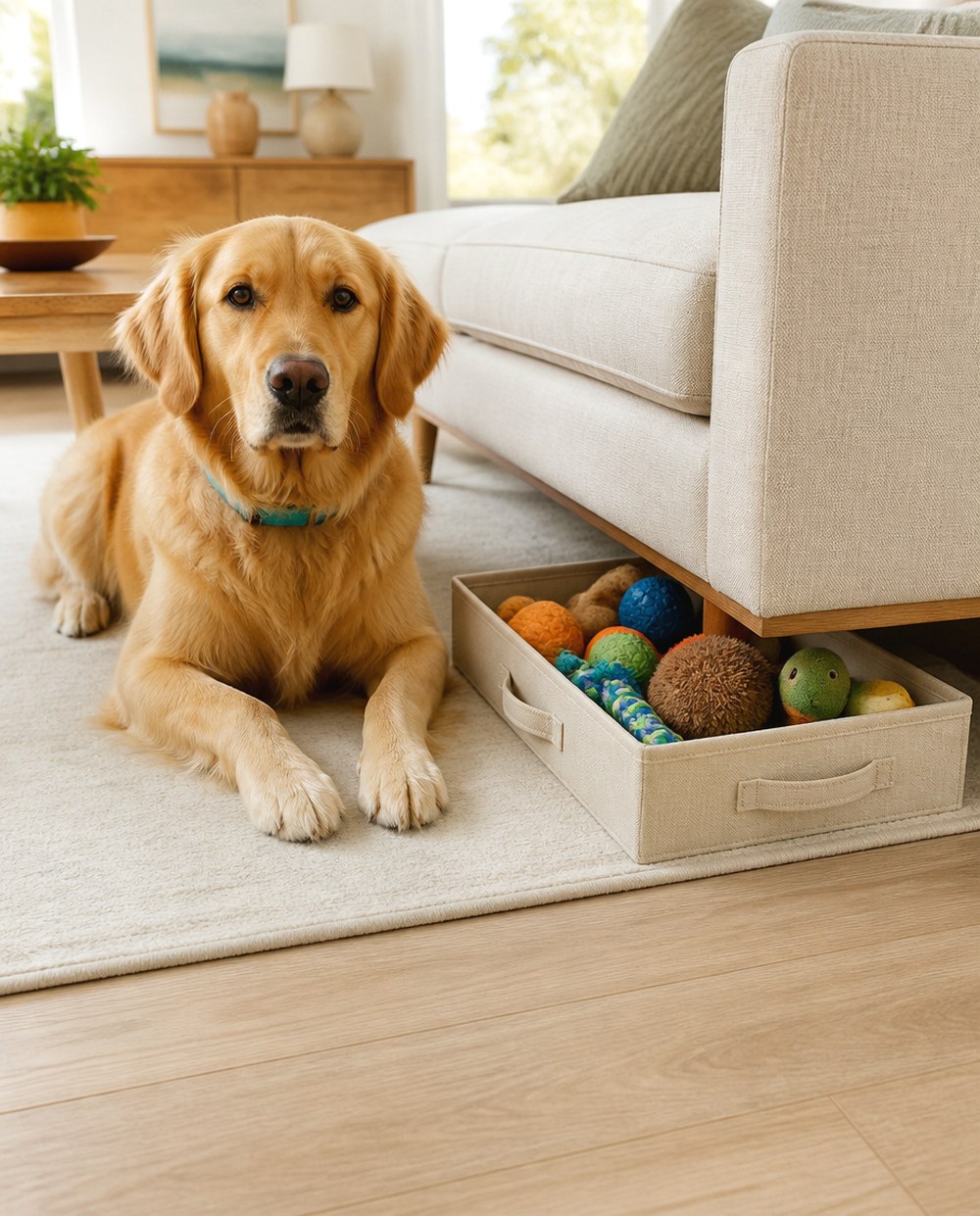
4. Slide Shallow Toy Bins Under a Sofa or Bench
The unused space beneath raised furniture can hold more than you might expect.
Shallow bins are useful for apartment living rooms and other spaces where every square foot matters. Use them beneath a sofa with adequate clearance, a window bench, or a sturdy console rather than adding another freestanding container.
Bins with low-profile handles are easier to pull out for playtime and slide back when you are finished. Clear containers make the contents obvious, while opaque containers create a tidier visual effect.
This solution is better for owner-managed storage than pet access. Avoid forcing containers underneath furniture where they can scrape floors, catch on fabric, or block vents.
5. Create a Two-Bin Rotation Station
A large toy collection does not need to be available all at once.
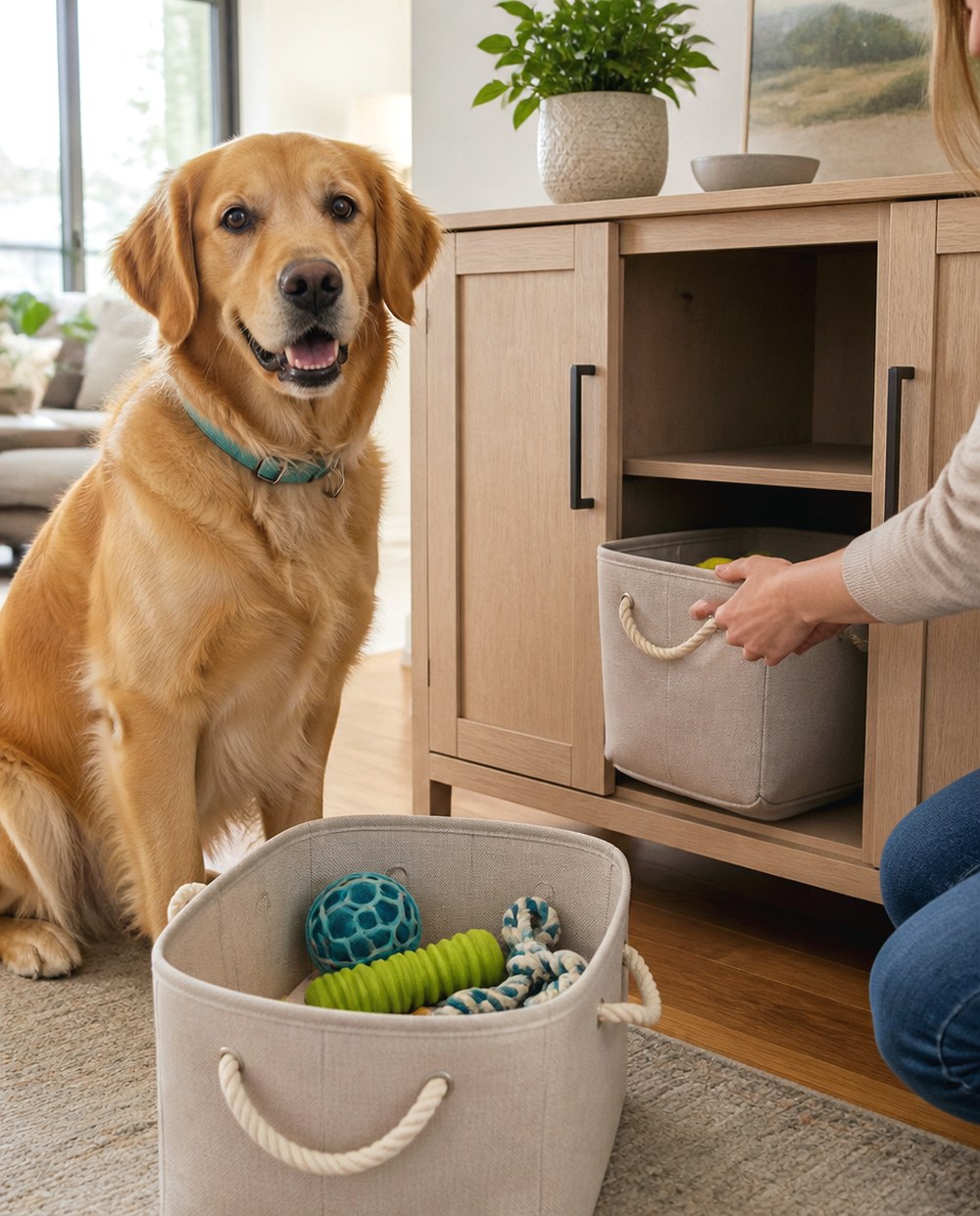
Use two matching bins: one for the toys currently in circulation and another for toys temporarily stored away. Periodically swap several items instead of continually adding more toys to the living-room pile.
Rotation can make the collection easier for you to manage and gives each bin enough empty space that toys can actually be put away without overflowing.
The second container can live inside a cabinet, closet, or closed console. Before rotating toys back into use, check them for loose pieces, tears, cracked rubber, exposed stuffing, or other damage.
This setup is particularly useful for households where buying more storage has only created more places for clutter to accumulate.
6. Add a Slim Rolling Cart Beside a Cabinet
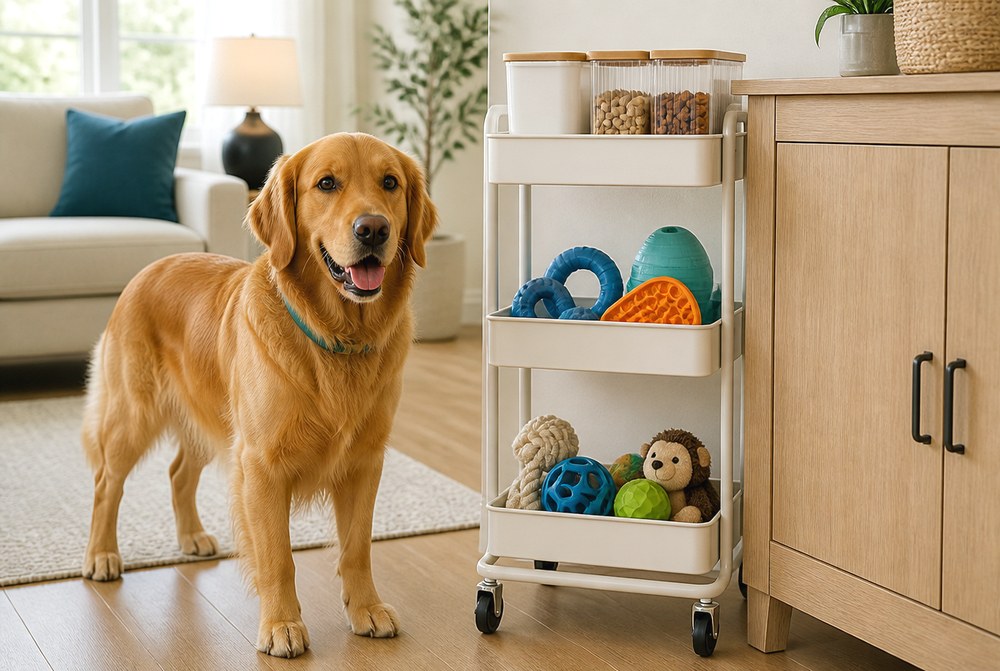
A narrow rolling cart can turn a small strip of unused space into organized storage.
Instead of filling every tier randomly, give each level a purpose. For example, sturdy everyday toys can go on one shelf, supervised enrichment toys on another, and cleaning cloths or sealed pet supplies on the top level.
A rolling cart is especially useful when toys move between the living room and another part of the home. You can bring the collection out for play and return the whole station afterward.
Choose a sturdy cart that does not wobble easily. If your pet is likely to push, climb on, or pull items from it, keep the cart parked securely and place anything inappropriate for unsupervised access on a higher or closed shelf.
7. Use a Lidded Box for Supervision-Only Toys
Not every pet toy belongs in an open basket.
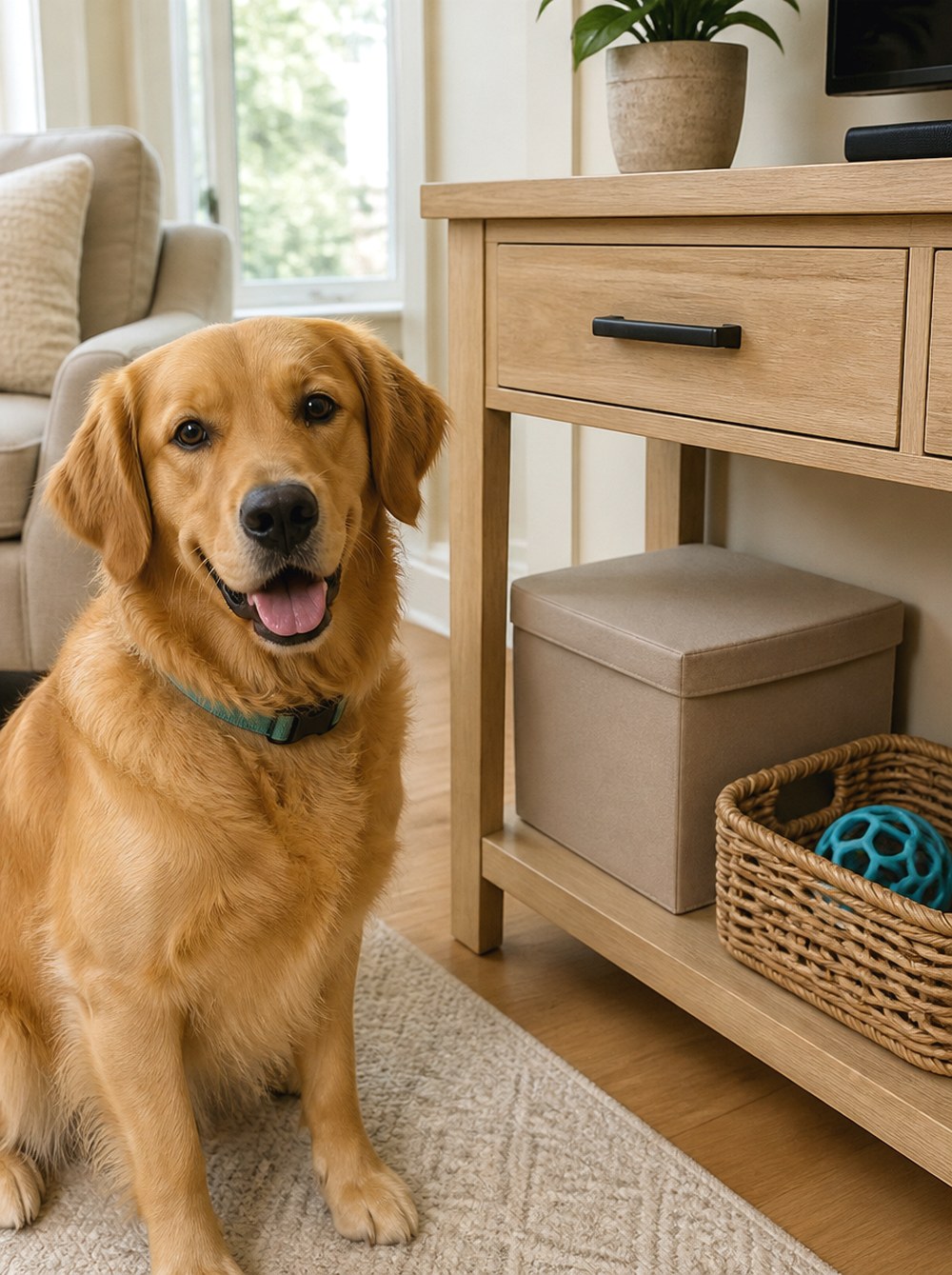
Food puzzles, fabric toys, tug toys that your pet tends to shred, or other items that require closer monitoring can have their own closed container. A lidded box on a low cabinet or inside a console prevents those toys from being confused with unrestricted everyday options.
This creates a useful visual rule for the household: open basket means freely available; closed storage means an adult brings the item out.
Choose a lid that closes securely without creating a pinch or falling hazard. The box should also be stored where a determined pet cannot knock it down or chew through it.
Separating toys by supervision needs can be more useful than sorting them only by size.
8. Build a Toy Cubby Into an Existing Bookcase
If a bookcase already occupies part of the living room, dedicating one lower cubby to pet toys avoids adding another piece of furniture.
A removable fabric or smooth-sided bin keeps dog hair and toy debris from spreading across the shelf. It also lets you pull the entire collection out for cleaning.
Keep pet storage separate from fragile decorations, small objects, plants, or anything that could be knocked down when the bin is removed. For a pet that chooses its own toys, the cubby should be low enough for comfortable access without encouraging climbing.
A matching bin can make the pet-storage section blend with the rest of the bookcase rather than looking improvised.
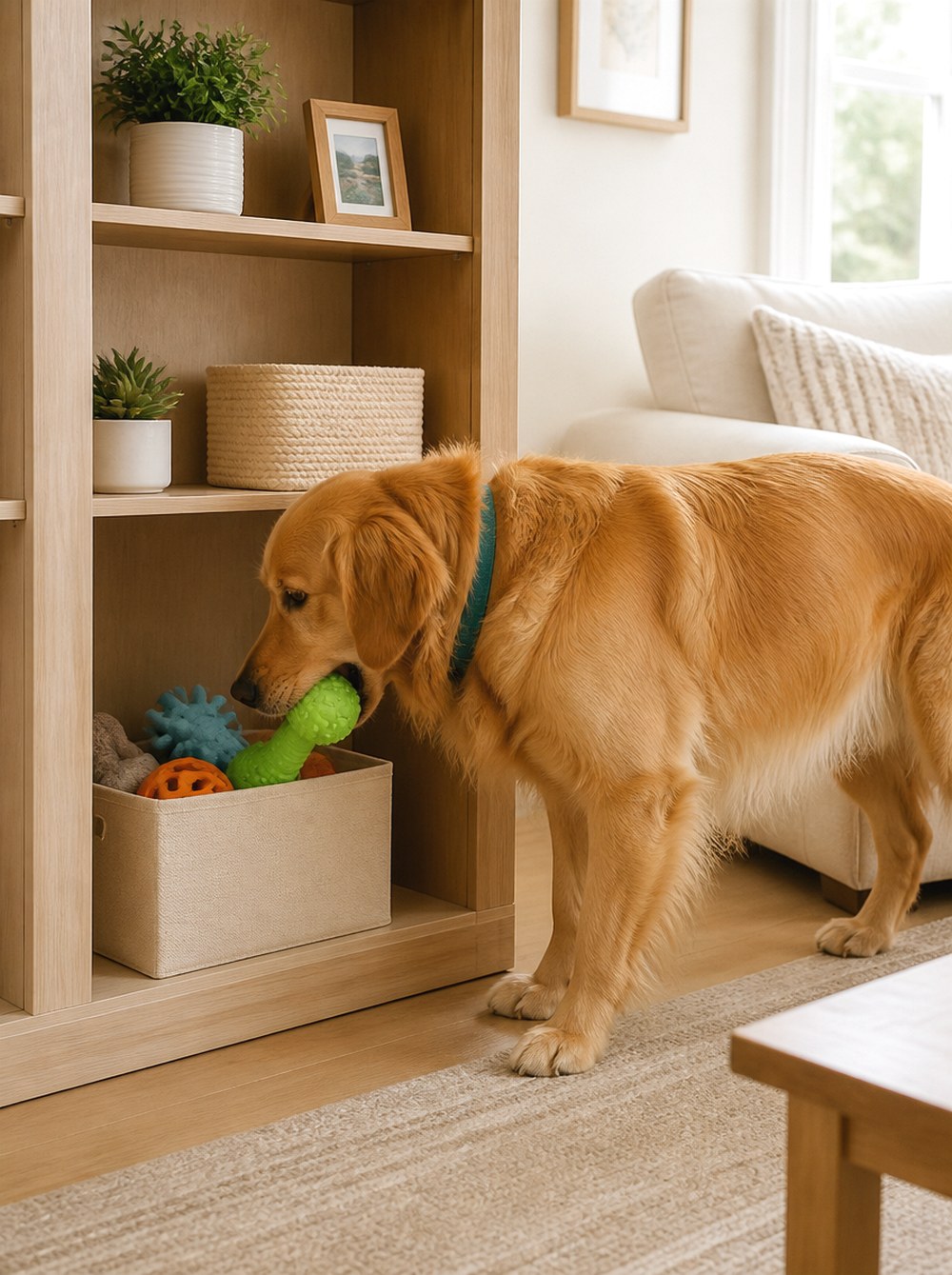
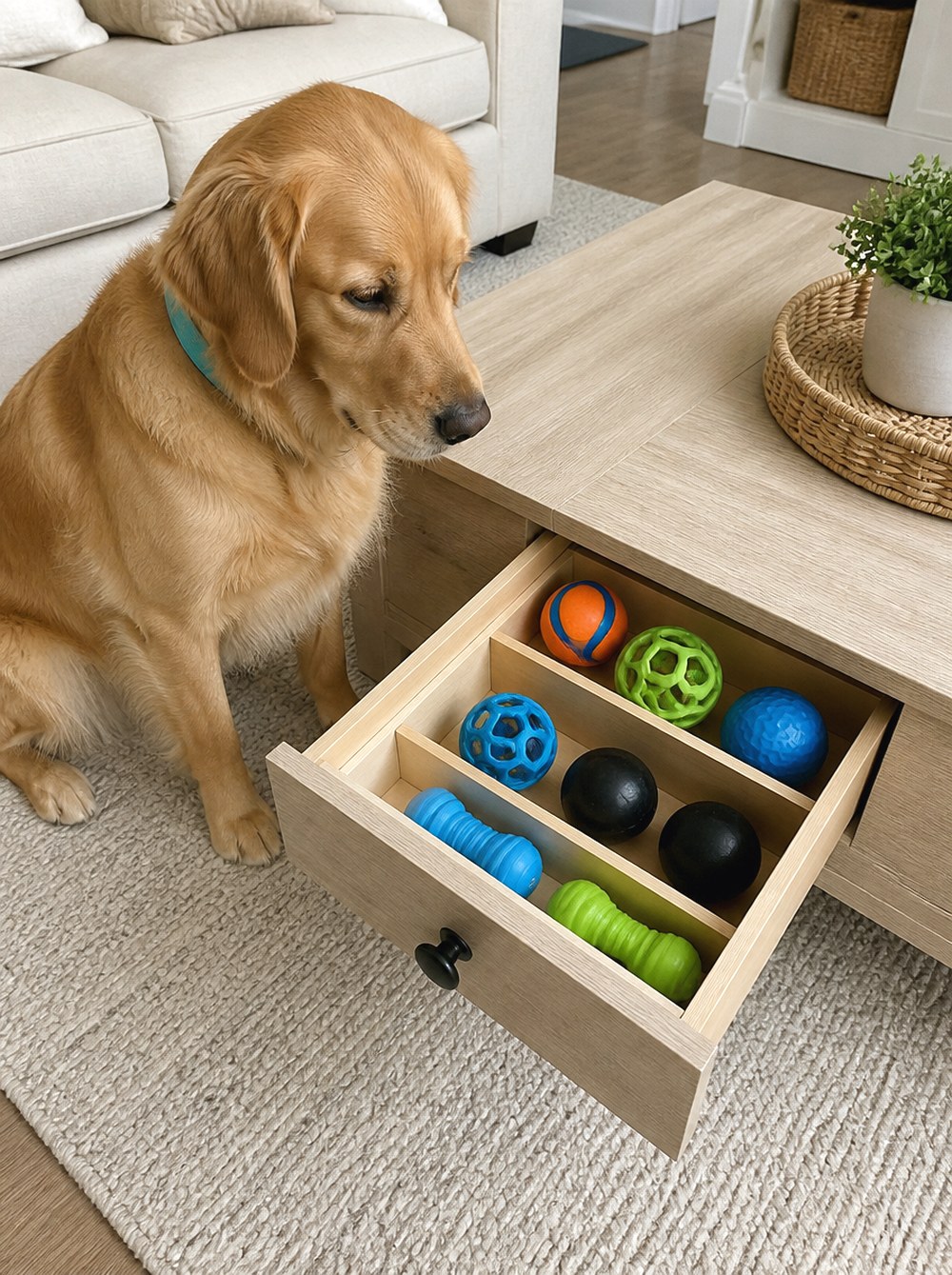
9. Dedicate a Drawer in the Coffee Table to Small Toys
Coffee tables with drawers can hide small pet toys almost exactly where they are used.
This is a practical place for balls, compact rubber toys, replacement puzzle components that are too large to be swallowed, or other small items that tend to disappear beneath furniture.
Use a shallow divider so everything does not roll to the back. Keeping only pet supplies in the drawer also prevents accidental mixing with coins, batteries, clips, or other small household objects.
The drawback is capacity. A coffee-table drawer works best as a small-item station, not as the only storage space for a large toy collection. Pair it with a basket or closed cabinet for bulky pieces.
10. Set Up a Small “Return Here” Basket Near the Main Play Area
Sometimes the biggest storage problem is not capacity. It is that the storage container is too far from where toys actually get used.
If most play happens beside the sofa or on one end of the rug, place a small return basket there. During a quick room reset, toys only need to travel a few feet instead of across the house.
This basket does not need to hold the entire collection. Think of it as the landing spot for the toys currently being used. Extra items can stay in an ottoman, cabinet, or rotation bin.
A small basket is also easier to empty and clean than an oversized container filled with forgotten toys.
Position it outside the main walking path, and inspect the contents as you put toys away. Discard or replace toys that have broken pieces, significant tears, or damage that makes them unsafe for continued use.
You May Also Like


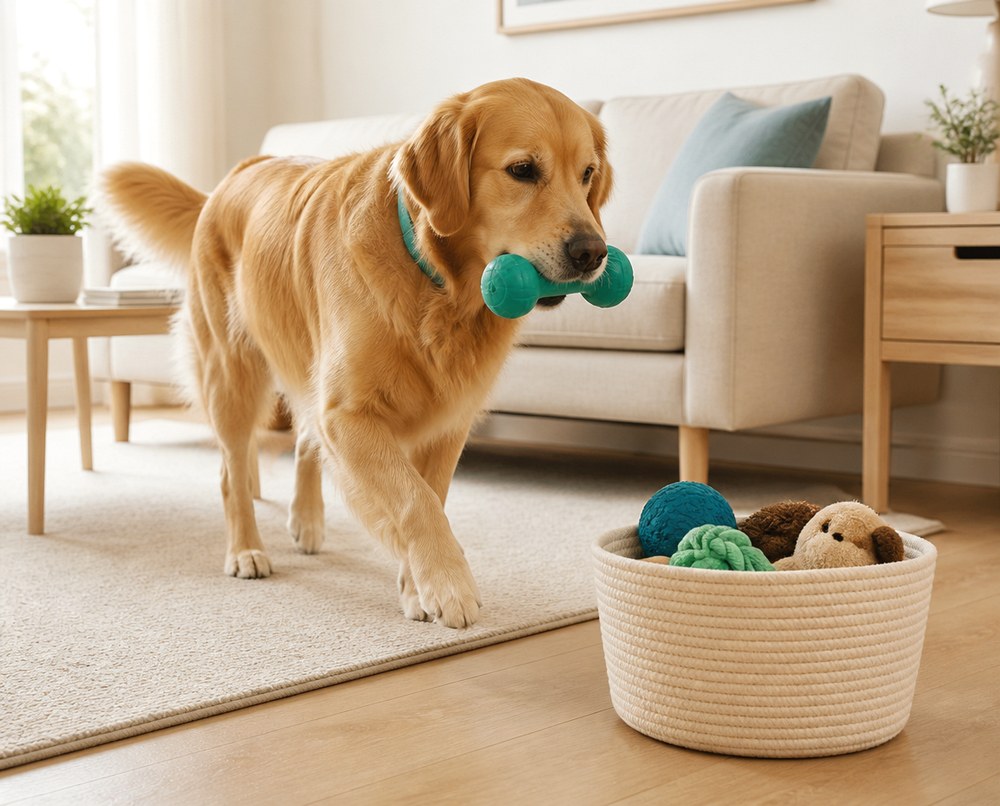
Choose Storage Based on How the Toys Are Used
A living room usually works better when pet storage is divided by function rather than forcing every object into one oversized container.
Keep durable everyday toys somewhere convenient if your pet is permitted to access them independently. Put toys that need supervision behind a lid, drawer, or cabinet door. Bulky or less frequently used toys can move into hidden storage, and a rotation bin can prevent the active collection from becoming unmanageable.
For a small collection, one good basket may be enough. For a larger collection, combining two complementary solutions often works better—for example, an accessible basket for current toys plus an ottoman for overflow.
Whichever setup you choose, leave enough empty space that putting toys away takes seconds rather than careful rearranging. Storage is much more likely to stay organized when there is room for the collection you actually use.
Keep the Storage Area Clean and Safe
Pet-toy storage collects fur, crumbs, dirt, and moisture along with the toys themselves. Empty accessible bins periodically and clean them according to the material’s care instructions. Toys should be dry before going back into enclosed storage.
Check the collection at the same time. Remove damaged items, exposed stuffing, loose components, sharp edges, and anything that has become inappropriate for your pet’s chewing habits.
Storage furniture should remain stable and should not provide access to cords, cleaners, medicines, small household items, or fragile objects. Strings, fabric items, cardboard, food puzzles, and toys with chewable components may require supervision depending on the individual pet.
The most useful living-room system is not the one that hides the greatest number of toys. It is the one that gives each type of toy a sensible place and makes the room quick to reset after play.
