A pet room does not need custom cabinetry, expensive beds, or matching storage containers to work well. In fact, some of the most useful pet spaces are built around things you already own: an unused shelf, a washable rug, a spare basket, or a secondhand piece of furniture.
Save This Idea on Pinterest
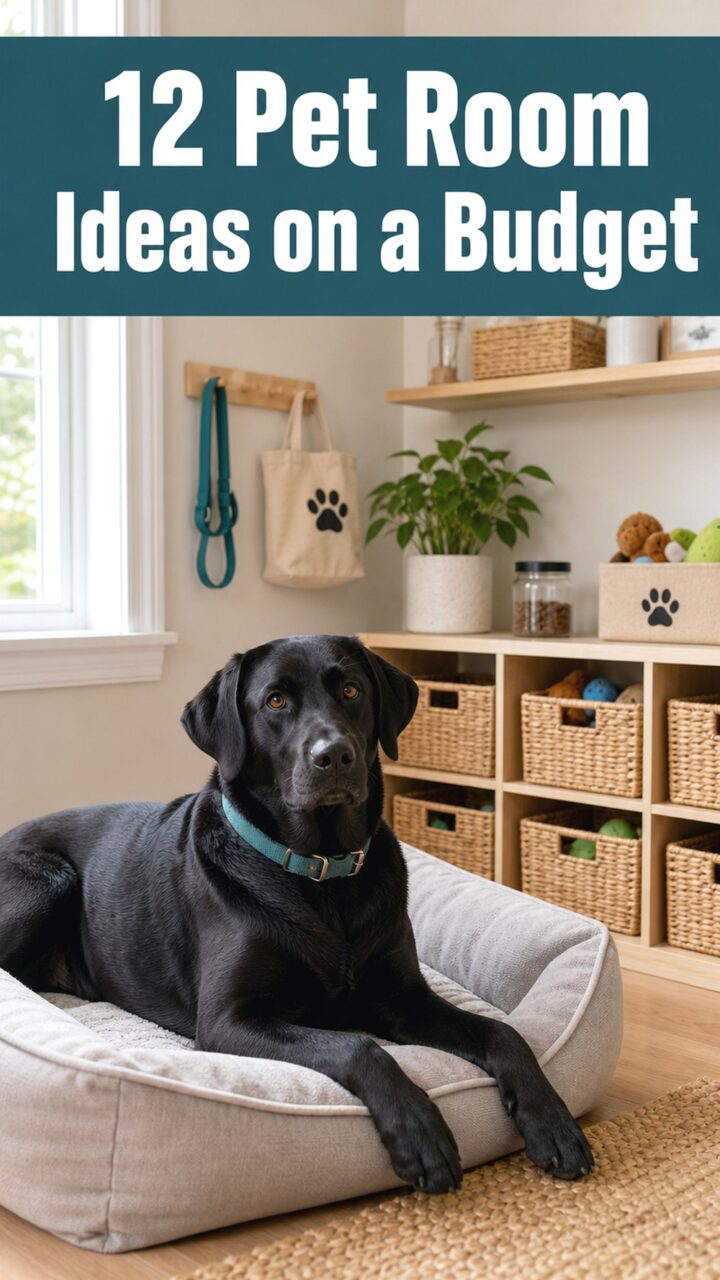
12 Pet Room Ideas on a Budget for a Cozy, Practical Space
Save to PinterestThe best way to keep costs under control is to spend money only where it makes daily care easier. Give your pet a comfortable place to rest, keep frequently used supplies within reach for you but safely away from your pet, protect the floor, and leave enough open space for movement.
These 12 pet room ideas on a budget focus on those practical priorities while still creating a room that feels intentional and welcoming.
1. Start With a Dedicated Sleep Corner
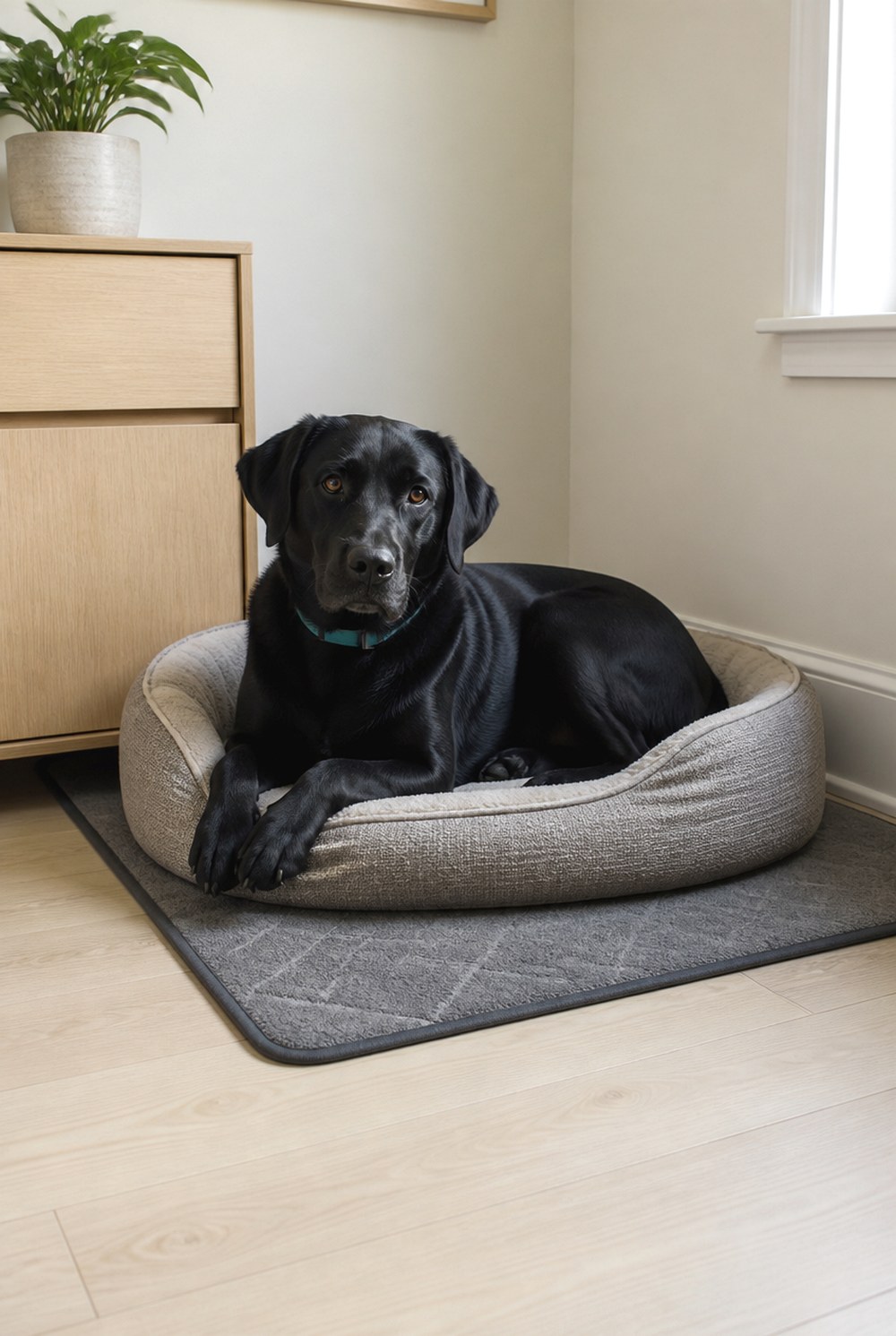
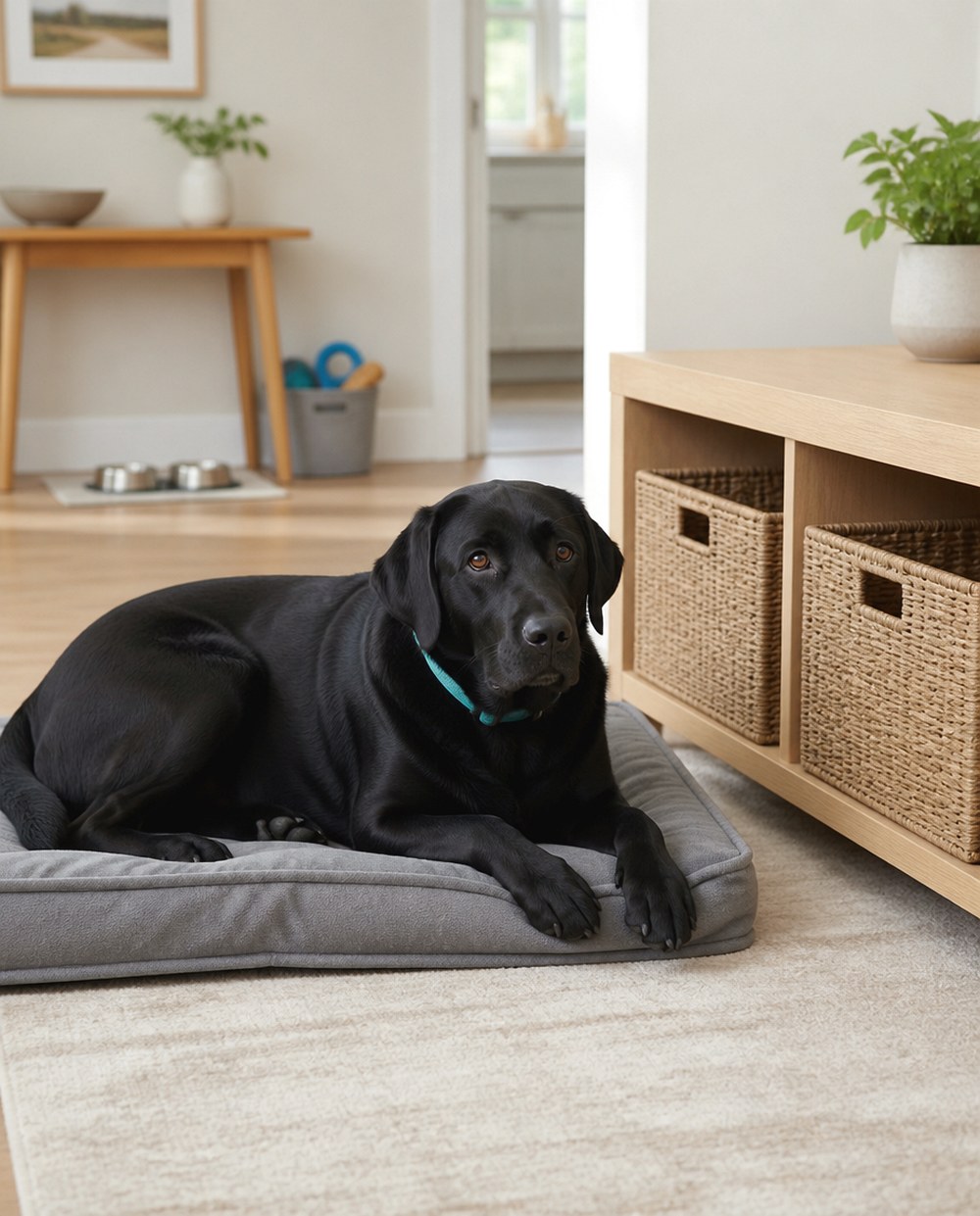
A comfortable resting area gives the room a clear purpose before you add anything else. Instead of filling the room with pet furniture, choose one quiet corner for your pet’s bed.
You may be able to reuse a washable blanket, an existing pet bed, or a firm floor cushion that is appropriate for your pet. Placing it against a wall can make the area feel sheltered without taking up much floor space.
Keep the setup uncomplicated. A bed surrounded by decorative pillows, loose blankets, cords, or baskets may look cozy but can create unnecessary chewing or tangling opportunities.
If your pet tends to track dirt inside, put a washable mat beneath the bed. That lets you clean the sleeping zone without moving furniture every time.
2. Give an Old Bookcase a Pet-Supply Makeover
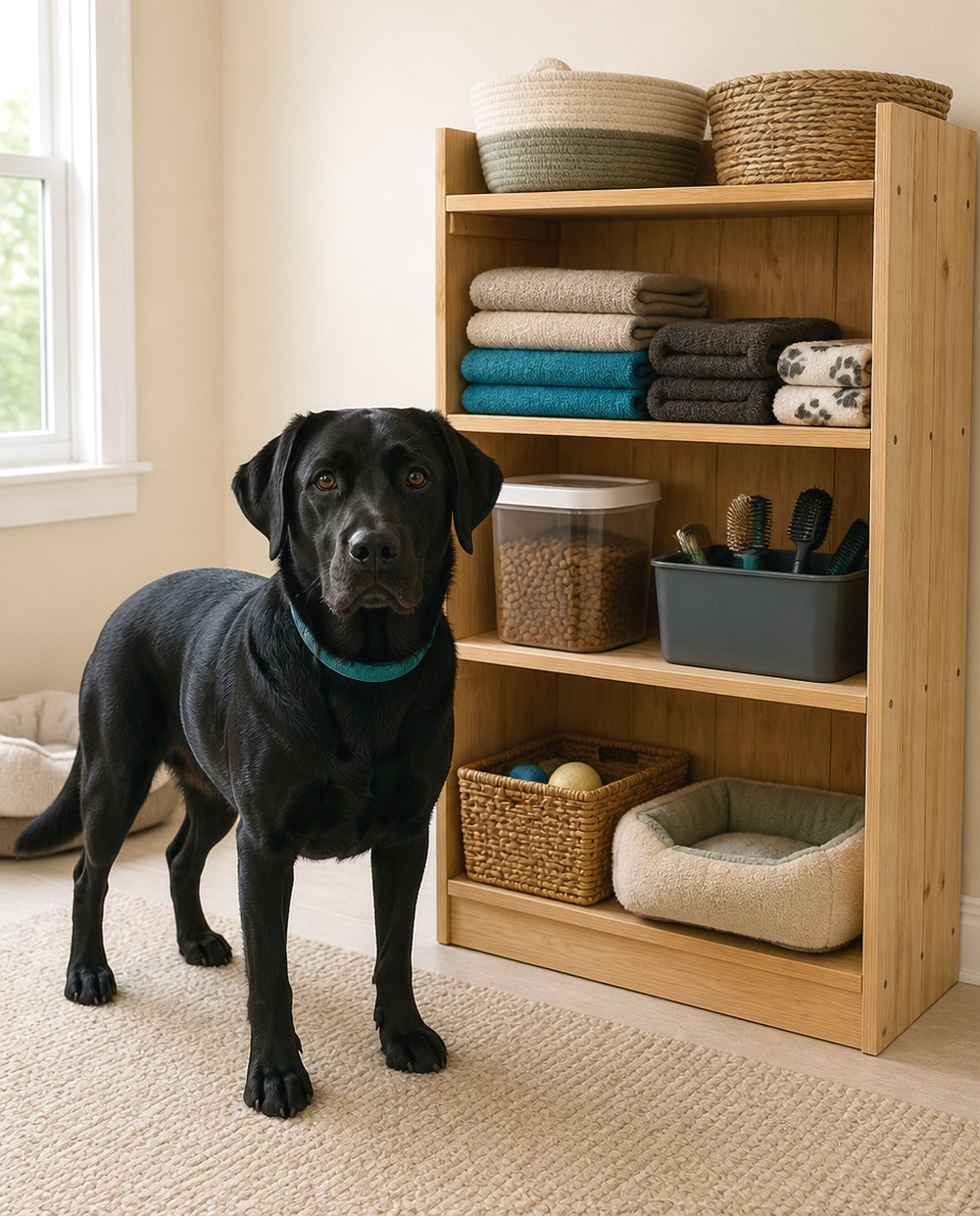
Before buying a dedicated pet-storage cabinet, look around the house for a small bookcase, cube shelf, or sturdy side unit that is no longer being used.
Use the upper shelves for items you need regularly, such as clean towels, grooming supplies, waste bags, or sealed food containers. Lower shelves should contain only items your pet can safely access.
Matching containers are optional. Reusing baskets or bins you already own works just as well. A consistent arrangement often makes mismatched containers look more deliberate.
Make sure tall or lightweight furniture is securely anchored where appropriate. Medicines, cleaning products, sharp grooming tools, and small objects should stay in closed storage that your pet cannot reach.
You May Also Like


3. Build a Low-Cost Feeding Zone
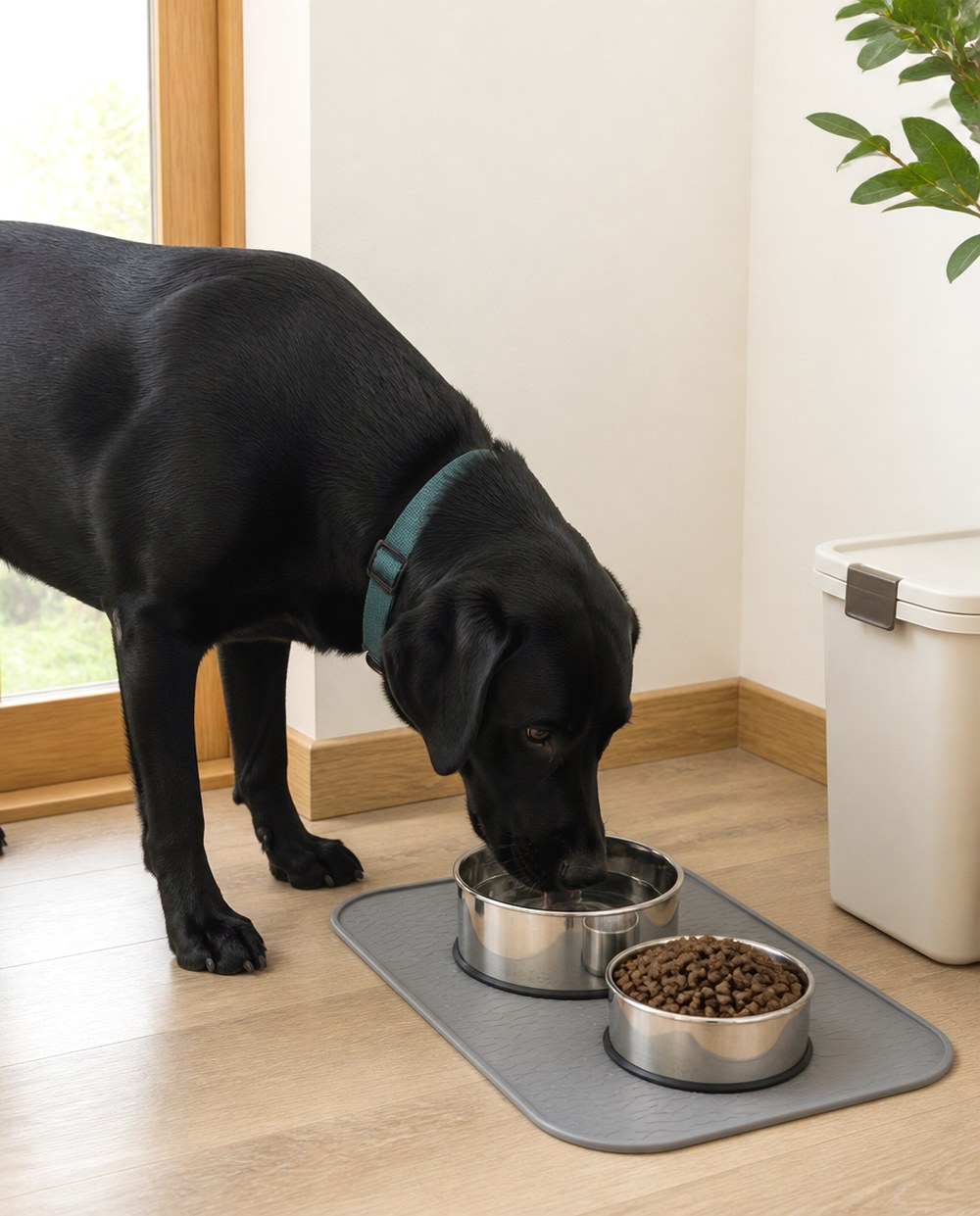
Keeping food and water in one designated spot can prevent bowls from migrating around the room and make spills easier to handle.
You do not need a raised feeding station unless your veterinarian has recommended a particular setup for your pet. Standard bowls placed on a washable feeding mat are enough for many households.
A leftover boot tray, suitable washable mat, or other easy-clean surface can help contain splashes. Choose something that stays flat and does not slide easily.
Keep the water bowl accessible throughout the day as appropriate for your pet, and wash bowls regularly. Store extra food nearby only if it can be kept in a secure, appropriate container your pet cannot open.
4. Turn One Wall Into a Walk-Prep Station
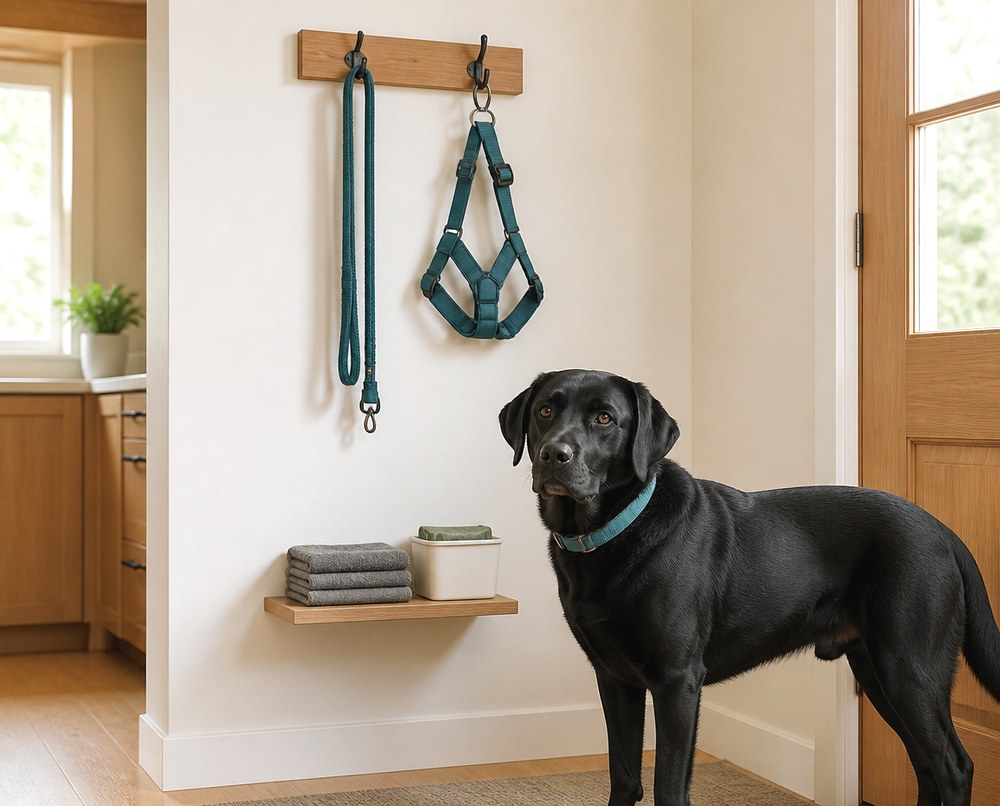
Leashes, harnesses, towels, and waste bags are easier to manage when they have one home.
A small wall rail, securely installed hooks, or an existing entry organizer can become a compact walk station. Position hanging items where you can reach them but your pet cannot chew or become tangled in them.
A small basket on a high shelf can hold waste-bag rolls and other lightweight supplies. Keep medications, pest-control products, and anything potentially hazardous in separate closed storage.
For a pet room near an exterior door, this setup can also reduce the amount of dirt carried through the rest of the house because towels are ready when you come back inside.
5. Create a Toy Library Instead of Leaving Everything Out
Buying more toys is not always the answer to boredom. Changing which toys are available can make an existing collection feel more interesting.
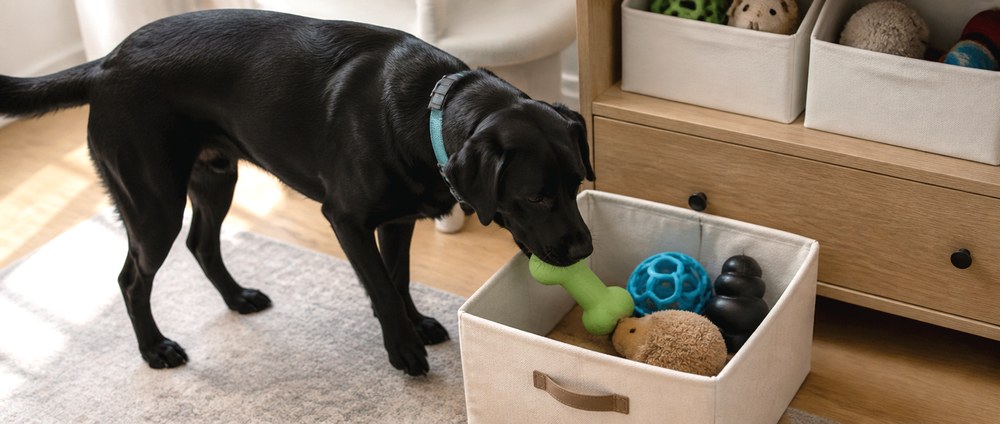
Use one sturdy basket or low bin for the toys currently in use. Keep the rest in closed or elevated storage and rotate them periodically.
This also makes damaged toys easier to notice. Check toys while you switch them and remove anything with loose pieces, sharp edges, exposed stuffing, or other damage that could become unsafe.
For pets that chew baskets, skip woven storage at floor level and use a durable container that is appropriate for the household.
6. Protect the Floor With a Washable Room Zone
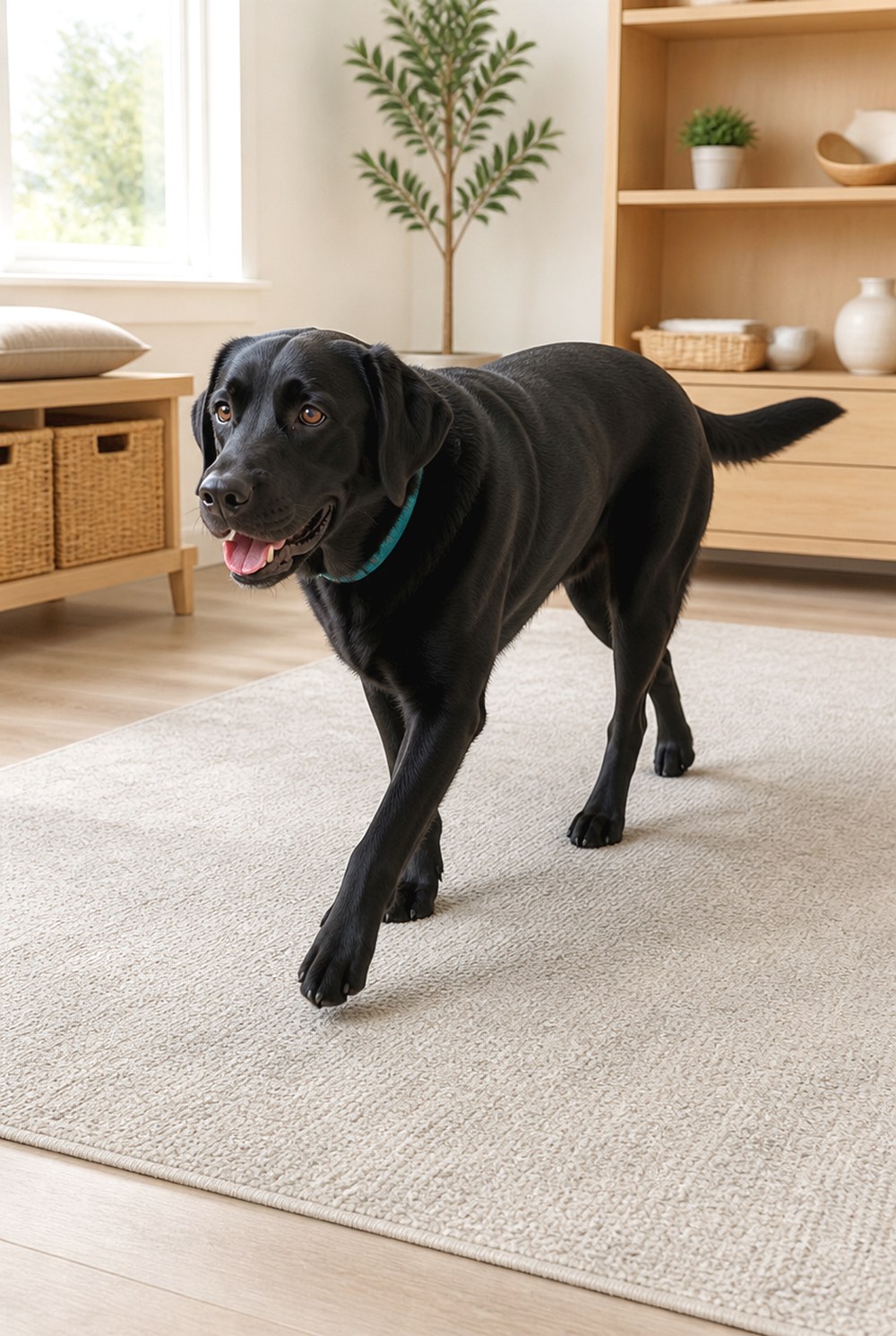
Replacing flooring is rarely a budget-friendly first step. A strategically placed washable rug or mat can solve many of the same everyday problems for much less disruption.
Use it where your pet is most likely to rest, play, or enter the room. The surface should lie flat, provide reliable footing, and be appropriate for your pet’s mobility.
Avoid covering the entire room just for appearance. Leaving some clear floor space makes cleaning easier and prevents the space from feeling crowded.
If your pet is older or has difficulty walking on slippery surfaces, traction becomes more important than decorating the room. Sudden mobility changes or signs of pain warrant veterinary attention.
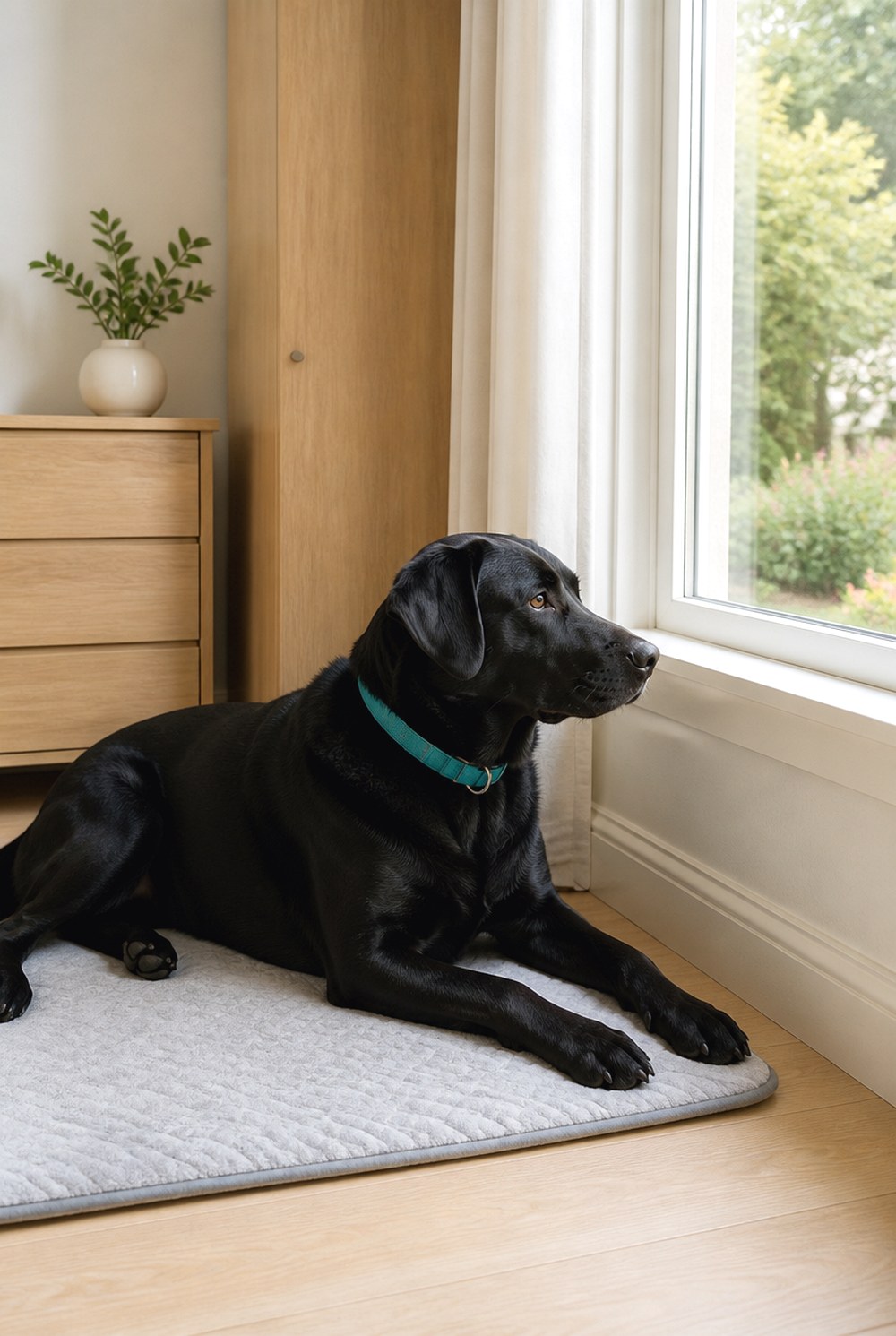
7. Make a Window-Side Observation Spot
A room can feel more engaging without adding more toys. If there is a secure window with a useful view, arrange part of the room so your pet can comfortably observe what is happening outside.
For a dog, this might be as modest as placing a bed or washable mat several feet from the window. Avoid stacking furniture to create height.
Watch how your pet responds. A window view that encourages calm observation can be useful, while one that triggers constant barking, pacing, or agitation may be better partially blocked or moved away from.
Secure blind and curtain cords so they cannot become tangled around a pet.
8. Use a Drawer for Supervised Enrichment Supplies
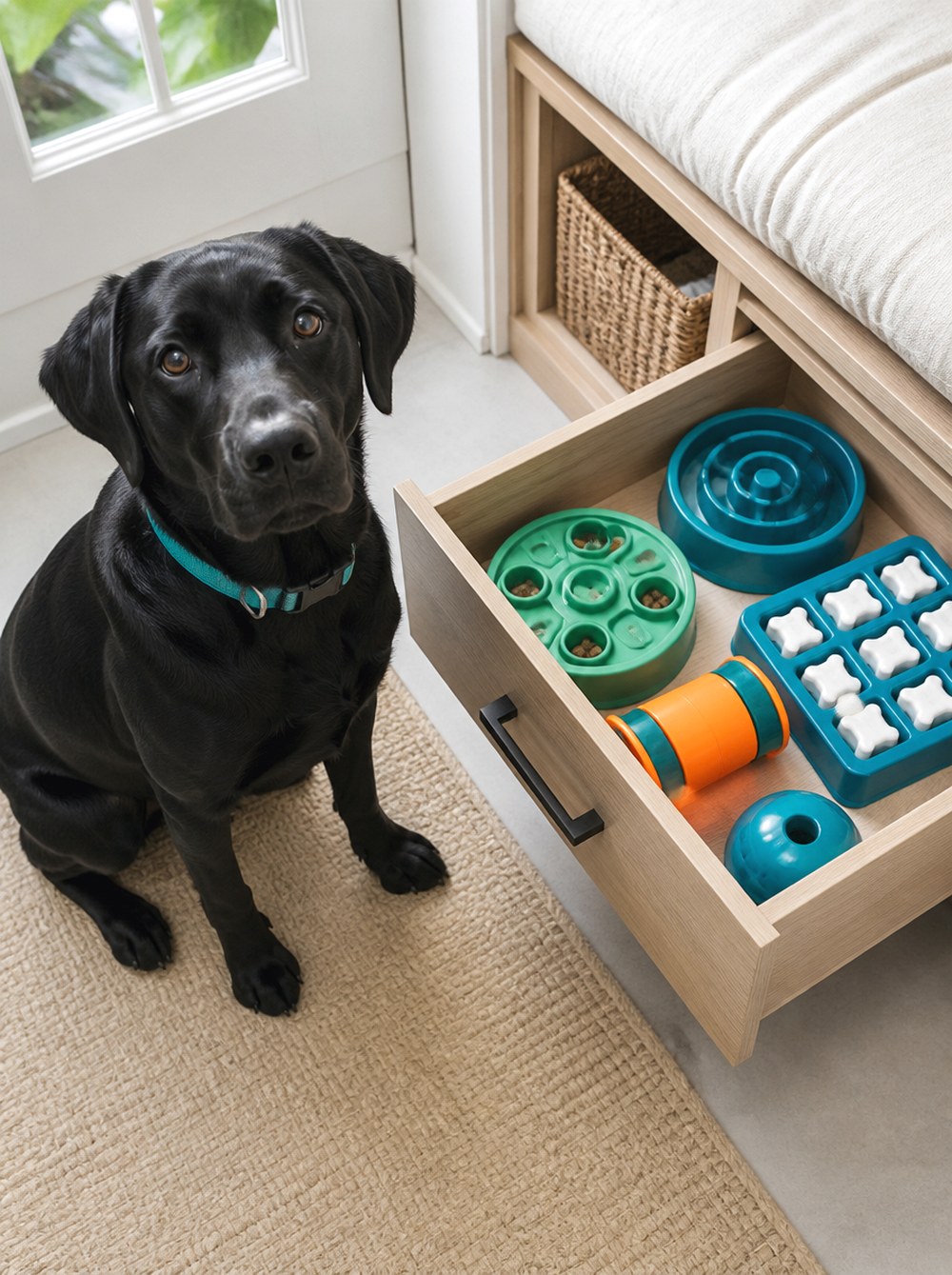
Enrichment supplies can quickly turn into their own category of clutter. Instead of buying another storage unit, dedicate one existing drawer to food puzzles and activity materials.
Keep washable puzzle toys, treat-dispensing toys, and other reusable supplies together so they are easy to find. Cardboard or fabric-based activities should be used only when appropriate for your pet and supervised if chewing or swallowing pieces is possible.
Do not leave food-filled enrichment items sitting out indefinitely. Wash reusable items according to their care instructions before returning them to storage.
The goal is not to collect dozens of puzzles. A few safe options used in different ways can provide plenty of variety.
9. Repurpose a Rolling Cart for Grooming Supplies
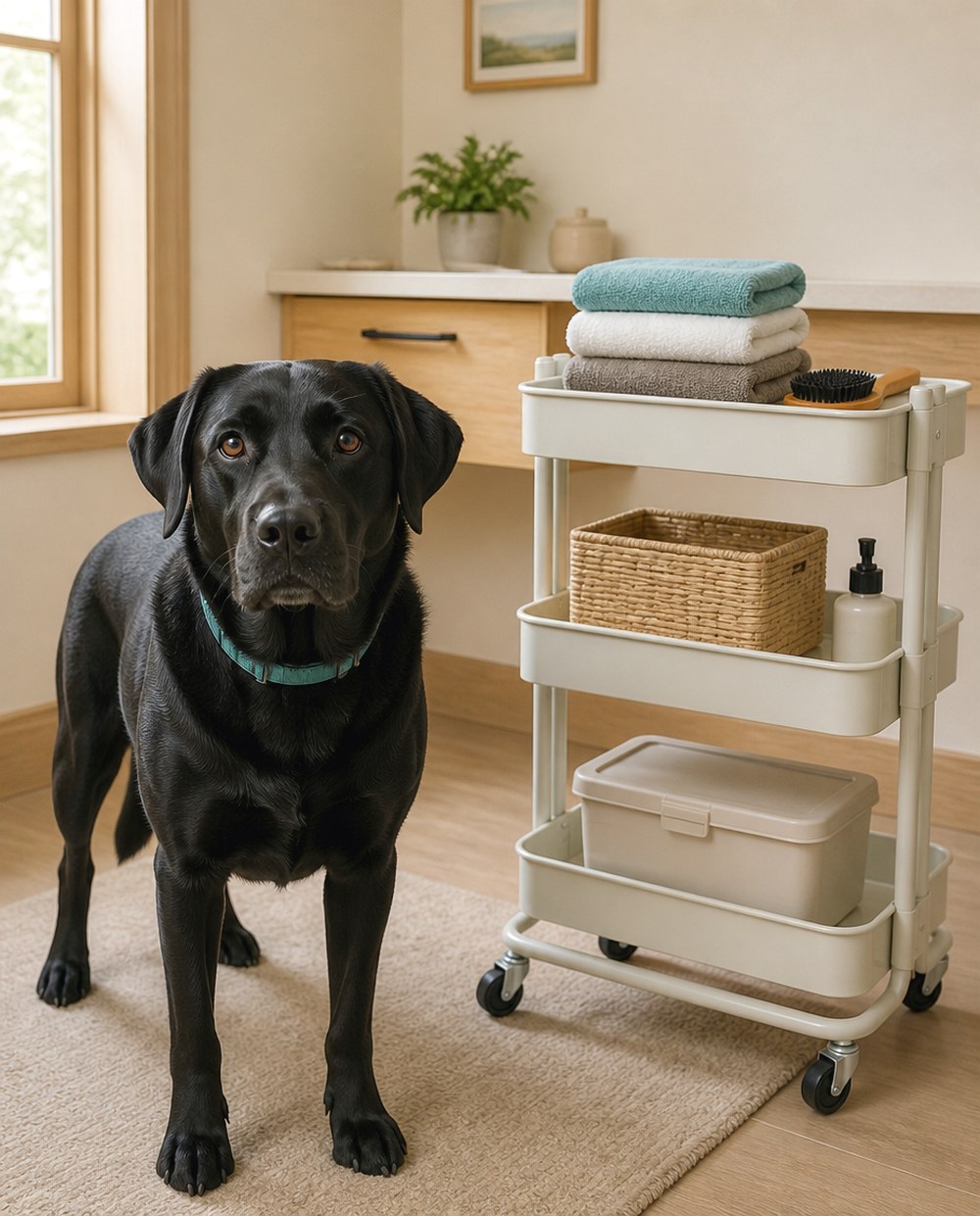
A small rolling cart can work well in a pet room if you already have one, but it should be treated as owner storage rather than something the pet can investigate.
Use it for brushes, clean towels, nail-care tools, and other grooming supplies. Place anything sharp, medicinal, or potentially harmful in a closed container or secure location rather than an open lower shelf.
The advantage of a cart is mobility. You can bring supplies where they are needed and then return the cart to a secure position.
If you do not have a cart, a handled caddy stored on a high shelf provides much of the same convenience.
10. Add a Small Cleanup Station Near the Door
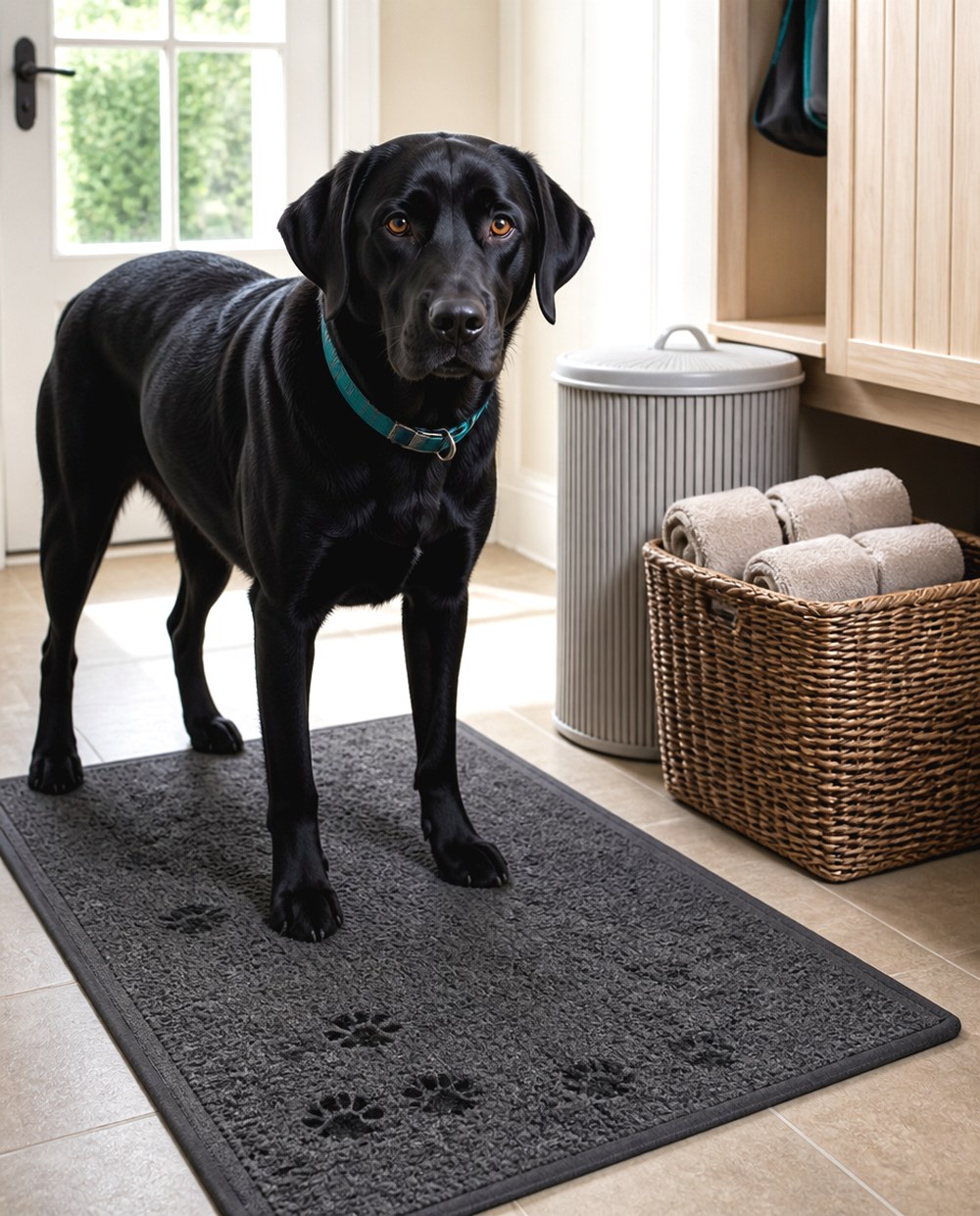
A pet room is much easier to maintain when cleanup supplies are convenient.
Set aside a washable towel basket and a lidded hamper or closed container for used pet linens. This keeps muddy towels from landing on the floor or mixing immediately with clean supplies.
Pet-appropriate cleaning products should be used according to their labels and stored securely outside your pet’s reach. Do not leave sprays, wipes, detergents, or other cleaning chemicals on an open pet-accessible shelf.
A compact cleanup station is especially useful for dogs that come inside with wet paws after walks.
11. Give the Room One Quiet Retreat
A pet room can include toys, grooming supplies, and activity areas while still offering a place where nothing is expected from your pet.
Choose the quietest side of the room for a second rest mat, open crate if your pet is already comfortable using one, or another established resting place. Do not force a pet into a crate or introduce confinement simply as decoration.
Keep this zone away from busy storage, food preparation, or household traffic when possible.
You can create a sense of separation with furniture placement rather than buying a room divider. For example, placing a low storage unit beside—not directly around—the resting area can visually define the space while maintaining airflow and clear access.
12. Finish With Low-Cost Personal Details
Once the functional parts of the room work, use whatever remains of the budget for personality.
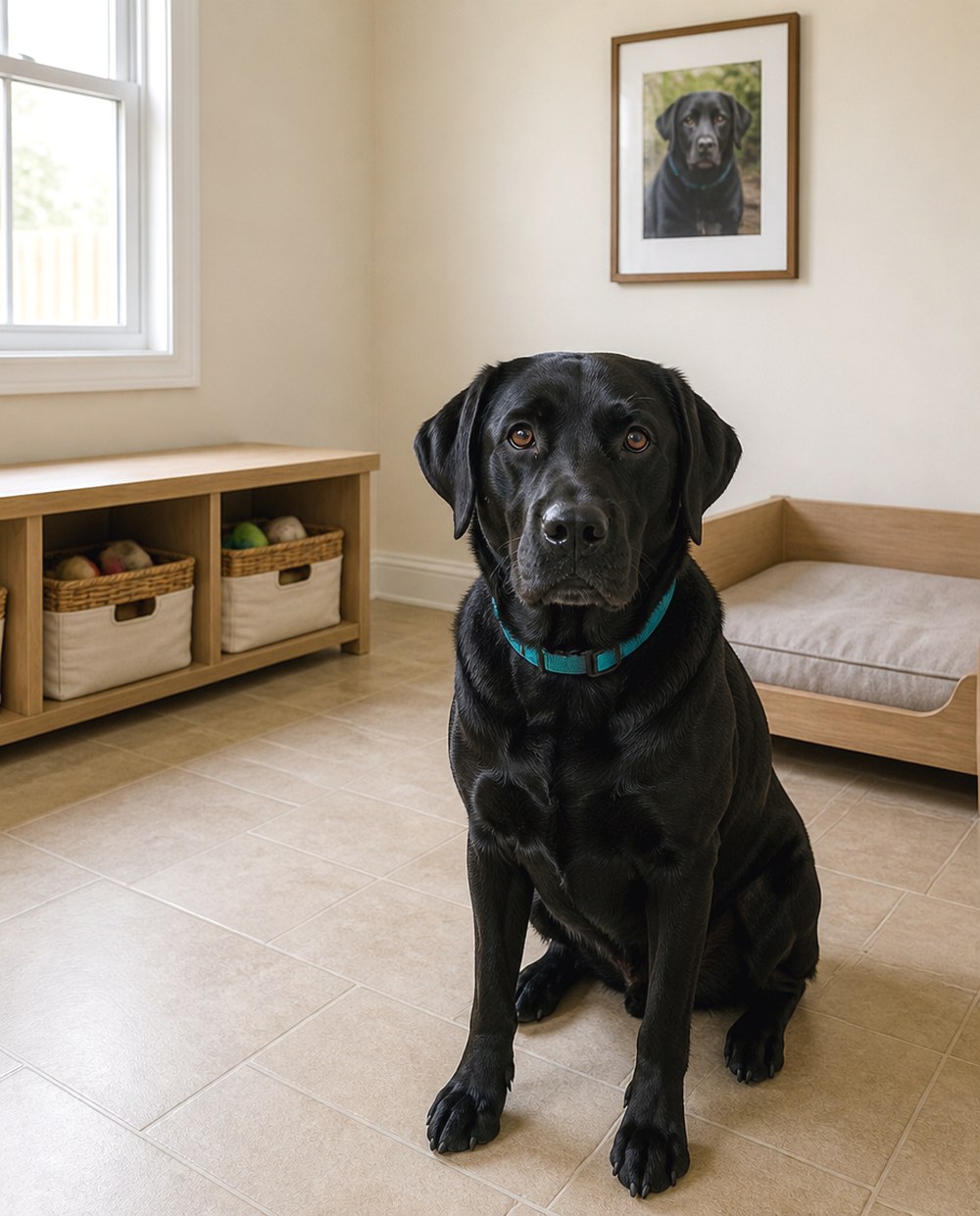
This is where inexpensive changes can have a large visual effect. Frame a favorite pet photo in a frame you already own, add washable labels to owner-access storage, or reuse a small piece of household décor that does not create a hazard.
Keep decorations off the floor if your pet chews unfamiliar objects. Skip toxic plants, candles, dangling garlands, breakable ornaments, or objects with small removable parts.
A restrained finishing touch usually works better than filling every empty wall. The room should still have open space for your pet to turn around, stretch, play, and settle comfortably.
You May Also Like


Where to Spend—and Where to Save
When you are putting together a pet room on a limited budget, start with function rather than appearance.
Spend first on anything that directly affects safety, hygiene, comfort, or durability. That may include a suitable bed, secure food storage, appropriate bowls, or a floor surface your pet can use comfortably.
Look for savings in storage and decoration. Shelves, baskets, carts, hooks, frames, and small furniture pieces can often be repurposed from other rooms or found secondhand. You also do not need to finish everything at once.
A workable order is to establish the sleeping and feeding areas first, organize the supplies you already have, and then live with the room for a while. The way you actually use the space will show you what is missing.
Keep the Room Useful as Your Pet’s Needs Change
A pet room should be easy to change. A puppy may need more supervision and fewer accessible objects. An adult dog may benefit from a larger open activity area. A senior pet may need better traction, a more accessible bed, and shorter paths between resting, water, and the door.
The same principle applies to cats and other household pets: arrange the space around the animal’s real behavior rather than around a photograph of what a pet room is supposed to look like.
If your pet suddenly avoids the room, struggles to get comfortable, develops mobility problems, stops eating or drinking normally, has bathroom changes, or shows other sudden behavioral or physical changes, contact a veterinarian rather than assuming the room setup is the cause.
Build the Room in Layers
You do not need to complete all 12 pet room ideas at once. Start by solving the biggest daily inconvenience in the space.
If supplies are scattered everywhere, organize storage first. If muddy paws are the problem, create the cleanup zone. If your pet has nowhere quiet to settle, begin with the sleep corner.
Once those daily problems are handled, the room will already feel more finished. Everything added after that can earn its place by making the space safer, cleaner, calmer, or easier to use.
