Feeding two or more pets in the same home can turn a small corner of the kitchen into a surprisingly complicated space. One pet may finish first and investigate another bowl. A cat may need access to food a dog should not reach. Water gets splashed across the floor, food bags crowd a cabinet, and bowls seem to migrate around the room.
Save This Idea on Pinterest

12 Multi-Pet Feeding Station Ideas for Calmer, Cleaner Meals
Save to PinterestA useful multi-pet feeding station does more than hold several dishes. It gives each pet a predictable place to eat while making portions, cleanup, storage, and supervision easier for you.
The right arrangement depends on how your pets behave around food. Pets that calmly eat beside one another may do well with divided stations in the same room. Pets that rush, steal food, or guard bowls usually need more distance or separate feeding spaces.
When You Need More Separation
These setups create clearer boundaries between individual meal areas.
1. Opposite-Wall Feeding Stations
Instead of lining every bowl along one wall, place one feeding station on one side of the room and the second station across from it.
Distance can reduce the feeling that both pets are competing over the same feeding spot. It also makes it easier to notice which pet is approaching the wrong bowl.
Give each station its own washable mat and keep the bowl arrangement consistent from meal to meal. Avoid placing either pet in a tight corner where another animal could block the exit.
This setup works particularly well in kitchens, utility rooms, or dining areas with enough open floor space to create two recognizable zones.

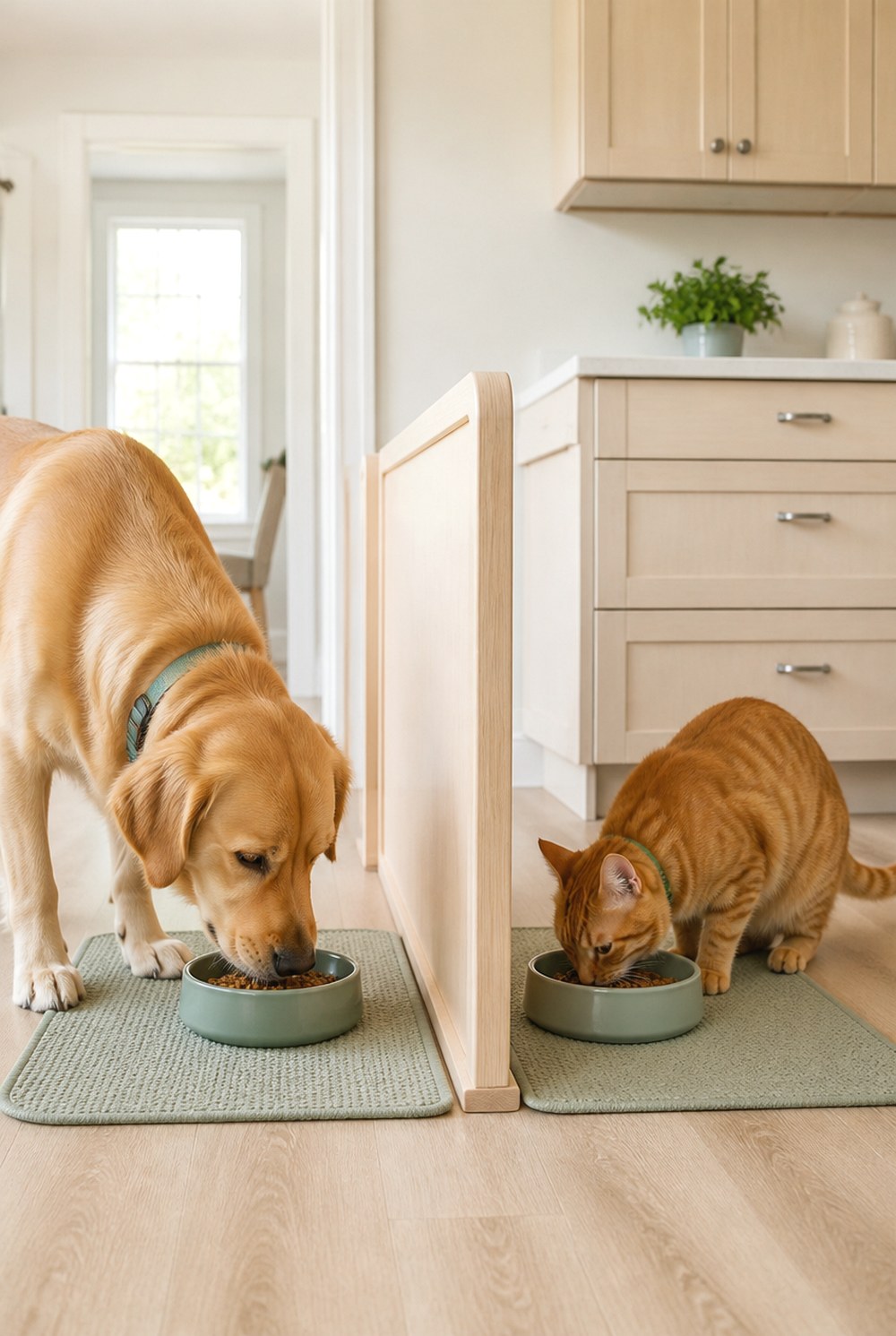
2. A Feeding Station With a Center Divider
For pets that can eat in the same general area but become distracted by each other’s bowls, create two neighboring stations with a solid divider between them.
A stable cabinet end panel, purpose-built partition, or securely positioned furniture panel can block the direct sight line without enclosing either pet.
The divider should be large enough to provide a meaningful visual boundary but arranged so both animals can enter and leave their eating spaces comfortably. It should never wobble or be something a pet can knock over.
This arrangement keeps the bowls close enough for convenient meal preparation while making each side feel more individual.
You May Also Like


3. Floor-Level Dog Station and Elevated Cat Station
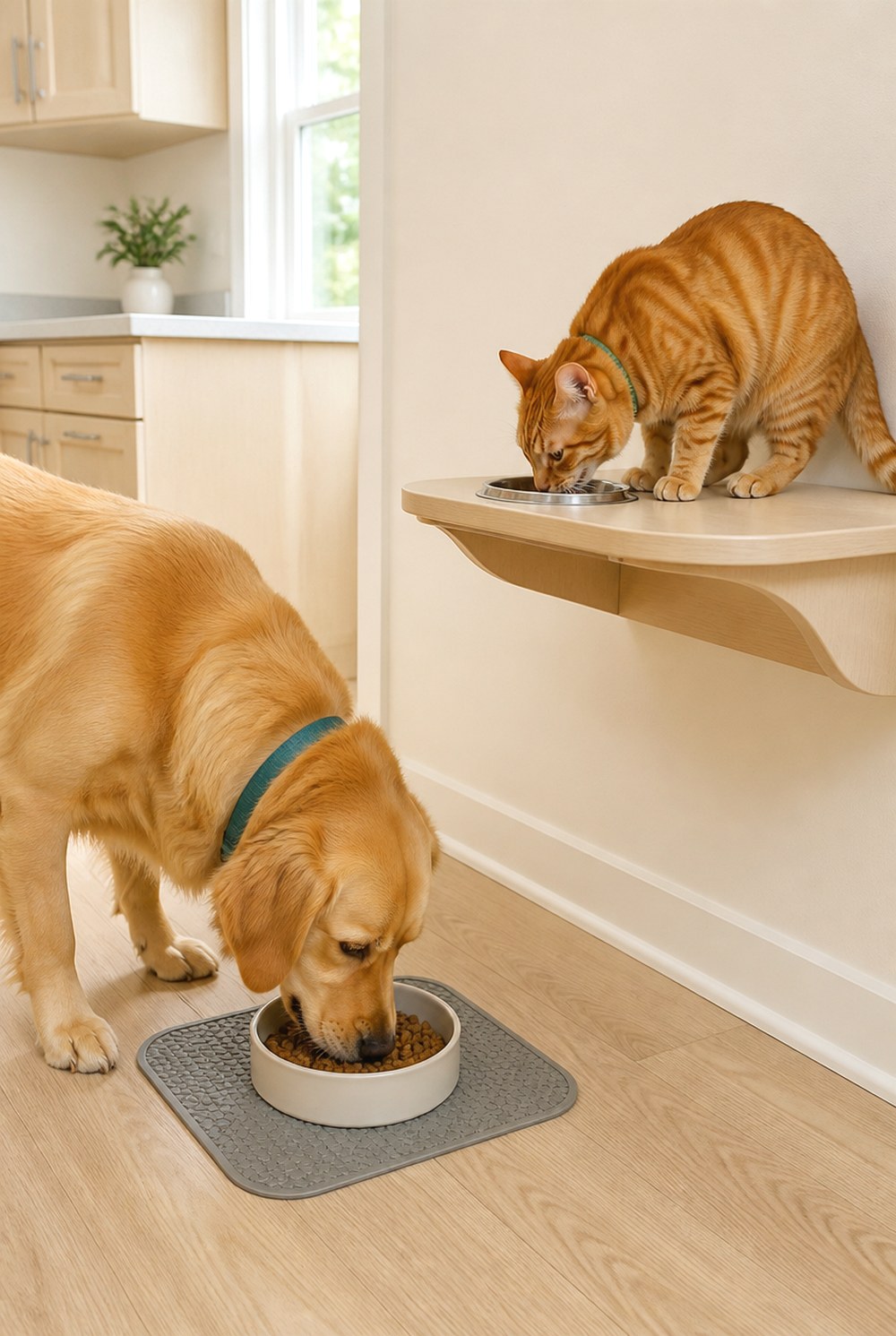
A mixed dog-and-cat household often benefits from using vertical space.
Give the dog a stable floor-level eating area while creating a separate elevated cat feeding surface that the cat can reach comfortably. The cat platform should be wide, sturdy, nonslip, and positioned away from edges.
Do not assume that elevation alone will stop every dog from reaching cat food. The layout needs to match the dog’s size and ability, and meals may still need supervision.
For kittens, senior cats, or cats with mobility limitations, a high jump may be unsuitable. A lower platform or completely separate room can be a better choice.
4. Gated Feeding Zones
A doorway or wide opening can become a useful dividing point when pets need stronger separation.
One pet eats on one side while the other uses a separate station beyond a securely installed pet gate or barrier appropriate for the animals in the household.
This can be especially useful when one pet finishes quickly and immediately tries to investigate the other bowl.
Choose a barrier that is stable and suitable for the pets’ size and jumping ability. Do not leave collars, paws, or food bowls positioned where they could become caught against the gate.
After the meal, pick up unfinished food as appropriate rather than leaving it available for another pet to reach later.

Stations That Keep Supplies Under Control
When the pets themselves eat comfortably together, storage and cleanup may become the bigger challenge.
5. Feeding Cabinet With Separate Pet Drawers
Turn the cabinet closest to the feeding area into a dedicated meal-prep zone.
Give each pet a separate drawer or bin for items such as measuring cups, clean feeding accessories, and sealed packages. Shared supplies can occupy a third section.
Keeping individual supplies separated is particularly useful when pets eat different foods. It reduces the chance of grabbing the wrong bag or scoop during a rushed morning.
Food should remain in suitable closed packaging or pet-safe storage according to its label, and the cabinet should prevent pets from helping themselves.

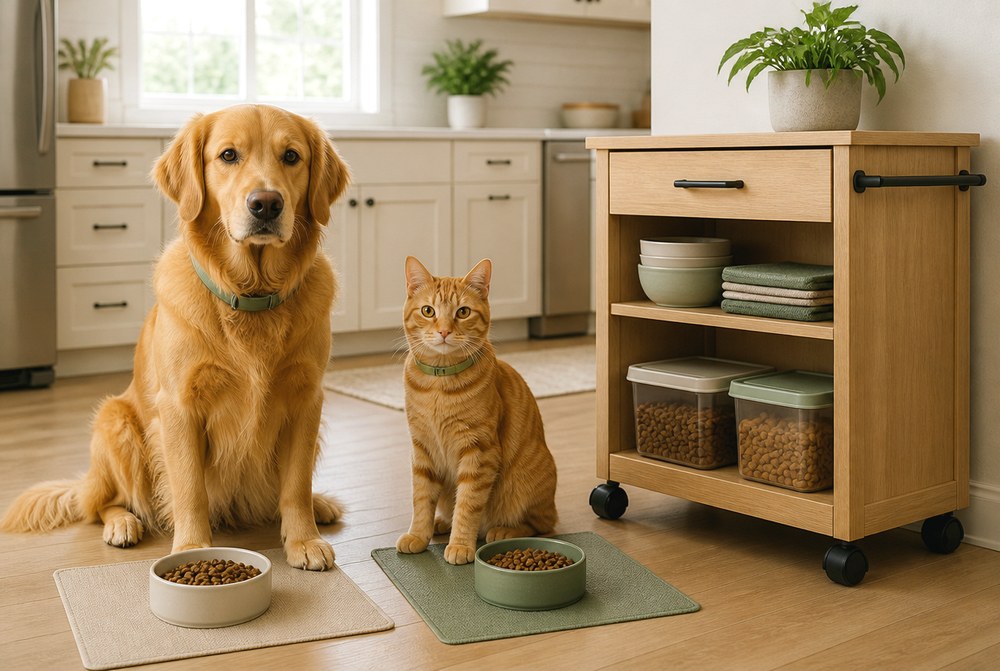
6. Rolling Feeding Cart
A compact rolling cart can keep daily feeding supplies together without permanently giving up cabinet space.
Use the top level for items you reach for during meal preparation and lower compartments for closed food containers, clean bowls, or washable mats. Locking wheels or another secure way to prevent movement can keep the cart stable while it is parked.
The biggest advantage is flexibility. You can keep the cart near a pantry and roll it closer during meal preparation rather than carrying several containers back and forth.
Keep anything unsafe for pets securely stored rather than exposed on an open shelf.
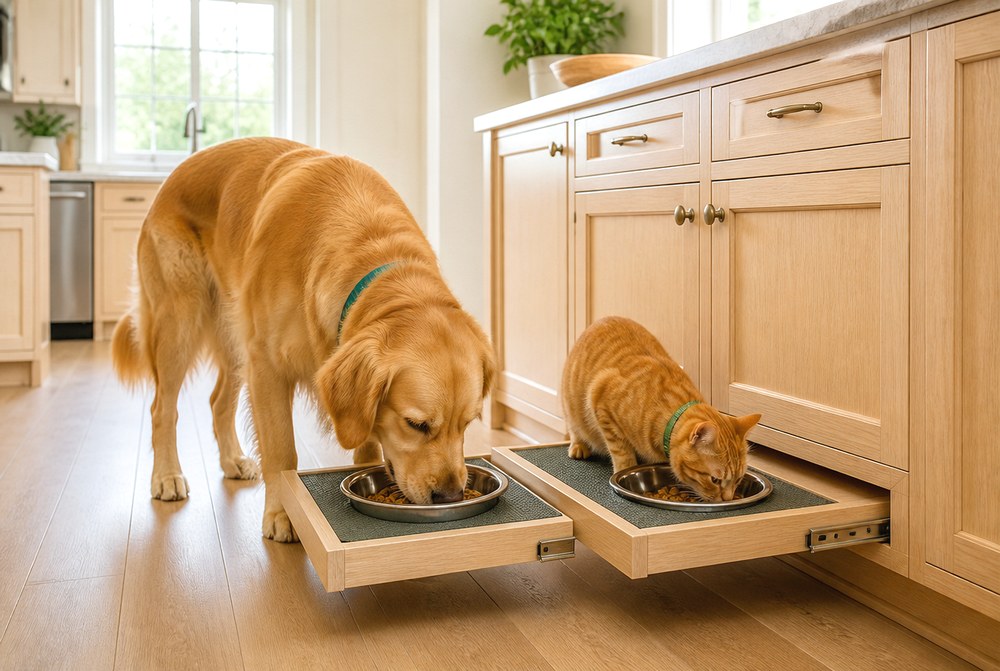
7. Pull-Out Meal Trays
If floor space is limited, consider a cabinet with sturdy pull-out trays that create temporary bowl platforms during meals.
Each pet receives a separate tray. When mealtime is finished and the trays have been cleaned and dried, they can slide back into the cabinet.
This arrangement keeps bowls from permanently occupying a narrow walkway.
The hardware needs to support normal feeding movement without sliding, tipping, or retracting unexpectedly. The trays should also sit at a comfortable level for the pets using them.
A pull-out design is better treated as a purpose-built feeding feature than an improvised drawer.
8. One Feeding Bench With Hidden Storage
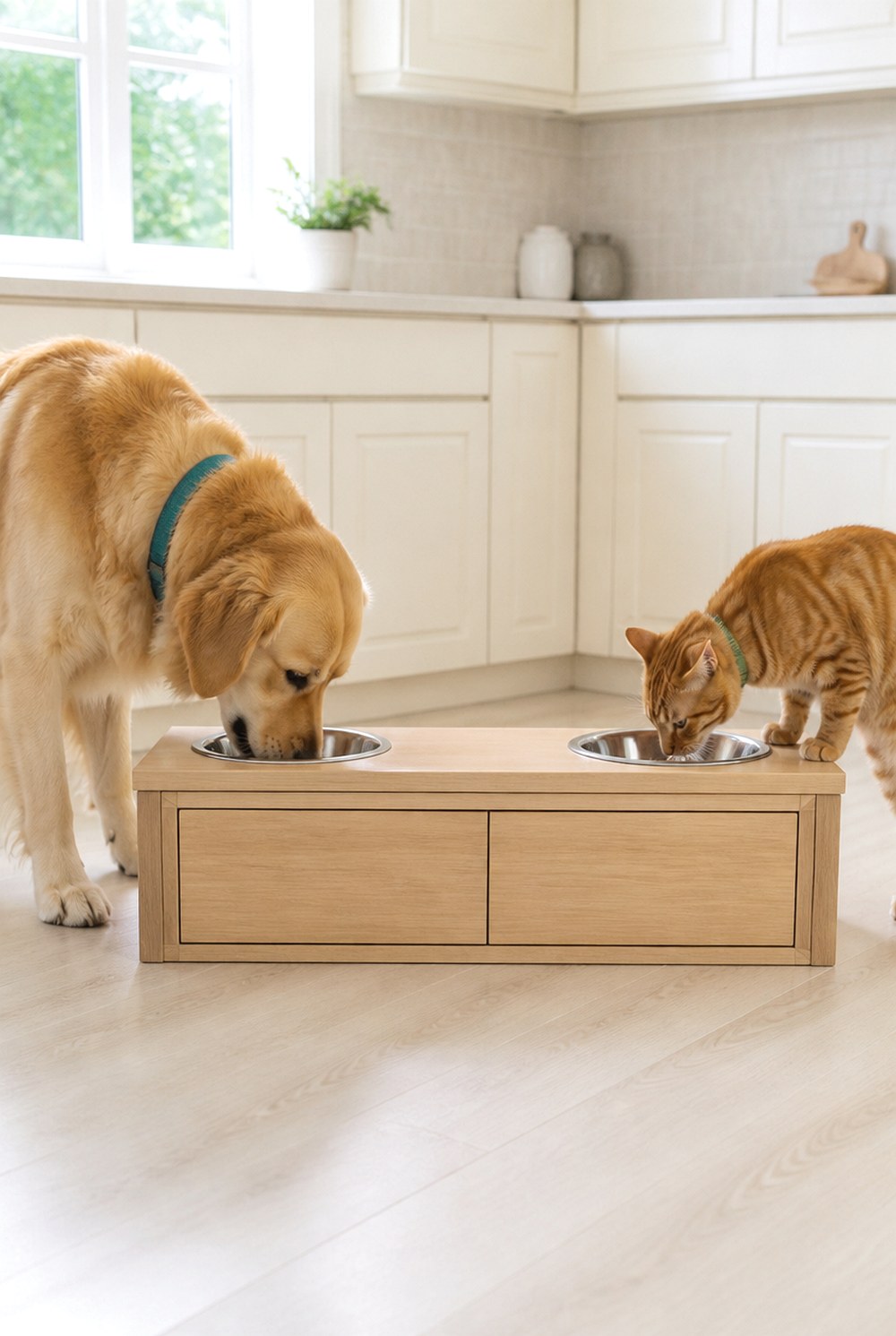
A low feeding bench can combine bowl space and storage in one piece of furniture.
The top or lower feeding surface can contain two clearly separated eating positions, while enclosed compartments hold closed food containers and spare supplies.
Choose a design that gives each pet adequate head and body room. Avoid forcing two animals shoulder-to-shoulder simply to make the furniture more compact.
A smooth, wipeable surface around the bowls makes dropped food and water easier to remove before it works into seams.
Ideas for Messy or Compact Feeding Areas
These stations solve practical space and cleanup problems without combining every pet into one crowded setup.
9. Washable Utility-Room Feeding Zone
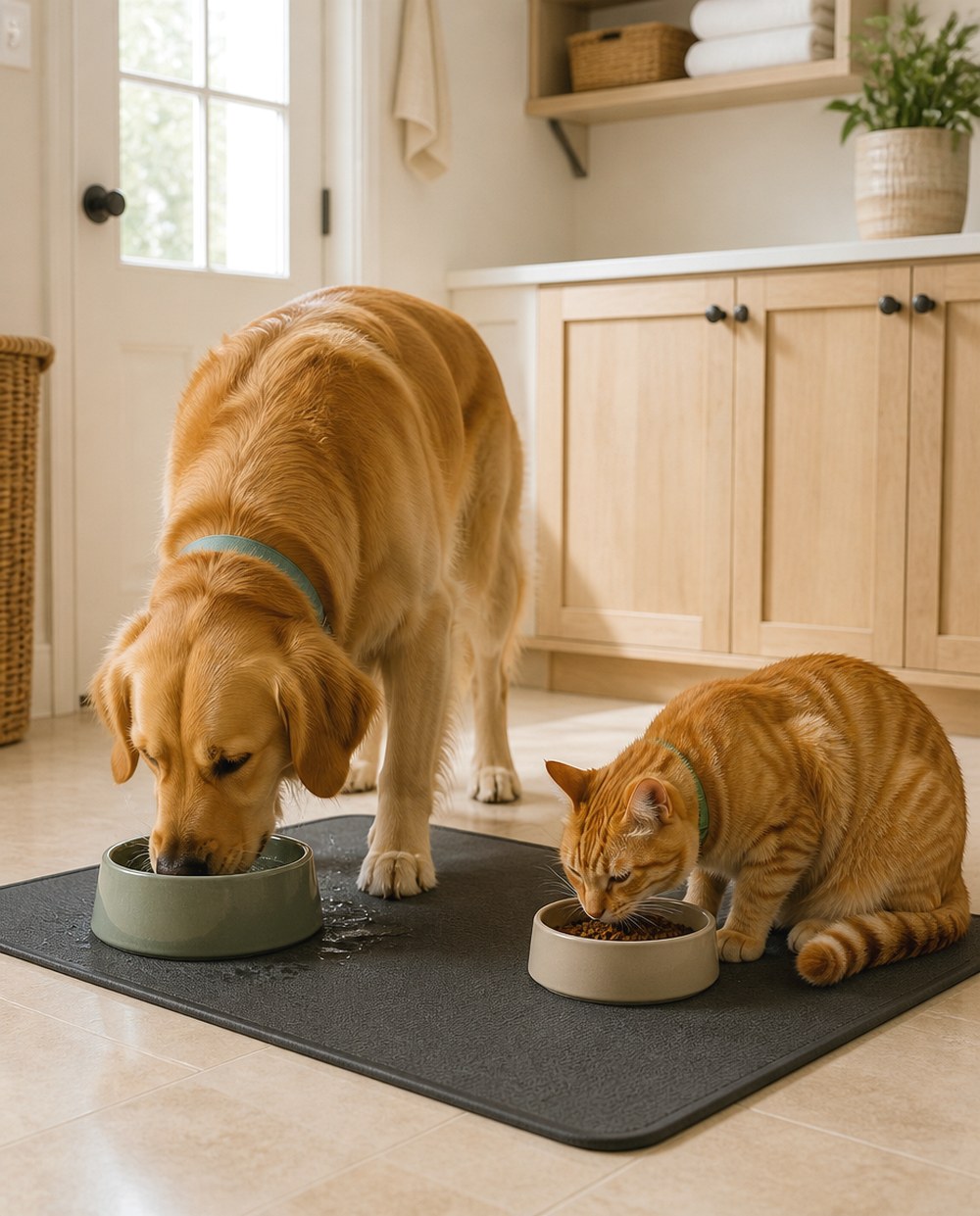
If one area of the kitchen is constantly covered with crumbs or water droplets, move the feeding station to an easy-clean utility area.
Use a large washable or wipeable floor mat beneath individual bowls, leaving enough room around each setup to catch ordinary spills.
Store spare cloths or other cleanup supplies nearby but keep cleaning products securely out of pet reach.
This arrangement can work well for enthusiastic drinkers, pets eating wet food, or households where several bowls make the main kitchen feel crowded.
10. Corner L-Shaped Station
A kitchen corner can accommodate two feeding areas without lining the bowls directly beside each other.
Place one station along each side of the corner so the pets naturally face different directions while eating. The L-shaped arrangement creates more personal space than a straight row of bowls.
Make sure neither pet is trapped between furniture and the other animal. Both should have a clear route away from the station after finishing.
This layout can be particularly useful in apartments where there is not enough room to create feeding zones on opposite sides of the room.

11. Individualized Bowl Station
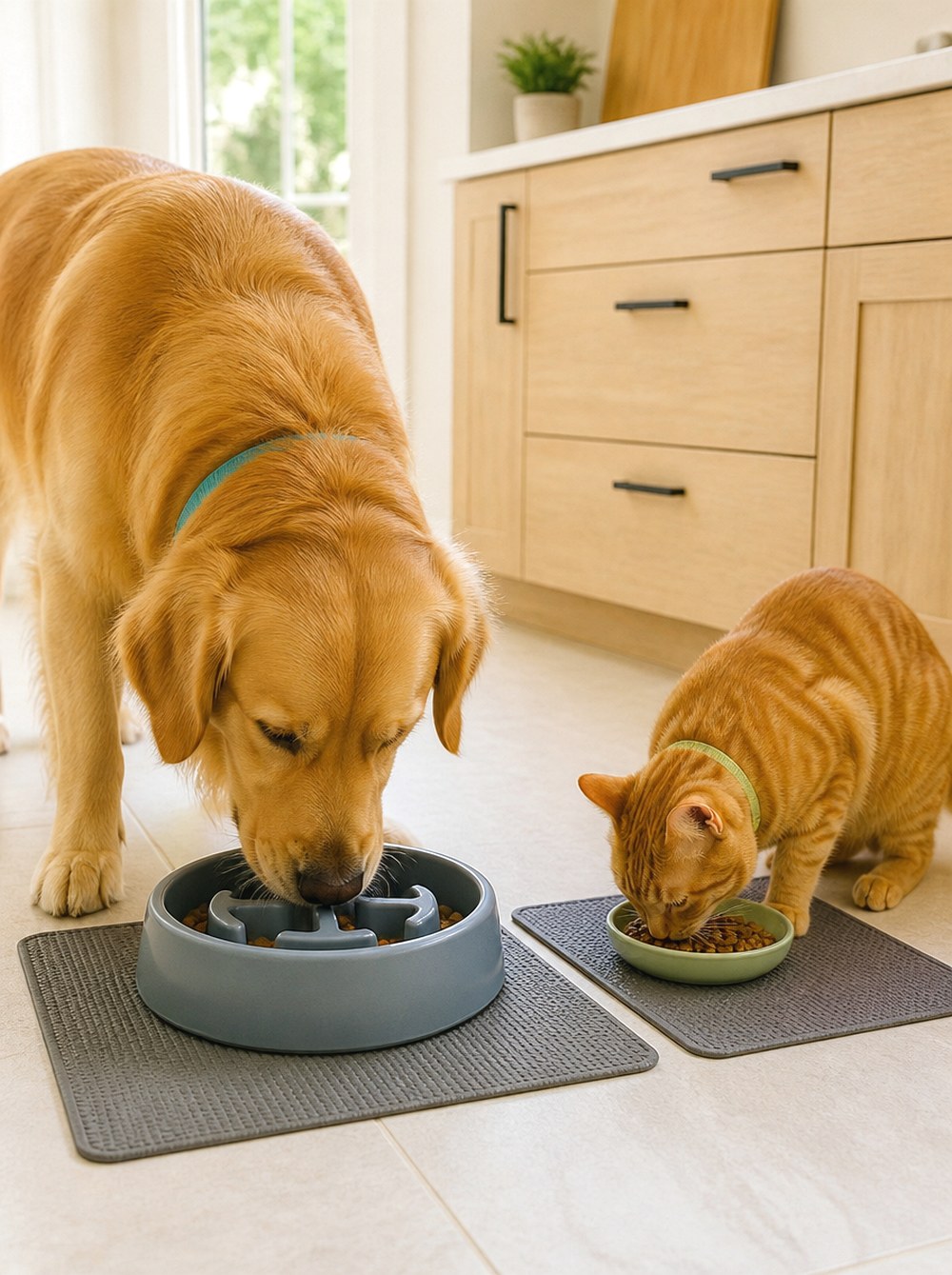
Pets sharing a home do not have to use identical feeding equipment.
One pet may eat at a standard bowl while another uses an appropriately designed slow-feeding bowl or another feeding format selected for that individual pet.
Build the station around those differences rather than forcing matching bowls for the sake of appearance.
Keep each feeding position visually distinct and always use feeding equipment suited to the individual animal. Supervise unfamiliar food puzzles or feeding devices until you know how your pet interacts with them, and replace damaged items.
12. Controlled-Access Feeding Station
When one pet repeatedly steals another pet’s food, physical separation is often more useful than adding more bowls.
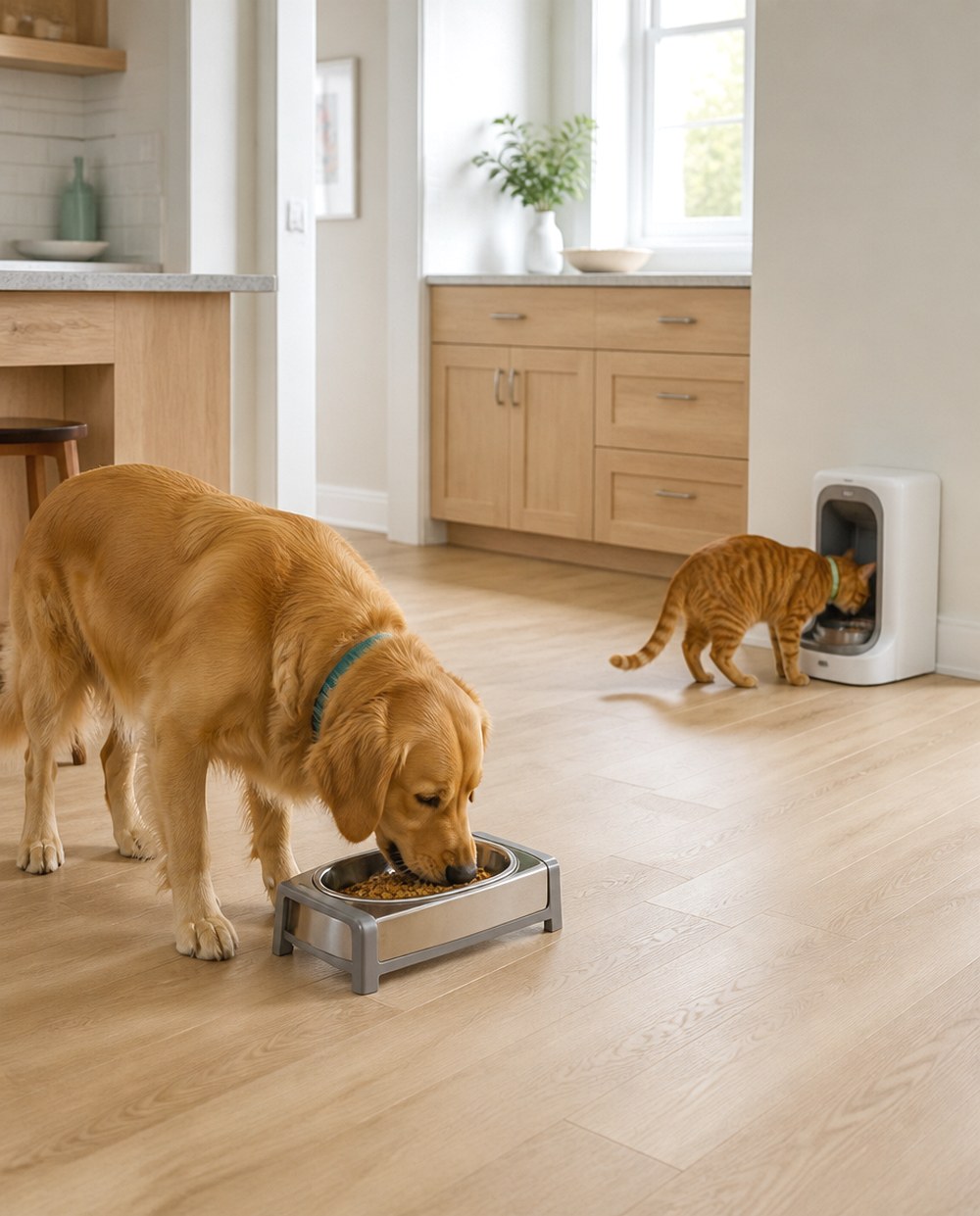
A controlled-access setup might place one pet’s meal in a securely separated area or use a pet-appropriate access-controlled feeder designed to limit access to the intended animal.
Keep the other pet’s feeding area several feet away rather than positioning both stations nose-to-nose.
Technology should not replace observation. Check that the intended pet can comfortably reach the food and that another animal is not hovering, blocking access, or creating stress around the station.
This arrangement can be especially useful when pets need different foods or have very different eating speeds.
You May Also Like


Match the Station to the Pets, Not Just the Room
The neatest-looking feeding station will not work if the pets are uncomfortable using it.
Watch what happens during an ordinary meal. A workable arrangement lets each animal approach its own bowl, eat without being repeatedly displaced, and leave without having to squeeze past another pet.
If one pet finishes first, do not allow that animal to routinely push into another pet’s meal. Increase distance, use a barrier, or feed separately.
Signs such as stiff posture, hovering over another pet, blocking access, growling, snapping, or repeated food stealing are reasons to reconsider a shared setup rather than simply moving the bowls a few inches farther apart. Persistent conflict around food may warrant help from an appropriately qualified behavior professional.
Sudden appetite changes, difficulty eating, repeated vomiting, weakness, unusual drinking, or other concerning physical changes should be discussed with a veterinarian rather than treated as a feeding-station problem.
A Few Details Make Any Station Work Better
Whichever layout you choose, keep the basics consistent:
- Give every pet a clearly assigned eating place.
- Leave enough room for pets to enter and leave comfortably.
- Use stable bowls and nonslip, washable surfaces.
- Keep food closed and stored where pets cannot raid it.
- Keep cleaners, medicines, cords, small objects, and other unsafe supplies out of reach.
- Wash food and water dishes regularly using a method appropriate for the bowl material.
- Remove damaged feeding equipment.
- Supervise meals when pets compete, steal food, or use unfamiliar feeding devices.
You do not need to build an elaborate feeding cabinet on the first day. Start by fixing the biggest problem in your current setup. If crowding is the issue, add distance. If food stealing is the problem, create controlled separation. If bags and bowls are taking over the kitchen, concentrate supplies in one secure storage zone.
A feeding station earns its place in the home when it makes meals more predictable for the pets and easier for you to manage.
