A cat does not need an entire room to have a comfortable winter retreat. A well-chosen corner can provide warmth, privacy, a good view, or simply a place to sleep away from household traffic.
Save This Idea on Pinterest

10 Winter Cat Cozy Corner Ideas for a Warm, Relaxing Home
Save to PinterestThe best winter setup depends on what your cat already seeks out. A cat that follows patches of afternoon sun may appreciate a window-adjacent perch, while one that disappears under furniture might prefer an enclosed cave bed. Older cats may benefit from a low, easy-to-enter resting place, while confident climbers may choose an elevated shelf.
The goal is not to make every corner warmer. It is to create several comfortable choices so your cat can move between sunny, sheltered, social, and quiet spots as the temperature and household activity change.
Choose the Kind of Cozy Your Cat Already Looks For
Before rearranging furniture, notice where your cat spends cold days.
A cat sleeping against interior walls may be avoiding drafts. A cat repeatedly climbing onto a chair beside you may want warmth without complete isolation. A cat squeezing into boxes or under tables probably values enclosure as much as temperature.
Use those habits as your starting point rather than trying to convince your cat to use a spot simply because it looks cozy.
These ten ideas cover different preferences.
1. Build a Draft-Free Bed Against an Interior Wall
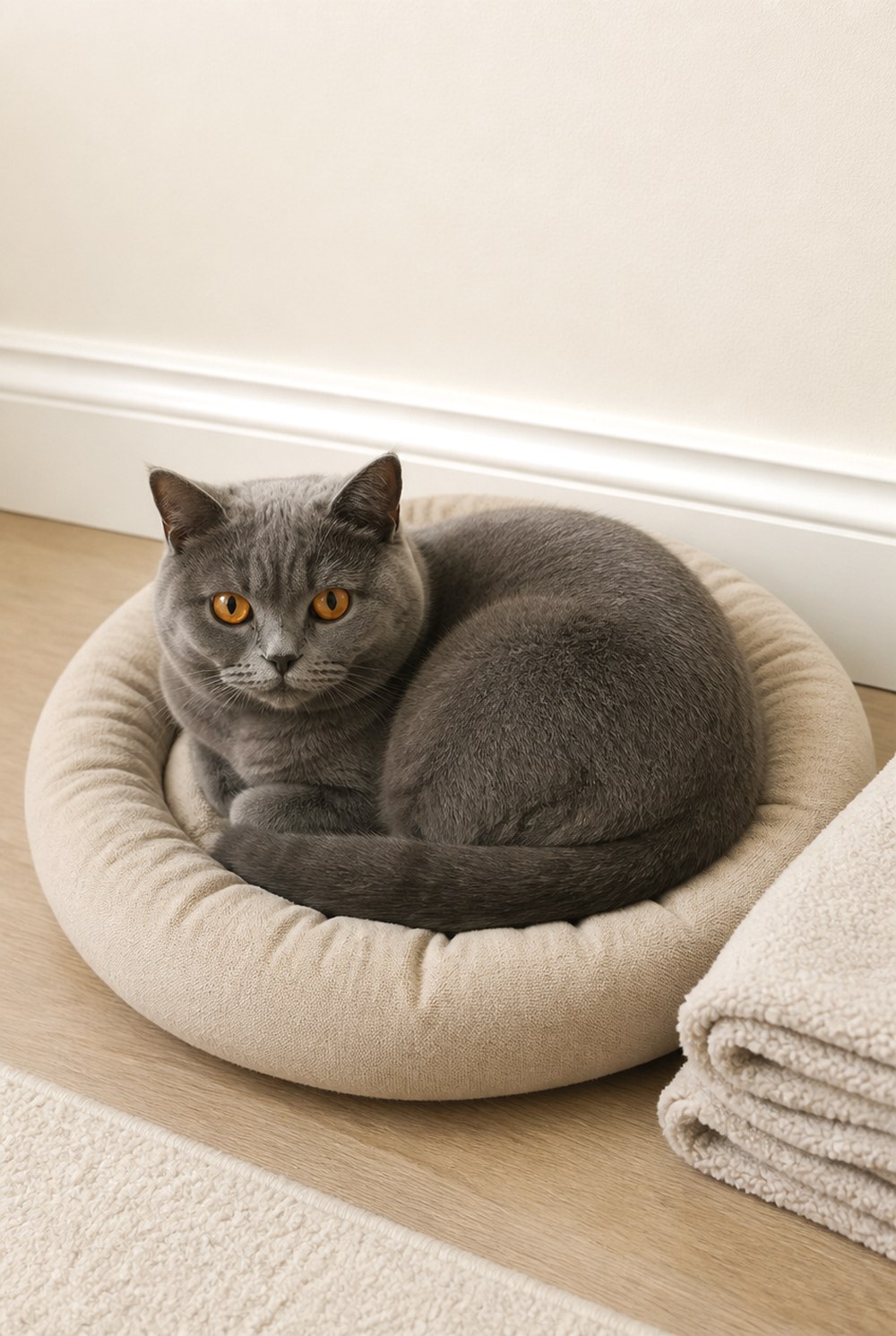
A low bed against an interior wall is one of the most practical winter setups, especially if the usual sleeping area is close to a chilly window or exterior door.
Choose a quiet section of the living room, bedroom, or hallway where cold air does not sweep across the floor. A padded cat bed with raised sides can help create a protected sleeping pocket. Add a washable fleece or tightly woven blanket if your cat likes burrowing.
Keep the entrance open enough for the cat to step in and out without climbing over a pile of fabric. For a senior cat or one with limited mobility, a shallow front edge is easier to navigate.
Check the location while the heating system is running. A corner that seems comfortable during the afternoon may sit directly in a cool airflow later in the evening.
2. Turn a Sunny Window Area Into an Afternoon Retreat
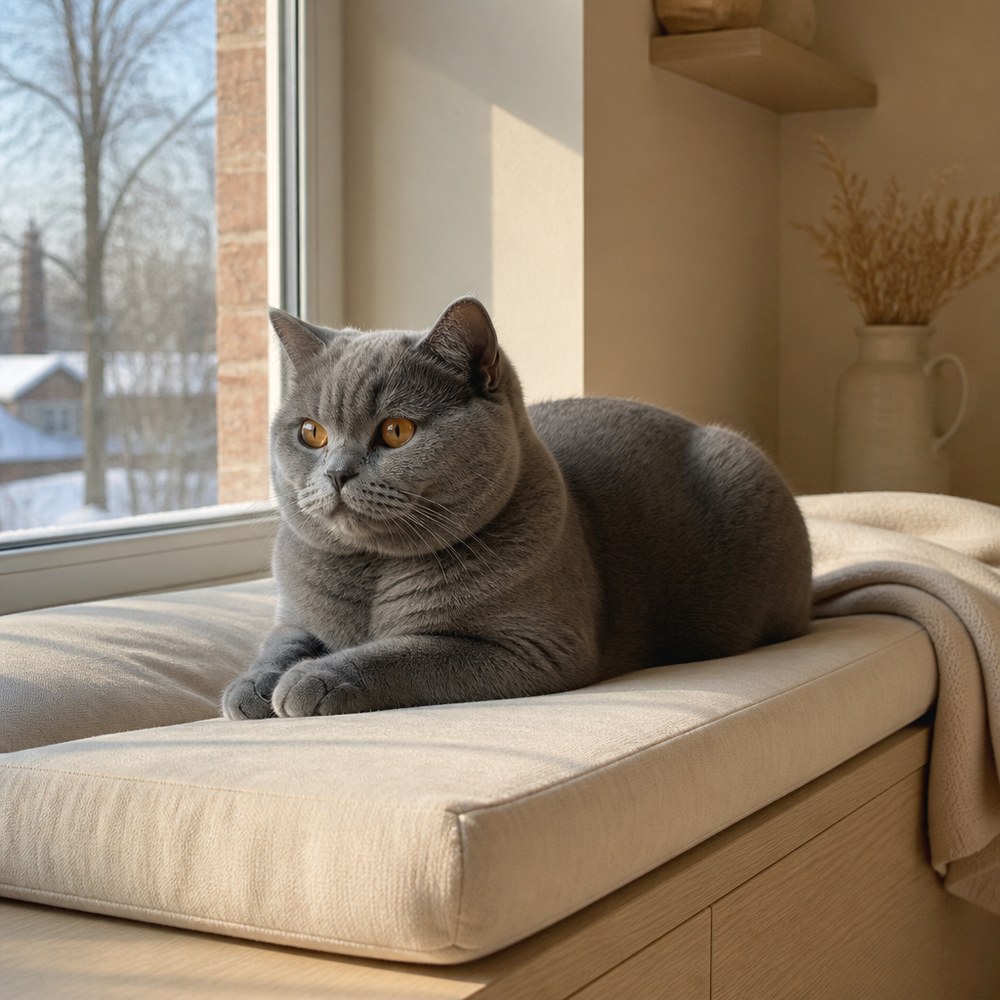
Winter sunlight can make a window area one of the most desirable places in the house, but the sleeping surface should not force your cat against cold glass.
Place a stable padded perch, bench cushion, or cat bed a short distance from the window where sunlight reaches it during the warmest part of the day. A folded blanket beneath the bed can add another layer between the cat and a cold sill.
Make sure the window closes securely and does not create a noticeable draft. Blinds and curtain cords should remain safely out of reach.
This setup works especially well as a daytime corner rather than a permanent sleeping location. Once the sun moves away, your cat can choose a warmer interior bed instead.
You May Also Like



3. Give a Shy Cat a Covered Cave Bed
Some cats relax more completely when their sleeping space has a roof and partially enclosed sides.
A soft cave-style bed can turn an exposed room corner into a sheltered retreat without hiding the cat somewhere difficult to reach. Place it beside a wall or sturdy piece of furniture rather than in the center of a busy room.
The opening should be large enough for comfortable entry, and the bed should hold its shape instead of collapsing around the cat. Washable materials are useful because enclosed beds can collect fur quickly.
Avoid packing the interior with loose fabric. The cave itself supplies the sense of enclosure, so one fitted cushion is usually enough.

4. Create an Elevated Shelf Retreat for a Cat That Likes Height
Warmth is not the only reason cats seek winter corners. Height can provide a quieter resting place with a clear view of the room.
A wide, securely mounted cat shelf or stable window-free perch can become a comfortable elevated retreat. Add a fitted nonslip cushion rather than a loose blanket that could slide off when the cat jumps.
The route up matters as much as the platform itself. Your cat should have stable steps or nearby furniture designed for safe access. Avoid placing the bed above fragile objects or in a location where a missed jump would lead to a hard fall.
For senior cats or cats with mobility difficulties, a floor-level alternative is usually a better choice.

5. Make a Basket Bed for a Small, Defined Sleeping Spot
Cats that repeatedly curl into laundry baskets, cardboard boxes, or tight spaces may appreciate a bed with clear boundaries.
A sturdy, low-sided basket lined with a fitted cushion can create that same contained feeling while looking at home beside a sofa or bookcase. Choose a basket large enough for your cat to turn around and stretch slightly rather than one that forces a cramped position.
Inspect woven materials regularly. Broken strands, sharp edges, or loose pieces should be repaired or the basket replaced.
A washable cushion makes cleanup easier during winter, when cats often spend longer periods sleeping in the same favorite spot.

6. Use the Space Beneath a Side Table as a Protected Nook
You may already have the framework for a cozy cat corner without buying another piece of furniture.
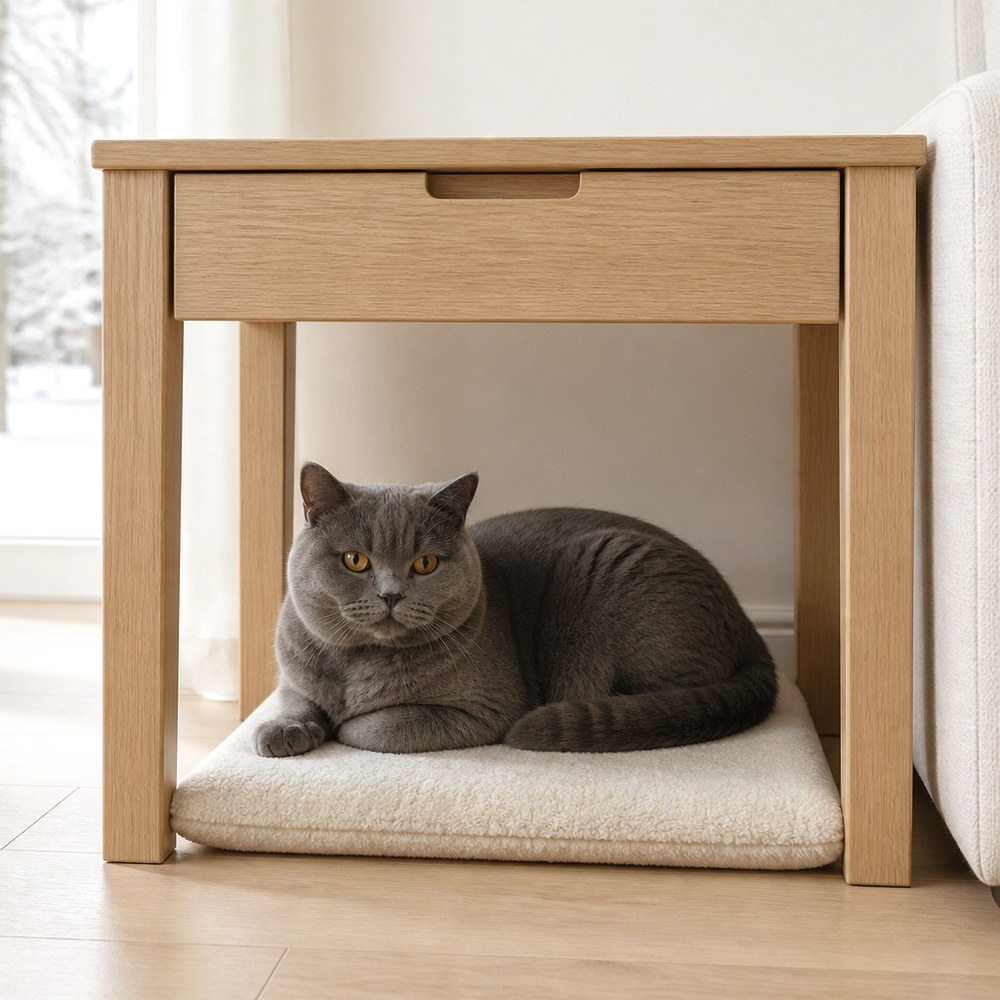
The open space beneath a sturdy side table can provide overhead cover while keeping the cat visible and accessible. Place a flat padded mat or shallow bed underneath, leaving the entrance and sides unobstructed.
This works particularly well in a living room where your cat wants to remain close to people but does not always want to be touched.
Keep lamps, charging cables, and decorative objects from hanging into the space. The table should be stable enough that ordinary movement around the room will not cause it to wobble.
7. Set Up a Self-Warming Mat in a Quiet Corner
A self-warming mat can add comfort without requiring an electrical cord. These mats generally work by reflecting some of the cat’s own body heat rather than generating powered heat.
Place one inside a familiar resting area rather than expecting your cat to adopt a completely new location at the same time. A bedroom corner, home office, or quiet end of the living room can work well.
Choose a mat designed for pets and follow its care instructions. It should lie flat without slippery folds.
If you use an electrically heated pet product instead, select one specifically intended for pets and follow its manufacturer instructions carefully. Do not improvise with human heating pads or damaged electrical equipment.
8. Make a Bedside Winter Sleeping Station
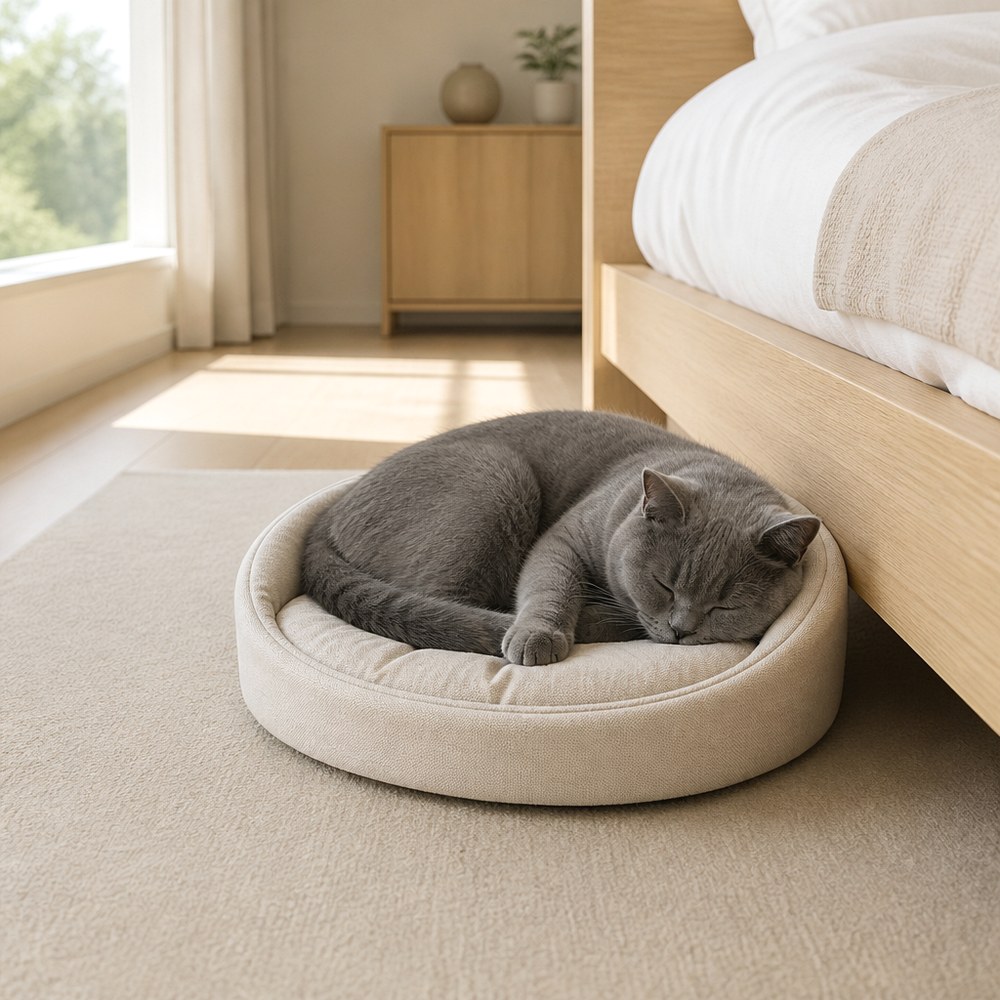
If your cat regularly sleeps in the bedroom, a dedicated bedside corner can provide a predictable alternative to your pillow, blankets, or the middle of the walking path.
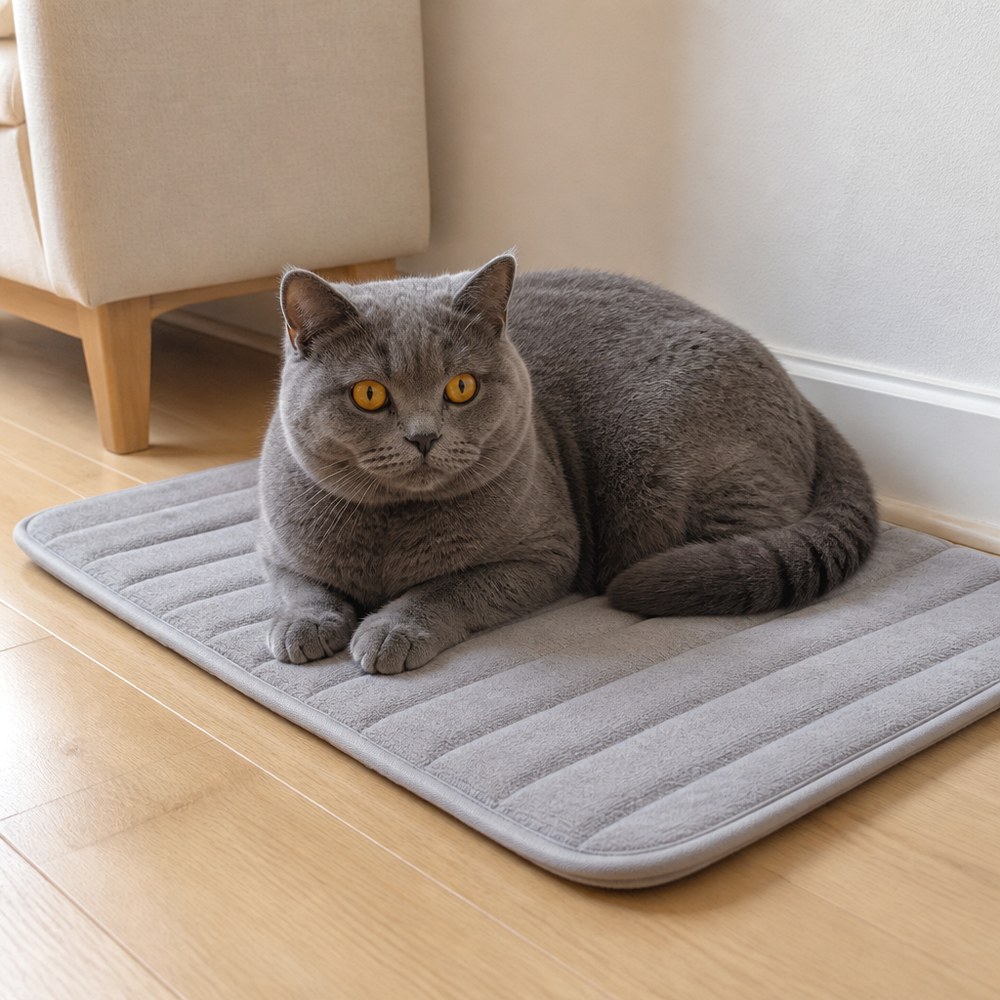
Place a low bed beside a wall where you are unlikely to step into it at night. Keep a clear route between the cat’s bed, water, and litter area rather than surrounding the bed with storage boxes or laundry.
A thicker fitted cushion may help separate the sleeping surface from a cold floor. If your cat changes sleeping locations during the night, that is normal; the corner is another option, not a place the cat needs to remain.
This is also a useful setup for cats that enjoy being near their person without sleeping directly on the bed.
9. Place a Companion Bed Beside Your Favorite Chair
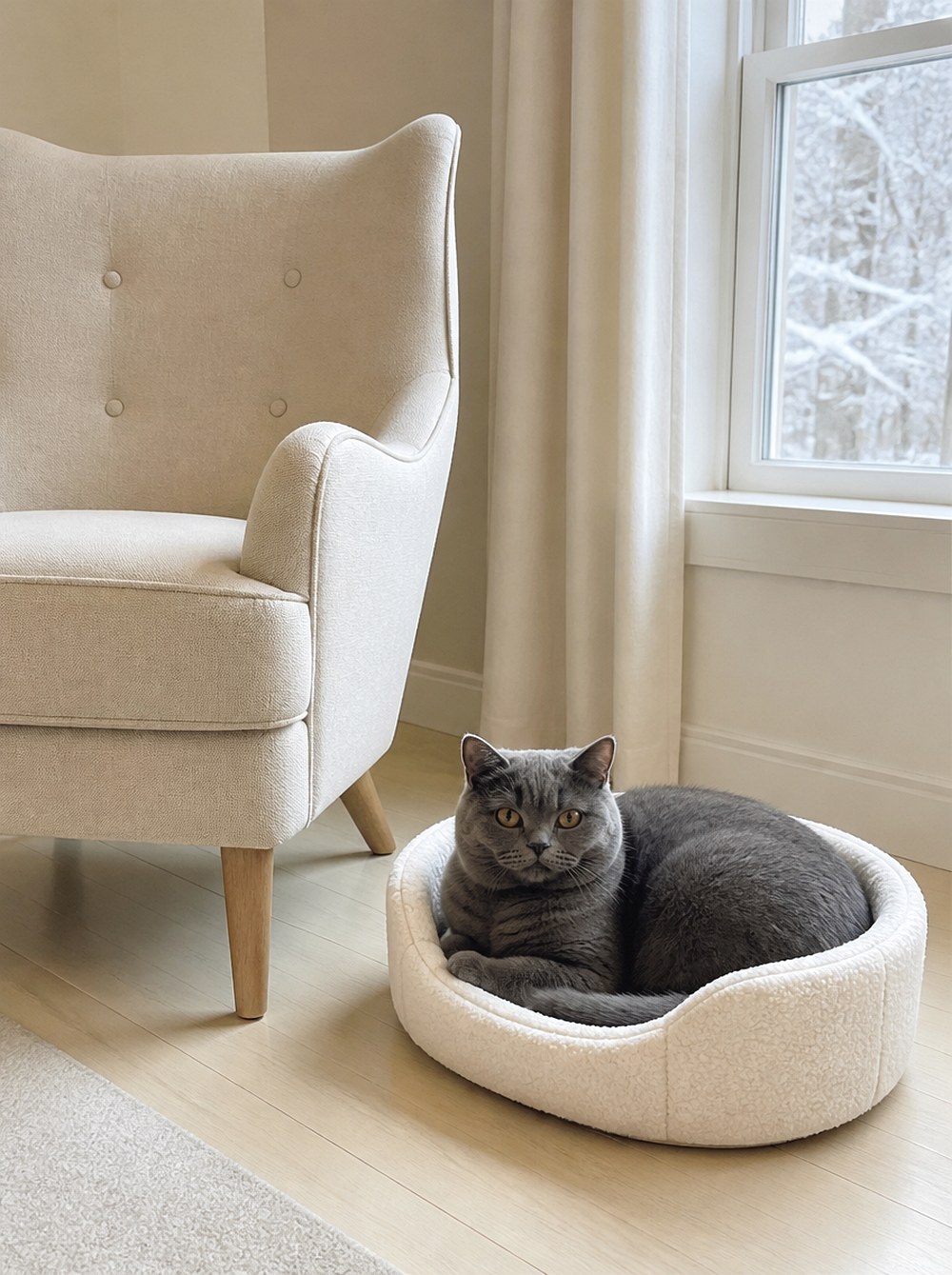
Not every cozy cat wants complete privacy. Some simply want a comfortable place near the household activity.
If your cat regularly settles near you while you read, work, or watch television, place a small bed or padded mat beside your usual chair. Position it outside the path of feet and far enough from reclining mechanisms or moving furniture.
This gives the cat a defined resting spot while preserving the social part of the routine.
A low bed is generally preferable to stacking cushions or creating an unstable platform beside the chair. Keep drinks, knitting supplies, chargers, and other small objects away from the cat’s corner.
10. Create a Two-Layer Hideaway With an Open Box and Cushion
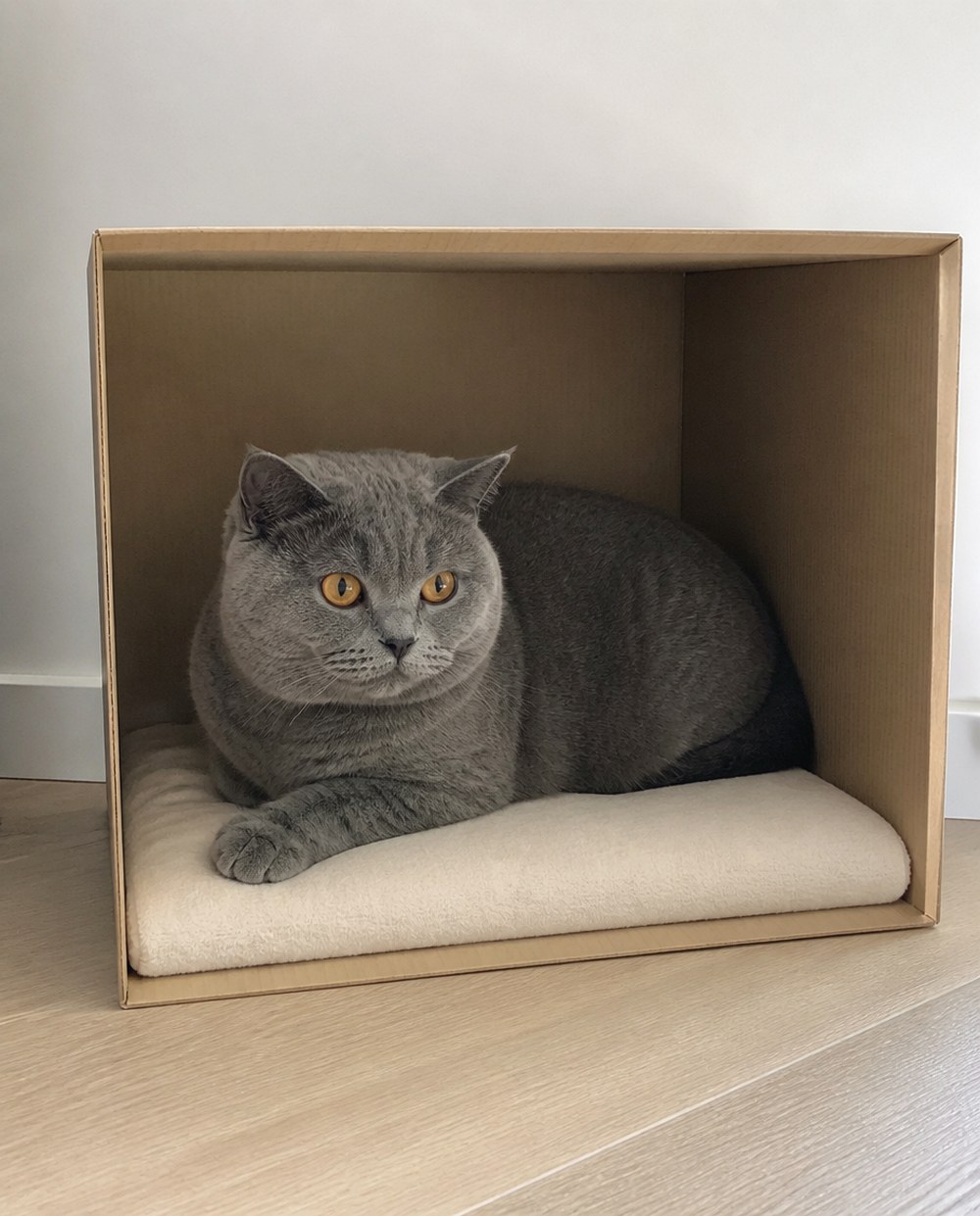
A plain cardboard box can become a useful temporary winter corner when it is set up carefully.
Choose a clean, sturdy box large enough for your cat to enter, turn around, and leave easily. Remove staples, tape loops, plastic, loose labels, and damaged cardboard. Place a fitted cushion or folded blanket flat on the bottom.
Leave the opening wide rather than creating dangling cardboard flaps. Position the box on a dry indoor floor where it will not be kicked or blocked by a door.
This is a particularly useful way to test whether your cat likes an enclosed corner before purchasing a permanent cave-style bed. Replace the box if it becomes damp, chewed, or structurally weak.
You May Also Like



Keep Several Winter Resting Options Available
A cozy corner works best when your cat can choose it rather than being placed there and expected to stay.
One spot may catch the afternoon sun while another remains appealing after dark. Your cat may use an elevated shelf when the house is active, then move to an enclosed bed when things quiet down. Providing two or three different types of resting places usually offers more flexibility than trying to build one elaborate winter station.
Check favorite corners periodically for cold drafts, damp fabric, damaged bedding, unstable furniture, or objects that have migrated into the space. Wash bedding as needed and replace anything that is frayed or unsafe.
Keep beds a safe distance from fireplaces, space heaters, radiators that become excessively hot, and other heat sources. Avoid open flames entirely. Secure electrical cords, blind cords, medicines, cleaners, small objects, and potentially toxic plants where your cat cannot reach them.
If your cat suddenly begins seeking unusually warm places, seems weak, stops eating normally, has bathroom changes, or shows another significant behavior or health change, contact a veterinarian rather than assuming the change is simply caused by winter weather.
Start with the corner your cat already chooses most often. A better cushion, protection from drafts, or a little more privacy may be all it needs to become a reliable winter retreat.
