A cat does not need a floor covered with purchased toys to have an interesting day. Many cats are just as engaged by opportunities to sniff, search, climb, watch, follow, investigate, and interact with their people.
Save This Idea on Pinterest

Toy-Free Activities for Cats: 10 Ways to Add Enrichment
Save to PinterestToy-free activities for cats can be especially useful when your cat loses interest in the toy basket, you are trying to reduce clutter, or you simply want more ways to add variety without buying something new.
Toy-free does not have to mean object-free. A cardboard box, safe window perch, portion of your cat’s regular food, or blanket can become part of an activity. The important part is what the cat gets to do: investigate, make choices, move, solve a small problem, or use natural feline behaviors safely.
Choose an Activity That Matches Your Cat’s Mood
You do not need to work through every idea each day. Match the activity to what your cat seems ready to do.
| If your cat seems… | Try… |
|---|---|
| Alert and watching everything | Window watching or a perch route |
| Restless and roaming | Room-to-room recall or hide-and-seek |
| Food motivated | A meal hunt or short training session |
| Curious but not highly active | Box exploration or a paper bag investigation |
| Interested in being near you | Follow-me exploration or hide-and-seek |
| Ready to settle | A calm observation station |
Keep sessions short enough that your cat can walk away while still comfortable. Some cats engage for several minutes and then rest; others return to an activity repeatedly throughout the day.
1. Turn an Empty Box Into an Exploration Zone
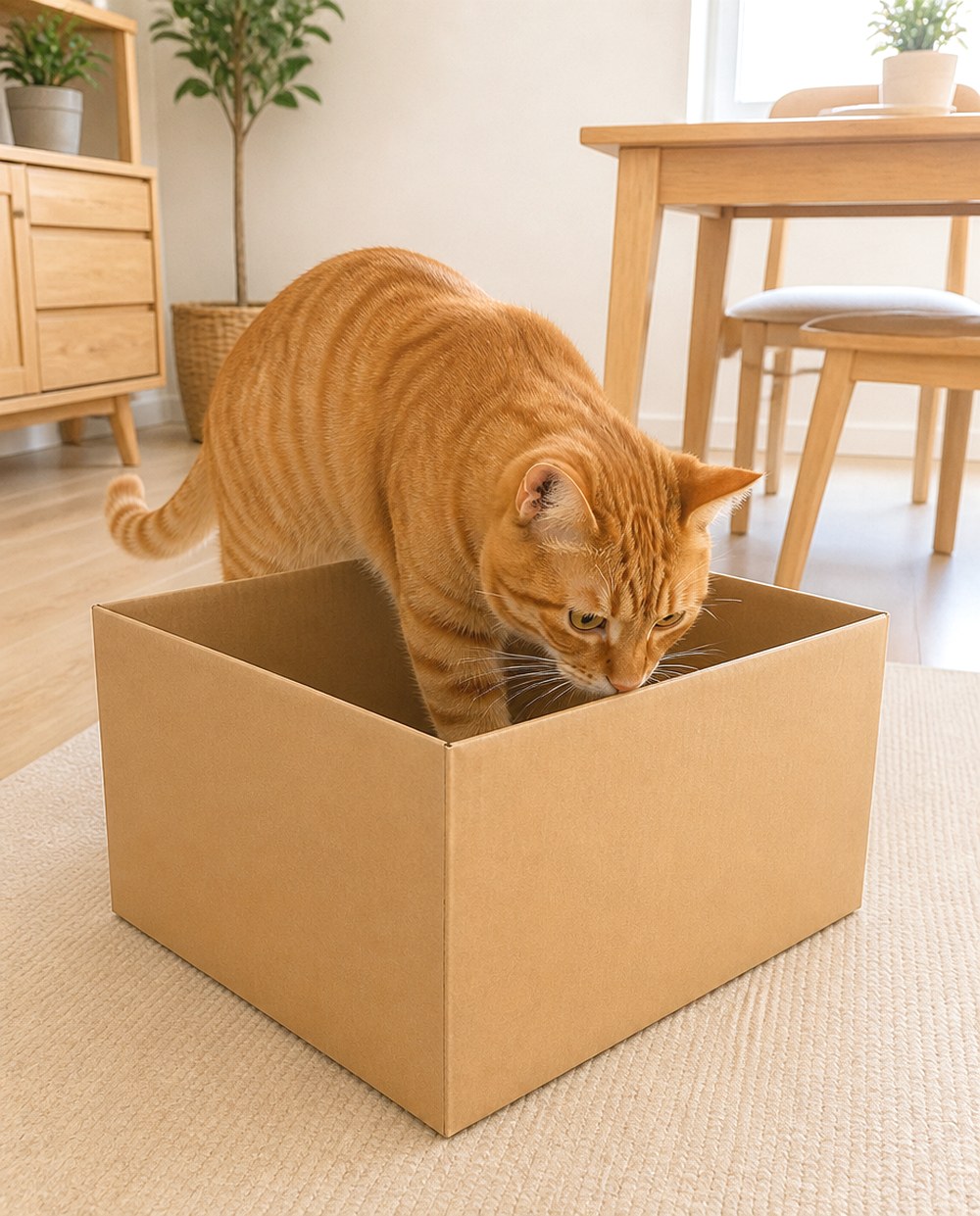
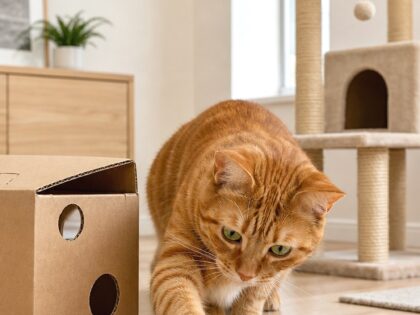
A plain cardboard box can offer more possibilities than it appears to. Set one clean box on its side and allow your cat to decide what to do with it. They might sniff the corners, sit inside, peek over an edge, rub against it, or use it as a temporary hiding spot.
For a small change, move the box to a different safe part of the room the next day rather than constantly adding new objects. A familiar item in a new location can create a fresh investigation without making the setup complicated.
Remove staples, loose tape, shipping labels that are peeling away, and damaged pieces of cardboard. If your cat tears off and swallows cardboard rather than simply scratching or biting it, remove the box.
2. Make Part of a Meal Into a Food Hunt
Instead of putting an entire meal in one location, use a small portion of your cat’s usual food for a supervised search.
Place individual pieces in several visible, clean spots around one room at first. Once your cat understands the activity, you can make a few locations slightly less obvious, such as beside a furniture leg or on a safe low perch.
The goal is searching, not frustration. Avoid hiding food where your cat has to squeeze into an unsafe gap, knock objects over, or climb somewhere unstable.
Food used for the hunt should come from the cat’s normal daily amount when possible rather than becoming a large supply of extra treats. Cats with medical or dietary restrictions may need a veterinarian-approved feeding plan.

You May Also Like



3. Set Up a Better Window-Watching Session
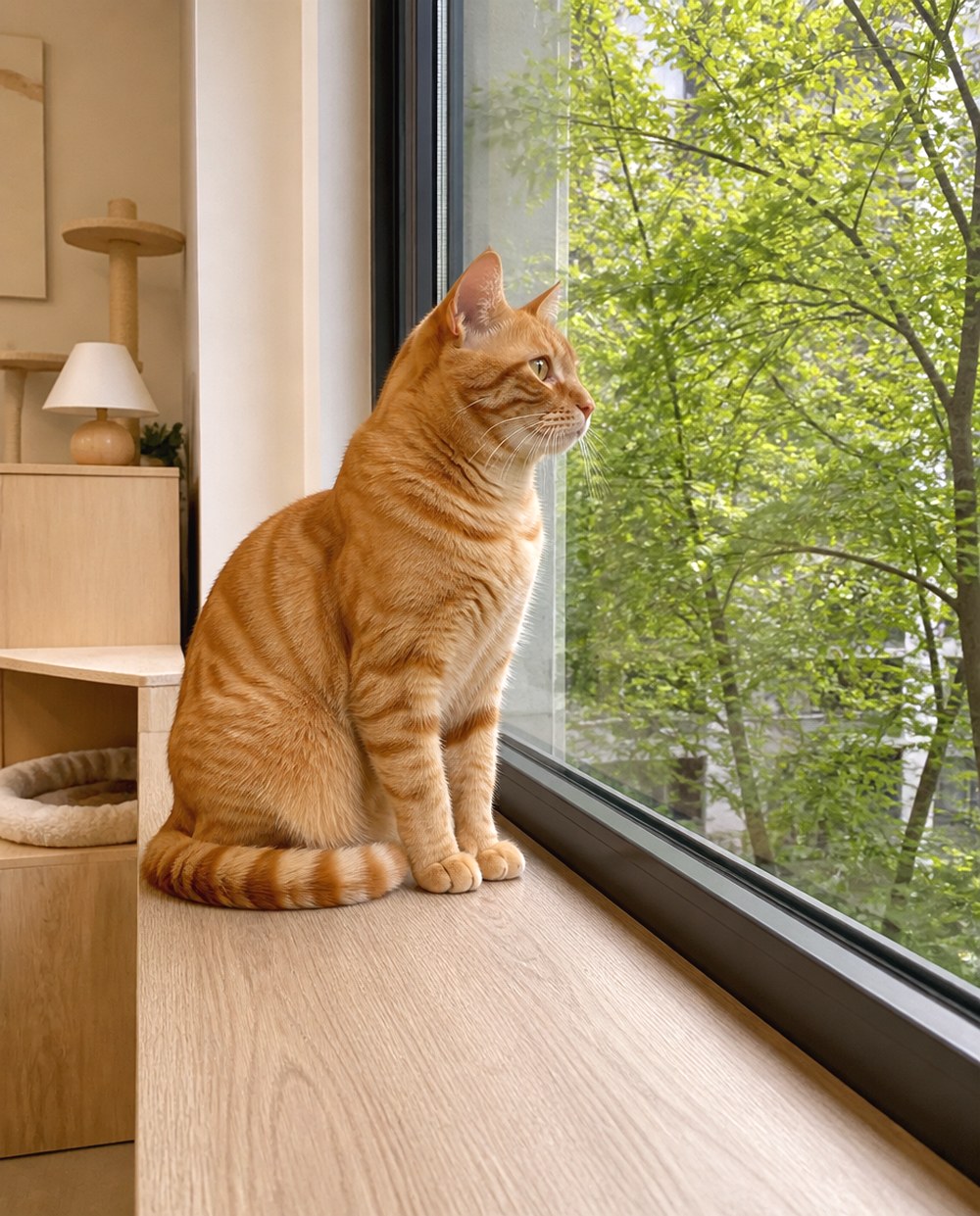
A secure window can provide changing sights, sounds, shadows, and movement without requiring you to actively entertain your cat.
Give your cat access to a stable perch with a clear view outdoors. A wide windowsill or sturdy piece of furniture may work if the surface is safe and cannot tip. Keep blind cords, curtain loops, and other dangling materials out of reach.
You do not need a spectacular view. Pedestrians, moving leaves, distant birds, passing cars, and changes in light can all hold a cat’s attention.
Never rely on an ordinary insect screen to prevent a determined cat from falling or escaping through an open window. Keep windows securely configured for your home and cat.
4. Play Hide-and-Seek With Yourself
For a cat that already likes following you, turn that behavior into a brief social game.
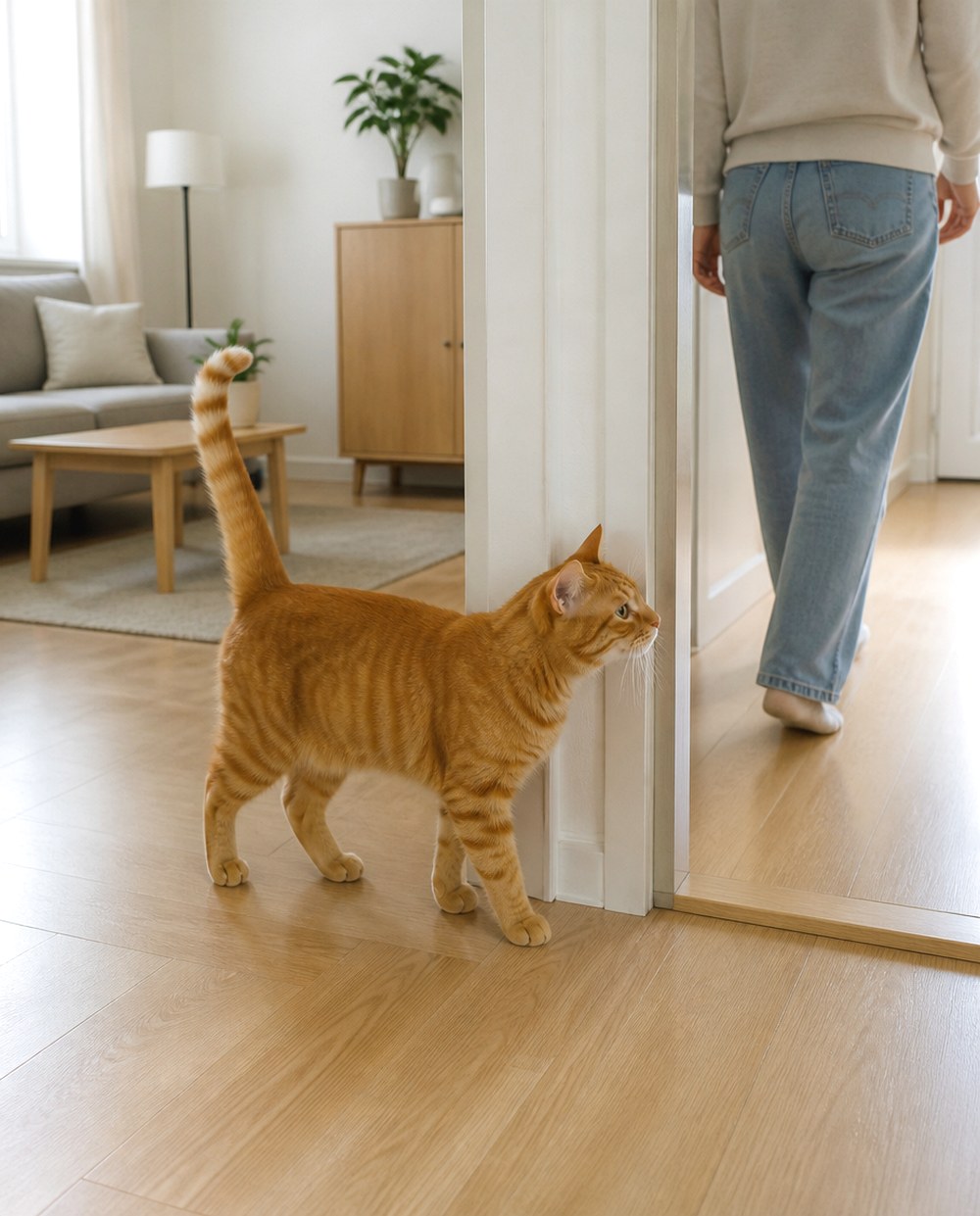
Let your cat see you move behind a doorway or around the corner of a familiar room. Call the cat once in your normal voice, then give them a chance to find you. When they arrive, reward the effort with gentle attention, praise, or a small piece of their regular food if appropriate.
Keep the hiding place straightforward. The point is to encourage searching and movement, not to make the cat anxious because you suddenly disappeared.
If your cat stays put or loses interest, end the game. Not every cat finds human hide-and-seek rewarding.

5. Practice Room-to-Room Recall
Recall is not only for dogs. Some cats can learn that hearing their name or another consistent cue predicts something worthwhile.
Begin only a short distance away. Say the chosen cue once. When your cat approaches, provide an appropriate reward. As the behavior becomes familiar, try calling from the next room.
This creates a small burst of movement while also building a useful communication habit. Do not chase or repeatedly call a cat that chooses not to come. A voluntary response is the goal.
For senior cats or cats with limited mobility, keep the distance short and use nonslip flooring. A sudden reluctance to walk, jump, or climb when those behaviors were previously normal deserves attention, particularly if you also notice pain or other behavior changes.

6. Build a Safe Perch-to-Perch Route
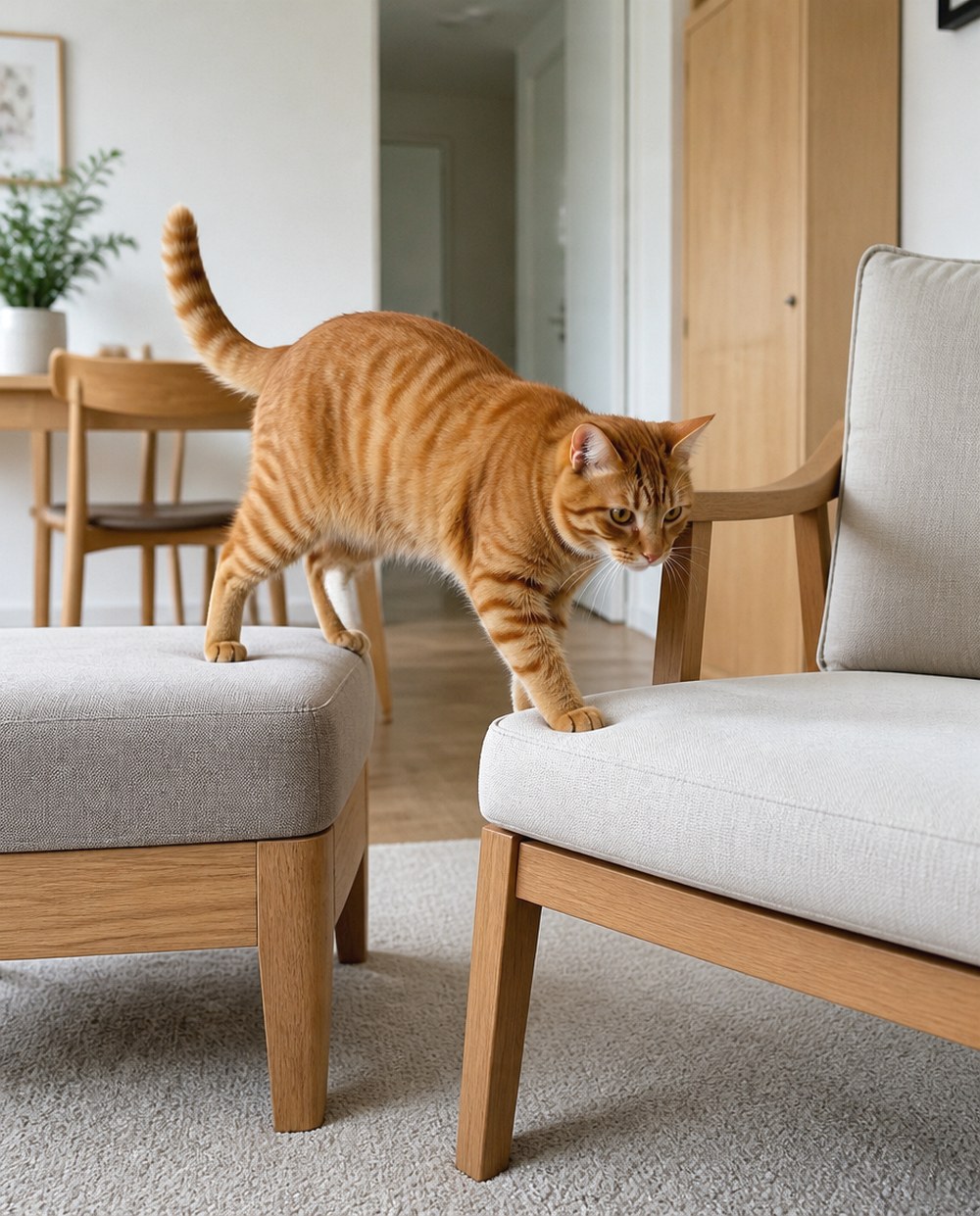
Cats often enjoy moving through a room at different heights. If your home already has stable cat-safe surfaces, you can create a short route from one approved perch to another.
For example, the sequence might move from the floor to a low ottoman, then to a sturdy chair, and finally to a wide window perch. Encourage exploration without physically placing or pushing your cat through the route.
Spacing matters. Each transition should be comfortably within your cat’s normal abilities, and every landing surface should remain stable.
Skip elevated routes for cats that have difficulty jumping, appear stiff, or have balance problems. A floor-level exploration path offers the same idea without unnecessary jumping.
7. Use a Handle-Free Paper Bag for Investigation
A plain paper shopping bag can become a short-lived exploration space if it is prepared carefully.
Remove the handles completely rather than leaving loops that could catch around a cat’s head or body. Lay the empty bag on its side on the floor and allow your cat to approach it voluntarily.
The changing shape and rustling sound provide a different experience from a rigid cardboard box. Some cats will walk inside immediately; others may prefer sniffing or pawing at the opening.
Supervise the activity and remove the bag if the paper starts breaking into pieces your cat tries to eat.

8. Turn a Blanket Into a Supervised Tunnel
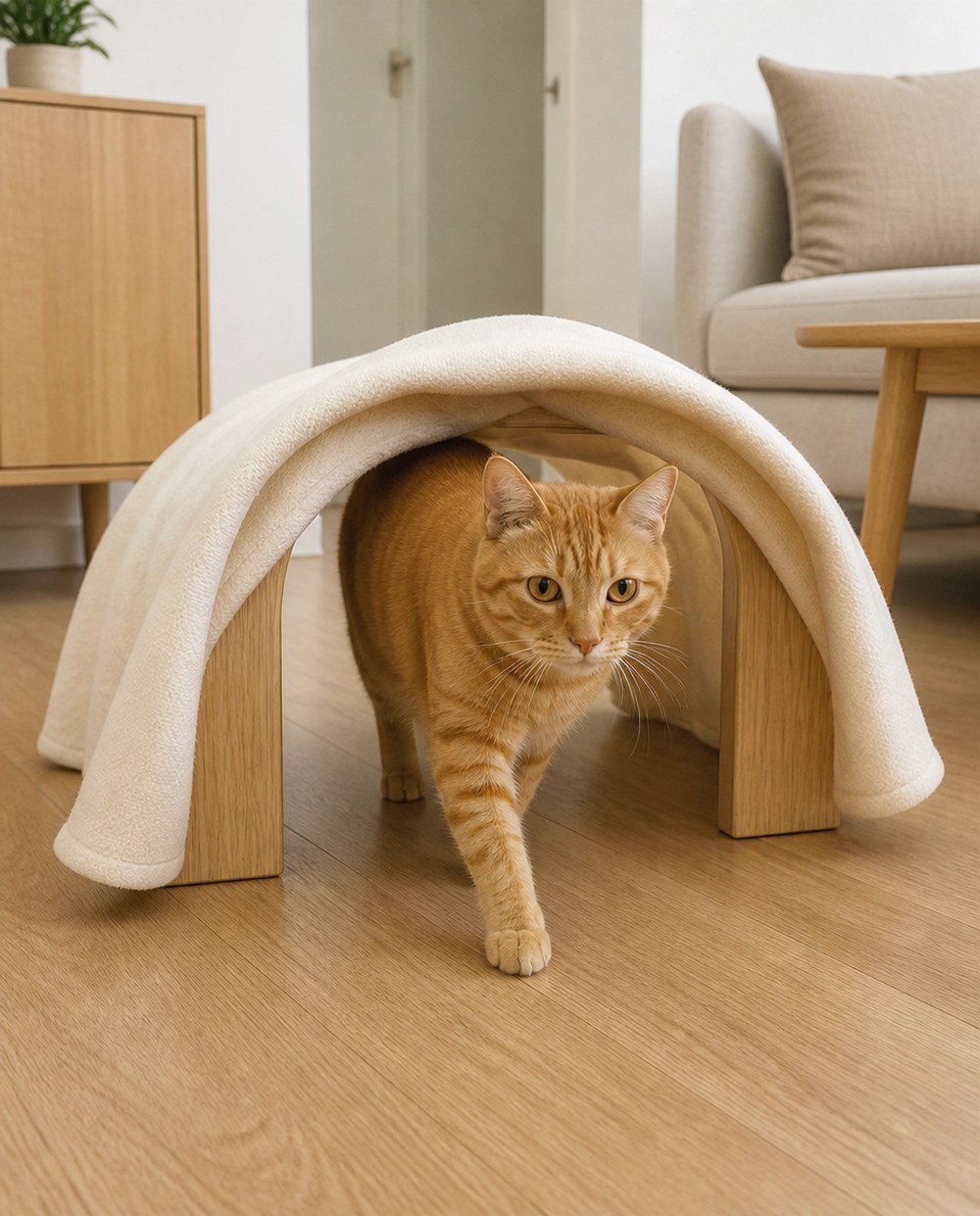
A blanket draped loosely over two stable low pieces of furniture can create a temporary tunnel or covered pathway.
Keep the structure low and open at both ends so your cat can enter and leave without becoming trapped. A familiar blanket may also carry reassuring household scents while making an ordinary room feel temporarily different.
Let your cat investigate at their own pace rather than putting them inside. Some cats enjoy walking through covered spaces; others simply sit beside them.
Supervise any fabric setup. Loose threads, frayed edges, and unstable supports should be removed from the activity.
9. Use Five Minutes for Reward-Based Training
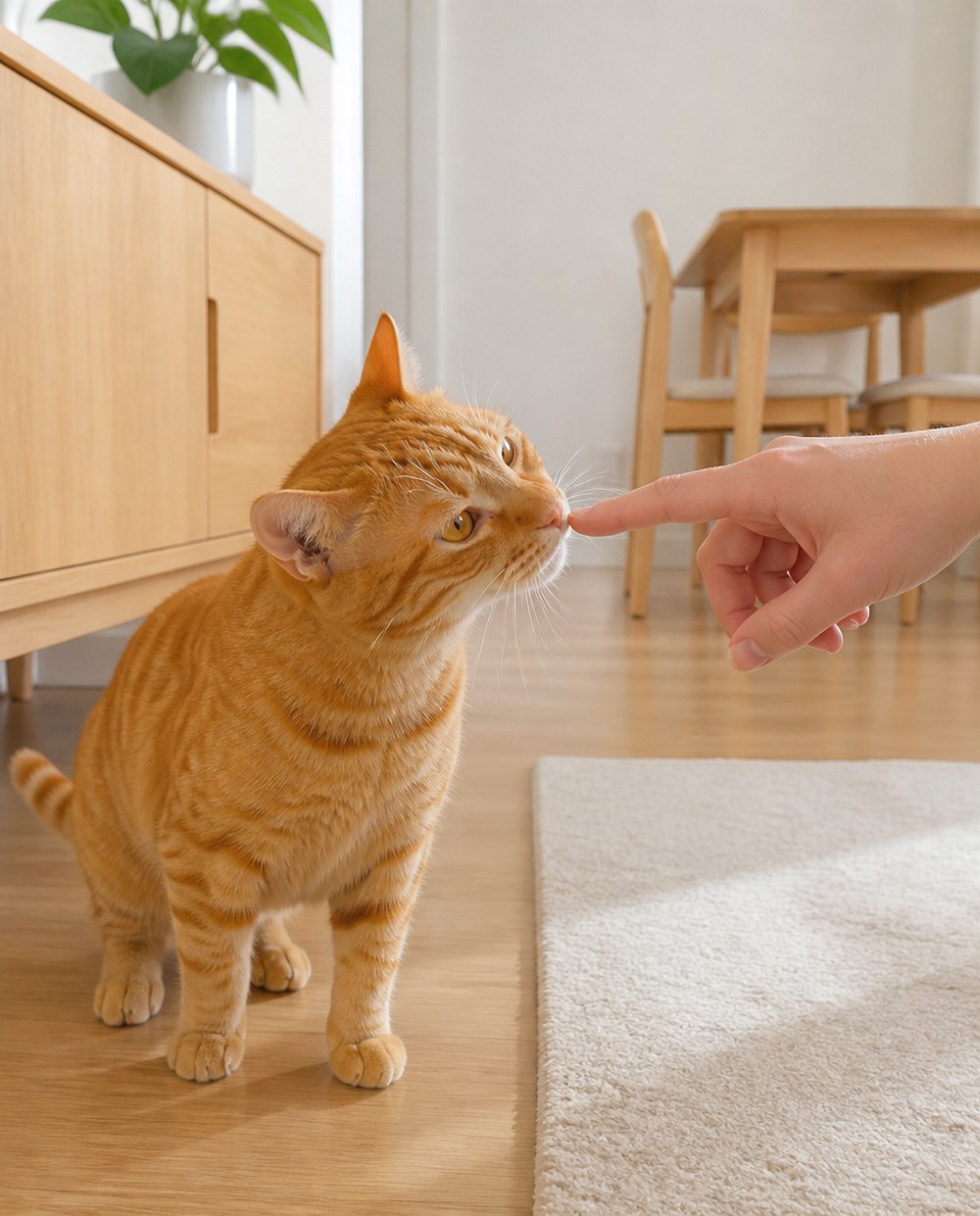
Training adds mental work without requiring a dedicated toy. Choose one small behavior, such as touching your finger with the nose, stepping onto a particular mat, or coming when called.
Keep the first version extremely easy. For a nose target, present one finger a short distance from your cat. If the cat chooses to investigate and touches it, mark the moment with calm praise and provide an appropriate reward.
Finish before attention fades. A few successful repetitions can be more productive than pushing through a long session.
Avoid physically forcing your cat into positions or using punishment when they leave. Training works best as a choice-based interaction.
10. Try a Slow Follow-Me Exploration
This activity works well for cats that naturally want to know where you are going.
Walk calmly from one familiar area of the home to another, pausing at a doorway, window, approved perch, or other safe point of interest. Let your cat follow, sniff, observe, or stop whenever they choose.
You can make the route different from the one you normally take through the house. That small change encourages the cat to pay attention to the environment and to you.
There is no need to lure the cat through every step. If they wander away halfway through, the activity is finished.
You May Also Like


Variety Matters More Than Constant Activity
Cats do not need to be entertained every waking minute. Rest, grooming, watching the room, and sleeping are normal parts of the day.
Instead of keeping several activities available continuously, rotate opportunities. A box might stay out for a day or two and then disappear. A food hunt might happen at breakfast one day, while the next day includes a short training session and extra window time.
Rotation can make familiar activities feel more noticeable without requiring a constant supply of new objects.
It also gives you useful information about your cat’s preferences. One cat may consistently choose vertical exploration, while another is much more interested in food searches or social games.
Know When Boredom May Not Be the Real Issue
Reduced interest in play does not always mean a cat needs a more exciting activity.
Pay attention to changes from your cat’s normal behavior. Contact a veterinarian if you notice concerns such as sudden withdrawal, obvious pain, breathing difficulty, weakness, repeated vomiting, major appetite changes, bathroom changes, or a sudden change in movement or behavior.
A cat that suddenly stops jumping onto a familiar perch, for example, should not simply be encouraged to exercise harder.
Start With What Your Cat Already Likes
The most useful toy-free activity is usually one that expands a behavior your cat already chooses.
A window watcher may enjoy a better observation spot. A cat that follows you from room to room may respond to recall or hide-and-seek. A food-focused cat may prefer a small meal hunt. A cat that investigates every delivery box already has an obvious enrichment preference.
Choose one activity, keep the first attempt short, and watch what your cat does. Their response will tell you more than trying to fill the day with ten activities at once.
